المنتجات (38,000+)

SI3010-FS - 2.4 kbps Global DAA | Silicon Labs
SI3010-FS

SI3010-FS - 2.4 kbps Global DAA | Silicon Labs

The Silicon Labs SI3010-FS is a 2.4 kbps direct access arrangement integrated with a global DAA and supplied in a 16-pin SOIC package. It operates from a 3 V to 3.6 V supply, supports a 0°C to 70°C temperature range, and is intended for telephone-line interface and ISOmodem applications. The SI3010-FS combines the line-side signaling functions of a direct access arrangement with the digital interface requirements of a V.22bis ISOMODEM system. A direct access arrangement, or DAA, is the line-side interface between a modem data terminal and a public switched telephone network. It converts analog line conditions into signals that can be processed by modem circuitry while providing the required isolation, hook-state detection, dialing, and line-current handling. A global DAA is designed to support internationally configurable telephone-line behavior rather than a single country-specific line interface. The SI3010-FS provides a 2.4 kbps data rate and operates from 3 V to 3.6 V, making it suitable for legacy V.22bis-class data communication equipment. Its 16-pin SOIC package is a surface-mount format suitable for automated assembly, and the reel configuration supports production feeding. The documented operating range of 0°C to 70°C identifies the SI3010-FS as a commercial-temperature device. The integrated DAA reduces the number of external line-interface functions required in a complete modem design. This can simplify the printed-circuit-board layout while preserving a standardized telephone-line interface. Because the part belongs to the Si2401 and Si2404 ISOmodem families, it is particularly relevant to designs requiring a line-side DAA paired with established modem controller or codec functionality. Typical uses include 2400 bps modem hardware, fax and data terminal equipment, industrial data links operating through telephone networks, and legacy communications controllers that require a globally programmable DAA. The SI3010-FS is also useful when a completed modem design must be maintained with an established 16-pin SOIC footprint and 2.4 kbps class performance. Designers should verify the complete SI3010 or Si240x companion-device arrangement because the DAA also requires suitable line-interface components and an appropriate host or modem companion. PCB layout must preserve the manufacturer's recommended analog and digital partitioning, while component selection must account for the telephone network's voltage and current requirements. This page consolidates verified distributor references, package and operating details, available replacement references, and practical selection guidance. It also identifies which technical and commercial values remain unavailable rather than presenting estimated specifications as verified facts.

طلب عرض سعر اتصل بنا
SI3010-GS - 3.6V DAA Interface IC | Silicon Labs | Telecom
SI3010-GS

SI3010-GS - 3.6V DAA Interface IC | Silicon Labs | Telecom

Silicon Labs SI3010-GS is an obsolete telecom interface IC implementing a Direct Access Arrangement (DAA) in a 16-pin SOIC package. The device operates from a 3 V to 3.6 V supply, consumes 15 mA, and is specified over a 0°C to 70°C temperature range. Its documented interfaces include parallel, SPI, and UART connections, while its 16-SOIC package measures approximately 3.90 mm in width. These specifications position the SI3010-GS as a line-side DAA controller for legacy telecom equipment rather than a general-purpose interface device. A Direct Access Arrangement is a subscriber-line interface controller that separates a telephone line codec from the host digital signal processor or CPU. In this product hierarchy, the SI3010-GS is a DAA interface IC within the broader category of telecom interface ICs. Such devices traditionally handled line-state signaling, loop control, and the host-side data interface used by customer-premises equipment, telephone adapters, and other legacy voice systems. The SI3010-GS offers a 3 V to 3.6 V operating supply, 15 mA supply current, and parallel, SPI, and UART host-interface options. Its 16-pin SOIC construction supports conventional surface-mount assembly and tubing or reel-handling workflows. Because the published status is obsolete, procurement decisions should emphasize confirmed availability, original manufacturer traceability, and functional equivalence with the specific firmware and line-interface implementation. Technically, the combination of a DAA function and multiple serial host interfaces allows the device to sit between a line-side codec or network termination path and an embedded controller. Parallel access can support legacy processor buses, while SPI and UART simplify connection to modern controllers. The 3.3 V-class supply also makes the device compatible with 3.3 V embedded systems, provided the associated clocking, reset, and interface levels comply with the system design. Typical uses include legacy Voice over IP terminal designs, embedded voice bridges, telephone-line interface modules, and industrial telecom equipment that retains a Silicon Labs-compatible DAA architecture. Replacement work should verify not only voltage and package dimensions but also register behavior, interrupt timing, clock requirements, line-side integration, and the host firmware's expectations. The principal design consideration is lifecycle risk: the SI3010-GS is listed as obsolete, so production continuity cannot be assumed. Engineers should obtain a controlled stock source, confirm the exact MPN and package, and validate any substitute against the manufacturer's SI3010 documentation before production release. This page consolidates the verified supply range, package details, lifecycle information, interface capabilities, and qualified same-footprint alternatives into one engineering-focused record. It also distinguishes documented facts from missing electrical details, helping designers evaluate sourcing risk and replacement decisions without inferring unsupported pinout or performance data.

طلب عرض سعر اتصل بنا
SI3010-KS - 3.3V Global Serial DAA | Silicon Labs | Telecom
SI3010-KS

SI3010-KS - 3.3V Global Serial DAA | Silicon Labs | Telecom

The Silicon Labs SI3010-KS is a 3.3 V direct access arrangement interface IC designed for global telephone-line applications, with a 3 V to 3.6 V supply range, 15 mA operating current, and a 16-pin SOIC package. Its programmable line interface supports parallel, SPI, and UART host connectivity, making it suitable for compact subscriber-line equipment and other telecom interfaces that need to minimize external analog-front-end components. A direct access arrangement, or DAA, is a semiconductor interface that connects a digital communications system to an analog telephone line. In the broader hierarchy, a DAA belongs to the telecommunications interface class, which sits within interface ICs and broader semiconductor solutions. Instead of implementing every line-side function with separate analog, isolation, switching, and signal-conditioning components, a DAA IC consolidates those functions into a controlled silicon interface. The SI3010-KS operates from a 3 V to 3.6 V supply and is identified by distributor listings as a single-circuit telecom DAA. Its available interface choices include parallel, SPI, and UART, giving the system designer several host-bus options for registering, configuration, and line-status monitoring. The listed operating current of 15 mA provides a concrete power figure for preliminary 3.3 V rail budgeting in compact telecom equipment. The device is supplied in a 16-SOIC package measuring 3.90 mm in body width. Distributor records identify both tube packaging and surface-mount construction, while the package family remains SOIC, a surface-mount technology also known as small-outline integrated circuit packaging. The 16-pin arrangement supports a relatively compact land pattern compared with larger leaded telecom-interface packages. Typical uses include Voice over IP subscriber terminals, analog telephone adapters, customer premises equipment, embedded voice systems, and other products that must bridge a digital controller with a telephone line. The exact line-side operating modes, country-specific network requirements, and host protocol details should be confirmed in the manufacturer datasheet before production release. Design planning must account for the 3.3 V supply tolerance, the 15 mA current requirement, the analog telephone-line environment, and the need for correct external protection and hook-related circuitry. Because a DAA is safety- and network-interface sensitive, PCB routing, isolation boundaries, surge exposure, and regulatory requirements should be reviewed as a complete design rather than treated as a generic serial-interface layout. This product record combines verified distributor specifications, package information, cross-reference results, drop-in replacement analysis, application guidance, and design considerations. It highlights where the SI3010-KS matches the published SI3010-F-FSR comparison data and clearly identifies parameters that remain unverified rather than estimating unsupported electrical details.

طلب عرض سعر اتصل بنا
SI3012-KS - V.90 Global MC'97 Silicon DAA | Silicon Laboratories
SI3012-KS

SI3012-KS - V.90 Global MC'97 Silicon DAA | Silicon Laboratories

Silicon Laboratories SI3012-KS is a Global MC'97 silicon direct access arrangement for modem and telephone-line-interface applications, combining an AC'97 2.1-compliant primary or secondary codec with a global phone-line interface. The device provides 84 dB dynamic range across its transmit and receive paths, operates from a 5 V power supply, and is offered in a 16-pin SOIC package. A direct access arrangement, or DAA, is the telephone-interface portion of a modem or communications system. It connects the host codec and modem data path to an analog telephone line while providing the signaling, isolation, and transmit/receive functions needed for global line-interface operation. In the component hierarchy, the SI3012-KS is a communications interface IC rather than a general-purpose codec or memory device. Verified feature data identifies AC'97 2.1 compliance, support for primary or secondary codec operation, and compatibility with FCC, CTR21, JATE, and other public telephone network requirements. Its 84 dB dynamic range provides the principal quantified signal-path performance figure, while the 5 V supply simplifies integration with conventional communications equipment. The SI3012-KS is specifically associated with V.90 modem designs and is listed as a Modem V.90 device in 16-SOIC packaging. The product is marked not recommended for new designs, with Si3018 identified by the distributor listing as the recommended successor for new-product planning. This lifecycle distinction is important for maintenance and repair work involving existing V.90 equipment. Typical uses include V.90 data-modem hardware, analog telephone-line interfaces, primary and secondary AC'97 codec connections, and legacy communications equipment requiring global telephone-network interface support. Its 5 V operating supply and 84 dB transmit/receive dynamic range fit established analog modem architectures, while the stated regulatory and PTT compatibility support deployment across multiple international line standards. Designers should preserve the manufacturer's reference circuit and verify the external isolation, line-interface, and codec connections against the SI3012-KS datasheet. Because the SI3012-KS is not recommended for new designs, new products should evaluate the Si3018 instead of assuming functional interchangeability. The available search data does not provide a verified pinout, detailed timing specification, or manufacturer pricing, so those values should be confirmed before schematic capture or procurement. This page distinguishes the SI3012-KS communications DAA from the similarly named Sanken SI-3012KS low-dropout regulator, consolidates verified lifecycle and feature information, and identifies the documented successor path for engineers evaluating legacy V.90 modem designs.

طلب عرض سعر اتصل بنا
SI3014-KS Global MC-97 DAA | Silicon Labs | Telecom
SI3014-KS

SI3014-KS Global MC-97 DAA | Silicon Labs | Telecom

The Silicon Labs SI3014-KS is a global MC-97 direct-access-arrangement interface IC with an AC97 2.1-compliant codec interface, 84 dB transmit and receive dynamic range, a 5 V power supply, and greater-than-3000 V isolation. It is supplied in a surface-mount, 16-SOIC package measuring 0.154 inches, or 3.90 mm, in width. A direct-access arrangement, or DAA, is a telephone-line interface device that places a codec and line-side transceiver behind a digital host interface. In the broader hierarchy, the SI3014-KS belongs to interface ICs, telecom line interfaces, modem ICs, and semiconductor ICs. Its MC-97 architecture helps a host codec control the digital and analog telephone-line signal path while the integrated isolation barrier separates host-side circuitry from line-side circuitry. The verified data identifies the SI3014-KS as a primary or secondary codec interface that is compliant with FCC, CTR21, JATE, and other PTT requirements. Its 84 dB dynamic-range TX/RX paths support voice-quality signal handling. Operation from a 5 V supply and compatibility with 3.3 V-related product information may be useful in mixed-voltage telecom designs, but circuit-specific voltage limits must be confirmed against the manufacturer datasheet before implementation. The device uses ASK over home power lines as its listed data format, while additional source material identifies it as a global MC-97 silicon DAA for telephone and modem interfaces. These descriptions place it between a digital audio codec and an analog phone line, with isolation helping control fault energy and common-mode coupling. Users should account for the non-RoHS and contains-lead status stated in the verified distributor data when evaluating regulatory and assembly requirements. Typical uses include legacy caller-ID, fax, answering-machine, voice-mail, modem, PBX, and embedded telephone equipment. In these systems, the MC-97 interface can connect a host processor to the line-side transceiver while the AC97 link carries digital audio and control traffic. Existing equipment may also use the SSI interface described in distributor listings, although the exact supported interface configuration must be checked against the original system design. Designers should not treat the isolated line interface as a universal drop-in replacement without reviewing the pinout, supply rails, clocking, impedance, isolation, and regulatory circuit requirements. The verified data identifies the part as not recommended for new designs and points users toward the Si3018 datasheet, so lifecycle and sourcing checks are essential. This page combines the verified specifications, sourcing records, and practical constraints without inventing undocumented electrical values.

طلب عرض سعر اتصل بنا
SI3015-BS - 3.3V ISOmodem DAA | Silicon Laboratories
SI3015-BS

SI3015-BS - 3.3V ISOmodem DAA | Silicon Laboratories

The Silicon Laboratories SI3015-BS is a 3.3 V ISOmodem line-side direct access arrangement with an integrated global telephone-line interface, a 2.4 kbps V.90 data format, and a 16-SOIC package. It operates from 3.3 V or 5 V and is identified as an obsolete telecom interface IC. An ISOmodem is a modem chipset designed for direct access arrangements used by analog telephone equipment. In the signal chain, it belongs to the modem IC category, provides the telephone-line interface, and supports primary or secondary AC97 codec operation. This places the SI3015-BS between a host audio or data interface and the public switched telephone network, reducing the need for a separate external line interface circuit. The principal verified features include AC97 2.1 compliance, support for FCC, CTR21, JATE, and other PTT requirements, 84 dB dynamic range across the transmit and receive paths, a 5 V power supply option, and greater than 3000 V isolation. The 16-SOIC package measures 0.154 inch, or 3.90 mm, in width and is supplied in a tube for the SI3015-BS ordering code. Technically, the SI3015-BS combines modem functionality with a global line-side DAA rather than relying on a discrete telephone interface arrangement. Its 2.4 kbps V.90 format targets legacy data communications rather than broadband modem applications. The listed 3.3 V operating option supports lower-voltage host equipment, while 5 V operation accommodates legacy telecom circuitry. The published 84 dB dynamic range is relevant to voice and low-speed data quality, and the greater than 3000 V isolation rating provides the primary withstand information associated with the line interface. Typical uses include legacy fax and data terminal equipment, telephone answering devices, remote data terminals, industrial dial-up links, and embedded telephone-line products requiring a direct access arrangement. In these systems, the SI3015-BS can interface with an AC97 codec or compatible host while handling the line-side isolation and telephone-network requirements. Designers should confirm whether the obsolete lifecycle status and legacy 2.4 kbps data rate match the intended equipment. PCB work also requires review of the external telephone-network components, isolation boundary, analog line interface, and power arrangement because those implementation details are not fully characterized by the available verified excerpts. This page consolidates verified distributor excerpts, lifecycle information, package details, interface standards, and replacement-screening constraints. It clearly distinguishes documented SI3015-BS characteristics from unavailable electrical values, preventing an obsolete part from being presented with fabricated pin, pricing, or replacement data.

طلب عرض سعر اتصل بنا
SI3015-FS - V.90 Modem, 16-SOIC | Silicon Labs
SI3015-FS

SI3015-FS - V.90 Modem, 16-SOIC | Silicon Labs

The Silicon Labs SI3015-FS is a 2.4 kbit/s V.90 modem chipset with error correction, supplied in a 16-pin SOIC package measuring 0.154 inch by 3.90 mm. It belongs to the Si2400 ISOmodem family, whose integrated direct access arrangement and programmable telephone-line interface reduce the external circuitry required by a conventional modem design. An ISOmodem chipset is a semiconductor solution for connecting equipment to public telephone lines. It combines modem signal-processing and telephone-interface functions into one device family, reducing the need for a separate DSP data pump, modem controller, analog front end, isolation transformer, relays, and optocouplers. The SI3015-FS therefore sits within the broader modem IC and telephone-line interface hierarchy rather than serving as a general-purpose communications transceiver. The verified listing identifies the part as a V.90 modem operating at 2.4 kbit/s and identifies a 16-pin SOIC package. It also reports V.90 data formatting and tube packaging. A secondary technical listing describes the related SI3015-F-FS variant as a V.22bis ISOmodem chipset with error correction, while the family documentation describes programmable line-interface functionality. Detailed electrical ratings, protocol features not present in the supplied data, and pin assignments remain unverified and must be checked against the manufacturer datasheet before design release. The SI3015-FS is associated with legacy telephone-network equipment, data communications, fax systems, embedded modems, and industrial telephone interfaces. Its integrated ISOmodem architecture can shorten board development by consolidating functions that would otherwise occupy multiple discrete or integrated blocks. The 16-SOIC package is also straightforward to route on a through-hole PCB and can be assembled using conventional leaded-package processes. Designers must confirm country-specific line-interface requirements, isolation boundaries, ring detection, hook-switch control, impedance matching, and firmware compatibility before deployment. Do not assume that a distributor category label constitutes proof of regulatory approval. The supplied evidence also does not establish the target part's lifecycle status, pinout, absolute maximum ratings, or complete compliance declarations. This page consolidates the verified SI3015-FS product, package, protocol, sourcing, and datasheet information into an engineering-oriented record. Where evidence is insufficient, it explicitly identifies missing data rather than estimating electrical values or proposing unverified pin-compatible replacements. Compare the exact ordering code, datasheet revision, and line-interface schematic before substituting any related SI30xx or Si24xx device.

طلب عرض سعر اتصل بنا
SI3015-KS - 2.4 kbps V.90 Modem IC | Skyworks Solutions
SI3015-KS

SI3015-KS - 2.4 kbps V.90 Modem IC | Skyworks Solutions

The Skyworks Solutions SI3015-KS is a 2.4 kbps V.90 modem integrated circuit in a 16-pin SOIC package. The verified distributor listing identifies the device as a modem IC with V.90 operation, while available documentation describes the SI3015 family as a V.22BIS ISOMODEM chipset with error correction. These positions place SI3015-KS in the interface-IC hierarchy for legacy data communication and telephone-line modem designs. Its package supports conventional surface-mount PCB assembly while preserving access to the analog and digital interfaces required by a host controller. A modem integrated circuit is a mixed-signal interface component that converts digital data into line-signal waveforms and reconstructs digital data from received signals. Within the broader category of interface ICs, this function bridges a host processor or data terminal with a communications channel. The V.90 designation identifies the modem standard associated with the listed 2.4 kbps operating class, while V.22BIS documentation provides additional family-level context. Error-correction capability is particularly relevant when a design must recover reliably from line noise or signal impairments. The SI3015-KS combines an integrated modem function with a compact 16-SOIC footprint. Its primary verified features are the 2.4 kbps modem rate, V.90 listing, 16-pin SOIC package, surface-mount construction, and error-correction support as stated in the indexed datasheet description. The package is suited to industrial and telecommunications equipment that retains V.22bis or V.90-era interfaces. Because this is a legacy interface product, system compatibility, electrical limits, clocking, and interface timing should be confirmed against the original manufacturer documentation before a new PCB is released. The SI3015-KS belongs to a signal path where analog line-side behavior and digital host-side behavior meet. Designers commonly place it in terminal equipment, data-card hardware, remote-control systems, and embedded telephone-data products. Its 2.4 kbps speed is much slower than modern broadband links, but it remains useful for low-bandwidth, legacy, or cost-constrained systems whose counterpart equipment still supports the same modem standard and physical interface. A key procurement consideration is lifecycle status. The verified Mouser result states that SI3015-KS is “Not recommended for new designs” and directs users to the Si3018 datasheet. Consequently, the SI3015-KS is most appropriate for repair, continuation, or compatibility work rather than unrestricted greenfield adoption. Existing production programs should verify lifecycle status, availability, and any notice of change before committing a long-term BOM. This page consolidates verified distributor descriptions, lifecycle guidance, application context, and sourcing information for SI3015-KS. It distinguishes the 16-SOIC V.90 2.4 kbps listing from related SI3015 documentation while avoiding unsupported electrical claims. Engineers should use the datasheet and line-interface circuitry for final timing, pin, protection, and component-selection decisions.

طلب عرض سعر اتصل بنا
SI3016-BS - 3.3V Global DAA V.90 Modem | Skyworks
SI3016-BS

SI3016-BS - 3.3V Global DAA V.90 Modem | Skyworks

The Skyworks Solutions SI3016-BS is a 3.3 V enhanced global direct access arrangement and V.90 modem interface IC in a 16-pin SOIC package. It integrates the line-side functions required by processors that already contain a system-side DAA, including a programmable line interface, line-voltage monitor, loop-current monitor, parallel handset detection, and overload protection. Verified distributor data identifies the SI3016-BS as a modem-class, 16-SOIC device. A direct access arrangement, or DAA, is a telephone-line interface that separates the external analog network from the digital host processor. In the SI3016 architecture, the host processor provides the system-side DAA while SI3016-BS handles the line-side function. This division allows a design to eliminate a conventional analog front end, isolation transformer, relays, opto-isolators, and a 2- to 4-wire hybrid, according to the manufacturer datasheet carried by Mouser. Key verified features include 3.2 dBm transmit/receive levels, a 7 µA on-hook line-monitor current, parallel handset detection, and overload protection. The programmable line interface supports adaptation to global telephone-line requirements, while the 3.3 V supply matches contemporary embedded processor systems. These features are relevant to modem, voice-over-data, fax, and telephony equipment that uses a host processor with an integrated system-side DAA. SI3016-BS combines a mixed-signal line interface with digital modem signaling in one package. Its 16-pin small-outline package supports conventional surface-mount assembly and keeps the telephone-line interface compact. The part is identified as an industrial-temperature component in one distributor result, but the exact temperature range and absolute electrical limits were not included in the supplied excerpts and therefore are not inferred here. Typical applications include central-office terminal equipment, caller-ID interfaces, voice gateways, fax machines, modems, and embedded telephone systems. In these systems, the SI3016-BS can sit between the telephone network and a processor that integrates the system-side DAA. Its value comes from reducing external analog-interface components while retaining programmable line control and protection functions. Designers should confirm compatibility with the selected host processor, its system-side DAA, and the country-specific telephone-network requirements before production release. The manufacturer datasheet should govern pin connections, line-interface programming, electrical limits, timing, and test conditions. Designers should also preserve the required isolation and surge-protection strategy at the board and line-interface boundary. This page consolidates verified distributor listings, the available manufacturer datasheet link, package information, and documented feature data into one engineering-oriented reference. It deliberately leaves unsupported electrical limits, pricing tiers, pin functions, lifecycle claims, and drop-in equivalents unstated until authoritative data is available.

طلب عرض سعر اتصل بنا
SI3016-FS - 3.3V V.90 Line-Side DAA | Skyworks Solutions
SI3016-FS

SI3016-FS - 3.3V V.90 Line-Side DAA | Skyworks Solutions

Skyworks Solutions SI3016-FS is a 3.3 V enhanced global direct access arrangement (DAA) line-side interface IC with a V.90 modem function, supplied in a 16-pin small-outline integrated-circuit package. The device provides a programmable telephone-line interface and is designed to reduce the external analog circuitry required in global line-side applications. According to the manufacturer data sheet, integrating the DAA eliminates the need for a separate analog front end, isolation transformer, relays, opto-isolators, and a 2- to 4-wire hybrid. A direct access arrangement is the line-side interface between a telephone network and a modem or host processor. Within the broader hierarchy, the SI3016-FS is a DAA integrated circuit, a line interface IC, a modem IC, and ultimately an interface IC within the semiconductor category. Its programmable line interface is intended to support global telephone-line requirements while reducing board area and the number of discrete components that a conventional analog line interface would require. The verified listing identifies the SI3016-FS as a 3.3 V, V.90, 16-SOIC device. The compact 16-pin SOIC package is a surface-mount package in the SOIC family. The SI3016-FS is specifically associated with a Skyworks Solutions interface for connecting a line-side DAA arrangement to a compatible Silicon Laboratories host-processor system-side interface. The provided data also distinguishes the SI3016-F-FS ordering variant, but it does not provide a complete pin-level comparison proving that it is a drop-in replacement. Key benefits include integration of the line-side DAA function, a programmable telephone-line interface, and elimination of several discrete protection and coupling components. These characteristics can simplify compliance-oriented telephone-interface designs, reduce assembly cost, and conserve PCB area compared with discrete implementations. The value is greatest where the host processor supports the required integrated system-side DAA interface and where the complete SI3016 reference design has been evaluated against the applicable network requirements. Typical uses include V.90 modem equipment, line-side DAA modules, telephone-network interface circuits, and compact data-over-voice products. The SI3016-FS is also relevant to industrial or communications equipment requiring an integrated line-side interface, subject to validation of host compatibility, isolation, surge exposure, line impedance, and regulatory requirements for the target country or network. The primary design consideration is host-interface and regulatory validation: the device cannot be treated as a generic RS-232 modem because it is a line-side DAA with telephone-network coupling requirements. Designers should follow the manufacturer data sheet for external components, line-side protection, clocking, grounding, and host connections. This page synthesizes verified distributor data, the SI3016 data sheet, alternative evidence, and practical selection guidance that are not presented as a single raw manufacturer table.

طلب عرض سعر اتصل بنا
SI3016-KS - 3.3V V.90 Embedded Modem DSP | Texas Instruments
SI3016-KS

SI3016-KS - 3.3V V.90 Embedded Modem DSP | Texas Instruments

The Texas Instruments SI3016-KS is a 3.3 V enhanced global direct-access-arrangement line-side IC for embedded V.90 modem designs, with protocol support for V.21, V.22, V.23, V.32, V.34, V.90, Bell 103, and Bell 212A. The device is supplied in a 16-pin small-outline package and is intended for telephone-line interface systems requiring an integrated line-side modem function. Its protocol coverage makes it relevant to legacy embedded communications equipment, telephone interfaces, and data-acquisition systems rather than general-purpose signal processing. An embedded direct-access arrangement, or DAA, is the line-side interface between a telephone network and a modem signal chain. It combines the physical line-interface requirements with programmable modem support, allowing a host processor to manage communications through a dedicated integrated device. In the system hierarchy, the SI3016-KS sits at the interface between a host processor and a telephone line, where signal conditioning, modem protocol support, and line connectivity must be coordinated. Verified distributor information identifies the SI3016-KS as a modem DSP supporting V.21, V.22, V.23, V.32, V.34, V.90, Bell 103, and Bell 212A. The available electrical data identifies a 3.3 V enhanced global DAA and a 1.42 V to 1.65 V supply range for the host-processor-side portion of the specification. The public package description identifies a 16-pin SOP with gull-wing leads, while the exact internal pin assignments and electrical limits require the manufacturer datasheet for board-level design. Typical implementations use the IC in embedded modem equipment, telephone-line data terminals, industrial communication equipment, and legacy WAN or remote-access systems. The broad protocol set allows software or firmware to select among several modem standards instead of requiring a separate modem IC for every line rate. The practical trade-off is that SI3016-KS is a specialized line-side solution rather than a general-purpose DSP, so system designers must verify clocking, analog line-interface requirements, host signaling, and software support against the complete datasheet. For layout, preserve the package footprint, route the telephone-line interface according to the datasheet’s reference application, and verify supply decoupling and signal-return paths before production. The datasheet PDF should be treated as the controlling source for pinout, timing, absolute maximum ratings, and interface details; the available search data does not provide enough verified information to safely invent those values. This page combines distributor metadata, protocol descriptions, sourcing references, and design cautions rather than claiming unverified electrical or timing figures.

طلب عرض سعر اتصل بنا
SI3018-FS - Global V.92/V.34 DAA Interface IC | Skyworks
SI3018-FS

SI3018-FS - Global V.92/V.34 DAA Interface IC | Skyworks

Skyworks Solutions, Inc. SI3018-FS is a programmable global line-side direct access arrangement interface IC for V.92 and V.34 modem designs, supplied in a 16-pin SOIC package. It integrates the telephone-line interface functions described in the manufacturer documentation and is associated with the Si3056 global DAA family. The SI3018-FS is intended to replace a discrete analog front end containing components such as isolation transformers, relays, opto-isolators, and a four-wire hybrid. A direct access arrangement, or DAA, is the telephone-line interface between a modem and the public switched telephone network. A DAA belongs to the broader category of telecom interface integrated circuits, where it sits between a data communications modem and the analog telephone line. Its primary purpose is to provide the required line termination, signal coupling, and isolation functions in a programmable integrated implementation. The verified manufacturer material identifies SI3018 as the global line-side device in the Si3056 family and states that the related Si3056 supports four AC termination impedances with the SI3018 line-side device. The SI3018-FS combines this global DAA positioning with V.92 and V.34 modem support. Its 16-pin SOIC package allows the device to be assembled with conventional surface-mount production equipment while reducing the external component count of a discrete telephone-line interface. The SI3018 family is associated with the Si3056 modem platform, which integrates modem functionality and a global DAA. Using a dedicated line-side interface can simplify modem board partitioning and reduce the amount of analog circuitry that must be laid out, tuned, and qualified. This is particularly relevant to compact modem, fax, voice-over-data, and embedded communication equipment that must connect to analog telephone networks. Designers must treat line-side telephone interfaces as isolated high-voltage domains. The SI3018-FS replaces several external isolation and hybrid components, but the application still requires correct line-side routing, separation from logic-side circuitry, approved protection components, and compliance with the applicable national telecommunications requirements. The available verified results do not provide the complete electrical limits or recommended component values. The principal selection trade-off is integration versus flexibility. The SI3018-FS is attractive when a design specifically targets its supported global line interface and modem ecosystem because it can reduce external parts and board area. Designs requiring different country-specific line parameters, AC termination impedances, or different modem interfaces should verify the exact ordering code and pin-level compatibility against the manufacturer datasheet before committing to a replacement. This page consolidates the verified distributor listings, manufacturer family data, package information, comparison fields, and practical sourcing guidance for the SI3018-FS. It also distinguishes confirmed ordering variants from unsupported assumptions, making it easier for engineers to identify whether a candidate is truly pin-compatible before modifying an existing telecom design.

طلب عرض سعر اتصل بنا
SI3018-GS - 16-SOIC Telecom DAA Interface IC | Silicon Labs
SI3018-GS

SI3018-GS - 16-SOIC Telecom DAA Interface IC | Silicon Labs

Silicon Labs SI3018-GS is a telecom Direct Access Arrangement interface integrated circuit supplied in a 16-pin SOIC package. The verified product information identifies it as the SI2493 ISOmodem line-side device, with 16 terminations and a lead-free data sheet. It is intended for telephone-line interface and telecom equipment designs requiring a dedicated line-side DAA solution. The SI3018-GS belongs to the broader Direct Access Arrangement -> telephone-line interface -> telecom interface IC -> semiconductor hierarchy. A Direct Access Arrangement interface IC is the line-facing member of a subscriber-line or modem interface. It connects a communications system to an analog telephone line while supporting the signaling, isolation, and termination functions required by that line. The verified information identifies SI3018-GS as a 16-SOIC telecom interface and specifically associates it with the SI2493 ISOmodem line-side device, making it appropriate for legacy and established telephone-interface platforms rather than unrelated general-purpose interface products. The SI3018-GS provides 16 terminations and uses a 16-SOIC package. The verified sourcing results specifically describe it as a lead-free telecom interface IC and classify it as a Direct Access Arrangement device. These package and termination details are the principal verified features for comparing it with other line-side interface components. Its principal advantage is integration into a dedicated telecom interface role rather than requiring a collection of unrelated line-interface functions. Functionally, the SI3018-GS is associated with the SI2493 ISOmodem line-side architecture. The available manufacturer-family material identifies the SI3056 family as providing four AC termination impedances for SI3018 line-side devices and sixteen AC termination impedances for SI3019 line-side devices. This context establishes SI3018 as the lower-termination-count member of the referenced line-side family, while detailed operating conditions remain available through the linked Silicon Labs family document. Typical applications include analog telephone-line interfaces, customer-premises equipment, modem line-side designs, and telecom interface cards. In each case, the device is positioned on the line side of the communications architecture rather than directly beside a general-purpose digital processor. System designers must still verify line impedance, isolation, protection, ringing, and regulatory requirements against the applicable Silicon Labs documentation before releasing a production design. The principal design consideration is to use the exact SI3018-GS data sheet and pin configuration during schematic capture and PCB layout. Because the verified material confirms the 16-SOIC package but does not expose a complete numbered pin table, engineers should not infer pin assignments from generic DAA devices or from the SI3018-F-GS listing. Component sourcing and inventory status should also be checked before committing to a high-volume build. This product page combines the verified package classification, telecom-interface role, termination count, family relationships, distributor sources, and available drop-in references with practical selection guidance. It also distinguishes verified SI3018-GS information from unverified parameters that require confirmation from the manufacturer data sheet before design-in.

طلب عرض سعر اتصل بنا
SI3018-KS - Telecom DAA Interface IC | Skyworks Solutions
SI3018-KS

SI3018-KS - Telecom DAA Interface IC | Skyworks Solutions

The Skyworks Solutions SI3018-KS is a single-circuit telecom Direct Access Arrangement (DAA) interface IC designed for telecommunications equipment and voice-line interface applications. It is identified in distributor listings as a 16-SOIC packaged Telecom IC Direct Access Arrangement, with support for parallel, SPI, and UART interfaces. The device is associated with the Si3050 Global Serial Interface DAA family and is intended for line-side equipment requiring an integrated interface between a voice codec or digital voice channel and the analog telephone network. A Direct Access Arrangement is a telecom interface function that provides the physical and signaling interface between a digital voice system and a subscriber line. In this product category, the DAA IC handles the line-side interface duties required by telecommunications equipment. The SI3018-KS is consequently positioned within the broader hierarchy of integrated circuits, interface ICs, telecom interface ICs, and voice-access devices. The key verified features of SI3018-KS are its single-circuit DAA architecture, 16-SOIC surface-mount package, 3 V to 3.6 V supply range, 8.5 mA operating current, and parallel, SPI, and UART interface support. These characteristics make the component relevant to designs requiring a compact telecom line interface with multiple digital host-interface options. The Si3018 family documentation also identifies related line-side devices, including the Si3019 and Si3010, within the same broader telecom-interface product family. The SI3018-KS is useful when integrating a voice line card, voice gateway, digital loop carrier endpoint, or other telecom access circuit. Its supply range is compatible with common 3.3 V communication-system rails, while the SOIC package supports conventional surface-mount assembly. The selectable interface methods provide flexibility when connecting the DAA to a host controller, codec, or system bus. Because the available distributor data does not provide the complete electrical limits, timing characteristics, line-side impedance options, or detailed pin assignments, the manufacturer datasheet should be consulted before layout or production release. In particular, verify the external line-interface network, bypass-capacitor requirements, clocking, reset behavior, and all absolute maximum ratings for the specific revision. This page consolidates the verified manufacturer-family and distributor information for SI3018-KS, adds application guidance, comparison context, and design cautions, and distinguishes documented facts from parameters that still require confirmation from the datasheet.

طلب عرض سعر اتصل بنا
SI3018-KT - V.92 Global Serial Interface DAA | Skyworks
SI3018-KT

SI3018-KT - V.92 Global Serial Interface DAA | Skyworks

The Skyworks Solutions, Inc. SI3018-KT is a V.92 global serial interface direct access arrangement, or DAA, integrated into a 16-pin TSSOP surface-mount package measuring 0.173 inch, or 4.40 mm, in width. The device provides an 80 dB dynamic range across its transmit and receive paths and incorporates an integrated codec, a 2-wire to 4-wire hybrid, AC and DC termination, a ring detector, and telephone-line interface functions. These features place the SI3018-KT in the line-side interface IC category used to connect a digital voice system to an analog telephone network. A direct access arrangement is an interface integrated circuit that combines codec, line-driver, line-receiver, hybrid, and telephone-line termination functions that otherwise require several discrete or separate IC blocks. The DAA category belongs to the broader telecom interface IC hierarchy, which connects host digital signals to analog transmission channels. The SI3018-KT is intended for voice and data applications requiring a compact implementation of a V.92 line-side interface. The principal documented features include V.92 data-format support, an 80 dB dynamic range for the TX/RX paths, selectable AC and DC termination, a configurable ring-detect threshold, ringer-impedance support, an integrated codec, and an integrated 2-wire to 4-wire hybrid. Combining these functions reduces the number of external line-interface components and simplifies telephone-line equipment while preserving the separation between the digital host interface and the analog PSTN line. The SI3018-KT architecture places the codec and telephone-line interface functions in one IC rather than requiring separate codec, hybrid, and termination devices. This integration is particularly useful where board area is constrained, such as modems, voice gateways, terminal adapters, and compact customer-premises equipment. The 16-TSSOP package is supplied in tube packaging according to the available distributor specification, and the reported package width is 4.40 mm. Typical application areas include central-office line-card equipment, remote terminal units, voice-over-data gateways, fax and modem interfaces, and other telephone-network access products. In each case, the device can serve as the line-side interface between a digital processor and an analog telephone line while providing integrated signaling, codec, and hybrid functions. The primary design consideration is exact interface verification. Designers should confirm the exposed pad requirements, supply rails, digital host interface, termination configuration, ring-detection thresholds, and hook-state behavior against the manufacturer datasheet before layout release. PCB signal integrity is particularly important on analog line and hybrid networks, so the layout should preserve the manufacturer-recommended component placement and grounding topology. This product page consolidates the verified distributor specifications, official Skyworks family-document references, commercial availability information, interface-function details, and practical design cautions. It also distinguishes documented SI3018-KT characteristics from unreported voltage, current, temperature, and absolute-maximum data so engineers can make procurement and design decisions without treating unverified figures as guaranteed specifications.

طلب عرض سعر اتصل بنا
SI3019-KS - Global DAA Telecom Interface IC | Skyworks Solutions
SI3019-KS

SI3019-KS - Global DAA Telecom Interface IC | Skyworks Solutions

Skyworks Solutions Inc. SI3019-KS is a single-channel enhanced global Direct Access Arrangement interface IC for telecommunications equipment, factory extension services, and voice-network line interfaces. The device uses V.92 data formatting, provides 80 dB dynamic range across its transmit and receive paths, and is packaged in a 16-SOIC housing measuring 0.154 inch, or 3.90 mm, wide. The SI3019-KS is supplied in tube packaging for production assembly. A Direct Access Arrangement, or DAA, is the line-side interface between a communications system and the public telephone network. It belongs to the telephone-interface IC hierarchy, which combines network-interface signaling, voice-path processing, codec functions, and line termination. By integrating an AC termination function, DC termination function, ring-detect threshold, ringer impedance, and codec interface with a four-wire hybrid, the SI3019-KS consolidates several functions normally distributed across a line-card design. The SI3019-KS supports GCI, PCM, and SPI interfaces, providing flexible connectivity between the DAA and the surrounding line-processing equipment. Its documented supply-voltage range is 3 V to 3.6 V, while current consumption is listed as 8.5 mA. These characteristics suit low-voltage telecom systems in which a direct-access arrangement must combine signaling control and a voice path in a compact, surface-mount package. Within the device, the integrated codec and four-wire hybrid separate transmit and receive voice signals from the line-facing network path. The 80 dB dynamic-range specification provides a quantitative indication of the available voice-path signal range. AC and DC termination functions support the physical line interface, while the ring-detect threshold and ringer-impedance functions help the surrounding system interpret line-state conditions. Typical uses include telephone line cards, customer premises equipment, private-branch exchange interfaces, voice gateways, central-office line cards, and industrial telecommunications equipment. In these systems, the SI3019-KS can manage the line-side termination and signaling interface while GCI, PCM, or SPI connects the device to digital line-processing circuitry. Designers should confirm the complete pin mapping, absolute electrical limits, line-impedance requirements, and timing details against the manufacturer datasheet before layout release. Decoupling, analog-signal routing, hybrid-network isolation, and grounding are especially important because the device combines digital control interfaces with sensitive line-side voice functions. This page consolidates verified distributor specifications, lifecycle-related sourcing information, same-family replacement candidates, and application guidance. Because the supplied web results do not expose the full manufacturer datasheet, pin list, detailed electrical table, or numeric distributor price breaks, those items are explicitly marked for verification rather than inferred.

طلب عرض سعر اتصل بنا
SI3019-KT - V.92 Global DAA Interface IC | Silicon Labs
SI3019-KT

SI3019-KT - V.92 Global DAA Interface IC | Silicon Labs

Silicon Labs SI3019-KT is a Global Serial Interface Direct Access Arrangement, or DAA, integrated circuit implementing V.92 data-format signaling in a 16-pin TSSOP package. The device provides an 80 dB dynamic range across its transmit and receive paths and integrates a codec, AC and DC line termination, ring detection, and support for connection to a four-wire hybrid. These functions position the SI3019-KT as a line-side analog interface for legacy telephone equipment operating with V.92 modem signals. The 16-TSSOP package is supplied in a tube according to the verified distributor specification. A direct access arrangement is the line-side interface between a telephone network and a data modem or terminal. A DAA integrates several functions that would otherwise require separate codec, termination, and detection circuitry. In the broader semiconductor hierarchy, the SI3019-KT belongs to the interface IC category, and more specifically to the telecom DAA and integrated codec product class. Its V.92 designation identifies the data format supported by the device, while the integrated four-wire hybrid interface supports connection to external line-interface circuitry. The principal verified feature set includes V.92 data-format support, AC and DC termination, a ring-detect threshold function, ringer-impedance handling, an integrated codec, and an interface for up to a four-wire hybrid. The specified 80 dB dynamic range applies to the transmit and receive paths. These functions make the part relevant to legacy data-modem, terminal-adapter, and telephone-line interface designs where a compact integrated line-side solution is valuable. No operating-voltage, absolute-maximum-rating, clock, or temperature-range values were supplied in the verified source material. Technically, the SI3019-KT combines digital codec functions with analog telephone-line termination functions. AC termination supports the voice-frequency band, while DC termination manages the line's DC operating condition. Ring detection allows downstream circuitry to identify an incoming line event, and the ringer-impedance feature provides control over the impedance presented to the line during ringing. The integrated codec handles the digital side of the signal path, and the four-wire hybrid connection allows the DAA to work with external transmit and receive line paths. Typical applications include V.92 dial-up modem equipment, legacy data terminal adapters, telephone interface cards, fax equipment, and industrial communication products that retain compatibility with analog telephone networks. The compact 16-TSSOP package can simplify board layout compared with a discrete codec-and-termination implementation. However, this device is intended for legacy V.92 systems and should not be assumed to support newer broadband protocols, echo-cancellation performance, or packetized VoIP functionality without consulting the complete manufacturer documentation. The primary design consideration is the external analog network around the DAA. The four-wire hybrid, line termination components, protection network, ring-detection interface, and codec connections must be designed to the voltage, impedance, and signal-integrity limits of the target telephone line. Designers should also account for the non-RoHS and lead-containing status reported by the verified distributor specification before using the part in new compliance-sensitive programs. This product record combines the verified package, V.92 format, 80 dB dynamic range, termination, codec, ring-detection, and hybrid-interface details with practical selection guidance. It also distinguishes verified technical facts from unprovided electrical ratings, preserves the distributor-reported compliance status, and avoids presenting packaging-order variants as engineering alternatives.

طلب عرض سعر اتصل بنا
SI3050-KT - Global Voice DAA | Silicon Labs | Telecom
SI3050-KT

SI3050-KT - Global Voice DAA | Silicon Labs | Telecom

Silicon Labs SI3050-KT is a programmable global voice direct access arrangement, or DAA, packaged in a 20-pin TSSOP measuring 4.40 mm wide. It provides an 80 dB dynamic range, PCM highway and SPI control interfaces, GCI support, u-law and A-law companding, transmit and receive line-voltage monitoring, loop-current monitoring, selectable +6 dBm and +3.2 dBm transmit/receive levels, and a parallel handset interface. The SI3050-KT is supplied in tube packaging according to the verified distributor data. A direct access arrangement is the analog interface between a telephone line and a digital voice system. This category of interface IC integrates the functions needed to detect line state, supervise current, exchange voice samples, and support a local handset. A global voice DAA therefore sits between a foreign-exchange-office line and digital telephony circuitry, where it replaces a larger collection of discrete analog, isolation, and supervision components. The Si3050 uses Silicon Laboratories' patented capacitive isolation technology, allowing high-voltage capacitors to provide isolation without the same bulk and cost as isolation transformers, relays, or optoisolators. The companion Si3011, Si3018, and Si3019 devices support system-side implementations, while the SI3050 handles the line-side interface. Its programmable control and monitoring functions provide designers with a configurable interface for globally compliant voice-telephony equipment. A key technical benefit is the integration of the PCM highway or SPI control path with a conventional telephone-line interface. The 80 dB dynamic range supports voice-band signal handling, while line-voltage and loop-current monitors report the external line state to system logic. The selectable +6 dBm and +3.2 dBm operating levels provide installation flexibility, and u-law and A-law companding supports widely deployed PCM telephony formats. The parallel handset interface adds direct local-handset connectivity. Typical applications include voice cards, foreign-exchange-office customer premises equipment, digital telephone adapters, caller-ID systems, voice gateways, analog telephone line interfaces, and embedded telephony platforms. In these systems, the SI3050-KT connects the analog line to a companion Si3011, Si3018, or Si3019 system-side device and translates line activity and voice signals into a digital interface. Designers should pay particular attention to the external isolation, protection, and line-interface network because the SI3050-KT does not replace application-specific overvoltage protection. PCB placement should preserve the isolation region between the telephone line and logic domains, and the 4.40 mm TSSOP footprint requires careful lead spacing during assembly. Verify the exact companion-device configuration, country-specific line compliance, and isolation-component values against the manufacturer datasheet. This product page consolidates verified package, interface, monitoring, companding, and lifecycle information with application guidance and drop-in cross-reference analysis. It also separates confirmed specifications from parameters that require manufacturer-document verification, helping engineers evaluate the SI3050-KT without mistaking distributor metadata for a complete electrical characterization.

طلب عرض سعر اتصل بنا
SI3056-FS - Integrated Isolated DAA | Skyworks
SI3056-FS

SI3056-FS - Integrated Isolated DAA | Skyworks

Skyworks Solutions Inc. SI3056-FS is an integrated direct access arrangement (DAA) with a programmable telephone-line interface and patented isolation technology, supplied in a 16-pin SOIC package. It consolidates an analog front end, isolation transformer, relays, opto-isolators, and two- to four-wire hybrid functions, providing a compact interface for global telephone-line equipment. A direct access arrangement is a subscriber-line interface circuit that connects a telephone network to a communications system while providing the required line-state detection, ringing, signaling, isolation, and voice-path functions. Within the product hierarchy, a DAA is a telecom interface IC used in telephony, broadband access, voice-over-IP, and related line-termination equipment. The SI3056 data sheet identifies the SI3056 as a programmable line interface designed to meet global telephone-line interface requirements. Its isolation technology is a central feature because it permits the line-facing circuitry to be integrated into a single package. Compared with a discrete implementation, this integration can reduce board area and the number of external isolation and switching components that a design otherwise needs to coordinate. The SI3056 is associated with 56Kbps modem-class line-interface operation according to the supplied cross-reference information. The device also appears in distributor records as a telecom interface IC using an SSI interface, while the closely related SI3056-D-FS listing identifies a DAA system-side SSI configuration. Exact voltage, current, timing, temperature, isolation-voltage, and absolute-maximum ratings were not included in the supplied records and therefore require confirmation from the manufacturer data sheet. Typical uses include analog telephone adapters, voice-over-IP terminals, fax and modem equipment, central-office line-card assemblies, and other systems requiring a programmable interface to the public telephone network. The 16-pin SOIC package is also compatible with conventional surface-mount assembly processes, although designers should confirm the exact footprint, exposed-pad details, and recommended land pattern before layout release. The primary design consideration is not to infer electrical compatibility from the package alone. Designers should verify pin assignments, supply rails, isolation requirements, interface timing, ringing behavior, and line-side approvals against the applicable version of the Skyworks Si3056 Si3018/19/10 data sheet before production use. This page consolidates the verified distributor identity, manufacturer data-sheet link, package information, replacement-search evidence, pricing caveats, and engineering comparison points into one traceable reference for the SI3056-FS integrated DAA.

طلب عرض سعر اتصل بنا
SI3056-KS - Global Serial Interface DAA | Silicon Labs
SI3056-KS

SI3056-KS - Global Serial Interface DAA | Silicon Labs

The Silicon Labs SI3056-KS is an integrated global serial interface direct access arrangement (DAA) with a programmable telephone line interface, integrated codec, and support for global telephone-line requirements in a 16-pin small-outline package. The device is designed to replace a conventional analog front end, isolation transformer, relays, optoisolators, and a two-wire to four-wire hybrid, reducing board area and external component count. Published descriptions identify 80 dB dynamic range in the transmit and receive paths, programmable AC and DC termination, a programmable ringer impedance, and a ring-detect threshold. According to the manufacturer datasheet, the SI3056 also supports Type I and Type II caller ID signaling. A direct access arrangement is a telephone-interface IC that places the analog line-coupling, codec, isolation, and control functions into one programmable device. In the broader hierarchy, a DAA belongs to the interface-IC family and is used with a host processor or serial communications controller. Instead of using discrete telephone-interface components, a system can configure line termination, transmit and receive gains, ring detection, and codec behavior through registers. This integration is particularly useful in voice-over-data equipment, VoIP terminals, embedded telephony systems, and caller-ID products. The SI3056’s principal engineering benefit is reduced implementation complexity. The integrated codec and four-wire-hybrid support, patented isolation technology, and programmable line interface can remove several external circuit blocks. The 80 dB TX/RX dynamic range supports voice-band operation while giving the designer a defined signal-chain range. Programmable AC termination and DC termination accommodate different line conditions, while programmable ring detection and ringer impedance make the same device adaptable across multiple telephone-network requirements. The SI3056 family uses a serial host interface for configuration and control. Firmware must correctly initialize line impedance, gain, termination, ring-detection thresholds, and codec settings before enabling the line path. Host-side software should also handle Type I and Type II caller ID if that feature is required. Because the device is intended to bridge a digital system to an analog telephone line, PCB isolation, grounding, creepage, surge exposure, and regulatory testing remain important system-level considerations even though the component integrates isolation circuitry. Typical uses include Voice over IP endpoint hardware, analog telephone adapters, fax and multifunction-printer line interfaces, caller-ID equipment, and embedded voice gateways. The SI3056 is also suitable when an existing product needs a programmable replacement for several discrete line-interface blocks. Integration can shorten assembly time and reduce component count, but engineers must still validate line-side protection, ringing behavior, codec quality, and regional network requirements in the complete product. The principal design consideration is to treat the SI3056-KS as a controlled line-side subsystem rather than a generic codec. Follow the manufacturer datasheet for pin connections, isolation boundaries, termination settings, ring-detection configuration, and external protection components. Avoid adding unverified network-interface protection between the device and the telephone line because it can alter impedance and signaling behavior. Validate the assembled design across line lengths, off-hook states, ring voltage conditions, and caller-ID modes.

طلب عرض سعر اتصل بنا
SI3200-BS - Dual-Channel 100V Programmable SLIC | Skyworks
SI3200-BS

SI3200-BS - Dual-Channel 100V Programmable SLIC | Skyworks

The Skyworks Solutions SI3200-BS is a dual-channel programmable CMOS Subscriber Line Interface Circuit with line monitoring, 100 V linefeed capability, and a 16-pin SOIC package. It combines low-voltage CMOS control with high-voltage telephone-line functions, operates from 3.3 V or 5 V supplies, and can also use single or dual battery supplies up to 100 V. Each channel supports software-programmable parameters, balanced ringing to 65 Vrms, and standby power below 65 mW per channel. A Subscriber Line Interface Circuit, or SLIC, is an integrated circuit that interfaces a central-office or digital-signaling system with an analog telephone line. In the hierarchy of electronic components, a SLIC is a telecom interface IC within the broader interface-IC and semiconductor categories. It combines linefeed control, ringing generation, speech-path signaling, line monitoring, and programmable voice-channel functions so customer-premise equipment can connect to the public switched telephone network. The SI3200-BS provides two independently programmed line channels in one package. According to the manufacturer datasheet information supplied for this part, its principal features include balanced ringing to 65 Vrms, low standby power consumption below 65 mW per channel, 100 V linefeed operation, and software-programmable ringing frequency and related line parameters. These characteristics make it relevant to analog telephone adapters, voice over broadband terminals, customer-premise equipment, and other dual-line voice products. The device uses a mixed-signal architecture in which low-voltage CMOS logic controls high-voltage analog telephone functions. Its 3.3 V or 5 V supply operation allows the digital control section to operate from conventional logic rails, while the high-voltage linefeed section supports battery feed up to 100 V. Two channels per package can reduce board area, but each channel still requires protection, hook-state detection, line termination, and external circuitry appropriate to the telephone application. Typical uses include dual-channel analog telephone interfaces, voice-over-IP terminal linecards, small-business phone systems, CPE line-monitoring circuits, and telecom equipment requiring a programmable SLIC. The SI3200-BS is also suited to designs that need 65 Vrms balanced ringing while limiting standby consumption. Its dual-channel organization is particularly useful when two independent telephone lines must share one linefeed IC. Designers should use the manufacturer datasheet and application information to verify external component values, line-state thresholds, ringing waveforms, protection requirements, and thermal margins. The 100 V linefeed capability does not eliminate the need for surge protection, correct isolation boundaries, adequate copper creepage, and controlled layout around high-voltage nodes. Availability, detailed pricing, and exact operating-temperature limits were not supplied in the verified data and must be confirmed before release to production. This page consolidates the verified linefeed, power, packaging, and programmability information with engineering guidance, comparison parameters, and application analysis. It distinguishes documented capabilities from unavailable specifications, helping engineers evaluate the SI3200-BS without treating distributor search results as a substitute for the manufacturer datasheet.

طلب عرض سعر اتصل بنا
SI3200-FS Dual-Channel SLIC Linefeed IC | Skyworks
SI3200-FS

SI3200-FS Dual-Channel SLIC Linefeed IC | Skyworks

Skyworks Solutions SI3200-FS is a dual-channel Subscriber Line Interface Concept (SLIC) linefeed interface IC for customer premise equipment and telecom telephony systems. It integrates the analog line-interface functions required by a dual-channel voice channel, supports 3.3 V and 5 V supply operation, and is packaged in a 16-pin SOIC. The device is identified as a Telecom Interface IC and is intended for applications involving two-channel line feeding, PCM or GCI control, and telephone-network access designs. A SLIC, or Subscriber Line Interface Circuit, is an analog interface integrated circuit that connects a telephone line to a digital voice codec or channel processor. It forms part of the wider telecom interface hierarchy: SLIC -> linefeed interface -> customer premise equipment interface -> telecom equipment. The SI3200-FS is designed for low-voltage digital control systems that require a dedicated line-interface function rather than a general-purpose signal amplifier or power-management device. The SI3200-FS provides two linefeed circuits and supports interface arrangements identified in the product documentation as GCI, PCM, and SPI. It operates from 3.3 V or 5 V, has a quoted supply current of 110 uA, and is specified for an operating temperature range of -40 °C to +85 °C. The listed power dissipation is 941 mW. Its 16-pin SOIC package supports conventional surface-mount assembly and is marked as lead-free in distributor product information. Typical telecom uses include analog telephone adapters, voice-over-IP terminals, digital loopback equipment, customer access units, and other CPE products that connect a digital voice processor to one or two analog telephone lines. Because the IC handles the linefeed portion of the signal path, the surrounding design must account for line protection, ring-voltage requirements, isolation or surge handling, impedance matching, and proper separation between the telephone line and low-voltage logic. The SI3200-FS is used where a dual-channel interface, low-voltage digital control, and established 16-pin SOIC implementation are priorities. Designers should confirm the exact linefeed ratings, external component requirements, control timing, and board-level protection against the manufacturer datasheet for the selected source and revision. For sourcing and design review, this page combines the manufacturer-identified electrical characteristics, package information, telecom-interface application context, comparison points, and practical implementation guidance. Request a Quote on this page for current commercial availability, packaging options, and lead-time confirmation.

طلب عرض سعر اتصل بنا
SI3200-GS - 100V Linefeed Interface IC | Skyworks Solutions Inc.
SI3200-GS

SI3200-GS - 100V Linefeed Interface IC | Skyworks Solutions Inc.

The Skyworks Solutions Inc. SI3200-GS is a dual-channel, 100 V linefeed interface integrated circuit for Subscriber Line Interface Concept, or SLIC, designs, with GCI, PCM, and SPI interfaces and operation from 3.3 V or 5 V supplies. The device is supplied in a 16-pin SOIC package and consumes 110 µA of supply current. Its listed power dissipation is 941 mW, while its specified operating-temperature range is -40 °C to +85 °C. These verified characteristics position the SI3200-GS in the telecom interface IC category for voice-line equipment. A linefeed interface IC is a specialized analog and mixed-signal interface block used in telephone access equipment. It belongs to the broader telecom interface hierarchy: linefeed driver and receiver circuitry connects a voice channel to the external line, while the surrounding SLIC, codec, and system controller handle call processing and digital voice transport. The SI3200-GS combines two independent circuits with a 100 V linefeed capability, reducing the number of line-channel devices required in a dual-channel design. The SI3200-GS supports 3.3 V and 5 V supply operation, allowing it to be paired with either legacy 5 V telecom designs or lower-voltage mixed-signal systems when the rest of the interface is compatible. Its GCI, PCM, and SPI interfaces provide control and voice-data connectivity options. The verified 110 µA supply current is particularly relevant in line-powered or standby-sensitive access equipment, where reducing unused-circuit consumption can affect available thermal and power budgets. Two internal circuits are explicitly identified in the supplied technical data, enabling one package to serve two line channels. The 100 V linefeed rating is important in telecom applications because the external line transient and DC-bias environment can exceed ordinary low-voltage logic levels. The SI3200-GS therefore acts as the high-voltage interface between low-voltage control electronics and the physical subscriber line rather than as a general-purpose logic or mixed-signal amplifier. Typical applications include two-channel subscriber line access circuits, voice-over-IP line-card interfaces, digital loop termination equipment, and telecom linefeed modules. In these systems, the SI3200-GS can handle line-side drive and receive functions while a codec, processor, or channel-signaling controller manages PCM or SPI traffic. The 16-pin SOIC package also remains convenient for leaded assembly and inspection in telecommunications equipment produced in moderate volumes. Designers should verify the external line network, protection network, power-supply limits, bypass-capacitor arrangement, and thermal rise before production use. The specified 941 mW power figure and -40 °C to +85 °C operating range must be checked against the actual channel loading and ambient temperature. The verified data does not expose the complete pin map or detailed absolute-maximum ratings, so those items must be confirmed in the manufacturer datasheet before schematic release. This page consolidates verified distributor specifications, procurement context, package information, interface functions, application guidance, and an honest assessment of replacement availability. It also distinguishes confirmed technical facts from unavailable pinout, pricing, and lifecycle details, helping engineers evaluate the SI3200-GS without relying on unsupported substitution assumptions.

طلب عرض سعر اتصل بنا
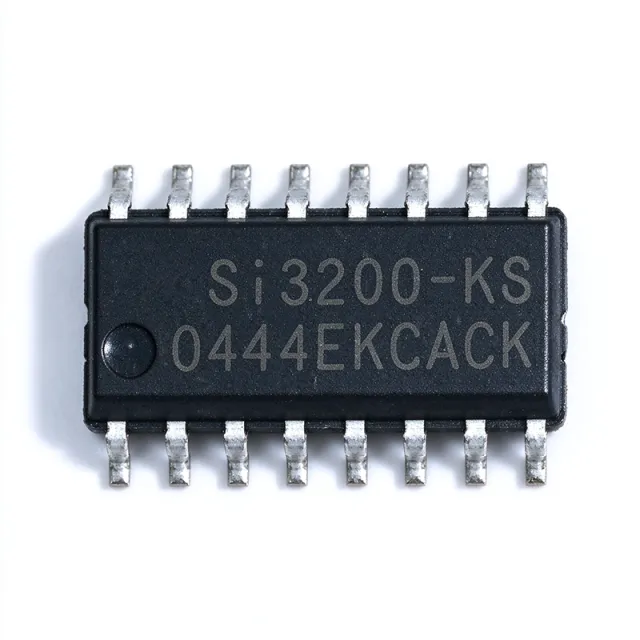
SI3200-KS - Dual Programmable CMOS SLIC | Skyworks
SI3200-KS

SI3200-KS - Dual Programmable CMOS SLIC | Skyworks

Skyworks Solutions Inc. SI3200-KS is a dual-channel Subscriber Line Interface Concept (SLIC) integrated circuit for customer-premise telephone equipment, combining a programmable CMOS line interface with line monitoring in a 16-pin SOIC package. Its key characteristics are dual-channel integration, standby power below 65 mW per channel, internal balanced ringing up to 65 Vrms, and software-programmable operating parameters. The SI3200-KS is intended for compact analog telephone and voice-over-data equipment that requires integrated line driving and supervision functions. A Subscriber Line Interface Concept, or SLIC, is an integrated line-interface circuit used in customer-premise equipment. It forms the analog signaling path between a telephone line and the equipment codec or voice-processing electronics. In the product hierarchy, a SLIC is a specialized telecom interface IC: it sits above general-purpose transceivers and codecs while providing the line-specific voltage, current, ringing, and supervision functions required by analog telephone networks. The SI3200-KS provides two SLIC channels in one package, reducing board area compared with separate single-channel implementations. Its software-programmable parameters allow an equipment designer to configure ringing frequency, line impedance behavior, and other interface characteristics through the control system. Internal balanced ringing to 65 Vrms supports telephone-line signaling without requiring a separate balanced-ringing circuit for every channel. The device emphasizes low standby power, with the manufacturer data describing consumption below 65 mW per channel. This characteristic is relevant in customer-premise equipment that may remain connected to a telephone line while the user is not actively making a call. Consolidation into one dual-channel IC can also reduce package count, although actual board savings still depend on the surrounding protection, isolation, codec, and magnetics arrangement. Typical uses include analog telephone adapters, voice gateways, customer-premise line cards, and other dual-channel voice terminals. A complete voice terminal still requires supporting components such as a speech codec, line protection, isolation components, and the appropriate external line circuitry. The SI3200-KS therefore occupies the line-interface portion of the design rather than replacing the codec or the entire telephone front end. When designing around the SI3200-KS, verify the complete external line interface against the manufacturer’s recommended schematic and component values. Pay particular attention to line-voltage and ringing limits, external protection, grounding, and the relationship between programmed line parameters and the codec interface. The verified source material does not provide a complete pin list, so board-level pin assignment must be checked against the manufacturer documentation rather than inferred from the distributor description. This product page consolidates verified distributor information, a source-backed technical description, practical application guidance, and a structured comparison of the available same-family references. It distinguishes confirmed facts from parameters that still require direct verification from the full manufacturer datasheet, helping engineers evaluate the obsolete SI3200-KS without relying on ambiguous cross-reference listings alone.

USD $1.15 متوفر