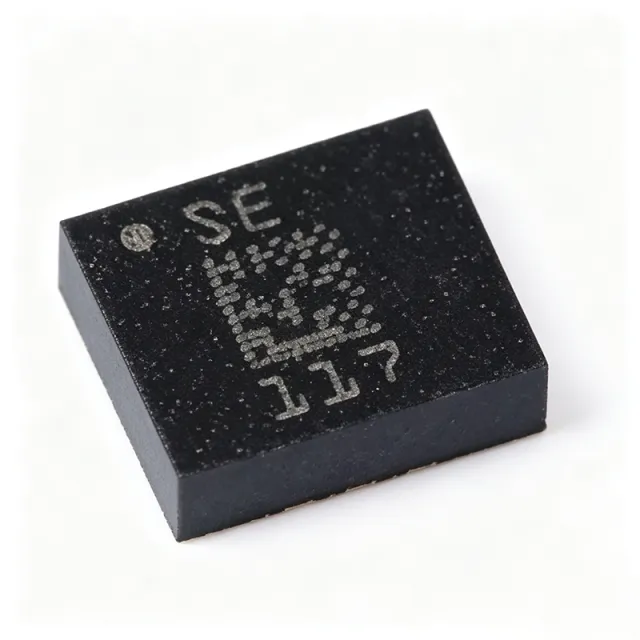
Quick Answers: What Is the LSM6DS3TR-C and Why Does It Matter?
The LSM6DS3TR-C is a high-performance 3D digital accelerometer and 3D digital gyroscope system-in-package (SiP) from STMicroelectronics, designed for consumer and industrial motion sensing. It features a full-scale acceleration range of ±2/±4/±8/±16 g and an angular rate range of ±125/±245/±500/±1000/±2000 dps, with 16-bit data output for both sensors. Operating from 1.71V to 3.6V, it communicates via I2C or SPI, and is available now with stock of 99,999 units at a base price of $0.875 (as of 2026-08-21). Its ultra-low power consumption of 0.9 mA in normal mode and compact LGA-14L package (2.5 x 3.0 x 0.83 mm) make it ideal for wearables, IoT, and industrial monitoring.
Technical Guide: How to Select, Design In, and Use the LSM6DS3TR-C
When designing with the LSM6DS3TR-C, start by verifying your power supply: the device operates from 1.71V to 3.6V, so you can connect directly to 1.8V or 3.3V logic without level shifting. Ensure proper decoupling with a 100 nF capacitor close to the VDD pin. The device supports both I2C (up to 400 kHz) and SPI (up to 10 MHz) interfaces; select the interface via the CS pin (SPI) or the SDO/SA0 pin (I2C address selection). For low-power always-on applications, configure the interrupt pins (INT1 and INT2) to wake the host MCU on motion events, using the embedded FIFO (8 KB) to batch data and reduce host load.
Key specifications to consider: the accelerometer full-scale range is ±2/±4/±8/±16 g, and the gyroscope range is ±125/±245/±500/±1000/±2000 dps. The output data rate (ODR) ranges from 1.6 Hz to 6.66 kHz for the accelerometer and 12.5 Hz to 6.66 kHz for the gyroscope. Sensitivity is 0.061 mg/LSB (at ±2g) for the accelerometer and 4.375 mdps/LSB (at ±125dps) for the gyroscope. Zero-g offset is ±20 mg, and zero-rate offset is ±10 dps. The operating temperature range is -40°C to +85°C.
For design-in, place the sensor away from high-frequency traces and vibration sources. Use the SPI interface for high-speed data streaming (up to 6.66 kHz ODR) in gaming or OIS applications. For battery-powered devices, use low-power mode (0.45 mA) and the hardware step detector to offload the host MCU. The device is RoHS compliant, ensuring environmental compliance.
Alternatives & Comparison: Drop-In Replacements for LSM6DS3TR-C
When evaluating drop-in alternatives, consider the LSM6DS3, LSM6DSO, and LSM6DSL, all of which share the same LGA-14L package and are pin-to-pin compatible. The LSM6DS3 is the closest match with minor spec differences. The LSM6DSO offers a larger FIFO (3 KB) and additional features but consumes more current (0.55 mA). The LSM6DSL provides lower power consumption with similar features. Use the comparison table below to make an informed choice.
| Parameter | LSM6DS3TR-C | LSM6DS3 | LSM6DSO | LSM6DSL |
|---|---|---|---|---|
| Accelerometer Full-Scale Range | ±2/±4/±8/±16 g | ±2/±4/±8/±16 g | ±2/±4/±8/±16 g | ±2/±4/±8/±16 g |
| Gyroscope Full-Scale Range | ±125/±245/±500/±1000/±2000 dps | ±125/±245/±500/±1000/±2000 dps | ±125/±245/±500/±1000/±2000 dps | ±125/±245/±500/±1000/±2000 dps |
| Output Data Rate (Accel) | 1.6 Hz to 6.66 kHz | 1.6 Hz to 6.66 kHz | 1.6 Hz to 6.66 kHz | 1.6 Hz to 6.66 kHz |
| Output Data Rate (Gyro) | 12.5 Hz to 6.66 kHz | 12.5 Hz to 6.66 kHz | 12.5 Hz to 6.66 kHz | 12.5 Hz to 6.66 kHz |
| Resolution | 16-bit | 16-bit | 16-bit | 16-bit |
| Supply Voltage | 1.71 V to 3.6 V | 1.71 V to 3.6 V | 1.71 V to 3.6 V | 1.71 V to 3.6 V |
| Current Consumption (Normal) | 0.9 mA | 0.9 mA | 0.55 mA | 0.4 mA |
| Current Consumption (Low Power) | 0.45 mA | 0.45 mA | 0.25 mA | 0.2 mA |
| FIFO Size | 8 KB | 8 KB | 3 KB | 4 KB |
| Communication Interface | I2C, SPI | I2C, SPI | I2C, SPI | I2C, SPI |
| Package | LGA-14L (2.5 x 3.0 x 0.83 mm) | LGA-14L (2.5 x 3.0 x 0.83 mm) | LGA-14L (2.5 x 3.0 x 0.83 mm) | LGA-14L (2.5 x 3.0 x 0.83 mm) |
| Operating Temperature Range | -40°C to +85°C | -40°C to +85°C | -40°C to +85°C | -40°C to +85°C |
| Sensitivity (Accel) | 0.061 mg/LSB (at ±2g) | 0.061 mg/LSB (at ±2g) | 0.061 mg/LSB (at ±2g) | 0.061 mg/LSB (at ±2g) |
| Sensitivity (Gyro) | 4.375 mdps/LSB (at ±125dps) | 4.375 mdps/LSB (at ±125dps) | 4.375 mdps/LSB (at ±125dps) | 4.375 mdps/LSB (at ±125dps) |
| Zero-g Offset | ±20 mg | ±20 mg | ±20 mg | ±20 mg |
| Zero-rate Offset | ±10 dps | ±10 dps | ±10 dps | ±10 dps |
| RoHS Status | Compliant | Compliant | Compliant | Compliant |
Summary: The LSM6DS3TR-C offers a balanced combination of low power, high FIFO, and proven reliability. The LSM6DS3 is the closest drop-in with identical specs. The LSM6DSO provides a larger FIFO but at higher power. The LSM6DSL offers lower power but a smaller FIFO. Choose based on your power and data buffering needs.
Industry Insight: Market Position, Lifecycle, and Supply Situation
The LSM6DS3TR-C is currently in an active lifecycle status, indicating ongoing production and support from STMicroelectronics. As of 2026-08-21, XAIPART holds 99,999 units in stock, with a base price of $0.875. This healthy stock level suggests strong availability in the distribution channel. The device is widely used in consumer and industrial applications, and its active status ensures long-term availability for design-in. [DATA_NEEDED: Market share data for LSM6DS3TR-C in the 6-axis IMU segment]
Trends & Outlook: What Buyers Should Watch
Buyers should monitor the trend toward lower power consumption and higher integration in motion sensors. The LSM6DS3TR-C's 0.9 mA normal mode and 0.45 mA low-power mode already position it well for battery-powered IoT and wearables. The 8 KB FIFO is a key differentiator for data batching, reducing host processor load. As AI and edge computing expand, demand for always-on sensing with hardware-accelerated features (like step detection) will grow. The LSM6DS3TR-C's 16-bit resolution and wide full-scale ranges (±2 to ±16 g, ±125 to ±2000 dps) ensure it can handle diverse applications from fine gesture detection to high-impact sports tracking. Watch for potential successors with even lower power and larger FIFOs, but the LSM6DS3TR-C remains a cost-effective choice for many designs.
Comments
Be the first to comment.
🔐 Please sign in to post a comment.
Don't have an account? Sign up