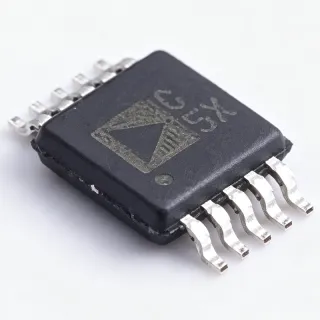
AD670KN - 8-Bit Signal Conditioning ADC | Analog Devices
MPN: AD670KN ✓ چالاکAD670KN گشتی
An ADC is a signal-conditioning ADC that converts an analog input voltage into a digital code for processing, measurement, logging, or control. The AD670 belongs to the broader ADC and data-converter hierarchy within integrated circuits. Unlike a bare flash or successive-approximation converter, the AD670 combines input amplification, reference generation, conversion, and digital output buffering on one monolithic device.
The AD670KN requires no external components or user calibration trims for normal operation, simplifying analog-system implementation. Its 8-bit resolution corresponds to 256 digital output codes, making it appropriate for position, level, process-control, and instrumentation measurements that do not require higher conversion resolution. The integrated voltage reference supports repeatable conversion behavior, while the tri-state output buffer provides controlled output-bus connection and disconnection.
Internally, the converter uses a successive-approximation register with comparator and DAC feedback to determine each digital result. The instrumentation-amplifier front end conditions the analog signal before conversion, reducing the number of external signal-conditioning stages required. This integrated architecture is particularly useful when the source has a limited voltage range and the application requires a complete converter rather than a bare ADC core.
Typical uses include industrial process measurement, laboratory instrumentation, sensor interfaces, data acquisition, embedded control, and legacy equipment requiring an 8-bit conversion function. Two analog channels support dual-input measurements or differential-style sampling when paired with the appropriate signal arrangement. The 10 µs conversion time permits updates in the low-kilohertz range, depending on acquisition timing and system overhead.
Designers should account for the analog input range, acquisition timing, reference behavior, output coding, and electrical characteristics stated in the manufacturer datasheet. Confirm pin assignments, input common-mode limits, and timing requirements before layout because the AD670KN uses a 20-pin ceramic DIP rather than a surface-mount package. The complete integration reduces external circuitry but leaves less routing flexibility than a modular converter.
جێگرەوەکانی جێگۆڕکێ بۆ AD670KN — هەمان پاکەت، پین بە پین گونجاو. ئەو بەشانەی پاکەتی جیاوازیان هەیە و پێویستیان بە چاککردنەوەی PCB هەیە لابراون.
جۆرەکان لەم زنجیرەیەدا
مۆدێلەکانی هەمان زنجیرە کە بە شێوەی ڕاستەوخۆ گونجاون لەگەڵ AD670KN (هەمان شێوە و پێکهاتەی شوێن) — جیاوازە لە Conversion Time, Operating Temperature, Package.
هیچ جێگرەوەی ڕاستەوخۆ بۆ ئەم بەرهەمە بەردەست نییە.
داوای جێگرەوەکان بکەAD670KN زۆرترین ڕێژە و تایبەتمەندییە کارەباییەکان
| Converter Type | Complete signal-conditioning successive-approximation ADC |
| وردی | 8 bit |
| Number of Analog Input Channels | 2 channels |
| ڤۆڵتیەی دابینکردن | 5 V |
| Conversion Time | 10 µs |
| Output Code Count | 256 codes |
| Front End | Integrated instrumentation amplifier |
| Internal Converter | Integrated DAC and comparator with SAR |
| Reference | Integrated precision voltage reference |
| Output Stage | Integrated tri-state output buffer |
| External Calibration Trims | 0 trims required |
| پاکێج | 20-pin ceramic DIP |
| پلەی گەرمیی کارکردن | -40 °C to +85 °C |
| شێوازی دامەزراندن | Through-hole |
ڕێنمایی ڕێکخستنی پینی AD670KN 20-pin ceramic dip
ڕێکخستنی پین بۆ AD670KN (پاکێجی 20-pin ceramic dip). ئەم پێکھاتە ئەنالۆگە پینی چوونەژوورەوە، دەرچوون و دابینکردنی وزەی ھەیە. سەرنج بدە بە داتاشیتی بەرھەمھێنەر بۆ ڕێکخستنەکانی پینی لادانی ئۆفسێت، قەرەبووکردنەوە و چالاککردن. گونجاوە بۆ ڕێکخستنی ئیشارەت و خولەکانی بەرزکەرەوە.

هیچ داتای وردی پینئاوت بەردەست نییە بۆ AD670KN.
سەرنج بدە بە داتاشیت بۆ ڕێکخستنی تەواوی پینەکان.
بەکارهێنانە باوەکان
AD670KN گونجاوە بۆ 6 بەکارھێنانs: Industrial Process Measurement, Laboratory Instrumentation, Sensor Signal Conditioning, Data Acquisition Systems, Legacy Equipment Maintenance, Embedded Control and Automation.
Industrial Process Measurement
The AD670KN fits industrial process-level measurement when an 8-bit result is sufficient for monitoring, threshold control, or status display. Its integrated instrumentation-amplifier front end, DAC, comparator, successive-approximation register, precision reference, and output buffer provide a complete conversion path on one 5 V monolithic device. The 10 µs conversion time supports rapid measurements relative to many slow process variables. Designers should verify the input range, source impedance, common-mode limits, and accuracy in the manufacturer datasheet, then condition transducer outputs so they remain within those limits.
پێشنیارکراو
Laboratory Instrumentation
The AD670KN is useful in legacy laboratory instruments that need a straightforward 8-bit digitizer without a collection of separate analog components. Its monolithic signal-conditioning architecture reduces the number of active stages around the conversion function, while the integrated reference supports repeatable operation from a 5 V supply. The device is particularly attractive for basic meter, panel, and educational instrumentation where the full input bandwidth of higher-resolution converters is unnecessary. Firmware must still handle output coding, acquisition timing, calibration limits, and the approximately 10 µs conversion interval.
پێشنیارکراو
Sensor Signal Conditioning
The AD670KN can serve as the acquisition element in a compact sensor interface when the required resolution is 8 bits and the sensor output fits the converter's analog input range. Its integrated instrumentation amplifier reduces the external amplification normally required for small sensor signals, while the internal DAC, comparator, SAR, reference, and output buffer provide a self-contained conversion channel. In a practical design, validate source-impedance limits, common-mode behavior, and settling requirements because those characteristics determine whether additional buffering or filtering is needed before conversion.
پێشنیارکراو
Data Acquisition Systems
The AD670KN provides a compact two-channel, 8-bit acquisition function for data loggers, automated test equipment, and embedded control systems with modest conversion requirements. Two analog inputs permit related measurements to be acquired within a compact instrument, and the 10 µs conversion time provides a defined basis for sequencing samples. The digital outputs and control pins should be interfaced according to the package pin table, while the analog section requires careful grounding and decoupling. This device is most appropriate when legacy-compatible data rates and code resolution are more important than conversion throughput.
پێشنیارکراو
Legacy Equipment Maintenance
The AD670KN is a strong candidate for repairing or extending legacy analog-digital instruments that were designed around the AD670 family and its 20-pin ceramic DIP implementation. The complete monolithic signal-conditioning architecture minimizes the number of external components that must be understood or replaced. Maintaining the original ordering code is preferable when socketed ceramic-DIP hardware, existing PCB artwork, and established calibration procedures must be preserved. Before fitting the device, verify the date code, temperature grade, package dimensions, and solderability, and confirm that the existing supply rails meet the specified 5 V operating conditions.
پێشنیارکراو
Embedded Control and Automation
The AD670KN can provide an embedded measurement channel for appliance controls, industrial controllers, and compact automation equipment where an 8-bit result is adequate for supervisory decisions. A microcontroller can issue conversion commands, read the tri-state digital output, and apply thresholding or filtering to the resulting code. The 10 µs conversion time allows sequential acquisition of the two analog inputs, although the complete acquisition cycle also depends on control overhead. Verify logic levels, timing relationships, and reference behavior so the embedded controller interprets every conversion code consistently across temperature and supply conditions.
پێشنیارکراو
کورتەی بەرهەمە پێشنیارکراوەکان
داتای سەرچاوەی ئەندازیاری بۆ AD670KN — بەراوردکردن، ڕێنمایی دیزاین و زانیاری پابەندبوون.
ڕێنمایی هەڵبژاردن
بەراوردکردن لەگەڵ جێگرەوەکان
| پارامەتر | ئەم بەرهەمە |
|---|---|
| Manufacturer | Analog Devices |
| Package | 20-pin ceramic DIP |
| Resolution | 8 bit |
| Analog Input Channels | 2 channels |
| Supply Voltage | 5 V |
| Conversion Time | 10 µs |
| Conversion Architecture | SAR with integrated DAC and comparator |
| Integrated Functions | Instrumentation amplifier, DAC, comparator, SAR, precision reference, tri-state output buffer |
| External Calibration Trims | None required |
| Operating Temperature | -40 °C to +85 °C |
جیاکەرەوە سەرەکییەکان
- Complete monolithic signal-conditioning converter (بەراورد بەAD670JNZ)
- No external calibration trims required (بەراورد بەAD670JNZ)
- Two-channel compact measurement interface (بەراورد بەAD670JNZ)
تێبینییەکانی دیزاین
Use the Analog Devices AD670 package drawing to verify ceramic-DIP socket clearance, row spacing, and pin orientation before committing a PCB layout. Treat analog input, reference, and digital output conductors as separate functional paths, with the shortest practical route from the converter pins to their associated network. Place bypass components at the device-side power and ground pins, and provide an uninterrupted ground return so switching and digital currents do not share the sensitive analog return path.
Check the manufacturer datasheet for input-bandwidth, source-impedance, settling-time, and common-mode limits before adding external filtering. A 10 µs nominal conversion time does not guarantee that every source and filter combination has settled by the sampling instant. Keep input-node capacitance controlled, place any anti-alias components close to the converter, and validate the complete acquisition path with the intended sensor or source rather than relying only on isolated converter timing.
Do not interpret family membership as proof that every AD670 suffix is interchangeable. The KN ordering code is associated with a 20-pin ceramic DIP implementation and a stated -40 °C to +85 °C grade. Confirm package construction, pin names, temperature grade, and electrical limits before ordering an alternative. A listing that describes a PDIP version may require a different socket or mechanical arrangement even when the electrical function is closely related.
Plan the 5 V supply path around the converter's specified operating conditions and bypass requirements. Keep regulator output impedance low at the conversion frequency, use a short return to the device ground, and avoid sharing narrow supply traces with motors, relays, or other high-current loads. Validate startup behavior and supply ripple at the actual board because input and reference accuracy ultimately affect the digital codes even though the converter itself requires no user calibration trim.
زانیاری پابەندبوون
The Analog Devices product page identifies AD670 family grade and package options, including 20-pin ceramic DIP versions. Specific RoHS, REACH, lead-free, halogen-free, and conflict-minerals declarations for AD670KN are not stated in the cited material.