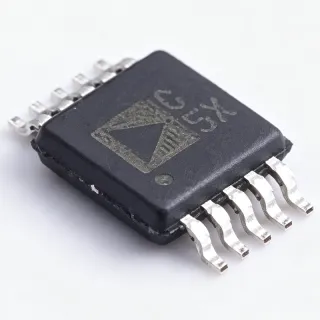
AD779JD - 14-Bit 128 kSPS Complete ADC | Analog Devices
MPN: AD779JD ✗ کۆتایی ژیانAD779JD گشتی
An ADC is a semiconductor that converts continuous analog voltage into a numerical digital value. The AD779 belongs to the sampling ADC category, where an internal sample-and-hold amplifier captures an input voltage before conversion. Within the broader hierarchy, it is a data-converter IC, interface IC, and signal-chain component that sits between analog sensors or conditioning circuits and a digital processor.
The principal features include 14-bit resolution and a maximum sampling rate of 128 kSPS. Because the converter, reference, clock, and interface are combined on one monolithic device, the design can minimize external-component requirements and simplify acquisition systems. Analog Devices describes AC and DC performance for the K, B, and T grades, covering signal-to-noise-plus-distortion ratio, total harmonic distortion, and intermodular distortion considerations.
The AD779 employs Analog Devices monolithic BiMOS technology, combining bipolar and MOS elements on one integrated circuit. This implementation supports long-term reliability compared with multichip or hybrid approaches. Versions compliant with MIL-STD-883 are available through the manufacturer’s military-product documentation, providing a route for applications requiring a qualified device variant.
Typical uses include industrial process measurement, instrumentation, laboratory data acquisition, sensor-interface systems, and embedded control platforms. Its complete integration is particularly useful when a board designer needs a reference, acquisition front end, clock source, and digital interface without assembling each function from separate components. The processor-compatible bus simplifies connection to suitable embedded control logic.
When laying out a circuit, place input and reference-related connections according to the pin-assignment and decoupling guidance in the manufacturer datasheet. Because this converter combines sensitive analog acquisition with digital signaling, keep analog traces away from noisy switching paths, provide a stable reference environment, and follow the recommended grounding arrangement. Confirm acquisition timing and overload limits against the selected AD779 grade.
This product page consolidates the manufacturer specifications, package information, same-family replacement options, comparison parameters, and practical selection guidance. It is intended to help engineers identify whether the AD779JD’s 14-bit resolution, 128 kSPS throughput, monolithic integration, and 28-pin ceramic DIP construction fit a new acquisition or signal-processing design.
جێگرەوەکانی جێگۆڕکێ بۆ AD779JD — هەمان پاکەت، پین بە پین گونجاو. ئەو بەشانەی پاکەتی جیاوازیان هەیە و پێویستیان بە چاککردنەوەی PCB هەیە لابراون.
جۆرەکان لەم زنجیرەیەدا
مۆدێلەکانی هەمان زنجیرە کە بە شێوەی ڕاستەوخۆ گونجاون لەگەڵ AD779JD (هەمان شێوە و پێکهاتەی شوێن) — جیاوازە لە Architecture, Integrated Functions, Package, Pin Count, Resolution.
AD779KN
✅ جێگرەوەی ڕاستەوخۆپەیوەندی بۆ نرخ
بینینی داتاشیت →AD779KNZ
✅ جێگرەوەی ڕاستەوخۆ📋 جێگرەوەی سەرچاوە (لە کاتالۆگدا نییە)
AD779JNZ
✅ جێگرەوەی ڕاستەوخۆ📋 جێگرەوەی سەرچاوە (لە کاتالۆگدا نییە)
AD779KD
✅ جێگرەوەی ڕاستەوخۆپەیوەندی بۆ نرخ
بینینی داتاشیت →AD779LDZ
✅ جێگرەوەی ڕاستەوخۆ ⚠️ تایبەتمەندییەکان پشتڕاست نەکراونەتەوە📋 جێگرەوەی سەرچاوە (لە کاتالۆگدا نییە)
AD779JD زۆرترین ڕێژە و تایبەتمەندییە کارەباییەکان
| وردی | 14 bits |
| ڕێژەی نموونەگرتن | 128 kSPS |
| Converter Architecture | Monolithic sampling ADC |
| Integrated Functions | Sample-and-hold amplifier, microprocessor-compatible bus interface, voltage reference, and clock generation |
| On-Chip Reference Voltage | 5 V |
| Input Signal Support | Bipolar and unipolar |
| Package Type | 28-pin ceramic DIP (CDIP) |
| ژمارەی پین | 28 pins |
| Process Technology | Monolithic BiMOS |
| Performance Characterization | AC and DC parameters characterized for K, B, and T grades |
| Key AC Parameters | Signal-to-noise-plus-distortion ratio, total harmonic distortion, and intermodular distortion |
| Military Version Availability | Versions compliant with MIL-STD-883 |
| Reliability Architecture | Single monolithic BiMOS implementation rather than a multichip or hybrid design |
| Digital Interface | Microprocessor-compatible bus interface |
ڕێنمایی ڕێکخستنی پینی AD779JD 28-pin ceramic dip (cdip)
ڕێکخستنی پین بۆ AD779JD (پاکێجی 28-pin ceramic dip (cdip)). ئەم پێکھاتە ئەنالۆگە پینی چوونەژوورەوە، دەرچوون و دابینکردنی وزەی ھەیە. سەرنج بدە بە داتاشیتی بەرھەمھێنەر بۆ ڕێکخستنەکانی پینی لادانی ئۆفسێت، قەرەبووکردنەوە و چالاککردن. گونجاوە بۆ ڕێکخستنی ئیشارەت و خولەکانی بەرزکەرەوە.

هیچ داتای وردی پینئاوت بەردەست نییە بۆ AD779JD.
سەرنج بدە بە داتاشیت بۆ ڕێکخستنی تەواوی پینەکان.
بەکارهێنانە باوەکان
AD779JD گونجاوە بۆ 6 بەکارھێنانs: Industrial Process Measurement, Laboratory Data Acquisition, Sensor Interface Systems, Embedded Control Platforms, Audio and Vibration Measurement, Legacy Measurement Equipment.
Industrial Process Measurement
The AD779JD fits industrial process-measurement channels that need direct digitization of low- to moderate-bandwidth analog sensor signals. Its 14-bit resolution provides 16,384 numerical codes, while the 128 kSPS sampling rate supports rapid acquisition of changing process variables. The integrated sample-and-hold amplifier, 5 V reference, clock circuitry, and microprocessor-compatible interface reduce the number of separate analog and timing components required around the converter. Design the analog front end to keep sensor excitation and return paths away from digital switching nodes, then validate input range, acquisition time, and grounding against the manufacturer datasheet before setting gain and filter values.
پێشنیارکراو
Laboratory Data Acquisition
The AD779JD is appropriate for laboratory instrumentation requiring a compact complete ADC rather than a collection of separate converter, reference, and clock components. Its 128 kSPS throughput supports rapid sampling of laboratory waveforms, while 14-bit resolution offers a practical balance between conversion detail and acquisition rate. The monolithic BiMOS implementation also reduces board area and component-count risk compared with a multichip acquisition arrangement. For a bench instrument, use a quiet reference layout, separate analog and return paths, and a digital interface timing budget that includes acquisition latency rather than treating the sampling rate as the only timing requirement.
پێشنیارکراو
Sensor Interface Systems
The AD779JD can serve as the central converter in a sensor-interface subsystem when the analog signal is already conditioned to the device’s supported input range. Its integrated sample-and-hold amplifier captures the conditioned voltage before conversion, and the on-chip 5 V reference provides the internal reference required by the converter architecture. The 14-bit result can feed a microcontroller, DSP, or other embedded controller through the processor-compatible bus. Designers should budget sufficient acquisition time for the source impedance, place input filtering close to the converter, and verify that sensor excitation and switching regulators do not introduce errors faster than the selected conversion timing permits.
پێشنیارکراو
Embedded Control Platforms
The AD779JD is suitable for an embedded controller that needs a dedicated high-speed sampling channel alongside general-purpose digital processing. The microprocessor-compatible bus provides a defined route for transferring converted data, and the complete monolithic implementation can simplify software and hardware integration compared with a discrete converter assembly. The 128 kSPS rate is useful when the control loop must observe a rapidly changing input, while 14-bit resolution limits quantization granularity. Firmware should account for acquisition, conversion, and data-transfer latency as a complete pipeline, and the hardware design should reserve adequate grounding and decoupling around all supply and reference connections.
پێشنیارکراو
Audio and Vibration Measurement
The AD779JD can support specialized audio, vibration, and waveform measurement systems that need more conversion resolution than a low-cost control ADC but do not require a high-resolution audio converter. Its 128 kSPS sampling rate captures changing waveforms, and the 14-bit output provides 16,384 possible digital codes for analysis by a processor. The manufacturer characterizes AC performance using signal-to-noise-plus-distortion ratio, total harmonic distortion, and intermodular distortion, making those parameters important when evaluating this legacy converter for signal-quality requirements. Verify the grade-specific limits in the AD779 datasheet and apply anti-alias filtering before the input reaches the sample-and-hold amplifier.
پێشنیارکراو
Legacy Measurement Equipment
The AD779JD is relevant to maintenance and replication work involving legacy measurement equipment that already uses its 28-pin ceramic DIP interface. The monolithic converter architecture integrates functions normally distributed across a sample-and-hold stage, converter, reference, clock, and digital interface, making it especially useful when restoring an established analog acquisition section. Before ordering, verify the exact package pinout, analog input range, reference behavior, and grade-specific timing because family suffix changes can affect qualification or environmental limits. Where continuity is critical, compare converter characteristics and recalibrate the acquisition chain after replacement rather than assuming bit-for-bit system equivalence.
پێشنیارکراو
کورتەی بەرهەمە پێشنیارکراوەکان
داتای سەرچاوەی ئەندازیاری بۆ AD779JD — بەراوردکردن، ڕێنمایی دیزاین و زانیاری پابەندبوون.
ڕێنمایی هەڵبژاردن
بەراوردکردن لەگەڵ جێگرەوەکان
| پارامەتر | ئەم بەرهەمە | AD779KN | AD779KNZ | AD779JNZ | AD779KD | AD779LDZ |
|---|---|---|---|---|---|---|
| Package | 28-pin ceramic DIP (CDIP) | 28-pin DIP | 28-pin DIP | 28-pin PDIP | 28-pin DIP | 28-pin ceramic DIP |
| Brand | Analog Devices | Analog Devices | Analog Devices | Analog Devices | Analog Devices | Analog Devices |
| Resolution | 14 bits | 14 bits | 14 bits | 14 bits | 14 bits | 14 bits |
| Sampling Rate | 128 kSPS | 128 kSPS | 128 kSPS | 128 kSPS | 128 kSPS | 128 kSPS |
| Converter Architecture | Complete monolithic sampling ADC | Complete monolithic sampling ADC | Complete monolithic sampling ADC | Complete monolithic sampling ADC | Complete monolithic sampling ADC | Complete monolithic sampling ADC |
| Integrated Reference | 5 V | 5 V | 5 V | 5 V | 5 V | 5 V |
| Interface | Microprocessor-compatible bus | Microprocessor-compatible bus | Microprocessor-compatible bus | Microprocessor-compatible bus | Microprocessor-compatible bus | Microprocessor-compatible bus |
| Grade and Qualification | J grade; MIL-STD-883-compliant versions available | K grade | K grade with Z package code | J grade with Z package code | K grade with D package code | L grade with Z package code |
جیاکەرەوە سەرەکییەکان
- Complete monolithic integration (بەراورد بەAD779KN)
- Specific ceramic-DIP ordering configuration (بەراورد بەAD779KNZ)
- Legacy 28-pin footprint continuity (بەراورد بەAD779JNZ)
تێبینییەکانی دیزاین
Place the analog input and reference-related components close to the AD779JD pins, and route sensitive analog traces away from digital bus lines and switching-regulator nodes. Use the manufacturer’s recommended decoupling arrangement and a single-point grounding strategy for the analog return. The exact pin assignments and component values should be taken from the AD779 datasheet rather than inferred from generic ADC layouts.
Calculate acquisition time against the actual source impedance and input-filter network because the sample-and-hold amplifier must charge to the required accuracy before conversion. Add an anti-alias filter appropriate to the 128 kSPS sampling rate and keep its switching capacitance low enough for the available acquisition interval. Validate settling with the complete sensor, amplifier, resistor, and capacitor network rather than an unloaded input.
Do not substitute an AD779 ordering code based only on its suffix. Check the exact 28-pin package construction, pin names, operating-temperature grade, qualification requirements, reference configuration, input range, and acquisition timing in the manufacturer datasheet. Legacy ceramic-DIP devices may also have traceability or condition constraints, so obtain those requirements with the purchase request.
زانیاری پابەندبوون
Analog Devices states that versions compliant with MIL-STD-883 are available. No explicit RoHS, REACH, lead-free, halogen-free, or conflict-minerals declaration was identified for the AD779JD ordering code.