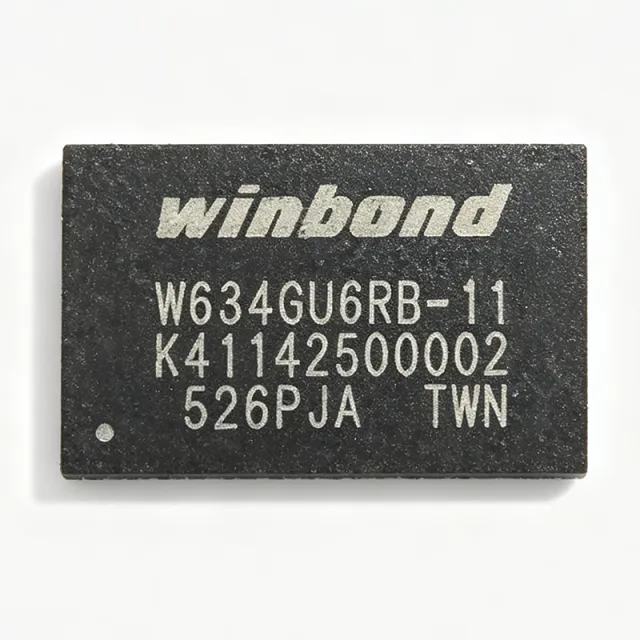
W77L516A25PL
W77L516A25PL - 25MHz 8-Bit 8051 MCU, 64KB Flash | Nuvoton
The Nuvoton Technology Corporation W77L516A25PL is an 8-bit 8051-compatible microcontroller operating at 25 MHz, with 64 KB of flash program memory, 1 KB of RAM, and 36 I/O lines in a 44-pin PLCC package. It combines the familiar 8052 instruction set with a redesigned processor core that executes instructions approximately 1.5 to 3 times faster than a traditional 8051 at the same clock frequency. The W77L516A25PL is designed for embedded-control applications requiring deterministic serial communication, timer resources, parallel I/O, and programmable flash storage.
An 8-bit microcontroller is a compact processor intended to control embedded systems rather than execute a desktop operating system. Within the semiconductor hierarchy, the W77L516A25PL belongs to the 8051-compatible microcontroller class and retains the standard 8052 peripheral model, including four 8-bit I/O ports, three 16-bit timer/counters, a full-duplex serial port, and interrupt resources. Its instruction-set compatibility allows legacy 8051-oriented code and development practices to be retained during product modernization.
The principal device characteristics include 64 KB of flash program memory, 1 KB of on-chip RAM, 36 I/O pins, and a 25 MHz operating frequency. Additional integrated resources identified for this device include a serial port, power-on reset, and a watchdog timer. The redesigned core removes wasted clock and memory cycles, so software timing can improve without changing the external clock speed. Flash memory also provides a more flexible program-storage medium than mask-programmed or one-time-programmable microcontroller implementations.
The 44-pin PLCC package provides a leaded, socket-compatible format suited to controllers, interface modules, industrial control boards, and legacy system upgrades. Its pin-compatible 8052 heritage simplifies board-level continuity when a design moves from a conventional 8051-class controller to this faster implementation. Designers should still validate the clock configuration, peripheral allocation, reset behavior, and memory map in the target system rather than assuming every legacy peripheral behaves identically.
Typical uses include industrial equipment interfaces, serial protocol bridges, data acquisition modules, appliance controllers, embedded instrumentation, and communication adapters. The combination of four parallel I/O ports, three timers, serial communications, and 36 I/O lines is especially useful for systems that must connect switches, sensors, displays, relays, and legacy peripherals while maintaining predictable control timing.
The principal design consideration is preserving compatibility at both software and board level. Confirm that the chosen oscillator and reset circuit meet the datasheet requirements, allocate every pin according to the manufacturer's pin description, and include adequate decoupling. Because this is a legacy-compatible 8-bit architecture, migration planning should also include confirmation of compiler support, bootloader behavior, peripheral register mapping, and any source-code changes required for the faster core.
This page combines the manufacturer's device data with practical selection guidance, application context, package information, and verified sourcing links. It is intended to help engineers determine whether the W77L516A25PL fits an existing embedded-control design and how to evaluate compatible W77-family options without overlooking memory, timing, package, or toolchain requirements.
Angebot
Kontakt