XC7A200T-2SB484I
XC7A200T-2SB484I - 215K Artix-7 FPGA | AMD | Industrial
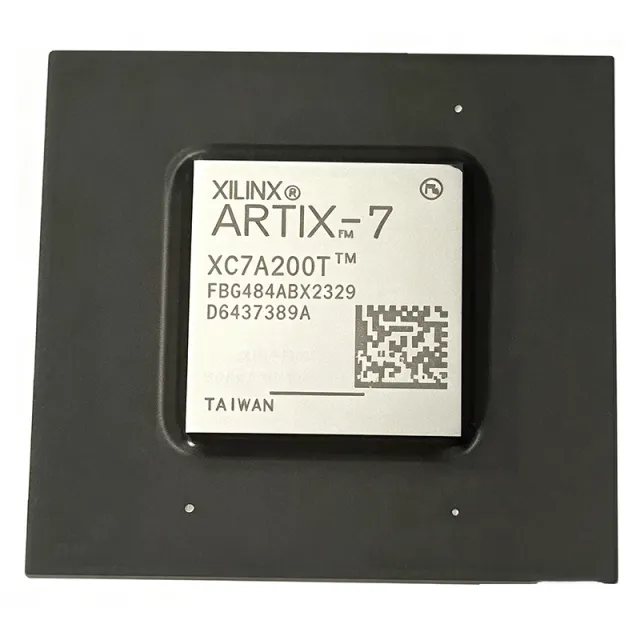
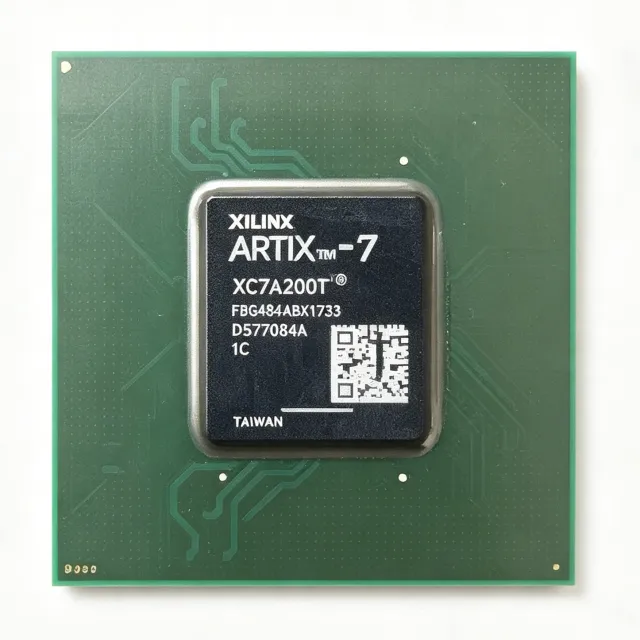
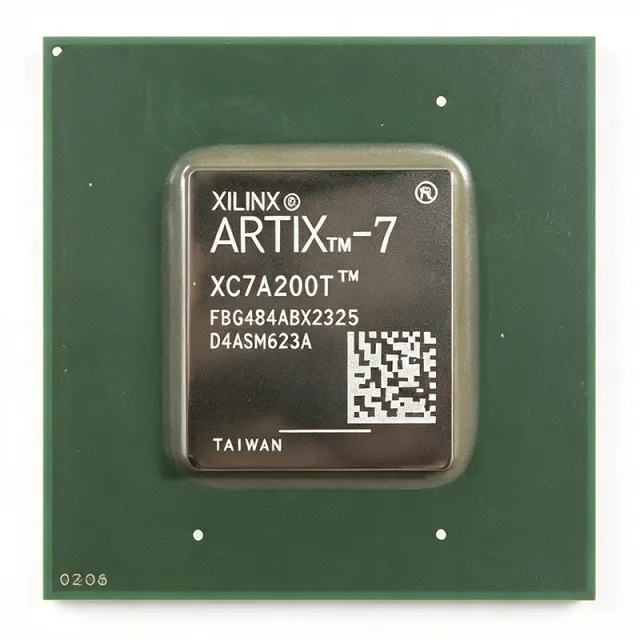
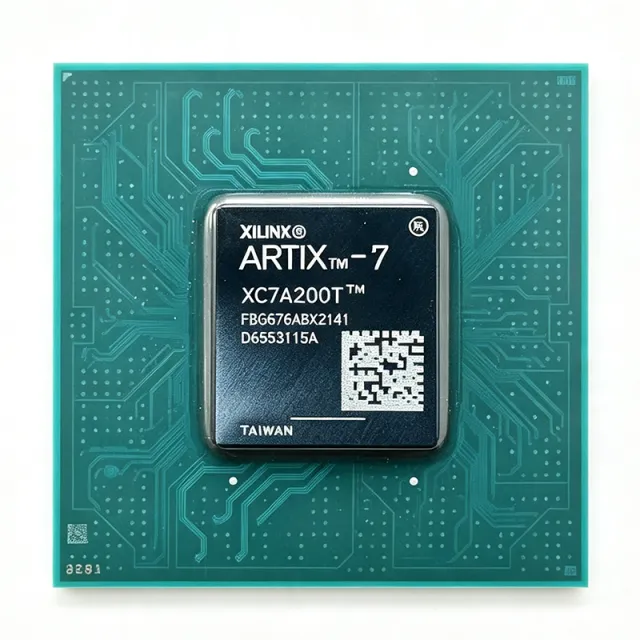
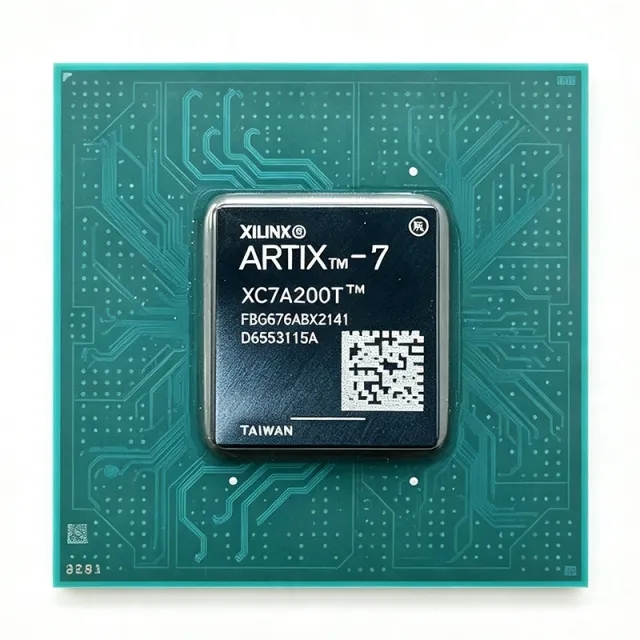
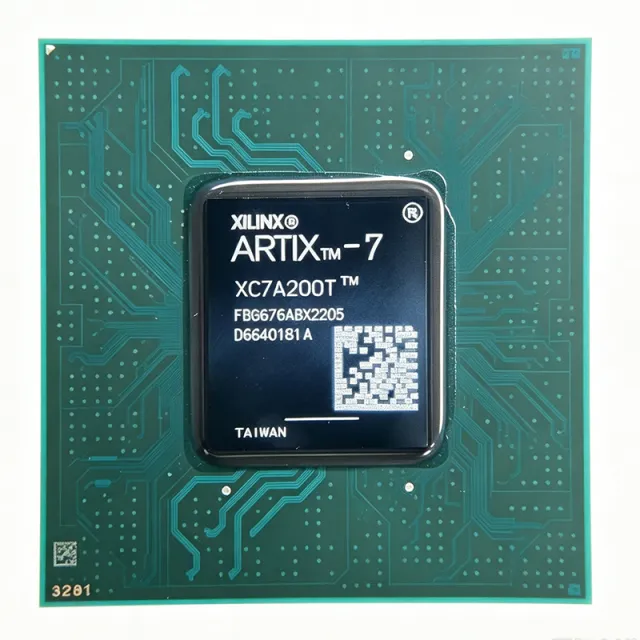
The AMD XC7A200T-2SB484I is an Artix-7 field-programmable gate array with 215,360 logic cells, 285 I/Os, and 13,455,360 RAM bits in a 484-ball FCBGA package. It combines programmable logic, fixed-point DSP resources, block RAM, high-speed serial transceivers, and general-purpose I/O in a single device. The -2 speed grade targets mid-range performance, while the industrial I temperature designation supports extended-temperature operation.
An FPGA is a semiconductor whose digital logic, interconnects, memory, and I/O behavior are configured after manufacture. The Artix-7 family occupies the hierarchy between lower-capacity programmable-logic devices and larger Zynq-class adaptive SoCs. It is intended for designs requiring substantially more parallel processing and storage than a microcontroller while avoiding the cost and complexity of a larger FPGA platform. Configuration logic determines how the internal resources implement a completed digital design.
The XC7A200T provides 215,360 logic cells and 13,455,360 RAM bits, making it suitable for parallel image processing, industrial control, communications, instrumentation, and embedded signal-processing systems. The device exposes 285 general-purpose I/O and includes four high-speed serial transceiver channels in the associated 484-ball family information. Its 28 nm process technology supports a balance of performance, capacity, and power efficiency. Exact clock, transceiver, and I/O performance limits must be selected from the appropriate speed-grade and temperature tables in the manufacturer datasheet.
The SB484 package is a 19 x 19 mm, 0.80 mm-pitch FBGA with 484 bottom-side terminals. Package construction, power delivery, and exposed thermal behavior are critical in an FPGA design because dynamic power depends on configuration, clock activity, I/O toggling, and resource utilization. Decoupling, controlled rise time, and heat removal should be planned with the same care as high-speed signal routing. The -2 speed grade should not be assumed to satisfy -1, -2L, or -3 timing requirements in an existing design.
Typical applications include industrial machine vision, high-speed data acquisition, serial-interface aggregation, programmable logic controllers, test equipment, and embedded control systems. A 215K-cell device can consolidate parallel pipelines and interface logic that would otherwise require several discrete devices. Its block RAM supports packet buffering and data-plane storage, while DSP slices accelerate fixed-point filtering, correlation, and waveform-processing tasks. The available serial transceivers can reduce the need for external line drivers in suitable links.
The primary design tradeoff is package migration. XC7A200T ordering codes containing a different package suffix can represent the same base FPGA but not necessarily the same footprint, height, ball map, or power architecture. For a drop-in decision, compare the exact package drawing, pinout file, voltage rails, decoupling requirements, configuration interface, and thermal design rather than relying only on the 484-ball ball count.
This product record combines the verified manufacturer-family characteristics, package information, searchable ordering-code references, and design-oriented selection guidance. It also distinguishes true same-footprint options from superficially similar Artix-7 devices, helping engineers evaluate capacity, speed grade, temperature grade, package construction, and board-level compatibility before committing to a replacement or second-source strategy.
RFQ
संपर्क