製品 (39,000+)

LM339DBRE4 - Quad Comparator, 14-SSOP | Texas Instruments
LM339DBRE4

LM339DBRE4 - Quad Comparator, 14-SSOP | Texas Instruments

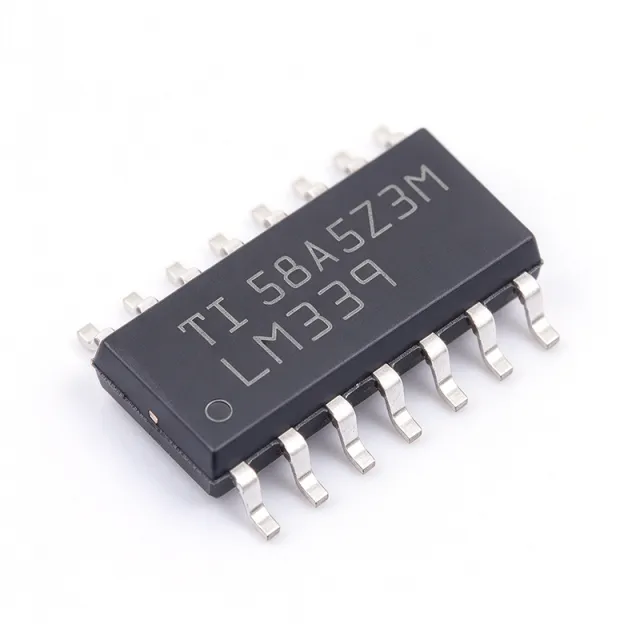
Texas Instruments LM339DBRE4 is a four-channel differential voltage comparator in a 14-pin SSOP package. The device supports single-supply or dual-supply operation, has a tested maximum supply voltage of 30 V, and provides a differential input-voltage range equal to the maximum-rated supply voltage, reaching ±38 V. Each comparator has an open-collector output suitable for driving TTL, MOS, and CMOS-compatible loads. A voltage comparator is an analog semiconductor that compares two input voltages and changes its output state when the non-inverting input becomes higher than the inverting input. The LM339 belongs to the broader comparator hierarchy, combining four independent channels in one integrated circuit. This integration reduces component count and simplifies designs requiring multiple threshold, sorting, or signal-level decisions. The principal features of the LM339DBRE4 include four independent comparator channels, an open-collector output architecture, and supply-current drain that is largely independent of supply voltage. The device operates from single or split supplies, with the total supply span specified from 2 V to 36 V. Its input stage supports low input-bias current, while the output stage is designed for compatibility with TTL, MOS, and CMOS logic. Because the outputs are open collector, each channel requires an external pull-up resistor when a logic-high output is required. This arrangement permits the output transistor to remain off during the high state, reducing quiescent demand and allowing bus-oriented implementation. The outputs can also be wired together for wired-AND behavior where appropriate. The differential input range is unusually wide for a comparator, which makes the device useful where signal inputs can exceed the supply-referenced logic thresholds. Typical uses include industrial control and monitoring, sensor-interface thresholds, overvoltage and undervoltage detection, panel and system interlocks, and general-purpose analog decision circuits. Four channels allow one device to supervise several independent conditions. Open-collector outputs are especially useful when a monitored line must pull down a shared alarm or interlock node until every external pull-up has returned to its inactive state. When designing the PCB, place the pull-up resistors close to the relevant output pins and keep comparator input traces away from switching nodes and output-return currents. The wide common-mode and differential ranges support robust industrial systems, but input protection and supply-decoupling practices remain essential when external wiring can introduce transients. Consult the manufacturer datasheet for the complete electrical limits and application guidance. This product page combines package, electrical, application, and substitution guidance for engineers evaluating the LM339DBRE4. It highlights the four-channel open-collector architecture, verified operating attributes, pinout considerations, and same-footprint alternatives that can be screened against temperature range and qualification requirements before design release.

見積もり お問い合わせ
LM339DE4 - 4-Channel Open-Collector Comparator | Texas Instruments
LM339DE4

LM339DE4 - 4-Channel Open-Collector Comparator | Texas Instruments

The Texas Instruments LM339DE4 is a quad differential comparator containing four independent voltage comparators, with a maximum rated supply voltage of 38 V and an open-collector output configuration in a 14-pin SOIC package. Each channel can compare two differential input voltages, making the device suitable for threshold detection, level translation, sensing, and basic control systems. A comparator is an analog integrated circuit that determines whether one input voltage is above or below another input voltage. The LM339 belongs to the comparator IC category within the broader hierarchy of analog integrated circuits and semiconductors. Its four channels share power and ground connections but operate independently, allowing one package to perform four comparison functions without requiring four separate single-channel devices. Key features include a 38 V maximum rating, low input offset voltage of 0.37 mV, low input bias current of 3.5 nA, and supply-current consumption of 200 uA per comparator. The open-collector outputs can sink current from external pull-up circuitry, which allows a system designer to select the output logic voltage independently and also supports wired-AND behavior when multiple comparator outputs are connected together. The LM339 family supports single-supply or dual-supply operation. Its common-mode input range includes ground, while the differential input range can extend to plus or minus 38 V according to the manufacturer product information. Outputs are compatible with TTL, MOS, and CMOS logic. These characteristics make the device useful where a low-voltage control system must monitor signals operating at higher voltage levels. Typical applications include industrial sensor interfaces, battery monitoring, overvoltage and undervoltage detection, motor-control feedback, window comparators, and digital threshold translation. The four-channel organization is especially useful when a board needs several independent protection or level decisions. Each open-collector output requires an appropriate pull-up resistor unless it drives a compatible external load or relay stage. PCB design should keep comparator inputs away from high-current switching paths and provide a low-impedance ground reference. Place bypass capacitance close to the supply and ground pins, use short analog traces, and avoid connecting long external wires directly to the input pins without suitable filtering. Input protection may be needed when transients or ESD events exceed the application's normal operating conditions. This page organizes the LM339DE4 electrical characteristics, pinout, sourcing guidance, application examples, and qualified same-footprint alternatives into a compact engineering reference. It also identifies the practical differences that must be checked before replacing a comparator in an existing design, particularly supply limits, input common-mode range, output pull-up requirements, and temperature grade.

見積もり お問い合わせ
LM339DG - Quad Open-Collector Comparator | onsemi
LM339DG

LM339DG - Quad Open-Collector Comparator | onsemi

onsemi LM339DG is a four-channel general-purpose analog comparator designed for single-supply operation from 3 V to 36 V. The device provides four independent comparison channels in a 14-pin SOIC package and uses open-collector outputs compatible with CMOS, TTL, MOS, and wired-open-collector systems. Typical input bias current is 25 nA, while typical input offset current is 5 nA. A quad comparator is an integrated circuit containing four comparison channels on one package. Each channel compares a non-inverting input with an inverting input and produces a logic-level indication of their relationship. Comparators occupy the analog comparator category within interface and signal-conditioning semiconductors. Unlike a precision operational amplifier, a comparator is optimized for fast output transitions and level detection rather than accurate closed-loop amplification. The LM339DG supports the voltage range required by industrial, automotive, and consumer systems. Its low supply-current drain is specified as 0.8 mA typical, and its low input bias current helps reduce errors in high-impedance sensing circuits. The open-collector output architecture permits wired-OR connections, external pull-up resistor selection, and level translation to the logic voltage used by the surrounding system. Outputs require a pull-up resistor because the output transistors do source current. The manufacturer positions the LM339 family for level detection, low-level sensing, memory applications, consumer equipment, automotive electronics, and industrial electronics. Four channels in one 14-pin SOIC can reduce board area when a system compares multiple thresholds, monitors several sensor lines, or implements window detection. Independent inputs allow each channel to establish a separate reference or limit. Circuit design must account for open-collector outputs, input common-mode limits, output pull-up requirements, and unused input states. Pull-ups should use the receiving logic's supply voltage when level translation is required, while their resistance should balance rise time, power consumption, and output-current capability. Unused comparator inputs must be tied to defined reference potentials rather than left floating. The LM339DG is appropriate when one package must provide multiple inexpensive threshold decisions across a wide supply range. It is less suitable when a push-pull output is required without external pull-ups, when input signals exceed the common-mode range, or when the application requires the low offset and noise performance of a dedicated precision comparator. This page combines device specifications, package guidance, replacement analysis, and practical design considerations for faster engineering selection.

見積もり お問い合わせ
LM339DG4 - 4-Channel Open-Collector Comparator | TI
LM339DG4

LM339DG4 - 4-Channel Open-Collector Comparator | TI

The Texas Instruments LM339DG4 is a four-channel differential analog comparator with open-collector outputs, a 2 V to 36 V supply range, and a 14-pin SOIC package. Each channel compares two input voltages, making the device suitable for threshold detection, level sensing, and industrial control logic. Its low 0.37 mV input offset, 3.5 nA input bias current, 300 ns response time, and 200 uA supply current per comparator provide a practical balance of accuracy, speed, and low power consumption. An analog comparator is an integrated circuit that evaluates a differential input and changes its output when the measured relationship crosses a defined threshold. The LM339 belongs to the comparator hierarchy, alongside general-purpose differential comparators and the broader semiconductor category. Four independent channels in one package reduce board area, while the open-collector architecture allows each output to be pulled up to a local supply voltage and used for wired logic, alarm signaling, or transistor-driver interfaces. The LM339 family supports single-supply or split-supply operation, and its input common-mode range extends close to ground. The low offset voltage helps establish a stable switching threshold, while low input bias current limits disturbance in high-impedance sensing circuits. Its open-collector outputs require an external pull-up resistor and can sink current rather than source a full logic-high voltage. This behavior is useful when driving relays, lamps, or NPN transistors through an appropriate interface stage. The LM339DG4 is a 14-pin SOIC device intended for the 0 °C to 70 °C commercial temperature range. Its four channels share power pins but retain separate input and output connections. The manufacturer identifies a maximum rating of up to 38 V, an ESD rating of 2 kV HBM, and the B-version family improvements include lower offset, lower supply current, faster response, and improved input ruggedness. These characteristics make the device suitable for general-purpose signal conditioning rather than precision instrumentation. Typical applications include industrial sensor thresholds, overvoltage and undervoltage detection, temperature-control logic, battery monitoring, window or level comparators, and discrete transistor control. Because the outputs are open collector, the same package can support different logic families by selecting the pull-up voltage appropriately. The device is also useful in educational and prototype circuits where four comparison channels are needed without using four separate packages. Design the pull-up resistor around the output-sink current, required rise time, and available supply voltage. Keep the comparator inputs away from switching nodes and use a stable reference near the threshold when input offset matters. Verify absolute maximum supply voltage, input common-mode limits, output-current limits, and thermal conditions before applying the part in a new design. This page combines the device specifications, application guidance, pin assignment, qualification limits, and technically constrained replacement options for engineers evaluating the LM339DG4. It also identifies where a true same-package drop-in substitution should be reviewed rather than treating every similarly named LM339 variant as electrically identical.

見積もり お問い合わせ
LM339DR - Quad Differential Comparator, Open-Collector | TI
LM339DR

LM339DR - Quad Differential Comparator, Open-Collector | TI

The Texas Instruments LM339DR is a quad differential comparator that integrates four independent precision voltage comparators into a single 14-pin SOIC package. The device operates from a single power supply over a wide voltage range and is well-suited for use in voltage-level detection, threshold detection, and analog signal conditioning circuits. The LM339DR outputs are open-collector and require a pull-up resistor to a supply ranging from 5V to 36V (or higher), enabling level-shifting between incompatible logic domains. What is an analog comparator? An analog comparator is an active circuit element that compares two input voltages and produces a binary output based on which is larger. Comparators sit alongside op-amps and ADCs in the signal-chain hierarchy: op-amp (linear amplification) -> comparator (1-bit decision) -> Schmitt trigger (hysteresis-based decision). The LM339 family sits in the general-purpose comparator category, optimized for cost and versatility rather than speed or precision. Key features of the LM339DR include a typical input offset voltage of 2 mV, a wide common-mode input voltage range that includes ground, a differential input voltage range equal to the maximum-rated supply voltage, and an operating supply range of 2V to 36V. The device draws a low supply current of approximately 1 mA (200 uA per comparator in the newer LM339B), and outputs are compatible with TTL, MOS, and CMOS logic families. Operating temperature range spans 0C to +70C in the standard commercial grade, with automotive-grade LM2901 variants covering -40C to +125C. The LM339DR architecture uses a bipolar transistor design with Darlington NPN output stages driving open-collector transistors. This architecture provides high input impedance and stable switching thresholds, though response time is in the microsecond range rather than the nanosecond range of high-speed comparators. The device is internally compensated and requires no external frequency-compensation components. Typical applications include overvoltage/undervoltage protection circuits, zero-crossing detectors, oscillator circuits, window comparators, and sensor-signal level translation. Industrial uses include battery chargers, switch-mode power supply feedback loops, and motor-control interface circuits. Designers should note that open-collector outputs require external pull-up resistors and that output transition time is dominated by the RC time constant of the pull-up resistor and load capacitance. For high-speed applications, choose a comparator with push-pull outputs such as the TL331 family. This page synthesizes distributor pricing, drop-in alternatives, and practical design notes not found in the standalone TI datasheet, providing engineers a single-point comparison resource.

USD $0.07 在庫あり
LM339DR2 - 3-36 V Quad Comparator | onsemi
LM339DR2

LM339DR2 - 3-36 V Quad Comparator | onsemi

The onsemi LM339DR2 is a four-channel differential comparator for single or split-supply operation, with a 3 V to 36 V single-supply range and a 14-pin SOIC package. The device provides open-collector outputs, low input bias current of 25 nA typical, low input offset current of ±5 nA typical, and low input offset voltage of ±1 mV typical. These characteristics make it suitable for level detection, low-level sensing, memory, industrial, automotive, and consumer applications. A quad comparator is an analog integrated circuit that compares two input voltages and produces a digital logic state indicating which input is higher. The LM339 belongs to the broader comparator hierarchy, which includes differential comparators, analog interface ICs, and semiconductor signal-conditioning devices. Its four independent channels can implement window detection, threshold sensing, relay or solenoid control, and digital interface conditioning within one package. Key electrical features include single or split-supply operation, a typical input bias current of 25 nA, typical input offset current of ±5 nA, and typical input offset voltage of ±1 mV. The open-collector outputs can sink output current while supporting TTL-compatible and CMOS-compatible interfacing. A typical low output saturation voltage is 130 mV at 4 mA, providing a defined logic-low level when the output transistor is conducting. The four comparator sections are electrically independent, allowing each channel to evaluate a separate signal or pair of thresholds. Input ESD clamps improve reliability without changing normal operation. The open-collector architecture requires an external pull-up resistor when the output is used as a logic signal, while the comparator can also directly participate in systems that provide their own pull-up or drive another open-collector node. Typical applications include industrial control systems, automotive sensing circuits, consumer threshold detection, memory address or data qualification, overvoltage and undervoltage monitoring, and interface logic between analog sensors and digital controllers. The low input bias current is particularly useful when the source impedance is high and leakage-induced errors must remain small. Designers should verify common-mode input limits at the selected supply voltages and provide adequate input and output pull-up arrangements for the open-collector nodes. Because output behavior depends on external pull-up strength and load current, check the resulting rise time and logic-level compatibility across the full operating range. This product page consolidates the LM339DR2 electrical characteristics, package details, verified drop-in candidates, and practical design guidance into an engineering-focused reference. It also distinguishes confirmed family-level options from variants that require final qualification against temperature grade, production status, and application-specific limits before release to manufacturing.

見積もり お問い合わせ
LM339DR2G - 4-Channel 3-36V Comparator | onsemi
LM339DR2G

LM339DR2G - 4-Channel 3-36V Comparator | onsemi

onsemi LM339DR2G is a four-channel general-purpose comparator designed for single-supply operation from 3 V to 36 V, with a response time of 1.3 us in a 14-pin SOIC package. The device provides CMOS, TTL, and open-collector-compatible outputs for level detection, low-level sensing, memory, industrial-control, and automotive applications. A comparator is an analog signal-conditioning semiconductor that compares two input voltages and produces a logic-level output indicating their relationship. The LM339 family combines four independent channels in one package, placing the comparator function within the broader hierarchy of analog integrated circuits, interface ICs, and signal-processing semiconductors. Key features include four independent comparators, 3 V to 36 V single-supply operation, 1.3 us response time, 25 nA typical input bias current, and ±5 nA typical input offset current. Its open-collector outputs support wired logic and pull-up-resistor applications, while the specified CMOS and TTL compatibility allows connection to a broad range of digital control systems. The LM339 architecture is suited to threshold monitoring rather than precision signal amplification. Each channel compares its non-inverting and inverting inputs, allowing the output state to change when the differential input crosses the switching threshold. Low input bias current reduces disturbance of high-impedance sensing networks, while the wide supply range accommodates both low-voltage logic and higher-voltage industrial systems. Typical uses include sensor threshold detection, battery and power-supply monitoring, overvoltage and undervoltage protection, window comparison in control systems, logic-level translation, and memory or interface testing. The comparator can also serve as a simple relay-driver front end when its open-collector output is paired with an appropriate pull-up and external transistor stage. PCB design should keep comparator inputs and feedback components away from switching-current paths and high-impedance nodes. Place bypass capacitors close to the supply pins, use a stable pull-up resistor on every open-collector output, and check input common-mode limits at the minimum and maximum supply voltages before finalizing the layout. This page consolidates the LM339DR2G operating limits, pin assignment, drop-in comparisons, application guidance, and practical layout considerations to support faster component selection, sourcing, and circuit implementation.

見積もり お問い合わせ
LM339DR2GH - Quad Comparator, 3-36V | onsemi
LM339DR2GH

LM339DR2GH - Quad Comparator, 3-36V | onsemi

onsemi LM339DR2GH is a single-supply quad differential comparator containing four independent comparison channels in a 14-SOIC package. The device operates from 3V to 36V, provides a response time of 1.3 microseconds, and uses open-collector outputs compatible with TTL and CMOS systems. Its four-channel architecture allows one package to supervise four analog signals, reducing component count and board area in threshold detection, protection, and sequencing circuits. A comparator is an analog integrated circuit that compares two input voltages and changes its output state according to their relative relationship. The LM339 belongs to the hierarchy comparator > analog comparator > analog IC > semiconductor. Unlike an operational amplifier configured for closed-loop amplification, a comparator is intended for open-loop decision-making and is typically used where a digital output represents whether one voltage is above or below another threshold. The LM339DR2GH provides four open-collector outputs, allowing each output to be pulled up to a compatible supply voltage through an external resistor. Open-collector outputs are useful when several devices must share a wired bus, but every pulled-up node requires suitable pull-up circuitry. The stated TTL and CMOS output compatibility supports interfacing with both bipolar and field-effect logic families. The 1.3-microsecond response time provides a defined delay for switching decisions without implying zero transition time. The 3V to 36V supply range supports single-supply systems operating across low-voltage logic and higher industrial voltage rails. Split-supply operation is also possible when the circuit requires signals around ground. Because a comparator can tolerate input voltages extending beyond its supply rails within specified limits, designers must still verify the maximum differential input voltage and common-mode input range in the manufacturer datasheet before applying unusual rail or input conditions. Typical uses include battery threshold detection, overvoltage and undervoltage protection, window comparison, sensor conditioning, relay or solenoid drive, oscillator timing, and general analog signal conditioning. The four independent channels are especially useful when a system must compare several rails or thresholds. Each channel should have its own defined input and output arrangement, with unused channels configured according to the manufacturer's guidance rather than left as floating inputs. Design attention should focus on output pull-up voltage and current, input common-mode limits, differential input voltage, output saturation behavior, and the logic levels connected to the open-collector nodes. Keep sensitive input traces away from switching nodes and place pull-up resistors close to the corresponding output pins. The package is a 14-pin SOIC, so check the pin-description table and footprint before assigning PCB nets. This product page organizes the identified LM339DR2GH specifications, same-package alternatives, application guidance, and design considerations into a concise engineering reference. It also separates functional requirements from procurement details so a designer can confirm pin compatibility, operating limits, and implementation constraints before releasing a schematic or layout.

見積もり お問い合わせ
LM339DRE4 - Quad Open-Collector Comparator | Texas Instruments
LM339DRE4

LM339DRE4 - Quad Open-Collector Comparator | Texas Instruments

Texas Instruments LM339DRE4 is a quad differential analog comparator with four open-collector outputs, a 2 V to 36 V supply range, and a low input offset voltage of 0.37 mV. Each comparator can operate from a single supply or from dual supplies, making the device suitable for threshold detection, level sensing, and industrial control systems. The component is packaged in a 14-pin SOIC surface-mount package. An analog comparator is an integrated circuit that compares two voltage signals and produces a logic-level indication of their relative relationship. Within the broader semiconductor hierarchy, the LM339 belongs to the comparator IC and linear analog IC families. Its four independent channels reduce component count when a system requires multiple sensing, window-detection, or control decisions. Important electrical characteristics include low input bias current of 3.5 nA, low supply current of 200 µA per comparator, a fast response time, and an open-collector output architecture. The open-collector outputs permit wired-AND operation and require an external pull-up resistor. This architecture also gives the designer control over output rise time and logic voltage compatibility. The LM339 supports single-supply operation from 2 V to 36 V. Under dual-supply conditions, the common-mode input range depends on the supply arrangement. The manufacturer datasheet states that neither input should normally be driven more than 0.3 V below the negative supply, while the upper common-mode limit is typically VCC minus 1.5 V. Proper input-range design is therefore essential in battery-powered and mixed-polarity systems. Typical applications include industrial sensor interfaces, battery monitoring, window comparators, overvoltage detection, motor-control logic, and general digital threshold conversion. The quad-channel format is particularly useful when four independent measurements or control points must be handled in one package. Its low input bias current also reduces errors when connected to high-impedance sensing networks. Designers should pull each output up to a suitable supply through an external resistor and account for the open collector's off-state leakage when analyzing bus behavior. PCB placement should keep sensitive input traces away from switching nodes and the pull-up network. Input filtering should use resistors and capacitors selected for the required response time rather than excessively slowing the comparator. This product page combines manufacturer specifications, application guidance, pin-level information, and practical design notes to support component selection and PCB implementation. It also provides structured comparison data for evaluating pin-compatible LM339-family and related comparator options.

見積もり お問い合わせ
LM339DRG3 - 4-Channel Comparator | Texas Instruments
LM339DRG3

LM339DRG3 - 4-Channel Comparator | Texas Instruments

The Texas Instruments LM339DRG3 is a four-channel differential comparator with open-collector outputs, a 2 V to 36 V single-supply operating range, and a 14-SOIC package. Each of its four independent comparators can operate from single or dual supplies, making the device suitable for threshold detection, industrial signal conditioning, and basic control systems. A comparator is an analog integrated circuit that compares two input voltages and changes its output when the non-inverting input rises above the inverting input. The LM339 family belongs to the hierarchy of comparator ICs, analog signal-processing ICs, and general-purpose semiconductors. Its four open-collector outputs can pull down external loads and interface with TTL, MOS, and CMOS logic when suitable pull-up circuitry is used. The LM339DRG3 provides four independent comparator channels in one 14-pin SOIC package. Its single-supply range extends to 36 V, while operation from dual supplies is also possible. The common-mode input range includes ground, an important feature for monitoring signals referenced to the same ground as the comparator. Open-collector outputs add design flexibility but require an external pull-up resistor when a logic-high output is required. The device is designed for general-purpose applications where the input signals remain within the comparator's supported common-mode and differential voltage limits. The 14-SOIC package provides a practical transition from through-hole designs to surface-mount assemblies while retaining the familiar LM339 channel arrangement. Each comparator is electrically independent, allowing one package to implement four separate decisions or thresholds. Typical uses include industrial sensor-interface circuits, overvoltage and undervoltage detection, temperature-control thresholds, relay or solenoid drive logic, window comparators, and low-frequency control loops. The open-collector stage is especially useful when driving a transistor, indicator, relay interface, or pull-up-connected logic family rather than driving a high-current load directly. When laying out a design, verify that every differential input pair remains within its allowed voltage range and that input nodes do not exceed the supply and ground limits. Place pull-up resistors close to the open-collector outputs, maintain the required input common-mode range, and use a stable bypass capacitor near the supply pin. The open-collector architecture can pull a rail down but cannot source current, so external drive circuitry may be required. This page combines the manufacturer’s LM339 electrical and family information with practical pinout, comparison, sourcing, and layout guidance. It also distinguishes verified drop-in options from package-only substitutions, helping engineers select a replacement while accounting for supply voltage, output topology, operating grade, and lifecycle requirements.

見積もり お問い合わせ
LM339DRG4 - 4-Channel Open-Collector Comparator | Texas Instruments
LM339DRG4

LM339DRG4 - 4-Channel Open-Collector Comparator | Texas Instruments

The Texas Instruments LM339DRG4 is a four-channel differential comparator IC with open-collector outputs, a 38 V maximum differential input rating, and a 14-pin SOIC package. Each channel supports single-supply or dual-supply operation, while the common-mode input range includes ground. The device provides 0.37 mV low input offset, 3.5 nA low input bias current, 200 µA typical supply current per comparator, and a 1 µs response time. A comparator is an analog integrated circuit that compares two input voltages and produces a logic-level output indicating which input is higher. The LM339 belongs to the voltage comparator hierarchy within comparator ICs, analog ICs, and semiconductors. Its open-collector outputs can sink useful current but require an external pull-up resistor, allowing the output node to operate at a voltage chosen by the system designer and enabling wired logic, level conversion, or multiple-device interconnection. The four independent channels provide flexible use in threshold detection, window comparison, overvoltage monitoring, signal conditioning, and control loops. Its 38 V maximum differential input rating supports industrial signal environments where input transients can exceed the supply voltage. Open-collector outputs are compatible with TTL, MOS, and CMOS logic, and the low 200 µA supply current per comparator supports power-conscious equipment. Internally, the LM339 is designed around four independent comparison channels rather than a shared digital control block. The 1 µs response time supports general-purpose decision making without introducing the delay of a more specialized precision comparator. Its 0.37 mV input offset helps establish switching thresholds accurately, while 3.5 nA input bias current limits disturbance of high-impedance sensing circuits. The manufacturer describes the B-version family as a drop-in replacement for earlier LM239, LM339, and LM2901 A and V versions. Typical applications include industrial control and monitoring, sensor threshold circuits, power-supply sequencing, battery monitoring, relay drivers, window comparators, and embedded control interfaces. The four channels can implement independent decisions in one package, reducing board area when several threshold functions are required. Each open-collector output requires a pull-up network, and the logic family connected to that pull-up determines the resulting high voltage. Designers should treat input common-mode range, supply limits, output pull-up voltage, and output sink current as separate constraints. Keep sensitive comparison inputs away from switching nodes and provide a stable reference near the selected threshold. Place the pull-up resistor close to the output, verify that its voltage remains within the connected logic device's limits, and check the output-state timing against the 1 µs response specification. This page combines manufacturer specifications, functional application guidance, pin-level implementation details, and a parameter comparison of same-footprint alternatives. It is designed to help engineers determine whether the LM339DRG4 provides the required voltage tolerance, response speed, output topology, and package compatibility before incorporating it into a new design.

見積もり お問い合わせ
LM339DT - Low-Power Quad Voltage Comparator | STMicroelectronics
LM339DT

LM339DT - Low-Power Quad Voltage Comparator | STMicroelectronics

STMicroelectronics LM339DT is a low-power quad voltage comparator containing four independent precision comparison channels in a 14-pin SO-14 surface-mount package. The device supports a 2 V to 36 V supply range and uses open-collector outputs compatible with CMOS, DTL, ECL, MOS, and TTL logic families. Its four independent comparators make it suitable for threshold detection, level translation, sensing, and open-collector wired-OR functions. A voltage comparator is an analog integrated circuit that compares two input voltages and produces a digital logic state indicating which input is higher. The LM339 belongs to the comparator hierarchy, where a comparator IC converts an analog voltage relationship into a logic-level decision. Four independent channels allow one package to perform four separate comparisons, reducing component count when a system requires several monitoring or control functions. The principal benefits of the LM339DT are its low operating power, wide supply-voltage range, and open-collector output architecture. Each output can sink current from a pull-up network, allowing multiple comparator outputs to share a bus for wired-OR operation. The open-collector structure also permits designers to select the external pull-up voltage and logic family, making the device useful in mixed-voltage systems where fixed push-pull outputs would be less flexible. The four internal channels have independent input and output stages but share a common ground reference. Because output current is returned through the open-collector transistor rather than a push-pull output stage, external pull-up resistors are required for normal digital operation. Input common-mode range, differential input limits, response time, output saturation voltage, and input offset voltage must be checked against the actual sensing point and supply conditions before finalizing a circuit. Typical applications include industrial sensor interfaces, battery and power-supply monitoring, window or threshold comparators, relay-control logic, level-crossing detection, and general-purpose embedded control. A single package can implement four independent monitoring channels while preserving the low component count and straightforward hookup of a quad comparator. PCB design should keep comparator inputs away from high-current switching nodes and route the four channels in a way that minimizes common-impedance coupling. Place input and pull-up components close to the device, maintain a low-impedance ground reference, and verify that input transients do not exceed the absolute maximum ratings. The open-collector outputs require suitable pull-up resistors, and any external LED or relay load must include appropriate current limiting or drive circuitry. This page combines the LM339DT specifications, verified manufacturer and distributor links, drop-in replacement guidance, comparison parameters, and practical PCB and circuit-design notes. It is intended to help engineers identify whether the quad open-collector architecture satisfies the voltage, logic-interface, layout, and sourcing requirements of a new design.

見積もり お問い合わせ
LM339DTBR2 - 4-Channel Open-Collector Comparator | onsemi
LM339DTBR2

LM339DTBR2 - 4-Channel Open-Collector Comparator | onsemi

onsemi LM339DTBR2 is a four-channel general-purpose differential comparator with CMOS inputs, open-collector outputs, and TTL-compatible output levels. It operates from a single supply over a 2 V to 36 V range and is packaged in a 14-pin TSSOP for surface-mount assembly. The four independent channels support threshold detection, level sensing, and open-drain bus signaling in industrial and embedded systems. A comparator is an analog semiconductor that compares one voltage with another and changes its output state when the differential input crosses a selected threshold. The LM339 family belongs to the comparator hierarchy within integrated circuits, where each independent channel can monitor an input voltage against a reference or another signal. Open-collector outputs provide wired-AND behavior when several channels pull up a common bus. The device provides four comparison channels, a wide 2 V to 36 V single-supply operating range, and CMOS input characteristics combined with TTL-compatible outputs. The open-collector architecture allows the output pull-up voltage and current to be selected externally. This makes the LM339 adaptable to transistor-driven relays, open-drain buses, and systems that require multiple low- or high-side signaling nodes. Each channel includes independent inverting and non-inverting inputs, allowing threshold inversion without changing the surrounding circuit. Open-collector outputs remain in a high-impedance state when the comparator does not actively pull the node low, so external pull-up resistors establish the inactive voltage. This architecture is useful when several comparator channels share a bus or when the output must interface with a supply domain different from the comparator supply. Typical uses include industrial sensor thresholding, battery and power-supply monitoring, window-comparator functions, control-system interlocks, and general-purpose logic interfaces. The 14-TSSOP package reduces board area compared with a through-hole DIP implementation, while the four-channel integration reduces the number of discrete comparator packages required for multi-signal designs. When designing with the LM339DTBR2, use the manufacturer pin-description table to assign every input, output, supply, and ground connection. Place pull-up resistors close to the open-collector outputs, keep input and return paths short, and ensure that the selected pull-up voltage and sink current remain within the applicable electrical limits. This page combines device specifications, verified replacement information, comparison guidance, and practical design notes for faster component selection.

見積もり お問い合わせ
LM339EDR2G - Quad Comparator, 3-36V | onsemi
LM339EDR2G

LM339EDR2G - Quad Comparator, 3-36V | onsemi

The onsemi LM339EDR2G is a four-channel general-purpose comparator designed for single-supply operation from 3.0 V to 36 V or split-supply operation from ±1.5 V to ±18 V. Each channel provides low-power voltage comparison with a typical input bias current of 25 nA, typical input offset current of ±5.0 nA, and a typical low output saturation voltage of 130 mV at 4.0 mA. The device is packaged in a 14-pin SOIC. A voltage comparator is an analog integrated circuit that compares two input voltages and produces a logic-level output indicating their relative polarity. Within the broader semiconductor hierarchy, a comparator belongs to the linear IC and signal-conditioning family, alongside amplifiers, voltage references, and interface devices. Quad comparators consolidate four independent comparison channels into one package, reducing board area in industrial controls, consumer equipment, and automotive electronics. The LM339EDR2G offers low input bias current, low input offset current, and input common-mode voltage range extending to ground. These characteristics suit level detection and low-level sensing, where the comparator must detect small voltage changes without drawing excessive input current. Its output is TTL and CMOS compatible, allowing the device to interface with both older logic families and modern low-voltage digital circuits. ESD clamps on the inputs improve reliability in applications where electrostatic discharge may occur. Operation from a single supply simplifies designs that do not have a negative rail, while split-supply operation permits sensing around ground. Each open-collector output can sink current from a load or pull-up network, allowing the output transition speed and level to be controlled externally. The LM339 is not intended as a high-speed comparator; its role is general-purpose thresholding, signal conditioning, and simple decision logic rather than waveform timing at high frequencies. Typical uses include consumer and automotive level detection, industrial sensor interfaces, memory threshold detection, power-supply monitoring, and control systems. The low input currents are particularly useful with high-impedance sensors, while the wide single-supply range supports multiple industrial and automotive rails. An external pull-up is required for the open-collector outputs when a valid logic-high level is needed. PCB layout should keep sensitive input traces away from output and pull-up return paths, while placing the device close to the sensed node when trace resistance could affect the comparison threshold. Verify input and output absolute maximum ratings, common-mode range, pull-up values, and propagation delay for the intended supply voltage before releasing a production design. This product page combines the manufacturer electrical characteristics, package information, sourcing details, drop-in assessment, and practical PCB guidance into a focused engineering reference. It is intended to help designers select the LM339EDR2G, understand its operating limits, compare relevant alternatives, and implement the four comparator channels correctly in level-detection and sensing circuits.

見積もり お問い合わせ
LM339F-E2 - 4-Channel 3-32V Comparator | ROHM Semiconductor
LM339F-E2

LM339F-E2 - 4-Channel 3-32V Comparator | ROHM Semiconductor

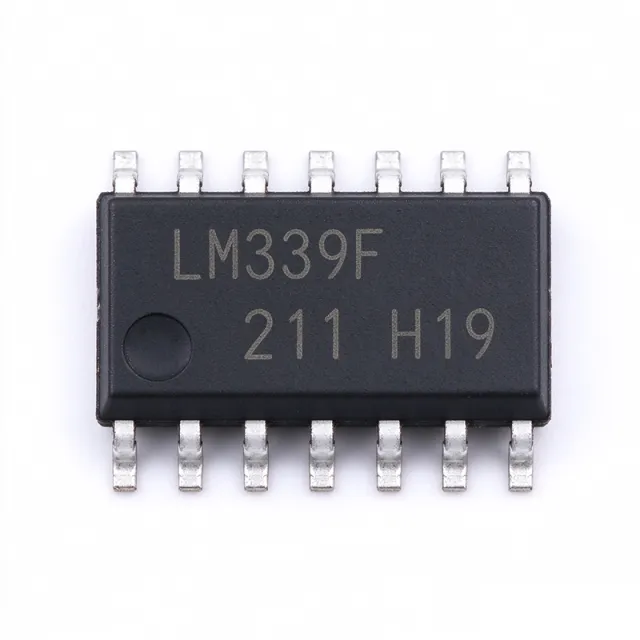
ROHM Semiconductor LM339F-E2 is a four-channel differential comparator IC designed for ground-sense signal detection and general-purpose voltage comparison. It operates from a 3 V to 32 V supply, provides four open-collector outputs, and is packaged in a 14-pin SOP package. The device is intended for industrial, control, and instrumentation systems where multiple independent threshold decisions are required. A comparator is a voltage-regulating semiconductor that evaluates two input voltages and produces a digital output indicating their relationship. The LM339 family belongs to the comparator hierarchy, alongside linear ICs such as amplifiers, while differing from op amps because its output is designed for logic-level signaling rather than linear amplification. The LM339F-E2 combines four ground-sense comparators in one package, reducing component count and simplifying routing in multi-channel sensing systems. The key operating characteristics are the 3 V to 32 V supply range, four-channel configuration, ground-sense input arrangement, and open-collector outputs. The open-collector architecture allows each output to be pulled up to a suitable external voltage and permits multiple outputs to share a wired bus when the design requires wired-AND behavior. External pull-up resistors are required because the output transistors do not actively drive the output high. The SOP14 package supports conventional surface-mount assembly and provides separate access to four comparator channels. Applications include process-control thresholds, industrial sensor interfaces, battery and power-system monitoring, overvoltage detection, signal translation, and four-channel digital sensing. Because the output stage is open collector, output rise time and logic-level compatibility depend on the pull-up resistor, load capacitance, and intended system voltage. Designers should verify input common-mode range, output pull-up voltage, input offset behavior, and response timing against the manufacturer datasheet for each operating condition. A pull-up resistor should be placed close to each output to limit trace capacitance and switching noise. Where multiple open-collector outputs are connected together, every output must remain electrically compatible with the shared bus and appropriate current limiting must be included. This page organizes the manufacturer product information, lifecycle status, verified source links, cross-reference candidates, application guidance, and design notes into a practical engineering reference. It also distinguishes documented electrical characteristics from parameters that require confirmation before schematic release or production qualification.

USD $0.33 在庫あり
LM339FV-E2 - Quad Open-Collector Comparator | ROHM
LM339FV-E2

LM339FV-E2 - Quad Open-Collector Comparator | ROHM

The ROHM Semiconductor LM339FV-E2 is a four-channel general-purpose comparator with an open-collector output, a 3 V to 32 V operating supply range, and a low 1 us response time. It is supplied in a 14-pin SSOP-B surface-mount package with tape-and-reel packing. The device is intended for ground-sense and general voltage-comparison applications where four independent comparison channels are useful. A comparator is an analog integrated circuit that evaluates two input voltages and produces a logic-level indication of their relationship. The LM339 belongs to the broader comparator and analog interface hierarchy, where it bridges precision input sensing and digital control logic. Its open-collector outputs can support wired logic, level translation, and relay-driving functions when paired with suitable external pull-up circuitry. Four comparison channels provide a practical advantage over dual comparators where board area is constrained. The 3 V to 32 V supply range allows operation from low-voltage analog systems through conventional industrial control rails. A 1 us response time supports fast threshold decisions, while low supply current and a 250 nA input-output bias-current specification help limit loading on high-impedance sensing networks. Each comparator channel compares a non-inverting and an inverting input and uses an open-collector output structure. The open-collector transistor can pull the output toward ground but cannot actively drive it high, so a pull-up resistor is normally required. This architecture provides flexibility for interfacing with 3.3 V, 5 V, or other logic rails while also permitting multiple open-collector outputs to share a common bus when the system design permits wired-AND behavior. Typical uses include industrial threshold detection, power-supply sequencing, sensor signal conditioning, battery monitoring, window comparison, and general control logic. The quad-channel organization is particularly useful in monitoring systems that must evaluate several temperature, voltage, current, or sensor thresholds independently. Tape-and-reel packaging supports automated surface-mount assembly, although the narrow SSOP-B package still warrants careful inspection and soldering practices. Designers should account for the open-collector output when calculating pull-up resistor values and checking the sink-current capability of every attached node. Input common-mode limits, output saturation behavior, supply decoupling, and channel-to-channel timing should be reviewed against the manufacturer datasheet. For new designs, the manufacturer classifies LM339FV-E2 as not recommended for new designs, so a currently supported comparator should be considered when a lifecycle-compliant component is required. This product page combines the exact ROHM ordering information with engineering-focused comparisons, application guidance, design cautions, and sourcing instructions. It distinguishes the LM339FV-E2 from dual-channel comparator alternatives while keeping the focus on verified package, supply-voltage, output-type, timing, and lifecycle characteristics.

見積もり お問い合わせ
LM339J - Quad Open-Collector Comparator | Texas Instruments
LM339J

LM339J - Quad Open-Collector Comparator | Texas Instruments

The Texas Instruments LM339J is a general-purpose quad differential comparator with four independent comparison channels, open-collector outputs, and a 14-CDIP package. The device operates from single or dual supplies, with the verified dual-supply range extending from ±1 V minimum to ±18 V maximum, and its listed typical dual-supply configurations include ±3 V, ±5 V, ±9 V, ±12 V, and ±15 V. Its maximum power dissipation is listed as 1190 mW. These characteristics place the LM339J within the comparator IC hierarchy: comparator, differential comparator, analog IC, and semiconductor. A comparator is an analog signal-conditioning IC that compares two input voltages and changes its output state according to their relationship. Unlike a logic gate, a comparator is intended for decision-making near analog operating points. The LM339J combines four comparator channels in one 14-pin through-hole package, making it useful where multiple threshold decisions are required but board area and component count must remain controlled. The open-collector output is the central feature of the LM339J. Each output can source current when the comparator output is high and must be pulled up with an external resistor to the appropriate logic supply. This architecture permits wired logic, interface to TTL, MOS, or CMOS circuitry, and light-driven or relay-driving arrangements. Open-collector outputs can also be paralleled when the application requires a common output node. The verified product information identifies the LM339J as a standard, general-purpose comparator and describes it as a low-power, low-offset device. The exact input-offset voltage, input-bias current, response time, and channel-to-channel behavior for the original LM339J were not included in the supplied source data, so those values should be confirmed in the manufacturer datasheet before precision timing or sensing designs are released. The newer LM339B family has different stated specifications and should not be assumed identical to the original LM339J. Typical uses include industrial control and monitoring, automatic test equipment, power-supply sequencing, battery threshold detection, motor or actuator control, sensor conditioning, and general-purpose digital interface circuits. The 14-CDIP package is especially useful for legacy industrial equipment, educational systems, through-hole prototypes, and assemblies where a socketed or leaded comparator is preferred over a surface-mount package. Designers should verify input common-mode limits, differential input limits, output pull-up voltage, output sink current, supply current, and input behavior around ground before implementation. A pull-up resistor must always connect each open-collector output to a suitable positive supply. Because the open-collector transistor can pull the node low but cannot actively drive it high, supply sequencing and unused-input states require deliberate design. This page combines verified distributor pricing, package information, technical search results, and engineer-focused design guidance. It also distinguishes the original LM339J from newer LM339B variants and clearly identifies where package, electrical, or lifecycle information still requires manufacturer-document confirmation.

見積もり お問い合わせ
LM339M - Quad Open-Collector Comparator | Texas Instruments
LM339M

LM339M - Quad Open-Collector Comparator | Texas Instruments

The Texas Instruments LM339M is a low-power, low-offset-voltage quad comparator containing four independent voltage comparators in a 14-pin SOIC package. It supports single or dual supplies, operates from 2 V to 36 V, accepts input voltages up to ±18 V relative to the supply arrangement, and provides open-collector outputs. The verified data identifies a response time of 1.3 µs, typical supply current drain of 800 µA, and typical input bias current of 25 nA. A comparator is an analog integrated circuit that compares two input voltages and produces a digital logic state indicating which input is higher. The LM339 belongs to the broader hierarchy of analog comparator ICs, voltage-detection devices, and general-purpose signal-conditioning components. Its four independent channels allow one package to implement multiple threshold, overvoltage, undervoltage, window, or sorting decisions while sharing a common supply architecture. Key features include four open-collector outputs, low supply current, low input bias current, low-offset operation, and an input common-mode range that includes ground on single-supply systems. Open-collector outputs require an external pull-up resistor and can support wired logic, connector interfaces, level translation, or multiple devices sharing a bus when the electrical conditions are appropriate. Unlike a push-pull output, this architecture provides useful flexibility at the cost of requiring an external pull-up and having a slower rising edge. The LM339M can operate from 2 V to 36 V, while the verified distributor listing identifies SOIC-14 packaging and a 0 °C to 70 °C temperature grade for the listed Texas Instruments LM339M variant. The four comparators share supply pins but have independent noninverting and inverting inputs. Pin assignment and input polarity must be verified against the manufacturer datasheet before layout, especially because the M suffix identifies the package configuration rather than a different comparator function. Typical applications include DC overvoltage and undervoltage detection, battery threshold monitoring, industrial control interfaces, sensor conditioning, open-collector alarm signaling, and four-channel comparator banks in embedded systems. A pull-up resistor on each output is normally required. Inputs must remain within the device’s common-mode limits, and supply bypass should follow the manufacturer’s recommended layout practice to reduce susceptibility to switching noise and lead instability. This page consolidates the verified LM339M specifications, source links, packaging information, and application-oriented design guidance. It deliberately separates confirmed values from unspecified electrical details; parameters not present in the supplied data are not inferred here.

見積もり お問い合わせ
LM339MX - Quad Open-Collector Comparator | Texas Instruments
LM339MX

LM339MX - Quad Open-Collector Comparator | Texas Instruments

The Texas Instruments LM339MX is a general-purpose quad voltage comparator containing four independent comparator channels in a 14-pin SOIC package. Each channel supports single or dual power-supply operation across a total range of approximately 36 V, or approximately ±18 V, and uses an open-collector output. Verified distributor data identifies a response time of 1.3 µs, output compatibility with TTL, CMOS, MOS, DTL, and ECL logic, and an operating temperature range of 0 °C to 70 °C. A voltage comparator is an analog signal-conditioning integrated circuit that compares two input voltages and changes its output state when the non-inverting input exceeds the inverting input. The comparator category belongs to the wider hierarchy of analog IC, signal-conditioning IC, logic-interface IC, and semiconductor. The LM339MX is therefore positioned between precision analog conversion and digital logic systems, converting a small voltage difference into a logic-level transition that can drive digital control, protection, or monitoring circuitry. The four independent channels make the LM339MX suitable for multi-threshold monitoring without requiring four separate packages. Its open-collector outputs permit wired-AND behavior when multiple channels or external devices pull the same output node low. Each channel also supports a pull-up arrangement rather than driving the output rail directly, allowing interface compatibility with different logic families. The approximately 1.3 µs response time makes the device suitable for general-purpose control loops rather than high-speed edge-detection applications. The 14-pin SOIC footprint supports compact through-hole-style PCB assembly and is pin-compatible with common LM339-family and general-purpose quad-comparator implementations. Because the outputs are open collector, a pull-up resistor is normally required when driving CMOS or TTL inputs. The four channels share supply and ground pins, so decoupling should be placed close to the package power pins and the ground return should follow a low-impedance path. Typical uses include overvoltage and undervoltage monitoring, power-supply sequencing, battery threshold detection, window comparators, motor-control interfaces, and industrial control systems. Compared with faster rail-to-rail comparators, the LM339MX emphasizes wide supply operation, multiple logic-output compatibility, and a straightforward open-collector interface rather than low-power or nanopower operation. For new designs, verify the exact input common-mode range, output-current limits, and switching behavior against the selected manufacturer datasheet because these values were not included in the retrieved source snippets. This page combines verified distributor specifications, package details, drop-in alternatives, and application guidance to support engineering selection.

見積もり お問い合わせ
LM339MX/NOPB - 4-Comparator, 1.3 us | Texas Instruments
LM339MX/NOPB

LM339MX/NOPB - 4-Comparator, 1.3 us | Texas Instruments

Texas Instruments LM339MX/NOPB is a four-channel, general-purpose voltage comparator with open-collector outputs, a 1.3 us response time, and a 14-pin SOIC package. Each channel provides independent comparison functions, while the device supports single-supply or dual-supply operation across a 2 V to 36 V total supply range. The open-collector outputs are compatible with CMOS, MOS, TTL, DTL, and ECL logic, allowing wired-AND operation and flexible pull-up implementation. A voltage comparator is an analog integrated circuit that compares two input voltages and produces a digital logic state indicating which input is higher. The LM339 belongs to the comparator hierarchy, where a comparator IC converts an analog decision into a logic-level output. It is used when a system needs threshold detection, overvoltage protection, window comparison, sensor conditioning, or a simple control decision without requiring the gain and feedback behavior of an operational amplifier. The four internal comparators offer input offset voltage as low as 2 mV maximum for all four channels, a 1.3 us response time, and typical supply current of 800 uA. Open-collector outputs require an external pull-up resistor when driving a logic input. This architecture can provide level translation, wired-AND bus behavior, and collective open-drain signaling, although pull-up selection, output rise time, and bus capacitance must be considered during design. According to the Texas Instruments LM339 product information, the B version is a drop-in replacement for LM239, LM339, and LM2901, while the A and V versions have different characteristics. The device family supports a common-mode input voltage range that includes ground and a differential input range equal to the maximum-rated supply voltage. Output compatibility with TTL, MOS, and CMOS makes the comparator suitable for mixed-voltage systems, although logic thresholds and supply conditions should be checked against the selected interface. Typical uses include DC overvoltage and undervoltage detection, battery monitoring, sensor threshold switching, temperature-control loops, window comparators, and industrial control interfaces. The 14-pin SOIC package supports surface-mount assembly and provides separate input, output, and ground connections for each comparator. The open-collector architecture is particularly useful when several detectors must share a wired signal or when the output must interface with a logic voltage different from the comparator supply. Design with adequate input common-mode range, correct supply polarity, and an appropriate pull-up network. Do not permit comparator inputs to exceed the device rating, and account for output saturation, pull-up resistance, bus loading, and propagation delay in timing-sensitive control paths. The 0 °C to 70 °C temperature range identifies this ordering code for commercial-temperature operation. This product page combines the manufacturer specifications, package and pin information, sourcing guidance, drop-in replacement analysis, comparison parameters, and practical interface guidance. It is designed to help engineers determine whether the LM339MX/NOPB fits a new design or can replace an existing four-channel comparator without changing the PCB footprint.

見積もり お問い合わせ
LM339N - Quad Open-Collector Comparator | Texas Instruments
LM339N

LM339N - Quad Open-Collector Comparator | Texas Instruments

The Texas Instruments LM339N is a low-power, low-offset quad differential comparator containing four independent comparator channels in a 14-pin PDIP package. The verified source identifies the device as a general-purpose comparator with open-collector outputs, a 2 V to 36 V supply range, and approximately 1.3 microsecond response time. Each channel can compare two input voltages, while its open-collector output requires an external pull-up resistor for a usable logic-high level. A quad comparator is an analog comparator integrated circuit used to determine whether an input voltage is higher or lower than a reference voltage. The comparator function belongs to the broader analog and mixed-signal semiconductor hierarchy: comparator -> differential comparator -> analog IC -> semiconductor. LM339N provides four channels in one package, reducing component count when a system needs several independent threshold, sorting, overvoltage, or sensing decisions. The main verified characteristics are four independent comparator sections, open-collector outputs, a 14-pin PDIP package, and a wide operating supply range of 2 V to 36 V. The manufacturer describes the LM339-N family as a low-power, low-offset voltage quad comparator. Because the outputs are open collector, the output stage can sink current but does not actively drive a high voltage; an external resistor connects the output node to the desired positive supply. This arrangement supports wired logic, relay or lamp drive, and level translation when the pull-up voltage is selected appropriately. The open-collector architecture also provides a useful benefit in multi-comparator systems: several outputs can be connected to a common pull-up node when the application intentionally requires wired-AND behavior. The design must account for the voltage and current limits of every connected output and for the sink-current capability of each comparator. The external pull-up resistor also affects rise time, so a lower resistance can improve speed while increasing current and power dissipation. Typical uses include DC threshold detection, battery and supply monitoring, window comparison, industrial control logic, sensor conditioning, overvoltage indication, and general-purpose analog decision circuits. The four channels can be used for independent comparisons or arranged as a multi-level voltage detector. Because input and output details beyond the verified source were not supplied, exact input common-mode limits, output sink-current limits, input offset, response-time conditions, and temperature ranges should be confirmed in the manufacturer datasheet before production release. The LM339N is primarily a through-hole general-purpose comparator rather than a high-speed logic device. Its strength is simple wide-supply operation with four channels and open-collector outputs. A PCB design should route comparator inputs away from switching nodes, provide a stable reference, use a defined ground return, and choose pull-up resistors according to the required logic voltage, rise time, and current budget. This page combines verified distributor and manufacturer information with application-oriented design guidance while avoiding unsupported numeric claims.

見積もり お問い合わせ
LM339N/PB - Quad Open-Collector Comparator | Texas Instruments (Lead-Free (Pb-Free))
LM339N/PB

LM339N/PB - Quad Open-Collector Comparator | Texas Instruments (Lead-Free (Pb-Free))

The Texas Instruments LM339N/PB is a low-power, low-offset quad differential comparator containing four independent comparator channels in a 14-pin PDIP package. The verified source identifies the device as a general-purpose comparator with open-collector outputs, a 2 V to 36 V supply range, and approximately 1.3 microsecond response time. Each channel can compare two input voltages, while its open-collector output requires an external pull-up resistor for a usable logic-high level. A quad comparator is an analog comparator integrated circuit used to determine whether an input voltage is higher or lower than a reference voltage. The comparator function belongs to the broader analog and mixed-signal semiconductor hierarchy: comparator -> differential comparator -> analog IC -> semiconductor. LM339N/PB provides four channels in one package, reducing component count when a system needs several independent threshold, sorting, overvoltage, or sensing decisions. The main verified characteristics are four independent comparator sections, open-collector outputs, a 14-pin PDIP package, and a wide operating supply range of 2 V to 36 V. The manufacturer describes the LM339-N family as a low-power, low-offset voltage quad comparator. Because the outputs are open collector, the output stage can sink current but does not actively drive a high voltage; an external resistor connects the output node to the desired positive supply. This arrangement supports wired logic, relay or lamp drive, and level translation when the pull-up voltage is selected appropriately. The open-collector architecture also provides a useful benefit in multi-comparator systems: several outputs can be connected to a common pull-up node when the application intentionally requires wired-AND behavior. The design must account for the voltage and current limits of every connected output and for the sink-current capability of each comparator. The external pull-up resistor also affects rise time, so a lower resistance can improve speed while increasing current and power dissipation. Typical uses include DC threshold detection, battery and supply monitoring, window comparison, industrial control logic, sensor conditioning, overvoltage indication, and general-purpose analog decision circuits. The four channels can be used for independent comparisons or arranged as a multi-level voltage detector. Because input and output details beyond the verified source were not supplied, exact input common-mode limits, output sink-current limits, input offset, response-time conditions, and temperature ranges should be confirmed in the manufacturer datasheet before production release. The LM339N/PB is primarily a through-hole general-purpose comparator rather than a high-speed logic device. Its strength is simple wide-supply operation with four channels and open-collector outputs. A PCB design should route comparator inputs away from switching nodes, provide a stable reference, use a defined ground return, and choose pull-up resistors according to the required logic voltage, rise time, and current budget. This page combines verified distributor and manufacturer information with application-oriented design guidance while avoiding unsupported numeric claims.

見積もり お問い合わせ
LM339NE3 - 36V Quad Open-Collector Comparator | Texas Instruments
LM339NE3

LM339NE3 - 36V Quad Open-Collector Comparator | Texas Instruments

The Texas Instruments LM339NE3 is a four-element differential comparator IC with a 2 V to 36 V single-supply operating range, open-collector outputs, and a 14-pin PDIP package. Each comparator provides low input offset voltage of 0.37 mV, input bias current of 3.5 nA, supply current of 200 µA per comparator, and response time of 1 µs. These characteristics make the LM339NE3 suitable for general-purpose threshold detection and analog signal comparison. A comparator is an analog interface IC that compares two input voltages and produces a logic-level indication of their relationship. The LM339 belongs to the broader comparator hierarchy and operates as a general-purpose signal-conditioning component between sensor, reference, and digital-control stages. Its common-mode input range includes ground, allowing the device to monitor signals referenced to a negative rail in dual-supply systems. Four independent comparators are integrated into one package, reducing component count on boards that require multiple threshold or window-detection functions. The open-collector output architecture can sink logic-level current while normally leaving the output transistor off, which supports wired-AND behavior when several outputs share a pull-up resistor. The output stage is compatible with TTL, MOS, and CMOS logic according to the manufacturer product information. The low 200 µA supply current per comparator supports low-power monitoring systems, while the 1 µs response time provides useful speed for supply sequencing, overvoltage detection, and fast control loops. Input offset voltage determines how close the two inputs must be before the output changes state, while input bias current affects the impedance presented to the sensing circuit. The common-mode range and differential input limits must both be checked in high-voltage systems. Typical uses include battery monitoring, power-supply sequencing, overvoltage and undervoltage detection, window comparators, sensor thresholding, relay-control logic, and industrial control systems. The open-collector outputs are particularly useful when multiple detector channels must indicate one combined fault condition. A suitable pull-up resistor is required for normal digital-logic operation because the outputs do not actively drive a high voltage. For reliable PCB design, keep input traces away from switching-power nodes, place the pull-up resistor close to the open-collector output, and decouple the supply connection locally. Designers should verify input and output limits under worst-case supply, temperature, and common-mode conditions. The DIP package is suitable for through-hole assembly, prototyping, and applications that favor easy inspection or manual replacement. This product page combines the manufacturer electrical characteristics, package information, application guidance, drop-in alternatives, and practical design notes to support component selection, PCB implementation, and lifecycle-aware purchasing decisions.

見積もり お問い合わせ
LM339NE4 - Quad 36V Comparator | Texas Instruments | DIP
LM339NE4

LM339NE4 - Quad 36V Comparator | Texas Instruments | DIP

Texas Instruments LM339NE4 is a quad differential analog comparator with four independent comparison channels, 300 ns nominal response time, and operation from 2 V to 36 V in a 14-pin PDIP package. Its open-collector outputs are compatible with TTL, MOS, and CMOS logic, making the device suitable for general-purpose threshold detection and control systems. An analog comparator is a semiconductor that compares two input voltages and changes its output state when the difference crosses a selected threshold. The LM339 belongs to the comparator hierarchy, where a general-purpose comparator can be used for voltage monitoring, sensing, level translation, and open-loop control. Placing four comparison functions in one integrated circuit reduces component count and simplifies design in equipment with several independent analog thresholds. The LM339NE4 offers low input offset voltage of 0.37 mV, low input bias current of 3.5 nA, and low supply current of 200 µA per comparator. According to the Texas Instruments datasheet, the device supports input and output logic interfacing with TTL, MOS, and CMOS systems. These characteristics are important when the comparator must detect small input-voltage changes without introducing excessive bias or loading on the signal source. The open-collector architecture provides flexibility in output pull-up selection and permits wired logic connections when suitable pull-up resistors are installed. However, the output must not be left without an appropriate pull-up because the open-collector transistor remains off when it is not actively sinking current. Rise time therefore depends on the pull-up resistance, total bus capacitance, and the number of attached loads. Typical uses include industrial control and monitoring, overvoltage and undervoltage detection, sensor-interface thresholds, battery monitoring, panel and instrument threshold circuits, and general digital control. The four channels may monitor several rails or signals independently, while common power and ground connections simplify the implementation of multi-channel systems. Designers should verify the differential input range, common-mode input range, supply voltage, output pull-up network, and channel-to-channel behavior against the manufacturer datasheet. The broad voltage capability is useful for industrial systems, but the comparator must still be checked for the exact input conditions and output timing required by the application. This page consolidates electrical characteristics, sourcing guidance, drop-in replacement options, pin information, comparison parameters, and practical PCB design notes into one engineering-focused reference for evaluating the LM339NE4.

見積もり お問い合わせ