製品 (39,000+)

LM393DT - Dual Low-Power Voltage Comparator | STMicroelectronics
LM393DT

LM393DT - Dual Low-Power Voltage Comparator | STMicroelectronics

The LM393DT is a dual low-power voltage comparator from STMicroelectronics, designed for general-purpose applications requiring precise voltage comparison with minimal power consumption. It operates from a single supply voltage ranging from 2V to 36V or dual supplies from ±1V to ±18V, with a typical supply current of only 0.4 mA per comparator. The device features an open-collector output stage that can sink up to 16 mA, allowing direct interface with TTL, CMOS, and other logic families. The LM393DT is available in the SOIC-8 package, making it suitable for space-constrained PCB designs. Data verified as of 2026-08-05. A voltage comparator is an electronic circuit that compares two input voltages and outputs a digital signal indicating which is higher. The LM393DT is a dual comparator, meaning it contains two independent comparators in a single package. Comparators are fundamental building blocks in analog and mixed-signal systems, used in applications such as threshold detection, zero-crossing detection, and waveform shaping. They are part of the broader category of linear ICs, which also includes operational amplifiers and voltage regulators. The LM393DT's low power consumption and wide supply range make it a versatile choice for battery-powered and industrial applications. Key features of the LM393DT include a low input offset voltage of 2 mV (typical), a low input bias current of 25 nA (typical), and a response time of 1.3 µs (typical) for a 5V overdrive. The open-collector output allows wired-OR connections and level shifting, and the device can operate from a single supply as low as 2V, making it suitable for low-voltage systems. The SOIC-8 package provides a compact footprint with a thermal resistance of 150 °C/W, enabling reliable operation in moderate temperature environments. The LM393DT uses a bipolar transistor architecture with a differential input stage and an open-collector output. This design provides high input impedance and stable operation over a wide temperature range (-40°C to +105°C). The device includes internal ESD protection and is designed to meet JEDEC standards for reliability. The open-collector output requires an external pull-up resistor, which allows the output voltage to be set to any level up to the maximum supply voltage, providing flexibility in interfacing with different logic families. Typical applications for the LM393DT include window comparators, level shifters, oscillator circuits, and analog-to-digital converters. In a window comparator, the dual comparators are used to detect whether an input signal is within a specified voltage range, which is useful in battery monitoring and overvoltage protection. The low power consumption makes it ideal for portable devices, while the wide supply range supports industrial control systems operating from 24V rails. When designing with the LM393DT, ensure that the pull-up resistor is selected to limit the output sink current to within the 16 mA maximum rating. For high-speed applications, minimize parasitic capacitance on the output node to achieve the specified response time. The input common-mode range extends from ground to VCC-1.5V, so ensure that input signals remain within this range for proper operation. This page synthesizes distributor pricing, drop-in alternatives, and practical design notes not found in the STMicroelectronics datasheet, providing a comprehensive resource for engineers selecting and using the LM393DT.

USD $0.05 お問い合わせ
LM393EDR2G - Dual Open-Collector Comparator | onsemi
LM393EDR2G

LM393EDR2G - Dual Open-Collector Comparator | onsemi

The onsemi LM393EDR2G is a dual, independent, low-offset-voltage comparator that operates from a single supply or split supply in an 8-pin SOIC package. Each comparator provides an open-collector output, a supply-voltage rating of up to 36 V, and input offset voltage specifications as low as 2.0 mV. The device is intended for general-purpose analog signal conditioning, threshold detection, and industrial control applications. A comparator is an analog interface integrated circuit that evaluates two input voltages and produces a logic-level indication of their relationship. The LM393 series belongs to the comparator hierarchy within analog and mixed-signal semiconductors. Its two independent channels can compare separate sensor, reference, or feedback signals, making it useful wherever a control system requires a decision based on analog voltage levels rather than numerical data processing. The LM393EDR2G provides two independent precision voltage comparators in one package. Its open-collector outputs can sink current and require an external pull-up resistor when operating at positive logic levels. The single-supply configuration allows the common-mode input range to extend toward ground, while split-supply operation supports bipolar signal comparison. The 2.0 mV low-offset specification improves threshold accuracy in applications where the difference between two nearby voltages determines the output state. The 8-SOIC package supports conventional surface-mount assembly and preserves a straightforward pinout for designs using the standard LM393 family. Because the outputs are open collector rather than totem-pole, designers must account for pull-up placement, sink-current limits, rise-time behavior, and possible interaction between channels. Two open-collector outputs can also be wired together when wired-OR logic is required, provided the resulting current and timing constraints are acceptable. Typical applications include industrial sensor interfaces, battery and power-system threshold monitoring, window-comparator signal conditioning, overvoltage and undervoltage detection, and control inputs for automotive or consumer equipment. In each case, the two channels provide independent comparisons while operating from a common device supply. The broad supply range also makes the device suitable for systems whose input rails vary significantly. The primary design consideration is output pull-up configuration. Place the pull-up resistor close to the open-collector output to limit trace capacitance and improve switching speed. Also verify the input common-mode range and differential input limits at the actual minimum and maximum supply voltages, and confirm that the pull-up current remains within the output sink-current rating. This product page combines the manufacturer's functional description, package and cross-reference information, practical design guidance, and application-specific selection criteria. It is intended to help engineers determine whether the LM393EDR2G fits an existing dual-comparator footprint and how to evaluate its electrical and environmental constraints before layout release.

見積もり お問い合わせ
LM393F-E2 - Dual Ground-Sense Comparator | ROHM
LM393F-E2

LM393F-E2 - Dual Ground-Sense Comparator | ROHM

The ROHM Semiconductor LM393F-E2 is a dual ground-sense comparator with two independent comparison channels, an operating supply range of 3 V to 32 V, and open-collector outputs in an 8-pin SOP package. Each channel provides an inverting input, a non-inverting input, and an output, allowing two independent threshold decisions within one package. A comparator is a semiconductor that evaluates two input voltages and changes its output state according to their relationship. The dual ground-sense comparator belongs to the comparator IC, analog signal-conditioning, and power-management IC hierarchy. Its open-collector architecture requires an external pull-up resistor, making it useful for wired logic levels, system fault signaling, and interfaces where active-low signaling is preferred. The LM393F-E2 supports a wide 3 V to 32 V operating supply range and features low supply current. These characteristics suit industrial control, instrumentation, power-supply supervision, and general-purpose signal conditioning. Because the outputs are open collector, multiple comparators can share a pull-up node when the design requires wired logic behavior, provided timing, sink-current, and fault-state requirements are checked. The two channels are intended for general-purpose comparison rather than rail-to-rail precision operation. Input common-mode limits, offset voltage, propagation delay, output-current capability, and electrical characteristics vary with supply voltage and temperature. These operating dependencies should be considered when selecting comparator gain, resistor values, and switching thresholds. The SOP outline also requires attention to copper area, thermal dissipation, and clean routing of the high-impedance comparison inputs. Typical uses include monitoring a divided battery voltage, detecting overvoltage or undervoltage conditions, checking a sensor signal against a reference, and generating an active-low fault indication. The same topology also works for industrial control thresholds and simple automotive or appliance protection circuits when the operating temperature and qualification requirements are suitable. Use the pin-description table in the ROHM manufacturer datasheet when assigning PCB tracks and pull-up components. Pay particular attention to the common supply pins and output pull-up topology; incorrect output-state assumptions or unsuitable pull-up values can create excessive sink current, slow transitions, or an unintended system fault indication. This page combines package-specific pin information, comparison data, drop-in replacement analysis, application guidance, and practical design notes for engineers evaluating the LM393F-E2 in analog threshold-detection and power-management systems.

見積もり お問い合わせ
LM393F-GE2 - Dual Open-Collector Comparator | ROHM
LM393F-GE2

LM393F-GE2 - Dual Open-Collector Comparator | ROHM

The ROHM Semiconductor LM393F-GE2 is a dual general-purpose comparator with two independent channels, a 3 V to 32 V supply range, and an open-collector output in an 8-pin SOP package. Each channel compares two input voltages and provides a logic-level indication of their relationship. The comparator is specified for input bias current up to 0.25 µA, input offset voltage up to 4.5 mV, propagation delay of 1 µs, and an operating temperature range from -40 °C to +85 °C. A comparator is an analog signal-processing IC that converts the relationship between two voltages into a digital result. The LM393 belongs to the comparator hierarchy within amplifier and linear ICs, where its role is to determine whether a signal is above or below a reference. Unlike a general-purpose operational amplifier used for closed-loop amplification, a comparator is normally operated open-loop and switches its output when the differential input crosses a defined threshold. The LM393F-GE2 combines two independent comparators in one 8-pin SOP package. Its open-collector outputs can sink output current while the device is in the low state and require an external pull-up resistor when used with a positive logic supply. The 3 V to 32 V operating range accommodates both conventional 5 V logic and higher-voltage industrial systems. The 4.5 mV maximum input offset voltage and 0.25 µA maximum input bias current help reduce threshold errors and loading in sensor and monitoring circuits. The two-channel architecture allows independent thresholds or complementary decisions to be implemented in one package. A 1 µs propagation delay is suitable for common industrial control, sensing, and protection tasks where response time is adequate but nanosecond-level performance is unnecessary. Because the outputs are open collector, each channel can also participate in wired logic when the voltage, current, and pull-up requirements are appropriate. Typical applications include overvoltage and undervoltage monitoring, sensor threshold detection, industrial control interfaces, DC motor-direction sensing, and window or limit comparators. The comparator can evaluate a feedback voltage against a reference generated by a resistor divider or reference IC. Its low input bias current is especially useful when the sensing source has high impedance, while the open-collector output simplifies interface to transistors, relays, and digital logic. Designers should select the pull-up resistor and output pull-down load with the allowable output current, supply voltage, and switching-speed requirements in mind. Input common-mode range and output saturation behavior must also be checked for the selected logic level. Because the ROHM status is Not Recommended for New Designs, new designs should evaluate an actively supported comparator unless this part is required for continuity with an existing qualified design. This product record combines the exact LM393F-GE2 specifications, package information, lifecycle status, sourcing workflow, and drop-in comparison guidance. The comparison and design notes also clarify where pin-compatible parts differ in supply range, common-mode capability, or electrical performance, helping engineers make an informed continuity decision.

見積もり お問い合わせ
LM393FVJ-E2 - Dual Open-Collector Comparator | ROHM
LM393FVJ-E2

LM393FVJ-E2 - Dual Open-Collector Comparator | ROHM

The ROHM Semiconductor LM393FVJ-E2 is a dual, general-purpose differential comparator with an open-collector output, a 3.0 V to 36.0 V operating supply range, and an operating temperature range of -40°C to 125°C. The device is packaged in an 8-pin TSSOP-B8J package and is supplied in tape-and-reel packing. Each comparator channel compares two input voltages and provides an open-collector output that can sink current while operating in a wired-AND configuration. A comparator is a semiconductor interface that converts the relationship between two voltages into a logic-level indication. The LM393 belongs to the broader open-collector comparator family, providing a straightforward alternative to logic gates when an analog threshold must be evaluated. Its two independent channels make it useful for monitoring two conditions, while its open-collector outputs allow multiple comparators to share a pull-up resistor and participate in wired-AND or wired-OR arrangements. The principal features of the LM393FVJ-E2 include wide operating supply voltage, ground-sensed input and output, open-collector outputs, low offset voltage, and a broad operating temperature range. According to the ROHM product documentation, the 3.0 V to 36.0 V supply capability permits operation from low-voltage systems through higher industrial rails. The open-collector architecture also gives the designer control over the output pull-up voltage, which is useful when interfacing the comparator with a supply different from its own. Each internal channel consists of a differential input stage followed by an open-collector output stage. The inverting and non-inverting inputs determine the output state according to the applied voltage relationship. Because the output transistor is open collector, an external pull-up resistor is required. The output can remain in a high-impedance state while the transistor is off, and the pull-up establishes the high output voltage without requiring an active push-pull output stage. Typical applications include general-purpose threshold detection, current monitoring, battery monitoring, window comparators, relay-control interfaces, and multivibrator circuits. In a battery monitor, the two input channels can independently evaluate charge and discharge thresholds. In an industrial control system, the open-collector output can interface with a suitably rated relay driver or other pull-up-equipped peripheral. Designers should select an external pull-up resistor that satisfies the required sink current, output rise time, and downstream-device input limits. The pull-up should connect only to a compatible positive supply, and the circuit must account for the open-collector output remaining off during reset or fault conditions. Confirming the input common-mode range and output-current limits at the intended supply voltage is essential for reliable operation. This page organizes the ROHM product details, verified distributor records, lifecycle status, application guidance, and replacement assessment into one engineering-focused reference. It also identifies which technical attributes require confirmation from the manufacturer datasheet before a board is released to production.

見積もり お問い合わせ
LM393M - Dual Open-Collector Comparator | Texas Instruments
LM393M

LM393M - Dual Open-Collector Comparator | Texas Instruments

The Texas Instruments LM393M is a dual differential comparator in an 8-pin SOIC package, with two independent comparator channels and open-collector outputs. The verified distributor listing identifies it as a standard general-purpose comparator supporting single-supply or dual-supply operation, with a 2 V to 36 V total supply range and comparator response time listed as 1.4 microseconds. Its open-collector outputs require an external pull-up resistor, allowing the output stage to be wired for wired-AND behavior, level translation, or interface to a higher-voltage logic system. What is a dual differential comparator? A comparator is an analog integrated circuit that compares two input voltages and produces a binary high-or-low result according to their relationship. A differential comparator includes both a non-inverting and an inverting input. The LM393M contains two such channels, making it useful for independent threshold decisions in one package. It belongs to the comparator, analog IC, and semiconductor hierarchy rather than being an amplifier; the output intentionally indicates which input is higher instead of reproducing an analog signal. The key verified feature set includes two differential comparators, an 8-SOIC surface-mount package, open-collector outputs, a 1.4 microsecond response time, and a 2 V to 36 V comparator supply specification. The distributor comparison material also lists differential input and output-current information, while the supplied search results identify the device as suitable for general-purpose comparison. Because the output transistor is open collector, output high level depends on the pull-up resistor and supply rail, not on a push-pull output driver. The two channels are independent, allowing the device to compare two separate sensor or control signals. The common open-collector output architecture can be useful in power-monitoring circuits where several comparator outputs must combine logically, provided the system uses suitable pull-up resistors and does not exceed the device's electrical limits. The SOIC-8 package supports conventional surface-mount assembly, while the dual channel count can reduce board area compared with two single comparators. Typical applications include battery and power-supply monitoring, overvoltage and undervoltage protection, sensor threshold detection, industrial control logic, window or level monitoring, and general digital control systems. The 2 V to 36 V comparator supply range provides useful flexibility for industrial and embedded systems, although the complete operating conditions must be checked against the manufacturer datasheet. A key design consideration is the open-collector output. Add a pull-up resistor to each output, choose its value with the required sink-current and rise-time limits in mind, and ensure that the downstream device accepts the resulting logic level. Do not assume that the output can source current independently. The input common-mode range, output saturation levels, supply current, and absolute maximum ratings are not fully specified in the supplied verified data and must be confirmed before design release. This page combines the verified distributor identity, package information, comparator function, search-result specifications, available cross-reference sources, and practical design guidance. It does not invent unprovided offset, temperature, response-current, or compliance details; unavailable parameters are identified for engineering follow-up.

見積もり お問い合わせ
LM393MX - Dual Open-Collector Comparator, 2-36V | Texas Instruments
LM393MX

LM393MX - Dual Open-Collector Comparator, 2-36V | Texas Instruments

Texas Instruments LM393MX is a dual general-purpose differential comparator with open-collector outputs, a 2 V to 36 V supply-voltage range, and an 8-pin SOIC package. The two comparators can operate independently, making the device suitable for voltage-level detection, threshold comparison, window monitoring, and interface conditioning. Verified distributor information identifies the LM393MX as a standard rail-to-rail comparator with a typical response time of 1.3 µs. A comparator is an analog integrated circuit that compares an input voltage with a reference voltage and changes its output state when the relationship between those voltages reverses. The LM393 belongs to the comparator hierarchy within analog and power-management semiconductors. Its open-collector output architecture differs from push-pull or CMOS outputs because the output transistor requires an external pull-up resistor to establish a high voltage. The principal benefits of the LM393MX are its wide 2 V to 36 V operating range, low 1 mA supply current, two independent comparison channels, and open-collector outputs that can support wired logic or interface signaling. The verified data identifies the package as 8-SOIC, making it practical for conventional surface-mount PCB assembly. Its commercial operating-temperature range is listed as 0°C to +70°C. Each channel compares a non-inverting input with an inverting input. When the non-inverting input is higher, the associated open-collector output transistor turns on and pulls the output toward ground. When the non-inverting input is lower, the transistor turns off and the external pull-up resistor raises the output. This behavior allows the output voltage to be established by the system supply and interface rather than by the comparator alone. Typical uses include battery-voltage supervision, industrial sensor thresholds, overvoltage and undervoltage detection, signal conditioning, and control-system interlocks. Its two channels can implement two independent decisions, such as monitoring two regulated rails in one controller. Because the output is open collector, applications must include a suitable pull-up resistor and must account for the sink-current capability of the output transistor. A primary design consideration is that an open-collector output cannot operate as a push-pull logic output without external circuitry. The pull-up resistor determines the rise time, available current, and power loss, while the output node should remain within the voltage limits of the connected logic family. Input common-mode range, output sink current, response time, and offset-voltage limits should be verified in the manufacturer datasheet before using the device outside the verified operating conditions. This page combines the verified manufacturer and distributor specifications, same-package drop-in alternatives, practical comparator design guidance, and application-focused selection information. It also distinguishes verified values from parameters that still require confirmation from the complete LM393 datasheet or a specific alternative manufacturer's documentation.

見積もり お問い合わせ
LM393N - Dual Comparator 2-36V Open-Collector | 8-PDIP
LM393N

LM393N - Dual Comparator 2-36V Open-Collector | 8-PDIP

The LM393N is a classic dual low-power low-offset-voltage comparator from the LM193/LM393/LM2903 family originally introduced by National Semiconductor and now multi-sourced by Texas Instruments, Fairchild (onsemi), Motorola, NXP, and others. It integrates two independent precision voltage comparators in an 8-pin PDIP (through-hole, DIP-8) package, designed to operate from a single supply rail of 2 V to 36 V or from split supplies of ±1 V to ±18 V. Each comparator features an open-collector output that can sink up to 16 mA and drives loads referenced to ground or any positive rail up to 36 V, making it ideal for level translation between incompatible logic domains. A comparator is an analog decision element that compares two input voltages and produces a logic-level output indicating which input is larger. The LM393N fits within a hierarchy of: comparator -> analog comparator -> signal-conditioning IC -> semiconductor. Within the broad comparator category, the LM393N belongs to the low-power, low-offset, open-collector-output class (synonym: voltage comparator), distinct from the LM339 quad family and the more modern CMOS comparators such as the LMV393 and LM393LV. Key specifications of the LM393N include: input offset voltage as low as 2 mV maximum (LM193/LM193A series; typical LM393 spec is ±5 mV), input bias current of 25 nA typical, common-mode input range that includes ground, and a propagation delay of approximately 1.3-1.5 microseconds. The open-collector output stage requires a pull-up resistor (typically 2-10 kohm from output to the positive logic rail). The device operates across a -40 C to +85 C ambient temperature range and is widely used in battery-powered systems thanks to its low quiescent current draw (typically 0.4 mA per comparator). Typical applications of the LM393N include zero-crossing detectors for AC line signals, battery voltage monitors and low-battery cutoff circuits, window comparators, over-voltage and over-current protection circuits, square-wave/relaxation oscillators, voltage level shifters (e.g., 5 V CMOS to 12 V relay logic), and analog sensor threshold detectors for photodiodes, thermistors, and Hall-effect sensors. The wide supply range and ground-sensing input make it especially useful in single-rail automotive and industrial 12 V/24 V systems. When designing with this device, remember that the open-collector output cannot actively source current - you must provide a pull-up resistor on each output. Also, the input common-mode range is limited to 0 V to VCC-1.5 V; inputs that approach the upper rail may saturate the input stage. For low-voltage (<5 V) battery applications where lower quiescent current is critical, consider the LMV393 (CMOS) or LM393LV as direct upgrades.

見積もり お問い合わせ
LM393NG - Dual Open-Collector Comparator, 36 V | onsemi
LM393NG

LM393NG - Dual Open-Collector Comparator, 36 V | onsemi

onsemi LM393NG is a dual independent precision voltage comparator with an operating supply range of 2 V to 36 V, housed in an 8-pin PDIP package. The device provides two separate comparator channels, supports single or split supply operation, and uses open-collector outputs. Its input offset voltage is specified as low as 2.0 mV, while the differential input voltage range can extend to ±38 V. The LM393NG is intended for general-purpose industrial, automotive, consumer, and educational designs where two independent threshold or sensing functions are required. A voltage comparator is an analog integrated circuit that compares two input voltages and produces a logic-level indication of their relationship. In the hierarchy of electronic components, the LM393NG is a dual comparator, part of the comparator and analog signal-conditioning family used between sensors, switching circuits, and digital logic. Because its open-collector outputs require an external pull-up resistor, the device can directly interface with TTL, CMOS, and MOS logic while remaining flexible in voltage and polarity. The LM393NG's principal advantages are its two independent channels, low offset voltage of 2.0 mV, 250 nA input current specification, and ability to operate from a single supply or with split supplies. Its common-mode input range includes ground during single-supply operation, making it practical for battery-powered and low-side sensing systems. The open-collector architecture also permits the output transistor to remain off when the device is unpowered, subject to the detailed limits stated by the manufacturer. Technically, the LM393NG combines independent comparator channels with output stages designed for wired-open-collector use. A pull-up resistor sets the output high state, while the comparator pulls the output low when its condition is met. Because the output is not actively driven high, output rise time depends on the pull-up resistance and the capacitance connected to the output node. Designers should therefore avoid excessive pull-up resistance when fast transitions or low propagation delay are important. Typical uses include window monitoring for power rails, sensing battery voltage, comparing a sensor against a reference, detecting overtemperature, building simple oscillator and relay-drive circuits, and generating control signals for industrial or automotive equipment. Split-supply operation is useful where signals may be centered around ground, while single-supply operation supports systems whose available inputs remain between ground and the positive supply. The main PCB considerations are correct orientation, adequate bypassing near the supply pins, and unobstructed pull-up access at each open-collector output. Confirm input common-mode limits, output-current capability, and absolute maximum ratings against the manufacturer datasheet before applying the comparator outside nominal supply conditions. Keep sensitive feedback networks away from switching-node and high-current return paths to avoid offset errors and unstable switching behavior. This page combines the verified onsemi, DigiKey, and Mouser product information with practical comparator-selection guidance, same-package alternatives, and design notes intended to make LM393NG sourcing and implementation decisions more efficient than a basic distributor listing alone.

見積もり お問い合わせ
LM393P - Dual Comparator, 2V-36V, Open-Collector, 8-PDIP | Texas Instruments
LM393P

LM393P - Dual Comparator, 2V-36V, Open-Collector, 8-PDIP | Texas Instruments

The Texas Instruments LM393P is a dual-channel differential comparator with open-collector outputs, housed in an 8-pin PDIP (P) through-hole package. The device contains two independent precision voltage comparators designed to operate from a single supply over a 2V to 36V range, or from dual supplies of ±1V to ±18V, with a typical response time of approximately 1.3 us and a propagation delay of 300 ns. A voltage comparator is a fundamental analog building block that compares two input voltages and produces a digital logic-level output indicating which input is larger. Comparators belong to the broader category of analog comparators -> signal conditioning ICs -> amplifiers and comparators -> analog ICs -> semiconductors. The LM393 family is one of the industry's longest-standing and most widely second-sourced comparator designs, making the LM393P a staple in through-hole commercial, industrial, and educational designs. Open-collector outputs allow the user to define the output high level via an external pull-up resistor to any reference voltage, including a logic level different from VCC, enabling level shifting and OR-wired multi-comparator topologies. Key features include a maximum input offset voltage of ±5 mV, an input bias current of 25 nA typical, a quiescent supply current of 0.4 mA typical (independent of supply voltage), and an open-collector output capable of sinking up to 16 mA. The wide supply range (2V to 36V single supply) and low input bias current make the LM393P well suited to direct interfacing with sensors, op-amp outputs, and TTL/CMOS logic families without additional level translation. Each comparator channel consists of a low-offset differential input stage followed by an open-collector NPN output transistor. The output transistor is OFF when the non-inverting (+) input is at lower potential than the inverting (-) input, and saturates to pull the output LOW when + exceeds -. Designers commonly add an external pull-up resistor (typically 10 kohm to VCC) to establish the HIGH level, which is critical because an open-collector output cannot actively drive HIGH. Typical applications include zero-crossing detectors, over/under-voltage monitors, battery low-detection circuits, window comparators, oscillators, Schmitt triggers, and sensor signal conditioning for industrial, automotive, and consumer designs. The LM393P's through-hole PDIP package supports breadboard prototyping, educational labs, and legacy through-hole PCB designs where surface-mount variants (LM393D, LM393DR) are unsuitable. When designing with the LM393P, place a 0.1 uF bypass capacitor as close as possible to the VCC pin and ensure the pull-up resistor value is sized against the desired output rise time and load capacitance. Avoid driving the output above the maximum collector-emitter voltage of 36V and respect the absolute maximum input common-mode range of -0.3V to VCC to prevent input stage damage. This page synthesizes distributor pricing, drop-in alternatives, and practical design notes not found in the manufacturer datasheet, with verified values drawn from TI product page, DigiKey catalog, and the LM393B/LM2903B datasheet family specification table.

見積もり お問い合わせ
LM393P3 - Dual Open-Collector Comparator | Texas Instruments
LM393P3

LM393P3 - Dual Open-Collector Comparator | Texas Instruments

Texas Instruments LM393P3 is a dual differential voltage comparator in an 8-pin plastic dual in-line package (8-PDIP). The device provides two independent comparison channels with open-collector outputs, allowing each output to be pulled up to a compatible logic supply and to drive multiple wired-open-collector loads. According to the supplied manufacturer and distributor records, the LM393 family is intended for commercial-grade applications and operates from a 2 V to 30 V supply range, with a 0 °C to 70 °C operating-temperature classification. A comparator is a linear integrated circuit that evaluates two input voltages and produces a logic-level result indicating which input is higher. In the LM393, two comparators share a common supply and ground while retaining separate non-inverting, inverting, and output connections. This dual-channel architecture belongs to the comparator IC hierarchy, where the LM393 occupies the general-purpose, low-power, open-collector segment of the broader analog and power-management semiconductor category. The principal engineering benefit is the open-collector output architecture. Unlike a totem-pole output, an open collector does not actively drive the output high, allowing a pull-up resistor to establish the high logic level. This supports wired-open-collector or wired-AND behavior, permits different supply domains for the pull-up rail, and requires an external pull-up on every output used in a design. The two channels can therefore implement independent threshold decisions, window detection, or complementary comparisons. The LM393P3 uses the standard LM393 differential-comparator architecture rather than rail-to-rail input stages. Input behavior must therefore be evaluated against the device's common-mode and differential input limits in the manufacturer datasheet, especially when comparing signals near either supply rail. Because the verified records do not provide numerical input-offset, response-time, input-bias-current, output-sink-current, or channel-separation figures, those values require confirmation in the official LM393 datasheet before precision timing or sensing decisions are finalized. Typical uses include industrial sensor thresholding, overvoltage and undervoltage detection, battery monitoring, control-loop signal comparison, and digital-interface adaptation. A practical application places the signal under test on one input and a reference voltage from a divider on the other; the open-collector output then changes state when the relation between the two voltages changes. A pull-up resistor converts the output state to a valid logic voltage, while hysteresis can reduce repeated switching when a slowly changing input crosses the reference. For a new design, verify the required output current, input range, temperature grade, and logic compatibility against the datasheet before releasing the schematic. Do not omit the output pull-up resistors, and do not assume that the open collector can source current. Check whether a logic-family or application-specific comparator offers lower offset, faster response, rail-to-rail input operation, push-pull outputs, or automotive qualification. This page combines the verified product records with package, sourcing, comparison, and design guidance focused on drop-in replacement decisions.

見積もり お問い合わせ
LM393PE3 - Dual Open-Collector Comparator | Texas Instruments
LM393PE3

LM393PE3 - Dual Open-Collector Comparator | Texas Instruments

Texas Instruments LM393PE3 is a dual differential comparator with two independent comparison channels, a 2 V to 36 V supply range, and open-collector outputs in an 8-pin PDIP package. Each channel compares two inputs and supports single-supply or dual-supply operation, making the device suitable for threshold detection, signal conditioning, and open-collector bus interfacing. A comparator is an analog integrated circuit that evaluates two input voltages and changes its output state when one input becomes higher than the other. Within the device hierarchy, the LM393 is a dual comparator, a linear integrated circuit, and a signal-conditioning component commonly used ahead of digital control systems. Its open-collector architecture requires an external pull-up resistor, allowing wired logic, level translation, and multiple output devices to share a common signal line. The LM393 family provides low input offset voltage, low input bias current, low supply current, and fast response time. The manufacturer identifies improved B-version performance, including a 0.37 mV low input offset, 3.5 nA low input bias current, 200 µA supply current per comparator, a 1 µs response time, and an extended temperature range. The LM393PE3 also supports TTL, MOS, and CMOS-compatible output interfacing. Each comparator section includes a non-inverting input, an inverting input, and an open-collector output. The open-collector transistor can pull its output low but cannot actively drive the node high, so the output voltage is established by the pull-up resistor and supply voltage. Separate inputs allow two thresholds or two sensed quantities to be monitored independently within one package. Typical uses include DC voltage-window detection, battery monitoring, industrial sensor interfaces, overvoltage and undervoltage protection, digital control thresholds, and open-collector alarm signaling. In these applications, the device converts an analog condition into a logic-compatible event without requiring a separate precision reference or output driver. A primary design consideration is the open-collector pull-up network. Select a resistor that provides adequate sink current at the device's output-saturation limit while keeping rise time acceptable for the connected load. Also verify input common-mode range, supply voltage, output pull-up voltage, and the required logic thresholds across temperature and supply tolerance. This product page combines manufacturer specifications, replacement guidance, application analysis, and design-focused comparison information to help engineers evaluate the LM393PE3 for through-hole dual-comparator designs without relying on raw catalog listings alone.

見積もり お問い合わせ
LM393PE4 - Dual Differential Comparator | Texas Instruments
LM393PE4

LM393PE4 - Dual Differential Comparator | Texas Instruments

Texas Instruments LM393PE4 is a dual differential comparator with two independent open-collector outputs, a 36 V total supply rating, and a low input offset voltage of 0.37 mV. The device is offered in an 8-pin PDIP package for through-hole PCB installation and is suitable for single-supply or dual-supply operation. A differential comparator is an analog signal-conditioning IC that compares two input voltages and produces a digital logic state indicating which input is higher. As part of the broader amplifier IC and comparator hierarchy, the LM393PE4 is used to perform threshold detection, level translation, sensing, window comparison, and open-drain signaling in industrial, automotive, and consumer electronics systems. The LM393 family provides low input bias current of 3.5 nA, supply current of 200 µA per comparator, and a response time of 1 µs. Its open-collector outputs allow the output voltage to be pulled up to an external supply and permit multiple outputs to be wired together when the application requires a wired-AND function. A high-battery human body model ESD rating of 2 kV supports robust handling in conventional equipment. Each of the two comparator sections can operate from the same supply or from independently arranged positive and negative rails. The standard LM393PE4 is the original LM393-family device, while improved LM393B variants provide lower offset voltage, lower bias current, lower supply current, faster response, and an expanded 38 V maximum rating. Pin-compatible B-version devices can therefore replace suitable original-grade devices without changing the printed circuit board. Typical applications include DC voltage threshold detection, overvoltage and undervoltage monitoring, temperature-probe interfacing, battery supervision, window comparators, relay or solenoid drivers, and logic-level translation. The open-collector outputs are particularly useful where the required output voltage differs from the comparator supply voltage or where several devices must share a wired bus. Designers should account for the output pull-up network, input common-mode range, supply bypass capacitors, and the voltage-current limits of each open-collector transistor. The external pull-up resistor determines output rise time and low-level sink current, while board layout should keep comparator inputs away from switching nodes and high-current output paths to limit pickup of switching noise. This product page combines manufacturer specifications, a normalized pin description, drop-in replacement options, application guidance, and design-focused selection criteria. These resources help engineers distinguish the original LM393PE4 from improved or alternate manufacturer variants while confirming package, electrical, and application compatibility before a PCB design is released.

見積もり お問い合わせ
LM393PS - Dual Open-Collector Comparator | Texas Instruments
LM393PS

LM393PS - Dual Open-Collector Comparator | Texas Instruments

Texas Instruments LM393PS is a commercial-grade, dual differential comparator in an 8-pin SOIC package. The device contains two independent comparator channels, supports rail-to-rail input operation, and uses open-collector outputs for flexible interfacing with pull-up resistors, wired logic, lamps, relays, and other open-collector loads. Its 8-pin SOIC package supports conventional surface-mount assembly and is the standard package used for the LM393PS ordering option. A comparator is an analog integrated circuit that compares two input voltages and produces a logic-level indication of their relationship. In a wider power-management hierarchy, the LM393PS belongs to the comparator family, which sits alongside amplifiers, voltage references, and analog-to-digital converters as core signal-conditioning and control building blocks. Differential comparison is especially useful when a design must determine whether a measured signal is above or below a threshold. Each LM393PS channel provides independent access to its non-inverting and inverting inputs, while the two open-collector outputs can be used separately or, where appropriate, externally wired together. Open-collector outputs can sink current but do not actively drive a high voltage, so external pull-up resistors are normally required. This architecture is useful for wired-AND behavior, level translation, and compatibility with systems using pull-up or pull-down logic networks. The manufacturer documentation lists features associated with the LM393 family, including a maximum rating up to 38 V, an ESD rating of 2 kV HBM, low input offset voltage of 0.37 mV, low input bias current of 3.5 nA, low supply current of 200 µA per comparator, and a response time of 1 µs. These characteristics apply to the relevant B-version family ratings identified in the manufacturer documentation and should be checked against the operating-temperature grade and exact ordering option used in a production design. Typical applications include battery-powered threshold detection, sensor signal conditioning, industrial control logic, power-supply supervision, window-comparator circuits, and relay or LED indication. In battery-powered equipment, the low supply current helps reduce standby consumption, while the wide input-voltage capability supports a broader range of industrial supply environments. The open-collector output also permits the system designer to select the external pull-up voltage independently from the comparator supply. A key design consideration is the input common-mode range. Although the device is described as rail-to-rail for input operation, designers should verify the exact LM393PS electrical limits and operating conditions in the Texas Instruments datasheet. Pull-up resistor values must balance low output leakage, usable sink current, rise time, and system power consumption. For new layouts, reserve the unused comparator channel for test access rather than leaving its inputs floating. This product page organizes the LM393PS specifications, package information, application guidance, comparison parameters, and engineering notes into one design reference. It emphasizes practical decisions around input thresholds, output pull-ups, supply bypassing, unused channels, and drop-in replacement evaluation rather than repeating only the ordering-table information.

見積もり お問い合わせ
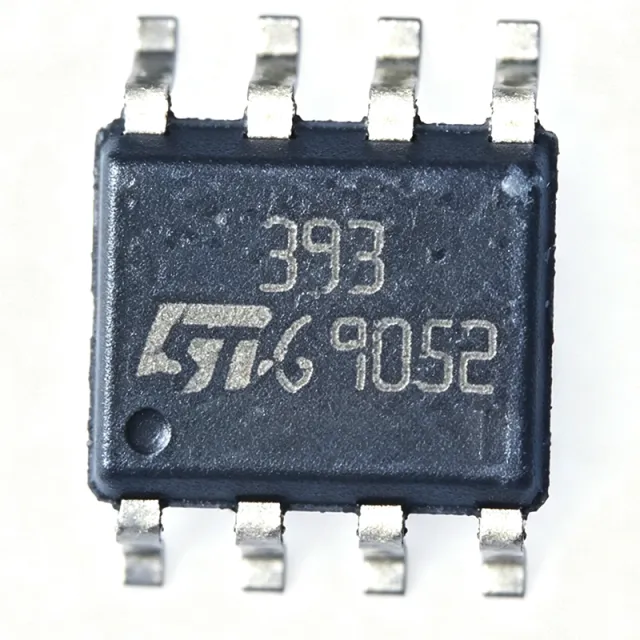
LM393PSRG4 - Dual Open-Collector Comparator | TI
LM393PSRG4

LM393PSRG4 - Dual Open-Collector Comparator | TI

Texas Instruments LM393PSRG4 is a dual differential comparator with two independent channels, open-collector outputs, and an 8-pin SOIC package. It operates from a single supply or dual supplies, with verified product information identifying a 2 V to 36 V single-supply range and ±1 V to ±18 V dual-supply range. The LM393 family provides rail-to-rail input operation and output compatibility with TTL, MOS, and CMOS logic, making it useful for threshold detection and analog-to-digital conversion stages. A comparator is an interface IC that compares two input voltages and changes its output state when the non-inverting input rises above the inverting input. The LM393 family places two independent comparator channels in one package. Its differential architecture is useful in sensing circuits, where a small signal around a reference voltage determines whether a downstream logic device receives a high or low state. Open-collector outputs also allow the output stage to be pulled up to the voltage required by the receiving logic. The principal benefits of the LM393PSRG4 are its wide supply-voltage range, low supply-current drain of 0.4 mA typical per comparator, and output compatibility with multiple logic families. The common-mode input range includes ground, which simplifies single-supply sensing when signals remain near the lower rail. Two channels can be used independently or together to create window, zero-crossing, or saturation-detection functions. The device is specified for general-purpose signal comparison rather than high-speed line sensing. A listed characterization identifies a 1.3 µs response-time class for this device family, while the B-version devices provide improved specifications for applications where tighter electrical performance is useful. Because each output is open collector, an external pull-up resistor is required unless the output is used in a wired-AND configuration. Output-current and pull-up limits must be checked against the manufacturer datasheet for the chosen operating condition. Typical uses include industrial sensor thresholds, battery monitoring, window comparators, relay or LED drive, oscillator and timer circuits, and conversion of an analog measurement into a digital logic event. The two channels make the device especially useful when a board needs two independent comparison points without using separate single-comparator packages. PCB implementation should preserve short comparator-input paths and provide a stable return for both channels. Keep sensitive reference and signal traces away from switching nodes and output pull-up networks. Select the external pull-up value to balance rise time, power dissipation, and the sink-current rating of the open-collector stage. Validate input and output behavior across temperature and supply tolerances before using the comparator close to its supply or common-mode limits. This page combines the verified device identity, package information, family-level operating characteristics, cross-reference candidates, application guidance, and design considerations into one engineering-focused resource. Use the manufacturer datasheet and pin-description table for final footprint, input limits, output-current limits, and ordering details.

見積もり お問い合わせ
LM393PT - Dual Open-Collector Comparator | STMicroelectronics
LM393PT

LM393PT - Dual Open-Collector Comparator | STMicroelectronics

STMicroelectronics LM393PT is a low-power dual general-purpose voltage comparator with two open-collector outputs, supplied in an 8-pin TSSOP package. The device compares two input voltages and provides a digital, open-drain indication of their relationship, making it suitable for threshold detection, level translation, window monitoring, and simple control systems. Its single-supply architecture supports the positive-voltage signal ranges commonly encountered in industrial and consumer electronics. A voltage comparator is an analog integrated circuit that evaluates one voltage relative to another and changes its output state when the relationship crosses a defined threshold. The LM393 belongs to the comparator IC hierarchy, which sits within interface and signal-conditioning semiconductors. Unlike an operational amplifier configured as a comparator, the LM393 integrates an open-collector output stage intended for wired logic, relay drivers, and systems that need pull-up resistors. The principal feature of the LM393PT is its dual-channel architecture, allowing two independent comparisons in one package. Both channels use open-collector outputs, so each output can pull a logic rail low while presenting a high-impedance state when inactive. The verified distributor description identifies the device as a standard general-purpose, rail-to-rail comparator, although detailed input common-mode, output-current, timing, and supply-current limits require confirmation from the manufacturer datasheet. The 8-pin TSSOP package supports compact PCB layouts while exposing both comparator channels, their input pins, the common supply connection, and both output pins. Because the outputs are open collector, an external pull-up resistor is normally required on each output. That arrangement supports wired-AND behavior at the logic interface and permits the output node to be pulled toward a voltage selected by the application rather than being forced to the comparator supply voltage. Typical uses include battery-threshold detection, industrial control-interface qualification, sensor-limit switching, overvoltage and undervoltage monitoring, and general digital threshold generation. The dual-channel configuration can implement two independent alarms or form the two comparisons required by a window comparator when suitable threshold references and output logic are added. A critical implementation consideration is the required output pull-up: omitting it leaves the open-collector output floating. Designers should also verify input voltage limits, output sink-current capability, propagation delay, input-offset behavior, and supply operating range against the STMicroelectronics datasheet before applying the comparator outside its published conditions. This page combines verified distributor specifications and sourcing information with a package-specific pinout, drop-in replacement analysis, comparison data, and practical design guidance. It is intended to support faster component selection while clearly separating confirmed LM393PT attributes from electrical parameters that still require datasheet verification.

見積もり お問い合わせ
LM393PWG4 - Dual Open-Collector Comparator | Texas Instruments
LM393PWG4

LM393PWG4 - Dual Open-Collector Comparator | Texas Instruments

Texas Instruments LM393PWG4 is a dual differential comparator with two independent comparator channels, a single 2 V to 36 V supply range, and an open-collector output configuration in an 8-pin TSSOP package. Each channel supports single-supply or dual-supply operation, while the open-collector outputs permit wired-AND connections and external pull-up resistors. A comparator is an analog integrated circuit that compares two input voltages and changes its output state when the differential input crosses a defined threshold. In the broader hierarchy, a comparator belongs to the analog IC and signal-conditioning family, where it supports threshold detection, sensing, protection, and digital logic-interface functions. The LM393 family combines two channels in one package, reducing board area compared with two separate single comparators. The LM393PWG4 provides low supply-current drain of 0.4 mA typical per comparator, with current consumption largely independent of supply voltage. Its open-collector outputs can sink output current while remaining electrically isolated from the positive supply. This architecture is useful when several comparator outputs must share a pull-up node, although the external resistor must be selected to suit the required sink current and rise time. Operation from a 2 V to 36 V total supply span gives flexibility across low-voltage control systems, industrial equipment, and higher-voltage sensing platforms. The device can also operate from dual supplies when their total span and common-mode limits are respected. Because the output transistor is open collector, the output high voltage is set by the pull-up network rather than by the comparator itself. Typical uses include window comparators, overvoltage and undervoltage detection, sensor threshold conditioning, relay or solenoid drive decisions, and direct interfacing to open-collector logic. In a battery-powered design, the low supply-current characteristic helps reduce standing power. In a 24 V industrial system, the wide supply range supports operation without a separate low-voltage regulator, subject to the input protection requirements of the individual installation. Design the PCB with the non-inverting and inverting inputs routed away from switching nodes and the open-collector pull-up placed close to the output node. Confirm the common-mode input range, output-current capability, propagation delay, and output saturation requirements for the specific temperature and supply conditions before releasing the design. This page combines the LM393PWG4 electrical characteristics, package and pin information, drop-in alternatives, comparison criteria, and practical PCB guidance to support faster component selection and implementation.

見積もり お問い合わせ
LM393PWRG3 - Dual Open-Collector Comparator | Texas Instruments
LM393PWRG3

LM393PWRG3 - Dual Open-Collector Comparator | Texas Instruments

The Texas Instruments LM393PWRG3 is a dual, general-purpose differential comparator with two independent channels, open-collector outputs, and a 2 V to 36 V single-supply operating range. Each channel accepts differential inputs and includes rail-to-rail input capability according to the manufacturer product listing. The device is packaged in an 8-pin TSSOP package and is supplied in tape-and-reel packaging under ordering code G3. A comparator is an analog semiconductor that compares two voltages and produces a logic-level indication of their relative relationship. The LM393 family belongs to the wider comparator hierarchy, which falls under linear and analog integrated circuits used for signal conditioning, threshold detection, supervision, and protection. Unlike an operational amplifier, the LM393 uses open-collector outputs that require an external pull-up resistor when driving a digital or mixed-signal circuit. The principal features of the LM393PWRG3 are its two independent comparator channels, 36 V maximum supply capability, differential input structure, open-collector outputs, and approximately 0.3 microsecond response time. The open-collector architecture permits a wired-AND arrangement when multiple comparator outputs share a pull-up node. Its output is compatible with TTL, MOS, and CMOS systems according to the Texas Instruments LM393 family documentation. The comparator channels operate independently, allowing one device to implement two threshold checks, two window-limit functions, or a pair of sensor comparisons. A single 2 V to 36 V supply can be used, and dual-supply operation is also possible when the supply arrangement and voltage relationships satisfy the family requirements. Designers must account for the open-collector output's pull-up network, input common-mode behavior, supply bypass capacitance, and output-sinking limits when laying out the circuit. Typical uses include overvoltage and undervoltage detection, battery and power-supply monitoring, sensor threshold conditioning, motor or actuator protection, industrial control interfaces, and logic-level qualification. The same 8-pin TSSOP footprint also supports compact analog and embedded-control designs where two comparator functions are needed without allocating space for separate single-channel devices. For robust implementation, place the supply bypass capacitor close to VCC and connect the ground reference directly to the exposed ground pathway. Select the external pull-up resistor to balance rise time, power consumption, and the output's current-sinking capability. Confirm input levels, output timing, supply range, and operating temperature against the manufacturer datasheet before releasing a production design. This page combines the exact ordering information, functional characteristics, package details, application guidance, and drop-in comparison information needed to evaluate the LM393PWRG3. It also highlights practical differences among documented alternatives so engineers can select the appropriate comparator without overlooking pull-up requirements or channel-specific constraints.

見積もり お問い合わせ
LM393PWRG4 - Dual Open-Collector Comparator | Texas Instruments
LM393PWRG4

LM393PWRG4 - Dual Open-Collector Comparator | Texas Instruments

The Texas Instruments LM393PWRG4 is a dual differential comparator IC containing two independent general-purpose comparators in an 8-pin TSSOP package. The device supports single-supply or dual-supply operation, uses open-collector outputs for flexible level translation, and is suitable for systems requiring two independent threshold or sensing channels. According to the manufacturer product information, the LM393 family operates over a wide supply-voltage range, with operation from dual supplies possible when the total supply difference is between 2 V and 36 V. The two comparators have common-mode input voltage range including ground, while the differential input voltage range can equal the maximum-rated supply voltage. The open-collector output stage is the key feature of the LM393PWRG4. Each output can sink current when the comparator condition is met, but it requires an external pull-up resistor to establish a high voltage. This architecture works with TTL, MOS, and CMOS logic families and allows the output level to be selected by the system designer. The two channels are electrically independent, so each comparator can monitor a different signal, threshold, or protection condition within the same package. Typical electrical characteristics include low input offset voltage, low input bias current, and supply-current drain that is independent of supply voltage. The verified manufacturer listing identifies the part as a standard general-purpose comparator with rail-to-rail input capability and open-collector outputs. The open-collector topology also enables wired-AND behavior when multiple comparator outputs are connected together, provided each output has an appropriate pull-up and the resulting current budget is respected. Common applications include sensor-interface thresholding, battery and power-supply monitoring, window comparator circuits, overvoltage and undervoltage protection, temperature-control systems, and logic-level translation. Because the outputs are open collector, a design can select the pull-up voltage independently from the comparator supply voltage, which is useful when interfacing to a higher-voltage logic domain. The comparator inputs should remain within the specified common-mode range, and the unused channel inputs must be connected appropriately rather than left floating. When designing around the LM393PWRG4, start by assigning each channel to a sensing function and defining the pull-up voltage and sink-current requirement. Place the pull-up resistors close to the output pins, maintain adequate copper and thermal margin around the TSSOP, and verify that the input bias currents do not disturb high-impedance sensor nodes. This page combines manufacturer characteristics, package information, application guidance, drop-in alternatives, and design notes for faster component selection.

見積もり お問い合わせ
LM393QT - Dual Open-Collector Comparator | STMicroelectronics
LM393QT

LM393QT - Dual Open-Collector Comparator | STMicroelectronics

The STMicroelectronics LM393QT is a dual general-purpose comparator with two independent channels, an open-collector output, rail-to-rail input capability, and a 2 V to 36 V supply range. Each channel responds in 300 ns, and the device is housed in an 8-pin UFSON surface-mount package measuring 2 mm by 2 mm. A voltage comparator is an analog integrated circuit that compares two input voltages and produces a digital logic result indicating which input is higher. The comparator category belongs to the broader signal-conditioning and decision-making hierarchy, where its output can enable switching, threshold detection, protection, or system-control functions. The LM393QT uses open-collector outputs, allowing multiple comparator outputs to be wired together when a suitable pull-up is present. Key features include two independent comparators, a 300 ns response time, low-power operation with an input-current rating of 25 nA, and a wide 2 V to 36 V supply range. Rail-to-rail input operation allows each input to approach the supply rails, while the open-collector architecture provides flexible output pull-up selection and wired logic capability. The two channels share a common supply and ground but otherwise operate independently. The open-collector transistor can pull its output low while disabling the output driver during the high state, so an external pull-up resistor is required for normal logic-high operation. This architecture does not actively drive the output high, a key consideration when designing level-shifting or fault-detection circuits. Typical uses include battery and power-supply monitoring, sensor threshold detection, overvoltage and undervoltage protection, window comparison, signal conditioning, and industrial control systems. Its 2 mm by 2 mm UFSON package also supports compact mixed-signal designs where board area is constrained. When laying out the device, route the two comparator channels away from noisy switching nodes and connect input and output tracks to minimize coupling. Select pull-up resistors according to the required logic rise time, output current, and available supply voltage, while confirming that every downstream device can tolerate the open-collector output arrangement. This page combines manufacturer specifications, practical pinout guidance, application analysis, and verified sourcing references. It also emphasizes the electrical and layout checks required to use the LM393QT reliably in threshold-detection, protection, and low-power signal-conditioning systems.

見積もり お問い合わせ
LM393ST - Dual Open-Collector Comparator | STMicroelectronics
LM393ST

LM393ST - Dual Open-Collector Comparator | STMicroelectronics

STMicroelectronics LM393ST is a dual, general-purpose voltage comparator with open-collector outputs, rail-to-rail input capability, and a single-supply operating range extending to 36 V. The device is packaged in an 8-pin MiniSO package, making it suitable for compact analog control, sensing, and protection circuits that require two independent comparison channels. A voltage comparator is an analog integrated circuit that compares two input voltages and changes its output state when the non-inverting input exceeds the inverting input, or vice versa. Within the broader semiconductor hierarchy, a comparator belongs to the amplifier and signal-conditioning IC family, where it supports threshold detection, decision-making, and feedback control. Unlike a general-purpose operational amplifier, the LM393ST uses open-collector outputs designed for wired logic, pull-up arrangements, and low-voltage system interfacing. Each LM393ST channel includes an open-collector output capable of sinking current while remaining in a high-impedance state when inactive. External pull-up resistors establish the high output level, allowing the device to interface with a selected supply voltage and potentially support open-collector bus arrangements. The dual-channel configuration provides two independent comparators in one package, reducing board area when a design requires more than one threshold decision. The LM393 family is specified for operation from 2 V to 36 V on a single supply, while the STMicroelectronics listing describes rail-to-rail input behavior. This wide supply range accommodates low-voltage control systems as well as industrial environments operating from higher rails. The open-collector outputs and broad input capability make the device useful for monitoring supply rails, detecting sensor crossings, implementing window functions with additional circuitry, and building basic automation-control decisions. Because the outputs are open collector, every board-level implementation must include suitable pull-up components unless the outputs are connected to another compatible open-collector load. The pull-up voltage should remain within the electrical limits of the connected logic, while the pull-up resistance must balance rise time, power consumption, and output-current capability. Short traces and a common ground reference help prevent comparison errors when sensing small voltage differences. Use the LM393ST when two independent, general-purpose comparisons are needed in an 8-pin MiniSO design and open-collector interfacing is desirable. Review the manufacturer pin description and electrical limits before final PCB routing, particularly input common-mode range, output sink current, supply sequencing, and exposed thermal behavior.

見積もり お問い合わせ
LM393TL - Dual Open-Collector Comparator, 2-36V | Texas Instruments
LM393TL

LM393TL - Dual Open-Collector Comparator, 2-36V | Texas Instruments

The Texas Instruments LM393TL is a dual differential voltage comparator with open-collector outputs, supplied from 2 V to 36 V (±1 V to ±18 V) and packaged in an 8-WFBGA (8-DSBGA) surface-mount package supplied in tape-and-reel. Each of the two independent comparator channels offers an input offset voltage of up to 9 mV (9000 uV) and a response time of 1300 ns. A comparator is a differential amplifier that converts the voltage difference between two inputs into a logic-level output. As part of the wider signal-conditioning chain, a comparator sits between sensor front-ends and digital logic, in the hierarchy analog IC -> comparator -> differential input stage -> signal conditioning. The LM393 family is the classic open-collector (open-drain) dual comparator used for threshold detection, zero-crossing sensing and open-drain bus interfacing. Key features of the LM393TL include a very wide 2 V to 36 V single supply range (or ±1 V to ±18 V split supply), an input common-mode range that includes ground, a differential input voltage range of ±38 V, and outputs compatible with TTL, CMOS and MOS logic families. Because the outputs are open collector, a single external pull-up resistor per channel is required to establish a logic high, which also allows wired-AND busing and level shifting. Internally the LM393 is built around a classic bipolar differential input stage driving a large-area open-collector output transistor. The wide input common-mode range and low supply current make the part suitable for slow, cost-sensitive sensing rather than high-speed signal conditioning; the 1300 ns response time reflects the open-collector architecture rather than any limitation of the input stage. Typical applications include battery-powered threshold detection, over/under-voltage and temperature monitoring in industrial and consumer equipment, zero-cross detection in AC mains and motor control, and open-drain level shifting between 5 V TTL systems and 3.3 V CMOS logic. Design consideration: because the LM393TL output is open collector, always fit a pull-up resistor (typically 2 kΩ to 10 kΩ) close to the device, and check that the pull-up rail voltage does not exceed the absolute maximum ratings of the output transistor. Note also that the commercial-grade LM393 is rated 0 °C to 70 °C; use LM2903 for industrial temperature ranges. This page combines verified distributor and manufacturer data with package-specific alternatives, a parameter comparison table, and practical layout notes that are not found in the original manufacturer datasheet, giving engineers a faster path from part selection to a working PCB.

見積もり お問い合わせ
LM4871MX/NOPB - 3W Mono Class-AB Audio Amp | Texas Instruments
LM4871MX/NOPB

LM4871MX/NOPB - 3W Mono Class-AB Audio Amp | Texas Instruments

The LM4871MX/NOPB is a mono bridged audio power amplifier from Texas Instruments, part of the Boomer series, capable of delivering 3W of continuous average power into a 3Ω load with less than 10% THD when powered by a 5V supply. It operates from a 2V to 5.5V supply, making it ideal for battery-powered portable devices. The device features a shutdown mode that reduces quiescent current to minimize power consumption when not in use. Housed in an 8-pin SOIC (D) package, it is designed for surface-mount assembly and operates over a temperature range of -40°C to 85°C. An audio power amplifier is an electronic amplifier that amplifies low-power audio signals to a level suitable for driving loudspeakers. The LM4871 is a Class-AB amplifier, which offers a good compromise between efficiency and linearity, providing low distortion while consuming moderate power. In the hierarchy of audio electronics, it falls under audio amplifiers, which are a subset of analog ICs used in consumer electronics, portable devices, and multimedia systems. Key features include a shutdown mode with low quiescent current (6.5mA typical), a wide supply voltage range of 2V to 5.5V, and a maximum output power of 3W into 3Ω. The device also offers thermal shutdown protection and is available in a lead-free (NOPB) version, compliant with RoHS. Its differential output architecture eliminates the need for output coupling capacitors, reducing external component count and board space. The LM4871 uses a bridged-tied load (BTL) configuration, which effectively doubles the voltage swing across the load compared to a single-ended amplifier, maximizing output power without increasing supply voltage. This architecture, combined with a low-noise design, ensures clean audio reproduction. The device is designed for simplicity, requiring only a few external components, making it easy to integrate into compact designs. Typical applications include portable speakers, mobile phones, MP3 players, and other battery-powered audio devices where high efficiency and low power consumption are critical. Its small SOIC package and minimal external component requirement make it suitable for space-constrained designs. When designing with the LM4871, ensure proper PCB layout with adequate ground plane and decoupling capacitors close to the supply pins to minimize noise and improve thermal performance. The shutdown pin can be used for power management to extend battery life.

見積もり お問い合わせ
LM4875M/NOPB - 750mW Mono Audio Amplifier w/ DC Volume | TI
LM4875M/NOPB

LM4875M/NOPB - 750mW Mono Audio Amplifier w/ DC Volume | TI

The Texas Instruments LM4875M/NOPB is a 750 mW mono bridged audio power amplifier with DC voltage volume control and headphone switch, housed in an 8-pin SOIC package. It operates from a 2.7 V to 5.5 V supply, delivers 750 mW continuous average power into an 8 ohm load at less than 1% THD+N when powered from 5 V, and integrates a mono Class-AB output stage with a dedicated single-ended headphone channel. The die combines the speaker amplifier, headphone amplifier, depop circuitry, and a digitally-controlled analog volume interface in a single 8-pin SOIC footprint. An audio power amplifier IC is an integrated circuit that delivers sufficient low-distortion current to drive a loudspeaker or headphone transducer from a low-voltage analog source. Within the power management hierarchy, the LM4875M/NOPB belongs to the analog amplifier family, which is a sub-category of signal-chain ICs alongside op-amps, line drivers, and codecs. Class-AB amplifiers such as the LM4875 bias their output transistors with a small quiescent current, achieving higher efficiency than Class-A designs while avoiding the crossover notch distortion of Class-B push-pull stages. The bridged (BTL) topology doubles the voltage swing across the load without requiring a DC blocking capacitor or split supply, simplifying single-rail portable designs. Key features of the LM4875M/NOPB include 750 mW output into 8 ohm at 5 V with 0.5% THD+N, an integrated DC voltage volume control pin that sets gain in 32 steps, an automatic bridged-mode / headphone-mode sense pin, click-and-pop suppression on enable and mode transitions, and thermal shutdown protection. The supply range of 2.7 V to 5.5 V supports both single-cell Li-ion (3.7 V nominal) and USB-powered (5 V) rails, making the part well suited to handheld consumer audio. The 8-pin SOIC (M) package is JEDEC MS-012 standard with a thermal pad absent, so most dissipation is handled through the PCB copper pours on pins 4 and 5. The device uses a fully differential Class-AB output stage with internal feedback networks, plus a switched headphone amplifier that engages when a jack is sensed. Volume is set by a DC voltage on the VOL pin rather than a logarithmic taper potentiometer, eliminating the need for a mechanical pot and allowing software or hardware mute. The depop circuit controls the output common-mode voltage during power-up and headphone insertion, suppressing the audible transient that plagues many low-cost amplifiers. Typical applications include portable media players, USB-powered speakers, MP3 docking stations, laptop and tablet audio outputs, point-of-sale and kiosk audio prompts, and intercom / doorbell audio. The wide 2.7-5.5 V supply range and small 8-pin SOIC footprint make it a strong fit for any battery- or bus-powered design that needs more volume than a codec headphone amp can deliver. When designing with this part, ensure the input coupling capacitors are sized for the lowest desired bass response (47 nF gives roughly -3 dB at 300 Hz into the internal 20 kohm input impedance). Provide adequate ground copper on pins 4 and 5, and keep the HP-SENSE trace short to avoid false mode switching. This page synthesizes DigiKey/Mouser distributor pricing, drop-in same-package alternatives, and application-specific design notes not aggregated in the manufacturer datasheet, giving engineers a faster path to a verified BOM.

見積もり お問い合わせ
