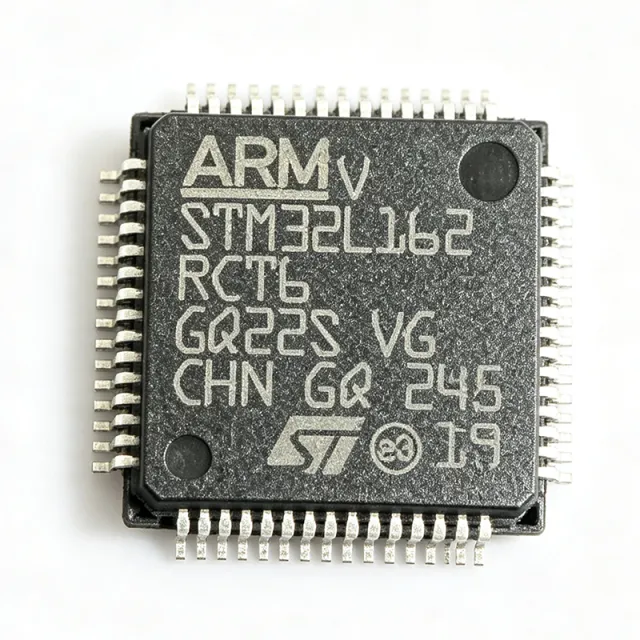
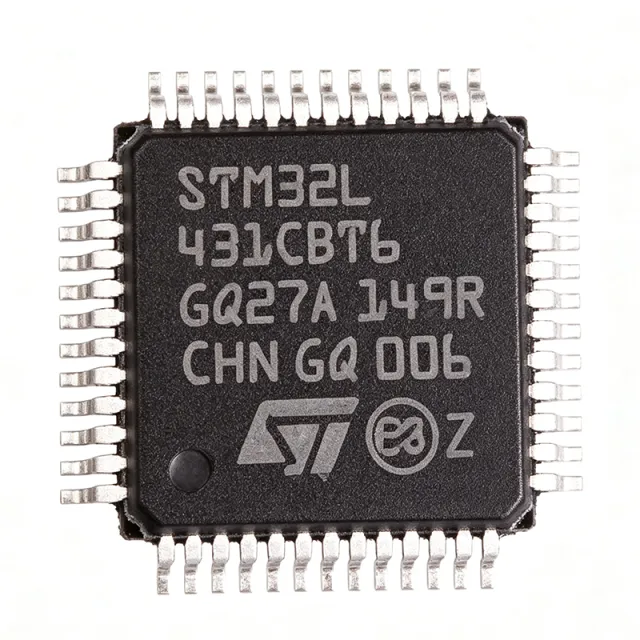
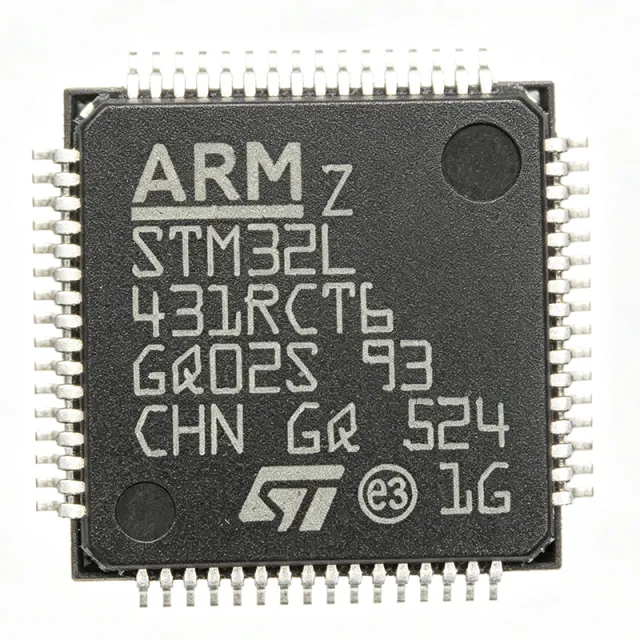
STM32L152ZDT6
STM32L152ZDT6 - 32MHz Cortex-M3 USB MCU | ST
STMicroelectronics STM32L152ZDT6 is an ultra-low-power 32-bit microcontroller with an Arm Cortex-M3 core, a maximum 32 MHz operating frequency, 384 KB of Flash memory, USB connectivity, and 144 leads in an LQFP 20 x 20 mm package. It combines an 8 μs wake-up time with low-power operating modes for responsive, energy-conscious embedded systems. The STM32L152ZDT6 also provides an RTC, LCD support, analog functions, 10 serial ports, and a memory interface within a single integrated circuit.
What is an ultra-low-power microcontroller? An ultra-low-power microcontroller is a semiconductor controller designed to execute firmware while minimizing energy consumption, particularly during idle, sleep, and standby periods. In the device hierarchy, the STM32L152ZDT6 is an Arm Cortex-M3 microcontroller, a 32-bit reduced-instruction-set processor platform, within the STM32 family of embedded processors and the broader category of embedded semiconductors. Its combination of USB connectivity, real-time-clock capability, analog functions, and low-power wake-up makes it suitable for connected embedded equipment that must balance responsiveness with restricted energy budgets.
Key features include the 32 MHz Arm Cortex-M3 processor, 384 KB of Flash memory, and integrated USB connectivity. The 10 serial ports support multiple communication tasks without requiring a separate protocol controller. An RTC provides timekeeping for data logging, alarms, and scheduled operations, while LCD support can simplify instrument and human-interface designs. The manufacturer material also identifies analog functions, a memory interface, seven low-power modes, and an 8 μs wake-up time as defining characteristics of the STM32L152xD family.
Technically, the STM32L152ZDT6 belongs to the STM32L1 low-power microcontroller family and supports operation at up to 32 MHz. Its extensive peripheral integration reduces the number of external devices required in USB-connected embedded products. The 144-LQFP package also provides a large pin count, supporting the family connectivity, analog, timing, and memory-interface functions. The supplied source data confirms the 384 KB Flash configuration but does not specify RAM capacity, exact analog converter performance, pin assignments, or detailed absolute maximum ratings; these values must be confirmed in the manufacturer documentation.
Typical applications include low-power USB data loggers, industrial sensing nodes, battery-powered instruments, LCD-equipped control panels, and connected embedded accessories. In each case, the combination of USB, RTC, serial interfaces, analog functions, and fast wake-up can reduce board complexity. Designers should also evaluate whether the 384 KB Flash configuration is sufficient for the firmware image, USB stack, bootloader, diagnostics, and application data before committing to a PCB layout.
A key design consideration is that firmware, USB enumeration, clock configuration, and low-power state transitions must be coordinated to obtain the intended energy profile. USB connection can influence whether the device remains in a low-power state, so the application should use the manufacturer's clock, GPIO, and low-power recommendations. Decoupling, exposed-pad or thermal considerations, and signal routing should be designed from the complete package documentation rather than inferred from the distributor summaries.
This page consolidates verified distributor and manufacturer information, a 144-LQFP package identity, pricing evidence, application guidance, and a documented scarcity of verified drop-in alternatives. It also separates confirmed STM32L152ZDT6 characteristics from parameters that still require engineering verification, helping procurement and design teams make traceable engineering decisions without treating generic STM32 alternatives as automatic replacements.
見積もり
お問い合わせ