Produk (44,000+)

KSZ8041FTL - 10/100 Ethernet PHY with 100BASE-FX | Microchip
KSZ8041FTL

KSZ8041FTL - 10/100 Ethernet PHY with 100BASE-FX | Microchip

The Microchip Technology KSZ8041FTL is a single-supply 10Base-T, 100Base-TX, and 100Base-FX Ethernet physical-layer transceiver with MII, RMII, and SMII interfaces, supplied in a 48-pin 7 x 7 mm TQFP package. Its 3.135 V to 3.465 V supply range, one transmitter and one receiver, and automatic MDI/MDI-X handling support copper and fiber Ethernet connectivity. An Ethernet physical-layer transceiver, commonly called an Ethernet PHY, converts digital data from a network controller into electrical or optical-signaling-compatible signals for the physical medium. The KSZ8041 belongs to the Ethernet interface IC hierarchy, combining a 10/100 Ethernet MAC interface with mixed-signal circuitry for 10Base-T, 100Base-TX, and 100Base-FX physical channels. The KSZ8041FTL adds 100Base-FX support to the feature set of the KSZ8041TL. This makes the FTL suitable for fiber links, media converters, and equipment that needs one Ethernet PHY to address copper and fiber interfaces. Automatic crossover handling through HP Auto MDI/MDI-X removes the need to distinguish straight-through and crossover cables in conventional copper installations. Its mixed-signal design is intended to extend signaling distance while reducing power consumption. The device supports full MII, reduced MII, and serial MII connectivity, allowing integration with network controllers operating at different interface rates and pin requirements. The 48-pin lead-free TQFP package provides a conventional surface-mount footprint for industrial and embedded Ethernet equipment. Typical uses include 10/100 industrial Ethernet controllers, fiber-to-copper media converters, embedded gateways, network switches, test equipment, and communication equipment requiring a single PHY with both copper and fiber support. Evaluation is supported by the Microchip KSZ8041FTL-EVAL platform, while the KSZ8041TL-FTL evaluation board covers the related TL and FTL devices. A critical design consideration is validating the selected media mode, PHY address straps, and interface configuration at power-up. The manufacturer hardware design checklist specifically identifies reset-time strap behavior and warns that receive inputs can affect strap latching, so external hardware and software sequencing must follow the manufacturer guidance. This page combines manufacturer-supported interface and package information with distributor availability references, practical application guidance, and engineering-focused comparison data. It also distinguishes exact verified facts from parameters that require confirmation from the current manufacturer datasheet before a new PCB or production release is approved.

RFC Hubungi kami
KSZ8041FTL-S - 10/100 Ethernet PHY | Microchip | 48-TQFP
KSZ8041FTL-S

KSZ8041FTL-S - 10/100 Ethernet PHY | Microchip | 48-TQFP

Microchip Technology KSZ8041FTL-S is a single-supply 10Base-T/100Base-TX Ethernet physical-layer transceiver with MII, RMII, and SMII interfaces, packaged in a 48-pin TQFP measuring 7 x 7 mm. It operates from a 3.135 V to 3.465 V supply, supports one transmit and one receive channel, and uses a mixed-signal design intended to extend signaling distance while reducing power consumption. The device also supports HP Auto MDI/MDIX operation. An Ethernet physical-layer transceiver, commonly called an Ethernet PHY, converts digital frames handled by an Ethernet media-access controller into signals suitable for twisted-pair cabling. It forms the physical-layer element within the broader Ethernet interface hierarchy, which also includes the MAC, clock and timing circuitry, magnetics, connectors, and cable. The KSZ8041 family is intended for embedded systems requiring 10 Mb/s or 100 Mb/s Ethernet connectivity over copper cabling. The KSZ8041 provides MII, RMII, and SMII interfaces, allowing it to connect with controllers operating under different parallel-interface conventions. A single 3.3 V supply reduces the number of external rails required in embedded equipment. Its 48-TQFP package provides enough pins for the Ethernet data interfaces, control signals, clocking connections, physical-layer management functions, and power-ground connections required by the device. The mixed-signal architecture is a central product characteristic. According to the Microchip product page, this design extends signaling distance and reduces power consumption relative to conventional approaches. The PHY supports automatic MDI/MDIX handling through HP Auto MDI/MDIX, simplifying connections to standard Ethernet ports without requiring separate crossover cables in common installations. Typical applications include industrial Ethernet controllers, embedded web servers, set-top equipment, printers, network bridges, industrial automation equipment, and communications modules. The RMII interface is particularly useful where connector count and board area are important, while MII or SMII support provides flexibility for designs using different Ethernet controller architectures. PCB implementation requires close attention to the manufacturer hardware-design checklist, particularly configuration strap values and reset behavior. Strapping pins control speed, duplex, auto-negotiation, power-down functionality, and PHY address, and their levels are latched during power-up and reset. Confirm the required logic levels before finalizing a board because MAC receive signals may influence straps during startup. This product page organizes the electrical characteristics, package information, drop-in family alternatives, application guidance, and design checklist references around the KSZ8041FTL-S. It is intended to accelerate component identification, PCB footprint planning, sourcing, and first-pass feasibility assessment for 10/100 Ethernet designs.

RFC Hubungi kami
KSZ8041FTL-TR - 10/100 Ethernet PHY with 100BASE-FX | Microchip (Tape & Reel)
KSZ8041FTL-TR

KSZ8041FTL-TR - 10/100 Ethernet PHY with 100BASE-FX | Microchip (Tape & Reel)

The Microchip Technology KSZ8041FTL-TR is a single-supply 10Base-T, 100Base-TX, and 100Base-FX Ethernet physical-layer transceiver with MII, RMII, and SMII interfaces, supplied in a 48-pin 7 x 7 mm TQFP package. Its 3.135 V to 3.465 V supply range, one transmitter and one receiver, and automatic MDI/MDI-X handling support copper and fiber Ethernet connectivity. An Ethernet physical-layer transceiver, commonly called an Ethernet PHY, converts digital data from a network controller into electrical or optical-signaling-compatible signals for the physical medium. The KSZ8041 belongs to the Ethernet interface IC hierarchy, combining a 10/100 Ethernet MAC interface with mixed-signal circuitry for 10Base-T, 100Base-TX, and 100Base-FX physical channels. The KSZ8041FTL-TR adds 100Base-FX support to the feature set of the KSZ8041TL. This makes the FTL suitable for fiber links, media converters, and equipment that needs one Ethernet PHY to address copper and fiber interfaces. Automatic crossover handling through HP Auto MDI/MDI-X removes the need to distinguish straight-through and crossover cables in conventional copper installations. Its mixed-signal design is intended to extend signaling distance while reducing power consumption. The device supports full MII, reduced MII, and serial MII connectivity, allowing integration with network controllers operating at different interface rates and pin requirements. The 48-pin lead-free TQFP package provides a conventional surface-mount footprint for industrial and embedded Ethernet equipment. Typical uses include 10/100 industrial Ethernet controllers, fiber-to-copper media converters, embedded gateways, network switches, test equipment, and communication equipment requiring a single PHY with both copper and fiber support. Evaluation is supported by the Microchip KSZ8041FTL-TR-EVAL platform, while the KSZ8041TL-FTL evaluation board covers the related TL and FTL devices. A critical design consideration is validating the selected media mode, PHY address straps, and interface configuration at power-up. The manufacturer hardware design checklist specifically identifies reset-time strap behavior and warns that receive inputs can affect strap latching, so external hardware and software sequencing must follow the manufacturer guidance. This page combines manufacturer-supported interface and package information with distributor availability references, practical application guidance, and engineering-focused comparison data. It also distinguishes exact verified facts from parameters that require confirmation from the current manufacturer datasheet before a new PCB or production release is approved.

RFC Hubungi kami
KSZ8041FTLI 10/100 Ethernet PHY | Microchip | 48-TQFP
KSZ8041FTLI

KSZ8041FTLI 10/100 Ethernet PHY | Microchip | 48-TQFP

The Microchip Technology KSZ8041FTLI is a single-port 10Base-T/100Base-TX Ethernet physical-layer transceiver with MII, RMII, and SMII interfaces, supplied in a 48-pin TQFP package. It is designed for embedded systems that require a 10/100 Ethernet copper connection and a conventional parallel MAC interface. The device uses a single-supply mixed-signal design to extend signaling distance while reducing power consumption, and supports HP Auto-MDI/MDI-X crossover operation. An Ethernet PHY is the physical-layer component that converts digital MAC data into electrical signals for a twisted-pair cable and converts received signals back into digital data for the MAC controller. The KSZ8041 belongs to the Ethernet interface IC hierarchy, where the PHY works alongside a network controller, transformer, RJ45 connector, clock source, and magnetics. Unlike a switch or protocol controller, the KSZ8041 primarily handles analog signaling and line coding at the physical layer. The KSZ8041 supports 10Base-T and 100Base-TX operation and provides MII, RMII, and SMII choices for connection to a host controller. These interface options allow the PHY to be used with controllers having different clocking and data arrangements. The manufacturer describes the device as using a unique mixed-signal design to extend signaling distance while reducing power consumption. HP Auto-MDI/MDI-X support simplifies direct connection to a network transformer without manual crossover configuration. Typical uses include industrial Ethernet equipment, embedded control systems, access equipment, industrial controls, print systems, and embedded network gateways. The 48-TQFP package provides a conventional surface-mount footprint and exposes the PHY, clock, interface, power, and configuration functions needed for implementation in a multilayer PCB. A successful design depends on correct supply decoupling, controlled clocking, proper MII/RMII/SMII connection, and layout that preserves the integrity of the analog receive and transmit paths. The PHY should be placed close to the Ethernet magnetics, with short, controlled-impedance traces for digital interface signals and carefully planned separation between noisy digital return currents and sensitive analog nodes. The manufacturer’s KSZ8041 documentation should be used for the final pin assignments, strap configuration, layout guidance, and interface timing.

RFC Hubungi kami
KSZ8041NLI-TR - 10/100 Ethernet PHY | Microchip
KSZ8041NLI-TR

KSZ8041NLI-TR - 10/100 Ethernet PHY | Microchip

Microchip Technology KSZ8041NLI-TR is a single-supply 10Base-T/100Base-TX Ethernet physical-layer transceiver with MII and RMII interfaces, operating from a single 3.3 V supply and packaged in a 32-QFN 5x5 mm package. It supports one Ethernet channel at 10 Mbps or 100 Mbps and includes the mixed-signal circuitry required to connect a network medium interface to a digital Ethernet controller. An Ethernet PHY, or physical-layer transceiver, converts digital frame data into electrical signaling for a 10/100 Ethernet link and converts received link signals back into data for the host controller. The KSZ8041 sits between an Ethernet MAC or microcontroller with MII/RMII support and the transformer-coupled network interface, providing the physical signaling layer required by IEEE 802.3 Ethernet designs. Key verified features include 10/100Base-TX operation, full MII and RMII interface support, single-supply operation, and a 32-QFN package measuring 5x5 mm. The manufacturer describes a mixed-signal design intended to extend signaling distance while reducing power consumption. The part is identified by the -TR ordering suffix and is listed in tape-and-reel commercial distribution channels. The interface architecture makes the KSZ8041 suitable for embedded Ethernet designs, including industrial controllers, embedded processors, set-top boxes, access equipment, and other systems that require a 10/100 Ethernet physical layer. MII support suits designs requiring separate transmit and receive data paths, while RMII can reduce the number of digital interface signals when supported by the host controller. When placing the device, follow the manufacturer package and land-pattern requirements, provide the specified decoupling and Ethernet magnetics interface components, and route high-speed or high-current network-side connections according to the applicable reference design. The exact pin names, pin functions, electrical limits, and recommended external-component values require confirmation from the official manufacturer datasheet before layout release. This page consolidates verified manufacturer and distributor information for KSZ8041NLI-TR and distinguishes confirmed product facts from parameters that were not included in the supplied search data. It is intended to support component identification, sourcing, and preliminary engineering review rather than replace the complete Microchip datasheet.

RFC Hubungi kami
KSZ8041NLJ-TR 10/100 Ethernet PHY | Microchip | 32-QFN
KSZ8041NLJ-TR

KSZ8041NLJ-TR 10/100 Ethernet PHY | Microchip | 32-QFN

The Microchip Technology KSZ8041NLJ-TR is a single-supply 10BASE-T/100BASE-TX Ethernet physical-layer transceiver with MII, RMII, and SMII interfaces, packaged in a 32-pin QFN measuring 5 mm by 5 mm. It operates from a 3.3 V supply and is designed for embedded systems that require 10/100 Mb/s Ethernet connectivity without a separate external MAC. An Ethernet physical-layer transceiver, commonly called an Ethernet PHY, converts digital data into signals suitable for a twisted-pair Ethernet cable and converts received cable signals back into digital data. The KSZ8041 belongs to the PHY hierarchy within network interface controllers, interface integrated circuits, and broader communications semiconductors. Its mixed-signal design supports extended signaling distance while reducing power consumption, making it appropriate for industrial, consumer, and embedded Ethernet platforms. The KSZ8041NLJ-TR combines 10BASE-T and 100BASE-TX operation in one device, allowing the same network port to support legacy 10 Mb/s links and Fast Ethernet links. Its MII, RMII, and SMII host interfaces provide flexibility when connecting to a microcontroller, application processor, or dedicated Ethernet controller. Automatic MDI/MDIX handling also helps simplify implementation where either straight-through or crossover cabling may be encountered. The 32-QFN package supports compact, surface-mount PCB construction while providing the exposed thermal-pad area expected for this package family. Its 3.3 V single-supply architecture simplifies power planning in systems that already operate at 3.3 V. The KSZ8041NLJ-TR variant supports an extended temperature range up to 125 °C, making it suitable for industrial and other thermally demanding equipment when the complete system is designed for those conditions. Typical applications include industrial Ethernet controllers, embedded Linux platforms, factory automation equipment, network-connected sensors, set-top boxes, printers, and compact communication modules. The PHY can be used behind a processor with an RMII interface or behind a controller with MII or SMII signaling. Designers must still provide correct magnetic-interface circuitry, decoupling, reference-clock implementation, and PCB routing compliant with the manufacturer’s reference layout. For a new design, use the manufacturer’s recommended Ethernet magnetics, termination, and exposed-pad layout exactly. Keep the digital MII, RMII, or SMII traces away from the analog magnetics interface, provide clean 3.3 V supply routing, and account for the QFN exposed pad in both assembly and thermal planning. This page combines the manufacturer product information, interface and package characteristics, sourcing guidance, drop-in alternatives, comparison parameters, and practical PCB implementation notes to support faster engineering evaluation and component selection.

RFC Hubungi kami
KSZ8041RNL - 10/100BASE-TX RMII PHY | Microchip Technology
KSZ8041RNL

KSZ8041RNL - 10/100BASE-TX RMII PHY | Microchip Technology

The Microchip Technology KSZ8041RNL is a single-supply 10BASE-T/100BASE-TX physical-layer transceiver with a full RMII interface, operating from 3.135 V to 3.465 V in a 32-VFQFN exposed-pad package measuring 5 mm by 5 mm. It accepts a 25 MHz crystal as its input reference clock and supplies a 50 MHz RMII reference clock to the media access controller, eliminating the need for a separate 50 MHz system clock. The device supports one transmit driver and one receive receiver and uses a mixed-signal design intended to extend Ethernet signaling distance while reducing power consumption. An Ethernet PHY is the physical-layer interface between a media access controller and a copper Ethernet network. Within the hierarchy of Ethernet controllers, PHYs, interface transceivers, and semiconductors, the KSZ8041RNL converts digital MAC data into differential 10BASE-T or 100BASE-TX signals and converts received Ethernet signals back into RMII digital data. The RMII interface reduces the number of parallel data signals required between the PHY and MAC while supporting 100 Mb/s operation. The key features include support for both 10BASE-T and 100BASE-TX networks, an RMII-only configuration, a 25 MHz input reference, and a generated 50 MHz RMII reference output. According to the Microchip datasheet 00002245B, the RNL version is an enhanced RMII implementation that does not require a 50 MHz system clock. Microchip also identifies automatic MDI/MDI-X capability in the KSZ8041 product family, reducing the need for manual crossover handling. The mixed-signal architecture separates the digital control and clock paths from the analog line-driver and receive functions. This is important in compact embedded systems because the Ethernet magnetics, crystal, decoupling network, and high-speed digital RMII traces all influence signal integrity. Power-supply noise and imperfect clock routing can therefore affect otherwise correct firmware and media-access-controller configurations. Typical uses include embedded Linux systems, industrial controllers, set-top boxes, access equipment, printers, and embedded network bridges that connect a conventional RMII MAC to a 10/100 Ethernet network. The part can also support a design needing the MAC to receive a stable 50 MHz reference generated by the PHY. The manufacturer product page lists related KSZ8041 variants for MII, SMII, RMII, and fiber support, so interface requirements should be checked before substitution. Designers should provide the specified crystal, clock-support components, Ethernet transformer, decoupling capacitors, and a layout that keeps sensitive analog and differential Ethernet traces isolated from noisy digital circuitry. The power-up strapping pins configure speed, duplex, auto-negotiation, power-down behavior, and PHY address, and their values are latched during reset. The hardware design checklist should be followed because incorrect strap resistors or reset timing can produce an unintended operating mode even when the clock and power rails are correct. This page combines the verified Microchip datasheet details, distributor availability, package information, interface distinctions, and practical migration considerations in a format that helps engineers evaluate the KSZ8041RNL before PCB layout or a second-source decision.

RFC Hubungi kami
KSZ8041RNL-TR - 10/100BASE-TX RMII PHY | Microchip Technology (Tape & Reel)
KSZ8041RNL-TR

KSZ8041RNL-TR - 10/100BASE-TX RMII PHY | Microchip Technology (Tape & Reel)

The Microchip Technology KSZ8041RNL-TR is a single-supply 10BASE-T/100BASE-TX physical-layer transceiver with a full RMII interface, operating from 3.135 V to 3.465 V in a 32-VFQFN exposed-pad package measuring 5 mm by 5 mm. It accepts a 25 MHz crystal as its input reference clock and supplies a 50 MHz RMII reference clock to the media access controller, eliminating the need for a separate 50 MHz system clock. The device supports one transmit driver and one receive receiver and uses a mixed-signal design intended to extend Ethernet signaling distance while reducing power consumption. An Ethernet PHY is the physical-layer interface between a media access controller and a copper Ethernet network. Within the hierarchy of Ethernet controllers, PHYs, interface transceivers, and semiconductors, the KSZ8041RNL-TR converts digital MAC data into differential 10BASE-T or 100BASE-TX signals and converts received Ethernet signals back into RMII digital data. The RMII interface reduces the number of parallel data signals required between the PHY and MAC while supporting 100 Mb/s operation. The key features include support for both 10BASE-T and 100BASE-TX networks, an RMII-only configuration, a 25 MHz input reference, and a generated 50 MHz RMII reference output. According to the Microchip datasheet 00002245B, the RNL version is an enhanced RMII implementation that does not require a 50 MHz system clock. Microchip also identifies automatic MDI/MDI-X capability in the KSZ8041 product family, reducing the need for manual crossover handling. The mixed-signal architecture separates the digital control and clock paths from the analog line-driver and receive functions. This is important in compact embedded systems because the Ethernet magnetics, crystal, decoupling network, and high-speed digital RMII traces all influence signal integrity. Power-supply noise and imperfect clock routing can therefore affect otherwise correct firmware and media-access-controller configurations. Typical uses include embedded Linux systems, industrial controllers, set-top boxes, access equipment, printers, and embedded network bridges that connect a conventional RMII MAC to a 10/100 Ethernet network. The part can also support a design needing the MAC to receive a stable 50 MHz reference generated by the PHY. The manufacturer product page lists related KSZ8041 variants for MII, SMII, RMII, and fiber support, so interface requirements should be checked before substitution. Designers should provide the specified crystal, clock-support components, Ethernet transformer, decoupling capacitors, and a layout that keeps sensitive analog and differential Ethernet traces isolated from noisy digital circuitry. The power-up strapping pins configure speed, duplex, auto-negotiation, power-down behavior, and PHY address, and their values are latched during reset. The hardware design checklist should be followed because incorrect strap resistors or reset timing can produce an unintended operating mode even when the clock and power rails are correct. This page combines the verified Microchip datasheet details, distributor availability, package information, interface distinctions, and practical migration considerations in a format that helps engineers evaluate the KSZ8041RNL-TR before PCB layout or a second-source decision.

RFC Hubungi kami
KSZ8041TL 10/100 Ethernet PHY | Microchip | TQFP-48
KSZ8041TL

KSZ8041TL 10/100 Ethernet PHY | Microchip | TQFP-48

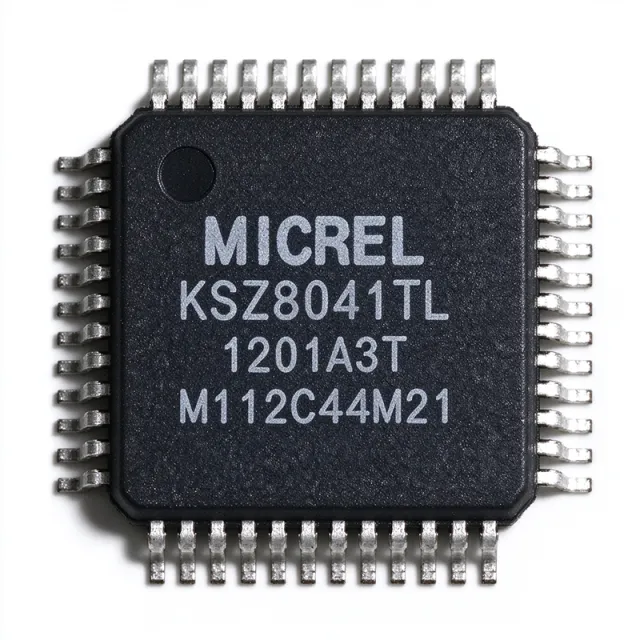
The Microchip Technology KSZ8041TL is a single-supply 10BASE-T/100BASE-TX Ethernet physical-layer transceiver with MII, RMII, and SMII interfaces, supplied in a 48-TQFP package. It supports 10 Mb/s and 100 Mb/s copper Ethernet and combines transmit, receive, clock, and management functions for embedded network equipment. The verified manufacturer material identifies a mixed-signal design intended to extend signaling distance while reducing power consumption, plus HP Auto MDI/MDIX capability. An Ethernet physical-layer transceiver, or PHY, converts digital MAC data into signals suitable for twisted-pair cabling and converts received cable signals back into digital data. The KSZ8041 belongs to the Ethernet interface IC hierarchy, connecting a network media-access controller to a 10BASE-T or 100BASE-TX copper link. Its MII, RMII, and SMII support lets designers select an interface appropriate to the host controller and board constraints. The KSZ8041TL provides separate 10BASE-T and 100BASE-TX operation, automatic cable-related handling, and support for HP Auto MDI/MDIX according to the Microchip product page. These features simplify connection to standard Ethernet magnetics and network transformers without requiring a fixed transmit/receive crossover configuration. The verified sources also describe the KSZ8041TL as a low-power physical-layer solution enabled by a mixed-signal architecture. The manufacturer datasheet describes INTRP on pin 32 as an optional interrupt signal for informing an external controller that the PHY register has received a status update. This makes the device suitable for designs requiring PHY-status monitoring alongside packet transmission and reception. The digital host interface can be used with controllers that support MII, RMII, or SMII, subject to the voltage, timing, and pin requirements in the device documentation. Typical uses include industrial Ethernet controllers, embedded gateways, printers, set-top equipment, network interface cards, media-conversion equipment, and industrial control systems. The TL variant is intended for copper-based 10BASE-T/100BASE-TX links; the related KSZ8041FTL adds 100BASE-FX support, so it is not a drop-in functional substitute unless the PCB and magnetics are specifically designed for fiber. For a new layout, follow the manufacturer pinout and reference-circuit recommendations exactly, especially the supply bypass capacitors, crystal or clock network, Ethernet differential pairs, and isolation or magnetics interface. Keep the digital MII/RMII/SMII traces away from the analog magnetics-side circuitry, maintain the specified impedance environment, and provide clean power referenced to the device ground. Confirm the exact package variant, temperature range, and ordering suffix before releasing a PCB.

RFC Hubungi kami
KSZ8041TL-S - 10/100 Ethernet PHY | Microchip Technology
KSZ8041TL-S

KSZ8041TL-S - 10/100 Ethernet PHY | Microchip Technology

The Microchip Technology KSZ8041TL-S is a single-supply 10BASE-T/100BASE-TX Ethernet physical-layer transceiver with one transmitter and one receiver, MII, RMII, and SMII host interfaces, and a 48-lead TQFP package measuring 7 mm by 7 mm. Its 3.135 V to 3.465 V operating-supply range supports 3.3 V network equipment designs. An Ethernet physical-layer transceiver, commonly called an Ethernet PHY, converts digital frames exchanged with a network controller into electrical signals suitable for twisted-pair cabling. It belongs to the interface-IC hierarchy: Ethernet PHY, network interface, interface IC, and semiconductor. The KSZ8041 family supports both 10BASE-T and 100BASE-TX copper links and provides configurable host-facing interfaces for integration with Ethernet MAC controllers. The KSZ8041TL-S uses a mixed-signal design intended to extend Ethernet signaling distance while reducing power consumption. Its one-driver, one-receiver arrangement supports bidirectional copper communication through an external magnetics-based network interface. The part provides MII, RMII, and SMII connectivity, allowing system designers to select an interface appropriate to MAC timing and board constraints rather than introducing a separate PHY for each parallel-interface mode. The principal operating constraints center on the single 3.3 V supply, supported Ethernet data rates, copper media support, package footprint, and configuration straps. The device supports 10BASE-T and 100BASE-TX operation but does not include the 100BASE-FX capability described for the KSZ8041FTL family member. The target therefore fits copper Ethernet designs requiring MII, RMII, or SMII connectivity rather than fiber-media converter designs. Typical uses include industrial Ethernet controllers, embedded network equipment, print servers, network interface adapters, and communication equipment that connects a host MAC to a 10/100 copper Ethernet network. Its SMII interface can also suit designs requiring a wider parallel data bus, while RMII reduces the number of host-side signals when board area is more constrained than throughput demands. When designing a board around the KSZ8041TL-S, follow the manufacturer hardware design checklist for power sequencing, reset behavior, PHY strapping, magnetic-component selection, and magnetics-side layout. Ensure the host interface voltage levels match the selected MII, RMII, or SMII mode, and avoid driving strap pins with external circuitry that could interfere with startup sampling. This page consolidates the KSZ8041TL-S electrical identity, package details, host-interface options, sourcing guidance, drop-in candidates, and practical PCB considerations into one engineering reference. It also distinguishes the target from copper-only, industrial-temperature, and fiber-capable members of the KSZ8041 family.

RFC Hubungi kami
KSZ8041TL-TR 10/100 Ethernet PHY | Microchip | TQFP-48 (Tape & Reel)
KSZ8041TL-TR

KSZ8041TL-TR 10/100 Ethernet PHY | Microchip | TQFP-48 (Tape & Reel)

The Microchip Technology KSZ8041TL-TR is a single-supply 10BASE-T/100BASE-TX Ethernet physical-layer transceiver with MII, RMII, and SMII interfaces, supplied in a 48-TQFP package. It supports 10 Mb/s and 100 Mb/s copper Ethernet and combines transmit, receive, clock, and management functions for embedded network equipment. The verified manufacturer material identifies a mixed-signal design intended to extend signaling distance while reducing power consumption, plus HP Auto MDI/MDIX capability. An Ethernet physical-layer transceiver, or PHY, converts digital MAC data into signals suitable for twisted-pair cabling and converts received cable signals back into digital data. The KSZ8041 belongs to the Ethernet interface IC hierarchy, connecting a network media-access controller to a 10BASE-T or 100BASE-TX copper link. Its MII, RMII, and SMII support lets designers select an interface appropriate to the host controller and board constraints. The KSZ8041TL-TR provides separate 10BASE-T and 100BASE-TX operation, automatic cable-related handling, and support for HP Auto MDI/MDIX according to the Microchip product page. These features simplify connection to standard Ethernet magnetics and network transformers without requiring a fixed transmit/receive crossover configuration. The verified sources also describe the KSZ8041TL-TR as a low-power physical-layer solution enabled by a mixed-signal architecture. The manufacturer datasheet describes INTRP on pin 32 as an optional interrupt signal for informing an external controller that the PHY register has received a status update. This makes the device suitable for designs requiring PHY-status monitoring alongside packet transmission and reception. The digital host interface can be used with controllers that support MII, RMII, or SMII, subject to the voltage, timing, and pin requirements in the device documentation. Typical uses include industrial Ethernet controllers, embedded gateways, printers, set-top equipment, network interface cards, media-conversion equipment, and industrial control systems. The TL variant is intended for copper-based 10BASE-T/100BASE-TX links; the related KSZ8041FTL adds 100BASE-FX support, so it is not a drop-in functional substitute unless the PCB and magnetics are specifically designed for fiber. For a new layout, follow the manufacturer pinout and reference-circuit recommendations exactly, especially the supply bypass capacitors, crystal or clock network, Ethernet differential pairs, and isolation or magnetics interface. Keep the digital MII/RMII/SMII traces away from the analog magnetics-side circuitry, maintain the specified impedance environment, and provide clean power referenced to the device ground. Confirm the exact package variant, temperature range, and ordering suffix before releasing a PCB.

RFC Hubungi kami
KSZ8041TLI - 10/100 Ethernet PHY | Microchip Technology
KSZ8041TLI

KSZ8041TLI - 10/100 Ethernet PHY | Microchip Technology

The Microchip Technology KSZ8041TLI is a single-channel 10Base-T/100Base-TX Ethernet physical-layer transceiver with full MII, RMII, and SMII interfaces, supplied in a 48-pin TQFP package. The device operates from a single 3.3 V supply and supports IEEE 802.3 and IEEE 802.3u Ethernet operation at 10 Mbps and 100 Mbps. Its integrated mixed-signal design is intended to extend signaling distance while reducing power consumption in compact embedded networking equipment. An Ethernet PHY is the physical-layer component that converts digital data from a MAC or Ethernet controller into analog signaling for a copper network, while receiving and converting incoming signals back into digital data. In the broader hierarchy, the KSZ8041TLI is an Ethernet interface transceiver, a network interface IC, and a semiconductor for Ethernet connectivity. It is appropriate for industrial control, embedded systems, communications equipment, and other designs requiring a dedicated 10/100 Ethernet front end. The verified device information identifies support for auto-negotiation through hardware pin strapping on pin 42 or software using register 0h bit 12. Auto-negotiation follows Clause 28 of the IEEE 802.3u specification and allows link partners to select the highest common operating mode. The same 48-pin TQFP package also supports MII, RMII, and SMII host interfaces, allowing designers to match the PHY to different MAC architectures. The KSZ8041TLI is designed for surface-mount implementation and uses a 3.3 V single-supply architecture. Its mixed-signal approach supports the 10Base-T and 100Base-TX physical layers while controlling power use compared with discrete implementations. The product page also identifies HP Auto MDI/MDIX support, which simplifies connection to both straight-through and crossover cable arrangements in many network designs. Typical uses include embedded Ethernet controllers, industrial automation modules, serial-to-Ethernet equipment, printer controllers, set-top boxes, and communication appliances. When designing around this PHY, verify the exact MAC interface mode, pin strapping requirements, magnetics selection, and termination network against the manufacturer datasheet. The verified data confirms the functional family and package but does not provide a complete pin list, recommended magnetics part numbers, or detailed timing values. This product record combines verified distributor and manufacturer information with practical interface-selection guidance, same-package alternatives, pricing context, and design cautions. The comparison and notes help distinguish temperature, packaging, and interface-option differences without treating functionally similar parts as automatically drop-in replacements.

USD $3.61 Dalam Stok
KSZ8041TLI-S - 10/100 Ethernet PHY | Microchip | TQFP-48
KSZ8041TLI-S

KSZ8041TLI-S - 10/100 Ethernet PHY | Microchip | TQFP-48

The Microchip Technology KSZ8041TLI-S is a single-supply 10BASE-T and 100BASE-TX Ethernet physical-layer transceiver with MII, RMII, and SMII interfaces, packaged in a 48-pin TQFP measuring 7 x 7 mm. It supports 10 Mb/s and 100 Mb/s Ethernet connectivity and incorporates automatic MDI/MDI-X handling for link partner compatibility. An Ethernet physical-layer transceiver, commonly called an Ethernet PHY, converts digital data into the electrical signaling used by 10BASE-T and 100BASE-TX networks. It belongs to the network interface controller and Ethernet transceiver hierarchy, operating between a network media-access controller and the transformer-coupled Ethernet line. The KSZ8041 supports MII, RMII, and SMII host interfaces, allowing integration with controllers operating in parallel, reduced-pin, or source-synchronous signaling configurations. The principal benefits of the KSZ8041TLI-S are its 10/100 Mb/s dual-rate support, three digital host-interface choices, single-supply operation, and mixed-signal design. The manufacturer describes the mixed-signal implementation as extending signaling distance while reducing power consumption. Automatic MDI/MDI-X support also removes the need to configure transmit and receive pairs manually when either straight-through or crossover cabling is used. The device integrates the analog PHY circuitry and digital host-interface functions required for a compact Ethernet front end. Its 48-pin TQFP-48 package provides separate interface and power-related connections on a conventional surface-mount footprint. Because it is a single transceiver, it does not by itself provide two independent copper ports, multi-port switching, or packet processing. Those functions belong to the network controller, switch, or higher-level system around the PHY. Typical uses include embedded control systems, industrial automation equipment, communications modules, print systems, and compact network interfaces that require 10BASE-T or 100BASE-TX connectivity. The MII interface supports designs with a broad parallel signal set, RMII reduces host-side pin requirements, and SMII supports systems configured for source-synchronous signaling. Selection should account for the host controller's supported physical interface and the electrical requirements of the magnetic network interface. Place the PHY, its supporting passive components, and the Ethernet magnetic device according to the manufacturer's reference layout. Keep high-speed host-interface traces short and controlled, provide the specified supply and decoupling arrangement, and account for magnetics and connector placement when defining the Ethernet channel. Verify signal integrity, return loss, insertion loss, and radiated emissions over the intended network interface before production release. This page organizes the official product information, package details, replacement comparisons, interface selection guidance, and practical integration notes into one engineering-focused resource. It also distinguishes confirmed drop-in options from functional alternatives so that footprint, interface, and parameter compatibility can be checked before a PCB substitution is approved.

RFC Hubungi kami
KSZ8041TLI-TR - 10/100 Ethernet PHY | Microchip Technology (Tape & Reel)
KSZ8041TLI-TR

KSZ8041TLI-TR - 10/100 Ethernet PHY | Microchip Technology (Tape & Reel)

The Microchip Technology KSZ8041TLI-TR is a single-channel 10Base-T/100Base-TX Ethernet physical-layer transceiver with full MII, RMII, and SMII interfaces, supplied in a 48-pin TQFP package. The device operates from a single 3.3 V supply and supports IEEE 802.3 and IEEE 802.3u Ethernet operation at 10 Mbps and 100 Mbps. Its integrated mixed-signal design is intended to extend signaling distance while reducing power consumption in compact embedded networking equipment. An Ethernet PHY is the physical-layer component that converts digital data from a MAC or Ethernet controller into analog signaling for a copper network, while receiving and converting incoming signals back into digital data. In the broader hierarchy, the KSZ8041TLI-TR is an Ethernet interface transceiver, a network interface IC, and a semiconductor for Ethernet connectivity. It is appropriate for industrial control, embedded systems, communications equipment, and other designs requiring a dedicated 10/100 Ethernet front end. The verified device information identifies support for auto-negotiation through hardware pin strapping on pin 42 or software using register 0h bit 12. Auto-negotiation follows Clause 28 of the IEEE 802.3u specification and allows link partners to select the highest common operating mode. The same 48-pin TQFP package also supports MII, RMII, and SMII host interfaces, allowing designers to match the PHY to different MAC architectures. The KSZ8041TLI-TR is designed for surface-mount implementation and uses a 3.3 V single-supply architecture. Its mixed-signal approach supports the 10Base-T and 100Base-TX physical layers while controlling power use compared with discrete implementations. The product page also identifies HP Auto MDI/MDIX support, which simplifies connection to both straight-through and crossover cable arrangements in many network designs. Typical uses include embedded Ethernet controllers, industrial automation modules, serial-to-Ethernet equipment, printer controllers, set-top boxes, and communication appliances. When designing around this PHY, verify the exact MAC interface mode, pin strapping requirements, magnetics selection, and termination network against the manufacturer datasheet. The verified data confirms the functional family and package but does not provide a complete pin list, recommended magnetics part numbers, or detailed timing values. This product record combines verified distributor and manufacturer information with practical interface-selection guidance, same-package alternatives, pricing context, and design cautions. The comparison and notes help distinguish temperature, packaging, and interface-option differences without treating functionally similar parts as automatically drop-in replacements.

USD $3.61 Dalam Stok
KSZ8051MLL - 100Mbps MII Ethernet PHY | Microchip Technology
KSZ8051MLL

KSZ8051MLL - 100Mbps MII Ethernet PHY | Microchip Technology

Microchip Technology KSZ8051MLL is a single-supply 10Base-T/100Base-TX Ethernet physical-layer transceiver with full MII support, 100 Mbps data rate, and a 48-LQFP 7 x 7 mm package. It operates from a 3.3 V supply with a specified 3.135 V to 3.465 V range and is designed for transmission and reception over standard Category 5 unshielded twisted-pair cable. An Ethernet physical-layer transceiver, or PHY, converts logical data transmitted by a MAC or controller into signals suitable for copper Ethernet wiring and converts received cable signals back into digital data. The KSZ8051MLL belongs to the 10/100 Ethernet PHY category, within interface ICs and the broader Ethernet communications hierarchy. Its full MII interface provides parallel control, data, and status connections to a network controller. The principal operating characteristics are a 100 Mbps maximum data rate, one transmitter and one receiver, and a 3.3 V supply. Manufacturer information identifies support for 1.8 V, 2.5 V, and 3.3 V interface operating levels, depending on the configuration and connected controller. The commercial-temperature version operates from 0°C to +70°C and is supplied in a surface-mount 48-LQFP package. The integrated PHY reduces the amount of external circuitry required for a 10/100 Ethernet endpoint. It handles physical signaling to the network medium while the associated controller manages packet processing and the higher-level protocol stack. Full MII support makes it appropriate for designs that require a conventional parallel Ethernet interface rather than a serial reduced-media interface. Typical applications include industrial Ethernet equipment, embedded network controllers, print servers, IP cameras, building-control gateways, and compact communication modules. The 100 Mbps rate supports Fast Ethernet networks, while MII connectivity allows direct integration with controllers such as LAN9353T/PT and related Ethernet interface devices. PCB implementation requires careful separation between the digital MII signals and the analog magnetics interface. Place network-side filtering and magnetics close to the connector, observe the recommended copper and layout practices in the manufacturer datasheet, and keep high-current and high-speed return paths controlled to reduce radiated emissions and susceptibility to external noise. This page combines the manufacturer product information, interface characteristics, package details, drop-in candidates, and practical Ethernet design guidance. It is intended to help engineers verify mechanical compatibility, MII requirements, supply conditions, and thermal constraints before integrating the KSZ8051MLL into a Fast Ethernet design.

RFC Hubungi kami
KSZ8051MLL-TR - 100M Ethernet PHY with MII | Microchip
KSZ8051MLL-TR

KSZ8051MLL-TR - 100M Ethernet PHY with MII | Microchip

The Microchip Technology KSZ8051MLL-TR is a single-supply 10BASE-T/100BASE-TX Ethernet physical-layer transceiver with full Media Independent Interface support, supplied in a 48-lead LQFP package measuring 7 mm by 7 mm. It operates from a 3.3 V supply and is designed for automotive Ethernet applications qualified to AEC-Q100 standards. The integrated PHY provides a physical interface between a 10/100 Ethernet MAC and a CAT-5 or better unshielded twisted-pair network. An Ethernet physical-layer transceiver, or Ethernet PHY, is the circuit that converts digital Ethernet data into signals suitable for transmission over twisted-pair cabling and converts received analog signals back into digital data for the MAC. The KSZ8051 belongs to the interface-IC hierarchy: Ethernet PHY → Ethernet transceiver → physical-layer transceiver → semiconductor. Its MII interface connects directly to an Ethernet MAC while the analog PHY side connects to an RJ45 magnetics or network connector section. Key features include support for both 10 Mb/s and 100 Mb/s Ethernet rates, full MII support, single-supply 3.3 V operation, and AEC-Q100 qualification. The 48-LQFP surface-mount package provides a defined lead arrangement and exposed routing space for power, ground, data, control, and analog network connections. These characteristics make the device suitable for automotive Ethernet nodes, industrial control equipment, embedded gateways, and industrial network switches. The KSZ8051 is a highly integrated PHY solution intended to reduce board cost and simplify PCB layout. A 3.3 V-only system architecture eliminates the need for a separate 5 V transceiver rail. The full MII interface provides a conventional parallel connection to an Ethernet controller, allowing the PHY to support legacy 10/100 Ethernet designs without introducing a proprietary serial interface. Typical applications include 100BASE-TX vehicle-network gateways, industrial Ethernet controllers, embedded communication modules, network-interface adapters, and factory automation equipment. Automotive deployments benefit from the manufacturer’s AEC-Q100 qualification, while industrial designs can use the same PHY for equipment operating near 10BASE-T or 100BASE-TX networks. The principal design task is preserving signal integrity from the PHY through the magnetics and connector while providing a low-impedance 3.3 V plane across the LQFP leads. Place input and output decoupling capacitors close to their associated power pins, route the MII clock and data signals as matched-length groups, and maintain continuous ground-plane return paths beneath and between the PHY and network-interface circuitry. This page combines the manufacturer’s device classification, package information, automotive qualification status, sourcing lifecycle information, and practical PCB guidance with clearly qualified drop-in replacement analysis. It distinguishes electrically and mechanically interchangeable options from related Ethernet PHYs that require redesign.

RFC Hubungi kami
KSZ8051MNL - 10/100 Ethernet MII PHY | Microchip Technology
KSZ8051MNL

KSZ8051MNL - 10/100 Ethernet MII PHY | Microchip Technology

The Microchip Technology KSZ8051MNL is a single-supply 10BASE-T/100BASE-TX automotive Ethernet physical-layer transceiver with a full Media Independent Interface (MII), supplied in a 32-pin QFN package measuring 5 mm by 5 mm. It is designed to connect an Ethernet MAC or equivalent controller to standard CAT-5 unshielded twisted-pair cabling while supporting 10 Mbps and 100 Mbps operation. An Ethernet physical-layer transceiver is the network-interface circuit that converts digital data from a media-access controller into differential signaling suitable for twisted-pair cabling, then converts received signals back into digital data. Within the broader hierarchy of Ethernet interface components, the KSZ8051MNL belongs to the PHY class, sits below the network interface controller, and ultimately forms part of a complete Ethernet communication system. The KSZ8051 family is AEC-Q100 standard qualified for automotive applications. The manufacturer describes the KSZ8051 as a highly integrated PHY solution that reduces board cost and simplifies layout through on-chip termination resistors for the differential pairs. It also integrates a low-noise regulator that supplies the 1.2 V core. These features place more of the analog network interface inside the package while reducing the number of external support components needed on the PCB. The KSZ8051MNL provides the full MII interface, distinguishing it from the KSZ8051RNL version, which uses the Reduced Media Independent Interface. This distinction is important during product selection because RMII and MII are not interchangeable bus arrangements. The MII version is appropriate when the connected controller exposes the required parallel MII signals, clocks, and control lines. Typical uses include automotive Ethernet gateways, vehicle domain controllers, infotainment platforms, industrial Ethernet equipment, and other 10/100BASE-TX endpoints. In an automotive design, the device can support a wired network connection while the AEC-Q100 qualification provides an automotive-oriented component option. Its integrated 1.2 V regulator and on-chip termination simplify the analog implementation, although the power supply, magnetic-component interface, decoupling, and signal-integrity layout still require careful implementation. For layout, follow the manufacturer datasheet when assigning the 32 QFN connections and routing the MII and differential Ethernet signals. Keep the 1.2 V bypass capacitor close to its supply pin, route the differential pairs as a controlled-impedance pair, and provide the magnetic-interface network recommended by the datasheet. These practices reduce board-area requirements and help preserve the performance of the integrated PHY. This product page combines the manufacturer’s device description, package and interface information, documented automotive qualification, source links, and practical implementation guidance. It also distinguishes the MII KSZ8051MNL from RMII and migration-related devices so engineers can identify the appropriate family member without relying on a superficial package-size match.

RFC Hubungi kami
KSZ8051MNL-TR - 10/100 Ethernet PHY | Microchip Technology
KSZ8051MNL-TR

KSZ8051MNL-TR - 10/100 Ethernet PHY | Microchip Technology

The Microchip Technology KSZ8051MNL-TR is a single-supply 10BASE-T/100BASE-TX automotive Ethernet physical-layer transceiver packaged in a 32-QFN (5 x 5 mm) package. It provides one Ethernet transceiver, full MII connectivity, and IEEE 802.3 management interface support for automotive Ethernet links over twisted-pair cabling. The device is AEC-Q100 standard qualified and incorporates an internal 1.2 V supply for its analog core. An Ethernet physical-layer transceiver, or Ethernet PHY, converts digital frames exchanged with a network controller into electrical signals suitable for twisted-pair transmission and reconstructs incoming signals for the MAC. The PHY sits between the Ethernet MAC and the transformer-coupled network cable, implementing the physical signaling required by 10BASE-T and 100BASE-TX networks. The KSZ8051 therefore belongs to the interface-IC hierarchy: Ethernet PHY, network interface, integrated circuit, and semiconductor. The KSZ8051 supports both 10BASE-T and 100BASE-TX operation from a single supply. Its full Media Independent Interface provides parallel data, control, and status connections to a compatible Ethernet controller. IEEE 802.3 MDIO management support allows an upper-layer controller to monitor and control PHY status. According to the Microchip product page, the highly integrated PHY reduces board cost and simplifies layout, while the internal 1.2 V rail eliminates the need for a separate 1.2 V supply at the device level. The automotive qualification is a defining feature for this family. Automotive electronic systems require predictable operation across demanding temperature, vibration, and EMC environments. AEC-Q100 qualification makes the KSZ8051 suitable for qualified vehicle-network designs when the complete system also satisfies applicable automotive EMC and network requirements. The MNL suffix identifies the 32-QFN device, and the -TR suffix identifies the tape-and-reel ordering option. Typical uses include automotive Ethernet gateways, body and chassis controllers, infotainment systems, vehicle access networks, and industrial or embedded Ethernet equipment using MII-connected controllers. In these systems, the PHY handles the physical layer while the host controller handles frames, protocol processing, and higher-layer networking. The MII boundary keeps the PHY suitable for controllers designed around a parallel bus rather than a serial Media Independent Interface. Layout is especially important because the PHY interfaces directly to a cable transformer through differential analog pins. Decoupling capacitors should be placed at the supply pins, the 1.2 V output should be decoupled as directed by the reference design, and the analog pair should follow the manufacturer’s differential-routing and return-path guidance. Keeping switching circuitry and high-current paths away from the PHY reduces susceptibility to radiated and conducted noise. This page consolidates the device function, qualified automotive positioning, package details, interface information, migration considerations, practical layout guidance, and confirmed same-footprint alternatives. It also distinguishes a true replacement from a related 32-QFN Ethernet PHY whose pins or registers differ, helping engineers avoid replacements that require schematic or firmware changes.

RFC Hubungi kami
KSZ8051RNL-TR - 10/100 Ethernet PHY | Microchip Technology
KSZ8051RNL-TR

KSZ8051RNL-TR - 10/100 Ethernet PHY | Microchip Technology

Microchip Technology KSZ8051RNL-TR is a single-supply 10BASE-T/100BASE-TX Ethernet physical-layer transceiver with an RMII v1.2 interface, supporting data rates up to 100 Mbps in a 32-QFN 5 x 5 mm package. The device is AEC-Q100 qualified for automotive applications and includes a 50 MHz reference-clock output to the MAC, with an option to use an externally supplied 50 MHz reference clock. An Ethernet physical-layer transceiver, or Ethernet PHY, converts digital MAC-layer data into signals suitable for twisted-pair cabling and recovers those signals at the receiving endpoint. In the signal-chain hierarchy, the KSZ8051 sits between an Ethernet MAC controller and a network transformer or integrated magnetic device. It implements the physical signaling required by IEEE 802.3 networks while leaving frame processing and higher-layer protocol work to the MAC. Key features include support for both 10BASE-T and 100BASE-TX links, full RMII operation, MDC/MDIO management access, and back-to-back mode for copper repeater or media-converter designs. The integrated PHY reduces external circuitry and simplifies board layout. Its single-supply architecture also simplifies power planning compared with multi-rail Ethernet transceiver designs. The KSZ8051RNL includes the transmit and receive functions required for copper Ethernet. According to the manufacturer datasheet, the 10BASE-T drivers use wave shaping and pre-emphasis, with a typical 10BASE-T output amplitude of 2.5 V peak. In RMII mode, the PHY can present a 50 MHz reference to the MAC or accept a 50 MHz reference from the system, supporting common embedded and automotive Ethernet architectures. Typical uses include automotive Ethernet nodes, industrial controllers, network interface controllers, media converters, and 100 Mbps copper repeaters. Back-to-back operation allows two KSZ8051RNL devices to form a copper repeater, while an RMII-compatible KSZ8041 can support a media-converter arrangement. These use cases benefit from the combination of IEEE 802.3 signaling, AEC-Q100 qualification, MDC/MDIO management, and compact 32-QFN packaging. PCB design should preserve the differential signal integrity of each Ethernet pair, provide the required magnetic-device interface, and follow the manufacturer's reference schematic for decoupling and exposed-pad connections. Power routing must accommodate the transceiver's operating supply range, and clock and RMII traces should be laid out to minimize timing disturbance and edge-rate crosstalk. This page consolidates the KSZ8051RNL-TR functional characteristics, same-footprint family variants, application guidance, and practical design considerations into a concise engineering reference for Ethernet PHY selection and PCB implementation.

RFC Hubungi kami
KSZ8061MNXI - 10/100 Ethernet PHY | Microchip | 32-QFN
KSZ8061MNXI

KSZ8061MNXI - 10/100 Ethernet PHY | Microchip | 32-QFN

Microchip Technology KSZ8061MNXI is a single-chip 10Base-T/100Base-TX Ethernet physical-layer transceiver supporting 10 Mb/s and 100 Mb/s operation over unshielded twisted-pair cable. The device uses a 3.135 V to 3.465 V supply range and is offered in a 32-pin QFN package with an exposed pad measuring 5 mm by 5 mm. Its integrated Ethernet transceiver combines a physical-layer device with digital signaling for network-interface equipment. An Ethernet PHY, or physical-layer transceiver, is the circuit that converts digital Ethernet data into signals suitable for twisted-pair cabling and reconstructs incoming signals for the digital MAC controller. Within the Ethernet hierarchy, the PHY connects the data-link and physical layers, while the MAC handles frame processing and higher-layer software support. The KSZ8061 therefore serves as the physical interface between a network controller and an RJ45-based copper Ethernet connection. The KSZ8061 family includes Microchip Quiet-WIRE technology, which provides internal filtering intended to reduce line-side EMI. This filtering can simplify magnetics selection and improve signal quality in compact network products. The PHY supports both 10 Mb/s and 100 Mb/s rates, making it suitable for embedded controllers, industrial equipment, access devices, printers, IP telephones, and embedded Ethernet systems that require a compact copper-network interface. The KSZ8061 integrates the functions required for 10Base-T and 100Base-TX physical signaling, while the host controller supplies the digital Ethernet interface and network-management functions. Its 3.3 V-class operating range is compatible with conventional 3.3 V digital systems when signal levels and power sequencing are designed accordingly. The 32-QFN package reduces board area compared with larger leaded packages and requires careful layout of high-frequency and mixed-signal connections. Typical implementations place the PHY close to the network connector and route differential transmit and receive pairs according to the manufacturer reference design. The Ethernet magnetics, RJ45 connector, center-tap termination, isolation components, and exposed-pad ground connection all influence signal integrity. Placement should minimize return-path discontinuity and keep high-current or switching nodes away from the differential pairs. Thermal design should account for dissipation in the PHY, magnetics, and connector assembly rather than relying only on the nominal ambient temperature. Use the exposed pad and its PCB land pattern for heat spreading, provide a low-impedance ground plane, and follow the manufacturer layout and grounding guidance. Confirm final compliance with the applicable EMC and network-interface requirements for the finished product rather than the component alone. This page combines the exact package and interface information, sourcing guidance, application-focused engineering guidance, and a strict comparison of identified same-package options. It helps engineers determine whether the KSZ8061MNXI fits a 10/100 copper-Ethernet design and how to plan the supporting PCB, magnetics, grounding, and compliance work.

RFC Hubungi kami
KSZ8061RNBW - 10/100 Ethernet PHY | Microchip | 32-QFN
KSZ8061RNBW

KSZ8061RNBW - 10/100 Ethernet PHY | Microchip | 32-QFN

The Microchip Technology KSZ8061RNBW is a single-channel 10BASE-T/100BASE-TX Ethernet physical-layer transceiver with a 32-QFN 5 x 5 mm package and 3.3 V supply operation. It supports data rates of 10 Mb/s and 100 Mb/s over unshielded twisted-pair cable, integrating the digital media-access-control-side interface, analog transmit and receive channels, filtering, and link-management functions in one device. An Ethernet physical-layer transceiver, commonly called an Ethernet PHY, is the interface between a network controller and physical copper cable. The PHY belongs to the Ethernet interface IC hierarchy, where a link-layer controller transfers frames through the PHY to a 10/100BASE-TX network. Its primary roles are line coding, signal shaping, receive equalization, link detection, and recovery of valid data from the physical medium. The KSZ8061 offers two supported Ethernet speeds, 10 Mb/s and 100 Mb/s, in a compact 32-QFN package measuring 5 x 5 mm. It operates from a 3.3 V supply and incorporates Quiet-WIRE internal filtering, a Microchip feature intended to reduce line noise and improve signal quality in network equipment. These characteristics make the device suitable for compact Ethernet endpoints that require 10/100BASE-TX connectivity without a separate magnetics-based implementation. The KSZ8061 family integrates the physical-layer functions required for transmission and reception over unshielded twisted-pair media. Full-duplex operation is supported, while internal Quiet-WIRE filtering addresses unwanted signal content on the line. The small 5 x 5 mm QFN footprint supports dense equipment layouts, but its exposed thermal and electrical requirements still demand careful PCB planning and controlled layout of high-speed differential nets. Typical uses include industrial Ethernet controllers, embedded network equipment, network interface cards, print servers, IP cameras, and compact communications equipment. In these systems, the KSZ8061 provides the physical copper interface while an Ethernet MAC or communications controller handles frame processing. Designers should pair it with suitable magnetics or an integrated network interface arrangement and implement a manufacturer-recommended 100-ohm differential transmission environment. PCB implementation requires short, symmetric differential routing from the PHY to the network connector or magnetics, continuous reference planes, controlled impedance, and unobstructed return paths. Decoupling capacitors should be connected close to the supply and ground pins. Differential pair routing, isolation from noisy switching circuitry, and verification with Ethernet compliance testing are more important than raw component count when achieving reliable 100BASE-TX performance. This product page organizes the KSZ8061RNBW specifications, application guidance, verified source links, and carefully scoped replacement information. It also identifies the electrical, package, lifecycle, and pin-level details that should be confirmed in the manufacturer datasheet before schematic release or PCB layout.

RFC Hubungi kami
KSZ8061RNBW-TR - 10/100 Ethernet PHY | Microchip | 32-QFN (Tape & Reel)
KSZ8061RNBW-TR

KSZ8061RNBW-TR - 10/100 Ethernet PHY | Microchip | 32-QFN (Tape & Reel)

The Microchip Technology KSZ8061RNBW-TR is a single-channel 10BASE-T/100BASE-TX Ethernet physical-layer transceiver with a 32-QFN 5 x 5 mm package and 3.3 V supply operation. It supports data rates of 10 Mb/s and 100 Mb/s over unshielded twisted-pair cable, integrating the digital media-access-control-side interface, analog transmit and receive channels, filtering, and link-management functions in one device. An Ethernet physical-layer transceiver, commonly called an Ethernet PHY, is the interface between a network controller and physical copper cable. The PHY belongs to the Ethernet interface IC hierarchy, where a link-layer controller transfers frames through the PHY to a 10/100BASE-TX network. Its primary roles are line coding, signal shaping, receive equalization, link detection, and recovery of valid data from the physical medium. The KSZ8061 offers two supported Ethernet speeds, 10 Mb/s and 100 Mb/s, in a compact 32-QFN package measuring 5 x 5 mm. It operates from a 3.3 V supply and incorporates Quiet-WIRE internal filtering, a Microchip feature intended to reduce line noise and improve signal quality in network equipment. These characteristics make the device suitable for compact Ethernet endpoints that require 10/100BASE-TX connectivity without a separate magnetics-based implementation. The KSZ8061 family integrates the physical-layer functions required for transmission and reception over unshielded twisted-pair media. Full-duplex operation is supported, while internal Quiet-WIRE filtering addresses unwanted signal content on the line. The small 5 x 5 mm QFN footprint supports dense equipment layouts, but its exposed thermal and electrical requirements still demand careful PCB planning and controlled layout of high-speed differential nets. Typical uses include industrial Ethernet controllers, embedded network equipment, network interface cards, print servers, IP cameras, and compact communications equipment. In these systems, the KSZ8061 provides the physical copper interface while an Ethernet MAC or communications controller handles frame processing. Designers should pair it with suitable magnetics or an integrated network interface arrangement and implement a manufacturer-recommended 100-ohm differential transmission environment. PCB implementation requires short, symmetric differential routing from the PHY to the network connector or magnetics, continuous reference planes, controlled impedance, and unobstructed return paths. Decoupling capacitors should be connected close to the supply and ground pins. Differential pair routing, isolation from noisy switching circuitry, and verification with Ethernet compliance testing are more important than raw component count when achieving reliable 100BASE-TX performance. This product page organizes the KSZ8061RNBW-TR specifications, application guidance, verified source links, and carefully scoped replacement information. It also identifies the electrical, package, lifecycle, and pin-level details that should be confirmed in the manufacturer datasheet before schematic release or PCB layout.

RFC Hubungi kami
KSZ8061RNDW - 10/100 Ethernet PHY | Microchip | 32-QFN
KSZ8061RNDW

KSZ8061RNDW - 10/100 Ethernet PHY | Microchip | 32-QFN

Microchip Technology KSZ8061RNDW is a single-channel 10BASE-T/100BASE-TX Ethernet physical-layer transceiver with a stated operating data rate of 10 Mb/s to 100 Mb/s. It is packaged in a 32-pin QFN with exposed pad (EP), measuring 5 mm by 5 mm, and operates from a 3.3 V supply. The KSZ8061 family uses Quiet-WIRE internal filtering to reduce line noise and is designed for data transmission and reception over unshielded twisted-pair cable. An Ethernet physical-layer transceiver, or Ethernet PHY, converts digital data into signals suitable for twisted-pair cabling and recovers digital data from received signals. In the system hierarchy, the PHY connects a network medium interface to an Ethernet MAC or controller. KSZ8061RNDW belongs to the 10/100 Ethernet PHY category within interface ICs, rather than operating as a general-purpose transceiver or a complete Ethernet controller. The key specified features are support for 10BASE-T and 100BASE-TX, one Ethernet transceiver channel, a 3.3 V supply, and a compact 32-QFN EP package. Quiet-WIRE filtering is a significant family-level feature because it is intended to reduce cable-side emissions and improve robustness against environmental interference. The exposed pad supports thermal transfer when the device is soldered to an appropriately designed ground plane, although exact thermal and electrical limits must be confirmed from the manufacturer datasheet before design release. The KSZ8061 integrates the physical-layer functions required to communicate with a 10BASE-T or 100BASE-TX network medium. These functions include signal transmission, reception, line coding, and cable-side filtering. Its 5 mm by 5 mm package supports space-constrained industrial and embedded equipment while exposing a thermal and electrical path through the EP. Design engineers must follow the manufacturer's hardware checklist for magnetics, termination, layout, decoupling, and exposed-pad implementation. Typical applications include industrial Ethernet controllers, embedded control systems, factory automation equipment, network adapters, print servers, and compact communication modules. The device is appropriate where a system requires a single 10/100 copper-Ethernet port rather than multi-gigabit operation. For new designs, verify the required cable category, auto-negotiation behavior, isolation requirements, regulator tolerance, and environmental temperature range against the complete manufacturer documentation. The principal PCB concern is preserving the controlled impedance and symmetry of the differential transmit and receive pairs. Place the PHY, magnetics, supporting passives, and the Ethernet connector according to the Microchip hardware design checklist, with particular attention to return paths and exposed-pad grounding. Avoid substituting package or suffix variants without checking the ordering code, temperature range, tape-and-reel configuration, and pin-compatible application requirements. This page combines manufacturer product information, package identification, interface-function details, engineering guidance, and qualified drop-in alternatives. It also highlights the verification points that separate a nominal Ethernet PHY match from a production-ready replacement, including pin compatibility, electrical parameters, packaging, thermal implementation, and lifecycle status.

RFC Hubungi kami
KSZ8081MLXCA - 3.3V 10/100 Ethernet PHY | Microchip Technology
KSZ8081MLXCA

KSZ8081MLXCA - 3.3V 10/100 Ethernet PHY | Microchip Technology

The Microchip Technology KSZ8081MLXCA is a single-supply 10BASE-T/100BASE-TX Ethernet physical-layer transceiver with a 100 Mbps data rate, a 3.135 V to 3.465 V operating-voltage range, and a 48-LQFP 7 mm × 7 mm package. It transmits and receives Ethernet data over standard Category 5 unshielded twisted-pair cable. An Ethernet physical-layer transceiver, commonly called an Ethernet PHY, converts digital data into electrical signals suitable for twisted-pair networking and converts incoming signals back into digital data. In the network hierarchy, the KSZ8081 belongs to Ethernet interface ICs, where it provides the physical-layer function between a media-access controller and a network cable. The KSZ8081 supports both 10BASE-T and 100BASE-TX operation from one integrated PHY. Its single-supply 3.3 V architecture reduces the number of external supply rails required in compact equipment, while the 48-LQFP package provides 48 electrical and thermal-pad-related package positions for a conventional surface-mount PCB layout. The device is intended for 10/100 Ethernet rather than gigabit Ethernet. Microchip describes the KSZ8081 as a highly integrated PHY that reduces board cost and simplifies implementation of 10BASE-T/100BASE-TX network ports. This integration is valuable in industrial controllers, embedded systems, access equipment, and communication products where an Ethernet connection must coexist with a digital host controller over a compact board area. Typical uses include industrial Ethernet control systems, embedded gateways, serial-to-Ethernet equipment, network-connected test instruments, building-control interfaces, and compact communication modules. The PHY can be paired with a suitable Ethernet media-access controller, and its CAT-5 UTP compatibility supports conventional copper Ethernet infrastructure. PCB design should follow the pin-description and layout guidance in the manufacturer datasheet, particularly for the differential TX and RX pairs, crystal or clock circuitry, decoupling, and the exposed thermal pad. Maintain controlled-impedance routing for the 100BASE-TX differential pairs and provide low-impedance power and ground planes around the transceiver. This product page combines the manufacturer’s PHY description with package, voltage, temperature, and cross-reference details, then organizes the engineering trade-offs around PCB layout, network compatibility, documentation, and genuine same-footprint alternatives. These practical considerations help shorten component-selection and hardware-validation work.

RFC Hubungi kami