LMH1226RTWT - 12G UHD Dual-Output Reclocker | Texas Instruments
MPN: LMH1226RTWT ✓ Active| Qty | Unit Price | Extended |
|---|---|---|
| 1 | $0 | $0.00 |
| 10 | $0 | $0.00 |
| 100 | $0 | $0.00 |
| 500 | $0 | $0.00 |
| 1,000 | $0 | $0.00 |
LMH1226RTWT Overview
A reclocker is a signal-conditioning device in the serial-digital-video signal chain: it extracts the clock from a degraded incoming data stream and retransmits the data with a clean, jitter-free clock, effectively regenerating the signal. Reclockers sit within the broader hierarchy of video interface ICs under linear/video processing semiconductors, bridging cable equalizers and cable drivers in broadcast and professional AV equipment.
Key features include support for SMPTE data rates up to 11.88 Gbps (12G-SDI), 10 Gigabit Ethernet over IP, DVB-ASI, and AES10 (MADI) protocols. An adaptive board-trace equalizer at input IN1 is SFF-8431 compatible and handles both SMPTE and 10 GbE rates. The dual output drivers provide programmable de-emphasis to compensate board trace losses at the outputs.
The reclocker attenuates high-frequency jitter to deliver the best signal integrity for Ultra HD 4K/8K video transport. With typical power consumption of only 214 mW and 16 mW in signal-absent mode, it suits dense, power-sensitive broadcast designs. The device is configured through SPI, and its high input jitter tolerance allows operation with degraded or long-reach incoming signals.
Typical applications include 12G-SDI broadcast cameras and switchers, UHD video routers, 4K/8K video-over-IP infrastructure, and signal distribution amplifiers in professional AV systems.
A key design consideration: the LMH1226 is pin compatible with the LMH1219 (a 12G-UHD cable equalizer with integrated reclocker), allowing PCB footprint reuse when a design needs equalization ahead of the reclocker.
This page synthesizes distributor pricing context, pin-compatible alternatives, and practical design notes not found in the manufacturer datasheet.
Drop-in alternatives for LMH1226RTWT — same package, pin-to-pin compatible. Different-package parts requiring PCB rework are excluded.
Quick Comparison Tool — Select alternative parts for side-by-side comparison:
LMH1219RTWT
✅ Drop-In📋 Reference alternative (not in catalog)
LMH1226RTWT Specifications
| Function | 12G UHD Dual-Output Reclocker |
| Maximum Data Rate | 11.88 Gbps (SMPTE) |
| Supported Protocols | SMPTE, 10 GbE video over IP, DVB-ASI, AES10 |
| Number of Outputs | 2 (dual output) |
| Input Equalizer | Adaptive board trace equalizer at IN1, SFF-8431 compatible |
| Output De-emphasis | Programmable |
| Typical Power Consumption | 214 mW |
| Power (Signal Absent) | 16 mW |
| Control Interface | SPI |
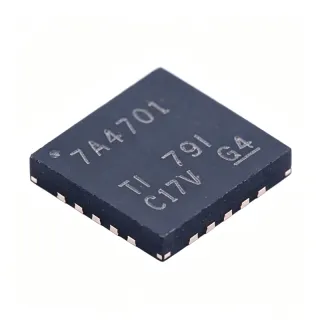
| Package | 24-WQFN (4x5 mm) |
| Mounting Type | Surface Mount |
| Pin Compatibility | Pin compatible with LMH1219 |
LMH1226RTWT 24-wqfn (4x5 mm) Pin Configuration Guide
Pin configuration for LMH1226RTWT (24-wqfn (4x5 mm) package). Pin numbering, functions, and connection diagrams are defined in the manufacturer datasheet. Refer to it for the exact footprint and soldering guidelines.

No detailed pinout data available for LMH1226RTWT.
Refer to the datasheet for full pin configuration.
Typical Applications
LMH1226RTWT is suitable for 6 applications: 12G-SDI Broadcast Cameras, UHD Video Routers and Switchers, 4K/8K Video-over-IP Infrastructure, Signal Distribution Amplifiers, Medical and AV Integration Systems, AES10/MADI and DVB-ASI Transport.
12G-SDI Broadcast Cameras
In modern broadcast cameras, the LMH1226RTWT reclocks the 11.88 Gbps 12G-SDI output stream before it drives coaxial cable toward CCUs or switchers. Its high-frequency jitter attenuation restores a clean clock from the camera's internal serializers, and dual outputs allow simultaneous feeds to viewfinder/monitor and main program paths without an external fanout buffer. Typical power of 214 mW keeps the camera's power budget intact, while 16 mW signal-absent mode reduces drain during standby. Programmable de-emphasis pre-compensates short board traces between the reclocker and the output connectors, preserving eye margins at the far-end receiver.
Recommended
UHD Video Routers and Switchers
Broadcast routers switch dozens of 12G-SDI signals; every input needs reclocking to remove accumulated jitter before the crosspoint, and every output needs a clean driver. The LMH1226RTWT's dual outputs and SPI control let one device serve multiple ports of a router card, and its 214 mW consumption multiplied across many channels keeps the card's total thermal load manageable in sealed frames. SFF-8431-compatible adaptive equalization at IN1 handles the trace losses of dense backplane routing. Support for DVB-ASI and AES10 alongside SMPTE rates lets one router card transport mixed-format content without reclocking gaps.
Recommended
4K/8K Video-over-IP Infrastructure
As broadcast facilities migrate to SMPTE ST 2110 and 10 GbE video-over-IP, equipment must handle both legacy SDI and IP transport. The LMH1226RTWT natively supports 10 GbE video over IP data rates alongside SMPTE rates up to 11.88 Gbps, so a single reclocker design bridges both worlds. The SFF-8431-compatible adaptive equalizer at IN1 matches the electrical requirements of 10 GbE interfaces. High-frequency jitter attenuation is essential on IP-side serial links where reference-clock quality determines packet timing, and the dual outputs allow redundant (main/backup) signal paths typical of IP broadcast plants.
Recommended
Signal Distribution Amplifiers
SDI distribution amplifiers (DAs) take one input and regenerate it to multiple outputs. The LMH1226RTWT provides two reclocked outputs per device, and cascading devices builds 1:4 or 1:8 DAs while keeping every output independently reclocked and jitter-clean. Its signal-absent power mode of 16 mW is particularly valuable in DA frames, where unused inputs are common; power drops automatically without control intervention. Programmable output de-emphasis compensates the different trace lengths from the reclocker to each BNC connector, equalizing eye diagrams across all outputs at 11.88 Gbps.
Recommended
Medical and AV Integration Systems
High-resolution medical imaging displays and professional AV installations increasingly use 12G-SDI links for uncompressed 4K video over long coax. The LMH1226RTWT reclocks the signal mid-chain to extend reliable reach, attenuating the high-frequency jitter that accumulates over cable segments and connectors. DVB-ASI and AES10 support also covers contribution encoders and audio transport in integrated AV systems. Its low 214 mW dissipation suits fanless enclosures used in operating-room equipment where acoustic noise is unacceptable, and SPI configurability allows a system controller to adapt de-emphasis per installed cable length.
Recommended
AES10/MADI and DVB-ASI Transport
Beyond video, the LMH1226RTWT supports AES10 (MADI) multi-channel audio at its standard rates and DVB-ASI for broadcast contribution links. Broadcast plants transporting MADI audio between consoles, routers, and converters benefit from the same jitter attenuation that cleans SDI video, since MADI clock recovery degrades with long chains just like video. At 270 Mbps-class DVB-ASI rates, the adaptive equalizer and reclocker maintain compliant eye templates for downstream demodulation equipment. Dual outputs allow feeding a main device and a monitoring or redundancy path from a single reclocked source.
Recommended
Recommended Products Summary
Engineering reference data for LMH1226RTWT — comparison, design guidance, and compliance information.
Selection Guide
Comparison with Alternatives
| Parameter | This Product | LMH1219RTWT |
|---|---|---|
| Package | 24-WQFN (4x5 mm) | 24-WQFN (4x5 mm) - same, pin compatible |
| Brand | Texas Instruments | Texas Instruments |
| Function | Dual-output 12G UHD reclocker | 12G-UHD cable equalizer with integrated reclocker |
| Maximum Data Rate | 11.88 Gbps | 12G UHD rates (11.88 Gbps class) |
| Supported Protocols | SMPTE, 10 GbE, DVB-ASI, AES10 | SMPTE (verify full list in LMH1219 datasheet) |
| Input Equalization | Board-trace adaptive EQ at IN1 (SFF-8431) | Integrated cable equalizer |
Key Differentiators
- Dual outputs per device (vs LMH1219RTWT)
- Very low signal-absent power (vs LMH1219RTWT)
- Pin-compatible upgrade path with integrated equalization (vs LMH1219RTWT)
Design Notes
Use the programmable output de-emphasis to match your actual board trace lengths. Measure the eye at the far-end connector first with de-emphasis disabled, then enable and sweep de-emphasis settings via SPI until the far-end eye height and width are maximized at 11.88 Gbps. Over-driving de-emphasis on short traces degrades the receive eye at the destination device just as much as under-driving it on long traces.
The adaptive equalizer at IN1 is a board-trace equalizer (SFF-8431 compatible), not a long-haul coaxial cable equalizer. If the input arrives over long coax from a camera or router, place the pin-compatible LMH1219 (equalizer with integrated reclocker) at the cable entry point instead, or add a separate cable equalizer stage ahead of the LMH1226. Assuming the LMH1226 alone will recover a signal from 70+ meters of coax is a common design error.
At 214 mW typical dissipation the 24-WQFN 4x5 mm package does not require a heatsink, but the 16 mW signal-absent mode only activates when the part correctly detects loss of signal. Ensure SPI configuration and signal-detect thresholds are set as documented in the manufacturer datasheet so idle ports actually enter the low-power state; an incorrectly configured signal-detect threshold can leave inactive ports consuming full power and heating dense router cards unnecessarily.
Compliance Information
Compliance statuses were not stated in the provided verified data; consult the TI product page and datasheet for current RoHS/REACH declarations.