Ürünler (19.000+)

ATMEGA328-MU - 8-bit AVR MCU 32KB Flash 20MHz | Microchip
ATMEGA328-MU

ATMEGA328-MU - 8-bit AVR MCU 32KB Flash 20MHz | Microchip

The Microchip Technology ATMEGA328-MU is an 8-bit AVR RISC microcontroller with 32 KB of in-system programmable Flash, 2 KB SRAM, and 1 KB EEPROM, running at up to 20 MHz and packaged in a 32-pin VQFN (5x5 mm) with an exposed thermal pad. The industrial-grade (-40C to +85C) device integrates 23 general-purpose I/O lines, a 10-bit ADC with up to 8 channels, two 8-bit timers plus one 16-bit timer, and a rich set of serial interfaces including I2C, SPI, and USART. An 8-bit microcontroller (MCU) is a single-chip computer built around an 8-bit data path, integrating a CPU core, program memory (Flash), working RAM, non-volatile EEPROM, and a set of peripherals. The AVR family used by the ATmega328 implements a Modified Harvard RISC architecture with 131 instructions, most of which complete in a single clock cycle, giving the ATMEGA328-MU an effective throughput of up to 20 MIPS at 20 MHz. Within the broader taxonomy, the part belongs to the hierarchy: AVR 8-bit MCU -> Microcontroller -> Embedded Processor -> Semiconductor. Key features include the debugWIRE on-chip debug interface (eliminating the need for a full JTAG header), an internal calibrated oscillator, six sleep modes with power-down currents under 1 uA, and a 10-bit successive-approximation ADC capable of 15 kSPS at full resolution. The integrated brown-out detector and watchdog timer simplify firmware safety, while the peripheral event system and programmable serial USART support industrial bus protocols. Architecturally, the ATmega328 combines an 8-bit ALU with 32 general-purpose working registers that are directly accessible by the instruction set, eliminating accumulator bottlenecks. The 32 KB Flash is organized as 16K x 16 to optimize code density and enable on-chip self-programming via a bootloader, the same mechanism that allows Arduino Uno compatibility and ISP (In-System Programming) through the SPI pins. Typical applications include Arduino-compatible boards, sensor hubs, low-power battery nodes, and small industrial controllers. The wide 1.8 V to 5.5 V supply range supports both 3.3 V and 5 V rails, and the low-power sleep modes make the device suitable for solar-powered or energy-harvesting designs. When designing with this part, observe the maximum 20 MHz clock at 4.5 V to 5.5 V supply; at lower Vcc the maximum frequency is derated per the datasheet DC characteristics. Decouple VCC and AVCC with 100 nF plus 10 uF bulk capacitors placed within 5 mm of the pins. This page synthesizes DigiKey/Mouser distributor pricing, drop-in alternatives (ATmega328P-MU family variants and ATMEGA328PB-MU), and practical PCB/layout design notes that complement the manufacturer datasheet.

RFQ İletişim
ATMEGA328-MUR - AVR 8-Bit MCU 32KB 20MHz VQFN-32 | Microchip
ATMEGA328-MUR

ATMEGA328-MUR - AVR 8-Bit MCU 32KB 20MHz VQFN-32 | Microchip

The Microchip Technology ATMEGA328-MUR is a high-performance, low-power 8-bit AVR RISC microcontroller with 32KB of In-System Programmable Flash, 2KB SRAM, 1KB EEPROM, and a 20MHz maximum clock frequency, housed in a 32-pin VQFN (5x5 mm) package with exposed pad on Tape & Reel for industrial temperature operation. An 8-bit AVR microcontroller is a self-contained computing IC that executes programs from internal Flash memory while integrating SRAM, EEPROM, timers, ADC, and communication peripherals on a single die. Within the power-management and embedded-control hierarchy, the ATmega328 sits in the mid-range of Microchip's AVR ATmega family between the ATmega168 (16KB) and the ATmega328PB (enhanced peripheral set), and is the silicon family behind the classic Arduino UNO. Key features include 131 powerful RISC instructions with mostly single-cycle execution delivering up to 20 MIPS at 20MHz, an 8-channel 10-bit ADC, 2 x 8-bit and 1 x 16-bit timers, and USART, SPI, and I2C (TWI) serial interfaces. The 4K byte self-programming Flash enables boot-loader firmware updates in the field. Technically, the advanced RISC architecture combines a 32-register general-purpose file directly connected to the ALU, allowing two independent registers to be accessed in a single instruction.debugWIRE on-chip debug support and pin-selectable brown-out detection simplify development and improve system robustness. The device operates from 2.5V to 5.5V depending on speed grade, with sleep modes down to microamp-level standby. Typical applications include industrial sensors and controllers, Arduino-compatible hobby and maker boards, HVAC and building automation nodes, and battery-powered portable instruments where a mature, well-documented 8-bit platform is preferred. Design consideration: at 20MHz the device requires 4.5V to 5.5V supply; use the internal 8MHz RC oscillator or an external crystal with appropriate fuse settings, and verify brown-out threshold against supply tolerance. This page synthesizes distributor pricing context, drop-in alternatives, pinout data, and practical design notes not found in the manufacturer datasheet.

RFQ İletişim
ATMEGA328-PU - 8-Bit 20MHz 32KB Flash MCU | Microchip
ATMEGA328-PU

ATMEGA328-PU - 8-Bit 20MHz 32KB Flash MCU | Microchip

The Microchip Technology ATMEGA328-PU is an 8-bit AVR microcontroller operating up to 20 MHz, with 32 KB of in-system programmable flash, 2 KB SRAM, and 1 KB EEPROM in a 28-pin through-hole DIP package. It is designed for embedded control, digital I/O, timers, serial communication, and general-purpose battery-powered products. The ATMEGA328-PU combines an AVR RISC core, programmable I/O, and serial interfaces in a device that can be assembled through holes rather than surface-mount reflow. A microcontroller is a programmable integrated circuit that combines a CPU core, memory, and peripherals into one embedded-control component. The ATMEGA328-PU belongs to the AVR family and uses an 8-bit architecture with single-cycle instruction execution, allowing useful control performance at modest clock rates. Its DIP-28 package makes it especially suitable for Arduino-style boards, prototyping systems, educational kits, and products assembled in conventional through-hole production. Key features include 32 KB of flash memory, 2 KB of SRAM, 1 KB of EEPROM, 20 MHz maximum clock frequency, and 32 I/O ports according to the supplied distributor result. The device also provides integrated support for common embedded-control functions, including timers, serial communication, and programmable digital interfaces. Its 28-PDIP package supports straightforward socket assembly and through-hole PCB insertion. The AVR architecture is suitable for deterministic control loops because many instructions execute in a single clock cycle. This helps software respond efficiently to inputs while timers and serial interfaces handle time-based or communication-related tasks. The 20 MHz operating point provides additional performance margin over lower-frequency 8-bit implementations, although the actual clock source, fuse settings, and power conditions must be confirmed in the manufacturer documentation. Typical applications include Arduino-compatible controller boards, automation and industrial control modules, temperature and environmental monitoring, LED lighting systems, data loggers, hobby robotics, and battery-powered embedded products. The through-hole package is useful where technicians need socketed replacement or where automated assembly does not handle fine-pitch SMD components. For a new design, verify the required clock, memory, serial interfaces, and analog functions against the manufacturer datasheet before transferring an existing board. A replacement must match the package, pinout, voltage requirements, and relevant memory characteristics; a functionally similar microcontroller is not automatically a drop-in replacement. This page combines verified distributor information, package-specific selection guidance, and engineering-oriented application context. Pricing, stock, lifecycle status, and detailed electrical limits should be confirmed against current distributor and manufacturer records before committing to production.

RFQ İletişim
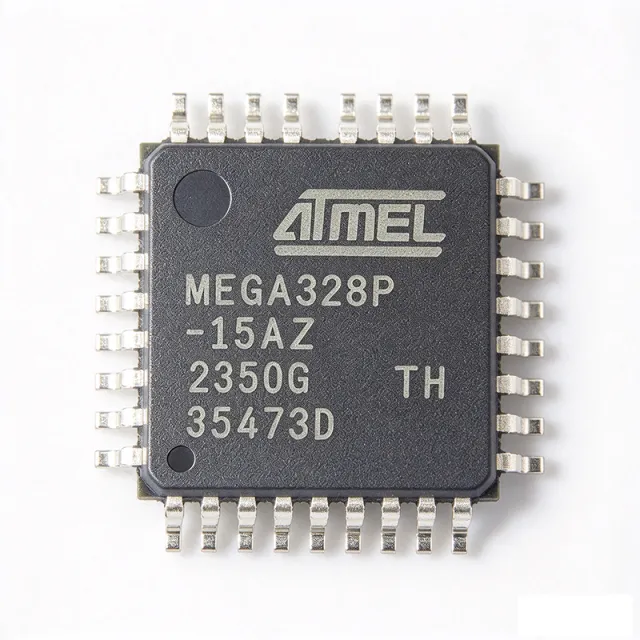
ATMEGA328P-15AZ - 8-bit AVR MCU 32KB Flash TQFP-32 | Microchip
ATMEGA328P-15AZ

ATMEGA328P-15AZ - 8-bit AVR MCU 32KB Flash TQFP-32 | Microchip

The Microchip Technology ATMEGA328P-15AZ is a high-performance, low-power 8-bit AVR RISC microcontroller with 32KB of In-System Self-Programmable Flash memory, operating at up to 20 MHz from a 1.8V to 5.5V supply, housed in a 32-pin TQFP package (10 x 10 mm, 0.8 mm pitch). An 8-bit AVR microcontroller is a single-chip processor that integrates a RISC CPU, non-volatile program memory, SRAM, EEPROM, and peripheral functions such as timers, UART, SPI, I2C, and a 10-bit ADC on one die. Within the power-management and embedded-control hierarchy, the AVR family sits in the broader category of microcontroller units (MCUs), competing with PIC, STM8, and 8051 architectures in cost-sensitive embedded systems. Key features include the advanced RISC architecture with 131 powerful instructions, most executing in a single clock cycle, 32 x 8 general-purpose working registers, and an on-chip 2-cycle hardware multiplier delivering up to 16 MIPS throughput at 16 MHz. The P suffix denotes picoPower technology for ultra-low sleep-mode consumption, critical for battery-powered designs. High-endurance non-volatile memory segments provide 32KB of In-System Self-Programmable Flash with separate boot lock and true read-while-write operation. Architecturally, the ATmega328P pairs its Harvard-structure CPU with a flexible timer/counter system, USART, SPI, and Two-Wire Interface (I2C), plus a 10-bit successive-approximation ADC that enables direct analog sensor interfacing without external conversion circuitry. Typical applications include Arduino-compatible boards (the ATmega328P is the classic Arduino Uno/Nano processor), industrial sensor nodes, consumer appliance control, and legacy embedded systems where code and toolchain compatibility matter. Design consideration: at 5.5V maximum rating, observe total current limits per port and use decoupling capacitors on AVCC and VCC pins; the internal RC oscillator eliminates the need for an external crystal in non-timing-critical designs. This page synthesizes distributor pricing, drop-in alternatives, pinout data, and practical design notes not consolidated in the manufacturer datasheet.

USD $5,41 İletişim
ATMEGA328P-15MZ 32KB 8-Bit AVR MCU | Microchip Technology
ATMEGA328P-15MZ

ATMEGA328P-15MZ 32KB 8-Bit AVR MCU | Microchip Technology

The Microchip Technology ATMEGA328P-15MZ is an 8-bit AVR RISC microcontroller with 32 KB of in-system programmable flash, 1024 bytes of EEPROM, 2 KB of SRAM, and 23 general-purpose I/O lines, packaged in a 32-pin QFN with exposed pad. It combines a high-performance, low-power AVR core with 131 instructions, 32 working registers, and three flexible timer/counter blocks for compact embedded-control designs. An AVR microcontroller is a type of 8-bit embedded microcontroller that executes a reduced-instruction-set computer architecture with program memory, data memory, general-purpose I/O, timers, and serial interfaces integrated on one semiconductor device. Within the product hierarchy, ATmega328P devices combine a general-purpose RISC processor with flash program storage, SRAM, EEPROM, and communication peripherals for applications where a small, deterministic embedded controller is preferable to a general-purpose processor. The verified data identifies the device as a low-power AVR device with 131 instructions, mostly single-clock-cycle execution, 32 general-purpose working registers, and three timer/counter blocks. Its 32 KB flash supports in-system programming, while 1024 bytes of EEPROM provides nonvolatile data storage. The reported 23 general-purpose I/O lines make the controller suitable for boards that need several discrete inputs and outputs while retaining an integrated, compact implementation. Communication and timing resources support embedded product development across common industrial, consumer, and educational platforms. The verified family description includes I2C, SPI, and UART/USART-style connectivity in the ATmega328P family, while the timers support timing, input capture, output compare, and PWM-oriented control functions. Compared with a discrete logic controller, the integrated approach reduces the number of external ICs required for basic sensing, actuation, and communication tasks. Typical uses include Arduino-compatible embedded boards, data-acquisition front ends, simple industrial controllers, educational instruments, and low-power standalone products. The ATMEGA328P family is especially recognizable in compact hobbyist and maker platforms, but the same integrated resources can serve production designs that require flash-resident firmware, EEPROM parameters, serial links, and precise timer-based control. Designers should verify the exact clock, voltage, temperature, pin, and fuse limits against the manufacturer documentation because the supplied web results present conflicting clock and supply-range descriptions. The -15MZ ordering code and some search snippets indicate a restricted speed grade, while other snippets list 16 MHz or 20 MHz for related variants. PCB layouts should preserve the exposed-pad land pattern, provide the required bypass capacitors, and follow the manufacturer guidance for programming and clock implementation. This page consolidates the verified memory, core, package, interface, lifecycle, pricing-reference, and cross-reference information for ATMEGA328P-15MZ. It also adds package-specific selection guidance, qualified drop-in comparison points, and practical design considerations so engineers can distinguish a true PCB-compatible replacement from a merely similar AVR or 8-bit MCU.

RFQ İletişim
ATMEGA328P-AN - 8-Bit 20MHz AVR MCU 32KB Flash | Microchip
ATMEGA328P-AN

ATMEGA328P-AN - 8-Bit 20MHz AVR MCU 32KB Flash | Microchip

The Microchip Technology ATMEGA328P-AN is an 8-bit AVR RISC-based microcontroller with a 20 MHz maximum clock, 32 KB of ISP Flash memory, 2 KB SRAM, 1 KB EEPROM, and 23 general-purpose I/O lines, supplied in a 32-TQFP 7 mm × 7 mm package. It combines a low-power picoPower architecture with three flexible timer/counters, external interrupts, USART, and a byte-oriented Two-Wire serial interface. A microcontroller is a programmable integrated circuit that executes firmware, reads inputs, controls outputs, and manages embedded-system timing. The ATmega belongs to the AVR family of 8-bit RISC microcontrollers and sits within the broader embedded-controller and semiconductor hierarchy. Its in-system programming support makes it practical for designs assembled and programmed through ISP-compatible tools, while its serial interfaces support communication with sensors, converters, displays, and host systems. Verified product information identifies 32 KB Flash as 16K × 16 words, 2 KB SRAM, 1 KB EEPROM, 23 GPIO lines, 32 general-purpose working registers, three timer/counters with compare modes, USART, and Two-Wire Interface. The listed operating temperature is 105°C. These resources make the device suitable for compact control systems, sensor nodes, educational platforms, instruments, and Arduino-compatible embedded products. The ATMEGA328P-AN uses an 8-bit AVR processing core and provides read-while-write Flash capability. Its 32 general-purpose working registers support efficient data handling, while the three timer/counters support timing, compare, and event-based control. The USART provides serial communication, and the Two-Wire Interface provides a byte-oriented peripheral bus for compatible sensors and memory devices. Typical applications include low-cost embedded controllers, Arduino-compatible boards, environmental monitoring, motor and relay sequencing, data acquisition, simple instrumentation, and connected sensor nodes. The 20 MHz maximum clock and 2 KB SRAM provide useful headroom for compact real-time control, while the 32 KB Flash capacity is appropriate for moderate firmware sizes. Designers should preserve the exact 32-TQFP footprint and pin assignments of the target device, provide the required clock, reset, power, and decoupling connections, and confirm toolchain compatibility before substitution. The manufacturer product page and authorized distributor data are the appropriate sources for final electrical, timing, package, and programming details.

RFQ İletişim
ATMEGA328P-ANR - 8-Bit 20MHz AVR MCU 32KB Flash | Microchip (Tape & Reel)
ATMEGA328P-ANR

ATMEGA328P-ANR - 8-Bit 20MHz AVR MCU 32KB Flash | Microchip (Tape & Reel)

The Microchip Technology ATMEGA328P-ANR is an 8-bit AVR RISC-based microcontroller with a 20 MHz maximum clock, 32 KB of ISP Flash memory, 2 KB SRAM, 1 KB EEPROM, and 23 general-purpose I/O lines, supplied in a 32-TQFP 7 mm × 7 mm package. It combines a low-power picoPower architecture with three flexible timer/counters, external interrupts, USART, and a byte-oriented Two-Wire serial interface. A microcontroller is a programmable integrated circuit that executes firmware, reads inputs, controls outputs, and manages embedded-system timing. The ATmega belongs to the AVR family of 8-bit RISC microcontrollers and sits within the broader embedded-controller and semiconductor hierarchy. Its in-system programming support makes it practical for designs assembled and programmed through ISP-compatible tools, while its serial interfaces support communication with sensors, converters, displays, and host systems. Verified product information identifies 32 KB Flash as 16K × 16 words, 2 KB SRAM, 1 KB EEPROM, 23 GPIO lines, 32 general-purpose working registers, three timer/counters with compare modes, USART, and Two-Wire Interface. The listed operating temperature is 105°C. These resources make the device suitable for compact control systems, sensor nodes, educational platforms, instruments, and Arduino-compatible embedded products. The ATMEGA328P-ANR uses an 8-bit AVR processing core and provides read-while-write Flash capability. Its 32 general-purpose working registers support efficient data handling, while the three timer/counters support timing, compare, and event-based control. The USART provides serial communication, and the Two-Wire Interface provides a byte-oriented peripheral bus for compatible sensors and memory devices. Typical applications include low-cost embedded controllers, Arduino-compatible boards, environmental monitoring, motor and relay sequencing, data acquisition, simple instrumentation, and connected sensor nodes. The 20 MHz maximum clock and 2 KB SRAM provide useful headroom for compact real-time control, while the 32 KB Flash capacity is appropriate for moderate firmware sizes. Designers should preserve the exact 32-TQFP footprint and pin assignments of the target device, provide the required clock, reset, power, and decoupling connections, and confirm toolchain compatibility before substitution. The manufacturer product page and authorized distributor data are the appropriate sources for final electrical, timing, package, and programming details.

RFQ İletişim
ATMEGA328P-AU - 8-bit AVR MCU 20MHz 32KB Flash TQFP-32 | Microchip
ATMEGA328P-AU

ATMEGA328P-AU - 8-bit AVR MCU 20MHz 32KB Flash TQFP-32 | Microchip

The Microchip Technology ATMEGA328P-AU is a high-performance, low-power 8-bit AVR RISC microcontroller executing up to 20 MIPS at 20 MHz, with 32 KB ISP Flash, 1 KB EEPROM, and 2 KB SRAM in a 32-pin TQFP (7x7 mm, 0.8 mm pitch) package. An 8-bit microcontroller is a single-chip computer combining an 8-bit CPU, program memory, data memory, and peripherals on one die. Within the embedded-system hierarchy, MCUs sit at the top of the control chain, orchestrating sensors, actuators, and communication interfaces. The AVR architecture uses Harvard organization with separate program and data buses, enabling most instructions to execute in a single clock cycle for deterministic real-time behavior. Key features include picoPower technology with six sleep modes (down to 0.2 uA typical in Power-down), a wide 1.8V to 5.5V operating voltage, two 8-bit timers plus one 16-bit timer, six PWM channels, an 8-channel 10-bit ADC, and USART, SPI, and I2C serial interfaces. The device supports In-System Programming via SPI and includes the debugWIRE on-chip debug system, reducing external debug hardware to a single wire. Technical depth: the non-volatile memory process guarantees 10,000 FLASH write/erase cycles and 20-year data retention per the Atmel/Microchip AVR family datasheet. A programmable watchdog timer with its own oscillator, an analog comparator, and an on-chip temperature sensor round out the peripheral set. The -AU suffix denotes the industrial-grade (-40C to +85C) TQFP-32 package variant. Typical applications include Arduino Uno and Nano compatible boards, IoT sensor nodes, motor control, consumer appliances, and educational platforms. The wide voltage range and picoPower sleep modes make it especially attractive for battery-powered sensor nodes. Design tip: place 100 nF decoupling capacitors close to VCC and AVCC; use the internal 8 MHz RC oscillator for cost-sensitive designs or an external crystal for UART-critical accuracy. This page synthesizes distributor pricing, drop-in alternatives, pinout data, and practical design notes not found in the manufacturer datasheet alone.

RFQ İletişim
ATMEGA328P-AUR - 8-bit AVR MCU, 32KB Flash, 20MHz, TQFP-32 | Microchip
ATMEGA328P-AUR

ATMEGA328P-AUR - 8-bit AVR MCU, 32KB Flash, 20MHz, TQFP-32 | Microchip

The Microchip Technology ATMEGA328P-AUR is an 8-bit AVR RISC-based microcontroller (MCU) delivering 20 MIPS throughput at 20 MHz, integrating 32 KB of in-system programmable Flash, 2 KB SRAM, and 1 KB EEPROM in a 32-pin TQFP (7x7 mm) package supplied on tape and reel. According to the verified distributor data, the device supports an operating voltage range of 1.8 V to 5.5 V and is qualified for the industrial temperature range of -40 C to +85 C. An 8-bit AVR microcontroller is a single-chip computer based on the Harvard-architecture AVR enhanced RISC core that executes most instructions in a single clock cycle, providing deterministic throughput close to 1 MIPS per MHz. Within the broader hierarchy, the AVR belongs to the microcontroller family, which sits under embedded processors, semiconductors, and finally integrated circuits. The ATmega328P is the highest-memory variant in the ATmega48/88/168/328P family, making it the de-facto choice for hobbyist platforms such as the Arduino Uno and for cost-sensitive industrial control nodes. Key features include 23 programmable I/O lines, two 8-bit timers plus one 16-bit timer, a 10-bit ADC with up to 8 channels, six PWM channels, an analog comparator, and a full-duplex USART. Peripherals also include SPI, I2C (TWI), an internal calibrated oscillator, and six software-selectable power-saving modes that allow the MCU to drop below 1 uA in power-down. The RISC core provides 131 powerful instructions and up to 32 x 8 general-purpose working registers, enabling C-compiled firmware to execute efficiently within the tight 2 KB SRAM. The architecture uses a two-stage pipeline with multi-cycle hardware multipliers and a separate instruction and data bus, which is what makes single-cycle instruction execution possible. The on-chip boot loader support, combined with in-system programming via SPI, lets firmware be updated in the field without removing the part. The integrated power-on reset and brown-out detector plus a watchdog timer with a separate on-chip oscillator harden unattended designs against supply glitches. Typical applications include Arduino-compatible boards, sensor interface nodes, consumer appliances, small motor control, industrial telemetry, USB-to-UART bridges, and educational kits. The combination of low BOM cost, broad toolchain support (AVR-GCC, Microchip Studio, Arduino IDE), and decades of design heritage makes the ATmega328P-AUR a default choice for both prototype and production designs. When designing with this part, note that the -AU/-AUR suffix designates the 32-pin TQFP package, so PCB layout and pinout diagrams from the ATmega328P datasheet family apply directly. Ensure decoupling of VCC/AVCC with 100 nF plus 10 uF bulk capacitance placed close to the pins, and route the RESET line away from switching nodes to avoid spurious resets in noisy environments. This page synthesizes distributor pricing, drop-in alternatives within the AVR family, and practical design notes not found in the manufacturer datasheet, giving the engineer a single reference for sourcing and design decisions.

RFQ İletişim
ATMEGA328P-MMH - 20MHz 32KB 8-Bit AVR MCU | Microchip Technology
ATMEGA328P-MMH

ATMEGA328P-MMH - 20MHz 32KB 8-Bit AVR MCU | Microchip Technology

The Microchip Technology ATMEGA328P-MMH is a 20 MHz, 8-bit AVR RISC microcontroller with 32 KB of ISP Flash memory, 2 KB of SRAM, and 1 KB of EEPROM in a 28-VQFN 4 x 4 mm package. It provides 23 general-purpose I/O lines and 32 working registers, while supporting I2C, SPI, and UART/USART communication interfaces. The device is identified by the Microchip product page as a picoPower AVR microcontroller designed around Microchip's high-performance, low-power AVR architecture. An 8-bit microcontroller is a compact embedded-processing IC that executes instructions from nonvolatile program memory and uses general-purpose I/O to control sensors, communications links, indicators, and actuators. Within the product hierarchy, the ATMEGA328P is an AVR microcontroller, an 8-bit RISC MCU, a semiconductor, and a member of the broader embedded-processing category. Its combination of Flash, SRAM, EEPROM, and integrated serial interfaces supports standalone control without requiring external program or data memory. Three headline capabilities define the ATMEGA328P-MMH: a 20 MHz maximum clock, 32 KB of Flash program storage, and 2 KB of SRAM. The manufacturer lists 32 KB of ISP Flash with read-while-write capability, 1 KB of EEPROM, 23 general-purpose I/O lines, and 32 general-purpose working registers. The device also provides 131 powerful instructions with most instructions executing in a single clock cycle, supporting efficient event-driven and control-oriented firmware. The ATMEGA architecture integrates serial communication capabilities directly into the microcontroller. The verified distributor and comparison results identify I2C, SPI, and UART/USART interfaces, allowing the device to connect with sensors, external nonvolatile memory, transceivers, and host systems. Because ATMEGA328P-MMH is a surface-mount VQFN device, its 28-pin land pattern is intended for automated assembly and compact embedded boards rather than breadboard prototyping. Typical uses include Arduino-compatible embedded controllers, compact sensor nodes, LED and display controllers, USB-to-serial data acquisition systems, industrial control modules, and educational prototyping platforms. The ATMEGA328P family is particularly useful when moderate processing performance, deterministic I/O, and integrated serial interfaces matter more than a high-pin-count processor or external memory bus. Designers should verify the exact oscillator, reset, and power circuitry against the manufacturer documentation before layout. Because no numerical pinout was included in the supplied verified records, this page does not invent pin names or numbering. The 28-VQFN footprint also requires careful exposed-pad, paste, stencil, and reflow design, while the 4 x 4 mm package can make assembly inspection and rework more demanding than a leaded package. This page combines verified manufacturer specifications, distributor availability information, same-package alternatives, and practical implementation guidance. It distinguishes published ATMEGA328P-MMH facts from unresolved values and highlights the memory, package, and firmware implications engineers should verify before selecting a replacement or releasing a PCB design.

RFQ İletişim
ATMEGA328P-MMHR - 20MHz 32KB Flash 8-Bit MCU | Microchip
ATMEGA328P-MMHR

ATMEGA328P-MMHR - 20MHz 32KB Flash 8-Bit MCU | Microchip

The Microchip ATMEGA328P-MMHR is an 8-bit AVR microcontroller with a 20 MHz maximum clock, 32 KB of in-system programmable Flash, 2 KB of SRAM, 1 KB of EEPROM, and 23 general-purpose I/O lines in a 28-pin VQFN package measuring 4 x 4 mm. The MMHR ordering code identifies the compact surface-mount configuration used in space-constrained embedded systems. An 8-bit AVR microcontroller is a programmable semiconductor that combines a CPU core, Flash program memory, SRAM, EEPROM, timers, serial interfaces, and GPIO in one integrated circuit. Within the product hierarchy, it belongs to the AVR family of reduced-instruction-set microcontrollers, commonly called an MCU. Its integrated memory and peripherals allow a compact embedded design to replace separate processor, program-memory, and interface components. The ATMEGA328P-MMHR provides 32 KB of read-while-write Flash, 2 KB of SRAM, and 1 KB of EEPROM according to the manufacturer-family datasheet result. Its feature set includes 32 general-purpose working registers, 23 I/O lines, a real-time counter, three flexible timer/counter blocks with compare and PWM modes, one USART, one two-wire serial interface, and a six-channel 10-bit ADC. These resources support compact control, sensing, communications, and actuator workloads. The enhanced RISC-based AVR architecture executes most instructions in a single clock cycle, while the device supports clock frequencies up to 20 MHz for the ATMEGA328P-MMHR listing. Its peripherals reduce the need for external logic: PWM channels can drive indicators or power stages, the ADC can sample analog inputs, and the USART and I2C interface can connect sensors, displays, and service adapters. The 28-pin VQFN also supports high-density PCB placement, although its exposed-pad construction requires careful thermal design. Typical uses include Arduino-compatible sensor nodes, compact industrial controllers, LED and motor-control boards, environmental monitoring products, and low-cost connected instruments. The 23 I/O lines provide external signal connections, while the 1 KB EEPROM is useful for retaining small configuration values. The 20 MHz clock also provides sufficient timing resolution for common control-loop, communication, and measurement tasks. When laying out a board, follow the manufacturer pinout and land-pattern requirements rather than relying on generic QFN conventions. Provide the required supply decoupling at the power pins, route the exposed pad according to the package thermal guidance, and keep sensitive analog inputs away from high-current switching paths. Confirm the selected crystal or clock arrangement, programming interface, and fuse settings before releasing a production PCB. This page consolidates verified distributor specifications, source-linked pricing and availability information, package details, and practical selection guidance. It also distinguishes a genuine same-package drop-in candidate from other ATmega devices whose package, pin count, or device features prevent unqualified substitution.

RFQ İletişim
ATMEGA328P-MN - AVR 8-bit MCU 20MHz 32KB Flash 32-VQFN | Microchip
ATMEGA328P-MN

ATMEGA328P-MN - AVR 8-bit MCU 20MHz 32KB Flash 32-VQFN | Microchip

The Microchip (formerly Atmel) ATMEGA328P-MN is an 8-bit AVR RISC microcontroller featuring 32 KB of in-system self-programmable Flash, 2 KB SRAM, and 1 KB EEPROM, operating at up to 20 MHz and housed in a 32-pin VQFN (5x5 mm) package. It integrates 23 programmable I/O lines, six 10-bit ADC channels, one 16-bit timer/counter with separate prescaler and compare mode, and two 8-bit timer/counters together with a hardware USART, SPI, and TWI (I2C) interface. The supply voltage range spans 1.8 V to 5.5 V with throughput up to 20 MIPS, supporting both battery-powered and industrial 5 V rails. A microcontroller (MCU) is a single-chip computer that integrates a CPU, memory (Flash for program, SRAM for data, EEPROM for non-volatile storage), and programmable peripherals on one die. The ATmega328P belongs to the AVR enhanced RISC architecture family, which executes most instructions in a single clock cycle, enabling deterministic timing essential for real-time embedded control. Within the broader taxonomy, the ATmega328P-MN is a microcontroller -> embedded processor -> semiconductor device, and is the canonical MCU used on Arduino Uno and Arduino Nano carrier boards. Key features include 131 RISC instructions, a debugWIRE on-chip debug interface, six PWM channels, a 10-bit ADC, programmable watchdog timer with separate on-chip oscillator, and five software-selectable power-saving modes that drop quiescent current below 1 µA in power-down mode. Internal 8 MHz and 128 kHz RC oscillators reduce external component count for cost-sensitive designs. The device is built on a low-power CMOS process with an advanced Harvard architecture that separates program and data buses for simultaneous fetch and write, achieving throughput up to 20 MIPS at 20 MHz. Hardware multipliers and true single-cycle execution make it well suited to deterministic control loops in sensor processing and communication bridging. Typical applications include Arduino-compatible maker boards, consumer appliance controllers, sensor data acquisition nodes, battery-powered IoT endpoints, industrial 4-20 mA loop interfaces, and hobby/educational platforms. Designers choose the ATmega328P-MN for its mature toolchain (avr-gcc, Arduino IDE, Atmel Studio), abundant reference designs, and the broad availability of code libraries. Design tip: When migrating from the plastic DIP-28 (ATMEGA328P-PU) footprint used on the classic Arduino Uno to the QFN-32 package, ensure your PCB includes a thermal pad with at least 6 ground vias to dissipate the package's heat under high CPU load, and use a 0.5 mm pitch land pattern that respects the JEDEC MSL3 moisture sensitivity. This page synthesizes live distributor pricing, drop-in VQFN-32 alternatives (ATMEGA328PB-MN, ATMEGA328-MN, ATMEGA168P-MN), and engineering guidance not aggregated on a single OEM datasheet page.

RFQ İletişim
ATMEGA328P-MNR - AVR 8-bit MCU 20MHz 32KB Flash 32-VQFN | Microchip (Tape & Reel)
ATMEGA328P-MNR

ATMEGA328P-MNR - AVR 8-bit MCU 20MHz 32KB Flash 32-VQFN | Microchip (Tape & Reel)

The Microchip (formerly Atmel) ATMEGA328P-MNR is an 8-bit AVR RISC microcontroller featuring 32 KB of in-system self-programmable Flash, 2 KB SRAM, and 1 KB EEPROM, operating at up to 20 MHz and housed in a 32-pin VQFN (5x5 mm) package. It integrates 23 programmable I/O lines, six 10-bit ADC channels, one 16-bit timer/counter with separate prescaler and compare mode, and two 8-bit timer/counters together with a hardware USART, SPI, and TWI (I2C) interface. The supply voltage range spans 1.8 V to 5.5 V with throughput up to 20 MIPS, supporting both battery-powered and industrial 5 V rails. A microcontroller (MCU) is a single-chip computer that integrates a CPU, memory (Flash for program, SRAM for data, EEPROM for non-volatile storage), and programmable peripherals on one die. The ATmega328P belongs to the AVR enhanced RISC architecture family, which executes most instructions in a single clock cycle, enabling deterministic timing essential for real-time embedded control. Within the broader taxonomy, the ATmega328P-MN is a microcontroller -> embedded processor -> semiconductor device, and is the canonical MCU used on Arduino Uno and Arduino Nano carrier boards. Key features include 131 RISC instructions, a debugWIRE on-chip debug interface, six PWM channels, a 10-bit ADC, programmable watchdog timer with separate on-chip oscillator, and five software-selectable power-saving modes that drop quiescent current below 1 µA in power-down mode. Internal 8 MHz and 128 kHz RC oscillators reduce external component count for cost-sensitive designs. The device is built on a low-power CMOS process with an advanced Harvard architecture that separates program and data buses for simultaneous fetch and write, achieving throughput up to 20 MIPS at 20 MHz. Hardware multipliers and true single-cycle execution make it well suited to deterministic control loops in sensor processing and communication bridging. Typical applications include Arduino-compatible maker boards, consumer appliance controllers, sensor data acquisition nodes, battery-powered IoT endpoints, industrial 4-20 mA loop interfaces, and hobby/educational platforms. Designers choose the ATmega328P-MN for its mature toolchain (avr-gcc, Arduino IDE, Atmel Studio), abundant reference designs, and the broad availability of code libraries. Design tip: When migrating from the plastic DIP-28 (ATMEGA328P-PU) footprint used on the classic Arduino Uno to the QFN-32 package, ensure your PCB includes a thermal pad with at least 6 ground vias to dissipate the package's heat under high CPU load, and use a 0.5 mm pitch land pattern that respects the JEDEC MSL3 moisture sensitivity. This page synthesizes live distributor pricing, drop-in VQFN-32 alternatives (ATMEGA328PB-MN, ATMEGA328-MN, ATMEGA168P-MN), and engineering guidance not aggregated on a single OEM datasheet page.

RFQ İletişim
ATMEGA328P-MU - 8-bit AVR MCU 20MHz 32KB Flash VQFN-32
ATMEGA328P-MU

ATMEGA328P-MU - 8-bit AVR MCU 20MHz 32KB Flash VQFN-32

The Microchip Technology ATMEGA328P-MU is an 8-bit AVR RISC microcontroller running up to 20 MHz, integrating 32 KB of In-System-Programmable Flash, 2 KB SRAM, and 1 KB EEPROM in a 32-pin VQFN (5x5 mm) surface-mount package. It operates from a 1.8 V to 5.5 V supply, delivers up to 20 MIPS, and provides 23 general-purpose I/O lines plus a 6+2-channel 10-bit ADC. An 8-bit microcontroller (MCU) is a single-chip computing subsystem that combines a CPU core, non-volatile program memory (Flash), volatile data memory (SRAM), non-volatile data storage (EEPROM), and a rich set of peripherals such as timers, ADC, and communication interfaces. MCUs sit at the heart of embedded systems, bridging the gap between simple logic ICs and application processors in the broader semiconductor hierarchy, and are typically deployed where deterministic real-time control, low power, and cost efficiency are paramount. Key features of the ATMEGA328P-MU include 131 single-cycle RISC instructions, picoPower technology with multiple sleep modes for battery-powered systems, two 8-bit timers plus one 16-bit timer, a master/slave SPI interface, an I2C-compatible TWI, and a programmable USART. The P-suffix denotes the picoPower variant, with internal 8 MHz and 128 kHz calibrated RC oscillators that minimize external component count. On-chip debug is supported via debugWIRE and In-System Programming (ISP) enables field firmware upgrades without desoldering. Architecturally, the ATmega328P uses an AVR Harvard-architecture RISC core with 32 general-purpose working registers directly connected to the ALU, allowing two independent registers to be accessed in a single instruction executed in one clock cycle. The QFN-32 (5x5 mm) package exposes two extra ADC inputs (ADC6, ADC7) compared to the PDIP-28, and provides a low thermal resistance path through the exposed pad for improved heat dissipation at 20 MHz / 5 V operation. Typical applications include Arduino-compatible boards (Uno, Nano, Pro Mini), industrial sensor nodes, consumer appliances, hobby robotics, battery-powered instrumentation, and LED lighting controllers. Its 1.8 V to 5.5 V operating range supports both 3.3 V and 5 V rails, and the rich timer set enables precise PWM motor control and switching-mode LED dimming. When designing with this device, place a 100 nF decoupling capacitor on each AVCC and VCC pin, keep the analog reference (AREF) quiet with its own bypass capacitor, and ensure the exposed thermal pad is soldered to a ground copper pour to meet the datasheet's 31 C/W theta-JA thermal budget. This page synthesizes distributor pricing, drop-in alternatives, pinout data, and practical design notes not found in a single manufacturer datasheet, as of 2026-10-07.

RFQ İletişim
ATMEGA328P-MUR - 8-bit AVR MCU 20MHz 32KB Flash VQFN-32 (Tape & Reel)
ATMEGA328P-MUR

ATMEGA328P-MUR - 8-bit AVR MCU 20MHz 32KB Flash VQFN-32 (Tape & Reel)

The Microchip Technology ATMEGA328P-MUR is an 8-bit AVR RISC microcontroller running up to 20 MHz, integrating 32 KB of In-System-Programmable Flash, 2 KB SRAM, and 1 KB EEPROM in a 32-pin VQFN (5x5 mm) surface-mount package. It operates from a 1.8 V to 5.5 V supply, delivers up to 20 MIPS, and provides 23 general-purpose I/O lines plus a 6+2-channel 10-bit ADC. An 8-bit microcontroller (MCU) is a single-chip computing subsystem that combines a CPU core, non-volatile program memory (Flash), volatile data memory (SRAM), non-volatile data storage (EEPROM), and a rich set of peripherals such as timers, ADC, and communication interfaces. MCUs sit at the heart of embedded systems, bridging the gap between simple logic ICs and application processors in the broader semiconductor hierarchy, and are typically deployed where deterministic real-time control, low power, and cost efficiency are paramount. Key features of the ATMEGA328P-MUR include 131 single-cycle RISC instructions, picoPower technology with multiple sleep modes for battery-powered systems, two 8-bit timers plus one 16-bit timer, a master/slave SPI interface, an I2C-compatible TWI, and a programmable USART. The P-suffix denotes the picoPower variant, with internal 8 MHz and 128 kHz calibrated RC oscillators that minimize external component count. On-chip debug is supported via debugWIRE and In-System Programming (ISP) enables field firmware upgrades without desoldering. Architecturally, the ATmega328P uses an AVR Harvard-architecture RISC core with 32 general-purpose working registers directly connected to the ALU, allowing two independent registers to be accessed in a single instruction executed in one clock cycle. The QFN-32 (5x5 mm) package exposes two extra ADC inputs (ADC6, ADC7) compared to the PDIP-28, and provides a low thermal resistance path through the exposed pad for improved heat dissipation at 20 MHz / 5 V operation. Typical applications include Arduino-compatible boards (Uno, Nano, Pro Mini), industrial sensor nodes, consumer appliances, hobby robotics, battery-powered instrumentation, and LED lighting controllers. Its 1.8 V to 5.5 V operating range supports both 3.3 V and 5 V rails, and the rich timer set enables precise PWM motor control and switching-mode LED dimming. When designing with this device, place a 100 nF decoupling capacitor on each AVCC and VCC pin, keep the analog reference (AREF) quiet with its own bypass capacitor, and ensure the exposed thermal pad is soldered to a ground copper pour to meet the datasheet's 31 C/W theta-JA thermal budget. This page synthesizes distributor pricing, drop-in alternatives, pinout data, and practical design notes not found in a single manufacturer datasheet, as of 2026-10-07.

RFQ İletişim
ATMEGA328P-PN - 8-bit AVR MCU 20MHz 32KB Flash PDIP-28 | Microchip
ATMEGA328P-PN

ATMEGA328P-PN - 8-bit AVR MCU 20MHz 32KB Flash PDIP-28 | Microchip

The Microchip Technology ATMEGA328P-PN is an 8-bit AVR RISC microcontroller executing up to 20 MIPS at 20 MHz, with 32KB of self-programmable ISP flash memory, 2KB of SRAM, and 1KB of EEPROM, housed in a 28-pin PDIP package rated for -40C to +105C operation. An 8-bit microcontroller is a single-chip computer whose CPU processes data in 8-bit words, integrating processor core, program memory, data memory, timers, communication peripherals, and analog converters into one package. Within the power-management-free MCU hierarchy, the AVR family from Atmel (now Microchip Technology) popularized single-cycle RISC execution, making the ATmega line a mainstay of embedded control, education, and the Arduino ecosystem. Key features include 23 programmable general-purpose I/O lines, 6-channel 10-bit ADC, two 8-bit timers, one 16-bit timer, USART, SPI, and TWI (I2C) serial interfaces, plus a watchdog timer, analog comparator, and six sleep modes down to 0.1 uA in power-save mode. The picoPower (p) technology and wide 2.5V to 5.5V supply range support battery-powered designs. Architecturally, the AVR core uses Harvard memory organization with 131 single-cycle RISC instructions and on-chip debug via debugWIRE, while the flash is segmented for boot-loader self-programming. The 662-page family datasheet documents the complete register set, and the ATmega328P is famously the microcontroller of the Arduino Uno. Typical applications include Arduino-compatible boards, home appliances, HVAC and motor control, industrial sensing nodes, and hobbyist embedded projects. The through-hole PDIP-28 package makes it ideal for prototyping, socketed production boards, and educational kits. Design tip: program in-system via ISP header or debugWIRE on the reset pin; keep decoupling capacitors close to VCC and AVCC, and always return AREF to GND through a capacitor if the ADC is used. This page synthesizes distributor pricing, drop-in alternatives, and practical design notes not found in the manufacturer datasheet.

RFQ İletişim
ATMEGA328P-PU - 8-bit AVR MCU 32KB Flash 28-PDIP | Microchip
ATMEGA328P-PU

ATMEGA328P-PU - 8-bit AVR MCU 32KB Flash 28-PDIP | Microchip

The Microchip Technology ATMEGA328P-PU is an 8-bit AVR RISC microcontroller with 32 KB ISP Flash memory, 1 KB EEPROM, 2 KB SRAM, and 23 general-purpose I/O lines, housed in a 28-pin PDIP (PU) package. This is the classic microcontroller at the heart of the Arduino Uno R3, making it one of the most widely recognized MCUs in the industry. An 8-bit microcontroller (MCU) is a single-chip computer that integrates a processor core, program memory, data memory, and peripherals such as timers, UART, SPI, and I2C on one die. Within the power-management hierarchy of embedded systems, an MCU sits between discrete logic and full application processors, executing control and sensing tasks in cost-sensitive designs. The AVR family, originally developed by Atmel and now part of Microchip Technology, popularized single-cycle RISC execution for 8-bit control. The ATMEGA328P-PU executes 131 powerful instructions, most in a single clock cycle, through its AVR advanced RISC architecture with 32 general-purpose working registers. The P suffix denotes picoPower technology, delivering low power consumption with multiple sleep modes for battery-operated designs. Program memory supports In-System Programming (ISP) with read-while-write capability, enabling firmware updates over the Arduino bootloader or an ISP programmer such as the USBasp or AVRISP mkII. The architecture pairs a Harvard-memory AVR core with a 10-bit ADC, three flexible timers (two 8-bit and one 16-bit), a full-duplex USART, and hardware SPI and TWI (I2C) interfaces. Operating voltage for the -PU grade is 4.5 V to 5.5 V, which supports direct 5 V logic interfacing without level shifting. Typical applications include Arduino-compatible educational and maker boards, home automation and IoT sensor nodes, industrial control panels, and legacy equipment service replacements where a socketed DIP part simplifies field repair. Design tip: keep the clock at 16 MHz for full 5 V Arduino compatibility; the -PU grade is rated for 20 MHz max clock in the 4.5 V to 5.5 V supply window per DigiKey listing. Always decouple VCC and AVCC with 100 nF capacitors. This page synthesizes drop-in alternatives, package comparison data, and practical design notes not found in the manufacturer datasheet, with pricing as of 2026-09-17.

RFQ İletişim
ATMEGA328PB-ABTVAO - 16MHz 32KB 32-TQFP AVR MCU | Microchip
ATMEGA328PB-ABTVAO

ATMEGA328PB-ABTVAO - 16MHz 32KB 32-TQFP AVR MCU | Microchip

Microchip ATMEGA328PB-ABTVAO is a low-power 8-bit AVR microcontroller with a 16 MHz maximum clock, 32 KB flash memory and a 32-pin TQFP package. The device operates up to 105°C for automotive temperature-range applications and is supplied in tape-and-reel packaging according to the verified distributor listing. Its 32 general-purpose I/O lines support compact embedded-control designs that require communication, timing, sensing and actuator interfaces. An 8-bit microcontroller is a programmable semiconductor containing a CPU core, memory and integrated peripherals on one package. The ATmega328PB belongs to the AVR family of reduced-instruction-set-computing devices and is positioned below general-purpose microcontrollers in complexity. Its deterministic execution model and extensive peripheral integration make it suitable for control systems, consumer products, industrial equipment and automotive subsystems that do not require a high-performance application processor. Key device features include 32 KB of program flash, 2 KB of EEPROM, 4 KB of SRAM, 27 general-purpose I/O lines and 32 general-purpose working registers. The manufacturer describes the picoPower architecture as capable of throughputs close to 1 MIPS per MHz. Two flexible timer/counter blocks support periodic measurement, timing and event handling, while the I/O count enables multiple digital interfaces without requiring a larger package. The ATmega328PB uses the AVR enhanced RISC architecture and executes instructions within a single clock cycle. Read-while-write capability in flash supports efficient program-memory access, while the integrated EEPROM preserves nonvolatile configuration or calibration data. Its operating temperature rating of 105°C distinguishes this automotive-temperature ordering from versions limited to lower commercial or industrial temperature ceilings. Typical applications include automotive body and environment controls, compact industrial controllers, sensor nodes, serial-interface equipment and Arduino-compatible embedded platforms. The 32-pin TQFP footprint is easy to inspect and rework, and the large exposed perimeter and fine lead pitch provide a practical balance between pin availability, manufacturability and board area. The 32 general-purpose I/O pins leave electrical connectivity for power, ground, programming, clocking, reset, communications and application-specific signals. Designers should verify every peripheral, pin-multiplexing choice, fuse configuration and communication interface against the manufacturer datasheet before releasing a PCB. The automotive-temperature grade does not by itself establish AEC-Q100 qualification, functional-safety compliance or suitability for every vehicle subsystem. Decoupling, programming-header access, clock stability and unused-pin treatment also require board-level review. This product page consolidates verified distributor and manufacturer information, same-package ATmega328PB alternatives, application guidance and design cautions. It is intended to support faster engineering selection while clearly separating confirmed facts from parameters that still require confirmation from the complete Microchip datasheet or application-specific qualification records.

RFQ İletişim
ATMEGA328PB-AN - 8-bit AVR MCU 20MHz 32KB Flash TQFP-32 | Microchip
ATMEGA328PB-AN

ATMEGA328PB-AN - 8-bit AVR MCU 20MHz 32KB Flash TQFP-32 | Microchip

The Microchip Technology ATMEGA328PB-AN is a low-power 8-bit AVR RISC microcontroller delivering 20 MHz maximum clock frequency, 32 KB of In-System Programmable Flash, and 2 KB SRAM in a 32-pin TQFP (7x7 mm) package. Based on the picoPower AVR enhanced RISC architecture, it executes powerful instructions in a single clock cycle and achieves throughputs close to 1 MIPS per MHz. An 8-bit AVR microcontroller is a single-chip computer that integrates a RISC processor core, program Flash memory, data SRAM, EEPROM, and a rich set of peripherals on one die. Within the embedded systems hierarchy, it sits in the microcontroller class below 32-bit MCUs but above simple 4-bit controllers, making it a mainstay of cost-sensitive embedded control, education platforms, and Arduino-compatible designs. Key features include 1 KB of EEPROM for non-volatile data storage, 27 general purpose I/O lines, and five flexible Timer/Counters with compare modes - a significant peripheral increase over the ATmega328P. The device also integrates two serial programmable USARTs and two two-wire (I2C) interfaces, enabling simultaneous multi-bus designs that previously required external bridges. Technical depth comes from the AVR architecture: 32 general purpose working registers are directly connected to the ALU, allowing one-cycle execution of register-to-register operations. The picoPower technology portfolio provides multiple sleep modes with low wake-up times, supporting battery-powered designs. In-System Programmable Flash with Read-While-Write capability allows firmware updates through the SPI interface without removing the device from the board. Typical applications include Arduino-compatible development boards, industrial sensor nodes, consumer appliance control, and battery-powered data loggers. The added second USART and second SPI/I2C bus make it particularly attractive for designs that previously needed glue logic to connect multiple peripherals. When designing with this device, note that while software is backward compatible with the ATmega328P, the device signature differs, and bootloader or fuse tooling such as MiniCore should be configured for the 328PB. This page synthesizes distributor pricing, drop-in alternatives, and practical design notes not found in the manufacturer datasheet, giving engineers a single verified reference for selection and sourcing as of 2026-09-17.

RFQ İletişim
ATMEGA328PB-ANR - 8-Bit AVR MCU 20MHz 32KB Flash TQFP-32 | Microchip
ATMEGA328PB-ANR

ATMEGA328PB-ANR - 8-Bit AVR MCU 20MHz 32KB Flash TQFP-32 | Microchip

The Microchip Technology ATMEGA328PB-ANR is a picoPower 8-bit AVR RISC microcontroller delivering 20 MHz maximum clock frequency, 32 KB of ISP Flash memory, and 4 KB of SRAM in a 32-pin TQFP (7x7 mm) package, rated for the extended industrial temperature range of -40C to +105C. An 8-bit AVR microcontroller is a single-chip processor based on the AVR enhanced RISC architecture, in which most instructions execute in a single clock cycle to achieve throughput close to 1 MIPS per MHz. Within the power-management hierarchy, an MCU integrates the CPU, program memory, data memory, timers, communication peripherals, and analog blocks, replacing multi-chip logic solutions in embedded control systems. Key features include 27 general-purpose I/O lines, 32 general-purpose working registers, and a richer peripheral set than the ATmega328P: the 328PB adds a second SPI interface, a second TWI (I2C) interface, an additional USART (three total), and two extra 16-bit timer/counters. The picoPower technology supports multiple sleep modes for ultra-low-power battery operation, and read-while-write Flash enables in-system programming without halting execution. Architecturally, the device combines a Harvard-structure AVR core with a two-stage pipeline, hardware multiply, and flexible interrupt controller. Analog peripherals include a 10-bit ADC and analog comparators, while flexible timer/counter modules with PWM outputs drive motor, lighting, and power-conversion tasks. The extended -40C to +105C rating (the -AN suffix distinguishes it from the standard -40C to +85C -AU grade) suits deployments near heat sources such as power supplies and motors. Typical applications include Arduino-compatible embedded controllers, industrial sensor nodes, HVAC and appliance control boards, and battery-powered IoT end nodes. Its backward software compatibility with the hugely popular ATmega328P protects existing code investments while providing more serial interfaces for expanding system connectivity. A key design consideration: per Microchip and community migration notes, the 328PB is software-compatible with the 328P but exposes the added Port E and second buses on different pin locations; verify the 32-pin TQFP pinout against the datasheet when migrating legacy designs. This page synthesizes verified distributor pricing, drop-in TQFP-32 alternatives, pinout data, and practical design notes not consolidated in the manufacturer datasheet.

RFQ İletişim
ATMEGA328PB-AU - 8-Bit AVR MCU 20MHz 32KB Flash | Microchip
ATMEGA328PB-AU

ATMEGA328PB-AU - 8-Bit AVR MCU 20MHz 32KB Flash | Microchip

The Microchip Technology ATMEGA328PB-AU is a low-power 8-bit AVR RISC microcontroller executing up to 20 MIPS at 20 MHz, with 32 KB of in-system self-programmable Flash (organized 16K x 16), 2 KB EEPROM, 4 KB SRAM, and 27 general-purpose I/O lines, housed in a 32-pin TQFP (7 x 7 mm) package. An 8-bit AVR microcontroller is a Harvard-architecture RISC processor that executes most instructions in a single clock cycle, achieving throughputs close to 1 MIPS per MHz. Within the power-management and embedded-control hierarchy, it spans the classic 8051/PIC class up to entry-level 32-bit MCUs, and the ATmega328PB is the direct peripheral-enhanced successor to the widely used ATmega328P that powers the Arduino UNO and Nano. Key features include the picoPower technology for sub-uA sleep currents, two flexible 8/16-bit timer/counters, two USARTs, two TWI (I2C) interfaces, and two SPI interfaces - one more of each serial peripheral than the ATmega328P. The device also provides a 10-bit ADC with up to 7 external channels, an analog comparator, and a programmable watchdog timer. Architecturally, the AVR enhanced RISC core combines 32 general-purpose working registers directly connected to the ALU, allowing single-cycle instruction execution and efficient C compilation. On-chip ISP Flash supports read-while-write firmware updates, and recent production includes Functional Safety (FuSa) support per Microchip's safety documentation. Typical applications include Arduino-compatible hobby and maker boards, industrial sensors and actuators, consumer appliance control, battery-powered IoT nodes, and legacy ATmega328P cost-down redesigns, where the PB variant adds peripherals while reducing cost. Design consideration: the ATmega328PB is software-backward-compatible with the ATmega328P, but the added Port E functions on pins 19 and 22 mean designs leaving those pins connected to external circuitry should verify the enhanced pinout against the Microchip datasheet 40001906 before layout reuse. This page synthesizes distributor pricing, drop-in alternatives, pinout data, and practical design notes not consolidated in the manufacturer datasheet.

RFQ İletişim
ATMEGA328PB-AUR - 8-Bit AVR MCU 32KB Flash 20MHz TQFP-32 | Microchip
ATMEGA328PB-AUR

ATMEGA328PB-AUR - 8-Bit AVR MCU 32KB Flash 20MHz TQFP-32 | Microchip

The Microchip Technology ATMEGA328PB-AUR is a low-power 8-bit AVR RISC microcontroller with 32KB of ISP Flash memory (organized 16K x 16), 2KB EEPROM, 4KB SRAM, and a 20MHz maximum clock, housed in a 32-pin TQFP (7x7 mm) package delivered in tape-and-reel format. A microcontroller unit (MCU) is a single-chip computer integrating a processor core, program memory, data memory, and peripherals. The ATmega328PB belongs to the AVR ATmega family, part of the broader 8-bit microcontroller hierarchy within embedded processing semiconductors. Executing powerful instructions in a single clock cycle, the picoPower AVR architecture achieves throughput close to 1 MIPS per MHz, letting designers trade clock speed against power. Key features include 27 general-purpose I/O lines, 32 general-purpose working registers, two flexible 8-bit timer/counters, two 16-bit timer/counters (up from one on the ATmega328P), a 10-bit ADC, and dual SPI and dual TWI (I2C) interfaces - the PB adds a second SPI and second I2C bus versus the classic 328P. Functional Safety (FuSa) support is listed by DigiKey for this part. The enhanced AVR core uses single-cycle RISC execution with Harvard architecture, separating instruction and data buses. Software is fully backward compatible with the ATmega328P, and code and fuses port over without modification, while the richer peripheral set enables designs that previously required external expansion. Typical applications include Arduino-compatible boards, industrial control and sensor nodes, consumer appliances, and battery-powered portable devices where picoPower sleep modes extend battery life. Design consideration: the added Port E / second-bus pins make the PB not an officially guaranteed pin-for-pin drop-in in every legacy footprint - verify pins shared with the 328P per Microchip migration guidance before layout reuse. This page synthesizes distributor pricing (as of 2026-09-17), drop-in alternatives, pinout, and practical design notes not found in the manufacturer datasheet.

RFQ İletişim
ATMEGA328PB-MBTVAO - 8-Bit AVR MCU 32KB Flash QFN-32 | Microchip
ATMEGA328PB-MBTVAO

ATMEGA328PB-MBTVAO - 8-Bit AVR MCU 32KB Flash QFN-32 | Microchip

The Microchip Technology ATMEGA328PB-MBTVAO is an automotive-grade picoPower 8-bit AVR RISC microcontroller with 32 KB ISP Flash, 2 KB EEPROM, 4 KB SRAM, up to 20 MHz core clock, and 27 general-purpose I/O lines, housed in a 32-pin VQFN (5x5 mm) package rated from -40C to +105C and supplied on tape and reel. An 8-bit AVR microcontroller is a Harvard-architecture RISC processor that executes most instructions in a single clock cycle, delivering throughput close to 1 MIPS per MHz. Within the power-management hierarchy, it combines the CPU, program Flash, SRAM, EEPROM, timers, and communication peripherals (UART, SPI, I2C) in a single IC, making it the complete embedded control element of a board-level design. Key differentiating features include the picoPower low-power technology for battery-operated designs, an enhanced peripheral set versus the ATmega328P (two USARTs, two I2C, two SPI peripherals), and AEC-Q100 automotive qualification with Functional Safety (FuSa) support. The 105C operating rating supports under-hood and industrial environments that standard commercial-grade parts cannot survive. Architecturally, the ATmega328PB builds on the AVR enhanced RISC core with 32 general-purpose working registers, hardware multiplier, and a rich timer suite including two 8-bit and one 16-bit timer/counters plus an RTC-capable asynchronous timer. Software is backward compatible with the popular ATmega328P, easing firmware migration. Typical applications include automotive body and comfort modules, industrial sensor nodes, IoT end devices, and motor-control auxiliaries, where the combination of 32 KB self-programmable Flash, dual serial buses, and -40C to +105C operation is decisive. Design consideration: if migrating from an ATmega328P in a 32-pin QFN footprint, verify the extended peripheral pin-mapping on Port E; Microchip application notes state the 328PB is software-backward-compatible but not a blind pin-for-pin drop-in in every package option. This page synthesizes distributor inventory, cross-reference data, pinout, and design guidance not consolidated in the manufacturer datasheet.

RFQ İletişim
ATMEGA328PB-MNR - 20MHz 8-Bit AVR MCU | Microchip Technology
ATMEGA328PB-MNR

ATMEGA328PB-MNR - 20MHz 8-Bit AVR MCU | Microchip Technology

Microchip Technology ATMEGA328PB-MNR is a low-power, 8-bit AVR enhanced-RISC microcontroller operating up to 20 MHz, with 32 KB of Flash program memory, 2 KB of EEPROM, 4 KB of SRAM, and 27 general-purpose I/O lines in a 32-VFQFN 5 mm × 5 mm package. The device combines an AVR CPU, I2C, SPI, UART, two flexible timer/counters, and picoPower technology for embedded-control applications. A microcontroller is a programmable semiconductor that integrates a CPU core, memory, and peripherals into one compact device. The ATmega328PB belongs to the hierarchy of 8-bit MCU -> AVR microcontroller -> RISC embedded controller -> semiconductor. It executes instructions in a single clock cycle, providing throughput close to 1 MIPS per MHz, making it suitable for compact control systems that must combine responsive processing with low power consumption. Key features include 32 KB of Flash memory organized as 16K × 16, 4 KB of internal SRAM, 2 KB of EEPROM, 27 general-purpose I/O pins, and 32 general-purpose working registers. The ATmega328PB also provides I2C, SPI, and UART interfaces. Its picoPower implementation supports low-power operation, while the 20 MHz maximum clock rate provides useful processing headroom for control, communication, and peripheral coordination tasks. The AVR enhanced-RISC architecture uses a Harvard-style organization with separate program-memory and data-memory spaces. Flash supports read-while-write operation, allowing the MCU to continue operating from one Flash page while another page is programmed. The two flexible timer/counters support timing and waveform-generation tasks, while the serial peripherals enable connection to sensors, displays, transceivers, and service interfaces without requiring multiple external controller packages. Typical applications include Arduino-compatible embedded modules, compact industrial controllers, battery-powered condition-monitoring equipment, serial data concentrators, hobby robotics, and small sensor nodes. The 32-VFQFN package also helps reduce board area, although its fine pitch and exposed-pad construction require careful PCB layout and assembly planning. Designers should follow the manufacturer datasheet for the complete 32-pin assignment, exposed-pad connection, decoupling requirements, and programming interface. The exposed thermal pad must be connected to the supply and ground planes as specified, while high-current supply and return paths should be arranged to minimize switching-loop area and maintain stable operation. This product record combines verified manufacturer and distributor information with practical application guidance, interface selection, pricing context, and same-package replacement analysis. It is intended to help engineers identify whether the ATMEGA328PB-MNR fits a compact 8-bit embedded-control design without overlooking package, memory, peripheral, or programming constraints.

RFQ İletişim