Products (48,000+)

TLV2382ID - Dual 16V 160kHz RRIO Amplifier | Texas Instruments
TLV2382ID

TLV2382ID - Dual 16V 160kHz RRIO Amplifier | Texas Instruments

The Texas Instruments TLV2382ID is a dual, 16 V, 160 kHz, rail-to-rail input and output operational amplifier packaged in an 8-pin SOIC (D) package. It operates from a minimum supply voltage of 2.7 V, accepts supply voltages up to 16 V, and draws approximately 7 µA per amplifier, making it suitable for compact, low-power analog signal-conditioning systems. An operational amplifier is a voltage-gain device used to amplify small differential signals. The TLV2382 belongs to the rail-to-rail input and output operational amplifier family, within the broader hierarchy of analog amplifiers, amplifier ICs, and semiconductor signal-conditioning components. Rail-to-rail input operation allows the input common-mode range to extend close to both supply rails, while rail-to-rail output operation helps the output swing approach the available supply voltage. Key features include two amplifier channels, a 160 kHz gain-bandwidth product, approximately 7 µA supply current per amplifier, and operation from 2.7 V to 16 V. These characteristics make the TLV2382 useful where low quiescent current, broad input range, and compact dual-channel integration are more important than high bandwidth or heavy output-current capability. The TLV2382 family provides rail-to-rail input and output capability within a low-voltage, micropower design. Its 160 kHz bandwidth is sufficient for low-frequency sensor conditioning, general-purpose buffering, and small-signal amplification. The maximum recommended supply voltage of 16 V provides additional headroom for industrial and embedded applications compared with op amps restricted to lower rail voltages. Typical uses include battery-powered sensor interfaces, portable instrumentation, industrial control signals, low-current transducers, and general dual-amplifier analog front ends. In these systems, the low channel count and low supply current can help simplify board layout, while the rail-to-rail characteristics improve signal utilization across much of the available supply range. When designing around the TLV2382ID, confirm the input and output signal limits against the actual supply voltage. Decoupling capacitors should be placed close to the supply pins, and the unused amplifier channel should be configured according to the manufacturer's recommended stable-input arrangement rather than left floating. This product page combines the manufacturer's principal electrical and packaging characteristics with application guidance, pin-document direction, design cautions, and a parameter-focused comparison for engineers evaluating the TLV2382ID in space-constrained, low-power analog circuits.

RFQ Contact
TLV2401CD - 16V, 5.5kHz MicroPower RRIO Op Amp | TI
TLV2401CD

TLV2401CD - 16V, 5.5kHz MicroPower RRIO Op Amp | TI

The Texas Instruments TLV2401CD is a single, micropower, rail-to-rail input/output operational amplifier rated for supply voltages up to 16 V, with a gain-bandwidth product of 5.5 kHz. The device is packaged in an 8-pin SOIC (D) package and is intended for low-power signal-conditioning applications that require rail-to-rail input and output operation. An operational amplifier is an analog integrated circuit that amplifies the voltage difference between its inverting and non-inverting inputs. The TLV2401 belongs to the rail-to-rail-input/output operational-amplifier family, where the input common-mode range and output swing extend toward the supply rails. This category combines signal amplification, impedance buffering, filtering, and closed-loop control functions within a general-purpose analog IC. The most important feature of the TLV2401 is its low supply current. Texas Instruments describes the TLV2401 family as drawing approximately 880 nA per channel, making it suitable for battery-powered equipment where amplifier standby power materially affects operating time. The 5.5 kHz gain-bandwidth product supports low-frequency signal paths rather than high-speed communications, audio-frequency wideband amplification, or fast data acquisition. Rail-to-rail inputs are valuable when sensor outputs can approach either supply rail. Rail-to-rail output operation similarly improves usable output swing in single-supply systems, although the datasheet's output-voltage limits must still be respected when driving loads. Reverse-battery protection is included in the family description, helping guard the amplifier against excessive input current caused by improper battery installation. Typical uses include battery-powered sensing, portable instrumentation, low-frequency active filters, sensor conditioning, threshold detection, and embedded control loops. The 16 V maximum supply rating supports higher-voltage industrial systems, while the 8-pin SOIC package allows conventional surface-mount assembly and straightforward hand-soldering during prototyping. The primary design trade-off is bandwidth versus power and flexibility. The 5.5 kHz gain-bandwidth product is adequate for slow sensor signals but can create excessive closed-loop gain error or phase margin concerns at higher frequencies. Designers should select feedback values and source impedances that preserve stability, while verifying input and output ranges at the actual supply voltage. This product overview combines the manufacturer’s device identity and ordering information with package details, application guidance, drop-in replacement analysis, and practical considerations for implementing a low-power rail-to-rail analog signal chain.

RFQ Contact
TLV2401ID - 5.5kHz Low-Power RRIO Op Amp | TI
TLV2401ID

TLV2401ID - 5.5kHz Low-Power RRIO Op Amp | TI

Texas Instruments TLV2401ID is a single, low-power, rail-to-rail input and output operational amplifier with a 16 V maximum supply voltage and 5.5 kHz gain-bandwidth product. It is packaged in an 8-pin SOIC and combines a typical 880 nA per channel bias current with reverse-battery input protection and 5 V over-the-rail input operation. The device is suitable for portable instrumentation, low-voltage sensing, battery-powered measurement systems, and signal-conditioning circuits that require low power and rail-to-rail operation. An operational amplifier is an analog signal-processing IC that uses high-gain feedback to amplify or buffer a voltage difference between its two inputs. The TLV2401 belongs to the operational-amplifier hierarchy, where rail-to-rail input and output capability helps the amplifier operate across most of the supply range without requiring separate input or output rail restrictions. This makes it useful for sensors and mixed-signal systems whose operating signals can approach either supply rail. The principal features of the TLV2401ID include a 5.5 kHz gain-bandwidth product, approximately 880 nA per channel of typical bias current, rail-to-rail inputs and outputs, and operation from a single supply up to 16 V. Reverse-battery protection helps protect the amplifier when input polarity is reversed, while the over-the-rail input capability extends usable input behavior beyond the nominal supply rails under the conditions stated by the manufacturer. Its low gain-bandwidth product favors low-frequency precision and signal-conditioning tasks rather than wideband waveform processing. At relatively low operating frequencies, a closed-loop amplifier built around this device can provide stable gain with straightforward compensation and external feedback networks. The low bias current also reduces the effect of high-value sensor sources, although actual offset, noise, and bias-current behavior must be evaluated for the intended temperature and supply range. Typical uses include battery-powered sensor interfaces, portable ECG and biomedical signal conditioning, industrial measurement inputs, low-frequency current sensing, and general-purpose analog buffers. The 8-SOIC format supports conventional surface-mount assembly and PCB prototyping, while the single-amplifier configuration allows designers to avoid unnecessary channel count. Design with the TLV2401ID by placing input, feedback, and bypass components close to the device and verifying common-mode range, output swing, stability, and noise at the intended supply voltage. The Request a Quote form on this page can provide current commercial availability, lead-time, and order information. This product page combines the Texas Instruments ordering information, manufacturer datasheet characteristics, package details, drop-in family options, and practical design guidance to help engineers evaluate the TLV2401ID for low-power analog signal-conditioning designs.

RFQ Contact
TLV2401IP - 16V 900nA Rail-to-Rail Op Amp | Texas Instruments
TLV2401IP

TLV2401IP - 16V 900nA Rail-to-Rail Op Amp | Texas Instruments

Texas Instruments TLV2401IP is a single operational amplifier with rail-to-rail input and rail-to-rail output capability, a 16 V maximum supply voltage, 5.5 kHz gain-bandwidth product, and approximately 900 nA supply current. The device is offered in the TLV2401IP configuration as an 8-pin PDIP package rated for operation from -40°C to +125°C. An operational amplifier is an analog signal-processing IC that uses high gain and negative feedback to amplify small voltage differences. The TLV2401 belongs to the operational-amplifier hierarchy, which includes general-purpose amplifiers, rail-to-rail amplifiers, low-power amplifiers, instrumentation amplifiers, and precision amplifiers. Its principal role is to increase the voltage swing of sensor, transducer, and low-level signal-conditioning stages while drawing very little supply current. The TLV2401IP combines rail-to-rail inputs with rail-to-rail outputs, allowing operation near the supply rails without requiring the input common-mode range to remain entirely below one rail. Its approximately 900 nA supply current is especially useful in battery-operated instrumentation, while the 16 V supply limit permits operation from common single and dual supplies below that rating. The 5.5 kHz gain-bandwidth product is suited to low-frequency control, sensing, and buffering rather than high-speed signal processing. The amplifier's low quiescent current is achieved without eliminating the rail-to-rail capability that makes the TLV2401 useful for portable sensing. However, bandwidth and drive capability remain modest compared with general-purpose high-speed amplifiers. Designers should therefore treat the gain-bandwidth product, output-voltage headroom, capacitive-load stability, and input-bias-current requirements as the principal engineering limits. Typical uses include battery-powered sensor conditioning, portable measurement systems, industrial instrumentation, low-frequency filters, and analog signal buffering. The -40°C to +125°C temperature range also supports equipment operating across extended industrial environments when circuit-level qualification and appropriate package practices are applied. When designing around the TLV2401IP, begin with the 16 V maximum supply rating and avoid allowing transient supply voltages to exceed that limit. Keep feedback-loop compensation compatible with the 5.5 kHz bandwidth, verify output swing at the selected load, and provide stable decoupling close to the supply pins. The device's low current consumption makes supply routing and leakage effects increasingly important in long-duration battery measurements. This page combines the manufacturer product characteristics with practical design guidance, application analysis, parameter comparisons, and a focused replacement assessment. It also distinguishes confirmed drop-in options from variants that would require a package or layout change.

RFQ Contact
TLV2402ID - Dual 16V 5.5kHz RRIO Amplifier | Texas Instruments
TLV2402ID

TLV2402ID - Dual 16V 5.5kHz RRIO Amplifier | Texas Instruments

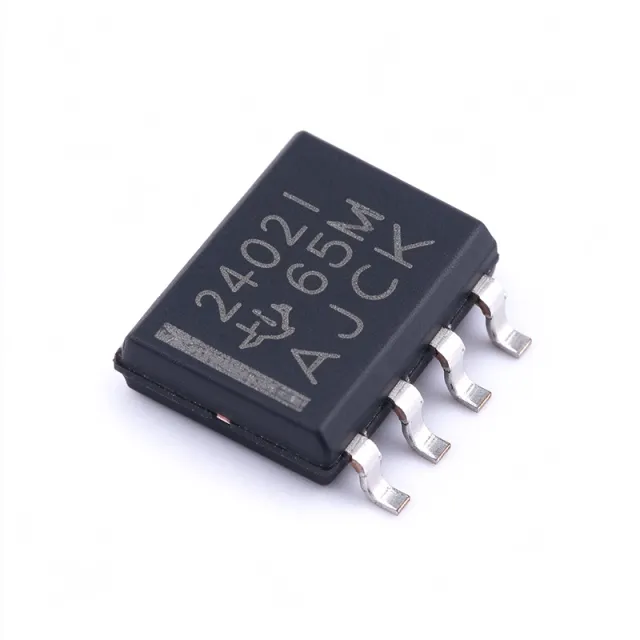
Texas Instruments TLV2402ID is a dual, rail-to-rail input/output operational amplifier designed for low-voltage, low-power signal-conditioning systems. The verified device information identifies a 16 V maximum supply, 5.5 kHz gain-bandwidth product, two amplifier channels, and an 8-pin SOIC package. Its approximately 900 nA per channel supply-current capability makes the TLV2402ID suitable for battery-operated instrumentation where amplifier power must remain small. An operational amplifier is an analog integrated circuit that uses high-gain feedback to amplify the difference between two input voltages. The TLV2402 belongs to the broader operational-amplifier hierarchy, where it combines low quiescent current, rail-to-rail input and output operation, and reverse-battery protection. These characteristics place it between general-purpose precision amplifiers and micropower amplifiers designed for portable or energy-limited equipment. The verified family description identifies rail-to-rail input and output stages, wide supply-voltage capability, high common-mode rejection, and reverse-battery protection. Rail-to-rail input operation allows the input common-mode voltage to extend toward the supply rails, which is important when sensing signals across most of the available input range. Rail-to-rail output operation permits the output to approach either rail, improving usable output swing in low-voltage systems. Reverse-battery protection helps guard the amplifier against excessive current caused by improper battery installation. The 5.5 kHz gain-bandwidth product supports low-frequency signal amplification rather than high-speed waveform processing. Because the dual device provides two amplifiers in one package, both channels use the same supply and are intended to share common operating conditions. The approximately 900 nA per channel supply current is particularly important for battery-powered sensors, portable meters, and industrial monitoring devices that remain active for long periods. Typical applications include low-current sensor conditioning, portable measurement systems, battery-powered monitors, low-frequency filtering, and general-purpose analog signal processing. The 8-pin SOIC package can be assembled using conventional surface-mount production methods, while the dual-channel configuration reduces component count when a design requires two amplified signals or a gain stage plus an active filter. Designers should verify the complete electrical limits, common-mode range, output-swing behavior, stability requirements, and recommended external components in the manufacturer datasheet before releasing a production design. Because the verified information does not include the complete pin table, numeric common-mode-rejection values, input-offset specifications, or recommended external capacitor values, those details require confirmation from the authoritative TLV2402 documentation. This product record combines the verified Texas Instruments family description, distributor availability information, package identification, and design guidance. It also distinguishes the only supported same-footprint substitute found in the supplied cross-reference results and clearly identifies missing technical values that should be obtained from the manufacturer datasheet before precise circuit calculations are performed.

USD $1.43 In Stock
TLV2404CN - 16V Quad Micropower RRIO Op Amp | TI
TLV2404CN

TLV2404CN - 16V Quad Micropower RRIO Op Amp | TI

The Texas Instruments TLV2404CN is a quad micropower operational amplifier with rail-to-rail input and output capability, a 16 V maximum supply designation, 5.5 kHz gain-bandwidth performance, and four amplifiers in a 14-pin PDIP package. It is intended for low-voltage, low-power analog systems that require more than one amplifier on a compact through-hole board. An operational amplifier is a voltage-controlled differential amplifier used to amplify small signals, buffer sensor outputs, perform analog calculations, and drive downstream circuits. The quad TLV2404 belongs to the operational-amplifier hierarchy within analog and mixed-signal semiconductors. Its four channels can reduce external component count and simplify PCB routing compared with four separate single amplifiers, while its micropower positioning supports battery-powered and always-on equipment. Key features include four rail-to-rail input and output amplifiers in one package, a 16 V device rating, and a 5.5 kHz gain-bandwidth product highlighted by Texas Instruments. The rail-to-rail input characteristic supports signal operation across much of the supply range, while rail-to-rail output capability helps preserve output swing near the supply rails. These characteristics are useful in portable sensor interfaces, low-frequency filter stages, and small-signal conditioning circuits. The TLV2404CN is the standard general-purpose TLV2404 configuration identified for a 14-pin PDIP package. According to the manufacturer product page, the family is designed for 2.7 V-class operation as well as higher supply voltages. Its low bandwidth makes it appropriate for energy harvesting, battery monitoring, portable instrumentation, and other applications where high-frequency performance is unnecessary. The through-hole package also supports prototypes, educational platforms, and manually assembled industrial control boards. Typical uses include four-channel sensor conditioning, low-pass and high-pass active filters, transimpedance stages with suitable external biasing, threshold comparators with added hysteresis, and low-frequency signal generators. In each case, resistor and capacitor values determine the practical bandwidth and noise behavior, so simulation and measurement should confirm stability, output swing, and input common-mode limits. For PCB design, route each input and output directly to its corresponding DIP pin, maintain short feedback paths, and place input-sensing traces away from switching nodes. Because the amplifier operates at low bandwidth, bypassing and grounding are often more important than high-speed impedance matching. Check the manufacturer pin-description table before assigning functions to the 14 pins. This product page combines the exact manufacturer and distributor identifiers with practical guidance on package reuse, low-power analog design, and four-channel layout. It also identifies where quotation, lifecycle, and detailed pin verification should be performed before production release.

RFQ Contact
TLV2404ID - 16V Quad MicroPower RRIO Op Amp | Texas Instruments
TLV2404ID

TLV2404ID - 16V Quad MicroPower RRIO Op Amp | Texas Instruments

The Texas Instruments TLV2404ID is a quad, rail-to-rail input and output operational amplifier designed for low-power analog signal conditioning from a single supply up to 16 V. Each amplifier supports a 5.5 kHz gain-bandwidth product and operates with a low 880 nA per-channel supply current. The device is offered in a 14-pin SOIC package for surface-mount assembly. These characteristics make it suitable for portable instrumentation, battery-powered monitoring, sensor interfaces, and low-frequency signal-conditioning circuits where four amplifiers are needed in one package. An operational amplifier is an analog integrated circuit that uses high-gain feedback to amplify the difference between two input voltages. The TLV2404 belongs to the rail-to-rail-input and rail-to-rail-output amplifier category, allowing its input and output stages to operate close to the supply rails. This rail-to-rail behavior is particularly useful in single-supply systems in which signal headroom is limited and internal supply rails are not available for biasing. The principal features of the TLV2404 include four amplifiers per package, an operating supply range extending to 16 V, 880 nA supply current per channel, a 5.5 kHz gain-bandwidth product, and rail-to-rail input and output operation. The low channel current reduces the contribution of the amplifier itself to total system power. The 5.5 kHz bandwidth is appropriate for low-frequency sensor signals, filtering, buffering, and gain stages rather than high-speed communications or precision waveform capture. Reverse-battery protection is included to guard the amplifier against excessive current caused by incorrect battery installation. The family also supports single-supply operation, which simplifies designs powered from one battery cell or a low-voltage rail. These features make the TLV2404 useful in portable and industrial systems where supply current, voltage range, input range, and fault tolerance affect practical reliability. Typical applications include low-power sensor conditioning, battery-operated monitors, portable measurement equipment, current-loop receivers, and four-channel signal buffering. In each case, the amplifier can operate near the supply rails while consuming very little current per channel. Designs requiring substantially higher signal bandwidth, lower offset voltage, lower output distortion, or faster settling should use an amplifier selected for those specifications instead. The primary layout consideration is to maintain a clean low-noise supply connection and place input and output components close to their associated pins. Because the amplifier is intended for low-frequency, low-power operation, PCB leakage, contamination, input bias currents, and capacitor leakage can become more important than high-frequency placement alone suggests. Verify operation across the complete supply range and temperature range used by the final product. This page organizes the TLV2404ID electrical characteristics, package information, application guidance, verified drop-in information, and selection considerations into one engineering reference. It also distinguishes documented operating facts from parameters that must be checked against the manufacturer datasheet before a production design is released.

RFQ Contact
TLV2404IN - 16V Quad 5.5kHz RRIO Op Amp | Texas Instruments
TLV2404IN

TLV2404IN - 16V Quad 5.5kHz RRIO Op Amp | Texas Instruments

Texas Instruments TLV2404IN is a quad, rail-to-rail input/output operational amplifier rated for supplies up to 16 V, with a 5.5 kHz gain-bandwidth product and approximately 880 nA per channel of quiescent current. The device is packaged in a 14-pin PDIP (N) package and operates across a -40 °C to 125 °C temperature range. It is designed for low-power signal conditioning where four amplifiers, low supply current, and rail-to-rail input and output capability are useful in the same circuit. An operational amplifier is an analog signal-processing IC that uses high open-loop gain to amplify the difference between two input voltages. A rail-to-rail input stage accepts common-mode voltages across most of the supply range, while a rail-to-rail output stage can swing close to either supply rail. Within the amplifier hierarchy, the TLV2404IN belongs to the micropower operational-amplifier class and supports applications such as sensor conditioning, battery-powered instrumentation, current measurement, filtering, and low-frequency control loops. Key features include four amplifier channels in one package, a 5.5 kHz gain-bandwidth product, rail-to-rail inputs and outputs, reverse-battery protection, and an approximately 880 nA per-channel quiescent current. Reverse-battery protection is particularly useful in portable systems where a misconnected battery can place reverse voltage across the device. The slow 5.5 kHz bandwidth favors low-frequency precision and sensing functions rather than high-speed signal processing. The TLV2404IN combines four rail-to-rail amplifiers with a micropower bias architecture. Its low quiescent current reduces supply drain in continuously powered equipment, while the wide common-mode input capability simplifies buffering of sensors whose operating range lies close to a supply rail. Because this is a general-purpose amplifier rather than a high-speed comparator, designers should account for its limited gain-bandwidth product when setting filter poles, closed-loop gain, and required settling behavior. Typical applications include portable battery-powered monitors, industrial sensor interfaces, low-frequency active filters, current-sense amplifier signal chains, and general-purpose analog instrumentation. A four-channel implementation can reduce board area when several independent low-frequency signals require amplification, provided each channel's noise, offset, common-mode range, and stability requirements are compatible. When designing around the TLV2404IN, check source and sink current capability at the chosen output voltage, place decoupling capacitors close to the supply pins, and confirm that each feedback network supports the intended operating frequency. Avoid treating reverse-battery protection as a substitute for correct battery polarity or for a dedicated fuse and protection network. This product page consolidates the exact TLV2404IN device characteristics, family-level alternatives, application guidance, pin-package constraints, and practical design notes into an engineering-focused reference for evaluating the amplifier before PCB implementation.

RFQ Contact
TLV2422CD - Dual 10V Rail-to-Rail Op Amp | Texas Instruments
TLV2422CD

TLV2422CD - Dual 10V Rail-to-Rail Op Amp | Texas Instruments

Texas Instruments TLV2422CD is a dual operational amplifier designed for low-voltage, low-power signal-conditioning systems. The device operates from a 10 V maximum supply, operates with single or split supplies, and provides rail-to-rail output capability. Its 52 kHz gain-bandwidth product supports general-purpose amplification in instrumentation, monitoring, and remote-sensing circuits. The TLV2422CD is packaged in an 8-pin SOIC and contains two amplifier channels in one package. An operational amplifier is an analog integrated circuit that uses high-gain differential amplification to improve the level and conditioning of weak signals. The TLV2422 belongs to the operational-amplifier, analog-amplifier, and signal-conditioning IC hierarchy. It is intended for applications where low-voltage operation and low quiescent power are important, including battery-powered instrumentation and portable monitoring equipment. Its high input impedance helps reduce loading on high-impedance sources such as piezoelectric transducers. The TLV2422 family provides low-noise operation, high input impedance, micropower dissipation, and rail-to-rail output operation. These characteristics are useful when the input signal must be amplified without significantly loading the sensor or when the output must remain usable near the supply rails. The 52 kHz bandwidth is suitable for low-to-moderate-frequency measurement and conditioning functions rather than high-speed signal processing. The TLV2422CD is identified as a standard, general-purpose amplifier. It is a dual-circuit device in an 8-pin SOIC package, allowing two amplifier sections to be implemented with one package. The manufacturer identifies the device as suitable for small-signal conditioning with high-impedance sources and highlights its use in handheld monitoring and remote-sensing applications. Single-supply and split-supply operation provide flexibility in industrial, medical-instrumentation, and portable-system designs. The 10 V supply rating makes the TLV2422CD appropriate for low-voltage analog systems, although the exact input, output, bias-current, noise, and temperature limits should be checked against the manufacturer datasheet for the exact operating conditions. Designers should also verify the common-mode range, output swing, stability requirements, and recommended external components before using the amplifier in a new design. When designing around the TLV2422CD, begin with the signal source impedance and required gain. The high input impedance is valuable for piezoelectric and other high-impedance transducers, while the 52 kHz gain-bandwidth product limits the practical bandwidth at higher closed-loop gains. Decoupling capacitors should be placed close to the supply pins, and the feedback network should be kept compact to reduce parasitic effects. This page summarizes the TLV2422CD identity, package, key operating characteristics, typical signal-conditioning uses, comparison boundaries, and design considerations. It also identifies replacement options and the points engineers should verify when migrating between pin-compatible dual operational amplifiers.

RFQ Contact
TLV2422ID - 10V Dual Micropower Op Amp | Texas Instruments
TLV2422ID

TLV2422ID - 10V Dual Micropower Op Amp | Texas Instruments

The Texas Instruments TLV2422ID is a dual, 10 V, 52 kHz operational amplifier with rail-to-rail output, wide-input-voltage capability, high input impedance, and low noise. The device is offered in an 8-pin SOIC package and is intended for low-power, low-voltage signal-conditioning systems. An operational amplifier, or op amp, is an analog integrated circuit that uses high open-loop gain to amplify small voltage signals. The TLV2422 contains two independent amplifier channels, placing it within the hierarchy of dual-channel op amps, voltage amplifiers, analog signal-conditioning ICs, and broader semiconductor-based signal-chain components. Its rail-to-rail output helps the output approach the available supply limits while its wide-input range supports operation from single or split supplies. Three headline characteristics define the TLV2422ID: two amplifier channels, a 10 V maximum supply rating, and a 52 kHz gain-bandwidth product. The micropower operating approach reduces supply demand in battery-powered equipment, while high input impedance is valuable when sensing signals from high-impedance transducers. Rail-to-rail output expands usable output range in compact systems where conventional fixed-output amplifiers can approach a supply rail. The combination of low noise, low voltage operation, micropower dissipation, and high input impedance makes the device suitable for conditioning weak sensor signals without requiring a large-output-current amplifier. Its 52 kHz bandwidth is appropriate for low-frequency instrumentation, portable monitoring, and remote-sensing channels rather than high-speed signal processing. The 8-SOIC package provides a familiar surface-mount footprint and supports automated assembly. Typical uses include portable environmental monitoring, industrial sensor interfaces, remote data acquisition, medical instrumentation, and piezoelectric or other high-impedance transducers. Split-supply operation is also useful when the signal can be centered around ground, while single-supply operation simplifies portable equipment powered from one positive rail. Designers should verify input and output common-mode limits at the selected supply voltage and account for the amplifier’s finite bandwidth when setting closed-loop gain. Input and output stability, grounding, and bypass-capacitor placement remain important, especially when a high-gain stage amplifies small sensor signals. This page combines manufacturer specifications, sourcing guidance, pin-level implementation details, application analysis, and carefully scoped drop-in alternatives. These engineering aids help distinguish the TLV2422ID from alternatives without obscuring the differences that still require validation before a board redesign.

RFQ Contact
TLV2422QD - Dual Micropower Rail-to-Rail Op Amp | Texas Instruments
TLV2422QD

TLV2422QD - Dual Micropower Rail-to-Rail Op Amp | Texas Instruments

The Texas Instruments TLV2422QD is a dual, general-purpose operational amplifier with two amplifier circuits in an 8-pin SOIC package. It is designed for low-power operation and uses a LinCMOS process with rail-to-rail output capability. The device supports dual supply operation from ±5 V to ±10 V, making it appropriate for bipolar analog systems whose signal levels extend toward either supply rail. An operational amplifier is an analog integrated circuit that amplifies the voltage difference between its non-inverting and inverting inputs. The TLV2422QD belongs to the operational-amplifier, analog-amplifier, and signal-conditioning-IC hierarchy. Its rail-to-rail output stage allows the output voltage to approach the supply limits more closely than a conventional amplifier with a restricted output swing, improving signal utilization in low-voltage or precision analog designs. Key characteristics include two amplifier channels, rail-to-rail output operation, wide-input-voltage capability, micropower operation, and an 8-pin SOIC package. Two channels in one package can simplify board layout when an application requires matched gain stages, buffers, or differential signal conditioning. Its package also reduces the component count compared with two separate single-channel amplifiers. The LinCMOS implementation combines CMOS power characteristics with analog signal handling. Rail-to-rail output operation is particularly useful for sensor interfaces, low-level signal conditioning, and test equipment where the processed signal must occupy much of the available output range. As with any operational amplifier, stability, common-mode behavior, output capability, and input bias effects must be evaluated against the actual circuit rather than inferred from the product category alone. Typical uses include current-to-voltage conversion for resistive sensors, buffer stages in instrumentation systems, audio preamplification, active filtering, low-voltage control loops, and general-purpose signal conditioning. Two independent channels can also form the active section of a difference amplifier when resistor ratios are matched carefully. PCB implementation should preserve the IC's high-impedance input behavior, provide a low-impedance return path, and route sensitive input and feedback traces away from switching nodes and digital signals. Decoupling capacitors should be placed close to the supply pins, while input and feedback components should be positioned to minimize parasitic capacitance. The complete pin assignment and electrical limits should be taken from the Texas Instruments datasheet before schematic capture or PCB release. This product page combines the confirmed device identity, package information, power architecture, drop-in-family comparison, application guidance, and design-focused selection criteria to support faster engineering evaluation while keeping all numerical claims tied to the manufacturer documentation.

RFQ Contact
TLV2432CD - Dual 10V 500kHz Rail-to-Rail Op Amp | TI
TLV2432CD

TLV2432CD - Dual 10V 500kHz Rail-to-Rail Op Amp | TI

The Texas Instruments TLV2432CD is a dual, 10 V, 500 kHz CMOS operational amplifier with rail-to-rail output capability, supplied in an 8-pin SOIC package. It combines two amplifier channels, a 10 V maximum supply rating, and a 500 kHz gain-bandwidth product in one compact surface-mount IC. An operational amplifier is an analog building block used to amplify voltage differences, buffer signals, integrate errors, and drive control inputs. The TLV2432 belongs to the CMOS operational-amplifier hierarchy and is designed for low-voltage signal conditioning where two channels, rail-to-rail output swing, and low supply current can simplify a board design. The device is identified as a CMOS, dual-amplifier circuit with rail-to-rail output operation. Its 500 kHz bandwidth is suitable for low-to-moderate-frequency instrumentation, while the 10 V supply rating positions it for circuits operating below the 10 V rail limit. Rail-to-rail output helps the amplifier produce useful output levels near the positive and negative supply rails, although input common-mode limits, output swing, noise, and stability still require verification for each design. The TLV2432CD is offered in an 8-SOIC package and uses two independent amplifier channels. Typical circuit roles include voltage buffering, sensor-signal conditioning, transimpedance conversion, active filtering, and low-frequency closed-loop amplification. Because it is a CMOS operational amplifier, its quiescent behavior is suitable for battery-powered and portable equipment when the operating-current target is compatible with the device specification. Typical applications include industrial sensor interfaces, portable measurement systems, audio signal conditioning, low-frequency control loops, and general-purpose dual-amplifier boards. Two amplifiers per package can reduce component count and PCB area when a design needs matched general-purpose channels. The same package also makes board-level substitutions more practical when the replacement has the same eight-pin pinout and acceptable electrical ratings. For layout, place the decoupling capacitor close to the supply pin, connect exposed-sensitive signals away from power paths, and verify feedback-network stability with the actual load. Do not assume that a rail-to-rail output removes the need for output-headroom checks. Confirm input common-mode range, maximum output current, slew rate, noise, offset, and operating temperature against the manufacturer datasheet before production release. This product page organizes the official device information, exact package identity, sourcing guidance, pin assignment, qualified drop-in alternatives, and practical design notes. It also provides parameter-by-parameter comparisons that help engineers evaluate replacements without confusing a footprint match with guaranteed electrical equivalence.

RFQ Contact
TLV2432ID - 10V 500kHz R-R Op Amp | Texas Instruments
TLV2432ID

TLV2432ID - 10V 500kHz R-R Op Amp | Texas Instruments

The Texas Instruments TLV2432ID is a dual, 10 V, 500 kHz CMOS operational amplifier with rail-to-rail output swing and a wide-input-voltage capability, packaged in an 8-pin SOIC. The two integrated amplifiers support signal conditioning, buffering, filtering, current sensing, analog measurement, and precision control applications operating from low-voltage battery or single-supply systems. An operational amplifier is a voltage-gain building block used to amplify small analog signals while driving higher-impedance loads. The TLV2432 belongs to the CMOS operational-amplifier family within the broader analog amplifier, signal-conditioning, and semiconductor hierarchies. Its dual configuration places two amplifiers in one package, reducing board area when a circuit needs symmetric signal paths, cascaded stages, or independent gain channels. Key characteristics include two amplifier channels, a 500 kHz gain-bandwidth product, operation up to a 10 V supply, rail-to-rail output capability, and an 8-pin SOIC package. The wide bandwidth makes the device suitable for moderate-speed filtering and feedback-control loops rather than high-frequency precision applications. Its low-voltage operation also makes it appropriate for portable instrumentation powered from a 3.3 V or 5 V rail. The TLV2432 uses an advanced LinCMOS operational-amplifier architecture. Rail-to-rail output swing allows the output voltage to approach the supply rails more closely than a conventional fixed-output amplifier, improving usable range in low-voltage systems. Two amplifiers in one SOIC can also simplify feedback layouts when the channels perform related filtering or buffering tasks, although each channel must still be evaluated for stability, noise, and output-load requirements. Typical uses include low-side current sensing in industrial control, sensor-signal conditioning, active filtering, audio and communication interfaces, portable measurement equipment, and general-purpose precision control. The 8-SOIC format remains easy to assemble, inspect, and prototype on conventional through-hole or mixed-technology boards where a fine-pitch surface-mount package would be inconvenient. When designing around the TLV2432ID, verify input and output common-mode limits, load-current capability, output-capacitance stability, and noise performance under the intended supply voltage. Keep feedback loops short, place compensation components close to the relevant pins, and provide stable supply bypassing to limit high-frequency disturbance. This product page combines manufacturer specifications, package and pin information, practical design guidance, drop-in alternatives, and application-focused comparisons to support faster component selection and PCB design decisions.

RFQ Contact
TLV2432QD - Dual 500 kHz Rail-to-Rail Op Amp | Texas Instruments
TLV2432QD

TLV2432QD - Dual 500 kHz Rail-to-Rail Op Amp | Texas Instruments

The Texas Instruments TLV2432QD is a dual, low-voltage operational amplifier with rail-to-rail output, wide-input-voltage operation, a 10 V maximum supply rating, and 500 kHz gain-bandwidth performance. The device is packaged in an 8-pin SOIC and is intended for signal conditioning, buffering, current sensing, analog measurement, filtering, and precision control applications. Operational amplifiers are analog signal-processing ICs that amplify the difference between two input voltages while providing high input impedance and low output impedance. The TLV2432 belongs to the LinCMOS operational-amplifier family, combining CMOS-style low-power characteristics with rail-to-rail output capability. Rail-to-rail output allows the output voltage to approach both supply rails under suitable load and output-voltage conditions, making the device useful in low-voltage systems where signal headroom is limited. The TLV2432 uses an extended common-mode input-voltage range and supports operation from a single 5 V supply or from supplies up to ±5 V, as described in the manufacturer product information. Its nominal gain-bandwidth product is 500 kHz, and its slew rate is 0.25 V/us according to the distributor specification listing. The amplifier also provides low input-bias current, listed as approximately 150 pA, which is useful when the source impedance is high and input bias errors must be minimized. The TLV2432QD is the Q-grade version of the TLV2432 family and is identified by the manufacturer as an 8-SOIC, rail-to-rail dual operational amplifier. The Q suffix indicates the specified grade and packaging ordering code, while the device family includes related TLV2432 variants with different packaging or temperature options. Its wide-input-voltage and rail-to-rail-output characteristics make it suitable for sensor interfaces, transducer amplifiers, active filters, low-voltage instrumentation, and general-purpose analog signal chains. Typical circuit use places each amplifier in an inverting or non-inverting configuration with external feedback resistors and decoupling capacitors close to the supply pins. When using the device for precision measurements, input bias current, input-offset voltage, common-mode range, output swing, and stability with the selected feedback network should be evaluated together. The 500 kHz bandwidth is adequate for many low-to-moderate-frequency signal-conditioning tasks but does not make the part suitable for demanding high-speed video or RF applications. The principal design tradeoff is the relationship between low-power analog flexibility and bandwidth. TLV2432 is appropriate when rail-to-rail output, wide input range, low bias current, and a moderate 500 kHz bandwidth are more important than very high slew rate or multi-gigahertz signal bandwidth. Confirm the exact ordering code, temperature range, and mechanical drawing against the manufacturer datasheet before releasing a production PCB.

RFQ Contact
TLV2434ID - 10V 500kHz Quad R-R Op Amp | Texas Instruments
TLV2434ID

TLV2434ID - 10V 500kHz Quad R-R Op Amp | Texas Instruments

Texas Instruments TLV2434ID is a four-channel CMOS operational amplifier designed for low-level signal processing with a 10 V maximum supply, 500 kHz gain-bandwidth product, rail-to-rail output swing, and an extended common-mode input range. The device is packaged in a 14-pin SOIC, allowing four amplifiers to be accommodated on one compact PCB footprint. An operational amplifier is a voltage-controlled, high-gain analog building block used to amplify weak signals, buffer impedance mismatches, compare voltages, perform active filtering, and drive downstream circuitry. Within the power-management and signal-processing hierarchy, the TLV2434ID belongs to the CMOS operational-amplifier family and combines four amplifier channels with low-voltage operation and rail-to-rail output capability. Key features include a 10 V supply rating, 500 kHz gain-bandwidth product, rail-to-rail output operation, and an extended common-mode input range. The rail-to-rail output allows the output voltage to approach the supply rails more closely than a conventional amplifier whose swing is restricted by saturation limits. The four-channel arrangement reduces package count and simplifies PCB routing when a design requires several similar analog functions. The TLV2434ID is a low-voltage CMOS op amp rather than a high-voltage bipolar amplifier. Its rail-to-rail behavior is particularly useful for sensor interfaces, portable instrumentation, battery-powered measurement systems, and signal-conditioning circuits operating from a low-voltage supply. Four independent channels can be used for filtering, buffering, gain stages, or active-feedback sensor conditioning. Typical applications include bridge-based sensor signal conditioning, low-level audio and communication interfaces, current monitoring, analog measurement front ends, active filters, and multi-channel test equipment. When designing around the device, confirm that input and output voltages remain within the common-mode and output-swing limits for the selected supply. Decoupling capacitors should be placed close to the supply pins, while sensitive inputs require short traces and a low-noise ground return. This product page combines the manufacturer’s device description, package information, cross-reference findings, application guidance, and engineering-focused selection criteria to support faster sourcing and board-level planning for the TLV2434ID.

RFQ Contact
TLV2442CD - Dual Wide-Input CMOS Op Amp | Texas Instruments
TLV2442CD

TLV2442CD - Dual Wide-Input CMOS Op Amp | Texas Instruments

Texas Instruments TLV2442CD is a dual Advanced LinCMOS operational amplifier with rail-to-rail output and wide-input-voltage capability, packaged in an 8-pin SOIC. The device contains two independent amplifier channels and is specified for operation from 0°C to 70°C. Its rail-to-rail output stage enables output voltage to approach the supply rails, while the wide common-mode input range provides flexibility when signals originate near the positive or negative rail. These characteristics make the TLV2442CD useful for low-voltage analog signal conditioning, buffering, and general-purpose dual-amplifier systems. An operational amplifier is an analog integrated circuit that uses high open-loop gain to amplify small input-voltage differences. A dual operational amplifier combines two amplifier channels in one package, reducing component count and board area. Within the broader semiconductor hierarchy, it belongs to the amplifier IC class, operates as a linear analog building block, and commonly supports instrumentation, sensing, filtering, and signal-conditioning functions. The TLV2442CD uses CMOS-compatible internal construction, commonly identified by Texas Instruments as Advanced LinCMOS. The TLV2442CD combines two amplifier channels with rail-to-rail output operation in one compact 8-pin SOIC. This configuration is useful when a board requires matched channel organization or simply benefits from consolidating two amplifiers into a single package. Its wide-input-voltage capability is particularly valuable in systems where the signal may vary close to a supply rail. The 0°C to 70°C rating identifies it as a commercial-temperature device rather than an extended-temperature industrial or automotive grade part. Both amplifier channels can be used independently, allowing one device to implement functions such as a signal buffer, a voltage follower, or two stages of a multi-stage analog circuit. Rail-to-rail output improves usable signal range near the upper and lower supply limits, although the application still must account for input common-mode limits, output-current capability, stability, and load behavior from the manufacturer datasheet. The wide input range should not be interpreted as permission to exceed the absolute maximum supply or input ratings. Typical applications include low-voltage sensor interfaces, analog signal buffers, voltage-feedback amplifier stages, sensor-conditioning networks, audio preamplification, and general industrial control modules. In a sensor interface, one channel can amplify a transducer signal while the other handles buffering or gain control. In a dual-stage filter or gain block, the two channels can reduce the number of amplifier packages required while preserving the convenience of standard SOIC assembly. When laying out a PCB, place each channel's decoupling capacitor close to the appropriate supply pins and keep feedback components compact around the amplifier inputs and outputs. Confirm stability for the intended load and output-capacitance range. For dual-rail operation, verify input and output swing against the actual signal range, and avoid using the commercial 0°C to 70°C TLV2442CD outside that temperature boundary. This page organizes the TLV2442CD specifications, ordering information, package details, practical design guidance, and qualified drop-in alternatives into a focused engineering reference. The comparison material helps engineers distinguish electrical and qualification differences between candidate amplifier MPNs while preserving the 8-pin SOIC footprint requirement.

RFQ Contact
TLV2442ID - Dual Rail-to-Rail Output Op Amp | Texas Instruments
TLV2442ID

TLV2442ID - Dual Rail-to-Rail Output Op Amp | Texas Instruments

Texas Instruments TLV2442ID is a dual Advanced LinCMOS operational amplifier with rail-to-rail output capability and wide-input-voltage operation. The device contains two amplifier circuits, operates from 2.7 V to 10 V, and is available in an 8-pin SOIC package. Its 1.75 MHz gain-bandwidth product and 1.3 V/µs slew rate make it suitable for low-power signal-conditioning designs that require more bandwidth than a basic micropower amplifier. An operational amplifier is a voltage-feedback amplifier used to amplify, buffer, filter, or compare small analog signals. The TLV2442 belongs to the CMOS operational-amplifier hierarchy within the broader amplifier IC and semiconductor categories. Unlike a rail-to-rail input device, the TLV2442 is specifically described by Texas Instruments as having a rail-to-rail output and wide-input-voltage range. This distinction matters when the output must approach the supply rails but the input does not need to cover both rails fully. Key characteristics include two amplifier circuits in one package, a 2.7 V to 10 V supply range, 1.75 MHz bandwidth, and a 1.3 V/µs slew rate. The rail-to-rail output is particularly useful for driving downstream circuits that operate near a supply rail. Combining two amplifiers in one SOIC-8 package can also reduce board area and simplify dual-channel signal paths such as sensor conditioning, filtering, or differential analog front ends. The Advanced LinCMOS implementation supports low-voltage operation while preserving useful dynamic performance for portable and embedded equipment. Bandwidth determines how quickly the closed-loop amplifier can process small-signal variations, while slew rate describes the maximum rate at which the output can change in a large-signal step. These characteristics make the TLV2442 appropriate for audio, instrumentation, communication, and control applications where the signal bandwidth remains below the amplifier’s 1.75 MHz capability. Typical uses include low-frequency sensor amplification, active filtering, audio signal conditioning, general-purpose buffering, and dual-channel analog processing. Battery-operated products benefit from the 2.7 V minimum supply voltage because the amplifier can operate directly from a single 3.3 V rail. The same SOIC-8 package is convenient for prototypes and production assemblies requiring a conventional surface-mount footprint. Designers should verify the input common-mode range, output swing, noise, offset, stability, and output-current capability against the manufacturer datasheet for the intended supply and load conditions. Decoupling capacitors should be placed close to the supply pins, and unused amplifier inputs must be configured according to the recommended circuit practice. Proper grounding and short feedback paths are essential for predictable settling and reduced channel interaction. This page combines the manufacturer’s device description with package, electrical, sourcing, replacement, and application guidance. It also identifies the limits of the available cross-reference information so that engineers can distinguish a verified drop-in option from variants that require a different footprint or a new design qualification.

RFQ Contact
TLV2442QD - Dual RRO CMOS Op Amp | Texas Instruments
TLV2442QD

TLV2442QD - Dual RRO CMOS Op Amp | Texas Instruments

Texas Instruments TLV2442QD is a dual CMOS operational amplifier featuring rail-to-rail output operation and a wide-input-voltage architecture in an 8-pin SOIC package. It combines two amplifier channels in one package, operates from a single 5 V supply in the documented application, and supports input signals approaching the supply rails. The device is listed by Texas Instruments as an Advanced LinCMOS rail-to-rail-output wide-input-voltage operational amplifier, making it suitable for general-purpose signal conditioning, instrumentation, and analog control circuits. An operational amplifier is an analog building block that amplifies the voltage difference between its inverting and non-inverting inputs. The TLV2442 family uses CMOS circuitry to provide rail-to-rail output behavior, while its extended common-mode input range allows the inputs to operate closer to the supply rails than a conventional CMOS amplifier. Two independent channels in one SOIC package can reduce board area and simplify dual-axis, filtering, buffering, or complementary signal-processing designs. The manufacturer identifies low noise and no phase inversion as important characteristics of this family. The reported gain-bandwidth value is 1.81 MHz, which makes the amplifier suitable for moderate-bandwidth instrumentation and control paths. Its 4.25 V minimum supply requirement at a 5 V single-supply operating point is another defining feature. Because the output can swing toward both supply rails, signal-chain designers gain additional usable output range without requiring a separate output-bias arrangement. The TLV2442 architecture is intended for low-voltage, low-power analog systems where two amplifier channels are needed in a compact package. Rail-to-rail output improves dynamic range in sensor interfaces and single-supply signal chains, while the wide common-mode input range accommodates input voltages near the rails. These characteristics make the device appropriate where conventional restricted-output amplifiers would clip or lose signal margin at low or high signal levels. Typical uses include sensor-signal conditioning, low-side current measurement, portable instrumentation, industrial control modules, audio input buffers, and general dual-channel filtering. In a two-axis sensing system, both channels can amplify signals with the same supply and package. In a filter or driver arrangement, the second channel may condition a complementary signal or support feedback around an external active network. Designers should verify input and output limits, common-mode behavior, output-current capability, noise, and stability for the intended operating point before finalizing the circuit. Decoupling capacitors should be placed close to the supply pins, and sensitive analog layouts should minimize trace resistance and coupling from switching circuitry. The Q suffix identifies the automotive-related ordering variant, so qualification and temperature requirements should be checked against the final operating environment. This page consolidates the device identity, operating characteristics, drop-in-family alternatives, package information, and practical implementation guidance for engineers evaluating the TLV2442QD. It also distinguishes same-footprint family options from broader functional equivalents so board-level replacement decisions begin with the required package and qualification constraints.

RFQ Contact
TLV2444CD - Quad Rail-to-Rail CMOS Op Amp | Texas Instruments
TLV2444CD

TLV2444CD - Quad Rail-to-Rail CMOS Op Amp | Texas Instruments

Texas Instruments TLV2444CD is a quad, rail-to-rail-output, wide-input-voltage CMOS operational amplifier packaged in a 14-pin SOIC. The device contains four amplifier circuits, provides output swing that includes both supply rails, and uses an extended common-mode input voltage range. According to the manufacturer product information, it operates from single or dual supplies and supports rail-to-rail output operation for low-voltage analog signal-conditioning systems. An operational amplifier is a voltage-gain amplifier used to amplify, buffer, filter, compare, or reshape analog signals. The TLV2444 belongs to the linear-amplifier hierarchy, combining low-voltage CMOS operation with rail-to-rail output capability. Its wide input-voltage range makes it useful when signals approach the available supply voltage, while the four amplifiers in one package can support several signal paths in compact equipment. Key features include four amplifier circuits, rail-to-rail output swing, an extended common-mode input range, low-noise operation, and no output phase inversion. A single-supply configuration requires at least 4.25 V. The CMOS design is intended for portable instrumentation, industrial control, data acquisition, and portable equipment where low-voltage analog signals must be conditioned without relying on a dual supply. The LinCMOS architecture positions the TLV2444 between conventional CMOS and bipolar operational amplifiers. Rail-to-rail output allows the output voltage to approach the positive and negative supply limits under suitable load conditions. The extended common-mode range is particularly valuable in battery-powered designs because sensor outputs can occupy much of the available signal range. Four amplifiers in one 14-pin SOIC also reduce board area compared with separate single or dual amplifier packages. Typical applications include sensor signal conditioning, portable measurement equipment, battery-powered data acquisition, industrial interface circuits, low-voltage comparators, and active filtering. Each amplifier can be configured for inverting, non-inverting, voltage-follower, or feedback-based filtering operation, provided the designer observes the input, output, and common-mode limits from the manufacturer data sheet. Design attention should focus on input bias current, output load capability, noise, bandwidth, stability with capacitive loads, and the selected feedback network. Because the exact electrical limits are product-specific, use the pin-description table and characteristic curves in the manufacturer data sheet when assigning input and output pins or sizing external resistors and capacitors. This product page organizes the TLV2444CD family information, exact package attributes, technical specifications, sourcing workflow, and engineering considerations for faster design review. It also distinguishes the available manufacturer alternatives from cross-brand parts and highlights where PCB-level verification remains essential before substituting any amplifier.

RFQ Contact
TLV2444ID - Quad Rail-to-Rail CMOS Op Amp | Texas Instruments
TLV2444ID

TLV2444ID - Quad Rail-to-Rail CMOS Op Amp | Texas Instruments

The Texas Instruments TLV2444ID is a four-circuit, Advanced LinCMOS operational amplifier with rail-to-rail output swing, wide-input-voltage capability, and low-voltage operation in a 14-pin SOIC package. The device is designed for single- or dual-supply systems where low power, compact implementation, and flexible input ranges are important. Its operating temperature range extends from -40°C to 125°C, making it suitable for industrial, instrumentation, communications, and embedded control applications. An operational amplifier is an analog signal-processing IC that amplifies the voltage difference between its differential inputs. The operational-amplifier category includes voltage-feedback and current-feedback devices, while the TLV2444ID is a voltage-feedback, CMOS quad amplifier. Four amplifiers in one package reduce board area and simplify designs requiring multiple low-voltage signal stages, buffers, or gain channels. Key features of the TLV2444ID include rail-to-rail output operation, a wide common-mode input voltage range, CMOS construction, and four amplifiers per package. Rail-to-rail output swing allows the output voltage to approach the supply rails, maximizing usable signal range in low-voltage systems. The wide input range is particularly useful when sensor outputs, divided signals, or bias voltages occupy much of the available supply voltage. The Advanced LinCMOS architecture supports low-voltage operation while maintaining low bias current and low-noise behavior. Because the amplifiers do not phase invert, they can be used in conventional inverting and non-inverting signal paths. A single package can implement filters, instrumentation amplifiers, sensor amplifiers, level-shifting stages, or analog signal-conditioning blocks while preserving consistent device characteristics across all four channels. Typical applications include portable instrumentation, battery-powered sensor interfaces, industrial control systems, audio and communication signal conditioning, data-acquisition front ends, and low-voltage analog processing. The 14-pin SOIC package supports conventional surface-mount assembly and provides a practical upgrade from discrete single or dual amplifier implementations when four independent channels are required. When designing around the TLV2444ID, verify the input common-mode range, output swing, supply current, stability requirements, and input-capacitance limits against the intended operating conditions. Decoupling capacitors should be placed close to the supply pins, and sensitive analog traces should be kept away from switching nodes and high-current return paths. This product page combines the manufacturer product information with practical guidance for package selection, pinout use, application fitting, design trade-offs, and verified drop-in alternatives. It is intended to help engineers determine whether the TLV2444ID's four-channel CMOS architecture and 14-pin SOIC footprint align with a new analog-front-end design or an existing board revision.

RFQ Contact
TLV2450CD - 23µA, 220kHz Rail-to-Rail Op Amp | Texas Instruments
TLV2450CD

TLV2450CD - 23µA, 220kHz Rail-to-Rail Op Amp | Texas Instruments

Texas Instruments TLV2450CD is a single-channel, rail-to-rail input and output operational amplifier with shutdown support, offering 23 µA supply current per channel, 220 kHz gain-bandwidth product, and ±10 mA output drive capability. The device is packaged in an 8-pin SOIC and is suited to portable instrumentation, sensor interfaces, low-power signal conditioning, and battery-powered systems. An operational amplifier, commonly called an op amp, is an analog integrated circuit that amplifies the difference between two input voltages. The TLV2450 belongs to the operational-amplifier hierarchy within analog and mixed-signal semiconductors. Its rail-to-rail input stage accepts signals extending toward the supply rails, while its rail-to-rail output stage provides useful output swing close to those limits. This combination makes it practical for low-voltage systems where the usable signal range is a substantial fraction of the available supply voltage. The TLV2450CD combines low quiescent current with a comparatively wide 220 kHz gain-bandwidth product. Its typical input offset voltage is 20 µV, supporting accurate amplification of small sensor and bridge signals. Shutdown capability provides a path to reduce consumption when the circuit is inactive, which is useful in battery-operated acquisition systems. The 23 µA-per-channel supply current is particularly valuable when every microamp contributes to overall system energy use. The device operates as a general-purpose single amplifier and can be configured for noninverting, inverting, summing, differential, filtering, and current-feedback applications. With a 220 kHz gain-bandwidth product, moderate closed-loop gains are practical in low-power signal paths. Designers must still account for noise gain, output-voltage headroom, capacitive-load stability, input common-mode range, and the effect of the selected external feedback network on accuracy and bandwidth. Typical uses include portable sensor conditioning, low-frequency active filters, microphone preamplification stages, industrial measurement interfaces, and low-leakage battery-powered circuits. The shutdown pin is useful in duty-cycled systems that retain a measurement function while requiring lower consumption between measurements. A key design consideration is to keep feedback-loop routing short and provide stable reference and bypass connections. Decoupling capacitors should be placed close to the supply pins, while sensitive input and feedback nodes should remain away from switching nodes and high-current paths. Because the operating current and bandwidth are modest, the TLV2450CD is most appropriate where low power and rail-to-rail signal access matter more than high speed or heavy capacitive-load drive. This product page combines the manufacturer-defined operating characteristics with practical application guidance, package details, pin-compatible alternatives, and engineering considerations for portable and low-power analog systems.

RFQ Contact
TLV2450CP - 6V 220kHz Low-Power RRIO Op Amp | Texas Instruments
TLV2450CP

TLV2450CP - 6V 220kHz Low-Power RRIO Op Amp | Texas Instruments

Texas Instruments TLV2450CP is a single operational amplifier with rail-to-rail input and output capability, a 6 V maximum supply voltage, 220 kHz gain-bandwidth product, and 23 uA typical quiescent current. The device is offered in an 8-pin PDIP package and includes shutdown functionality, making it suitable for low-voltage instrumentation, sensor signal chains, and portable systems where power efficiency and input flexibility are important. An operational amplifier, or op amp, is a high-gain analog building block used to amplify small voltage signals, buffer inputs, compare voltages, and drive analog-to-digital converter inputs. The TLV2450 belongs to the rail-to-rail input/output operational-amplifier family, where rail-to-rail input operation improves access to the supply-voltage range and rail-to-rail output operation increases output-voltage swing. Its low quiescent current reduces the supply demand of battery-powered and always-on circuits. The main advantages are 220 kHz gain-bandwidth product, approximately 23 uA typical quiescent current, and operation from a single 6 V supply or a 2.7 V to 6 V supply range. The rail-to-rail input stage accepts signals near either supply rail, while the rail-to-rail output stage supports low-voltage signal conditioning with limited headroom. A shutdown function provides a way to reduce operating demand when the amplifier is not needed. These characteristics suit compact, low-power signal-processing systems without requiring a high-speed amplifier. The TLV2450 is a general-purpose amplifier rather than a precision or high-current output device. Its 10 mA per channel output-current capability and 220 kHz bandwidth are appropriate for sensors, filters, and low-frequency analog stages, but not for demanding load driving, very wide-band instrumentation, or high-accuracy measurement rails. Designers should verify input and output common-mode limits, capacitive-load stability, shutdown behavior, and output-current requirements against the manufacturer datasheet before committing a design. Typical uses include battery-powered sensor interfaces, portable measurement equipment, low-voltage audio and control circuits, analog signal conditioning, and embedded analog front ends. The 8-pin PDIP package favors through-hole prototyping, educational instruments, and applications where a socketed or easily inspectable amplifier is useful. The single-amplifier configuration also keeps board requirements simple when only one analog channel is required. A primary design consideration is supply bypassing. Place a suitable local capacitor at the power pin and keep return-current paths short to reduce supply ripple and instability. Avoid driving long capacitive loads directly without checking the recommended output-capacitance limits. If shutdown is used, define its logic levels and state transitions carefully so the amplifier cannot oscillate between operating and shutdown modes. This page combines the manufacturer's device characteristics, package information, practical application guidance, verified source links, and an explicit treatment of replacement constraints. The TLV2450CP is best selected when low quiescent current, rail-to-rail signal access, shutdown capability, and an 8-pin PDIP footprint are more important than precision, high-current output, or very high bandwidth.

RFQ Contact
TLV2450ID - 23µA, 220kHz RRIO Op Amp | Texas Instruments
TLV2450ID

TLV2450ID - 23µA, 220kHz RRIO Op Amp | Texas Instruments

The Texas Instruments TLV2450ID is a single, low-power rail-to-rail input/output operational amplifier with a 220 kHz gain-bandwidth product, 23 µA supply current per channel, and a maximum supply voltage of 6 V. The device is offered in an 8-pin SOIC package and includes a shutdown function for reducing power consumption when the amplifier is not needed. An operational amplifier is a voltage-gain circuit used to amplify small signals in instrumentation, control, sensor, and analog signal-processing systems. The TLV2450ID belongs to the operational-amplifier hierarchy, where rail-to-rail input and output capability allows the signal to approach the supply rails. This is particularly useful in battery-powered equipment operating from low-voltage supplies, where usable input and output range is limited. The TLV2450ID combines 220 kHz gain-bandwidth product with 23 µA typical quiescent current. Its rail-to-rail input stage accepts signals near either supply rail, while the rail-to-rail output stage can drive loads toward the output limits. The manufacturer also specifies 20 µV typical input offset voltage and ±10 mA output-drive capability. A shutdown pin provides a direct way to control active power consumption in portable and intermittently operated systems. The TLV2450 is designed as a general-purpose amplifier for low-voltage analog systems. Its 220 kHz bandwidth supports moderate-frequency signal paths without requiring a higher-speed amplifier. Typical operating current of 23 µA is especially valuable in sensor nodes, portable instruments, and monitoring systems where amplifier power can dominate standby energy. The shutdown function can further reduce consumption when acquisition is intermittent. Typical applications include low-power sensor conditioning, portable measurement equipment, industrial monitoring, current-loop receivers, and buffered analog signal paths. In these systems, the amplifier can process transducer outputs close to ground or the positive rail while operating from a low-voltage supply. Care should be taken to preserve output swing margin and stable operation under the intended load and feedback configuration. For PCB design, place input and feedback components close to the amplifier pins, route sensitive input traces away from switching nodes, and use a stable feedback network appropriate for the required gain and bandwidth. Verify output drive, capacitive-load behavior, and shutdown logic against the circuit timing before releasing the design. This page combines the TLV2450ID operating characteristics with package guidance, application-focused design advice, and same-footprint alternatives for engineers evaluating a low-power rail-to-rail operational-amplifier design.

RFQ Contact
TLV2450IP - 6V, 220kHz, 23µA RRIO Op Amp | Texas Instruments
TLV2450IP

TLV2450IP - 6V, 220kHz, 23µA RRIO Op Amp | Texas Instruments

Texas Instruments TLV2450IP is a single, general-purpose operational amplifier with rail-to-rail input and output, 23 µA typical quiescent current, 220 kHz gain-bandwidth product, and a 6 V maximum supply in an 8-pin PDIP package. The low-current design supports portable and low-power signal-conditioning systems, while the 220 kHz bandwidth provides useful speed for sensor, filtering, and instrumentation applications. An operational amplifier is a voltage-feedback amplifier used to amplify differential signals, buffer analog nodes, or perform basic analog functions through external feedback networks. The TLV2450 belongs to the operational-amplifier hierarchy, where it combines rail-to-rail input and output capability with low quiescent current. Its power-management characteristics make it suitable for battery-operated equipment where every microamp of supply demand affects available operating time. The principal features of the TLV2450IP include a 23 µA typical supply current per channel, 220 kHz gain-bandwidth product, rail-to-rail input and output operation, and operation from a single supply up to 6 V. The manufacturer describes the device as a single 6 V, 220 kHz, low-quiescent-current RRIO operational amplifier with shutdown capability. Shutdown support is useful when a battery-powered system needs to reduce current consumption while the amplifier is not actively processing a signal. The family operates from a single positive supply, which simplifies circuits that cannot use negative rails. Rail-to-rail input operation allows sensing signals near either supply rail, while rail-to-rail output improves output-voltage range and can reduce the need for additional output-stage headroom. The 220 kHz gain-bandwidth product makes the amplifier appropriate for moderate-speed closed-loop stages rather than high-speed signal-path applications requiring substantially greater bandwidth. Typical uses include portable sensor interfaces, low-current data-acquisition front ends, battery-powered monitoring, analog filtering, buffer stages, and embedded instrumentation. In a sensor circuit, the amplifier can amplify a small differential signal while keeping system current consumption low. For filter and gain-stage designs, external resistors and capacitors determine the achievable response, subject to the amplifier's gain-bandwidth and stability characteristics. Designers should account for shutdown logic, input common-mode range, output swing, bias current, noise, and stability when assigning feedback components. Place the device close to the feedback network and maintain a stable reference connection to minimize parasitic effects. Confirm the complete electrical limits and pin configuration in the manufacturer datasheet before using the device in a new design. This product page consolidates the verified manufacturer characteristics, package information, sourcing workflow, drop-in comparison, and practical application guidance. It supports faster component selection by separating the TLV2450IP's low-power RRIO features from the design constraints that matter in portable and instrumentation systems.

RFQ Contact