Memory ICs
Subcategories
Products (487)
K3LKCKC0BM-MGCP - 64Gb LPDDR5 6400Mbps DRAM | Samsung
The Samsung Semiconductor K3LKCKC0BM-MGCP is a 64 Gb LPDDR5 SDRAM DRAM with a 6400 Mbps data rate, organized as 2G x32, housed in a 315-ball FBGA (PBGA315) package. It operates from multiple supply rails (500 mV, 900 mV, 1.05 V, 1.8 V) across an industrial-grade -25 C to +85 C temperature range, and is RoHS compliant. LPDDR5 (Low Power Double Data Rate 5) is a JEDEC-defined generation of mobile DRAM optimized for high bandwidth and low power consumption in battery-operated and performance-driven systems. Within the memory hierarchy, DRAM is a volatile random-access memory used as main system memory, sitting between the processor and non-volatile storage such as NAND flash. LPDDR5 succeeds LPDDR4X with higher data rates, lower operating voltage, and power-saving features. Key features of the K3LKCKC0BM-MGCP include its 64 Gbit density (8 GB per die), the LPDDR5 parallel interface running at 6400 Mbps per pin, and a 32-bit-wide memory organization (2G x32). These attributes make it well suited to flagship smartphone SoCs, AI edge accelerators, and automotive infotainment platforms that demand high memory bandwidth with tight power budgets. Technically, the device uses CMOS technology in a fine-pitch ball grid array, with core, I/O, and interface rails split across 500 mV/900 mV/1.05 V/1.8 V domains per LPDDR5 power architecture. The FBGA-315 ball map supports high-speed signal routing with controlled impedance and on-die termination practices defined by the LPDDR5 specification. Typical applications include mobile handset main memory, AI/edge computing modules, 5G networking equipment buffers, and automotive infotainment and ADAS compute platforms. Design consideration: strict length-matched PCB routing and reference-plane integrity are essential at 6400 Mbps; follow the Samsung datasheet layout guidelines for ball mapping, decoupling, and VDDQ rail design. This page synthesizes distributor pricing, stock availability, drop-in family alternatives, and practical design notes not found in the manufacturer datasheet.
K4A4G045WD-BCPB - 4Gb DDR4 SDRAM x4 1.2V | Samsung
The Samsung K4A4G045WD-BCPB is a 4Gb (1G x 4) DDR4 SDRAM from Samsung's D-die family, operating at 1.2V with a DDR4-2133 (PC2133) speed bin, housed in a 78-ball TFBGA (FBGA) surface-mount package. DDR4 SDRAM (Double Data Rate 4 Synchronous Dynamic Random Access Memory) is the fourth generation of the JEDEC-defined DDR memory hierarchy, following DDR, DDR2, and DDR3. Within the memory IC taxonomy it sits under DRAM -> SDRAM -> DDR SDRAM -> DDR4 SDRAM. DDR4 devices transfer data on both clock edges, doubling effective bandwidth per clock, and introduce lower operating voltage (1.2V vs 1.5V for DDR3), bank groups, and improved on-die termination for higher data rates and lower power in computing systems. Key features of the K4A4G045WD include 4Gb density organized as 1G x 4 (per Samsung and distributor data DDR4 1Gx4 PC2133), 1.2V core supply, DDR4-2133 speed class, and the compact 78-ball TFBGA package that enables dense memory subsystem layouts. The D-die process generation offers mature yield and long-lifecycle production status within Samsung's DDR4 portfolio. Architecturally, the device uses DDR4 bank-group organization with internal prefetch and standard DDR4 command interface (ACT, READ, WRITE, REF, PRE), supporting burst lengths of 8 with sequential and interleaved options, per the Samsung DDR4 SDRAM datasheet Rev. 1.1 (66 pages) covering the K4A4G045WD and K4A4G085WD family. Typical applications include desktop and notebook PC DIMM and soldered-down memory, networking and communication equipment, industrial controllers, and server-adjacent subsystems requiring stable long-term supply. A key design consideration: DDR4 signal integrity requires careful length-matched routing, VTT termination, and controller-calibrated write leveling; verify the memory controller supports the DDR4-2133 timing set (speed bin defined in CL-tRCD-tRP order per Samsung). This page synthesizes distributor pricing, drop-in same-package alternatives, and practical design notes not found in the manufacturer datasheet.
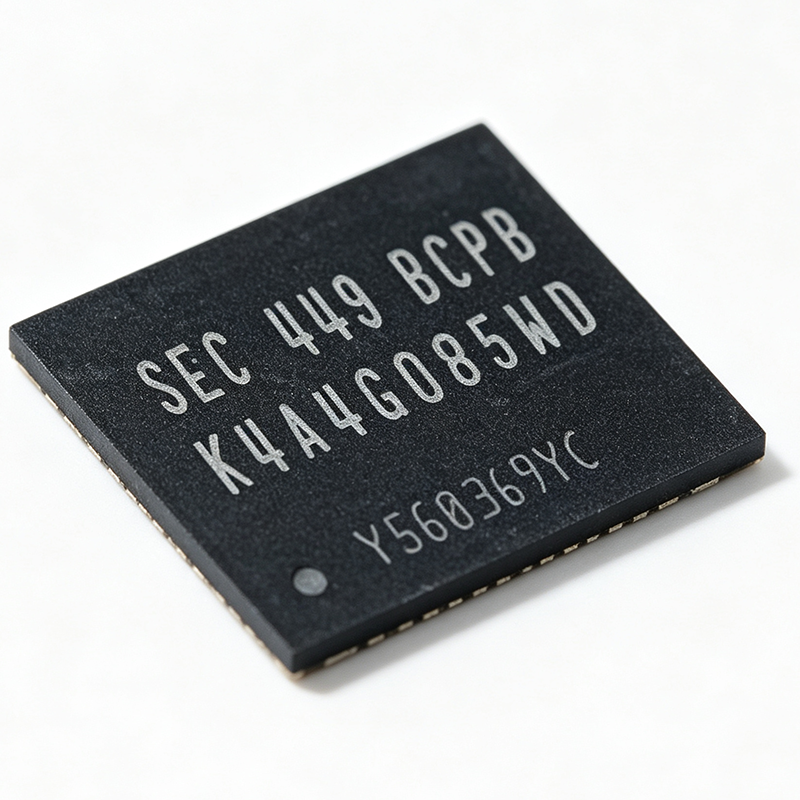
K4A4G085WD - 4Gb DDR4 SDRAM 512Mx8 BGA | Samsung
The Samsung K4A4G085WD is a 4Gb (512M x 8) DDR4 SDRAM in the D-die generation, fabricated on Samsung's advanced DRAM process and delivered in a 78-ball FBGA package. It operates from a 1.2V core supply at data rates up to DDR4-2400 with typical CAS latency settings of CL15 to CL17, depending on speed grade suffix. A DDR4 SDRAM (Double Data Rate 4 Synchronous Dynamic Random Access Memory) is a type of volatile DRAM that transfers data on both clock edges, doubling effective bandwidth versus SDR memory. Within the memory hierarchy it sits as the main-system-memory tier: DRAM cell -> DDR SDRAM -> DDR4 SDRAM -> memory IC -> semiconductor memory. DDR4 introduced the bank-group architecture, lower 1.2V operation, and improved on-die termination (ODT) relative to DDR3. Key features of the K4A4G085WD include the 8-bit-wide x8 I/O organization with 512M addressable locations, the DDR4 bank-group architecture that accelerates random access by permitting interleaved access to different bank groups, and low 1.2V power operation that cuts power consumption versus DDR3. Built-in termination and the CA parity option improve signal integrity at high bus speeds on long, heavily loaded memory buses. The D-die core uses Samsung's scaled DRAM cell technology, supporting standard DDR4 timing parameters such as tRCD, tRP and tRAS per the JEDEC DDR4 specification framework and the Samsung product guide. The 78-ball FBGA (Fine-Pitch Ball Grid Array, lead-free solder balls) keeps the footprint compact for dense memory subsystems, and the part is available in commercial speed grades such as -BCPB (DDR4-2400) and -BCRC, as identified in the Samsung DDR4 SDRAM Memory product guide (May 2018). Typical applications include embedded controllers, industrial computing modules, networking equipment, set-top boxes, and replacement/repair sourcing for PC DIMMs and UDIMM/SODIMM assemblies using x8 DRAM components. When designing with this device, follow Samsung's layout guidance for fly-by command/address routing, per-byte DQS strobe matching, and 40-ohm ODT calibration; address-bus integrity at DDR4-2400 is the most common failure point in first-turn boards. This page synthesizes verified datasheet data, drop-in alternatives across Samsung, Micron and SK Hynix families, practical design notes, and procurement information not found in the manufacturer datasheet alone.
K4A4G085WD-BCRC - 4Gb DDR4-2400 SDRAM 512Mx8 | Samsung
The Samsung K4A4G085WD-BCRC is a 4Gb DDR4 SDRAM organized as 512M x 8, operating at a data rate of 2400 Mb/s (PC2400) with a 1.2V core supply, housed in a 78-ball FBGA (TFBGA) package. DDR4 SDRAM (Double Data Rate 4 Synchronous Dynamic Random Access Memory) is a type of volatile memory that transfers data on both the rising and falling edges of the clock signal, doubling effective bandwidth compared to SDR memory. Within the memory hierarchy, DRAM sits below CPU caches and above storage devices such as NAND flash, serving as the primary working memory in computing systems. The JEDEC-standardized DDR4 generation operates at 1.2V, down from DDR3's 1.5V, reducing system power while raising transfer rates. Key features of the K4A4G085WD-BCRC include the 4Gb D-die configuration from Samsung's DDR4 family, a x8 data interface suitable for controllers with narrower memory buses, and the space-saving 78-ball fine-pitch BGA footprint that supports high-density memory subsystems on compact PCBs. Samsung continues to lead the industry with one of the broadest DRAM portfolios, and this device is found in applications from embedded controllers to computing modules. Technically, the device uses a multi-bank page burst access architecture. As a DDR4 component, it runs from a single 1.2V supply rail, requiring a memory controller that implements DDR4 initialization, training, and refresh scheduling. The x8 organization means a 64-bit system bus is typically populated with eight devices per rank; single-device designs can use the x8 data mask functionality available in DDR4 x8 parts. Typical applications include industrial controllers, embedded computing modules, network appliances, firmware execution and data logging buffers, and replacement sourcing for DDR3-era designs migrating to the DDR4 platform. Design consideration: verify that your memory controller supports DDR4-2400 speed bin timing and that the power delivery network supplies a clean 1.2V rail with proper VTT termination, since signal integrity at 2400 Mb/s on fly-by routed address/command buses demands careful length matching and ODT tuning. This page synthesizes distributor pricing, drop-in alternatives, and practical design notes not found in the manufacturer datasheet.
K4A4G085WD-BCRC - 4Gb DDR4-2400 SDRAM 512Mx8 | Samsung
The Samsung K4A4G085WD-BCRC is a 4Gb DDR4 SDRAM organized as 512M x 8 bits, operating at DDR4-2400 (PC4-2400) data rates from a 1.2V supply, housed in a 78-ball FBGA package. It belongs to Samsung's D-die DDR4 generation. DDR4 SDRAM is the fourth generation of Double Data Rate synchronous dynamic random-access memory, a class of volatile memory ICs that transfer data on both clock edges. Within the memory hierarchy, DDR4 sits above DDR3 and below DDR5, and is the dominant DRAM technology for embedded controllers, industrial modules, and enterprise computing platforms. Compared to DDR3, DDR4 lowers the core supply from 1.5V to 1.2V, raises bank-group parallelism, and improves bus speeds. Key features of the K4A4G085WD-BCRC include the 4Gbit density in a byte-wide x8 organization, DDR4-2400 speed grade (BCRC speed bin), and 1.2V low-voltage operation that reduces system power versus DDR3. The device supports standard DDR4 features such as bank-group architecture, on-die termination (ODT), and DBI/CRC functionality typical of the DDR4 specification. Technically, the D-die Samsung DDR4 family uses a scaled DRAM process with bank groups enabling higher effective bandwidth. The x8 organization suits designs using a single chip per data lane, simplifying layout for microcontroller FMC/SDRAM-style controllers and industrial compute modules that need moderate bandwidth and non-standard memory sizing. Typical applications include industrial controllers and PLCs requiring DRAM working memory, embedded computing and networking modules, firmware logging and data buffering systems, and replacement sourcing for legacy DDR4-based BOM lines. Distributors such as Jotrin, Censtry, and Weyland list the part as DDR4 512Mx8 PC2400. Design consideration: DDR4 demands careful signal-integrity work - length-matched fly-by routing of CK/CA/DQS, accurate VTT termination on the 1.2V bus, and controller configuration of tRFC and ZQ calibration. Verify the exact speed bin suffix (BCRC) against your controller's supported rates. This page synthesizes distributor pricing, drop-in alternatives across Samsung die generations and a JEDEC-compatible Micron equivalent, plus practical DDR4 design notes not found in the manufacturer datasheet.
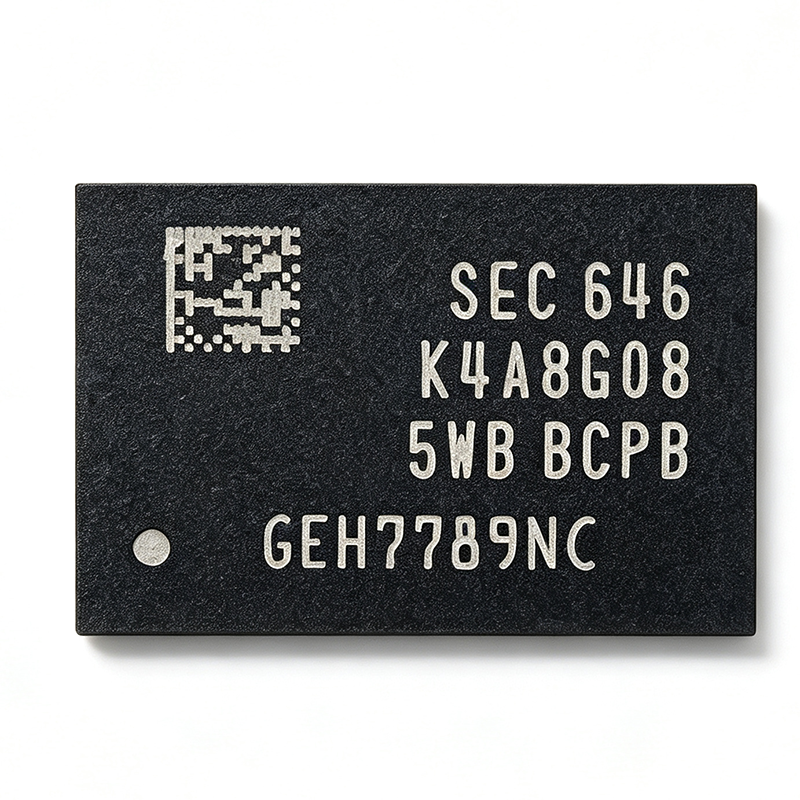
K4A8G085WB-BCPB - 8Gb DDR4 SDRAM 3200Mbps | Samsung
The Samsung K4A8G085WB-BCPB is an 8Gb DDR4 SDRAM memory chip organized as 1G x 8, operating at 1.2V with a data rate of 3200 Mbps (PC4-25600) in a 78-ball FBGA package. DDR4 SDRAM (Double Data Rate 4 Synchronous Dynamic Random Access Memory) is a volatile memory technology that transfers data on both rising and falling edges of the clock, doubling the effective data rate. Within the memory hierarchy it sits below the memory controller and above storage, serving as main system memory. DDR4 succeeded DDR3 by lowering the core supply from 1.5V to 1.2V (up to 40% power reduction), increasing bank count from 8 to 16 via bank groups, and raising densities to 8Gb and beyond. Key features of the K4A8G085WB-BCPB include the 3200 Mbps data rate (BC speed grade), CAS Latency 22, burst length 8, and 16 banks in 4 bank groups for improved parallelism. On-die termination (ODT) and dynamic ODT improve signal integrity, while temperature-compensated self-refresh (TCSR) reduces standby power. The device is fabricated on Samsung's advanced DRAM process (B-die generation) and supports programmable read latency (RL) and write latency (WL). It runs from a 1.2V supply (nominal) with refresh intervals of 7.8 us up to 85C operating temperature. DLL-enabled mode operation ensures precise output timing across the speed range. Typical applications include desktop and laptop DIMMs, embedded computing boards, industrial PCs, networking equipment, and test instrumentation requiring high bandwidth in a compact footprint. When designing in this component, match memory controller timing parameters (CL22 at 3200 Mbps), place decoupling capacitors close to the power balls, and follow the length-matched fly-by routing of DDR4 for CK/CA/DQS nets. This page adds distributor pricing data, drop-in alternatives within the same Samsung DDR4 x8 family, and cross-brand equivalents (SK Hynix, Micron, Nanya) not found in the manufacturer datasheet alone.
K4A8G085WB-BCRC - 8Gb DDR4 SDRAM 1Gx8 2400Mbps | Samsung
The Samsung K4A8G085WB-BCRC is a high-performance 8Gb DDR4 SDRAM organized as 1G x 8, operating at 1.2V with a data rate of 2400 Mbps (PC4-19200). It is housed in a 78-ball FBGA package, designed for a wide range of computing and embedded applications requiring high bandwidth and low power consumption. DDR4 SDRAM (Double Data Rate 4 Synchronous Dynamic Random-Access Memory) is a type of volatile memory that transfers data on both edges of the clock signal, doubling the data rate compared to DDR3. It operates at a lower voltage (1.2V) than DDR3 (1.5V), reducing power consumption by approximately 25%. DDR4 is the industry standard for modern servers, desktops, laptops, and high-performance embedded systems, offering higher density and speed than its predecessors. Key features of the K4A8G085WB-BCRC include a density of 8Gb, organization of 1G x 8, and a speed grade of 2400 Mbps. It supports a temperature range of 0°C to 85°C, making it suitable for commercial applications. The device uses a 78-ball FBGA package, which provides excellent thermal and electrical performance. It also features on-die termination (ODT), programmable read/write latency, and auto-refresh and self-refresh modes for power saving. Technically, the K4A8G085WB-BCRC is built on Samsung's advanced B-die process technology, which is known for its high speed and low latency. It supports a burst length of 8 and 4, and includes a built-in temperature sensor for thermal management. The device is designed to meet JEDEC DDR4 standards, ensuring compatibility with a wide range of memory controllers. Typical applications include high-performance computing, servers, networking equipment, and industrial embedded systems. Its high density and speed make it ideal for memory-intensive tasks such as data analytics, virtualization, and real-time processing. The low operating voltage also makes it suitable for power-sensitive designs. When designing with this component, ensure proper signal integrity by following the layout guidelines in the datasheet, including controlled impedance traces and proper decoupling. The device requires a 1.2V VDD and 2.5V VPP supply, and supports a data mask for byte-wise write operations.
K4A8G085WB-BCTD - 8Gb DDR4 SDRAM 1Gx8 | Samsung | FBGA-78
The Samsung K4A8G085WB-BCTD is a high-performance 8Gb DDR4 SDRAM organized as 1G x 8, designed for advanced computing and embedded systems. It operates at a supply voltage of 1.2V and supports data rates up to 3200 Mbps (PC4-25600), with a speed bin of CL22-22-22. The device is housed in a 78-ball FBGA package (TFBGA-78), offering a compact footprint for space-constrained designs. DDR4 SDRAM (Double Data Rate 4 Synchronous Dynamic Random-Access Memory) is a type of volatile memory that transfers data on both edges of the clock signal, doubling the data rate compared to DDR3. It operates at lower voltages (1.2V) and features higher density and improved signal integrity, making it the industry standard for modern servers, desktops, and embedded applications. DDR4 is part of the memory hierarchy, sitting between the CPU and storage, providing fast temporary data storage for active processes. Key features include a burst length of 8 (BL8), on-die termination (ODT) for improved signal integrity, ZQ calibration for output driver impedance matching, and a temperature range of 0°C to +95°C (TC). The device supports auto precharge, asynchronous reset, CRC (Cyclic Redundancy Check) for data integrity, and dynamic on-chip termination. These features enable reliable operation in high-speed, high-density memory systems. Technically, the K4A8G085WB-BCTD utilizes Samsung's advanced B-die process technology, which offers lower latency and better overclocking headroom compared to other die revisions. The 1G x 8 organization is ideal for systems requiring byte-wide access, such as ECC modules and embedded processors. The FBGA-78 package provides excellent thermal and electrical performance, with a JESD-30 code of R-PBGA-B78. Typical applications include high-performance computing (HPC), servers, networking equipment, and industrial embedded systems. Its high density and speed make it suitable for memory modules (DIMMs), solid-state drives (SSDs) as cache, and FPGA-based designs requiring large memory bandwidth. When designing with this device, ensure proper decoupling capacitors near the power pins and follow the layout guidelines in the datasheet to minimize signal integrity issues. The device requires a stable 1.2V supply and a reference voltage (VREF) for optimal operation.
K4A8G085WB-BCWE - 8Gb DDR4 SDRAM 3200Mbps | Samsung
The Samsung Electronics K4A8G085WB-BCWE is an 8Gb (1G x 8) DDR4 SDRAM memory component operating at 3200 Mbps data rate from a 1.2V VDD supply, housed in a 78-ball FBGA package rated for 0C to +85C commercial operating temperatures. Known in the enthusiast community as B-die, this device is part of Samsung's DDR4 SDRAM portfolio. DDR4 SDRAM (Double Data Rate 4 Synchronous Dynamic Random Access Memory) is the fourth generation of DDR memory technology, sitting within the broader memory hierarchy of volatile semiconductor memory (DRAM -> DDR SDRAM -> DDR4 -> GDDR/LPDDR variants). Compared with DDR3, DDR4 reduces operating voltage from 1.5V to 1.2V (roughly 25% lower power per Samsung) and increases bank groups, prefetch efficiency, and per-pin data rates up to 3200 Mbps. Key features include the 1G x 8 organization suited to single-rank and multi-rank DIMM or on-board memory designs, 3200 Mbps maximum data rate for high-bandwidth applications, a low 1.2V core supply for reduced power consumption, and the compact 78-ball FBGA surface-mount package for space-constrained embedded designs. Samsung's B-die devices are also noted for their tight timing characteristics. Technically, the device uses an 8n prefetch architecture with bank groups, on-die termination (ODT), and DLL-based timing control. Setup/hold specifications include VREF AC-noise derating of up to +/-1% of VDD, per the Samsung datasheet, ensuring signal integrity at high data rates on fly-by or pointed-topology DDR4 buses. Typical applications include servers and data-center memory modules, industrial controllers, network communication equipment, embedded computing modules, firmware boot and data-logging subsystems, and high-performance desktop memory upgrades. Design consideration: the BCWE grade is specified for 0C to +85C; industrial-temperature designs should verify the BI-grade variants, and controller timing registers must be programmed for the exact speed bin. This page synthesizes distributor pricing, drop-in alternatives, procurement notes, and practical design guidance not found in the manufacturer datasheet.
K4A8G085WB-BICH - 8Gb DDR4 SDRAM 1Gx8 | Samsung
The Samsung K4A8G085WB-BICH is an 8Gb B-die DDR4 SDRAM organized as 1G x 8, operating from a 1.2V supply. It is housed in a 78-ball FBGA package and supports data rates up to 2400 Mbps (DDR4-2400). This memory device is designed for high-performance computing, networking, and industrial applications requiring high density and low power consumption. DDR4 SDRAM (Double Data Rate 4 Synchronous Dynamic Random-Access Memory) is a type of volatile memory that transfers data on both edges of the clock, doubling the data rate compared to DDR3. It operates at lower voltages (1.2V) and features higher module densities and improved signal integrity through on-die termination (ODT) and data bus inversion (DBI). DDR4 is the industry standard for main memory in servers, desktops, and embedded systems. Key features include a 1.2V power supply, 8Gb density, x8 organization, and a 78-ball FBGA package. The device supports various burst lengths (BL8, BL16) and features programmable CAS latency, write latency, and refresh rates. It also includes on-die ECC, error correction coding, and temperature-compensated refresh for enhanced reliability. Technically, the K4A8G085WB-BICH utilizes Samsung's advanced B-die process technology, offering low power consumption and high-speed operation. It supports a wide operating temperature range of 0°C to 85°C, making it suitable for commercial and industrial environments. The device is RoHS compliant and lead-free. Typical applications include servers, data centers, networking equipment, and high-end consumer electronics. Its high density and speed make it ideal for memory-intensive tasks such as virtualization, cloud computing, and real-time analytics. When designing with this component, ensure proper decoupling capacitors near the power pins and follow the layout guidelines in the datasheet to minimize signal integrity issues. The device requires a stable 1.2V supply and careful attention to timing parameters for reliable operation.
K4A8G085WB-BICR - Samsung 8Gb DDR4 1Gx8 2400Mbps Industrial
The K4A8G085WB-BICR is an 8-Gigabit DDR4 SDRAM memory device from Samsung Electronics, organized as 1G x 8 bits and supplied in a 78-ball FBGA package. It operates from a 1.2V power supply and is designed for reliable operation in memory-intensive electronic systems. Based on Samsung's 8Gb B-die DDR4 platform, the BICR suffix indicates an industrial-temperature-graded x8 component, while retaining the same package footprint and pinout as the commercial K4A8G085WB-BCRC variant. An SDRAM (synchronous dynamic random-access memory) is a type of volatile memory that synchronizes data transfers with the system clock. DDR4 SDRAM, the fourth generation of double-data-rate memory, uses a 1.2V supply and transfers data on both edges of the clock, doubling effective bandwidth compared to previous generations. In the memory hierarchy, this device sits at the component level beneath registered DIMM modules and is controlled by a memory controller in a CPU, FPGA, or SoC to form the main system memory or high-bandwidth data buffer. Key features include 1G x 8 organization, 2400Mbps data rate (DDR4-2400), 8192 refresh cycles per bank, 16 banks, and 78-ball FBGA surface-mount construction. The industrial temperature grade enables use in equipment exposed to a wider temperature range than standard commercial DDR4. The x8 data path provides a good balance between density and signal count, allowing eight devices to be placed on a 64-bit memory bus. Technical depth: Samsung's B-die is widely documented for good timing margins and overclocking headroom; for DRAM controllers, the address and command timing are defined by the DDR4 JEDEC specification. Refresh management is essential because each of the 8192 rows must be refreshed within the tREFI interval, so the memory controller must handle periodic refresh commands. Signal integrity is strongly dependent on carefully routed DQS/DQ groups and termination, which is why high-speed DDR4 layout is critical. Typical applications include server and data-center memory modules, industrial single-board computers, networking line cards, video surveillance recorders, and FPGA-based edge-AI acceleration. The industrial grade is particularly suited for outdoor telecom cabinets, factory automation, and transportation infrastructure where ambient temperature can vary outside the commercial range. Design consideration: always verify the exact temperature grade and timing parameters from the Samsung K4A8G085WB datasheet before production; the BICR suffix is industrial, but the precise speed and temperature columns should be confirmed from the ordering information.
K4A8G085WB-BIRC - 8Gb DDR4 SDRAM 2400Mbps | Samsung
The Samsung K4A8G085WB-BIRC is a high-performance 8Gb DDR4 SDRAM organized as 1G x 8, operating at a speed of 2400 Mbps with a supply voltage of 1.2V. It is housed in a 78-ball FBGA package, designed for high-density memory applications requiring low power and high bandwidth. This device is part of Samsung's B-die family, known for excellent overclocking potential and reliability. DDR4 SDRAM (Double Data Rate 4 Synchronous Dynamic Random-Access Memory) is a type of volatile memory that transfers data on both rising and falling edges of the clock signal, effectively doubling the data rate. It operates at lower voltages (1.2V) compared to DDR3 (1.5V), reducing power consumption while delivering higher bandwidth. DDR4 is the industry standard for modern computing, servers, and embedded systems, offering improved signal integrity and higher density modules. Key features include a density of 8Gb, organization of 1G x 8, and a data rate of 2400 Mbps (PC4-19200). The device supports a temperature range of -40°C to 95°C, making it suitable for industrial applications. The 78-ball FBGA package ensures compact footprint and excellent thermal performance. The B-die variant is renowned for its tight timings and overclocking headroom, making it a favorite among enthusiasts and system integrators. Technically, the K4A8G085WB-BIRC utilizes Samsung's advanced DRAM process technology, offering low power consumption and high reliability. It features on-die termination (ODT), programmable read/write latency, and auto-refresh modes. The device supports various burst lengths (BL8, BL16) and includes a temperature-compensated self-refresh (TCSR) mechanism to maintain data integrity across temperature variations. Typical applications include high-performance computing, servers, networking equipment, and industrial embedded systems. Its 1G x 8 organization is ideal for building memory modules (e.g., UDIMM, SODIMM) and for direct placement on motherboards. The wide temperature range and low voltage make it suitable for automotive and industrial environments where reliability is critical. When designing with this device, ensure proper decoupling capacitors near the power pins and follow the layout guidelines in the datasheet to minimize signal integrity issues. The 78-ball FBGA package requires careful PCB design to route the high-speed signals effectively.
K4A8G085WB-BITD - 8Gb DDR4 SDRAM 2666Mbps | Samsung
The Samsung K4A8G085WB-BITD is a high-performance 8Gb DDR4 SDRAM organized as 1G x 8, operating at a data rate of 2666 Mbps. It is part of Samsung's B-die family, known for excellent overclocking potential and low latency. The device is housed in a 78-ball FBGA package, designed for surface-mount applications in memory modules and embedded systems. DDR4 SDRAM (Double Data Rate 4 Synchronous Dynamic Random Access Memory) is a type of volatile memory that transfers data on both edges of the clock, doubling the throughput of DDR3. It operates at a lower voltage of 1.2V, reducing power consumption compared to previous generations. DDR4 is the industry standard for modern computing, offering higher density and speed for servers, desktops, and mobile devices. Key features include a density of 8Gb, a 1G x 8 organization, and a speed grade of 2666 Mbps (PC4-2133). The device supports a supply voltage of 1.2V and operates over a temperature range of -40°C to +95°C, making it suitable for industrial applications. The 78FBGA package provides a compact footprint with excellent thermal and electrical performance. The K4A8G085WB-BITD utilizes Samsung's advanced B-die process technology, which is renowned for its tight timing margins and high-frequency stability. This makes it a preferred choice for enthusiasts and system integrators seeking maximum memory performance. The device includes on-die termination (ODT) and programmable read/write latency for signal integrity optimization. Typical applications include high-performance desktop and laptop memory modules, server DIMMs, networking equipment, and embedded systems requiring high bandwidth and reliability. Its industrial temperature range and robust design also make it suitable for automotive and IoT applications. When designing with this device, ensure proper decoupling capacitors near the power pins and follow the layout guidelines in the datasheet to minimize signal integrity issues. The device requires a stable 1.2V supply and careful routing of the high-speed data lines.
K4A8G085WB-BIWE - 8Gb DDR4 SDRAM 3200Mbps | Samsung
The Samsung K4A8G085WB-BIWE is a high-density 8Gb DDR4 SDRAM device organized as 1G x 8, designed for high-performance computing and embedded memory subsystems. It operates at a speed of 3200 Mbps (PC4-25600) with a supply voltage of 1.2V, delivering high bandwidth and low power consumption. The device is housed in a 78-ball FBGA package, enabling compact PCB layouts for space-constrained designs. DDR4 SDRAM (Double Data Rate 4 Synchronous Dynamic Random-Access Memory) is a type of volatile memory that transfers data on both edges of the clock signal, doubling the data rate compared to DDR3. It operates at a lower voltage (1.2V) than DDR3 (1.5V), reducing power consumption by up to 25%. DDR4 is the industry standard for modern computing platforms, offering higher density, speed, and reliability. Key features include a memory size of 8Gb, a data rate of 3200 Mbps, and a 1G x 8 organization. The device supports DLL-enabled mode for precise timing and includes on-die termination (ODT) for improved signal integrity. It operates over a temperature range of 0°C to +85°C, making it suitable for commercial and industrial applications. The K4A8G085WB-BIWE uses Samsung's advanced B-die process technology, which provides excellent overclocking headroom and low latency. The device includes programmable CAS latency, burst length, and refresh rates, allowing system designers to optimize performance. The 78-ball FBGA package offers a small footprint and good thermal performance. Typical applications include servers, networking equipment, industrial embedded systems, and high-performance computing platforms. The high density and speed make it ideal for memory-intensive tasks such as data analytics, virtualization, and real-time processing. When designing with this device, ensure proper decoupling capacitors are placed near the power pins to minimize noise. Follow the DDR4 layout guidelines for signal integrity, including impedance matching and length matching for data and address lines.
K4A8G085WC-BIWE - 8Gb DDR4-3200 1Gx8 DRAM | Samsung
The Samsung K4A8G085WC-BIWE is a high-performance DDR4 SDRAM memory IC organized as 1G x 8 bits, providing 8 Gb (1 GB) of volatile storage. Operating at a data rate of 3200 Mbps (DDR4-3200), it delivers high bandwidth with low power consumption, requiring a nominal 1.2V supply. The device is housed in a 78-ball FBGA package, designed for surface-mount assembly, and supports an industrial temperature range of -40°C to +95°C, making it suitable for demanding environments. DDR4 SDRAM (Double Data Rate 4 Synchronous Dynamic Random-Access Memory) is a type of volatile memory that transfers data on both edges of the clock signal, doubling the data rate compared to single-data-rate SDRAM. It is the fourth generation of DDR memory, succeeding DDR3, and offers higher speed, lower voltage (1.2V vs 1.5V), and improved reliability. DDR4 is a key component in computing systems, servers, and embedded applications, where it serves as the main system memory or as a buffer for high-speed data processing. Key features of the K4A8G085WC-BIWE include a density of 8 Gb, an organization of 1G x 8, and a speed grade of 3200 Mbps. The device operates from a 1.2V power supply, with a separate VDDQ of 1.2V, and supports on-die termination (ODT) and programmable read/write latencies. It also features auto-refresh and self-refresh modes for power saving, and a burst length of 8 (BL8) with burst chop (BC4) support. The industrial temperature range (-40°C to +95°C) ensures reliable operation in harsh conditions, such as automotive and industrial control systems. Technically, the K4A8G085WC-BIWE is built on Samsung's advanced DRAM process technology, offering high cell density and low power consumption. It incorporates a pseudo-open-drain (POD) interface for the data bus, which reduces I/O power. The device supports a 1.2V supply with an on-chip voltage regulator for the core, and it includes a temperature-compensated self-refresh (TCSR) feature to adjust refresh rates based on temperature, enhancing reliability. The 78-ball FBGA package provides excellent thermal and electrical performance, with a ball pitch of 0.8mm. Typical applications include industrial controllers, embedded computing modules, networking equipment, and data storage systems. The wide temperature range and high speed make it ideal for use in rugged environments where standard commercial-grade memory would fail. It is also used in firmware boot, data logging, and as a buffer in high-speed communication systems. When designing with this device, ensure proper decoupling of the VDD and VDDQ supplies with 0.1uF and 1uF capacitors placed close to the balls. The DDR4 interface requires careful PCB layout to maintain signal integrity, including matched trace lengths and controlled impedance. Also, follow the JEDEC DDR4 standard for termination and reference voltage (VREF) generation.
K4A8G165WB-BCPB - 8Gb DDR4 SDRAM x16 2133Mbps | Samsung
The Samsung K4A8G165WB-BCPB is a high-performance 8Gb DDR4 SDRAM organized as 512M x 16, operating at a speed of 2133 Mbps (PC4-17000) with a supply voltage of 1.2V. It is housed in a 96-ball FBGA package (TFBGA-96) and is designed for a wide range of computing and embedded applications requiring high bandwidth and low power consumption. DDR4 SDRAM (Double Data Rate 4 Synchronous Dynamic Random-Access Memory) is the fourth generation of DDR memory, offering higher speed and lower power compared to DDR3. It uses a 1.2V supply, reducing power consumption by up to 40% over DDR3, and supports data rates from 1600 to 3200 Mbps. DDR4 is the industry standard for modern PCs, servers, and embedded systems, providing improved signal integrity and reliability. Key features include a burst length of 8 (BL8) with both sequential and interleave burst types, on-die termination (ODT), and programmable CAS latency. The device supports a temperature range of 0°C to 85°C (commercial) and is available in a 96-ball FBGA package with a 0.8mm ball pitch. The B-die variant is known for its overclocking potential and low latency, making it popular among enthusiasts. Technically, the K4A8G165WB-BCPB uses a 20nm-class process technology, enabling high density and low power. It features a 16n prefetch architecture, which allows high data rates while maintaining internal clock speeds. The device includes auto refresh and self refresh modes, supporting power-saving states. The 1.2V supply and 1.14V to 1.26V range ensure compatibility with standard DDR4 power rails. Typical applications include high-performance computing, servers, networking equipment, and embedded systems such as industrial PCs and automotive infotainment. Its x16 organization is ideal for applications requiring high bandwidth per chip, such as graphics cards and network processors. When designing with this device, ensure proper decoupling with 0.1uF and 1uF capacitors near the power pins, and follow the layout guidelines in the datasheet for signal integrity. The device requires a stable 1.2V supply and a reference voltage (VREF) for optimal operation.
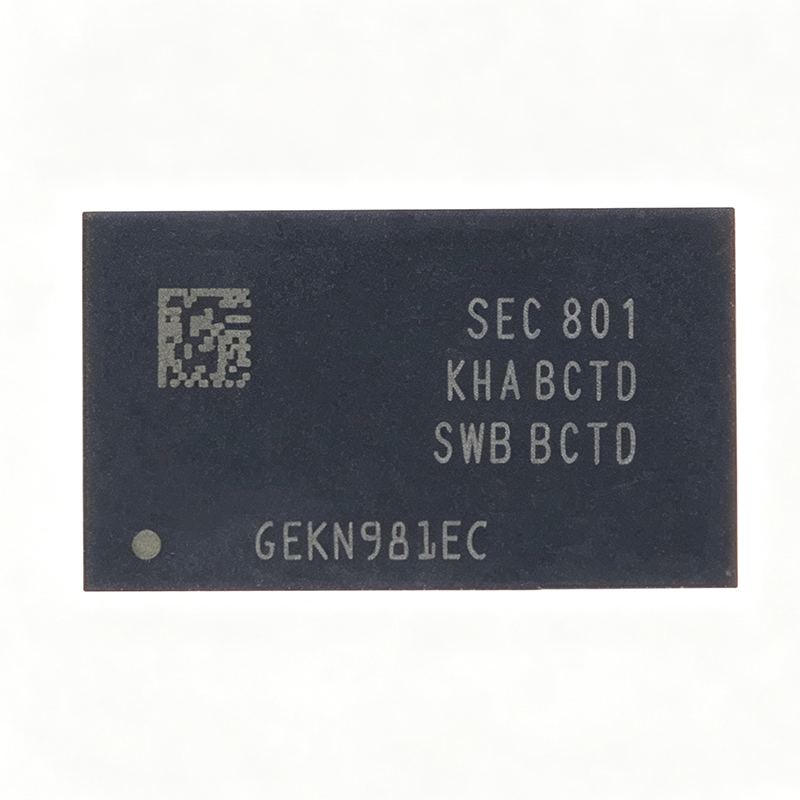
K4A8G165WB-BCTD - 8Gb DDR4 SDRAM x16 | Samsung
The Samsung K4A8G165WB-BCTD is a high-performance 8Gb DDR4 SDRAM organized as 512M x 16, operating at a speed grade of PC4-2666 (2666 Mbps/pin). It is housed in a 96-ball FBGA package and operates from a 1.2V supply, delivering the bandwidth and power efficiency required for modern computing and embedded systems. DDR4 SDRAM (Double Data Rate 4 Synchronous Dynamic Random-Access Memory) is the fourth generation of DDR memory, offering higher bandwidth and lower power consumption compared to DDR3. It achieves data rates up to 3200 Mbps/pin while operating at 1.2V, a 20% reduction from DDR3's 1.5V. DDR4 is the industry standard for main memory in servers, desktops, laptops, and increasingly in embedded applications such as networking and industrial computing. Key features include a 512M x 16 organization, 2666 Mbps data rate, 1.2V power supply, and support for JEDEC-standard features like on-die termination (ODT), ZQ calibration, and auto-precharge. The device also includes a data mask function and supports a temperature range of 0°C to +95°C (TC), making it suitable for a wide range of commercial and industrial environments. The K4A8G165WB-BCTD is built on Samsung's advanced B-die process technology, which is known for its high speed and low latency. The 96-ball FBGA package provides excellent signal integrity and thermal performance, while the 1.2V operation reduces power consumption by up to 25% compared to DDR3, making it ideal for power-sensitive applications. Typical applications include high-performance computing, servers, networking equipment, and embedded systems that require high memory bandwidth and capacity. The device is also used in graphics cards, set-top boxes, and automotive infotainment systems. When designing with this component, ensure proper decoupling with 0.1uF and 1uF capacitors near the power pins, and follow the layout guidelines in the datasheet to minimize signal integrity issues. The device requires a stable 1.2V supply and a reference voltage (VREF) of 0.6V.
K4A8G165WB-BCWE - 8Gb DDR4 3200Mbps 96FBGA DRAM | Samsung
The Samsung K4A8G165WB-BCWE is an 8Gb DDR4 SDRAM organized as 512M x 16, operating at 3200 Mbps data rate from a 1.2 V supply, housed in a 96-ball FBGA (96FBGA) package rated for 0C to +85C operation. DRAM (Dynamic Random Access Memory) is the mainstream volatile working memory used in virtually every computing system, sitting below CPU caches in speed but far above storage in bandwidth. DDR4 SDRAM, the fourth generation of Double Data Rate synchronous DRAM defined by the JEDEC DDR4 standard, doubles the internal prefetch of DDR3 to 8n, lowers the operating voltage from 1.5V to 1.2V, and increases bank groups to improve effective bandwidth. Within the system hierarchy, DRAM sits between the processor and non-volatile storage (NAND flash), providing the primary working set for operating systems and applications. Key features of this device include the 8 Gb B-die architecture in a x16 organization, a 3200 Mbps/pin data rate yielding up to 6.4 GB/s per device, and 1.2 V core operation that consumes up to 25% less power than comparable DDR3 parts. The x16 bus width simplifies interface routing for embedded controllers, and the commercial 0C to +85C temperature grade suits consumer, networking, and industrial-computing environments. Technically, the WB B-die uses an 8n prefetch DDR4 core with bank-group architecture, on-die termination (ODT), DLL for output timing, and programmable CAS latency per the DDR4 JEDEC interface. Power management features include a dedicated VPP rail for word-line boosting and self-refresh modes for standby power reduction. Typical applications include embedded controller memory subsystems, networking and communication equipment line cards, industrial PCs, set-top boxes, smart TVs, and desktop/commercial computing modules where a soldered-down x16 DDR4 device is preferred over a DIMM module. When designing with this device, the memory controller must support DDR4-3200 timing at 1.2 V, and signal integrity demands length-matched routing, on-die termination tuning, and VREF training per the controller calibration sequence. This page synthesizes distributor pricing, pin-compatible Samsung family alternatives, comparison tables, and practical DDR4 layout guidance not found in a single manufacturer datasheet.
K4A8G165WB-BIRC - 8Gb DDR4 SDRAM x16 | Samsung | 2400 Mbps
The Samsung K4A8G165WB-BIRC is a high-performance 8Gb DDR4 SDRAM organized as 512M x 16, operating at a speed of 2400 Mbps with a 1.2V supply voltage. It is housed in a 96-ball FBGA package, designed for space-constrained applications requiring high memory density and bandwidth. This device supports a wide temperature range of -40°C to +95°C, making it suitable for industrial and automotive environments. DDR4 SDRAM (Double Data Rate 4 Synchronous Dynamic Random-Access Memory) is a type of volatile memory that transfers data on both edges of the clock signal, doubling the data rate compared to DDR3. It operates at lower voltages (1.2V) to reduce power consumption, and features higher density and improved signal integrity. DDR4 is a key component in computing systems, networking equipment, and embedded applications, providing the main memory for processors and controllers. Key features of the K4A8G165WB-BIRC include a density of 8Gb, a 16-bit I/O interface, and a data rate of 2400 Mbps. The device supports DLL (Delay-Locked Loop) enabled mode for precise timing, and includes on-die termination (ODT) for improved signal quality. It also features programmable read and write latencies, and supports burst lengths of 8 and 16, enabling efficient data transfers. The K4A8G165WB-BIRC utilizes Samsung's advanced B-die process technology, which offers lower power consumption and higher speed grades compared to previous generations. The 96-ball FBGA package provides excellent thermal and electrical performance, with a compact footprint suitable for high-density PCB designs. The device is designed to meet JEDEC DDR4 standards, ensuring compatibility with a wide range of controllers and systems. Typical applications include high-performance computing, servers, networking switches, and industrial automation systems. The wide temperature range and high reliability make it ideal for mission-critical applications where data integrity is paramount. The 1.2V operation reduces power consumption, making it suitable for power-sensitive designs. When designing with this device, ensure proper decoupling capacitors are placed near the power pins to minimize noise. The DDR4 interface requires careful PCB layout to maintain signal integrity, including impedance matching and length matching for data and address lines. Refer to the Samsung datasheet for detailed timing and layout guidelines.
K4A8G165WB-BIRC0 - 8Gb DDR4 SDRAM x16 2400Mbps | Samsung
The Samsung K4A8G165WB-BIRC0 is a high-performance 8Gb DDR4 SDRAM organized as 512M x 16, operating at a speed of 2400 Mbps (PC4-19200) with a supply voltage of 1.2V. It is housed in a 96-ball FBGA package, designed for space-constrained applications requiring high memory density and bandwidth. This B-die DDR4 device supports a temperature range of -40°C to +95°C, making it suitable for industrial and automotive environments. DDR4 SDRAM (Double Data Rate 4 Synchronous Dynamic Random-Access Memory) is the fourth generation of DDR memory, offering higher speed and lower power consumption compared to DDR3. It achieves data rates up to 3200 Mbps and operates at 1.2V, reducing power by 25% compared to DDR3's 1.5V. DDR4 is a critical component in modern computing, networking, and embedded systems, providing the high bandwidth needed for processors, AI accelerators, and high-speed data processing. Key features of the K4A8G165WB-BIRC0 include a 2400 Mbps data rate, 8Gb density, and a 512M x 16 organization. The device supports on-die termination (ODT), programmable read/write latency, and burst length of 8, ensuring signal integrity and efficient data transfer. Its 96-ball FBGA package offers a compact footprint, and the -40°C to +95°C operating temperature range enables use in harsh environments. Technically, this DDR4 SDRAM utilizes Samsung's advanced B-die process technology, which provides excellent timing margins and overclocking headroom. The device features a 1.2V core and I/O supply, with an on-chip ECC option (not available on this variant) and a pseudo-open-drain interface. It supports a burst length of 8 and a burst chop of 4, with programmable CAS latency (CL) values of 15, 16, and 17 cycles at 2400 Mbps. Typical applications include high-performance computing, servers, networking equipment, industrial automation, and automotive infotainment systems. Its high density and speed make it ideal for memory-intensive tasks such as real-time data processing, AI inference, and high-resolution graphics. When designing with this component, ensure proper decoupling capacitors near the power pins and follow the layout guidelines in the datasheet to maintain signal integrity at 2400 Mbps. The device requires a stable 1.2V supply and a reference voltage (VREF) for optimal operation.
K4A8G165WB-BIWE - 8Gb DDR4 SDRAM 3200Mbps | Samsung
The Samsung K4A8G165WB-BIWE is a high-performance 8Gb DDR4 SDRAM organized as 512M x 16, operating at a speed grade of 3200 Mbps (PC4-25600). It is housed in a 96-ball FBGA package and operates from a 1.2V supply, delivering the bandwidth and reliability required for modern computing and embedded systems. This device supports a wide temperature range of -40°C to +95°C, making it suitable for industrial and automotive applications. DDR4 SDRAM (Double Data Rate 4 Synchronous Dynamic Random-Access Memory) is a type of volatile memory that transfers data on both edges of the clock signal, effectively doubling the data rate. It is the successor to DDR3 and offers higher speed, lower voltage (1.2V vs 1.5V), and improved power efficiency. DDR4 is a key component in the memory hierarchy, sitting between the CPU and storage, and is essential for system performance in servers, PCs, and embedded devices. Key features of the K4A8G165WB-BIWE include a density of 8Gb, a 16-bit I/O width, and a data rate of 3200 Mbps. The device supports on-die termination (ODT), programmable read/write latency, and burst lengths of 8 and 16. It also features auto-refresh and self-refresh modes for power saving. The 96-ball FBGA package ensures a compact footprint and excellent thermal performance. Technically, the K4A8G165WB-BIWE is built on Samsung's advanced DRAM process technology, offering high cell density and low power consumption. It complies with JEDEC DDR4 standards, ensuring interoperability with a wide range of memory controllers. The device includes a temperature-compensated self-refresh (TCSR) feature that adjusts refresh rate based on die temperature, enhancing reliability in harsh environments. Typical applications include high-performance computing, networking equipment, industrial automation, and automotive infotainment systems. Its wide temperature range and high speed make it ideal for edge computing and AI inference platforms where memory bandwidth is critical. When designing with this device, ensure proper decoupling capacitors are placed near the power pins to minimize noise. Also, follow the JEDEC DDR4 layout guidelines for signal integrity, especially for high-speed data lines.
K4A8G165WC-BCPB - 8Gb DDR4-2133 SDRAM 96-FBGA | Samsung
The Samsung K4A8G165WC-BCPB is an 8 Gb DDR4 SDRAM organized as 512M x 16, operating at the DDR4-2133 data rate on a 1.2 V supply (1.14 V to 1.26 V operating range), packaged in a 96-ball FBGA (TFBGA) surface-mount package. It is built on Samsung's C-die (1Y nm class) process and implements the JEDEC DDR4 SDRAM standard. DDR4 SDRAM (Double Data Rate 4 Synchronous Dynamic Random Access Memory) is the fourth generation of the DDR DRAM family, sitting within the broader hierarchy of volatile memory -> DRAM -> synchronous DRAM -> DDR SDRAM -> power-management-intensive main-memory ICs. Compared with DDR3, DDR4 lowers the operating voltage from 1.5 V to 1.2 V, doubles bank groups for higher bandwidth, and adds features such as bank group architecture, DLL-on/off modes, and per-DRAM addressability. Key features of the K4A8G165WC-BCPB include the wide x16 data interface, which simplifies controller routing for embedded designs; auto precharge and asynchronous reset functions; CRC and parity support on critical signals; ZQ calibration for output driver impedance; dynamic on-chip termination (ODT); and a data mask (DM) function for partial writes. The 1.2 V rail reduces system power roughly 25% versus equivalent DDR3 solutions. Technically, the device uses internal bank groups that allow interleaved accesses for higher effective bandwidth, a programmable DLL for output timing alignment, and programmable CAS latency appropriate to the 2133 Mbps/pin class. The 96-ball FBGA lead-free package measures approximately 7.5 mm x 10 mm x 0.8 mm and suits high-density soldered-down memory subsystems. Typical applications include embedded industrial controllers, networking equipment line cards, set-top boxes, and FPGA-based processing systems that require soldered 8 Gb DDR4 with a 16-bit data bus, such as Xilinx Zynq UltraScale+ or AMD/Intel embedded platforms. Design consideration: DDR4 fly-by routing requires proper on-die termination tuning, length-matched address/command groups, and VTT termination supply design; verify the controller supports the x16 organization, since x8 modules use a different 78-ball footprint. This page synthesizes distributor pricing, drop-in alternatives, and practical design notes not found in the manufacturer datasheet. Prices as of 2026-09-04.
K4A8G165WC-BCRC - 8Gb DDR4 SDRAM 2400Mbps | Samsung
The Samsung K4A8G165WC-BCRC is a high-performance 8Gb DDR4 SDRAM organized as 512M x 16, operating at a data rate of 2400 Mbps (PC4-19200) with a 1.2V supply voltage. It is housed in a 96-ball FBGA package, designed for high-bandwidth memory applications in computing, networking, and industrial systems. The device supports a temperature range of 0°C to +95°C (case temperature) and includes features such as auto precharge, asynchronous reset, CRC, ZQ calibration, dynamic on-chip termination (ODT), and data mask. DDR4 SDRAM (Double Data Rate 4 Synchronous Dynamic Random-Access Memory) is a type of volatile memory that transfers data on both edges of the clock, doubling the data rate compared to DDR3. It operates at a lower voltage (1.2V) than DDR3 (1.5V), reducing power consumption by about 25%. DDR4 is a key component in the memory hierarchy, sitting between the CPU and storage, providing high-speed temporary data storage for active programs and data. It is essential for servers, desktops, laptops, and embedded systems requiring high bandwidth and capacity. Key features of the K4A8G165WC-BCRC include a 2400 Mbps data rate, 8Gb density, and a 16-bit I/O interface. The device supports a supply voltage range of 1.14V to 1.26V, ensuring compatibility with standard DDR4 power rails. It also features programmable CAS latency, burst length of 8 (BL8), and on-die termination for improved signal integrity. The 96-ball FBGA package (9mm x 13mm) is optimized for space-constrained designs. Technically, the K4A8G165WC is based on Samsung's C-die process technology, offering improved performance and power efficiency. It includes a temperature-compensated self-refresh (TCSR) feature to reduce power consumption at high temperatures. The device supports a 1.2V VDD and VDDQ, with a separate VPP of 2.5V for wordline boost. The memory array is organized into 16 banks (4 bank groups), enabling higher concurrency and reduced latency. Typical applications include high-performance computing, servers, networking equipment, industrial controllers, and embedded systems requiring reliable, high-speed memory. The 512M x 16 organization is ideal for systems needing 16-bit wide memory buses, such as SoCs and FPGAs with DDR4 controllers. When designing with this device, ensure proper decoupling of the VDD and VDDQ rails with 0.1uF and 1uF capacitors, and follow the PCB layout guidelines for DDR4 routing to maintain signal integrity at 2400 Mbps. The device requires a stable 1.2V supply and a 2.5V VPP supply for wordline boost.
K4A8G165WC-BCWE - 8Gb DDR4-3200 SDRAM | Samsung | 96FBGA
The Samsung K4A8G165WC-BCWE is a high-performance 8Gb DDR4 SDRAM organized as 512M x 16, operating at a data rate of 3200 Mbps (DDR4-3200) with a supply voltage of 1.2V. It is housed in a 96-ball FBGA package, designed for space-constrained applications requiring high memory density and bandwidth. This device supports a temperature range of 0°C to +95°C, making it suitable for a wide range of commercial and industrial applications. DDR4 SDRAM (Double Data Rate 4 Synchronous Dynamic Random-Access Memory) is a type of volatile memory that transfers data on both edges of the clock signal, doubling the data rate compared to DDR3. It operates at a lower voltage (1.2V) than previous generations, reducing power consumption while delivering higher bandwidth. DDR4 is the industry standard for main memory in servers, desktops, laptops, and embedded systems, offering improved reliability and performance over its predecessors. Key features of the K4A8G165WC-BCWE include auto precharge, asynchronous reset, CRC (Cyclic Redundancy Check) for data integrity, ZQ calibration for improved signal integrity, dynamic on-chip termination (ODT) for better signal quality, and data mask function. These features enhance system reliability and performance, especially in high-speed data transmission environments. The device complies with JEDEC standards for DDR4 memory, ensuring interoperability with a wide range of controllers and systems. Technically, the K4A8G165WC-BCWE utilizes Samsung's advanced C-die process technology, which contributes to its high speed and low power consumption. The 96-ball FBGA package provides excellent thermal and electrical performance, with a compact footprint suitable for modern PCB designs. The device supports a burst length of 8 and burst chop of 4, and includes programmable CAS latency and additive latency for flexible timing configurations. Typical applications include high-performance computing, networking equipment, data centers, and embedded systems requiring large memory capacity and high bandwidth. The 512M x 16 organization is ideal for systems with a 16-bit data bus, such as advanced microprocessors and FPGAs. The low operating voltage and high speed make it suitable for power-sensitive applications like laptops and portable devices. When designing with this component, ensure proper decoupling capacitors are placed near the power pins to minimize noise. Also, follow the JEDEC DDR4 layout guidelines for signal integrity, especially for high-speed signals. The device requires a stable 1.2V supply and a separate VPP of 2.5V for word line boost, which must be properly regulated.