بەرهەمەکان (48,000+)

STM32L041F6P7 - 32MHz Cortex-M0+ 32KB Flash MCU with AES | STMicroelectronics
STM32L041F6P7

STM32L041F6P7 - 32MHz Cortex-M0+ 32KB Flash MCU with AES | STMicroelectronics

The STMicroelectronics STM32L041F6P7 is an ultra-low-power 32-bit Arm Cortex-M0+ microcontroller with 32 KB of Flash memory, 8 KB of SRAM, a 32 MHz CPU and a hardware AES accelerator, packaged in a 20-pin TSSOP (0.173 inch / 4.40 mm body width) surface-mount package. The STM32L041F6 access-line family targets cost-sensitive, battery-operated embedded designs where low active and standby current matter more than raw processing throughput. A microcontroller (MCU) is a self-contained embedded processing unit: a CPU core, program Flash, data SRAM, and a set of on-chip peripherals such as timers, serial interfaces, ADCs and GPIO, all integrated on a single die. The STM32L041F6 belongs to the STM32L0 access line, the entry tier of the STM32 family, and its Arm Cortex-M0+ core is the smallest and most energy-efficient member of the Cortex-M architecture, sitting at the bottom of the hierarchy MCU > microcontroller > embedded processor > semiconductor. Key features include the 32 MHz Cortex-M0+ core with its single-cycle multiplier and divider, 32 KB of Flash (32K x 8) alongside 8 KB of SRAM, an on-chip hardware AES accelerator for encrypted data links, and a small 20-TSSOP outline that keeps boards compact. The part is listed as Active in the lifecycle, is ROHS3 compliant, ships in a tray package, and carries a stated lead time of 17 weeks as of the October 2026 distributor data. Technologically, the STM32L041F6 is built around the ultra-low-power Arm Cortex-M0+ core with a 32 MHz maximum clock and a simple, deterministic peripheral set oriented around low-power operation. The 32 KB of Flash holds the application code and the 8 KB of SRAM serves as the working data space, which is adequate for small control loops, sensor fusion and low-rate communications. The AES block offloads encryption from the CPU, freeing the core for acquisition and protocol handling in secure metering and connected-sensor designs. Typical applications include low-cost IoT sensor nodes, smart water and gas meters, battery-powered wearables and trackers, industrial monitoring modules, compact keypads, and small motor or relay control boards where the 20-pin footprint and low standby current are decisive. When designing around this device, keep the decoupling network tight: place a 100 nF ceramic capacitor at each VDD pin and a 4.7 uF bulk capacitor close to the supply pins, and verify that your PCB footprint matches the 0.65 mm pitch 20-pin TSSOP. Because only 20 pins are available, budget carefully for analog inputs and serial lines, and confirm that the peripheral mix of your chosen variant matches your design. This page consolidates distributor pricing, lifecycle status and lead time as of 2026-10-28, a parameter-by-parameter comparison against pin-compatible STM32L0 alternatives, and practical design notes that are not found on the distributor product pages themselves.

RFQ پەیوەندی
STM32L041K6U6 - 32MHz Cortex-M0+ 32KB MCU | STMicroelectronics
STM32L041K6U6

STM32L041K6U6 - 32MHz Cortex-M0+ 32KB MCU | STMicroelectronics

The STMicroelectronics STM32L041K6U6 is an ultra-low-power 32-bit Arm Cortex-M0+ microcontroller operating at 32 MHz, with 32 KB of Flash memory in a 32-pin UFQFPN package measuring 5 mm by 5 mm. It belongs to the STM32L0 access-line family and is designed for compact embedded systems that require efficient processing, low standby power, and a broad set of serial and analog peripherals. An ultra-low-power microcontroller is an embedded semiconductor that balances processing capability with minimized energy consumption. The STM32L0 family sits within the hierarchy of 32-bit ARM Cortex-M embedded MCUs, combining a general-purpose core with Flash memory, RAM, analog conversion, timers, communication interfaces, and GPIO in one low-power device. The STM32L041K6U6 is appropriate when a design must occupy little board area and operate from limited energy budgets without requiring a high-performance Cortex-M processor. The headline characteristics are a 32 MHz Cortex-M0+ core, 32 KB of Flash memory, and a compact 32-pin UFQFPN package. The manufacturer identifies the STM32L041x6 as an access-line ultra-low-power family. Its 32-bit RISC architecture supports efficient control-loop execution, while the 5 mm by 5 mm package supports compact industrial, consumer, sensor, and connected-equipment designs. The integrated MCU architecture combines the Cortex-M0+ processing core with embedded memory, GPIO, timers, communication peripherals, debug facilities, and an ADC. This integration reduces the component count of a control board by consolidating a processor, memory, and common peripherals in one package. Software development can use the STM32 embedded ecosystem, including configuration tools, peripheral libraries, debug adapters, and established Cortex-M toolchains. Typical applications include low-power sensor nodes, industrial condition-monitoring equipment, compact access controls, battery-assisted measurement instruments, small motor-control modules, and energy-conscious embedded products. Its small footprint is particularly useful where PCB area is constrained and the system must combine control functions with communications or analog sensing. Designers should confirm the complete pin assignment, exposed-pad connection, decoupling requirements, operating voltage, and supported temperature grade against the manufacturer datasheet before layout. Because the UFQFPN thermal pad is electrically and thermally significant, the PCB should follow the recommended land pattern and provide adequate ground-plane continuity for stable operation. This page combines manufacturer specifications, package and ordering-code distinctions, application guidance, and drop-in replacement analysis for engineers evaluating the STM32L041K6U6. It is intended to accelerate component selection, PCB planning, firmware qualification, and second-source assessment.

RFQ پەیوەندی
STM32L051C6T6 - 32MHz Cortex-M0+ 32KB MCU | STMicroelectronics
STM32L051C6T6

STM32L051C6T6 - 32MHz Cortex-M0+ 32KB MCU | STMicroelectronics

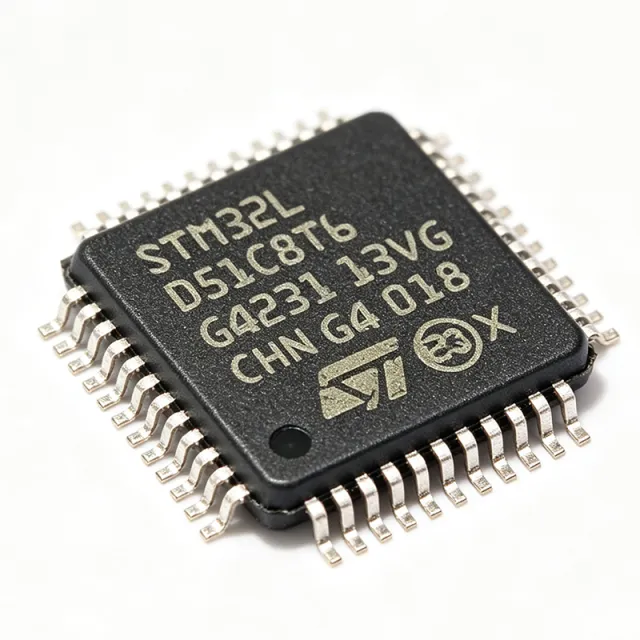
The STMicroelectronics STM32L051C6T6 is an ultra-low-power 32-bit Arm Cortex-M0+ microcontroller rated at 32 MHz, with 32 KB of Flash memory and 8 KB of RAM, housed in a 48-pin LQFP package. It belongs to STMicroelectronics’ STM32L0 access-line family and combines a compact general-purpose controller with energy-saving modes for embedded designs. A microcontroller is a programmable semiconductor system that integrates a CPU core, memory, I/O, and peripherals on one device. In the STM32 hierarchy, this MCU belongs to the STM32 family, the STM32L0 series, and the Arm Cortex-M0+ embedded-processing class. That architecture supports compact control firmware while separating larger tasks from low-power sensing or monitoring functions. The verified product information identifies a 32-bit Arm Cortex-M0+ core, 32 MHz operating frequency, 32 KB Flash, and an LQFP package measuring 7 mm by 7 mm. Distributor records also identify this orderable variant as a 48-pin tray-packaged device. The STM32L051x6/8 family description additionally lists embedded memory protection, enhanced I/O, and low-power capabilities, although individual peripheral values are not present in the supplied verification data. Ultra-low-power MCU architecture is particularly useful where average energy consumption matters more than maximum processing throughput. A device such as the STM32L051C6T6 can serve as the central controller for a battery-powered sensor node, industrial monitoring module, or connected actuator controller. Its 32 MHz Cortex-M0+ core provides a straightforward Arm software target, while 32 KB Flash constrains firmware and boot-code capacity compared with higher-memory STM32 devices. Potential uses include compact environmental sensors, low-power condition-monitoring nodes, appliance controls, meter interfaces, actuator controls, and embedded accessories that periodically wake a controller to acquire or process data. The 48-LQFP package also exposes more I/O than small dual in-line packages, but it requires a larger PCB footprint and careful assembly planning. Design planning should begin with the manufacturer’s pinout, memory map, and electrical limits. Do not infer unavailable GPIO, timer, analog, communication, voltage, current, or temperature specifications from family-level descriptions. Confirm that 32 KB of Flash is sufficient for the final bootloader and application, and review the exact peripheral mapping for each 48-pin board design. This product page combines verified manufacturer specifications, distributor availability, sourcing details, and application guidance. It also distinguishes exact drop-in alternatives from broader functional substitutes, helping engineers make PCB-level decisions without treating different Cortex-M devices as interchangeable.

RFQ پەیوەندی
STM32L051C8T3 - 32MHz Cortex-M0+ 64KB Flash MCU | STMicroelectronics
STM32L051C8T3

STM32L051C8T3 - 32MHz Cortex-M0+ 64KB Flash MCU | STMicroelectronics

The STMicroelectronics STM32L051C8T3 is an ultra-low-power 32-bit ARM Cortex-M0+ microcontroller in the STM32L0 access line, delivering 32 MHz CPU performance with 64 KB of Flash and 8 KB of SRAM in a 48-pin LQFP (7x7 mm) package. Operating from a 1.65 V to 3.6 V supply, it targets battery-powered and energy-harvesting designs where every microamp matters. An ultra-low-power microcontroller (MCU) is a class of embedded processor that combines a CPU core, on-chip memory, and a rich peripheral set with deep-sleep modes drawing only nanoamps to microwatts of quiescent current. The STM32L0 family sits inside the broader hierarchy of Cortex-M microcontrollers -> 32-bit MCUs -> microcontrollers -> microprocessors -> semiconductors, and ST positions the STM32L0 access line as the entry point for ultra-low-power embedded designs. Key features include 64 KB single-bank Flash, 8 KB SRAM, an 8-channel 12-bit ADC reaching 1 Msps, two ultra-low-power comparators, a real-time clock (RTC) with calendar, multiple timers (16-bit, 32-bit, SysTick), and seven communication interfaces including USART, SPI, and I2C. The integrated LDO + step-down DC-DC regulator combination on selected SKUs minimizes active and standby current while supporting flexible power modes. Architecturally, the Cortex-M0+ core pairs with ST's proprietary ultra-low-power peripherals (ULP) including low-power timers, brown-out reset, and multiple low-power run/sleep/shutdown modes. The dual-voltage operation and integrated DC-DC converter (on related STM32L0x2/x3 variants) deliver MCU run currents typically below 100 uA/MHz and standby currents in the sub-microamp range. Typical applications include IoT sensor nodes, wearable health monitors, smart meters, wireless remote controls, energy-harvesting devices, and battery-backed industrial alarms. Designers choose the STM32L051C8T3 specifically when they need deterministic Cortex-M0+ simplicity, generous Flash for an OTA-capable stack, and LQFP-48 hand-solderable packaging for prototyping or low-volume builds. When designing with this device, decouple both VDD and VDDA rails with 100 nF + 1 uF ceramics placed within 5 mm of the pins, and route the NRST line away from switching traces. The package's 7x7 mm LQFP-48 footprint is the industry-standard 0.5 mm pitch land pattern, simplifying PCB reuse across the STM32L0 family. This page synthesizes distributor pricing, drop-in alternatives within the STM32L0 family, and practical design notes not found in the manufacturer datasheet.

RFQ پەیوەندی
STM32L051C8T6 - Ultra-Low-Power ARM Cortex-M0+ MCU | STMicroelectronics
STM32L051C8T6

STM32L051C8T6 - Ultra-Low-Power ARM Cortex-M0+ MCU | STMicroelectronics

The STM32L051C8T6 is an ultra-low-power 32-bit microcontroller from STMicroelectronics, based on the ARM Cortex-M0+ core running at up to 32 MHz. It integrates 64 KB of Flash memory and 8 KB of SRAM, with a rich set of peripherals including a 12-bit ADC, comparators, timers, and multiple communication interfaces (I2C, SPI, USART). The device operates from a 1.8V to 3.6V supply and features several low-power modes, making it ideal for battery-powered and energy-harvesting applications. Data verified as of 2026-08-05. What is an ultra-low-power microcontroller? An ultra-low-power microcontroller is a type of embedded processor designed to minimize energy consumption while maintaining computational capability. It fits within the broader hierarchy: ARM Cortex-M0+ core -> 32-bit microcontroller -> embedded processor -> semiconductor. These devices are optimized for applications where battery life is critical, such as IoT sensors, wearables, and portable medical devices. The STM32L0 series specifically targets the low-power segment with multiple sleep modes and dynamic voltage scaling. Key features include a 12-bit ADC with hardware oversampling, a low-power UART, and a real-time clock (RTC) with calendar. The device supports a wide operating temperature range of -40°C to +85°C and is available in a 48-pin LQFP package. The STM32L051C8T6 also includes a unique device ID, CRC calculation unit, and a true random number generator (RNG) for security applications. Technically, the STM32L051C8T6 is built on ST's ultra-low-power technology, featuring a flexible clock tree with multiple internal/external oscillators. It supports a 1.8V to 3.6V power supply and has a typical current consumption of 3.4 µA in Stop mode with RTC, and 0.29 µA in Standby mode. The device also includes a brown-out reset (BOR) and power-on reset (POR) for reliable operation. Typical applications include IoT sensor nodes, smart home devices, portable medical monitors, and industrial sensor interfaces. Its low power consumption and rich analog peripherals make it suitable for battery-powered designs where long operational life is required. When designing with this MCU, pay attention to the power supply decoupling and the selection of the appropriate low-power mode for your application. Use the STM32CubeMX tool to configure the clock tree and peripherals efficiently. This page synthesizes distributor pricing, drop-in alternatives, and practical design notes not found in the ST datasheet, providing a comprehensive resource for engineers evaluating the STM32L051C8T6.

USD $0.98 پەیوەندی
STM32L051C8T7 - 32MHz 64KB Cortex-M0+ MCU | STMicroelectronics
STM32L051C8T7

STM32L051C8T7 - 32MHz 64KB Cortex-M0+ MCU | STMicroelectronics

The STMicroelectronics STM32L051C8T7 is an ultra-low-power 32-bit ARM Cortex-M0+ microcontroller operating at 32MHz, with 64KB of Flash memory and a 48-pin LQFP package measuring 7 x 7 mm. It belongs to the STM32 L0 access-line family, combining a compact RISC core with low-power operation for compact embedded systems. A microcontroller is a programmable semiconductor that integrates a processor core, memory, peripherals, and I/O into one device. The STM32L0 series is positioned within the hierarchy of embedded microcontroller ICs and specifically targets low-power designs. This makes the STM32L051C8T7 suitable for systems that need responsive control and broad peripheral integration while operating from constrained energy budgets. Key characteristics include a 32MHz Arm Cortex-M0+ RISC core, 64KB of Flash, and 12-bit ADC support with an operating temperature range of -40°C to +105°C. The 48-LQFP package provides a conventional leaded surface-mount footprint suitable for designs assembled with standard PCB equipment. Its 32-bit architecture and peripheral integration allow one device to handle control logic, sensor acquisition, communications, and system supervision. The STM32L0 architecture is designed around an Arm Cortex-M0+ core, a compact instruction set intended for embedded control rather than high-performance computing. The 64KB Flash area provides room for application firmware, while integrated peripherals reduce the need for external components. Designers should consult the manufacturer product page and datasheet for complete clock, memory, GPIO, timer, communication, and electrical characteristics before finalizing a board. Typical uses include low-power sensor nodes, compact industrial controls, battery-powered monitoring equipment, building automation endpoints, and small accessory controllers. The MCU is also appropriate for wearable-adjacent and portable products where board area and energy efficiency are important. In each case, the device can consolidate basic control and sensing tasks while preserving a straightforward firmware-development path. The primary design consideration is package and firmware planning. Use the datasheet pin-description and package drawings when assigning board tracks, programming connections, decoupling, clock components, and reset circuitry. Confirm that the firmware image, peripheral configuration, startup code, and development toolchain are compatible with the exact STM32L051C8T7 configuration before production release. This product page combines the manufacturer specifications, distributor listing details, same-family replacement information, package-level selection guidance, and practical design considerations to support faster component evaluation. It helps engineers distinguish exact configuration changes from genuinely interchangeable options and identify when firmware or qualification review is required before substitution.

RFQ پەیوەندی
STM32L051K6T6 - 32MHz 32KB Cortex-M0+ MCU | STMicroelectronics
STM32L051K6T6

STM32L051K6T6 - 32MHz 32KB Cortex-M0+ MCU | STMicroelectronics

The STMicroelectronics STM32L051K6T6 is an ultra-low-power, 32-bit Arm Cortex-M0+ microcontroller operating at 32 MHz, with 32 KB (32K x 8) of Flash memory and 25 I/O pins in a 32-LQFP (7x7) package. It belongs to STMicroelectronics' access-line STM32L0 family and is designed for compact, energy-sensitive embedded-control products. A microcontroller is a semiconductor that integrates a processor core, program memory, data memory, peripherals, and input/output interfaces into one device. In the product hierarchy, the STM32L051K6T6 is an MCU, a general-purpose integrated circuit used to execute firmware and supervise connected hardware. Its Arm Cortex-M0+ core provides a compact, energy-efficient architecture for control-oriented rather than high-compute workloads. The verified device data identifies a 32-bit operating architecture, a maximum stated frequency of 32 MHz, 32 KB of Flash, and a 32-LQFP package. Distributor listings also identify a 12-bit ADC and 25 I/O pins. These resources make the device suitable for low-power sensing, actuator control, simple communications, and embedded products where a larger Cortex-M3 or Cortex-M4 processor would add unnecessary cost, board area, or energy consumption. The STM32L051K6T6's 32 MHz Cortex-M0+ core is positioned for energy-conscious control applications, while its 32 KB Flash capacity supports firmware, configuration data, and boot logic on one device. Its LQFP construction provides visible leads for inspection and repair, unlike fine-pitch land-grid-array packages. Exact RAM capacity, peripheral timing, and detailed electrical limits should be confirmed in the manufacturer datasheet for the final design. Typical uses include battery-powered environmental sensors, compact industrial monitoring nodes, access-control peripherals, low-power motor-control modules, and connected instrumentation. A designer can use the ADC for analog measurements and the GPIO structure for switches, indicators, sensors, and actuators, subject to the complete pin and peripheral assignments in the datasheet. The most important design consideration is to verify every alternate-function assignment and operating condition against the STM32L051K6T6 datasheet before PCB release. The 32-LQFP footprint should be checked for pin clearance, thermal exposure, and assembly capability, while firmware should use only the peripherals and interrupt assignments supported by the exact orderable device. This product record consolidates verified manufacturer and distributor information, current purchasing references, package details, application guidance, and same-family drop-in alternatives. It also identifies information that requires confirmation from the full datasheet rather than estimating unspecified RAM, timing, temperature, or pin-function values.

RFQ پەیوەندی
STM32L051K6U6 - 32MHz Cortex-M0+ MCU | STMicroelectronics
STM32L051K6U6

STM32L051K6U6 - 32MHz Cortex-M0+ MCU | STMicroelectronics

The STMicroelectronics STM32L051K6U6 is an ultra-low-power 32-bit microcontroller with an Arm Cortex-M0+ processor operating at 32 MHz, 32 KB of Flash memory, and a 32-pin UFQFPN package measuring 5 x 5 mm. It is positioned for compact embedded systems requiring efficient control, communications, analog measurement, and low standby power. An ultra-low-power microcontroller is a semiconductor designed to complete control tasks while minimizing active and idle energy consumption. The STM32L0 family belongs to the 32-bit Arm Cortex-M microcontroller hierarchy and combines general-purpose processing, embedded memory, serial interfaces, timing peripherals, and analog conversion in one device. This integration reduces board area in battery-powered instruments, compact sensors, industrial controls, and accessory nodes. The STM32L051K6U6 provides 32 KB of Flash for firmware, 8 KB of SRAM for working memory, and 2 KB of EEPROM for nonvolatile data retention. Its feature set includes ADC capability, I2C, SPI, UART, and PWM functions. The Arm Cortex-M0+ core executes 32-bit instructions at up to 32 MHz, supporting responsive digital control while retaining the efficiency expected from an ultra-low-power embedded platform. The part is identified as a 32-UFQFPN surface-mount device in a 5 x 5 mm outline. Its compact land pattern is useful for space-constrained products, although the exposed-area thermal and assembly requirements must be followed in the PCB footprint and production process. The operating-temperature range listed for this ordering code extends from -40 C to 85 C, supporting industrial and commercial equipment where that range is adequate. Typical applications include low-power sensor nodes, compact industrial controllers, battery-operated instruments, communication modules, and small motor or actuator-control products. The UART and SPI interfaces support external radios and storage, I2C supports low-speed sensors and peripherals, and the ADC supports analog monitoring. Firmware can use these interfaces together with PWM outputs and low-power modes to balance responsiveness against average energy use. Designers should begin with the manufacturer pin-description table and package drawing before assigning tracks or defining the exposed-pad connection. Confirm the operating-voltage limits, decoupling requirements, clock configuration, programming interface, and unused-pin treatment in the manufacturer datasheet. Firmware migration to another STM32L0 member should be checked for peripheral differences even when the package and core are shared. This product page combines the exact ordering information, interface features, pin-package characteristics, practical application guidance, and same-family drop-in alternatives for STM32L051K6U6 evaluation. It is designed to shorten component selection while preserving the electrical, mechanical, and firmware checks required for a reliable embedded design.

RFQ پەیوەندی
STM32L051K8T6 - 32MHz Arm Cortex-M0+ MCU | STMicroelectronics
STM32L051K8T6

STM32L051K8T6 - 32MHz Arm Cortex-M0+ MCU | STMicroelectronics

The STMicroelectronics STM32L051K8T6 is an ultra-low-power 32-bit Arm Cortex-M0+ microcontroller operating at 32 MHz, with 64 KB of Flash memory and 8 KB of RAM in a 32-LQFP 7 x 7 mm package. It also provides 2 KB of data EEPROM, a 12-bit 10-channel ADC, and up to 27 GPIO for compact energy-sensitive embedded systems. An ultra-low-power microcontroller is an integrated computing device designed to perform control, measurement, and communications tasks while minimizing energy consumption between active processing periods. The STM32L051K8 belongs to the STM32L0 access-line hierarchy: microcontroller, embedded processor, Arm Cortex-M0+ MCU, and semiconductor. This positioning makes it suitable for small systems that need more processing capability than a simple logic device but value compactness, low power, and broad peripheral integration. Key features include 64 KB of Flash for firmware, 8 KB of SRAM for working data, and 2 KB of EEPROM for parameters that must retain their values without power. The device provides three general-purpose timers, one basic timer, one low-power timer, one SPI or I2S interface, one I2C interface, and two USART interfaces. Its 12-bit, 10-channel synchronized ADC supports embedded analog measurement, while as many as 27 GPIO allow direct connection of sensors, switches, displays, and actuators. The STM32L051K8T6 uses the high-performance 32 MHz Arm Cortex-M0+ core within the STM32L0 product family. Serial wire debug provides a compact programming and debugging connection, reducing the number of external pins and board area required during development. The part combines 32-bit processing, integrated analog conversion, timer-based control, and serial communications in one 32-LQFP package, reducing the component count of compact control boards. Typical applications include battery-powered sensor nodes, industrial condition-monitoring equipment, compact building-control modules, low-power data loggers, consumer accessories, and portable measurement instruments. Designers can use the ADC for analog inputs, timers for periodic sampling or PWM generation, and the I2C, SPI, and USART peripherals for sensors, memory, displays, or external communications modules. A key design consideration is power management. Engineers should use the device's low-power operating modes when the application spends substantial time idle, while confirming the required supply range, operating temperature, and peripheral clock configuration in the manufacturer documentation before releasing the PCB. This page also synthesizes verified distributor pricing, package details, alternatives, and practical implementation guidance for STM32L051K8T6 evaluation.

RFQ پەیوەندی
STM32L051K8U6 - 32MHz 64KB Cortex-M0+ MCU | STMicroelectronics
STM32L051K8U6

STM32L051K8U6 - 32MHz 64KB Cortex-M0+ MCU | STMicroelectronics

The STMicroelectronics STM32L051K8U6 is an ultra-low-power 32-bit microcontroller with an Arm Cortex-M0+ processor operating at 32 MHz, 64 KB of Flash memory, and a 32-pin UFQFPN package measuring 5 x 5 mm. It belongs to the STM32L0 access-line family of embedded processing devices designed for low-power, cost-sensitive control applications. An ultra-low-power microcontroller is a semiconductor that executes control logic while minimizing energy consumption during active operation, standby, and shutdown. The STM32L0 family combines an Arm Cortex-M0+ core, embedded Flash and SRAM, low-power peripherals, and communication interfaces in a compact surface-mount package. Its hierarchy is microcontroller IC, embedded processor, Arm Cortex-M0+ MCU, STM32L0 series, and ultra-low-power embedded control platform. Principal features include a 32 MHz maximum CPU frequency, 32-bit Arm Cortex-M0+ architecture, and 64 KB of Flash organized as 64K x 8 bits. The UFQFPN-32 package supports compact PCB layouts while providing the pins required for embedded-control interfaces. The manufacturer identifies this device as part of the STM32L051x6/8 access-line family. This combination of processing performance, memory density, package size, and low-power positioning makes the MCU suitable for sensing, metering, portable control, and connected embedded products. The STM32L051K8U6 integrates processing and peripherals into one device, reducing the component count required for a small embedded controller. Its 32 MHz Cortex-M0+ core provides sufficient arithmetic capability for digital control, sensor acquisition, communication handling, and simple human-machine-interface tasks. The 64 KB Flash capacity also provides room for application firmware, configuration data, and boot code within a single package. Typical uses include low-power sensor nodes, industrial measurement equipment, compact motor or actuator controllers, battery-powered instruments, access-control peripherals, and IoT devices with modest local processing requirements. Designers can use the microcontroller family for tasks where energy efficiency, a small footprint, and deterministic embedded control are more important than high-end graphics, large memory capacity, or high analog sampling rates. PCB design should preserve access to the exposed pad, program/debug interface, reset path, and power-supply pins specified in the manufacturer pinout table. Place decoupling capacitors close to the supply pins and route high-current or high-frequency signals away from sensitive inputs. Firmware development should use the device-supported Arm Cortex-M toolchain and verify startup, clock, peripheral, and low-power behavior for the intended operating modes. This product page combines the manufacturer family description with distributor package and memory information, practical PCB guidance, application fit, and same-package replacement analysis. It helps engineers evaluate the STM32L051K8U6 for an embedded-control design while separately reviewing the pinout, datasheet, firmware support, and qualification requirements before production release.

RFQ پەیوەندی
STM32L051K8U7 - 32MHz 64KB MCU | STMicroelectronics
STM32L051K8U7

STM32L051K8U7 - 32MHz 64KB MCU | STMicroelectronics

STMicroelectronics STM32L051K8U7 is an ultra-low-power 32-bit microcontroller with an Arm Cortex-M0+ core, 32 MHz maximum operating frequency, 64 KB of Flash memory, and a 32-pin UFQFPN 5 x 5 mm package. Its industrial temperature rating extends from -40 °C to +105 °C, making it suitable for embedded systems that require compact packaging, low-power operation, and mixed-signal processing. An ultra-low-power microcontroller is an embedded semiconductor that executes control, measurement, communications, and data-processing tasks while minimizing energy consumption. The STM32L0 family combines a Cortex-M0+ processor with low-power modes, analog peripherals, and embedded Flash in one compact device. This hierarchy places the STM32L051K8U7 among low-power 32-bit microcontrollers for battery-powered, industrial, sensor, and communications products. The device includes a 64 KB Flash program-memory area, a 32-bit Arm Cortex-M0+ core, and a maximum clock frequency of 32 MHz. Its 12-bit analog conversion capability supports sensor and process-control designs, while the ultra-safe low-power brownout reset and programmable voltage detector improve system supervision. A 32 kHz oscillator supports real-time-clock-oriented designs, and oscillator options include a 1 to 25 MHz crystal interface. The STM32L051 architecture is aimed at cost-sensitive embedded control rather than high-performance computing. Its compact UFQFPN package reduces board area, while the Cortex-M0+ instruction set supports efficient event handling and peripheral control. The product family is positioned for applications where low standby power, fast startup, and a broad set of mixed-signal peripherals are more valuable than a large memory footprint. Typical applications include industrial sensor nodes, low-power data loggers, building and access controls, compact instrumentation, battery-operated accessories, and connected equipment. A 12-bit ADC is useful for reading analog sensors, while low-power operation supports devices that spend most of their time in sleep or stop modes. The -40 °C to +105 °C range also supports applications exposed to temperature variation beyond typical commercial room-temperature conditions. PCB design should preserve the package land pattern, exposed-pad connection, and decoupling requirements exactly as defined in the manufacturer datasheet. Place input and output capacitors close to their associated supply pins, keep sensitive analog and oscillator routes away from fast-switching nodes, and verify the exposed thermal-pad solder plan for production assembly. Firmware validation should include reset behavior, brownout thresholds, clock startup, ADC calibration, and low-power wake-up tests. This product summary combines manufacturer positioning, verified distributor specifications, package information, sourcing guidance, and engineering-oriented selection criteria. It is designed to help engineers identify the correct STM32L0 device, confirm footprint and environmental requirements, and plan the analog, power, firmware, and PCB work needed for a reliable embedded design.

RFQ پەیوەندی
STM32L051R6T6 - 32MHz Cortex-M0+ MCU | STMicroelectronics
STM32L051R6T6

STM32L051R6T6 - 32MHz Cortex-M0+ MCU | STMicroelectronics

The STMicroelectronics STM32L051R6T6 is an ultra-low-power 32-bit microcontroller built around an Arm Cortex-M0+ RISC core operating at 32 MHz, with 32 KB of Flash memory in a 64-pin LQFP package measuring 10 x 10 mm. It is designed for compact, low-power embedded systems operating from 2.5 V or 3.3 V supplies. A microcontroller is a programmable semiconductor that integrates a processor core, memory, and peripherals on one device. The STM32L0 series belongs to the Arm Cortex-M microcontroller hierarchy and targets energy-efficient control applications. Its low-power architecture supports battery-powered sensing, portable instruments, industrial controls, and connected equipment where both processing capability and standby consumption matter. Key characteristics include 32-bit instruction processing, a 32 MHz maximum clock, 32 KB of Flash program memory, and a 64-LQFP surface-mount package. The 32 KB Flash capacity provides sufficient space for compact firmware, while the 10 x 10 mm package supports space-constrained boards. Operation at 2.5 V and 3.3 V aligns the device with conventional embedded and industrial supply rails. The STM32L051R6T6 uses the Arm Cortex-M0+ architecture, which provides a compact instruction set designed for microcontrollers rather than application processors. This architecture balances processing efficiency with low implementation overhead. The 32 MHz clock rate supports responsive control loops and communication tasks, while the STM32L0 power-management features are intended to reduce energy use during inactive periods. Typical applications include low-power sensor nodes, battery-operated measurement equipment, access-control terminals, compact industrial controllers, portable medical or diagnostic devices, and IoT-connected products. In these systems, the microcontroller can consolidate multiple peripheral functions into a single device while using low-power operating modes when continuous processing is unnecessary. PCB design should preserve the pin assignments and electrical characteristics shown in the manufacturer pin-definition table. Confirm the intended oscillator, decoupling, reset, and programming connections before layout release. Firmware compatibility between related STM32L0 devices must be evaluated through the manufacturer’s device migration and peripheral documentation rather than assumed from package similarity alone. This page combines the manufacturer product information with package-level comparison data, drop-in candidates, sourcing guidance, and practical design notes. It helps engineers distinguish same-footprint alternatives from devices that also require changes to firmware, clock configuration, peripherals, or board layout.

RFQ پەیوەندی
STM32L051R8H6 - 32MHz Cortex-M0+ 64KB MCU | STMicroelectronics
STM32L051R8H6

STM32L051R8H6 - 32MHz Cortex-M0+ 64KB MCU | STMicroelectronics

STMicroelectronics STM32L051R8H6 is an ultra-low-power 32-bit microcontroller with an Arm Cortex-M0+ core, 32 MHz maximum operating frequency, and 64 KB of embedded Flash memory. It is supplied in a 64-pin TFBGA package measuring 5 mm by 5 mm. The STM32L051 access-line family targets compact, energy-conscious embedded systems where processing performance, memory density, and a small board area must coexist. A microcontroller is a programmable system-on-chip that integrates a processor core, Flash program memory, SRAM, peripherals, and communication interfaces on one package. The STM32L0 product hierarchy combines an Arm Cortex-M0+ core with ultra-low-power design techniques for battery-powered sensors, industrial controls, connected equipment, and consumer devices. Its 32-bit architecture supports compact instruction decoding, efficient event handling, and real-time control without requiring a separate external processor. Key characteristics include a 32 MHz operating frequency, 64 KB of Flash, a 12-bit ADC, and an operating temperature range from -40 °C to +85 °C. The device belongs to STMicroelectronics' STM32L051x6/x8 access-line range, combining general-purpose embedded control with low-power operation. Its 64-pin TFBGA footprint supports dense PCB layouts while providing a broad selection of I/O and peripheral functions. The Arm Cortex-M0+ processor uses a compact instruction set designed for cost- and power-sensitive embedded applications. Firmware execution, peripheral configuration, and interrupt handling are managed within the integrated microcontroller, reducing the component count compared with separate processor, memory, and interface solutions. The 64 KB Flash provides room for application code, configuration data, and boot logic, while the access-line positioning supports straightforward embedded product development. Typical uses include low-power sensor nodes, industrial monitoring modules, compact motor controllers, wearable accessories, smart-home endpoints, and battery-operated measurement equipment. The small 5 mm by 5 mm TFBGA package is especially useful where PCB area is constrained, although fine-pitch assembly, inspection, and rework require suitable manufacturing capability. For a new design, verify the exact pin assignments, exposed-pad requirements, decoupling network, clock configuration, and peripheral assignments against the manufacturer datasheet and package drawing. Because this part uses a fine-pitch ball-grid array, PCB design should include the required land pattern, via-in-pad considerations where appropriate, thermal-via strategy, and assembly tolerances before schematic sign-off. This product page combines manufacturer and distributor technical information with pin-compatible family alternatives, application guidance, comparison criteria, and practical PCB considerations to support component selection, design review, and sourcing decisions for the STM32L051R8H6.

RFQ پەیوەندی
STM32L051R8T6 - 32MHz Cortex-M0+ 64KB MCU | STMicroelectronics
STM32L051R8T6

STM32L051R8T6 - 32MHz Cortex-M0+ 64KB MCU | STMicroelectronics

STMicroelectronics STM32L051R8T6 is an ultra-low-power 32-bit microcontroller based on the Arm Cortex-M0+ processor core, operating at up to 32 MHz and incorporating 64 KB of Flash memory. The device is supplied in a 64-pin LQFP package measuring 10 mm by 10 mm. Its combination of a 32-bit RISC core, compact surface-mount package and 64 KB program memory makes it suitable for embedded control, sensing, communication and low-power monitoring systems. A microcontroller is a semiconductor device that integrates a processor core, program memory, data memory, peripheral interfaces and clocking circuitry into one package. The STM32L0 series belongs to the hierarchy of embedded microcontroller, 32-bit RISC processor, embedded processor and semiconductor. Applications commonly require a compact controller that can execute firmware, acquire data, control outputs and communicate with sensors or other system components without requiring a separate processor and memory devices. The STM32L051R8T6 uses an Arm Cortex-M0+ core capable of 32 MHz operation and provides 64 KB of Flash memory, organized as 64K by 8 bits. Its 64-LQFP 10 mm by 10 mm package supports surface-mount assembly and provides a mechanically substantial alternative to smaller leadless packages. The STMicroelectronics product family is identified as an access-line, ultra-low-power MCU family, making the device relevant to designs where operating efficiency and integration are important. The exact peripheral set, RAM capacity, supply limits, pin assignments, clock tree and electrical characteristics are governed by the manufacturer documentation for the STM32L051x6 and STM32L051x8 device family. Firmware selection should account for the specific order code, package drawing, exposed peripheral pins and errata information. Because firmware and board support are closely tied to silicon revision, developers should treat the complete order code as the controlling device identifier. Typical application directions include compact environmental sensors, industrial sensing nodes, low-power data loggers, actuator controllers, communications modules and embedded accessories. In these systems, the Cortex-M0+ instruction set handles real-time control tasks, while the integrated Flash memory stores application firmware. The 64-pin LQFP package can also make prototype assembly and signal access more convenient than a very small leadless package. PCB planning should preserve the LQFP-64 footprint, pad geometry, pin-1 orientation and all exposed leads. Decoupling, grounding, clock stability and unused-pin treatment must follow the manufacturer reference design and device documentation. Software bring-up should also verify the low-power mode configuration, peripheral clock gates and debugger connection because these details affect both energy use and board-level reliability. This product record combines the exact order-code attributes, package information, commercial inquiry workflow, drop-in candidates and application-oriented engineering guidance in one concise reference. It helps engineers distinguish the STM32L051R8T6 from related MCU options before committing the 64-LQFP footprint to a PCB.

RFQ پەیوەندی
STM32L051R8T7 - 32MHz Cortex-M0+ | STMicroelectronics
STM32L051R8T7

STM32L051R8T7 - 32MHz Cortex-M0+ | STMicroelectronics

STMicroelectronics STM32L051R8T7 is an ultra-low-power 32-bit Arm Cortex-M0+ microcontroller operating at 32 MHz, with 64 KB of Flash program memory in a 64-LQFP 10 x 10 mm package. The device also provides 8 KB of SRAM, 2 KB of EEPROM, a memory protection unit, and an extensive set of embedded peripherals for compact, low-power embedded systems. An ultra-low-power microcontroller is a semiconductor that prioritizes energy efficiency while still providing programmable real-time control. The STM32L0 access line belongs to the hierarchy microcontroller -> embedded processor -> Arm Cortex-M0+ microcontroller -> ultra-low-power MCU. It is intended for battery-powered equipment, industrial sensing, connected nodes, and compact products where the system must perform useful work while consuming as little energy as practical. Key characteristics include a 32-bit Arm Cortex-M0+ core, a maximum indicated operating frequency of 32 MHz, and 64 KB of Flash organized as 64K x 8. The STM32L051x6/8 family also incorporates 8 KB of RAM, 2 KB of data EEPROM, and a memory protection unit. Its 64-LQFP package provides 64 external leads for access to the device's GPIO and peripheral resources on a board designed around a 10 x 10 mm footprint. The Cortex-M0+ architecture supports compact instruction encoding and efficient real-time execution, while the STM32L0 power-management features target low-energy operation across active, low-power, sleep, and stop-oriented use cases. The memory protection unit adds isolation and access-control capability to the embedded software environment. Exact peripheral configurations, clock limits, voltage ranges, current consumption, and temperature limits should be selected from the manufacturer datasheet for the complete STM32L051x6/8 device family. Typical uses include low-power sensor nodes, compact industrial controllers, battery-powered measurement instruments, wearable accessories, and IoT devices connected to analog or digital sensors. The 64 KB Flash capacity is suitable for moderate control and communication firmware, while the Cortex-M0+ core and low-power feature set help balance processing performance with energy consumption. PCB design should preserve the 64-LQFP land pattern, power and decoupling connections, clock requirements, and exposed peripheral assignments exactly as defined for STM32L051R8T7. Software selection should account for the complete family datasheet, including peripheral availability, interrupt mapping, memory map, bootloader behavior, and development-tool support, rather than assuming that every L0-family device has identical resources. This product page combines the manufacturer family information, distributor component identification, package and memory details, practical application guidance, and clearly qualified drop-in candidates. It also highlights what engineers should verify when changing orderable temperature grades or considering the STM32L051R8 for an embedded design.

RFQ پەیوەندی
STM32L052C6T6 - 32MHz 32KB USB MCU | STMicroelectronics
STM32L052C6T6

STM32L052C6T6 - 32MHz 32KB USB MCU | STMicroelectronics

The STMicroelectronics STM32L052C6T6 is an ultra-low-power 32-bit Arm Cortex-M0+ microcontroller with a 32 MHz CPU, 32 KB of Flash memory, USB 2.0 crystal-less connectivity, and a 48-LQFP 7 x 7 mm package. It combines a compact general-purpose MCU platform with low-power operation and USB connectivity for cost-sensitive embedded systems. An ultra-low-power microcontroller is an energy-efficient semiconductor designed to perform control and communication tasks while consuming little active and standby power. The STM32L0 series belongs to the 32-bit microcontroller category, combines an Arm Cortex-M0+ processor with memory and peripherals on one integrated circuit, and supports low-power embedded product design. STM32L052C6T6 additionally integrates USB, reducing the need for an external USB controller in suitable device designs. Principal features include a 32-bit Arm Cortex-M0+ core operating at 32 MHz, 32 KB of Flash memory, and a USB 2.0 interface capable of crystal-less operation. The device is identified in a 48-pin LQFP package with a 7 x 7 mm body size. Its 12-bit ADC and DAC capabilities are identified by the STMicroelectronics family datasheet, supporting analog measurement and controlled analog output in instrument, sensor, and control applications. The STM32L052C6T6 is designed around an Arm Cortex-M0+ instruction set architecture and a highly integrated embedded architecture. Flash memory retains programmed firmware when power is removed, while the USB interface adds a practical connection to a host device. Its 48-LQFP package exposes more I/O than smaller packages while retaining a manageable board footprint. Exact SRAM capacity, voltage limits, peripheral inventory, and current consumption should be confirmed in the manufacturer datasheet for the selected order code. Typical applications include USB-connected data loggers, compact industrial controllers, low-power sensor nodes, medical monitoring equipment, USB data acquisition systems, and consumer accessories. The 32 MHz Cortex-M0+ core is suitable for protocol handling, control loops, and general-purpose firmware, while USB connectivity simplifies host-to-device communication without requiring a separate USB bridge. PCB implementation should follow the exact LQFP-48 land pattern and the pin assignment in the manufacturer pinout. Keep USB routing short and controlled, provide the required decoupling capacitors, connect the crystal-less USB interface according to the reference design, and reserve programming and boot-related pins for manufacturing and recovery. Validate signal integrity and current limits in the final board stack-up. This product reference combines the manufacturer’s device capabilities with package-level engineering guidance, comparison criteria, sourcing options, and design-oriented considerations. It helps engineers assess whether the STM32L052C6T6 provides the required combination of Arm Cortex-M0+ processing, 32 KB Flash, USB connectivity, and a 48-LQFP footprint without overlooking firmware, footprint, or analog-peripheral differences.

RFQ پەیوەندی
STM32L052C8T6 - 32MHz Cortex-M0+ 64KB MCU | STMicroelectronics
STM32L052C8T6

STM32L052C8T6 - 32MHz Cortex-M0+ 64KB MCU | STMicroelectronics

The STMicroelectronics STM32L052C8T6 is an ultra-low-power 32-bit Arm Cortex-M0+ microcontroller with a 32 MHz maximum clock, 64 KB of Flash memory, and a 48-LQFP 7 mm × 7 mm package. It integrates one 12-bit ADC with hardware oversampling, one DAC, two ultra-low-power comparators, multiple timers, an RTC, and USB 2.0 crystal-less connectivity for compact control and sensor systems. An ultra-low-power microcontroller is an embedded semiconductor that combines a processor core, memory, analog interfaces, timers, and communication peripherals while minimizing energy use during active, sleep, and standby operation. The STM32L0 series belongs to the Arm Cortex-M microcontroller hierarchy and is designed for battery-powered instruments, connected sensors, industrial controls, and other systems where low standby current and compact integration are central requirements. The STM32L052C8T6 provides 64 KB of Flash and a 32 MHz Arm Cortex-M0+ processor. Its analog subsystem includes one 12-bit ADC with hardware oversampling and one DAC, while two comparators support low-power threshold detection. The device also provides USB 2.0 crystal-less connectivity, one RTC, one SysTick timebase, three general-purpose 16-bit timers, one basic timer, one low-power timer, and two watchdogs. Its peripheral mix supports both event-driven sensing and periodic control. Hardware oversampling can improve effective ADC resolution when the application can accept a longer conversion sequence, while the DAC enables analog output from a compact controller. The crystal-less USB interface simplifies designs that do not require an external USB clock source, although final firmware and board-level validation remain necessary. Typical uses include USB-connected low-power data loggers, industrial sensor nodes, compact environmental monitors, battery-powered accessories, and USB-to-serial or configuration interfaces. The 48-LQFP package also exposes more I/O than smaller microcontroller packages, making the device useful when a board needs USB, mixed analog inputs, and several timers without moving to a higher pin count. Designers should preserve USB signal integrity with a controlled impedance PCB layout, place decoupling capacitors close to the supply pins, and follow the pin-description table in the manufacturer datasheet when assigning board functions. Verify oscillator, USB, analog-reference, and low-power-mode requirements against the electrical characteristics before releasing a production layout. This page organizes the core MCU specifications, package details, application guidance, design considerations, and qualified drop-in alternatives into a single engineering reference for evaluating the STM32L052C8T6 in new or existing 48-LQFP designs.

RFQ پەیوەندی
STM32L052C8U6 - 32MHz USB Cortex-M0+ MCU | STMicroelectronics
STM32L052C8U6

STM32L052C8U6 - 32MHz USB Cortex-M0+ MCU | STMicroelectronics

The STMicroelectronics STM32L052C8U6 is an ultra-low-power 32-bit Arm Cortex-M0+ microcontroller operating at up to 32 MHz, with 64 KB of Flash memory, USB 2.0 connectivity, and a 48-pin UFQFPN 7 x 7 mm package. It combines a compact embedded-processing platform with analog peripherals suited to low-power sensing, data acquisition, industrial control, and connected equipment. An ultra-low-power microcontroller is an embedded semiconductor designed to execute firmware while minimizing energy use during active operation, sleep, and low-power standby states. The STM32L0 device family belongs to the broader Arm Cortex-M microcontroller hierarchy, combining general-purpose processing, memory, communication interfaces, timers, and analog conversion functions in one integrated circuit. This integration reduces board area and supports designs in which power consumption and component count are primary constraints. The STM32L052C8U6 provides a 32-bit Arm Cortex-M0+ processor, 64 KB of Flash program memory, and USB 2.0 crystal-less connectivity according to the manufacturer datasheet. Its analog resources include one 12-bit ADC with hardware oversampling and one DAC. Two ultra-low-power comparators support low-voltage detection and low-energy sensing, while the timer set includes three general-purpose 16-bit timers, one basic timer, and one low-power timer for energy-sensitive timing tasks. The device also includes an RTC, SysTick timebase capability, and two watchdog mechanisms, including an independent watchdog and a window watchdog. These resources support reliable autonomous operation, scheduled low-power wake-ups, fault recovery, and precise timing. The Cortex-M0+ architecture provides a compact software ecosystem for embedded C development, while USB connectivity enables direct peripheral communication without requiring a separate USB interface controller. Typical applications include USB-connected sensors, compact industrial data loggers, low-power environmental monitors, wearable accessories, access-control terminals, and USB Type-C peripheral controllers. The 48-pin UFQFPN package supports access to GPIO, communication, analog, and timer resources while keeping the assembled footprint compact for space-constrained products. Designers should verify the exact pin assignments, USB implementation requirements, decoupling network, clock strategy, and low-power mode transitions in the manufacturer datasheet before layout release. The crystal-less USB description does not remove the need to review the device's clock, transceiver, bus, and power-supply requirements for the intended peripheral design. This product page combines manufacturer specifications, package details, application guidance, and same-family drop-in alternatives. It also highlights the functional differences that must be checked before replacing the STM32L052C8U6, particularly Flash capacity, analog resources, timers, USB behavior, and firmware support.

RFQ پەیوەندی
STM32L052K6T6 - 32MHz USB Cortex-M0+ MCU | STMicroelectronics
STM32L052K6T6

STM32L052K6T6 - 32MHz USB Cortex-M0+ MCU | STMicroelectronics

The STMicroelectronics STM32L052K6T6 is an ultra-low-power 32-bit ARM Cortex-M0+ microcontroller operating at up to 32 MHz, with 32 KB of Flash memory and USB 2.0 crystal-less connectivity in a 32-LQFP 7x7 mm package. It combines low-power embedded control with serial peripherals for connected industrial, IoT, sensor, and USB-powered products. A microcontroller is a semiconductor that integrates a processor core, programmable memory, digital I/O, and peripherals into one device. The STM32L0 family belongs to the ARM Cortex-M microcontroller hierarchy and targets embedded systems where compact size, efficient processing, and low standby or operating power are important. Its peripheral integration reduces the component count needed for communications, timing, analog measurement, and control. The verified product information identifies an ARM Cortex-M0+ core, 32 MHz operation, 32 KB Flash organized as 32K x 8, USB 2.0 crystal-less connectivity, and a 32-LQFP package. Distributor listings also identify I2C and SPI support, making the device relevant for sensor networks, USB-to-serial equipment, compact control boards, and low-power connected products. The exact SRAM, voltage range, temperature limits, and peripheral ratings were not supplied in the verified excerpts and therefore are not asserted here. The crystal-less USB feature is a practical differentiator for designs that need USB connectivity without relying on a dedicated external crystal for the specified USB implementation. Firmware must still satisfy the USB clocking, impedance, power, and enumeration requirements described by the manufacturer. The 32 MHz Cortex-M0+ core provides a responsive platform for control logic while retaining the STM32 family's low-power positioning. Typical applications include low-power IoT nodes, USB-connected sensors, industrial instrumentation, low-power control boards, compact data-acquisition products, and embedded automation modules. These uses benefit from the MCU's combination of USB, I2C, SPI, Flash, and a compact 32-LQFP footprint. The 7x7 mm package is easy to route on a reasonably dense PCB while preserving exposed assembly and inspection access. Designers should verify the complete pinout, alternate-function mapping, power requirements, decoupling recommendations, clocking scheme, and USB layout against the official STM32L052K6 datasheet before layout release. USB differential routing, ground-return continuity, input filtering, and exposed-pad thermal design are more important than simply matching the package outline. Firmware should also confirm peripheral mapping and low-power-mode timing rather than assuming that a lower-power alternative is automatically interchangeable. This page combines verified distributor and manufacturer listings with structured application, comparison, and design guidance. It is intended to help engineers identify the correct STM32L052K6T6 platform while separating confirmed data from parameters that still require direct datasheet confirmation.

RFQ پەیوەندی
STM32L052K6U6 - 32MHz USB Cortex-M0+ MCU | STMicroelectronics
STM32L052K6U6

STM32L052K6U6 - 32MHz USB Cortex-M0+ MCU | STMicroelectronics

STMicroelectronics STM32L052K6U6 is an ultra-low-power 32-bit ARM Cortex-M0+ microcontroller with a 32 MHz maximum clock, 32 KB flash memory, and USB 2.0 crystal-less connectivity in a 32-pin UFQFPN package measuring 5 mm by 5 mm. The device is designed for energy-sensitive embedded systems that require compact control, serial connectivity, timers, and low power operation. A microcontroller is a programmable integrated circuit containing a processor core, memory, peripherals, and input/output interfaces. The STM32L0 series belongs to the ARM Cortex-M0+ class of embedded processors, combining a compact instruction set with broad peripheral integration. This product hierarchy places the STM32L052K6U6 within microcontrollers, embedded processors, and the broader semiconductor category. Key verified features include a 32-bit ARM Cortex-M0+ core, operation up to 32 MHz, 32 KB flash, and USB 2.0 crystal-less connectivity. The 32-pin UFQFPN package supports compact surface-mount layouts where board area is constrained. Its low-power positioning makes it relevant for connected sensors, USB peripherals, industrial controls, and battery-operated equipment, provided that the selected operating modes and peripheral requirements are confirmed against the manufacturer documentation. The part is suitable when a design needs an Arm Cortex-M0+ control core, USB connectivity, and a compact package. Its 32 MHz clock specification provides a clear performance target for embedded firmware, while the 32 KB flash capacity should be checked carefully against application code size, bootloader requirements, and future updates. The crystal-less USB feature can simplify clock integration, but USB layout, power, firmware, and signal-integrity requirements still require careful implementation. Before design release, verify the complete pin assignment, electrical limits, memory map, USB support, operating-temperature grade, and package land pattern in the official STMicroelectronics documentation. The supplied verified data confirms the core, clock, flash, USB connectivity, package, and distributor identity, but it does not provide every electrical or pin-level parameter required for a complete hardware design. This product page combines verified manufacturer and distributor information, structured specifications, application guidance, and design considerations. It is intended to support component identification and sourcing while clearly identifying details that still require confirmation from the official STM32L052K6 datasheet.

RFQ پەیوەندی
STM32L052K8T6 - 32MHz Cortex-M0+ 64KB MCU | STMicroelectronics
STM32L052K8T6

STM32L052K8T6 - 32MHz Cortex-M0+ 64KB MCU | STMicroelectronics

STMicroelectronics STM32L052K8T6 is an ultra-low-power 32-bit Arm Cortex-M0+ microcontroller with a 32 MHz CPU, 64KB of Flash, USB 2.0 crystal-less connectivity, and a 32-LQFP 7 x 7 mm package. The STM32L0 series targets compact embedded products that require efficient processing and low standby power without the resource demand of a higher-performance microcontroller. A microcontroller is a programmable semiconductor that integrates a CPU core, memory, peripherals, and communication interfaces into one device. In the product hierarchy, the STM32L052K8T6 is an Arm Cortex-M0+ MCU, an STM32L0-series microcontroller, a 32-bit embedded controller, and an ultra-low-power semiconductor. It is suited to connected sensors, compact USB devices, industrial modules, and portable products requiring USB and serial peripherals. The manufacturer product information identifies a 32 MHz operating frequency, 64KB organized as 64K x 8 Flash, a 32-bit architecture, and USB 2.0 crystal-less connectivity. Listed communication capabilities also include I2C and SPI. These features allow the device to move data between sensors, actuators, storage, and a USB host while retaining the low-power operating characteristics associated with the STM32L0 family. STM32L052K8T6 integrates several embedded peripherals into a single 32-LQFP package. Its 64KB Flash provides program storage for control logic, communication firmware, and configuration data. The Cortex-M0+ architecture provides a compact instruction set suited to real-time embedded workloads, while the documented I2C and SPI interfaces support common industrial and consumer peripherals. USB 2.0 crystal-less operation is particularly relevant to designs that need direct connectivity without a separate external USB clock source. Typical applications include low-power USB sensor nodes, compact data loggers, industrial condition-monitoring modules, building controls, and wearable or portable accessories. The 7 x 7 mm LQFP footprint is large enough for accessible manufacturing and inspection while remaining suitable for space-conscious boards. Firmware can collect sensor readings over I2C or SPI, store operational information in Flash, and communicate with a host through USB. A primary design consideration is power-budget allocation across active, sleep, and shutdown operation. Firmware should disable unused peripherals, configure clock sources correctly, and select the lowest-energy mode compatible with wake-up requirements. Because USB clocking, external interfaces, and analog functions can affect current consumption, measure the complete assembled product under realistic traffic and environmental conditions rather than relying only on nominal processor activity. This product page combines the manufacturer specifications with package, interface, application, replacement, and procurement guidance. It also distinguishes true same-footprint candidates from options that require package or firmware changes, helping engineers evaluate the STM32L052K8T6 for embedded USB, low-power sensing, and connected-control designs.

RFQ پەیوەندی
STM32L052K8U6 - 32MHz Cortex-M0+ USB MCU | STMicroelectronics
STM32L052K8U6

STM32L052K8U6 - 32MHz Cortex-M0+ USB MCU | STMicroelectronics

STMicroelectronics STM32L052K8U6 is an ultra-low-power 32-bit Arm Cortex-M0+ microcontroller operating at 32 MHz, with 64 KB of Flash memory and crystal-less USB 2.0 connectivity in a 32-pin UFQFPN 5 x 5 mm package. The device combines a compact embedded-control footprint with analog conversion, timing, real-time-clock, watchdog, and low-power peripherals for connected sensing and control designs. An ultra-low-power microcontroller is an embedded semiconductor designed to execute firmware while minimizing energy consumption between active processing intervals. The STM32L0 family belongs to the MCU hierarchy, extending from general-purpose embedded processors into low-power systems for battery-operated instruments, industrial sensors, compact data loggers, USB accessories, and compact consumer equipment. Its low-power focus makes the STM32L052K8U6 suitable for systems that spend substantial time in sleep or low-power operating modes. Key features include a 32-bit Arm Cortex-M0+ processor, 64 KB Flash, a 12-bit ADC with hardware oversampling, one DAC, two ultra-low-power comparators, three general-purpose 16-bit timers, one low-power timer, one basic timer, an RTC, and SysTick. Two watchdogs provide independent and windowed watchdog functions, while USB 2.0 support can operate without a crystal according to the manufacturer product information. The STM32L052x6/8 architecture integrates the analog and timing resources needed to reduce external component count. The ADC, DAC, comparators, RTC, and multiple timer types can support signal acquisition, local excitation, waveform generation, event detection, and periodic sampling. USB crystal-less operation can simplify peripheral layouts, although firmware, clock configuration, power budgeting, and signal-integrity validation remain necessary for each board design. Typical applications include USB-connected sensors, compact environmental monitors, industrial measurement modules, low-power data loggers, wearable accessories, and embedded control boards requiring both analog inputs and USB connectivity. The 32-pin 5 x 5 mm package also supports space-constrained products while retaining a generous peripheral set for general-purpose embedded applications. Designers should verify startup behavior, clock tolerance, USB electrical characteristics, decoupling, and low-power mode timing against the manufacturer datasheet. Place the required input, output, and analog bypass capacitors close to their associated pins, provide a clean ground return, and confirm that the exposed-pad thermal and assembly requirements match the PCB layout. This product overview combines the manufacturer's core MCU specifications with practical application guidance, package-aware comparison information, and engineering considerations for USB, analog, power, and PCB implementation. It is intended to help engineers evaluate the STM32L052K8U6 against same-package alternatives before committing to a board layout.

RFQ پەیوەندی
STM32L052R6T6 - 32MHz Cortex-M0+ USB MCU | STMicroelectronics
STM32L052R6T6

STM32L052R6T6 - 32MHz Cortex-M0+ USB MCU | STMicroelectronics

The STMicroelectronics STM32L052R6T6 is an ultra-low-power 32-bit ARM Cortex-M0+ microcontroller with a 32 MHz clock, 32 KB of embedded Flash memory, and USB 2.0 connectivity in a 64-LQFP 10 x 10 mm package. It combines low-power operation with 8 KB SRAM, 2 KB EEPROM, a 12-bit ADC, and a DAC for compact USB-connected sensing, control, and data-acquisition systems. An ultra-low-power microcontroller is a semiconductor designed to minimize energy consumption during active processing and standby operation. Within the product hierarchy, this device belongs to the STM32L0 family of 32-bit ARM Cortex-M0+ microcontrollers, combining a real-time microcontroller core, embedded nonvolatile memory, analog peripherals, and communication interfaces on one package. This integration allows a board to perform local sensing, control, and USB data transfer without adding a separate host controller. Key features include a maximum CPU frequency of 32 MHz, 32 KB of Flash for firmware storage, and 8 KB of SRAM for working memory. The integrated USB 2.0 controller supports crystal-less operation, reducing the number of external timing components required in USB designs. The analog feature set includes an ADC and DAC, while the 2 KB EEPROM provides nonvolatile storage for calibration data, configuration parameters, or serial numbers. The STM32L0 architecture is suited to applications where energy efficiency matters as much as processing capability. Its low-power feature set supports duty-cycled measurement systems in which the controller wakes, samples, processes, transmits data, and returns to a low-power state. USB connectivity enables configuration, logging, firmware update, and direct sensor-data transfer without requiring a separate communications processor. Typical applications include compact USB-connected environmental monitors, industrial sensor nodes, low-power data loggers, portable measurement instruments, and USB-controlled peripheral boards. The 64-LQFP package provides a conventional leaded footprint that is easier to inspect and hand-prototype than a fine-pitch ball-grid-array package, while remaining suitable for automated surface-mount assembly. PCB design should route USB D+ and D- as a controlled-impedance differential pair, place the 1.5 percent USB clock-crystal load capacitors close to the device, and provide the decoupling network specified in the manufacturer pinout and application guidance. Firmware development also requires confirming the low-power regulator settings, clock-tree configuration, and analog reference arrangement before reducing the operating frequency or disabling unused peripherals. This page consolidates manufacturer and distributor information into an engineering-oriented reference covering connectivity, memory, analog capability, package details, application fit, and same-family replacement options. It also identifies where device-specific verification is still required, helping designers move from initial component selection to a defensible hardware and firmware design.

RFQ پەیوەندی
STM32L052R8H6 - 32MHz USB Cortex-M0+ MCU | STMicroelectronics
STM32L052R8H6

STM32L052R8H6 - 32MHz USB Cortex-M0+ MCU | STMicroelectronics

The STMicroelectronics STM32L052R8H6 is an ultra-low-power 32-bit Arm Cortex-M0+ microcontroller operating at up to 32 MHz, with 64 KB of Flash memory, 8 KB of SRAM, and USB connectivity in a 64-TFBGA package measuring 5 x 5 mm. It combines embedded USB connectivity with peripheral resources suited to compact, energy-conscious embedded systems. A microcontroller is a programmable semiconductor that integrates a processor core, memory, and peripherals on one package. The STM32L0 product family belongs to the hierarchy of embedded microcontroller, 32-bit processor, Arm Cortex-M microcontroller, and low-power embedded controller. This product type allows one device to execute application firmware, acquire sensor data, control outputs, and communicate with a host or other embedded systems. Key features include 64 KB of Flash, 8 KB of SRAM, 2 KB of EEPROM, USB 2.0 support, and 12-bit ADC and DAC resources. Its Arm Cortex-M0+ core operates at up to 32 MHz, providing adequate performance for low-power control, sensor monitoring, data acquisition, human-interface equipment, and USB-connected peripheral designs. The compact 64-TFBGA package supports space-constrained boards but requires careful PCB layout and inspection because its ball grid provides fine-pitch routing opportunities. The STM32L052R8H6 is designed for embedded applications where low power, USB connectivity, and moderate processing performance are important. Its architecture sits between simple fixed-function controllers and more complex application processors. Firmware can use the Cortex-M0+ instruction set while USB provides a standard peripheral interface for configuration, data exchange, and control. The manufacturer positions the STM32L052x6 and STM32L052x8 devices as ultra-low-power microcontrollers with USB 2.0 crystal-less connectivity. Typical uses include compact USB sensor nodes, industrial monitoring modules, USB-connected control panels, compact instrumentation, and low-power embedded accessories. USB connectivity can reduce the number of external interface components, while the 32 MHz core and 8 KB SRAM allow local control logic to execute without a higher-power processor. Designers should select the correct clock, USB transceiver, decoupling, and programming configuration from the manufacturer documentation. PCB implementation requires careful treatment of the 64-TFBGA land pattern, power routing, and exposed-pad or thermal-management requirements specified for the exact package variant. Firmware development should follow the STM32CubeMX and STM32Cube programming workflow where supported. USB firmware should use the device's supported crystal-less USB configuration and validate enumeration timing across the intended host, power, and bus conditions. This product page combines the manufacturer product information, distributor specifications, package details, and practical design guidance in a format that helps engineers evaluate the STM32L052R8H6 for low-power USB embedded designs. It also identifies where a true pin-compatible replacement cannot yet be confirmed, preventing a merely similar microcontroller from being presented as a drop-in substitute.

RFQ پەیوەندی