EPC1LC20-W vs EPC2LC20 Comparison
Detailed side-by-side comparison of EPC1LC20-W by Altera and EPC2LC20 by Altera. Compare key specifications, electrical parameters, packaging, lifecycle status, pricing, and availability to determine the best component for your design requirements.

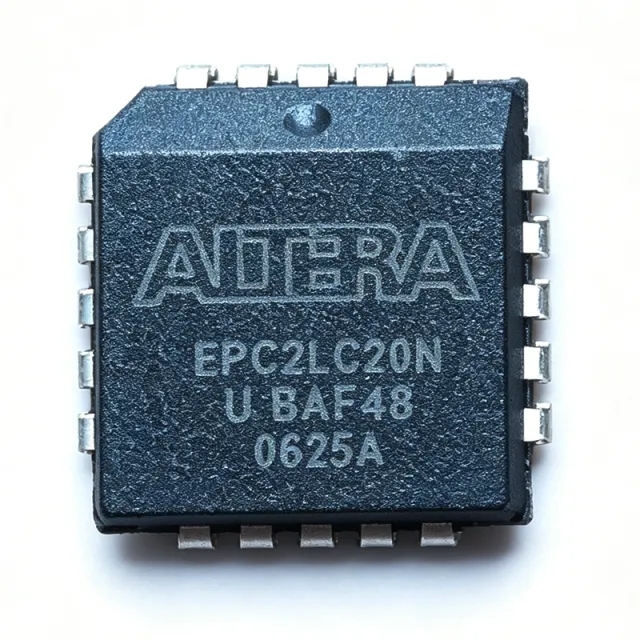
Specification Comparison
| Parameter | EPC1LC20-W | EPC2LC20 |
|---|---|---|
| Brand | Altera | Altera |
| Category | Memory ICs | Memory ICs |
| Lifecycle Status | Obsolete | NRND |
| Unit Price (USD) | — | $7.20 |
| Memory Type | OTP (One-Time Programmable) Configuration PROM | Non-volatile configuration PROM |
| Memory Size | 1 Mbit | 1.6 Mbit |
| Configuration Clock (DCLK) | 8 MHz maximum | — |
| Supply Voltage | 3.3 V and 5.0 V | — |
| Interface | Altera serial configuration (DCLK / DATA / nCONFIG / nSTATUS) | — |
| In-System Programming | Yes - IEEE 1149.1 (JTAG) ISP at 3.3 V / 5.0 V | — |
| Package | 20-PLCC J-lead (9x9 mm) | 20-pin PLCC (J-lead, 9x9 mm) |
| Lead Finish | Pb-free (matte tin) - "-W" suffix | — |
| Daisy-Chain Support | Yes - multiple EPC1 / EPC2 devices cascade to program larger FPGAs | — |
| Compression Support | Yes - stores compressed Altera FPGA bitstreams | — |
| Operating Temperature Range | [DATA_NEEDED: operating temperature range] | — |
| Programming Cycles | 1 (OTP) | — |
| Target FPGA Families | Cyclone, FLEX 6000 / 10K / 10KE, ACEX 1K, APEX 20K, Mercury | — |
| RoHS Status | Compliant (Pb-free -W finish) | Non-Compliant (original Altera Pb-containing part) |
| Mounting Type | Surface Mount (PLCC socket or direct solder) | Surface Mount |
| Configuration Interface | — | Serial (x1) to FPGA via DCLK/nCONFIG/nSTATUS/CONF_DONE |
| Programming Interface | — | IEEE 1149.1 (JTAG) ISP, 5.0-V and 3.3-V tolerant |
| Supply Voltage VCC | — | 3.0 V to 3.6 V (3.3-V operation) |
| ISP Voltage Range | — | 5.0 V or 3.3 V |
| Supported FPGA Families | — | ACEX 1K, APEX 20K/20KC/20KE, APEX II, Arria GX, Cyclone, Cyclone II, FLEX 10K, FLEX 6000, MAX 9000 |
| Cascade Support | — | Yes - daisy-chain multiple EPC2 devices via JTAG for larger bitstreams |
| Operating Temperature | — | -40C to +85C (industrial) [DATA_NEEDED: exact grade from datasheet] |
| Lead-Free Version | — | EPC2LC20N available as lead-free equivalent |
| Programming Support | — | Altera Programming Unit (APU), Quartus II, JTAG programmer |
| Boundary-Scan | — | IEEE 1149.1 compliant, 8-bit or 16-bit JTAG |