SN65HVD234DR vs SN65HVD232DR Comparison
Detailed side-by-side comparison of SN65HVD234DR by Texas Instruments and SN65HVD232DR by Texas Instruments. Compare key specifications, electrical parameters, packaging, lifecycle status, pricing, and availability to determine the best component for your design requirements.
Texas Instruments
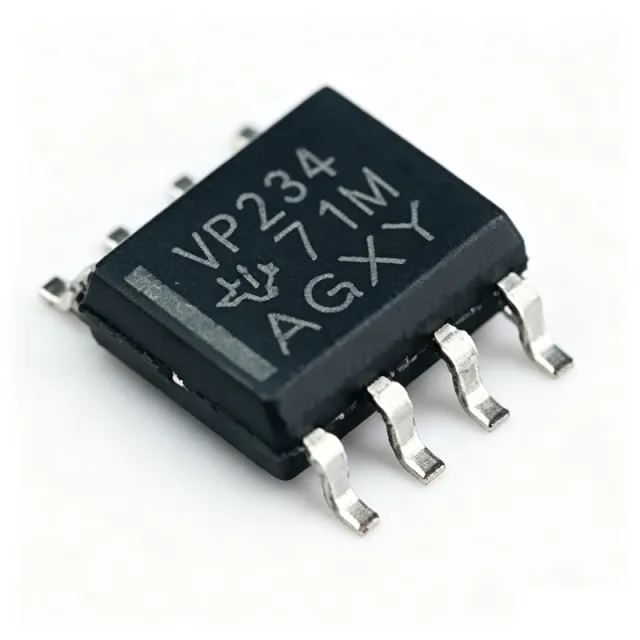
SN65HVD234DR - 3.3V CAN Transceiver 1Mbps w/ Sleep | Texas Instruments
SN65HVD234DR ✓ ActiveTexas Instruments

SN65HVD232DR - 3.3V 1Mbps CAN Transceiver | Texas Instruments
SN65HVD232DR ✓ ActiveSpecification Comparison
| Parameter | SN65HVD234DR | SN65HVD232DR |
|---|---|---|
| Brand | Texas Instruments | Texas Instruments |
| Category | Interface ICs | Interface ICs |
| Lifecycle Status | Active | Active |
| Stock Status | In Stock | In Stock |
| Unit Price (USD) | $1.30 | $0.00 |
| Product Type | CAN Bus Transceiver | Single-channel CAN transceiver |
| Protocol | ISO 11898-1 CAN 2.0A/B | — |
| Supply Voltage (VCC) | 3.0 V to 3.6 V | — |
| Logic Supply Voltage (VIO) | Not required (3.3V logic) | — |
| Maximum Signaling Rate | 1 Mbps | — |
| Number of Drivers/Receivers | 1/1 | — |
| Bus Fault Protection | +/-36 V | — |
| ESD Protection (Bus Pins, HBM) | >16 kV | — |
| Common-Mode Input Range | +/-12 V (extended) | — |
| Maximum Nodes Supported | 120 | — |
| I/O Logic Level | LVTTL, 5V-tolerant | — |
| Sleep Mode Supply Current | 0.05 uA (typical) | — |
| Standby Mode Supply Current | 370 uA (typical) | — |
| Operating Temperature Range | -40C to +125C | — |
| Package | SOIC-8 (D) | 8-pin SOIC |
| Mounting Type | Surface Mount | — |
| RoHS Status | Compliant | [DATA_NEEDED: RoHS status for this specific orderable part] |
| Modes of Operation (RS Pin) | High-speed, Slope Control, Low-power Standby | — |
| Dominant Time-Out Protection | Yes | — |
| Thermal Shutdown | Yes | — |
| Supply Voltage | — | 3.3 V |
| CAN Data Rate | — | Up to 1 Mbps |
| CAN Standard Compatibility | — | ISO 11898-2 high-speed CAN physical layer |
| Bus Nodes | — | Up to 120 nodes |
| Bus-Pin ESD Protection | — | Exceeds 16 kV HBM |
| Operating Temperature | — | -40°C to +85°C |
| Supply Voltage Range | — | [DATA_NEEDED: recommended operating supply-voltage range] |
| Logic Input Voltage | — | [DATA_NEEDED: CAN controller-compatible logic voltage] |
| Differential Output Voltage | — | Comparable between the SN65HVD23x family variants; exact value not stated in verified search data |
| Dominant Common-Mode Output | — | Lower than 5V supplied transceivers by a few hundred millivolts |
| Recessive Common-Mode Output Bias | — | Same as the referenced 5V supplied transceiver family |
| Receiver Input Impedance | — | High; supports up to 120 nodes on a bus |
| Driver Output Transition Time | — | Controlled for improved signal quality |
| Unpowered Node Behavior | — | Does not disturb the CAN bus |
| Channel Count | — | 1 CAN channel |
| REACH Status | — | [DATA_NEEDED: REACH status for this specific orderable part] |
| AEC-Q100 Qualification | — | [DATA_NEEDED: automotive qualification status] |