LM7805ACT vs L7805CV Vergleich
Detaillierter Direktvergleich von LM7805ACT von onsemi und L7805CV von STMicroelectronics. Vergleichen Sie die wichtigsten Spezifikationen, elektrischen Parameter, Gehäuse, Lebenszyklusstatus, Preise und Verfügbarkeit, um das beste Bauteil für Ihre Designanforderungen zu ermitteln.

STMicroelectronics
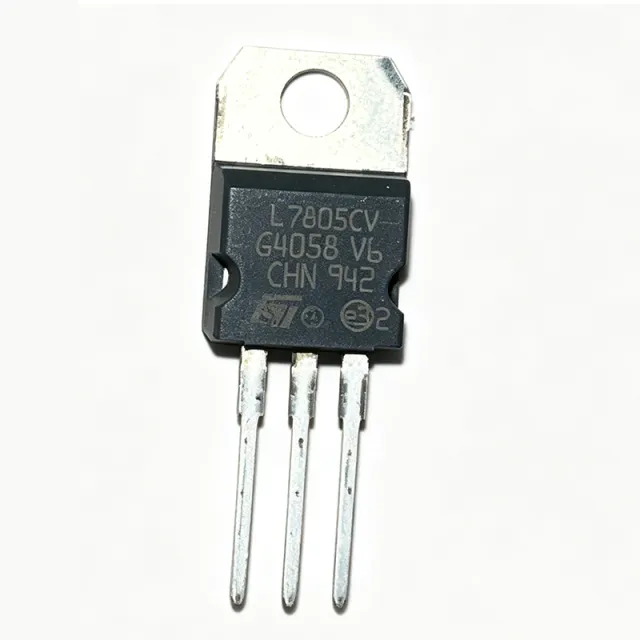
L7805CV - 5V 1.5A Positive Voltage Regulator | STMicroelectronics
L7805CV ✓ AktivSpezifikationsvergleich
| Parameter | LM7805ACT | L7805CV |
|---|---|---|
| Marke | onsemi | STMicroelectronics |
| Kategorie | Voltage Regulators | Voltage Regulators |
| Lebenszyklusstatus | Aktiv | Aktiv |
| Lagerstatus | In Stock | In Stock |
| Stückpreis (USD) | $0,22 | $0,15 |
| Regulator Type | Linear, Fixed Positive | — |
| Topologie | 3-terminal LDO (78xx family) | — |
| Ausgangsspannung | 5.0 V nominal | 5 V |
| Output Voltage Tolerance | ±2% (A-grade) | ±2% (4.8 V to 5.2 V) |
| Maximaler Ausgangsstrom | 1.0 A continuous | 1.5 A |
| Eingangsspannungsbereich | 10 V to 35 V | 7 V to 35 V |
| Dropout-Spannung | 2.0 V typical at 1 A | 2 V at 1 A |
| Line Regulation | [DATA_NEEDED: line regulation] | 50 mV (typical) |
| Load Regulation | [DATA_NEEDED: load regulation] | 100 mV (typical) |
| Ruhestrom | [DATA_NEEDED: quiescent current] | 6 mA (typical) |
| Ripple Rejection (PSRR) | [DATA_NEEDED: PSRR at 120 Hz] | — |
| Betriebs-Sperrschichttemperatur | -40 °C to +125 °C | — |
| Thermal Resistance (θJA, TO-220) | [DATA_NEEDED: thermal resistance θJA] | — |
| Internal Protection | Thermal shutdown, internal current limit, safe-area compensation | — |
| Gehäuse | TO-220-3 (TO-220AB), through-hole, 3 pins + tab | TO-220 |
| Pinout | Pin 1 = Input, Pin 2 = Ground, Pin 3 = Output (front view, tab up) | — |
| Montageart | Through-hole (THT) | Through Hole |
| RoHS-Status | Compliant | Compliant |
| Lead-Free | Yes | — |
| MSL-Level | N/A (through-hole package) | — |
| Ausgangstyp | — | Fixed |
| Ripple Rejection | — | 62 dB at 120 Hz |
| Betriebstemperaturbereich | — | 0°C to +125°C |
| Thermal Resistance (Junction to Case) | — | 5°C/W |
| Maximum Junction Temperature | — | 150°C |