Gestión de energía
Subcategorías
Productos (2819)
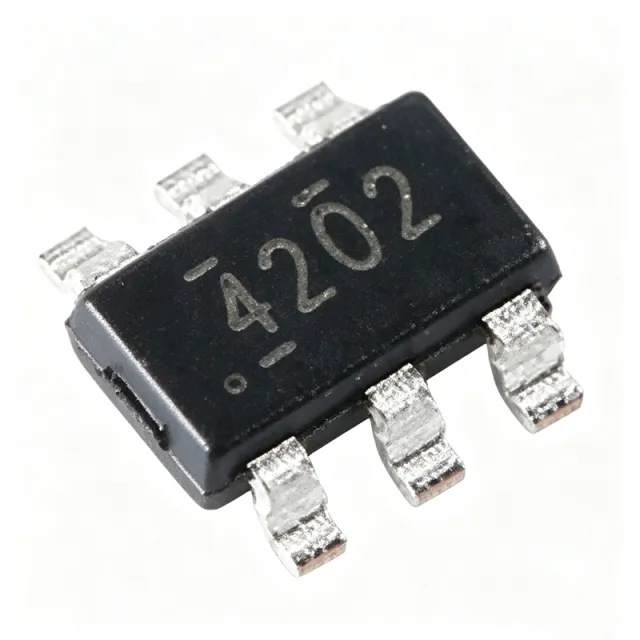
TPS54202DDCR - 4.5V-28V 2A Sync Buck Converter | TI
The Texas Instruments TPS54202DDCR is a 4.5V to 28V input, 2A synchronous step-down (buck) converter in a compact 6-pin SOT-23-THN (DDC) package. It integrates two switching MOSFETs, internal loop compensation, and a 5ms internal soft-start, drastically reducing external component count and PCB footprint for point-of-load designs. A buck (step-down) converter is a DC-DC switching regulator that efficiently converts a higher input voltage to a lower output voltage using inductive energy storage and high-frequency switching. Unlike linear regulators, buck converters achieve high efficiency even with large input-to-output voltage differentials. As a synchronous buck, the TPS54202 replaces the freewheeling Schottky diode with an integrated low-side MOSFET, improving light-load and full-load efficiency within the power management IC family. Key features include the adjustable output range of 0.596V to 26V, a fixed 500kHz switching frequency, and Advanced Eco-mode operation that folds back switching frequency at light loads to extend standby efficiency. The 45uA quiescent current suits always-on and battery-backed systems. EMI-friendly design techniques ease EMC compliance, and integrated overcurrent and thermal shutdown protection ensure robustness. The -40C to +125C junction temperature range supports industrial environments. Architecturally, the device uses current-mode control with internal compensation, so no external compensation network is needed. Integrated low-RDS(on) MOSFETs deliver high efficiency in the small SOT-23-6 thin package, achieving high power density without a heatsink at moderate loads. Typical applications include 12V and 24V rail point-of-load conversion in set-top boxes, broadband and networking equipment, industrial supplies, and portable instruments. For example, it efficiently steps 12V down to 3.3V for digital logic with minimal ripple. Design tip: follow the datasheet recommendation of a 10uF input and 22uF output ceramic capacitor, and keep the SW/BOOT loops tight on the PCB; verify thermal relief on the exposed area for loads above 1.5A.

TPS54218 - 2A, 2MHz Sync Buck Converter | TI | Point-of-Load
The Texas Instruments TPS54218 is a full-featured 6V, 2A synchronous step-down SWIFT DC-DC converter with two integrated 30-mOhm (typical) MOSFETs, packaged in a small, thermally-enhanced 3-mm x 3-mm 16-pin WQFN (RTE) exposed-pad package. It accepts an input voltage range of 2.95V to 6V and delivers an adjustable output from 0.803V at up to 2A. A DC-DC switching regulator (buck converter) is a power-management IC that converts a higher input voltage to a lower output voltage using high-frequency switching and an external inductor, achieving far higher efficiency than a linear regulator. The TPS54218 sits within the SWIFT family of point-of-load converters optimized for distributed power architectures. Key features include a programmable switching frequency from 200 kHz to 2 MHz, which reduces inductor size and solution footprint; a 0.8V voltage reference with +/-1% accuracy over temperature; current-mode control for simplified loop compensation and fast transient response; synchronization to an external clock; and adjustable soft start or power sequencing via the SS/TR pin. Under-voltage and over-voltage power-good output provides rail supervision. Efficiency is maximized by the integrated 30-mOhm MOSFETs and a typical 350-uA supply current; using the EN pin, shutdown current is reduced to 2 uA. The current-mode architecture enables small external component count and compact solutions. Up to 2-MHz operation allows the use of low-profile inductors, making the part well suited to space-constrained boards. Typical applications include point-of-load regulation for DSPs, FPGAs, and ASICs, 5V or 3.3V distributed-power rails in industrial and networking equipment, and portable/battery-connected systems needing high efficiency at 2A loads. Design tip: operating at 2 MHz reduces inductance requirements but increases switching losses; balance frequency against efficiency using the datasheet equations, and place the input capacitor, inductor, and BOOT capacitor close to the IC pins.
TPS54218ARTER - 2A, 6V Sync Step-Down Buck Regulator | TI
The Texas Instruments TPS54218ARTER is a 2 A synchronous step-down (buck) converter from the SWIFT family, operating from a 2.95 V to 6 V input with an adjustable output down to 0.803 V, packaged in a 16-pin VQFN (RTE) with exposed pad measuring 3 mm x 3 mm. A synchronous buck converter is a type of DC-DC switching regulator that replaces the freewheeling diode of a classic buck topology with an integrated second MOSFET, improving efficiency at low output voltages. Within the power-management hierarchy, it sits as a point-of-load voltage regulator IC, converting a higher intermediate bus voltage into a tightly regulated low-voltage rail for processors, FPGAs, and mixed-signal loads. Key features include two integrated n-channel MOSFETs that reduce external component count, constant-frequency peak current-mode control that simplifies loop compensation and reduces output capacitance, and a wide programmable switching-frequency range of 200 kHz to 2 MHz that permits very small inductors. The adjustable output uses a 0.803 V feedback reference. Technically, the peak current-mode architecture provides fast line and load transient response and cycles-by-cycle current limiting. The high switching capability enables single-digit-millihenry inductance values and a compact 3x3 mm power solution footprint, while integrated MOSFETs minimize switching-node parasitics. Typical applications include point-of-load power for DSPs and FPGAs, 5 V or 3.3 V distributed-bus post-regulation in industrial controls, and telecom/networking line cards where a small 2 A POL buck is needed. A key design consideration is that because this is a switching converter, PCB layout of the PH switching node, input decoupling, and ground return directly affects EMI and output ripple - keep the input capacitor loop minimal. This page synthesizes verified distributor pricing, same-family drop-in alternatives, and practical design notes beyond the raw datasheet.

TPS54218RTE - 2A, 6V, 2MHz Sync Buck Converter | TI
The Texas Instruments TPS54218RTE is a 2.95 V to 6 V input, 2 A output synchronous step-down (buck) SWIFT converter with an adjustable output voltage from 0.803 V and a switching frequency range up to 2 MHz, housed in a 16-pin WQFN package with exposed pad (RTE suffix). A synchronous buck converter is a type of DC-DC switching voltage regulator that steps a higher input voltage down to a lower output voltage using two integrated MOSFETs - a high-side and a low-side switch - instead of an external Schottky diode. This topology belongs to the broader power management IC family and delivers significantly higher efficiency than linear regulators, especially at large step-down ratios, making synchronous buck converters the workhorse of point-of-load power conversion in modern electronics. Key features of the TPS54218 include two integrated n-channel MOSFETs, which reduce external component count and board area; constant-frequency peak current mode control, which simplifies external frequency compensation and reduces output capacitance requirements; and a wide supported switching frequency range starting from 200 kHz and adjustable up to 2 MHz, allowing designers to trade efficiency against solution size. Architecturally, the peak current mode control scheme provides fast transient response to line and load changes, which is critical for powering DSPs, FPGAs, and microprocessors with dynamic load profiles. The internal MOSFETs minimize switching node parasitics for clean switching behavior, and the high frequency capability enables the use of small inductors and ceramic output capacitors for compact point-of-load designs. Typical applications include 5 V or 3.3 V rail point-of-load conversion for DSPs such as the TMS320F2803x series, general-purpose 2 A core and I/O rails in industrial control, and distributed power in networking and test equipment where a low profile, high-frequency solution is required. When designing with this device, ensure the input voltage stays within the 2.95 V to 6 V absolute operating window and select the RT-set frequency and inductance appropriate for your ripple current and transient targets. This page synthesizes distributor data, verified datasheet parameters, alternative-part context, and practical design notes in one place - information not consolidated in the manufacturer datasheet alone.
TPS54218RTER - 2A, 2MHz Sync Step-Down Buck | TI
The Texas Instruments TPS54218RTER is a 2A synchronous step-down SWIFT DC-DC buck converter with a 0.8V plus or minus 1 percent voltage reference, 2.95V to 6V input range, and an adjustable switching frequency of 200 kHz to 2 MHz, housed in a 16-pin WQFN (RTE) package with exposed pad. A synchronous buck converter is a type of switching voltage regulator that steps a higher DC input voltage down to a lower regulated output voltage using two internal MOSFETs - a high-side control FET and a low-side synchronous rectifier - instead of an external Schottky diode. Within the power management hierarchy (DC-DC converter, switching regulator, power management IC), synchronous topologies improve efficiency at light and full load by eliminating diode conduction losses, which is why they dominate point-of-load designs in modern digital systems. Key features include two integrated 30 mOhm (typical) MOSFETs delivering high efficiency at full 2A load, an externally synchronizable switching frequency from 200 kHz to 2 MHz for filter and footprint optimization, a precision 0.8V reference holding plus or minus 1 percent over temperature, and adjustable soft start with sequencing support. UV and OV power-good monitoring simplifies system supervision and fault reporting. Architecturally, the TPS54218 belongs to TI's SWIFT family of point-of-load converters. The D-CAP-style adaptive on-time control approach delivers fast transient response with low output ripple while supporting ceramic output capacitors without complex compensation. The integrated FETs and compact 16-WQFN (RTE) exposed-pad package minimize the external component count and PCB area for space-constrained rails. Typical applications include 5V or 3.3V point-of-load conversion for DSPs, FPGAs, and ASICs; DDR memory rail generation in networking and telecom equipment; and low-voltage rail powering in industrial and consumer systems where the narrow 2.95V to 6V input aligns with 3.3V and 5V intermediate bus rails. When designing, select the inductor and output capacitor for the chosen switching frequency: at 2 MHz, smaller inductance values reduce solution size but increase ripple current, while operating near 200 kHz maximizes efficiency. Keep the PH and BOOT loops tight and use the exposed pad as the thermal ground. This page synthesizes verified distributor pricing, drop-in alternative analysis, pinout guidance, and practical design notes not consolidated in the manufacturer datasheet.

TPS54240DGQR - 42V 2.5A Step-Down Converter | Texas Instruments
The Texas Instruments TPS54240DGQR is a 42-V, 2.5-A step-down (buck) DC-DC converter with an integrated 92-mΩ high-side MOSFET, housed in a 10-pin HVSSOP (PowerPAD MSOP) package. The TPS54240 accepts a wide 3.5 V to 42 V input range and produces an adjustable output from 0.8 V up to roughly 39 V at up to 2.5 A continuous load current. A 2.5 MHz nominal switching frequency enables small external LC components and tight transient response in space-constrained designs. A buck (step-down) converter is a switch-mode power supply topology that uses an inductor and switching element to efficiently convert a higher DC input voltage to a lower DC output voltage. Within the power management IC hierarchy, buck converters sit beneath switching regulators and above linear regulators in efficiency and below them in noise; the TPS54240 further offers Eco-Mode pulse-skipping to raise light-load efficiency, putting it in the SWIFT family of TI converters targeting industrial, automotive, and telecom rails. Key features include 138 µA typical operating quiescent current, 1.3 µA shutdown supply current when EN is pulled low, an internal 0.8 V reference, current-mode control with simple external compensation, and pulse-skipping Eco-Mode for high light-load efficiency. The internal high-side MOSFET is rated at 92 mΩ (typical), minimizing conduction losses at 2.5 A. Built-in protection includes UVLO, cycle-by-cycle over-current limiting, thermal shutdown, and slow-start controlled by an external SS capacitor. Architecturally, the TPS54240 uses peak current-mode control, which provides inherent line-voltage rejection, simple single-pole compensation, and cycle-by-cycle current limiting. The 2.5 MHz switching node is paired with a low-ESR ceramic output capacitor; combined with the PowerPAD exposed thermal pad on the HVSSOP-10, the device delivers high efficiency across load while keeping the PCB footprint compact. Typical applications include 24 V industrial sensor and PLC rails, automotive body electronics and infotainment pre-regulators, battery-powered USB-PD and portable-device chargers, multi-rail distributed power systems that need a front-end 5 V or 12 V bus, point-of-load regulation for FPGAs and DSPs, and LED driver front-ends. The wide Vin tolerance also suits solar and energy-harvesting front-end inputs. For design, size the inductor around L = (VOUT × (VIN−VOUT))/(VIN × KS × IOUT × fSW) and verify that the saturation current is at least 30% above the peak inductor current to absorb transients and avoid hitting the cycle-by-cycle current limit. The exposed PowerPAD must be soldered to a continuous ground copper pour of at least 1 in² to achieve the rated thermal resistance of approximately 40 °C/W. This page synthesizes distributor pricing, drop-in pin-compatible alternatives in the HVSSOP-10 footprint, comparison data versus close TI family members, and practical design notes not found in the bare datasheet.

TPS54283 - Dual 2A 300kHz Buck Converter | Texas Instruments
The Texas Instruments TPS54283 is a dual-output, non-synchronous buck (step-down) converter that integrates a high-side MOSFET and is rated for up to 2 A per channel. It operates from a 4.5-V to 28-V input supply, and each output is adjustable from 0.8 V up to 90% of the input voltage. The device switches at a fixed 300 kHz with internal compensation, and is offered in a 14-pin PowerTSSOP (HTSSOP-14, PWP) surface-mount package with an exposed PowerPAD for heat removal. This makes it a compact two-rail power solution for networking, consumer, and industrial boards. What is a non-synchronous buck converter? A non-synchronous buck converter is a step-down switching regulator that uses an integrated high-side MOSFET as the control switch and an external Schottky diode as the low-side rectifier. Because the TPS54283 integrates the high-side switch, each of its two channels only needs an external Schottky diode, an inductor, and input/output capacitors. In the power management hierarchy it is: DC-DC converter -> non-synchronous buck converter -> step-down switching voltage regulator -> power management IC. Key features include dual 2-A outputs, a wide 4.5-V to 28-V input range, adjustable output down to 0.8 V, fixed 300-kHz switching, internal compensation, and an integrated high-side MOSFET. The internal error-amplifier compensation removes the external compensation network, reducing BOM count and simplifying loop-stability design. The wide input range gives margin for 5-V, 12-V, and 24-V systems. From a technical standpoint, the current-mode controlled converter balances inductor size, output ripple, and efficiency at 300 kHz. Because the low-side rectifier is external, a designer can optimize the Schottky diode for forward voltage and thermal behavior. The PowerPAD must be soldered to a solid ground-plane copper area to keep junction temperature within limits at full dual 2-A load. Typical applications include broadband gateways (DSL/cable modems), IP security cameras, set-top boxes, and industrial control boards that generate a 5-V and a 3.3-V rail from a 12-V or 24-V input. The adjustable output also supports point-of-load power in consumer media devices. When designing with the TPS54283, verify input-to-output headroom and Schottky diode rating for each channel, and use the exposed thermal pad to a large ground copper pour. Total dissipation is the combined loss of both channels, so thermal layout is critical at 2 A per output.

TPS54302DDCR - 3A 4.5-28V Sync Buck | Texas Instruments
The Texas Instruments TPS54302DDCR is a 4.5V to 28V input, 3A output, EMI-friendly synchronous step-down converter in a 6-pin SOT-23-6 Thin (TSOT-23-6, DDC) package. It integrates two switching N-channel MOSFETs, internal loop compensation, and a 5ms internal soft start, reducing external component count for point-of-load power-supply design. The adjustable output reaches down to a 0.596V reference, covering 3.3V, 5V, and low-voltage core rails for FPGAs, MCUs, and SoCs. A synchronous buck converter is a DC-DC switching regulator in which a high-side and a low-side power FET switch alternately to convert a higher input voltage to a lower regulated output with high efficiency. It belongs to the switching regulator family within the power management IC hierarchy. Because the low-side FET replaces the Schottky diode of asynchronous converters, conduction losses drop and heavy-load efficiency improves significantly. The TPS54302 uses constant-frequency peak current-mode control at approximately 400kHz, providing fast line and load transient response and reducing required output capacitance. Key features include 3A continuous output current, a wide 4.5V to 28V input range, and a 5ms internal soft start that limits inrush current at power-up. Advanced Eco-mode delivers high light-load efficiency, and the EMI-friendly switching-edge design reduces the need for extra filtering in noise-sensitive products such as wireless IoT gateways. The TSOT-23-6 package occupies minimal board area and supports reflow up to 260C. Typical applications include industrial 24V and 12V rails, set-top boxes, battery-powered portable equipment, networking hardware, smart-home IoT gateways, and LED display control power. The wide input range plus 3A output make it a versatile point-of-load regulator, and the EMI-friendly design is valuable wherever RF sensitivity could be degraded by switching noise. Design tip: place input and output ceramic capacitors close to the IC, choose a power inductor with saturation current above 3.2A, and set the output voltage with 1% tolerance resistors on the 0.596V reference. Since 28V is the maximum rating, add transient protection if input spikes above 28V are possible.

TPS54302QDDCRQ1 - 28V 3A Sync Buck AEC-Q100 | TI
The Texas Instruments TPS54302QDDCRQ1 is an AEC-Q100 qualified, 4.5V to 28V input, 3A synchronous step-down (buck) converter in a compact 6-pin SOT-23-6 Thin (DDC) package. The device integrates two switching MOSFETs (85 mOhm high-side, 40 mOhm low-side), internal loop compensation, and a 5 ms internal soft start, drastically reducing external component count and solution size. A synchronous buck converter is a type of DC-DC switching voltage regulator that replaces the catch diode of a conventional buck regulator with an integrated low-side MOSFET, achieving higher efficiency, especially at light load and low duty cycle. Within the power management IC hierarchy, it belongs to the family of step-down regulators used to derive low-voltage, high-current rails from higher-voltage industrial or automotive supplies. Key features include a fixed 400 kHz switching frequency, frequency spread spectrum and EMI-friendly layout that reduce conducted and radiated emissions, Advanced Eco-mode pulse-skip operation for excellent light-load efficiency, and peak current-mode control for simple, stable loop behavior. The very low 2 uA shutdown current and 45 uA quiescent current suit battery-backed and always-on automotive systems. The adjustable output voltage is set down to 0.596V via a resistor divider. Technically, the peak current-mode architecture with internal compensation eliminates the need for loop tuning, while integrated bootstrap diode and dead-time control improve robustness. The AEC-Q100 qualification and wide input range make the device resilient against automotive load-dump clamped rails (12V/24V battery systems) and 24V industrial buses. Typical applications include automotive infotainment and cluster point-of-load power, ADAS sensor module supplies, 24V industrial automation rails, and telecom/medium-voltage sub-rails where EMI compliance matters. Design consideration: with a 3A continuous output, thermal performance depends on the SOT-23-6 copper area; follow the TI datasheet layout recommendations for the thermal pad and input capacitor placement, and keep switching-node area small to exploit the EMI-friendly design.

TPS54308DDCR - 28V 3A Sync Buck Converter | Texas Instruments
The Texas Instruments TPS54308DDCR is a 4.5-V to 28-V input, 3-A output synchronous 350-kHz FCCM step-down buck converter housed in a 6-pin SOT-23 (Thin, TSOT-23-6 / DDC) package. It integrates both high-side and low-side MOSFETs and uses internal loop compensation plus a 5-ms internal soft start to minimize external component count. A synchronous buck converter is a switched-mode DC-DC topology that uses two MOSFETs in a half-bridge configuration, with the low-side switch rectifying the voltage to eliminate the diode drop of a conventional buck, thereby improving efficiency at high step-down ratios. Within the broader power management IC hierarchy, a buck converter sits between linear regulators and isolated converters and is widely used wherever small size and high efficiency are required below about 5-A loads. Key specifications include 4.5 V to 28 V input range, 3 A continuous output current, 1-V to 18-V adjustable output, 350 kHz typical switching frequency, and FCCM (forced continuous conduction mode) for predictable EMI behavior across all load levels. Additional features include internal compensation, internal 5 ms soft start, and a typical quiescent current suitable for portable and always-on applications. The device's primary technical advantage is high power density. By integrating high-side and low-side MOSFETs in a small TSOT-23-6 footprint and using internal loop compensation, the TPS54308 minimizes the PCB area required for a complete 3 A point-of-load converter. TI's HotRod flip-chip package construction also reduces parasitic inductance and improves thermal performance for such a small outline. Typical applications include 12-V and 24-V industrial bus point-of-load regulators, USB power delivery (USB-PD) auxiliary rails, white goods and appliance power supplies, distributed 5-V and 3.3-V POL rails, telecom and networking cards, and general-purpose 5-V to point-of-load conversion. The wide 4.5 V to 28 V input range makes it tolerant of common industrial transients when fed from a protected bus. When designing with this part, place the input bypass capacitor as close as possible to the PVIN and PGND pins; keep the high-current switching loop small. The feedback resistor divider sets the output voltage and should use 1% or better tolerance to maintain set-point accuracy. The TPS54308 datasheet reference design with 22 µF input and 44 µF output ceramic capacitors typically delivers full 3 A at 25 °C ambient without airflow up to about 24 V input. This page synthesizes distributor pricing, same-package drop-in alternatives, and practical design notes not collected in the manufacturer datasheet, providing a single decision-making reference for engineers evaluating the TPS54308 family.
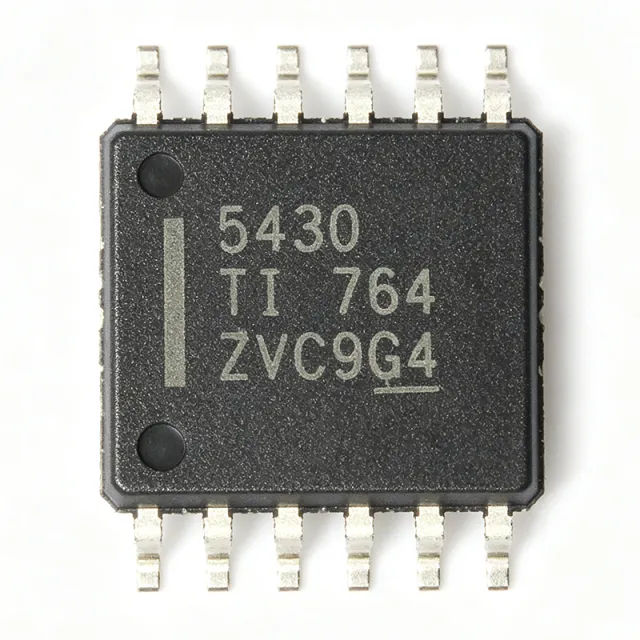
TPS5430DDAR - 3A, 36V Step-Down Converter | Texas Instruments
The Texas Instruments TPS5430DDAR is a 3A, wide-input step-down (buck) DC-DC converter in an 8-pin SO PowerPAD (DDA) package. It accepts 5.5V to 36V input and delivers an adjustable output from 1.221V up to near VIN at a fixed 500kHz switching frequency. A buck converter is a type of switching voltage regulator that efficiently steps a higher DC voltage down to a lower one using a switching MOSFET, an inductor, and output capacitors. Unlike linear regulators, switching converters routinely exceed 90% efficiency, making them the foundation of modern power management IC hierarchies (DC-DC converter -> switching regulator -> point-of-load converter). The TPS5430 belongs to TI's SWIFT family of DC-DC converters. Key features include the 5.5V to 36V input range that directly accepts 12V and 24V industrial and automotive buses, 3A continuous output current, fixed 500kHz operation that permits small inductors, an integrated high-side N-channel MOSFET, internal loop compensation, soft-start, cycle-by-cycle current limit, and thermal shutdown. The thermally enhanced SO-8 PowerPAD package provides low thermal resistance for full-load operation without an external heatsink. The device uses PWM voltage-mode control with an internal 1.221V bandgap reference; output voltage is set by an external resistor divider on the VSENSE pin. A bootstrap capacitor between BOOT and PH drives the high-side MOSFET gate above VIN. Fixed-frequency operation simplifies EMI filter design compared with variable-frequency converters. Typical applications include point-of-load supplies for FPGAs, DSPs, and microcontrollers, 24V industrial bus power, telecom intermediate rails, 12V automotive accessory power, and 5V/3.3V distributed power systems. Design tip: place input/output capacitors and the bootstrap capacitor close to the IC, solder the PowerPAD to a copper pour with thermal vias, and keep the PH switching node and power loops short to minimize ringing and EMI.
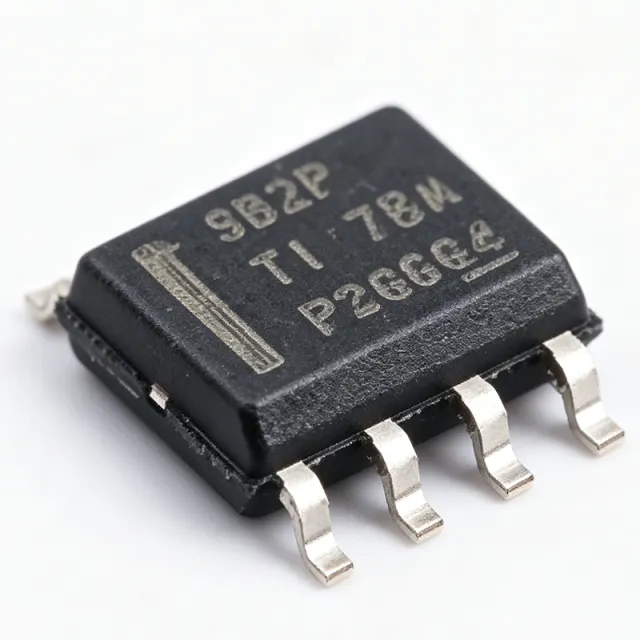
TPS5430QDDARQ1 - 3A, 36V Buck Converter AEC-Q100 | TI
The Texas Instruments TPS5430QDDARQ1 is an automotive-qualified (AEC-Q100) 3A step-down (buck) switching regulator from the SWIFT family, operating from a wide 5.5V to 36V input range at a fixed 500kHz switching frequency in a thermally enhanced 8-pin HSOIC (DDA) PowerPAD package rated from -40C to +125C. A DC-DC buck converter is a type of switching voltage regulator that steps a higher DC input voltage down to a lower regulated output voltage using a high-side switch, an inductor, and a rectifying element. Buck converters sit within the broader hierarchy of power management ICs and, unlike linear regulators, achieve high efficiency by switching rather than dissipating excess power as heat. Key features include up to 3A continuous output current, an adjustable output voltage from 1.221V to approximately 31V, voltage-mode PWM control with an integrated low-resistance high-side N-channel MOSFET, and non-synchronous rectification using an external Schottky diode. The 500kHz fixed frequency permits a compact inductor, while the internal compensation minimizes external component count. The PowerPAD package provides low thermal resistance for high-power-density designs. According to the TI TPS5430-Q1 datasheet, the device integrates cycle-by-cycle current limiting, thermal shutdown, and an enable pin for rail sequencing. WEBENCH support and evaluation modules accelerate design cycles. The wide 36V input withstands automotive load-dump transients with modest protection, supporting battery-direct connections in 12V and 24V systems. Typical applications include automotive infotainment and cluster power supplies, USB charging ports from battery rails, industrial 24V auxiliary supplies, and 5V/3.3V point-of-load conversions for MCUs and CAN transceivers. Design consideration: because the converter is non-synchronous, select an external Schottky diode rated for the full output current and peak switch current, and keep the PH node loop as small as possible for low EMI.

TPS54331DR - 3A 28V Buck Converter 570kHz | Texas Instruments
The Texas Instruments TPS54331DR is a 28V, 3A non-synchronous buck converter integrating a low RDS(on) high-side MOSFET. It operates from 3.5V to 28V input and provides an adjustable output from 0.8V to 25V in an 8-pin SOIC (D) package. A buck converter, or step-down converter, is a DC-DC switching regulator that efficiently reduces a higher input voltage to a lower output voltage. Unlike linear regulators, buck converters use switching elements and an external inductor to transfer energy, achieving high efficiency especially at large input-to-output voltage differences. The TPS54331DR is a non-synchronous buck converter within the broader power management IC family, using an external diode for low-side rectification, which simplifies design and reduces cost compared to synchronous converters. Key features include a fixed 570kHz switching frequency, current mode control with internal slope compensation, and Eco-mode pulse-skipping that improves light-load efficiency. The device offers 1uA shutdown supply current for battery-powered applications, adjustable soft-start, cycle-by-cycle overcurrent protection, and thermal shutdown. The integrated high-side MOSFET minimizes conduction losses. Architecturally, current mode control compares the COMP pin voltage to the switch current each cycle to turn off the high-side MOSFET. This provides excellent line and load transient response and simplifies external compensation. Eco-mode automatically reduces switching frequency at light loads, maintaining efficiency across wide load ranges. Typical applications include industrial power supplies, set-top boxes, LCD displays, distributed power systems, and consumer electronics. Its wide input range and 3A output make it ideal for powering FPGAs, DSPs, and microcontrollers from 12V or 24V buses, with output set precisely via external resistors. Design tip: ensure proper input/output capacitor selection and a tight PCB layout to minimize parasitic inductance. The COMP pin requires an external RC network for loop compensation, and the bootstrap capacitor must sit close to the BOOT pin for reliable high-side gate drive.

TPS54331DRCR - 3A 28V Step-Down Buck Converter | TI
The Texas Instruments TPS54331DRCR is a 28V-input, 3A non-synchronous step-down (buck) DC-DC converter with a fixed 570kHz switching frequency, adjustable output from 0.8V to 25V, and Eco-mode pulse-skipping for light-load efficiency, housed in an 8-pin SOIC (D) surface-mount package. According to TI, the device integrates a low RDS(on) high-side MOSFET and operates from a 3.5V to 28V input rail. A buck (step-down) converter is a switching voltage regulator that converts a higher DC input voltage to a lower regulated output voltage using a switching element, inductor, and output capacitor. Buck regulators sit within the broader hierarchy of power management ICs: switching regulator > DC-DC converter > voltage regulator. Compared to linear regulators (LDOs), buck converters achieve far higher efficiency, often above 90 percent, making them the default choice whenever the input-to-output voltage differential is large or load currents exceed roughly 500mA. Key features of the TPS54331 include the Eco-mode feature that automatically activates pulse-skipping at light loads to maintain high efficiency, and an ultra-low 1uA shutdown supply current that suits battery-powered applications. Current-mode control with internal slope compensation simplifies loop compensation design and delivers fast transient response. A fixed 570kHz switching frequency keeps the power inductor and capacitors small and places switching noise above most sensitive audio and RF bands. Technically, the converter is a non-synchronous (external free-wheel diode) topology, which keeps the IC cost low while requiring a Schottky diode such as the B340A on the PH switch node. The integrated 3A MOSFET, internal soft-start via SS/TR pin, programmable EN pin with hysteresis, and COMP pin for external loop compensation give designers full control over startup, efficiency, and transient behavior. Wide 3.5V to 28V input range covers 5V, 12V, and 24V industrial rails. Typical applications include 12V and 24V industrial auxiliary power rails, 5V or 3.3V point-of-load supplies for MCUs and FPGAs, LED lighting drivers, battery-powered instrumentation, and networking equipment. The 3A rating comfortably powers embedded processors, motors control logic, and multi-rail distributed power systems. For design, choose the free-wheel Schottky diode for low forward voltage and adequate current rating, keep the PH loop area small, and set the compensation network per the datasheet equations for your output capacitor ESR. Verify junction temperature with the SOIC-8 thermal metrics for your copper area. This page synthesizes verified distributor pricing, drop-in alternatives including the TI TPS54332D pin-for-pin replacement and the cross-brand SGM61232XG, plus practical design notes not found in the manufacturer datasheet.

TPS54335ADRCR - 4.5-28V In, 3A Sync Buck Converter | TI
The Texas Instruments TPS54335ADRCR is a 3 A synchronous step-down (buck) DC-DC converter with 4.5 V to 28 V input range, adjustable output from 0.8 V, and Eco-mode light-load efficiency, housed in a 10-pin VSON (DRC) package with exposed pad. A synchronous buck converter is a switching voltage regulator that uses high-side and low-side MOSFETs (instead of a diode) to step a higher input voltage down to a lower, tightly regulated output. Within the power management IC hierarchy, the TPS54335A sits in the switching regulator family, which achieves far higher efficiency than linear regulators (LDOs) because energy is transferred in switched inductor cycles rather than dissipated as heat. Key features include integrated 128 mOhm high-side and 84 mOhm low-side MOSFETs supporting 3 A continuous output current, an adjustable switching frequency from 50 kHz to 1.5 MHz set by a single external resistor, and an internal 2 ms soft-start on the TPS54335A variant. TI Eco-mode circuitry pulses the converter at light loads to maintain high efficiency down to microamp-level loads, with only 2 uA shutdown current. Technically, the device uses peak current-mode control with cycle-by-cycle overcurrent limiting, thermal shutdown, and input undervoltage lockout. The wide 4.5-28 V input accommodates 5 V, 12 V, and unregulated 24 V industrial rails. Output voltage is set by an external resistor divider from 0.8 V upward. Typical applications include 5 V and 12 V distributed power buses, industrial automation point-of-load supplies, and consumer/appliance onboard power where small size and high efficiency matter. Design consideration: because switching frequency is adjustable, trade efficiency (lower frequency) against inductor size and transient response (higher frequency); keep the RT resistor trace short to limit noise pickup. This page synthesizes verified distributor pricing, drop-in alternatives, design notes, and application guidance not found in a single manufacturer datasheet.

TPS54341DPRR - 42V, 3.5A Step-Down DC-DC Converter | TI
The Texas Instruments TPS54341DPRR is a 42-V input, 3.5-A output synchronous step-down DC-DC converter with an integrated high-side MOSFET, housed in a 10-pin WSON (DPR) exposed-pad package measuring 4 mm x 4 mm. It operates across a wide 4.5-V to 42-V input range, survives 45-V load-dump transients per ISO 7637, and supports an adjustable output voltage as low as 0.8 V. Current-mode control simplifies external compensation and gives designers flexibility in choosing the L/C output filter. A buck converter (step-down switching regulator) is a switch-mode power supply topology that converts a higher DC input voltage to a lower, regulated DC output voltage. The TPS54341DPRR belongs to the broader hierarchy: DC-DC converter -> switching regulator -> buck converter -> non-isolated POL (point-of-load) regulator -> power management IC. Buck regulators are the dominant choice for high-efficiency (>90%) intermediate bus and load-point conversion in 12-V, 24-V, and industrial 24-V battery systems, where linear regulators would dissipate unacceptable amounts of power as heat. Key features include 152 uA quiescent current at no load using Eco-Mode pulse-skipping, 2 uA shutdown current when the enable (EN) pin is pulled low, internal soft-start, and cycle-by-cycle current-limit protection. The internal 92-mΩ high-side MOSFET minimizes conduction losses, while the current-mode control loop maintains stable regulation across line, load, and temperature variations. The exposed thermal pad on the WSON-10 package reduces junction-to-PCB thermal resistance to roughly 30 °C/W on a standard 4-layer 1-oz copper board, supporting continuous 3.5-A operation at moderate VIN-VOUT deltas. The TPS54341 uses peak-current-mode control with internal slope compensation, allowing Type II/III networks to be added at the COMP pin for compensation. Switching frequency is set by an external RT resistor to ground on the RT/SS pin, typically between 100 kHz and 2.5 MHz, which lets designers trade off efficiency against solution size. The wide VIN range makes the part popular in 12-V and 24-V industrial systems, automotive body electronics, and distributed 48-V-to-POL intermediate bus architectures. Typical applications include industrial 24-V sensor and actuator rails, automotive infotainment and body controllers, 12-V/24-V battery-powered point-of-load regulators, distributed power architectures in PLCs and HMIs, and telecom/datacom 48-V intermediate bus converters. The ISO 7637 load-dump tolerance makes it especially attractive for vehicles where transients on the battery rail can exceed 40 V during cranking pulse events. When designing with the TPS54341DPRR, select the RT resistor for the desired switching frequency, choose an inductor with saturation current >= 4 A and DC rating >= 3.5 A, and place input ceramic bypass capacitors (typically 2 x 10 uF) as close to the PGND and VIN pins as possible. The exposed thermal pad must be soldered to a continuous ground plane to achieve rated thermal performance. This page synthesizes distributor pricing, drop-in alternatives, and practical design notes not found in the manufacturer datasheet.

TPS54360DDAR - 60V 3.5A Buck Converter | Texas Instruments
The Texas Instruments TPS54360DDAR is a 4.5V to 60V input, 3.5A step-down (buck) DC-DC converter with an integrated 92mOhm high-side MOSFET and Eco-mode light-load efficiency, supplied in an 8-pin HSOIC (DDA) PowerPAD package rated -40C to +125C. The adjustable output spans 0.8V to 58.8V. A buck converter is a switching regulator that efficiently reduces a higher DC voltage to a lower one using a switching element, inductor, and catch diode. Within the power-management IC hierarchy (DC-DC converter -> switching regulator -> power management IC), buck converters dominate point-of-load and wide-input designs because switching achieves far higher efficiency than linear regulators, especially at large input-to-output voltage differences. Key features include 3.5A continuous output current with a 4.5A minimum peak inductor current limit, current-mode control for fast transient response and simple loop compensation, and Eco-mode pulse-skipping that maintains high efficiency at light loads. The adjustable switching frequency of 100kHz to 2.5MHz lets designers trade efficiency against inductor and capacitor size. The integrated 92mOhm high-side MOSFET minimizes conduction loss and external component count. Architecturally, current-mode control provides inherent feed-forward of input-voltage variations and simplifies compensation compared with voltage-mode control. Protections include thermal shutdown, overcurrent protection, and an enable pin with precision threshold for power sequencing and programmable undervoltage lockout. Typical applications include 24V industrial bus power supplies, 12V automotive systems handling load-dump transients, telecom and networking equipment, and point-of-load converters for industrial and automotive electronics. Design tip: ensure a solid ground plane with thermal vias under the PowerPAD, place the BOOT capacitor and input/output capacitors close to the IC, and choose the switching frequency to balance efficiency versus solution size. Pricing as of 2026-08-29 starts around $0.50 at volume (LCSC).
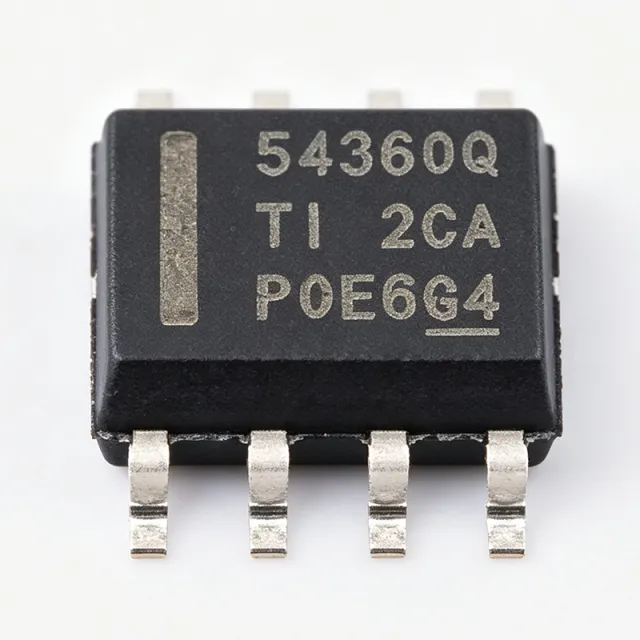
TPS54360QDDARQ1 - 60V 3.5A Buck Converter | Texas Instruments
The Texas Instruments TPS54360QDDARQ1 is an AEC-Q100 qualified 4.5V to 60V input, 3.5A step-down DC-DC converter with an integrated high-side MOSFET, supplied in an 8-pin SO-8 PowerPAD (DDA) package. The regulated output is adjustable from 0.8V using a resistor divider, making this a single-output buck switching regulator for automotive and industrial power supplies. A buck (step-down) converter is a switching voltage regulator that converts a higher input voltage to a lower regulated output using an internal power switch, external inductor, and output capacitor. Within the power management hierarchy, this device sits in the DC-DC converter family, part of the broader voltage regulator and power management IC (PMIC) domain, optimized for wide-input point-of-load conversion directly from automotive battery rails. Key features include a 60V maximum input with 65V transient survivability per ISO 7637 load-dump testing, 3.5A continuous output current, TI Eco-mode pulse-skip operation for high light-load efficiency, and current-mode control for simple external compensation and flexible component selection. The automotive Q1 qualification and -40C to +125C ambient range enable deployment in harsh vehicle environments. Architecturally, the device uses peak current-mode control with an integrated 60V power MOSFET, reducing external component count versus a controller-plus-discrete-FET solution. The low-ripple pulse-skip Eco-mode reduces switching losses at light loads, while the internal bootstrap and soft-start functions simplify startup design. The SO-8 PowerPAD exposed pad provides a low thermal resistance path for heat dissipation. Typical applications include automotive infotainment and cluster power rails, 12V/24V industrial bus point-of-load conversion, USB and display bias supplies, and general-purpose wide-input regulation from 24V industrial systems. Design consideration: at 60V input the converter operates at high switching-step ratios; ensure the external inductor saturation current exceeds the 3.5A peak limit and follow the TI datasheet layout guidelines, placing the input decoupling capacitor very close to VIN and GND pins.
TPS543C20RVFR - 40A 14V Sync Step-Down SWIFT Converter | TI
The Texas Instruments TPS543C20RVFR is a 40-A stackable synchronous step-down SWIFT buck converter with adaptive internal compensation, housed in a 40-pin PowerLFQFN (RVF) package. It accepts an input voltage range of 4 V to 14 V (A-version: 4 V to 16 V) and delivers an adjustable output from 0.6 V to 5.5 V at up to 40 A continuous current, with peak efficiency above 95% in typical 12 V to 1.0 V/1.8 V/3.3 V conversions. A buck (step-down) DC-DC switching regulator is a power-management integrated circuit that converts a higher DC input voltage into a lower DC output voltage by rapidly switching an internal MOSFET pair and smoothing the resulting pulsed waveform with an LC output filter. Within the broader power-electronics taxonomy, the TPS543C20 sits in the non-isolated POL (point-of-load) converter family -> DC-DC switching regulator -> voltage regulator -> power-management IC hierarchy. SWIFT converters from TI combine internal MOSFETs, current-mode control, and adaptive compensation to deliver high efficiency at multi-MHz switching frequencies in compact surface-mount footprints. Key features include integrated 3 mΩ/0.9 mΩ stacked NexFET power stages, differential remote sensing for tight load-point regulation, monolithic integration that eliminates external compensation components, and a stackable architecture that lets two devices operate in parallel for up to 80 A. Internally compensated emulated peak current-mode control provides a wide bandwidth loop, and the switching frequency is synchronizable to an external clock for EMI-sensitive rails. A built-in integrator and ramp-tracking amplifier allow stable operation across the full 0.6 V to 5.5 V output range. The TPS543C20 architecture uses internal MOSFETs driven by an emulated peak current-mode controller with a clock-synchronizable, fixed-frequency modulator. The internal integrator and directly amplifying ramp tracking loop eliminate the need for external compensation across the wide operating range, simplifying PCB layout and shrinking the BOM. Differential sensing cancels PCB IR-drop in high-current paths, allowing the regulated voltage at the load to remain within ±1% tolerance even at 40 A. Typical applications include space-constrained point-of-load rails in networking switches and routers, FPGA/ASIC core and transceiver supplies, server and storage POLs, and stacked 80 A configurations for high-current ASIC and processor rails. The 40-pin PowerLFQFN package exposes the die through a thermal pad, allowing multi-layer PCB copper pours to dissipate the heat generated at full load. When designing with the TPS543C20, observe the datasheet-required minimum input/output capacitor values (including ripple-current-rated ceramics) and keep the SYNC/FSEL loop short to the IC. Differential remote-sense traces must be routed as a matched pair directly to the load to suppress PCB IR-drop in high-current applications. This page synthesizes distributor pricing, drop-in alternatives, and practical design notes not found in the manufacturer datasheet.

TPS543C20RVFT - 40A Sync Step-Down SWIFT Converter | TI
The Texas Instruments TPS543C20RVFT is a 40-A stackable, synchronous step-down SWIFT converter accepting a 4-V to 14-V input and producing an adjustable output as low as 0.6 V, housed in a 40-pin PowerLFQFN package. Internally compensated emulated peak-current-mode control and a fixed-frequency, clock-synchronizable modulator target EMI-sensitive point-of-load rails in computing, telecom, and datacom hardware. The device is part of TI's SWIFT (Switcher With Integrated FET Technology) family and supports optional I2C/PMBus telemetry and body-bracket trimming for in-system optimization. A buck (step-down) DC-DC converter is a switching regulator that efficiently converts a higher DC input voltage to a lower DC output voltage by chopping the input with power MOSFETs and smoothing the pulsed waveform through an LC filter. Within the broader power-management hierarchy, buck converters sit between linear regulators (low noise, low efficiency at large VIN-VOUT) and isolated converters; they dominate non-isolated POL applications because switching operation yields 90%+ efficiency even at large step-down ratios. Key specifications of the TPS543C20RVFT include up to 40 A continuous output current, an internal 4-V to 14-V input range with a 16-V abs-max transient tolerance, sub-1% reference accuracy, and synchronization to an external clock for multi-rail EMI compliance. Differential remote sensing cancels PCB IR drop on the output, preserving load-transient accuracy at the point of load. The package exposes a top-side thermal pad that mates with PCB copper to keep junction temperature within limits at 40 A. Architecturally, the TPS543C20 uses emulated peak-current-mode control - an internal ramp tracks the inductor current, eliminating the subharmonic instabilities of classic peak-current-mode at high duty cycles. An internal integrator in the control loop further reduces output-ripple sensitivity, so the device needs no external compensation network across the full operating range. Typical applications include 12-V-input point-of-load regulation for ASICs, FPGAs, and high-current processors; datacom and server POL rails; telecom baseband and memory rails; and any dense board where a stackable second phase can double output current. The wide VIN and high IOUT make it equally suitable for industrial 12-V bus systems. When designing with the TPS543C20RVFT, follow TI's recommended LC values, place input ceramics as close as possible to the PVIN pins, and use adequate copper area plus thermal vias under the exposed pad. Two TPS543C20 devices can be paralleled for higher IOUT with current sharing. This page synthesizes distributor pricing, datasheet structure, drop-in alternatives, and PCB layout notes not consolidated on the TI product page.

TPS544B20RVFR - 18V, 20A Sync Buck Converter | Texas Instruments
The Texas Instruments TPS544B20RVFR is a 20-A synchronous SWIFT buck converter housed in a 40-pin LQFN-CLIP (RVF) package with integrated MOSFETs. It accepts a 4.5-V to 18-V input range and produces an adjustable output from 0.6 V up to about 5.5 V, while a PMBus interface supports digital telemetry and on-the-fly configuration. A buck converter is a switch-mode DC-DC topology that steps a higher input voltage down to a lower regulated output by rapidly switching an inductive element and rectifying the result through synchronous MOSFETs. Compared to linear regulators, buck converters reach efficiencies in the high-90% region at moderate duty ratios, making them the workhorse of point-of-load conversion for FPGAs, ASICs, DSPs, and server rails. The 5 mm × 7 mm integrated-FET footprint seen on the TPS544B20 family pushed the power-density envelope well above what discrete controllers could deliver at the same footprint. Key datasheet specifications for the TPS544B20 include 20-A continuous output, 4.5-V to 18-V input, 0.6-V to ~5.5-V adjustable output, internal low-side and high-side MOSFETs, adaptive on-time D-CAP3 control, and selectable soft-start with PMBus-readable VIN/VOUT/IOUT/Temperature. Protection features include OVP, UVLO, OCP, OTP, and pre-bias safe startup; the device also supports margining and sequencing through PMBus commands. The part is built on TI's stacked-die / copper-clip LQFN-CLIP package, which lowers the silicon-to-PCB thermal path to roughly 14 C/W (θ_JC) on the top clip and about 17 C/W (θ_JB) on the bottom pad. This enables sustained 20-A operation with a properly laid-out 4-layer PCB and minimal airflow, while remaining small enough for space-constrained telecom, server, and storage cards. Typical applications include 12-V-input point-of-load conversion for telecom and networking ASICs, FPGA core and transceiver rails, server and storage auxiliary rails, industrial point-of-use 5-V or 3.3-V generation, and digital power-system designs that exploit the PMBus interface for adaptive voltage scaling and telemetry-driven health monitoring. When designing with this part, allocate at least four PCB layers for the 20-A current path and follow the datasheet's decoupling, inductor, and bootstrap layout guidance. Because the LQFN-CLIP pad is the dominant thermal path, generous copper pour and thermal vias directly under the exposed pad are critical; without them the part will derate quickly above ~15 A. This page synthesizes the official TPS544B20 datasheet, current distributor pricing, drop-in same-brand and cross-brand alternatives, and practical layout/thermal guidance not found in a single manufacturer document.
TPS544C20RVF - 18V, 30A SWIFT Buck Converter | Texas Instruments
The Texas Instruments TPS544C20RVF is a 4.5V to 18V input, 30A output synchronous SWIFT step-down DC-DC buck converter with PMBus digital programmability and monitoring, housed in a 40-pin LQFN-CLIP (RVF) power package measuring 5 mm × 7 mm. It integrates low-side and high-side NexFET power MOSFETs (4.5 mΩ / 2.0 mΩ typical RDS(on)) and supports a 0.6V to 5.5V adjustable output with ±0.5% reference accuracy. Selectable D-CAP and D-CAP2 control modes enable ceramic output capacitor designs without external compensation networks. A buck converter (step-down switching regulator) is a type of DC-DC converter that produces a lower regulated output voltage from a higher input voltage by rapidly switching an inductor and rectifying the resulting waveform. Within the power-management IC hierarchy, buck converters belong to the broader switching-regulator family alongside boost, buck-boost, and SEPIC topologies, and they are favored over linear regulators (LDOs) when high step-down ratios and high output currents must be achieved with high efficiency. The TPS544C20 belongs to TI's SWIFT (Switcher With Integrated FET Technology) family of integrated FET converters, which combine the power stage, control logic, and compensation into a single IC. Key features of the TPS544C20RVF include 30A continuous output current in a 5 mm × 7 mm LQFN-CLIP package, selectable D-CAP / D-CAP2 modes for flexible transient tuning, lossless low-side MOSFET current sensing that eliminates external shunt resistors, and a PMBus 1.3 / 1.2 compatible interface for output voltage margining, fault monitoring, telemetry of VOUT / IOUT / temperature, and on/off control. An internal 600 mV ±0.5% reference and a MODE pin allow the user to select between D-CAP and D-CAP2 control architectures. Typical applications include high-density 30A point-of-load (POL) rails on server motherboards, telecom base-station equipment, FPGA and ASIC core/SerDes supplies, industrial automation controllers, and networking switches where PMBus telemetry and adaptive voltage scaling (AVS) are required. The wide 4.5V to 18V input range also makes it well suited for 5V and 12V intermediate bus architectures. The combination of high switching frequency capability, integrated power stage, and digital interface keeps the external BOM small and the transient response fast. When designing with this device, ensure adequate PCB copper area for thermal dissipation (the LQFN-CLIP thermal pad must be soldered to a sufficiently large copper pour), respect the 18V absolute-maximum input rating, and follow TI's recommended inductor and output-capacitor selection from the manufacturer datasheet for stable D-CAP/D-CAP2 operation.
TPS544C20RVFR - 30A 18V Sync Buck Converter | Texas Instruments
The Texas Instruments TPS544C20RVFR is a 4.5-V to 18-V input, 30-A output synchronous SWIFT buck converter with PMBus interface, housed in a 40-pin 5 mm x 7 mm LQFN-CLIP (PowerLFQFN) package. It integrates 4.5-mΩ high-side and 2.0-mΩ low-side stacked NexFET power stages to deliver high power density and fast transient response. The output voltage is adjustable from 0.6 V to 5.5 V with a 0.5%-accurate internal reference. A buck converter (step-down switching regulator) is a DC-DC converter that produces a lower DC output voltage from a higher DC input, using a controlled MOSFET switch, an inductor, and a capacitor. The TPS544C20 belongs to the broader synchronous buck controller family (SWIFT) and within the non-isolated point-of-load (POL) converter hierarchy, used to feed downstream processors, ASICs, and memory rails from a single intermediate bus. Key features include D-CAP and D-CAP2 mode selection for ceramic-cap output, lossless low-side MOSFET current sensing, 600-mV reference with 0.5% accuracy, integrated bootstrap switch, and PMBus-programmable output voltage, soft-start, and fault telemetry. Selectable switching frequency, current limit, and fault responses via PMBus simplify multi-rail digital infrastructure design. Typical applications include server and storage POL rails, FPGA/DSP/processor core and I/O supplies, networking ASICs, and high-current distributed bus architectures in telecom and datacom. The 0.5% reference and D-CAP2 mode let designers meet tight DC tolerance and fast transient requirements with all-ceramic output capacitors. When designing with this device, use the recommended PowerPAD footprint and provide a sufficient thermal copper pour. Configure PMBus registers in production firmware and respect the absolute-maximum VIN of 22 V; an input TVS is recommended for transient protection in harsh environments.
TPS5450DDAR - 5A 36V Buck Converter 500kHz | Texas Instruments
The Texas Instruments TPS5450DDAR is a 5A step-down (buck) DC-DC switching regulator from the SWIFT family, operating from a 5.5V to 36V input range, delivering an adjustable 1.221V to 31V output at a fixed 500kHz switching frequency, in an 8-pin HSOIC PowerPAD (DDA) package. A buck converter, or step-down converter, is a DC-DC switching regulator that efficiently reduces a higher input voltage to a lower regulated output using a switching element, an inductor, and input/output capacitors. Within the power management IC hierarchy, buck converters are fundamental point-of-load building blocks: voltage regulator -> switching regulator -> buck converter -> power management IC. The SWIFT family from TI is known for high efficiency, fast transient response, and a simplified design flow. Key features include a fixed 500kHz switching frequency that allows small external inductors and capacitors, an integrated low-resistance high-side N-channel MOSFET that minimizes external component count, cycle-by-cycle overcurrent protection, programmable soft-start via the SS/TR pin, an enable (ENA) pin for power sequencing, and internal thermal shutdown protection. Technically, the TPS5450 uses internally compensated voltage-mode PWM control with a high-performance voltage error amplifier providing tight output regulation. Typical conversion efficiency exceeds 90 percent at moderate loads, which minimizes heat generation. The PowerPAD (HSOIC-8, 3.90mm body width) construction provides a low thermal impedance path when soldered to an adequate PCB copper pour, allowing full 5A continuous operation without an external heatsink in most designs. Typical applications include point-of-load converters feeding FPGAs, DSPs, and microcontrollers from 12V or 24V rails, industrial automation power supplies, telecom equipment, and distributed power bus systems. The wide 5.5V-36V input spans USB supplies through 24V industrial rails, and the output can be set as high as 31V for unusual loads such as LED strings or solenoids. Design consideration: size the input and output capacitors and inductor per the TI datasheet (SLVS618) equations, and provide a solid thermal copper pour under the PowerPAD to keep the junction temperature below 125C at high loads. This page synthesizes distributor pricing, drop-in alternatives, practical design notes, and a parameter-by-parameter comparison not found in the manufacturer datasheet alone.