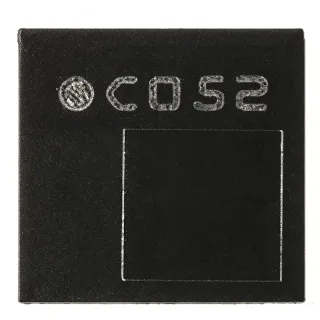
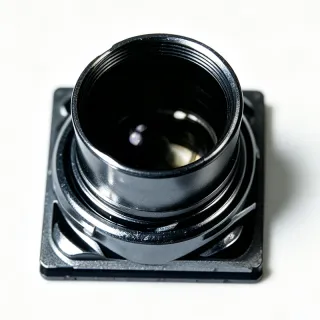
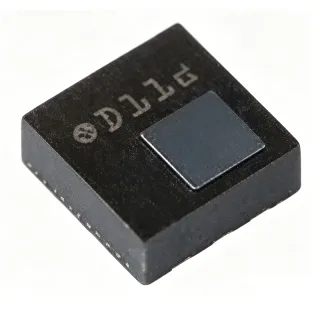
MPX2202A - 200kPa Absolute Pressure Sensor, 4-SIP | NXP
N.º de pieza: MPX2202A ⚠ Última compra| Cant. | Precio unitario | Total |
|---|---|---|
| 1 | $14.5 | $14,50 |
| 10 | $13.05 | $130,50 |
| 100 | $11.6 | $1.160,00 |
| 500 | $10.15 | $5.075,00 |
| 1.000 | $9.14 | $9.140,00 |
MPX2202A Descripción general
A pressure sensor is a transducer which converts an applied physical pressure into a measurable electrical signal. Within the broader sensor hierarchy, the MPX2202A belongs to the piezoresistive silicon pressure-sensor family, itself a subclass of MEMS sensors under the wider Sensors > Pressure Sensors category. Piezoresistive devices use diffused strain gauges on a silicon diaphragm whose resistance changes with applied pressure; the on-chip signal conditioning and temperature compensation deliver a calibrated, near-linear voltage output without the user needing to add external linearization circuitry.
Key features include 0.4 mV/kPa nominal sensitivity, ±0.25% linearity over the compensated range, on-chip temperature compensation from 0°C to +85°C, and a unibody package that integrates the port, diaphragm, and sensing die. The 4-SIP through-hole form factor is industry-standard for the legacy MPX-series, allowing drop-in compatibility with older MPX2010/MPX2200 designs using the same footprint.
The MPX2202A series (MPX2202, MPXV2202G, MPXM2202) leverages Motorola/Freescale/NXP piezoresistive technology. The silicon die is laser-trimmed for zero-pressure offset and full-scale span, with additional thin-film resistors integrated for active temperature compensation across the industrial 0°C to +85°C range.
Common applications include medical instrumentation (respiratory monitors, blood-pressure cuffs, infusion pumps), industrial process control (HVAC, pneumatic systems), altimeters and barometers, and consumer appliances. The absolute pressure reference (sealed vacuum on the back side of the die) means output is referenced to vacuum rather than ambient, making it ideal for altitude measurement and sealed system monitoring.
When designing with this part, ensure the supply is regulated to 10V nominal for rated performance and apply a low-noise instrumentation amplifier (e.g., INA128, AD620) directly at the SIP pins to avoid noise pickup over the millivolt-level signal path. Use a porous PTFE filter on the pressure port for harsh-media applications.
This page synthesizes distributor pricing from DigiKey, drop-in replacements within the MPX-series footprint, comparison vs the MPX2200A, and practical design notes not found in the standalone manufacturer datasheet.
Alternativas directas para MPX2202A — mismo encapsulado, compatible pin a pin. Se excluyen las piezas de otro encapsulado que requieren retrabajo de la PCB.
Variantes de esta serie
Modelos de la misma serie compatibles directamente con MPX2202A (mismo factor de forma y huella) — difiere en Output Type, Mounting Type, Operating Pressure Range, Linearity, Operating Temperature.
Herramienta de comparación rápida — seleccione piezas alternativas para compararlas lado a lado:
MPX2200A
✅ Sustitución directa✓ En stock
$9.13 / unidad
Ver hoja de datos →MPXV2202G
✅ Sustitución directa📋 Alternativa de referencia (no en el catálogo)
MPXM2202
✅ Sustitución directa📋 Alternativa de referencia (no en el catálogo)
MPX2100A
✅ Sustitución directa✓ En stock
$7.94 / unidad
Ver hoja de datos →MPX2010A
✅ Sustitución directa📋 Alternativa de referencia (no en el catálogo)
MPX2200D
✅ Sustitución directa✓ En stock
$5.4 / unidad
Ver hoja de datos →MPX2202A Valores máximos y características eléctricas
| Pressure Type | Absolute |
| Operating Pressure Range | 0 kPa to 200 kPa (0 PSI to 29.01 PSI) |
| Tensión de salida | 0 mV to 40 mV (typ) |
| Sensitivity | 0.4 mV/kPa nominal |
| Tensión de alimentación | 10 V typical (16 V max) |
| Linearity | ±0.25% (typ, full scale) |
| Temperature Compensation Range | 0 °C to +85 °C |
| Rango de temperatura de funcionamiento | -40 °C to +125 °C |
| Port Style | Cell with Body O-Ring |
| Encapsulado | 4-SIP Module (Unibody, through-hole) |
| Termination Style | Through-Hole |
| Tipo de salida | Analog Voltage (wheatstone bridge, mV-level) |
| Tipo de montaje | Through-Hole (TH) |
| Estado RoHS | Compliant (check latest manufacturer PCN) |
| Nivel MSL | Not Applicable (non-IC sensor) |
Configuración de pines de MPX2202A
| Pin 1 | Vout+ — Positive Wheatstone bridge output (0-40 mV differential vs Pin 3) |
| Pin 2 | GND — Ground / substrate reference for the bridge |
| Pin 3 | Vout- — Negative Wheatstone bridge output |
| Pin 4 | VS — Supply voltage (10 V typical, 16 V max) |
Aplicaciones típicas
MPX2202A es adecuado para 6 aplicacións: Medical Blood Pressure Monitor, Respiratory / Ventilator Pressure Sensing, Industrial Process Control / Pneumatic Systems, Altimeter / Barometer, Infusion Pump Pressure Monitoring, HVAC Pressure Monitoring.
Medical Blood Pressure Monitor
The MPX2202A is widely deployed in electronic sphygmomanometers and patient monitors where it transduces cuff pressure during inflation and deflation cycles. Its 0-200 kPa absolute range covers cuff pressures up to ~150 mmHg (20 kPa) with substantial headroom, while the 0.4 mV/kPa sensitivity provides adequate resolution for systolic/diastolic detection. Per the NXP MPX2202 datasheet, on-chip temperature compensation from 0 °C to +85 °C eliminates the need for software temperature correction across the clinical environment.
Recomendado
Respiratory / Ventilator Pressure Sensing
In CPAP, BiPAP, and respiratory-care equipment, the MPX2202A monitors airway and circuit pressure to ensure safe patient ventilation. The absolute pressure reference allows accurate measurement of pressure delivered to the patient regardless of atmospheric variation, important for altitude-compensated ventilator designs. With its 0-200 kPa range and millivolt-level ratiometric output, the MPX2202A integrates with isolation amplifiers (e.g., ISO124) to meet IEC 60601-1 patient-safety requirements.
Recomendado
Industrial Process Control / Pneumatic Systems
Factory pneumatic systems, hydraulic actuators, and process-control loops use the MPX2202A to monitor line pressure from 0-200 kPa with 0.25% linearity. The unibody 4-SIP package installs directly into pneumatic manifolds via the body O-ring port, providing a leak-tight seal at the pressure interface. The ratiometric 0-40 mV signal at 10 V supply feeds directly into 4-20 mA loop converters for industrial transmitter designs; its on-chip temperature compensation holds calibration across factory floor ambient swings.
Recomendado
Altimeter / Barometer
The MPX2202A's absolute pressure reference (sealed vacuum on the back side) makes it ideal for altitude measurement and barometric applications. At sea level (101.325 kPa), output is approximately 40 mV; at 3000 m (~70 kPa), output drops to ~28 mV, yielding ~4 mV per 1000 ft altitude - easily resolved by a 12-bit ADC. According to the NXP datasheet, the absolute reference is preferred for altimeters because ambient barometric pressure is the measurand, not a differential quantity.
Recomendado
Infusion Pump Pressure Monitoring
Volumetric and syringe infusion pumps use the MPX2202A to detect upstream occlusion by monitoring the pressure rise in the IV line. The 200 kPa range covers typical occlusion alarm thresholds (~50 kPa) with substantial margin for high-pressure injectors. Per the NXP datasheet, the device's biocompatible media compatibility (when used with appropriate tubing and O-ring interface) and stable ratiometric output enable reliable alarm triggering. Low noise output prevents false occlusion alarms during gravity-feed flow.
Recomendado
HVAC Pressure Monitoring
Building automation systems use the MPX2202A for duct static-pressure measurement, filter-status monitoring, and variable-air-volume (VAV) box feedback. The 0-200 kPa range covers typical duct static pressures of 0-1.5 kPa with adequate resolution for filter-loading detection. Its unibody package with O-ring port simplifies mounting on sheet-metal ductwork via a compression fitting. The on-chip temperature compensation handles the wide ambient swing in mechanical rooms (0 °C to +50 °C) without software correction.
Recomendado
Resumen de productos recomendados
Datos de referencia de ingeniería para MPX2202A — comparación, orientación de diseño e información de cumplimiento.
Guía de selección
Comparación con alternativas
| Parámetro | Este producto | MPX2200A | MPXV2202G | MPXM2202 | MPX2100A | MPX2200D |
|---|---|---|---|---|---|---|
| Brand | NXP Semiconductors | NXP Semiconductors | NXP Semiconductors | NXP Semiconductors | NXP Semiconductors | NXP Semiconductors |
| Package | 4-SIP Unibody Module (Through-Hole) | 4-SIP Unibody Module (same) | SOP-8 SMD with gauge port (different footprint) | Small SMD package (different footprint) | 4-SIP Unibody Module (same) | 4-SIP Unibody Module (same) |
| Pressure Type | Absolute | Absolute | Gauge | Absolute | Absolute | Differential |
| Operating Pressure Range | 0 to 200 kPa | 0 to 200 kPa | 0 to 200 kPa | 0 to 200 kPa | 0 to 100 kPa | 0 to 200 kPa (differential) |
| Output Voltage | 0 to 40 mV | 0 to 40 mV | 0 to 40 mV | 0 to 40 mV | 0 to 20 mV | 0 to 40 mV |
| Sensitivity | 0.4 mV/kPa | 0.4 mV/kPa | 0.4 mV/kPa | 0.4 mV/kPa | 0.2 mV/kPa | 0.4 mV/kPa |
| Supply Voltage | 10 V typ / 16 V max | 10 V typ / 16 V max | 10 V typ / 16 V max | 10 V typ / 16 V max | 10 V typ / 16 V max | 10 V typ / 16 V max |
| Port Style | Cell with Body O-Ring | Cell with Body O-Ring | Gauge horizontal port | Small SMD port | Cell with Body O-Ring | Dual port differential |
| Lifecycle Status | Last-Time-Buy | Last-Time-Buy | Active (verify) | Active (verify) | Last-Time-Buy | Last-Time-Buy |
Diferenciadores clave
- On-chip temperature compensation across 0 °C to +85 °C (frente a MPX2200A)
- Unibody 4-SIP package with axial port and body O-ring (frente a MPXV2202G (SOP-8 SMD gauge port))
- Absolute pressure reference sealed to vacuum (frente a MPX2200D (differential))
Notas de diseño
The MPX2202A produces a low-level differential mV signal (0-40 mV) that is highly susceptible to EMI and ground loops. Place the instrumentation amplifier (e.g., INA128, AD620) within 5 cm of the SIP pins, use twisted-pair wiring or guard traces, and keep the amplifier's high-impedance input traces away from switching converters. Add 100 nF ceramic bypass capacitors at VS (Pin 3) and GND (Pin 2) directly at the sensor pins. Per TI INA128 datasheet, input bias current return paths must be provided; do not leave either Vout- or Vout+ floating.
Do not exceed 16 V on Pin 3 (VS) - the on-chip temperature compensation and bridge resistors are designed for 10 V nominal operation and overvoltage degrades linearity and accelerates drift. Ensure the O-ring at the pressure port is properly seated; the unibody package relies on the O-ring for both pressure sealing and mechanical strain relief. For harsh chemicals or medical fluids, verify media compatibility - the standard gel-coat is rated for non-corrosive media only. Allow at least 60 seconds warm-up after power-on for the bridge to stabilize.
Estimated: For a through-hole 4-SIP socket or PCB pad layout, use 1.0 mm diameter plated through-holes on a 2.54 mm (0.1 inch) row pitch matching the SIP lead spacing. Provide a copper pour on the opposite layer connected to GND to act as a guard/ground plane for the mV-level signal traces. Estimated input power: 10 V * 6 mA typical = 60 mW dissipation; no heatsinking required. For IEC 60601-1 patient-leakage compliance, isolate the sensor amplifier section from mains with an isolation barrier (e.g., ISO124).
Supply the MPX2202A from a low-noise, regulated 10 V rail; a switching DC-DC converter without adequate filtering will inject noise into the mV-level output. According to typical application circuits in the NXP datasheet, an RC low-pass filter (10 ohm + 10 uF) at Pin 3 (VS) reduces supply noise by 40 dB. For battery-powered designs, an LT3042 LDO or equivalent providing <2 mVrms noise is sufficient. Total supply current at 10 V is approximately 6 mA typical.
Información de cumplimiento
RoHS and REACH compliant per NXP product page; not AEC-Q100 qualified (consumer/industrial pressure sensor, not automotive); halogen-free status not explicitly stated in available data - confirm with NXP. For medical end-use, IEC 60601-1 compliance is a system-level requirement, not a sensor-level qualification.