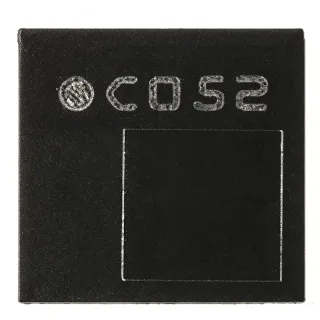
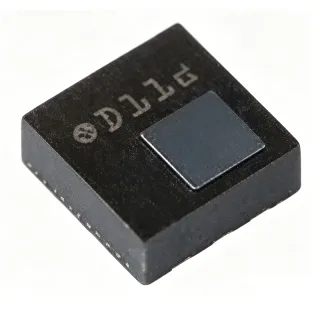
MPXV4006G7U - 6 kPa Vented Gauge Pressure Sensor | NXP
N.º de pieza: MPXV4006G7U ✓ Activo| Cant. | Precio unitario | Total |
|---|---|---|
| 1 | $14.5 | $14,50 |
| 10 | $13.2 | $132,00 |
| 100 | $11.65 | $1.165,00 |
| 500 | $10.4 | $5.200,00 |
| 1.000 | $9.1 | $9.100,00 |
MPXV4006G7U Descripción general
What is a vented gauge pressure sensor? A vented gauge (or gage) pressure sensor measures pressure relative to ambient atmospheric pressure through a vent tube or port. In the broader taxonomy, vented gauge sensors belong to gauge pressure sensors, which are a subclass of differential pressure sensors. Differential pressure sensors sit inside the wider category of MEMS pressure sensors, which themselves are part of the silicon transducer family used in modern sensor and IoT systems. Vented gauge sensors are commonly used to derive barometric-corrected absolute measurements because the reference side of the diaphragm is exposed to ambient air.
Key features of the MPXV4006G7U include ±5% accuracy across the compensated pressure range, on-chip temperature compensation from -10 °C to +60 °C, ±1.5% maximum pressure range tolerance, and an analog ratiometric output that simplifies ADC interfacing. The 0.2 V to 4.7 V swing uses nearly the full 0 V to 5 V input range of typical microcontrollers, maximizing dynamic resolution. The 8-pin DIP package offers through-hole mounting for hand-soldered prototypes and easy integration with breadboards.
Architecturally, the sensor uses a silicon micromachined diaphragm with an embedded piezoresistive bridge; strain generated by pressure deflection modulates bridge resistance, and the on-chip ASIC amplifies and calibrates this signal. Calibration coefficients are stored on-chip, removing the need for external trim networks and enabling part-to-part interchangeability within ±5%.
Typical applications include weather stations, HVAC duct pressure monitoring, medical respiratory equipment, altimeters, tire pressure gauges, and altitude-correcting barometric instruments. Designers select this part when a calibrated, temperature-compensated, low-pressure analog sensor is needed without the burden of external signal conditioning.
When designing with the MPXV4006G7U, place a 0.1 µF decoupling capacitor close to the supply pin and route the analog output through a low-pass filter if the application involves high-frequency electrical noise. The vent port must remain unobstructed to preserve gauge-reference accuracy.
This page synthesizes distributor pricing, drop-in pin-compatible alternatives, and practical design notes not found in the manufacturer datasheet alone, helping engineers select and qualify the part quickly for embedded and instrumentation designs.
Alternativas directas para MPXV4006G7U — mismo encapsulado, compatible pin a pin. Se excluyen las piezas de otro encapsulado que requieren retrabajo de la PCB.
Variantes de esta serie
Modelos de la misma serie compatibles directamente con MPXV4006G7U (mismo factor de forma y huella) — difiere en Output Type, Supply Voltage, Package, Port Style, Mounting Type.
Herramienta de comparación rápida — seleccione piezas alternativas para compararlas lado a lado:
MPXV4006GP
✅ Sustitución directa✓ En stock
$9.1 / unidad
Ver hoja de datos →MPXV4006GC6U
✅ Sustitución directa✓ En stock
$9.2 / unidad
Ver hoja de datos →MPXV4006GC7U
✅ Sustitución directa✓ En stock
$10.5 / unidad
Ver hoja de datos →MPXV4006G6U
✅ Sustitución directa✓ En stock
$5.1 / unidad
Ver hoja de datos →MPXV4006G6T1
✅ Sustitución directa📋 Alternativa de referencia (no en el catálogo)
MPXV4006G7U Valores máximos y características eléctricas
| Pressure Type | Vented Gauge |
| Pressure Range | 0 kPa to 6 kPa (0 to 0.87 PSI) |
| Accuracy | ±5% over compensated range |
| Tensión de alimentación | 4.75 V to 5.25 V |
| Tipo de salida | Analog Voltage (ratiometric) |
| Rango de tensión de salida | 0.2 V to 4.7 V |
| Temperatura de funcionamiento | -10 °C to +60 °C |
| Compensated Temperature Range | -10 °C to +60 °C |
| Encapsulado | 8-DIP Module (through-hole, no port variant) |
| Número de pines | 8 |
| Port Style | No port (vented gauge via internal vent) |
| Tipo de montaje | Through-Hole |
| Technology | Piezoresistive MEMS with on-chip ASIC |
| Signal Conditioning | On-chip, calibrated and temperature compensated |
Configuración de pines de MPXV4006G7U
| Pin 1 | VDD — Positive supply voltage (4.75 V to 5.25 V) |
| Pin 2 | GND — Ground |
| Pin 3 | VOUT — Analog ratiometric output (0.2 V to 4.7 V) |
| Pin 4 | NC — Not connected (no-port variant, per datasheet) |
| Pin 5 | NC — Not connected (no-port variant, per datasheet) |
| Pin 6 | NC — Not connected (no-port variant, per datasheet) |
| Pin 7 | NC — Not connected (no-port variant, per datasheet) |
| Pin 8 | NC — Not connected (no-port variant, per datasheet) |
Aplicaciones típicas
MPXV4006G7U es adecuado para 6 aplicacións: Weather Stations and Barometric Instruments, HVAC Duct Pressure Monitoring, Medical Respiratory and CPAP Equipment, Altitude and Altimeter Instruments, Portable Handheld Pressure Gauges, Industrial Process Control Low-Pressure Loops.
Weather Stations and Barometric Instruments
The MPXV4006G7U's vented gauge reference and 0-6 kPa range map directly to typical barometric and weather-station pressure variations. Its on-chip temperature compensation (0-60 °C) eliminates the thermistor networks that raw bridge sensors require, simplifying firmware and BOM. With a 0.2 V to 4.7 V ratiometric output driven from a 5 V LDO, the signal can be sampled by a microcontroller's 10-bit ADC at near-full-scale resolution, providing enough dynamic range for slow-changing weather data. Engineers should add an external RC low-pass filter at the output to attenuate supply noise before the ADC, and ensure the vent path stays unobstructed for accurate gauge readings.
Recomendado
HVAC Duct Pressure Monitoring
Differential pressure in HVAC ducts typically falls well below 6 kPa, making the MPXV4006G7U a good fit for inline flow and filter-pressure monitoring. The calibrated ±5% accuracy covers most commercial HVAC control loops without additional in-line calibration. The 8-DIP module mounts on a control board and accepts pressure through a tube routed into the duct. Because the sensor is ratiometric, using a 5 V system rail that powers both the sensor and ADC keeps gain error low across temperature. Designers should add a small capacitor at the supply pin and a 100 ms settling delay before sampling to filter mechanical vibration.
Recomendado
Medical Respiratory and CPAP Equipment
Respiratory circuits and CPAP machines use low-pressure sensors in the 0-6 kPa range for flow and pressure feedback. The MPXV4006G7U's on-chip signal conditioning and ±5% accuracy are adequate for non-critical monitoring, while its analog ratiometric output simplifies connection to medical front-end ADCs. Note that this part is not FDA-cleared or AEC-Q100 qualified; designers of FDA-cleared devices must validate the sensor under their own quality system. Adding a series resistor and bulk capacitor at the supply pin protects against EMI from compressor motors commonly found in respiratory equipment.
Recomendado
Altitude and Altimeter Instruments
Handheld altimeters, drone altitude hold sensors and aviation instruments often rely on a vented gauge reference, since the device automatically subtracts ambient barometric pressure to derive altitude. The MPXV4006G7U's 6 kPa span (approximately 0.5 mbar resolution at the low end) is suitable for low-altitude measurement and combined-GPS altitude smoothing. Designers should pair the sensor with a temperature-compensated altitude algorithm and ensure the vent tube is screened against water ingress but open to ambient air.
Recomendado
Portable Handheld Pressure Gauges
Battery-powered handheld gauges benefit from the MPXV4006G7U's compact 8-DIP module, low-voltage analog interface and calibrated output. The ratiometric 0.2 V to 4.7 V swing simplifies integration with low-power microcontrollers that include built-in 5 V-tolerant ADC channels. The vented gauge design means handheld instruments display gauge (relative) pressure, which is intuitive for HVAC technicians and field-service engineers. Adding a low-dropout regulator to stabilize the 5 V rail from a Li-ion battery improves reading stability as the cell discharges.
Recomendado
Industrial Process Control Low-Pressure Loops
Industrial control systems monitoring low-pressure lines (cleanroom differential, vacuum roughing lines, gas chromatograph carrier pressure) often use analog 0-5 V sensors for compatibility with legacy PLC analog input modules. The MPXV4006G7U's 0.2 V to 4.7 V output, 5 V supply and on-chip calibration integrate cleanly into such 0-5 V PLC analog channels. The 8-DIP through-hole package is rugged for industrial enclosures and the 0-60 °C compensated range covers most factory environments. Use shielded twisted-pair cabling from the sensor to the PLC to reject industrial EMI.
Recomendado
Resumen de productos recomendados
Datos de referencia de ingeniería para MPXV4006G7U — comparación, orientación de diseño e información de cumplimiento.
Guía de selección
Comparación con alternativas
| Parámetro | Este producto | MPXV4006GP | MPXV4006GC6U | MPXV4006GC7U | MPXV4006G6U |
|---|---|---|---|---|---|
| Package | 8-DIP Module (no port) | 8-DIP Module (with port) | 8-DIP Module (dual port) | 8-DIP Module (alternate port) | 8-DIP Module (axial port) |
| Brand | NXP Semiconductors | NXP Semiconductors | NXP Semiconductors | NXP Semiconductors | NXP Semiconductors |
| Pressure Type | Vented Gauge | Vented Gauge | Vented Gauge (dual port) | Vented Gauge | Vented Gauge |
| Pressure Range | 0 to 6 kPa | 0 to 6 kPa | 0 to 6 kPa | 0 to 6 kPa | 0 to 6 kPa |
| Output Voltage | 0.2 V to 4.7 V | 0.2 V to 4.7 V | 0.2 V to 4.7 V | 0.2 V to 4.7 V | 0.2 V to 4.7 V |
| Supply Voltage | 4.75 V to 5.25 V | 4.75 V to 5.25 V | 4.75 V to 5.25 V | 4.75 V to 5.25 V | 4.75 V to 5.25 V |
| Accuracy | ±5% | ±5% | ±5% | ±5% | ±5% |
| Operating Temperature | -10 °C to +60 °C | -10 °C to +60 °C | -10 °C to +60 °C | -10 °C to +60 °C | -10 °C to +60 °C |
Diferenciadores clave
- No-port variant simplifies hose-free system integration (frente a MPXV4006GP)
- On-chip calibration eliminates external trim networks (frente a MPX10/MPX12 family)
- 5 V ratiometric analog output integrates directly with legacy PLCs (frente a BMP280 (digital I2C))
Notas de diseño
Estimated: at 5 V supply the MPXV4006G7U typically draws under 10 mA. Use a low-dropout regulator (e.g., NXP's MC78M05 or similar) and place a 0.1 µF ceramic decoupling capacitor within 5 mm of the VDD pin. A small ferrite bead in series with VDD can suppress conducted EMI from upstream switching converters in mixed-signal designs.
Route the analog VOUT trace away from switching converter inductors and high-current digital traces. Add a 10 kΩ series resistor and a 100 nF capacitor to GND at the ADC input to form a 1.6 kHz low-pass filter that rejects high-frequency switching noise. Use a guard ring connected to GND around the sensor output trace on the PCB to reduce leakage and crosstalk.
Do not obstruct the internal vent path; for the no-port 7U variant the vent is internal and the package must not be hermetically sealed in conformal coating. Avoid applying pressure beyond 6 kPa without external over-range protection. Do not assume the output is calibrated for absolute pressure - this is a vented gauge sensor referenced to ambient.
Estimated: the on-chip temperature compensation covers -10 °C to +60 °C; outside this range, accuracy may degrade by an additional few percent. For outdoor weather stations, mount the sensor inside a radiation shield to prevent direct sunlight heating the package, which can shift readings beyond the compensated range.
Información de cumplimiento
RoHS, REACH, lead-free and halogen-free status not stated explicitly in the verified web data; set to unknown per the data authenticity rules. AEC-Q100 not qualified per the NXP MPXV4006G datasheet description.