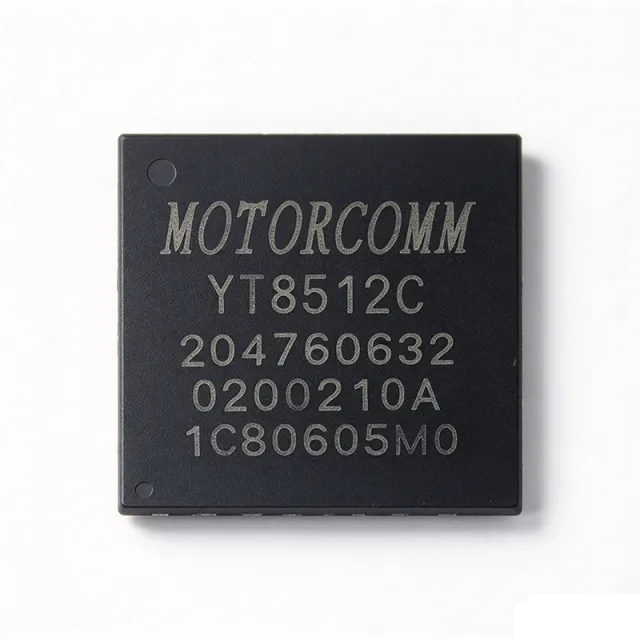
Z84C4310AEG
Z84C4310AEG - Z80 SIO/3 10MHz CMOS Serial I/O | Zilog
The Zilog Z84C4310AEG is a CMOS Z80 SIO/3 serial input/output controller operating at 10 MHz, housed in a 44-pin LQFP package. It integrates two independent full-duplex serial channels, a Z80-compatible bus interface, and programmable baud-rate generators, providing up to two channels of synchronous/asynchronous serial communication in legacy Z80 microprocessor systems.
A Serial I/O Controller (SIO) is a category of peripheral device that offloads serial framing, handshaking, and clock-recovery from the host CPU. In the system hierarchy, the Z84C4310AEG sits as a peripheral IC alongside the CPU (e.g., Z84C00 Z80), the CTC counter-timer, and the PIO parallel I/O. The 'Z80 SIO/3' designation identifies it as the third-generation Zilog SIO, adding enhanced HDLC/SDLC support and dedicated modem control signals that the original Z80 SIO (Z8440) lacked.
Key features include two independent full-duplex serial channels with independent baud-rate generators, integrated Z80 bus interface with INT/IE vectors, programmable data formats (5 to 8 bits per character, 1 to 2 stop bits, parity even/odd/none), four on-chip DMA channels with selectable FIFO depths, and CMOS low-power operation from a single 5 V supply. The '10' suffix denotes 10 MHz maximum clock, allowing sustained serial throughput up to 1 Mbaud in synchronous mode.
Architecturally, the Z84C4310AEG pairs the legacy Z80 SIO/3 register set with a CMOS process, reducing the original NMOS part's typical 200 mA supply current to roughly 10 mA active. Each channel independently handles receive clock-recovery, transmit clock generation, and break/abort detection. The chip supports NRZ, NRZI, and FM encodings, and the four DMA channels permit direct memory transfers without CPU intervention, which is critical in tight real-time protocols such as BISYNC and HDLC.
Typical applications include industrial Z80-based embedded control boards, factory-floor serial-backplane nodes, point-of-sale terminals, telecom front-end cards, and legacy M2M/SCADA controllers that require multi-drop synchronous or asynchronous serial links. Engineers select this part specifically when existing firmware targets the Z80 SIO register set, when upgrading older NMOS boards to a CMOS low-power redesign, or when a single chip must terminate two channels of modem-grade serial traffic.
Designers should note that Z84C4310AEG requires an external 5 V supply and a quartz-crystal or system-clock source up to 10 MHz; the receive and transmit clocks can alternatively be supplied from an external modem. Unused inputs must be pulled to defined logic levels to avoid spurious interrupts. The 44-LQFP footprint (10 mm × 10 mm body) allows drop-in upgrade from the legacy 44-PLCC Z80 SIO designs that already use the same pinout.
This page synthesizes distributor pricing, drop-in alternatives, and practical design notes not found in the manufacturer datasheet alone, including cross-family same-brand variants and architectural context for engineers maintaining or upgrading legacy Z80 platforms.
RFQ
צור קשר