Produk (39.000+)

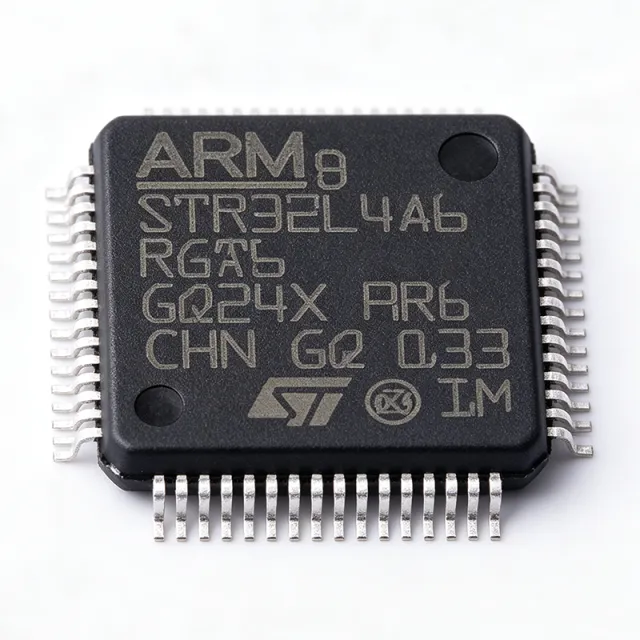
STM32L496RGT6 - 80MHz Cortex-M4 MCU, 1MB Flash | STMicroelectronics
STM32L496RGT6

STM32L496RGT6 - 80MHz Cortex-M4 MCU, 1MB Flash | STMicroelectronics

The STMicroelectronics STM32L496RGT6 is an ultra-low-power 32-bit ARM Cortex-M4 microcontroller with FPU, operating at up to 80 MHz (100 DMIPS) and integrating 1 MB of Flash memory and 320 KB of SRAM in a 64-pin LQFP (10x10 mm) package. The device targets battery-powered and always-on applications where microamp sleep currents and a 1.71 V to 3.6 V supply range are decisive design constraints. An ultra-low-power microcontroller (MCU) is a single-chip embedded processor that combines a CPU core, non-volatile Flash memory, SRAM, and a rich set of analog and digital peripherals, optimized for minimal energy consumption. Within the power-management hierarchy of embedded systems, MCUs such as the STM32L4 series sit at the application-control layer, executing user firmware while managing sensors, displays, and connectivity with microamp-scale sleep currents. They are commonly contrasted with general-purpose Cortex-M parts and with low-power variants from competing vendors such as NXP, Microchip, and Renesas. Key features include ST's FlexPowerControl with 320 nA in VBAT mode and 25 nA Shutdown mode (5 wakeup pins), USB OTG Full-Speed, an integrated LCD controller (segment LCD up to 8x40), DFSDM (digital filter for sigma-delta modulators), hardware AES-256 and a HASH accelerator, and support for an external SMPS to reduce core dynamic power. Analog peripherals include a 12-bit ADC, 12-bit DAC, comparators, and operational amplifiers. Technically, the Cortex-M4 with single-precision FPU and DSP instructions executes DSP-heavy workloads such as audio filtering and sensor fusion, while the proprietary ART Accelerator (Adaptive Real-Time) keeps the 80 MHz core fed from Flash with zero-wait-state access for most code paths. The peripheral set includes multiple USART/UART, SPI, I2C, CAN, timers, 16-channel 12-bit ADC, DAC, comparators, op-amps, and low-power timers, plus the integrated DFSDM for high-resolution sigma-delta input chains. Typical applications include battery-powered metering, IoT sensor nodes, portable medical and wearable devices, industrial sensor transmitters, and consumer products with segment LCD displays. The combination of USB OTG, LCD, and DFSDM gives it particular traction in mid-tier IoT endpoints and handheld instrumentation. For design, leverage the DFSDM with external sigma-delta modulators for 16+ bit effective sensing, and size the power supply for the 100 mA-class peak core plus USB load currents. Use ST's STM32CubeMX and STM32CubeIDE plus the HAL/LL drivers to configure the ultra-low-power modes, and reserve PCB area for an optional external SMPS inductor. The 64-LQFP footprint is shared across the STM32L4 family, easing pin-compatible upgrades to higher-density variants such as the STM32L496ZGT6 (144-LQFP). This page synthesizes distributor pricing, drop-in family alternatives, and practical design notes not found in the manufacturer datasheet.

Permintaan RFG Kontak
STM32L496VGT3 - 80MHz Cortex-M4 MCU | STMicroelectronics
STM32L496VGT3

STM32L496VGT3 - 80MHz Cortex-M4 MCU | STMicroelectronics

The STMicroelectronics STM32L496VGT3 is an ultra-low-power 32-bit Arm Cortex-M4 microcontroller with floating-point unit, operating at up to 80 MHz and delivering 100 DMIPS. It integrates 1 MB of flash memory, 320 KB of SRAM, USB OTG FS, audio interfaces, and analog peripherals in a 100-LQFP 14 x 14 mm package. Its operating supply range is 1.71 V to 3.6 V. An ultra-low-power microcontroller is a semiconductor controller designed to balance processing capability with minimum energy consumption. The STM32L496 belongs to the STM32L4 family and combines the Arm Cortex-M4 processor with embedded memory, communication interfaces, analog conversion functions, and low-power operating modes. This hierarchy places it within embedded processing, microcontroller, and power-management-aware system design. Principal device features include 1 MB of flash, 320 KB of SRAM, an Arm Cortex-M4 FPU core, and operation up to 80 MHz. The device also provides USB OTG 2.0 full-speed connectivity, two 12-bit DAC channels, two operational amplifiers with programmable gain, and two ultra-low-power comparators. Low-power characteristics include 320 nA consumption in VBAT mode and 25 nA consumption in shutdown mode with five wakeup pins. The peripheral set includes four I2C interfaces supporting FM+ operation at 1 Mbit/s, five USARTs, one LPUART, three SPIs, a Quad-SPI capability, two serial audio interfaces, and other communication resources. The 100-pin LQFP package provides enough external connectivity for industrial controllers, audio equipment, data-acquisition systems, and USB-enabled embedded products while supporting a broad operating-temperature option. Typical applications include USB-connected industrial data loggers, audio control systems, portable instruments, sensor-hub controllers, and low-power monitoring equipment. Engineers can use the Cortex-M4 FPU for DSP-oriented control loops, the DAC and operational amplifiers for analog signal conditioning, and the USB interface for configuration or data transfer. Power design must account for the 1.71 V to 3.6 V operating range, peripheral load current, and the difference between active and low-power consumption. Decoupling, controlled startup, unused-pin treatment, and thermal management should follow the pin definitions and application guidance in the manufacturer datasheet. This page combines the STM32L496VGT3 electrical characteristics, pin-oriented engineering guidance, same-family drop-in alternatives, and application comparisons to help designers evaluate integration, firmware constraints, and board-level implementation before releasing a PCB.

Permintaan RFG Kontak
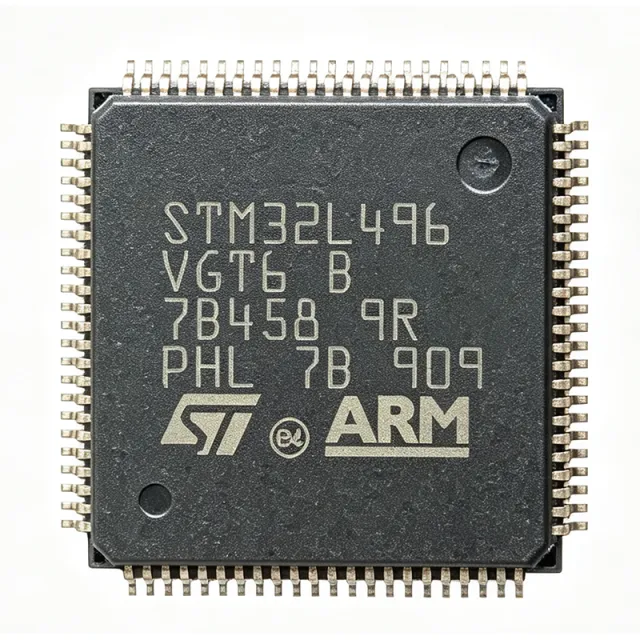
STM32L496VGT6 - Ultra-Low-Power ARM Cortex-M4F MCU | STMicroelectronics
STM32L496VGT6

STM32L496VGT6 - Ultra-Low-Power ARM Cortex-M4F MCU | STMicroelectronics

The STM32L496VGT6 is an ultra-low-power 32-bit microcontroller from STMicroelectronics, based on the ARM Cortex-M4F core with FPU, running at up to 80 MHz. It integrates 1 MB of flash memory and 320 KB of SRAM, making it suitable for complex embedded applications requiring significant code and data storage. The device operates from a 1.71V to 3.6V supply and features a rich set of peripherals including multiple USARTs, SPIs, I2Cs, USB OTG FS, CAN, SDMMC, and advanced analog capabilities with two 12-bit ADCs, two DACs, and an internal voltage reference. What is an ultra-low-power microcontroller? An ultra-low-power microcontroller is a type of embedded processor designed to minimize energy consumption while maintaining computational performance. It belongs to the broader category of microcontrollers, which are integrated circuits containing a processor core, memory, and programmable peripherals on a single chip. In the system hierarchy, an ultra-low-power MCU sits above basic 8-bit controllers but below application processors, offering a balance of efficiency and capability for battery-powered and energy-harvesting devices. The STM32L496VGT6 exemplifies this class with multiple low-power modes, including Sleep, Low-power Run, and Shutdown, enabling extended battery life in portable and IoT applications. Key features of the STM32L496VGT6 include its 80 MHz ARM Cortex-M4F core with DSP instructions and single-precision FPU, 1 MB flash, 320 KB SRAM, and a comprehensive set of communication interfaces. It also features a Chrom-ART Accelerator for enhanced graphic performance, a true random number generator, and a cryptographic acceleration unit supporting AES, DES, and 3DES. The device is manufactured using ST's 40 nm process technology, contributing to its low power consumption and high integration density. Technically, the STM32L496VGT6 offers up to 100 DMIPS performance, with a CoreMark score of 273. It includes a flexible memory controller supporting external memory, and a large number of GPIOs (up to 114) in the LQFP100 package. The analog subsystem includes two 12-bit ADCs with hardware oversampling, two 12-bit DACs, and an internal voltage reference buffer. The device also supports a wide range of timers, including advanced-control timers for motor control and a low-power timer for wake-up from low-power modes. Typical applications include industrial sensors, smart meters, medical devices, wearable electronics, and IoT nodes. Its ultra-low-power modes and rich analog peripherals make it ideal for battery-powered data acquisition systems, while its connectivity options enable seamless integration into industrial networks and cloud platforms. When designing with this device, pay attention to the power supply decoupling and the selection of the appropriate low-power mode for your application. The STM32L496VGT6 supports a flexible clock tree with multiple PLLs, allowing optimization of performance versus power consumption. Ensure proper configuration of the voltage regulator range to balance performance and energy efficiency.

USD $9,55 Kontak
STM32L496VGY6TR - 80MHz Cortex-M4 MCU 1MB Flash WLCSP-100
STM32L496VGY6TR

STM32L496VGY6TR - 80MHz Cortex-M4 MCU 1MB Flash WLCSP-100

The STMicroelectronics STM32L496VGY6TR is an ultra-low-power 32-bit ARM Cortex-M4 microcontroller with FPU, operating at up to 80 MHz and delivering 100 DMIPS, housed in a 100-ball WLCSP (4.62 x 4.14 mm) package. It integrates 1 MB of flash memory and 320 KB of SRAM, plus USB OTG FS, an LCD interface, and a digital filter for sigma-delta modulators (DFSDM). The device is part of the STM32L4 family and features an AES-256 hardware crypto accelerator and a hardware hash accelerator. An ARM Cortex-M4 microcontroller is a 32-bit RISC processor core designed for embedded applications, featuring low power consumption, deterministic interrupt response, and optional single-precision floating-point unit (FPU). The M4 sits within the broader Cortex-M family hierarchy: Cortex-M0/M3/M4 -> ARMv7-M architecture -> 32-bit MCU -> embedded processor -> semiconductor. The STM32L4 series specifically targets ultra-low-power applications, balancing processing performance with energy efficiency through multiple low-power modes including Shutdown at 25 nA. Key differentiating features include 1 MB flash, 320 KB SRAM, integrated SMPS step-down converter for dynamic voltage scaling, USB OTG FS, MIPI-DSI or parallel LCD interface support, two 12-bit ADCs at 5 Msps, two 12-bit DACs, DFSDM for audio/sensor applications, AES-256 and Hash accelerators, and the standard STM32 ecosystem (HAL/LL libraries, STM32CubeMX, IDE support). The WLCSP-100 package enables compact wearable and IoT designs where PCB area is critical. The Cortex-M4F core includes a single-precision FPU that accelerates DSP operations and floating-point math. The internal SMPS regulator improves efficiency over the traditional LDO regulator approach during active mode, enabling higher performance at lower power. The device supports multiple low-power modes (Stop, Standby, Shutdown) with the Shutdown mode consuming only 25 nA for battery-backed IoT endpoints. Typical applications include wearable fitness trackers, portable medical sensors, industrial IoT sensor nodes, USB-C powered accessories, LCD-based HMI panels, smart home sensor hubs, and audio interfaces leveraging the digital microphone support. The combination of USB OTG, LCD, and ultra-low power makes it particularly suited for battery-powered consumer and medical devices. When designing with this device, verify that the WLCSP-100 footprint matches your PCB capability (WLCSP requires advanced PCB process for routing and inspection). For prototypes or hand-assembly, consider the LQFP-64 or UFBGA-169 variants of the STM32L496 family instead. Provide a stable VDD and consider the SMPS inductor selection per ST application note AN4621. This page synthesizes distributor pricing, drop-in alternatives, and practical design notes not found in the manufacturer datasheet, providing actionable intelligence beyond standard spec repetition.

Permintaan RFG Kontak
STM32L496ZGT3 - 80MHz Cortex-M4 1MB MCU | STMicroelectronics
STM32L496ZGT3

STM32L496ZGT3 - 80MHz Cortex-M4 1MB MCU | STMicroelectronics

STMicroelectronics STM32L496ZGT3 is an ultra-low-power 32-bit Arm Cortex-M4 microcontroller with FPU operating at up to 80 MHz, offering up to 1 MB Flash, 320 KB SRAM, USB OTG FS, and audio support in a 144-LQFP 20 x 20 mm package. It is designed for embedded systems that need substantial memory, low-power operation, and broad peripheral connectivity. A microcontroller is a programmable semiconductor device that integrates a processor core, memory, and peripherals into one compact component. The STM32L4 series belongs to the Arm Cortex-M4 microcontroller family, combining real-time control capability with energy-saving operating modes. This hierarchy makes the STM32L496ZGT3 suitable for industrial controls, connected equipment, human-interface systems, and compact embedded platforms. Key features include an operating frequency of up to 80 MHz, a 100 DMIPS processing capability, and a floating-point unit. The device provides up to 1 MB of Flash configured as 1M x 8 and 320 KB of SRAM. Its USB OTG FS interface supports USB-connected data exchange, while integrated audio and digital signal processing resources suit mixed-signal and communication-oriented products. The STM32L496xx family uses STMicroelectronics FlexPowerControl for low-power operation. Supply operation is specified from 1.71 V to 3.6 V. Shutdown current is 25 nA with five wakeup pins, and VBAT mode consumes 320 nA while supporting the real-time clock and 32 x 32-bit backup registers. Available temperature options span -40 °C to 85 °C, 105 °C, or 125 °C depending on the selected orderable variant. Typical uses include industrial sensor controllers, USB-connected data loggers, audio-capable embedded equipment, low-power edge devices, and compact human-interface panels. The 144-pin LQFP package provides extensive I/O access compared with smaller microcontroller packages, making it useful where multiple communications, display, control, or analog interfaces are required. When laying out the board, follow the manufacturer pin and package guidance for the 144-LQFP footprint, place decoupling capacitors close to the appropriate supply pins, and confirm the selected external crystal, USB routing, and low-power peripherals against the datasheet. The large pin count also requires careful fan-out and assembly planning to avoid routing congestion. This page combines manufacturer specifications, exact-orderable-part identification, sourcing guidance, drop-in comparison points, and practical design considerations. It also highlights the distinction between true pin-compatible alternatives and parts that are only functionally similar, helping engineers make a board-level replacement decision without treating a different package or peripheral arrangement as a drop-in solution.

Permintaan RFG Kontak
STM32L496ZGT6 - 80MHz Cortex-M4 1MB MCU | STMicroelectronics
STM32L496ZGT6

STM32L496ZGT6 - 80MHz Cortex-M4 1MB MCU | STMicroelectronics

STMicroelectronics STM32L496ZGT6 is an ultra-low-power Arm Cortex-M4 32-bit microcontroller with FPU, operating at up to 80 MHz and delivering up to 100 DMIPS, with 1 MB of embedded Flash, 320 KB of SRAM, USB OTG FS, audio, HASH, and external SMPS support in a 144-pin LQFP package measuring 20 x 20 mm. An ultra-low-power microcontroller is a semiconductor designed to balance substantial processing capability with minimized energy consumption. The STM32L4 series belongs to the hierarchy of Arm Cortex-M4 MCU, 32-bit RISC microcontroller, embedded controller, and low-power system-on-chip. STM32L496ZGT6 combines that processing capability with sleep, low-power, shutdown, and RTC-oriented operating modes, making it suitable for battery-powered and energy-conscious embedded systems. Principal features include a 1.71 V to 3.6 V operating supply, a 32-bit Cortex-M4 processor with floating-point unit, 1 MB Flash, 320 KB SRAM, and USB OTG full-speed connectivity. The analog subsystem provides up to three fast 12-bit ADCs sampling at 5 Msps, two comparators, two operational amplifiers, two DAC channels, and an internal voltage-reference buffer. These resources reduce the need for external signal-conditioning and conversion components. The device also integrates two general-purpose 32-bit timers, two 16-bit PWM timers dedicated to motor control, seven general-purpose 16-bit timers, and two low-power timers. USB OTG FS, audio support, HASH, DFSD, and external SMPS capability broaden its use across data acquisition, secure control, industrial communication, and low-power consumer equipment. Its low-power architecture includes FlexPowerControl, 320 nA VBAT operation for the RTC and backup registers, and a 25 nA shutdown mode with five wakeup pins. Typical applications include industrial sensor nodes, USB-connected instrumentation, battery-powered data loggers, medical monitoring equipment, motor-control systems, and portable measurement products. The 144-pin LQFP provides ample external peripheral connectivity while supporting designs that need more I/O than smaller MCU packages. Designers should review the complete pin-description table, power-supply requirements, decoupling recommendations, clock configuration, and low-power constraints in the manufacturer datasheet before finalizing the PCB. In particular, preserve the external SMPS interface layout and assign wakeup pins carefully so shutdown-mode entry does not interfere with required system behavior. This page organizes the STM32L496ZGT6 core specifications, package information, design guidance, qualification factors, and same-footprint alternatives. It also distinguishes orderable temperature-grade variants from the selected STM32L496ZGT6 configuration so engineers can assess replacement compatibility without changing the LQFP-144 board footprint.

Permintaan RFG Kontak
STM32L4A6AGI6 - 80MHz Cortex-M4 MCU | STMicroelectronics
STM32L4A6AGI6

STM32L4A6AGI6 - 80MHz Cortex-M4 MCU | STMicroelectronics

The STMicroelectronics STM32L4A6AGI6 is an ultra-low-power 32-bit microcontroller built around the Arm Cortex-M4 processor, operating up to 80 MHz with 1 MB Flash and 320 KB SRAM in a 169-UFBGA 7 x 7 mm package. It combines 100 DMIPS, a floating-point unit, USB OTG FS, LCD support, AES hardware acceleration, audio peripherals, DFSDM, and an external switched-capacitor power-supply controller. A microcontroller is a programmable integrated circuit that combines a CPU core, memory, communication interfaces, timers, analog conversion blocks, and GPIO in one device. In the system hierarchy, the STM32L4A6AGI6 is a Cortex-M4 MCU, an embedded microcontroller, a semiconductor, and a member of the STM32L4 family. This integration lets a compact product perform control, communications, data acquisition, security, and low-power management without separate discrete controllers. Verified headline features include an Arm Cortex-M4 core with FPU at up to 80 MHz, 100 DMIPS, 1 MB of Flash organized as 1M x 8, and 320 KB of SRAM. The part also provides USB OTG FS, audio support, AES plus HASH, digital filtering for sigma-delta modulators, an LCD interface, and a high-performance external SMPS controller. These resources support firmware consolidation while keeping the board area below that of several discrete processors. The STM32L4A6xG family emphasizes ultra-low-power operation and performance efficiency. Its Cortex-M4 processing core, fast GPIO, communication peripherals, analog functions, and security hardware make it suitable for connected sensing, industrial equipment, human-interface systems, and compact control platforms. The exact package pin assignments and electrical limits should be checked against the official 169-ball data before layout release. Typical applications include USB-connected data acquisition, industrial sensor hubs, low-power gateways, audio-control systems, security-aware embedded controllers, and LCD-based human-interface devices. The 80 MHz Cortex-M4 core provides useful processing headroom, while 1 MB Flash and 320 KB SRAM reduce pressure on external memory for moderate firmware and data workloads. A key design consideration is BGA assembly: the 169-UFBGA package is not a hobbyist-friendly footprint and benefits from careful escape routing, controlled impedance, adequate thermal vias, and manufacturing capability. Firmware and peripheral assignments must also be validated because unused balls, power balls, and special-function balls are package-specific. This page consolidates verified manufacturer and distributor information, exact source links, practical design guidance, pricing data, and replacement analysis that are not presented as a single connected engineering resource on ordinary distributor listings.

Permintaan RFG Kontak
STM32L4A6QGI6 - 80MHz Cortex-M4 1MB MCU | STMicroelectronics
STM32L4A6QGI6

STM32L4A6QGI6 - 80MHz Cortex-M4 1MB MCU | STMicroelectronics

The STMicroelectronics STM32L4A6QGI6 is an ultra-low-power 32-bit Arm Cortex-M4 microcontroller rated up to 80 MHz, with 1 MB of Flash memory and a 132-ball UFBGA package measuring 7 x 7 mm. The device also includes USB OTG, LCD, and AES capabilities, as identified in the supplied manufacturer and distributor listings. An ultra-low-power microcontroller is an embedded processing component designed to balance compute performance, energy consumption, and peripheral integration. The STM32L4A6 belongs to the STM32L4 family of 32-bit RISC microcontrollers. Its Arm Cortex-M4 core places it above basic 8-bit and 16-bit embedded controllers in processing capability while retaining a compact, low-power architecture suitable for battery-powered and industrial systems. The principal verified specifications are an 80 MHz operating frequency, 1 MB of Flash, a 32-bit Arm Cortex-M4 processor, and a 132-UFBGA package. Distributor listings also identify USB OTG, LCD support, and AES functionality. One distributor source additionally lists 114 I/O. These integrated features can reduce the number of external devices required in designs that need USB connectivity, display control, or hardware-assisted secure data processing. Technically, the STM32L4A6QGI6 is intended for low-power embedded control. Its Cortex-M4 architecture supports efficient interrupt-driven firmware, while the integrated communications and security-oriented features broaden its applicability beyond basic sensor reading or actuator control. The exact RAM size, voltage range, ADC characteristics, GPIO current ratings, and detailed power-consumption figures are not included in the supplied verified excerpts and should be confirmed in the manufacturer documentation before design release. Typical uses include compact USB-connected control equipment, low-power industrial sensor nodes, display-oriented embedded controls, and security-conscious portable products. The 7 x 7 mm UFBGA package supports dense PCB layouts, although exposed-pad layout, escape routing, assembly profile, and pin-level connectivity require careful review before layout signoff. The primary design consideration is that a 132-ball package demands disciplined PCB layout and manufacturing controls. Place decoupling capacitors close to supply pins, preserve the package thermal and electrical land pattern specified by STMicroelectronics, and validate USB impedance, power sequencing, and signal routing against the relevant device documentation. This page consolidates the verified manufacturer and distributor facts, distinguishes documented capabilities from unavailable parameters, and provides package-aware replacement guidance and practical integration notes rather than presenting unsupported specifications as confirmed facts.

Permintaan RFG Kontak
STM32L4A6RGT6 - Cortex-M4 80MHz 1MB Flash MCU | STMicroelectronics
STM32L4A6RGT6

STM32L4A6RGT6 - Cortex-M4 80MHz 1MB Flash MCU | STMicroelectronics

The STMicroelectronics STM32L4A6RGT6 is an ultra-low-power 32-bit ARM Cortex-M4 microcontroller with FPU, operating at up to 80 MHz and delivering 100 DMIPS (1.25 DMIPS/MHz), with 1 Mbyte of flash memory and 320 Kbytes of SRAM, housed in a 64-pin LQFP (10x10 mm) package. An ultra-low-power microcontroller (MCU) is a system-on-chip that integrates a processor core, memory, and analog/digital peripherals on a single die, designed to minimize energy consumption in battery-powered and energy-harvesting systems. Within the power-management IC hierarchy, the STM32L4A6RGT6 belongs to the STM32L4 series of the STM32 family, which spans from low-power to high-performance ARM Cortex-M devices, and is positioned among the most energy-efficient Cortex-M MCUs on the market. Key differentiating features include a rich analog subsystem - two 12-bit DACs, two operational amplifiers, two ultra-low-power comparators, and a 16-bit ADC with hardware oversampling - plus a shutdown mode drawing as little as 28 nA. Digital connectivity covers USB OTG full-speed, two CAN 2.0B controllers, SDMMC, LCD controller, and multiple USART, SPI, and I2C ports, all supported across a 1.71V to 3.6V supply range. The device is manufactured on a 40 nm process and includes an AES cryptographic accelerator, a true random number generator (TRNG), a flexible memory protection unit (MPU), the Chrom-ART Accelerator (DMA2D) for graphics, and a 16-bit advanced motor-control timer. These blocks enable secure, GUI-enabled, and motor-driven products without external co-processors. Typical applications include industrial sensors, smart meters, medical and wearable devices, and IoT endpoints, where the combination of 28 nA shutdown, 80 MHz processing, and 1 MB flash removes the need for external memory or power-management companion ICs. Designers should carefully plan power-supply decoupling and PCB layout to realize the specified low-power figures, and should leverage the internal LDO or SMPS step-down options plus the graded low-power modes to maximize battery life. This page adds information gain beyond the manufacturer datasheet: drop-in alternatives with package and parameter matching, distributor pricing as of 2026-09-06, practical design notes, and a selection guide comparing the STM32L4A6RGT6 against same-footprint parts.

USD $9,56 Kontak
STM32L4A6VGT6 - 80MHz Cortex-M4 MCU | STMicroelectronics
STM32L4A6VGT6

STM32L4A6VGT6 - 80MHz Cortex-M4 MCU | STMicroelectronics

STMicroelectronics STM32L4A6VGT6 is an ultra-low-power 32-bit microcontroller based on the Arm Cortex-M4 RISC core, operating up to 80 MHz with 1 MB of embedded Flash memory in a 100-pin LQFP package. The device combines a 320 KB SRAM configuration, a floating-point unit, USB OTG, LCD support, and AES hardware encryption for compact embedded-control designs. A microcontroller is a programmable semiconductor that integrates a processor core, nonvolatile program memory, volatile data memory, peripherals, and communication interfaces on one package. The STM32L4 belongs to the MCU hierarchy within embedded processors and semiconductor control devices. Its Cortex-M4 architecture executes firmware efficiently while programmable timers, communication peripherals, and analog interfaces support real-time sensing, communications, and actuator control. Principal features include an 80 MHz operating frequency, 1 MB of Flash program storage, 320 KB of SRAM, 32-bit processing, and a hardware floating-point unit. USB OTG supports connected USB device and host-oriented designs, while the LCD interface targets embedded human-machine interfaces. AES hardware acceleration improves encrypted-data throughput without assigning cryptography to the central processing unit. The STM32L4A6VGT6 is especially useful when moderate processing performance and energy-conscious operation are required without moving to a larger package. Its 100-pin LQFP (14x14 mm) format exposes substantially more I/O than smaller MCU packages, supporting multiple external peripherals and mixed-signal interfaces. The Arm Cortex-M4 core and integrated floating-point hardware also provide a practical balance between computational capability, embedded software ecosystem, and board complexity. Typical applications include industrial sensor controllers, USB-connected data acquisition units, secure access-control equipment, low-power environmental monitors, compact human-machine interfaces, and connected battery-powered instruments. In these systems, the microcontroller can execute control logic, process sensor data, operate timers, and manage communications while retaining a broad set of peripheral interfaces. PCB design should follow the manufacturer pinout and reference-manual guidance for decoupling, clock stability, reset circuitry, and exposed interface routing. Confirm every peripheral assignment, power-domain requirement, and alternate-function selection in the STM32L4A6xG documentation before finalizing the schematic and PCB footprint. This product page combines manufacturer device positioning, distributor identification, package and memory details, drop-in same-family options, application guidance, and design-focused engineering notes to support faster component evaluation and sourcing decisions.

Permintaan RFG Kontak
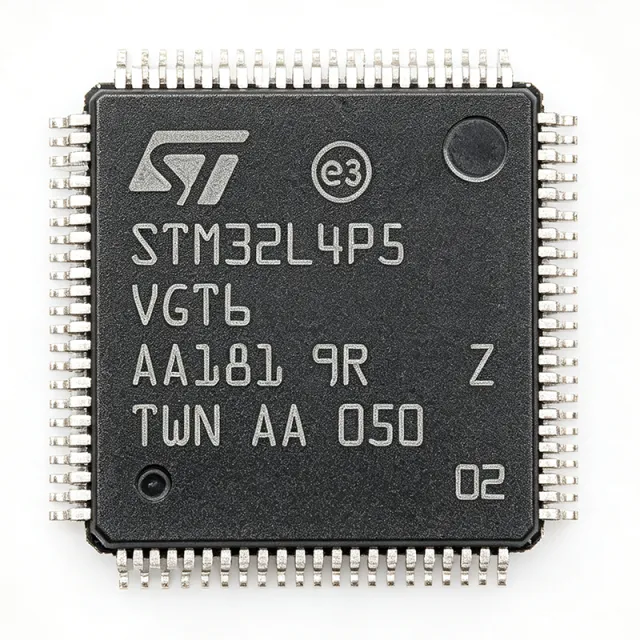
STM32L4P5VGT6 - Ultra-Low-Power Cortex-M4 MCU | STMicroelectronics
STM32L4P5VGT6

STM32L4P5VGT6 - Ultra-Low-Power Cortex-M4 MCU | STMicroelectronics

The STMicroelectronics STM32L4P5VGT6 is an ultra-low-power 32-bit microcontroller based on the ARM Cortex-M4 core with FPU, operating at up to 120 MHz. It delivers 213 DMIPS and 550 CoreMark, making it suitable for a wide range of battery-powered and energy-efficient applications. The device is housed in a 100-pin LQFP package (14x14 mm) and offers up to 1 MB of flash memory and 320 KB of SRAM. What is an ARM Cortex-M4 microcontroller? It is a 32-bit processor core designed for embedded systems, featuring a single-cycle multiply-accumulate (MAC) unit, hardware divide, and optional single-precision floating-point unit (FPU). The Cortex-M4 is part of the ARM Cortex-M family, which includes the M0, M0+, M3, M4, and M7 cores, each optimized for different performance and power trade-offs. In the system hierarchy, a microcontroller (MCU) integrates the processor core, memory, and peripherals on a single chip, serving as the central processing unit in embedded systems such as IoT devices, industrial controllers, and consumer electronics. Key features include a rich set of analog peripherals: two 12-bit DACs, three 12-bit ADCs with hardware oversampling, two operational amplifiers, two comparators, and an internal voltage reference buffer. The device also integrates advanced digital peripherals: two CAN FD controllers, one USB 2.0 OTG FS/HS, one SDMMC interface, and a flexible memory controller (FMC) for external memory expansion. The STM32L4P5VGT6 supports multiple low-power modes, including Sleep, Low-power Run, Low-power Sleep, Stop 0/1/2, and Standby, with a typical current consumption of 100 nA in Standby mode with backup domain. The STM32L4P5VGT6 is built on ST's ultra-low-power technology, featuring a dynamic voltage scaling (DVS) capability that adjusts the core voltage to optimize power consumption at different operating frequencies. The device includes a hardware cryptographic accelerator (AES, DES, 3DES) and a true random number generator (TRNG), enhancing security for connected applications. The rich set of timers includes two advanced-control timers, six general-purpose timers, two basic timers, and two low-power timers, providing precise timing and PWM generation. Typical applications include IoT nodes, smart meters, portable medical devices, industrial sensors, and wearable devices. The ultra-low-power modes and high integration make it ideal for battery-powered systems requiring long operational life. The device also supports a wide operating temperature range of -40°C to +85°C, suitable for industrial environments. When designing with this MCU, pay attention to the power supply decoupling: place a 100 nF capacitor close to each VDD pin and a 4.7 uF capacitor at the main power input. For low-power operation, configure the GPIOs to analog mode when unused to reduce leakage current. The STM32L4P5VGT6 is supported by STM32CubeMX and STM32CubeL4 firmware package, simplifying development.

USD $11,14 Kontak
STM32L4Q5AGI6 - 120MHz Cortex-M4 1MB MCU | STMicroelectronics
STM32L4Q5AGI6

STM32L4Q5AGI6 - 120MHz Cortex-M4 1MB MCU | STMicroelectronics

The STMicroelectronics STM32L4Q5AGI6 is an ultra-low-power 32-bit Arm Cortex-M4 microcontroller with FPU, rated up to 120 MHz, 1 MB of Flash, and 320 KB of SRAM in a 169-UFBGA 7 mm × 7 mm package. It delivers up to 150 DMIPS while combining low-power operation with integrated USB OTG, DFSD, AES, and PKA capabilities. A microcontroller is a programmable system-on-chip that integrates a CPU core, nonvolatile program memory, volatile data memory, peripherals, and interface controllers on one semiconductor device. The STM32L4 family belongs to the Arm Cortex-M microcontroller hierarchy and targets embedded control, communications, sensor processing, human-machine-interface, and low-power edge applications. Arm Cortex-M4 processors use the Thumb instruction set and support efficient interrupt-driven real-time control. Verified headline features include an Arm Cortex-M4 core, 120 MHz maximum operating frequency, 150 DMIPS performance, 1 MB Flash, and 320 KB SRAM. The part also provides an FPU, LCD-TFT support, USB OTG, DFSD, hardware AES, and PKA. These resources combine high processing throughput with a broad peripheral set, reducing the need for external memory, cryptographic accelerators, storage controllers, and display-interface logic in compact embedded systems. The STM32L4 architecture targets power-constrained products while retaining a broad set of communication and security interfaces. Flash capacity supports substantially larger firmware than smaller Cortex-M devices, while SRAM accommodates buffers, protocol stacks, graphics state, and real-time workloads. Hardware AES and PKA are particularly useful when a design must protect data or execute cryptographic operations with less software overhead. USB OTG expands connectivity options for peripherals, storage, charging, and host or device roles. Typical applications include connected industrial sensors, USB data acquisition, secure access-control terminals, low-power data loggers, compact human-machine-interface controllers, and embedded gateways. The 169-UFBGA package minimizes board area but requires careful escape routing, inspection, and assembly planning. Because the complete exposed-pad pin map and detailed electrical limits are not contained in the supplied search records, engineers should confirm them against the official STMicroelectronics STM32L4Q5xx datasheet before layout or firmware deployment. For robust implementation, preserve the datasheet-required decoupling near supply pins, route high-speed and sensitive signals with controlled return paths, and validate standby, wake-up, USB, and peripheral timing in the final board. Programming tooling, bootloader behavior, clock configuration, and low-power modes should also be verified from the official device documentation rather than inferred from distributor summaries. This page combines verified manufacturer and distributor information, procurement links, application engineering guidance, and explicit data gaps for pin-level and pricing validation. It is intended to accelerate component discovery while preserving traceability to the official STM32L4Q5xx datasheet and current distributor records as of 2026-10-23.

Permintaan RFG Kontak
STM32L4Q5CGT6 - 1MB Cortex-M4 MCU | STMicroelectronics | Ultra-Low-Power
STM32L4Q5CGT6

STM32L4Q5CGT6 - 1MB Cortex-M4 MCU | STMicroelectronics | Ultra-Low-Power

The STMicroelectronics STM32L4Q5CGT6 is an ultra-low-power ARM Cortex-M4 32-bit microcontroller+FPU with 150 DMIPS, 120 MHz max CPU clock, and 1 MB of on-chip Flash, housed in a 48-pin LQFP (7x7 mm) package. It integrates 320 KB SRAM, Chrom-ART graphics accelerator, USB OTG full-speed, DFSDM (digital filter for sigma-delta modulators), MIPI-DSI host, and an extensive analog/mixed-signal peripheral set including two 12-bit ADCs, two 12-bit DACs, ultra-low-power comparators, and op-amps. An MCU (microcontroller unit) is a single-chip computer that integrates a CPU core, program/data memory, and programmable I/O peripherals. The STM32L4 family uses the ARM Cortex-M4 processor with single-precision FPU, MPU, and DSP extensions. Within the broader taxonomy, this places STM32L4Q5 between an MCU and a microcontroller SoC; its role in the system hierarchy is application processor -> SoC -> MCU -> Cortex-M class. Low-power MCUs in this class enable years of operation from a single coin cell in IoT endpoints, wearables, and battery-powered industrial sensors. Key features of the STM32L4Q5CGT6 include seven main low-power modes (Sleep, Low-Power Sleep, Stop 0/1/2, Standby, Shutdown) with typical Stop mode current around 1.1 uA and Standby current of 30 nA with RTC. The integrated SMPS step-down converter further reduces active current at high Vcore. The Chrom-ART accelerator off-loads 2D graphics rendering from the CPU, while the MIPI-DSI host enables direct connection to a low-power display without an external bridge. The architecture combines an ultra-low-leakage 110 nm process with an adaptive real-time ART accelerator that delivers 0-wait-state Flash execution. Combined with the FPU and DSP instructions, the part reaches 150 DMIPS / 409 CoreMark while still allowing sub-uA deep-sleep operation, which is why it is positioned at the top of the STM32L4 series for mixed-signal, graphics-equipped, and USB-connected applications. Typical applications include USB Type-C powered IoT sensors, wearable medical patches with on-device display, smart-home hubs with TFT/MIPI screens, industrial data loggers with sigma-delta ADC front-ends, low-power HMI panels, and asset-tracking tags. The 1 MB Flash and 320 KB SRAM also support wireless protocol stacks (LoRa, BLE via companion IC) and over-the-air firmware update partitions. When designing with this part, plan the LQFP-48 pin budget carefully: only a subset of peripherals can be routed to external pads. Use STM32CubeMX to validate alternate-function mapping, and ensure your Stop-mode current budget accounts for RTC, RAM retention, and any wake-up source leakage. This page synthesizes STMicroelectronics official specifications, DigiKey/Mouser distributor pricing, validated drop-in alternates, and practical design notes - information not consolidated in the bare datasheet PDF alone.

Permintaan RFG Kontak
STM32L4Q5VGT6 - Ultra-Low-Power ARM Cortex-M4 MCU | STMicroelectronics
STM32L4Q5VGT6

STM32L4Q5VGT6 - Ultra-Low-Power ARM Cortex-M4 MCU | STMicroelectronics

The STM32L4Q5VGT6 is an ultra-low-power microcontroller from STMicroelectronics, featuring an ARM Cortex-M4 core with FPU and DSP instructions, running at up to 120 MHz. It is part of the STM32L4 series, designed for high performance and low power consumption, making it ideal for battery-powered and energy-efficient applications. An ARM Cortex-M4 microcontroller is a 32-bit processor core designed for embedded systems, offering a balance of performance and power efficiency. It includes a floating-point unit (FPU) for efficient mathematical computations and DSP instructions for signal processing. The STM32L4 series is known for its ultra-low-power modes, including sleep, stop, and standby, which are critical for extending battery life in portable devices. Key features of the STM32L4Q5VGT6 include 1 MB of flash memory and 320 KB of SRAM, providing ample storage for complex applications. It operates from 1.71V to 3.6V, with a wide temperature range of -40°C to +85°C. The device integrates a rich set of peripherals, including multiple USART, SPI, I2C, USB OTG FS, CAN, and advanced analog features such as a 16-bit ADC and a 12-bit DAC. It also includes a true random number generator (TRNG) and a cryptographic acceleration unit for secure applications. The STM32L4Q5VGT6 is built on a 40nm process technology, enabling low dynamic power consumption. It features a flexible power management system with multiple power domains, allowing designers to optimize power usage. The device supports various low-power modes, with typical current consumption as low as 100 nA in standby mode, making it suitable for always-on applications. Typical applications include industrial sensors, smart meters, medical devices, wearable devices, and IoT nodes. Its combination of performance, low power, and rich peripherals makes it a versatile choice for a wide range of embedded systems. When designing with this MCU, it is essential to consider the power supply decoupling and proper grounding to ensure stable operation. The device requires a 1.8V to 3.6V supply, and it is recommended to use a 100nF capacitor close to each power pin. Additionally, the internal LDO can be used to generate the core voltage, but external regulators may be needed for higher efficiency in battery-powered designs.

Permintaan RFG Kontak
STM32L4R5QGI6 - 120MHz Cortex-M4 MCU, 1MB Flash | STMicroelectronics
STM32L4R5QGI6

STM32L4R5QGI6 - 120MHz Cortex-M4 MCU, 1MB Flash | STMicroelectronics

STMicroelectronics STM32L4R5QGI6 is an ultra-low-power 32-bit Arm Cortex-M4 microcontroller with FPU, 120 MHz maximum clock frequency, and 1 MB of Flash memory in a 132-pin UFBGA package. The device operates from a 1.71 V to 3.6 V supply and combines USB OTG, DFSD storage support, extensive GPIO, and low-power sensing capabilities in a compact 7 x 7 mm footprint. An ultra-low-power microcontroller is an embedded semiconductor designed to execute firmware while minimizing energy consumption during active operation, standby, shutdown, and battery-backed operation. The STM32L4R5 belongs to the STM32L4 family hierarchy of Arm Cortex-M4 MCUs, combining real-time processing efficiency, embedded Flash, SRAM, analog and digital peripherals, and multiple low-power modes for compact sensing and control systems. Key characteristics include a 120 MHz Arm Cortex-M4 core with floating-point unit, 1 MB of embedded Flash, a 1.71 V to 3.6 V operating supply range, and USB OTG connectivity. FlexPowerControl supports low-power operation, while the verified family data specifies 33 nA shutdown current and 305 nA VBAT mode consumption for RTC and 32 backup registers. DFSD support expands the design options available for secure digital storage and firmware data workloads. The STM32L4R5 architecture is tailored for high-throughput, low-power embedded control. Its 32-bit Cortex-M4 processor includes hardware floating-point support for efficient control-loop, signal-processing, and math-heavy calculations. A large pin count provides extensive peripheral connectivity, while the 7 x 7 mm UFBGA package supports compact PCB layouts when adequate assembly capability and careful escape-routing are available. Typical applications include industrial sensor nodes, compact data loggers, USB-connected embedded controllers, low-power industrial equipment, DFSD-based portable systems, and battery-operated sensing platforms. The combination of 1 MB Flash and USB OTG also makes the MCU suitable for firmware-intensive peripheral control where local code storage and direct USB connectivity are valuable. Designers should confirm the complete pin assignment, exposed-pad requirements, supported peripherals, decoupling network, and operating-temperature grade against the manufacturer datasheet before layout release. High-density UFBGA construction also requires assembly-capable interconnect, solder-mask-defined geometry, and adequate thermal design for the selected power budget. This page consolidates verified distributor specifications, same-brand drop-in candidates, lifecycle information, application guidance, and practical design cautions. It distinguishes electrically similar devices from verified same-package alternatives so engineers can evaluate replacement decisions without assuming that a shared family designation guarantees pin-to-pin compatibility.

Permintaan RFG Kontak
STM32L4R5QII6 - 120MHz Cortex-M4 MCU | STMicroelectronics
STM32L4R5QII6

STM32L4R5QII6 - 120MHz Cortex-M4 MCU | STMicroelectronics

The STMicroelectronics STM32L4R5QII6 is an ultra-low-power 32-bit Arm Cortex-M4 microcontroller rated up to 120 MHz, with 2 MB of Flash memory, 640 KB of SRAM, and a 132-pin UFBGA package measuring 7 x 7 mm. It belongs to the STM32L4+ family and combines an FPU, USB OTG, DFSD support, and low-power operating modes for compact embedded systems. An ultra-low-power microcontroller is an embedded processing device designed to maintain useful computation while minimizing energy use. The STM32L4+ architecture combines a microcontroller, real-time control capability, data storage, and communication peripherals within a single silicon device. Its low-power design is intended for battery-powered, industrial, sensor, and connected products where energy efficiency contributes directly to battery life or heat management. Key features include operation from a 1.71 V to 3.6 V power supply, a maximum core frequency of 120 MHz, and low-power consumption figures including 305 nA in VBAT mode for the RTC and backup registers and 33 nA in shutdown mode. The STM32L4R5QII6 also provides 110 I/O, USB OTG, an FPU, and DFSD capability, allowing one device to control peripherals, acquire data, and communicate with a host or service interface. The device combines 2 MB of Flash with 640 KB of SRAM to support firmware, boot code, data logging, graphics buffers, and real-time control workloads. Its Arm Cortex-M4 processor supports single-precision floating-point instructions, which accelerates control calculations and digital filtering without requiring a separate accelerator. The STM32L4+ low-power feature set includes FlexPowerControl, Batch Acquisition Mode, and dedicated backup-domain functions. Typical applications include industrial sensor nodes, compact data loggers, USB-connected instrumentation, low-power condition-monitoring equipment, and embedded control products with limited board area. The 7 x 7 mm UFBGA package supports dense designs, but it requires careful PCB layout, controlled assembly, and reliable power and decoupling networks to achieve predictable low-noise operation. Power design should preserve the 1.71 V to 3.6 V operating range and place the required bypass capacitors close to the supply and ground pins. Firmware and board validation should also account for the 110 I/O limit and the high pin density of the 132-pin package. Use the manufacturer pin-description and land-pattern tables when assigning tracks and planning assembly. This page combines manufacturer specifications, package details, drop-in candidates, application guidance, and engineering-oriented design notes to support MCU selection, PCB planning, firmware bring-up, and sourcing decisions.

Permintaan RFG Kontak
STM32L4R5VIT6 - 2MB Flash Cortex-M4 MCU 120MHz | STMicroelectronics
STM32L4R5VIT6

STM32L4R5VIT6 - 2MB Flash Cortex-M4 MCU 120MHz | STMicroelectronics

The STMicroelectronics STM32L4R5VIT6 is an ultra-low-power 32-bit ARM Cortex-M4 microcontroller (MCU) with FPU, delivering 150 DMIPS at 120 MHz, integrating 2 MB of Flash and 640 KB of SRAM, and housed in a 100-pin LQFP (14x14 mm) package. The part belongs to the STM32L4+ Series and operates from a 1.71 V to 3.6 V supply, with a separate I/O rail that can go down to 1.08 V, supporting modern low-voltage sensor and memory interfacing. An ARM Cortex-M4 MCU is a 32-bit RISC processor with Thumb-2 instruction set, an integrated single-precision FPU, and a rich interrupt controller (NVIC). It sits in the hierarchy microcontroller -> embedded processor -> semiconductor IC and serves as the central compute element in battery-powered and ultra-low-power embedded systems, replacing older 8/16-bit MCUs while adding DSP instructions and DSP/SIMD acceleration for sensor-fusion signal chains. Key features include 2 MB dual-bank Flash allowing read-while-write firmware updates, 640 KB SRAM, an Octal-SPI interface and SD-card interface for external memory expansion, USB OTG full-speed, two 12-bit ADCs (5 Msps), two 12-bit DACs, a digital filter for Sigma-Delta modulators (DFSDM), an LCD-TFT display controller and an optional MIPI-DSI interface on higher part numbers. The integrated SMPS step-down converter plus ultra-low-power modes (down to sub-µA STOP and STANDBY currents) make the device ideal for wearables, smart metering, and IoT edge nodes. Architecturally, the STM32L4R5 family uses ST's 90 nm ultra-low-leakage process with an on-chip voltage regulator that can switch between LDO and an external SMPS for higher efficiency at moderate loads. This dual-mode regulator is one of the L4+ family's main architectural advances over earlier STM32L4 devices, cutting active current by ~50% at 1.8 V systems. Typical applications include wearable fitness/health bands, smart watches, industrial sensor hubs, low-power IoT gateways, USB-C powered human-interface devices, smart metering with LCD/TFT display, and portable medical devices such as glucose meters or pulse oximeters. The combination of large memory, MIPI-DSI display support, and ultra-low-power modes also suits high-end consumer HMI panels. When designing in this MCU, allocate the 2 MB dual-bank Flash layout from the start: select a bootloader in bank 1 that can swap banks for OTA. Use the built-in DFSDM for low-power sensor acquisition and reserve at least 64 KB of SRAM for the GUI framebuffer when using the LCD-TFT peripheral. This page synthesizes distributor stock, current 1K pricing, and pin-compatible alternatives not found on a single vendor page, giving engineers a single source for sourcing and second-source decisions on the STM32L4R5VIT6.

Permintaan RFG Kontak
STM32L4R5ZIT6 - 32-bit ARM Cortex-M4 MCU 120MHz 2MB Flash LQFP-144 | STMicroelectronics
STM32L4R5ZIT6

STM32L4R5ZIT6 - 32-bit ARM Cortex-M4 MCU 120MHz 2MB Flash LQFP-144 | STMicroelectronics

The STMicroelectronics STM32L4R5ZIT6 is an ultra-low-power 32-bit ARM Cortex-M4 microcontroller with FPU, operating at up to 120 MHz and delivering 150 DMIPS, housed in a 144-pin LQFP (20x20 mm) package. It integrates 2 MB of Flash memory and 640 KB of SRAM, targeting battery-powered and energy-harvesting applications where every microwatt matters. The device operates from a 1.71 V to 3.6 V power supply across -40 °C to 85/125 °C temperature ranges. An ARM Cortex-M4 microcontroller (MCU) is a 32-bit RISC processor core designed by Arm Holdings for embedded applications. It combines high computational performance with low power consumption, and the M4 variant adds a single-precision floating-point unit (FPU) plus DSP extensions. In the broader taxonomy, the STM32L4R5 belongs to the ultra-low-power microcontroller family (STM32L series), which sits below the mainstream STM32F series and above the ultra-low-power STM32L0 in ST's power-versus-performance spectrum. The "plus" designation (STM32L4+) indicates the higher-performance 120 MHz sub-family with Chrom-GRC graphics support. Key features of the STM32L4R5ZIT6 include a FlexPowerControl architecture with multiple low-power modes (Shutdown at 33 nA, VBAT mode at 305 nA, Batch Acquisition Mode for partial wake-up), USB OTG with internal PHY, and a DFSDM (Digital Filter for Sigma-Delta Modulators) peripheral for sensor hub applications. It also features a Chrom-ART Accelerator for 2D graphics and an Octo-SPI interface for high-speed external Flash, along with cryptographic and AES-256 hardware accelerators for IoT security. The device integrates the Cortex-M4 core with FPU and Memory Protection Unit, plus ST's ART Accelerator (Adaptive Real-Time memory accelerator) that allows 0-wait-state execution from Flash at the full 120 MHz clock speed. Up to 640 KB SRAM includes 32 KB of SRAM2 with parity check, retained in Standby mode and accessible via SRAM-based boot for secure firmware update. The LQFP-144 package exposes the full STM32L4R5 peripheral set: 3x 12-bit ADC (16-bit with oversampling), 2x DAC, 4x op-amps, 2x comparators, multiple timers, TFT controller, and MIPI-DSI support requires the larger BGA package. Typical applications include wearable health monitors, smart sensors, IoT edge nodes, industrial HMI panels, low-power wireless modules (BLE/LoRa companion), battery-powered data loggers, and energy-harvesting systems. The 2 MB Flash supports over-the-air firmware updates and rich graphical user interfaces on small TFT displays without external memory. When designing with the STM32L4R5ZIT6, use ST's STM32CubeMX and STM32CubeIDE toolchain for code generation, pin multiplexing, and power-consumption profiling. Source decoupling requires 100 nF X7R ceramic on every VDD/VDDA pair; the integrated SMPS step-down converter (when present on L4+ variants) should be configured with a 10 µH inductor per the application note AN4621. The LQFP-144 thermal performance typically permits 500 mA peak current draw at 120 MHz with a 2-layer FR4 board. This page synthesizes distributor pricing tiers, drop-in compatible same-family STM32 alternatives, application-tailored companion MPNs, and practical low-power design guidance that complements the manufacturer datasheet.

Permintaan RFG Kontak
STM32L4R5ZIT6P - Cortex-M4 MCU 120MHz 2MB Flash | STMicroelectronics
STM32L4R5ZIT6P

STM32L4R5ZIT6P - Cortex-M4 MCU 120MHz 2MB Flash | STMicroelectronics

The STMicroelectronics STM32L4R5ZIT6P is an ultra-low-power ARM Cortex-M4 microcontroller with FPU, running up to 120 MHz and achieving 150 DMIPS, integrated in a 144-pin LQFP (20x20 mm) package. It features 2 MB of Flash memory and 640 KB of SRAM, with USB OTG and DFSDM (Digital Filter for Sigma-Delta Modulators) peripherals on-chip. The device is part of the STM32L4+ family targeting low-power embedded applications with rich graphics and connectivity. An ultra-low-power MCU is a microcontroller specifically architected to minimize energy use across active, sleep, deep-sleep, and shutdown modes, enabling battery-powered and energy-harvesting designs. Within the system hierarchy, the STM32L4+ sits at the high end of ST's ultra-low-power line, above the STM32L0 and STM32L1 families, and below the Cortex-M7 based STM32F7/H7 high-performance lines. The Cortex-M4 core adds DSP extensions and a single-precision FPU, making it suitable for signal-processing tasks that the Cortex-M0+ cannot handle efficiently. Key features include a 120 MHz Cortex-M4 core with FPU and MPU, 2 MB dual-bank Flash supporting read-while-write, 640 KB SRAM including 16 KB SRAM2 with parity, a 1.8V core supply with internal SMPS step-down converter for ultra-low-power Run mode, and an extensive peripheral set including USB OTG full-speed, three SPIs, three I2C, six USART/UARTs, two SAIs, one CAN, one SDMMC, and a 12-bit ADC with 5 Msps throughput. The Chrom-ART 2D graphics accelerator and OctoSPI Flash interface support modern display and memory expansion requirements. Typical applications include low-power IoT sensor nodes, wearable health monitors, industrial HMI with TFT displays, smart meters, asset tracking with BLE or LoRa, and battery-powered data loggers. The 144-LQFP package provides generous GPIO (over 100 pins) for complex designs with multiple peripherals. When designing with this part, evaluate the package size relative to your PCB - the 144-LQFP (20x20 mm) footprint is among the largest in the STM32 family; the smaller 64-LQFP or 48-LQFP variants of the same silicon may suffice if your GPIO budget is smaller. The internal SMPS requires careful PCB layout to minimize EMI.

Permintaan RFG Kontak
STM32L4R9AII6 - 120MHz 2MB Cortex-M4 MCU | STMicroelectronics
STM32L4R9AII6

STM32L4R9AII6 - 120MHz 2MB Cortex-M4 MCU | STMicroelectronics

The STMicroelectronics STM32L4R9AII6 is an ultra-low-power 32-bit Arm Cortex-M4 microcontroller with FPU, 120 MHz maximum operating frequency, 2 MB of flash memory, and 640 KB of RAM in a 169-UFBGA 7 x 7 mm package. Its 1.71 V to 3.6 V supply range supports low-voltage embedded systems requiring substantial memory and low-power operation. The device is identified as part of the STM32L4+ Series and is designed for applications that combine real-time control, connectivity, and energy efficiency. An STM32L4+ microcontroller is a 32-bit embedded-control platform built around the Arm Cortex-M4 processor with a floating-point unit. The STM32L4 family extends the MCU hierarchy from embedded controller to ultra-low-power microcontroller, combining real-time processing, memory, analog peripherals, security, and communications interfaces. The STM32L4R9AII6 uses that architecture for demanding control tasks where conventional low-power MCUs may provide too little flash, RAM, or processing performance. Key verified features include a 120 MHz operating frequency, 2 MB flash memory, 640 KB RAM, an Arm Cortex-M4 32-bit RISC core, and FlexPowerControl low-power operation. The supply range is 1.71 V to 3.6 V. Low-power modes reported for the family include 305 nA in VBAT mode for the RTC and 32 x 32-bit backup registers, plus 33 nA shutdown mode. These values support battery-backed sensing, portable instruments, industrial controllers, and connected embedded equipment. The STM32L4R9AII6 combines a high-performance Cortex-M4 core with large on-chip memory in a compact BGA package. This arrangement reduces external memory requirements in firmware-intensive applications and allows more local data buffering. Its operating frequency supports responsive control and signal-processing workloads, while the low-power modes help preserve battery life during idle periods. The 169-UFBGA package requires careful PCB layout, escape routing, thermal management, and assembly-process qualification. Typical uses include industrial automation, battery-powered sensors, medical monitoring equipment, building controls, portable measurement systems, and connected embedded products. The STM32L4R9AII6 is particularly suitable when a design needs more than 1 MB of flash, substantial RAM, and low standby consumption. Its memory capacity can hold application firmware, protocol stacks, diagnostics, data logs, and control algorithms without requiring external storage. For a new design, verify every peripheral, pin multiplexing option, voltage requirement, and package-level layout rule against the official STMicroelectronics datasheet before layout release. Do not substitute a mechanically similar MCU unless pin mapping, electrical limits, memory map, firmware support, and package land pattern have all been reviewed. The UFBGA footprint also requires thermal-via planning and assembly capability appropriate for fine-pitch ball-grid-array devices.

Permintaan RFG Kontak
STM32L4R9VGT6 - 120MHz Cortex-M4 1MB MCU | STMicroelectronics
STM32L4R9VGT6

STM32L4R9VGT6 - 120MHz Cortex-M4 1MB MCU | STMicroelectronics

STMicroelectronics STM32L4R9VGT6 is an ultra-low-power 32-bit Arm Cortex-M4 microcontroller with a 120 MHz operating frequency, 1 MB of flash memory, and a 100-pin LQFP package measuring 14 x 14 mm. The device belongs to the STM32L4+ Series and is positioned for connected, low-power embedded systems that require substantial local code and data storage. An ultra-low-power microcontroller is a semiconductor that controls an embedded system while minimizing energy consumption during active operation, sleep, shutdown, and battery-backed states. The STM32L4+ family sits within the broader hierarchy of microcontroller, embedded processor, and semiconductor categories. Its FlexPowerControl architecture is intended to extend operating time in battery-powered equipment without requiring a high-performance processor to remain active during idle periods. Verified device features include an Arm Cortex-M4 32-bit RISC core, a 120 MHz maximum clock, and 1 MB of flash memory organized as 1M x 8. The STM32L4R9VG family supports a 1.71 V to 3.6 V operating supply range and temperature options extending from -40 °C to 85 °C or -40 °C to 125 °C. The STM32L4R9VG family also includes USB OTG and DFSD functionality according to the manufacturer listing. Low-power operation is supported by a shutdown mode consuming 33 nA and a VBAT mode consuming 305 nA, as stated in the available datasheet summary. These figures are especially relevant for sensors, portable instruments, and battery-operated equipment that spend most of their service life in a low-current state. The 1 MB flash capacity allows larger firmware, data logs, and embedded user-interface assets to remain resident without an external program-memory device. Typical uses include industrial sensing and control, connected sensor nodes, USB-enabled embedded equipment, data acquisition systems, and low-power consumer or medical products. The 100-pin LQFP package provides a higher pin count than compact MCU packages, making it suitable for designs requiring multiple peripheral connections while remaining compatible with established surface-mount manufacturing processes. Designers should preserve the complete STM32L4R9VG pin assignment and review the manufacturer reference manual before routing USB, high-speed interfaces, power supplies, debug signals, and analog inputs. Correct decoupling, grounded return paths, clock planning, and low-power state transitions are essential for dependable operation. The available verified data does not provide a complete pin-by-pin assignment, so no pin names are inferred here. This product record consolidates manufacturer positioning, distributor availability, verified electrical highlights, and same-family drop-in candidates with engineering trade-offs. It also identifies where complete RAM, GPIO, peripheral, timing, and package-thermal values require confirmation from the manufacturer documentation before a production design is released.

Permintaan RFG Kontak
STM32L4R9VIT6 - 120MHz ARM Cortex-M4 2MB Flash MCU | STMicroelectronics
STM32L4R9VIT6

STM32L4R9VIT6 - 120MHz ARM Cortex-M4 2MB Flash MCU | STMicroelectronics

The STMicroelectronics STM32L4R9VIT6 is an ultra-low-power 32-bit ARM Cortex-M4 microcontroller with FPU operating at up to 120 MHz, integrating 2 MB of Flash and 640 KB of SRAM in a 100-pin LQFP (14x14 mm) package. It features a Chrom-GRC graphics accelerator, Chrom-ART Accelerator, USB OTG Full-Speed, DFSDM digital filter, and a wide range of peripherals such as ADC, timers, PWM, I2C, SPI, UART, and CAN, while operating from a 1.71 V to 3.6 V supply. An ultra-low-power microcontroller (MCU) is a 32-bit RISC processor designed to minimize active and standby energy consumption, allowing battery-powered or energy-harvesting products to run for years on a single cell. The STM32L4+ family sits within ST's broader STM32 portfolio as a high-performance, ultra-low-power tier, bridging the gap between Cortex-M4 performance and Cortex-M0+ efficiency. Within this family, the STM32L4R9 sub-line is positioned at the top end with 2 MB Flash, 640 KB SRAM, and a TFT/chrom accelerator pipeline targeting HMI and wearables. Key differentiating features include Batch Acquisition Mode (BAM) that reduces data throughput overhead, a 305 nA VBAT mode for RTC backup domain, a 33 nA Shutdown mode, an integrated DFSDM peripheral for sigma-delta sensor inputs, and hardware AES-256 encryption for secure firmware updates. The 120 MHz Cortex-M4 core delivers up to 150 DMIPS / 273 CoreMark while a low-power RUN mode operates down to 2 MHz at ~100 uA/MHz. Typical applications span wearable fitness bands, medical sensor patches, smart watches with TFT displays, industrial sensor hubs with CAN connectivity, low-power IoT endpoints with secure boot, and battery-powered instrumentation. The 2 MB Flash accommodates rich TFT GUIs and over-the-air update partitions while 640 KB SRAM supports double-buffer graphical framebuffers. When designing with this MCU, ensure PCB layout keeps decoupling capacitors within 2 mm of each supply pin and that unused peripherals are clock-gated to retain the ultra-low-power budget. Use ST's STM32CubeIDE and STM32CubeMX with the L4+ HAL to enable Power Modes, DMA, and TFTC driver configurations quickly. This page synthesizes distributor pricing, drop-in alternatives, and practical design notes that complement (not replicate) the official ST datasheet, helping engineers shortlist the right ultra-low-power MCU for their HMI or wearable product.

Permintaan RFG Kontak
STM32L4R9ZGJ6 - 120MHz Cortex-M4 1MB Flash MCU | STMicroelectronics
STM32L4R9ZGJ6

STM32L4R9ZGJ6 - 120MHz Cortex-M4 1MB Flash MCU | STMicroelectronics

The STMicroelectronics STM32L4R9ZGJ6 is an ultra-low-power 32-bit microcontroller built around the Arm Cortex-M4 core, operating up to 120 MHz and integrating 1 MB of flash memory in a 144-UFBGA package measuring 10 x 10 mm. It belongs to the STM32L4+ family, which combines high processing performance with low-power operating modes for battery-powered and industrial equipment. A low-dropout voltage regulator is a power-management component that converts an input supply into a stable internal rail while limiting power loss. In this microcontroller, the low-power architecture supports operation from a 1.71 V to 3.6 V supply, with shutdown current as low as 33 nA and a VBAT mode drawing 305 nA to maintain the real-time clock and 32 backup registers. This makes the device suitable for designs where standby energy consumption is as important as active processing capability. The STM32L4R9ZGJ6 provides a 32-bit Arm Cortex-M4 processor with FPU, 1 MB of flash, and up to 640 KB of SRAM across the STM32L4R9 family. Its feature set includes USB OTG, DFSD capability, and the low-power peripherals associated with the STM32L4+ platform. The J6 ordering option identifies the temperature-qualified 144-pin package configuration used for industrial and extended-temperature designs. The device is designed around the STM32L4+ low-power architecture, including FlexPowerControl, multiple sleep modes, and batch acquisition mode. These resources allow firmware to remain responsive while limiting energy use during idle periods. The Cortex-M4 core supports efficient digital signal processing and control workloads without requiring a separate DSP component in many embedded applications. Typical applications include industrial sensor nodes, compact data loggers, battery-powered handheld instruments, connected industrial equipment, and USB-connected control peripherals. The small 144-UFBGA package also makes the part suitable for space-constrained designs where board area is limited and thermal management must be planned carefully. When laying out the PCB, follow the package ball assignments and recommended land pattern in the STM32L4R9ZG datasheet, provide clean supply decoupling, and keep sensitive analog and communication traces away from high-current switching paths. Because the package is a fine-pitch BGA, assembly capability, solder-paste volume, stencil design, and X-ray inspection requirements should be confirmed before volume production. This page consolidates electrical characteristics, package information, design considerations, and verified drop-in candidates to support component selection, schematic capture, PCB planning, and sourcing decisions without duplicating the raw datasheet layout.

Permintaan RFG Kontak
STM32L4R9ZGT6 - 120MHz 1MB Flash MCU | STMicroelectronics
STM32L4R9ZGT6

STM32L4R9ZGT6 - 120MHz 1MB Flash MCU | STMicroelectronics

STMicroelectronics STM32L4R9ZGT6 is an ultra-low-power 32-bit Arm Cortex-M4 microcontroller with a 120 MHz maximum clock, 1 MB of Flash memory, USB OTG, DFSD, 112 I/O, and a 144-LQFP 20 x 20 mm package. It belongs to the STM32L4+ Series, combining real-time embedded control with low-power operating modes and a broad set of communication and analog peripherals. An ultra-low-power microcontroller is an embedded semiconductor designed to maintain useful processing, sensing, and communication functions while minimizing energy consumption. The STM32L4+ hierarchy progresses from the STM32L4R9 device family to an Arm Cortex-M4 microcontroller, an embedded processor, and ultimately a semiconductor used in battery-powered and energy-conscious electronic systems. FlexPowerControl supports operating modes suited to applications where standby and shutdown current can determine practical battery life. The STM32L4R9ZGT6 operates from a 1.71 V to 3.6 V supply range and is available in temperature grades extending to 85 °C or 125 °C, depending on the exact orderable configuration. Its 120 MHz Arm Cortex-M4 core provides substantially more performance headroom than lower-frequency microcontrollers while retaining the compact package, 1 MB Flash, and low-power architecture of the STM32L4+ family. The integrated floating-point unit supports efficient control and signal-processing workloads. The device includes 112 I/O in its 144-lead package, along with USB OTG and DFSD functionality. These interfaces enable removable storage, data acquisition, firmware update, and external storage applications without requiring discrete interface controllers. According to the STMicroelectronics STM32L4R9ZG product page, the STM32L4R5xx, STM32L4R7xx, and STM32L4R9xx devices share the ultra-low-power STM32L4+ platform and Arm Cortex-M4 architecture. Low-power features include a 305 nA VBAT mode for the real-time clock and 32 × 32-bit backup registers, plus a 33 nA shutdown mode. These figures make the MCU applicable to environmental sensors, compact industrial recorders, portable measurement equipment, and other systems that spend substantial time between active processing intervals. When designing around the STM32L4R9ZGT6, preserve the 1.71 V to 3.6 V supply limits, use suitable decoupling close to the supply pins, and verify every peripheral operating condition against the manufacturer datasheet. Temperature grade, firmware configuration, power sequencing, and low-mode entry conditions should be validated together rather than treated as independent parameters. This product page consolidates verified manufacturer and distributor information, package details, low-power figures, replacement guidance, and application-oriented engineering context. It also distinguishes true same-package drop-in candidates from broader functional alternatives, helping designers compare procurement options without overlooking the differences that affect qualification.

Permintaan RFG Kontak