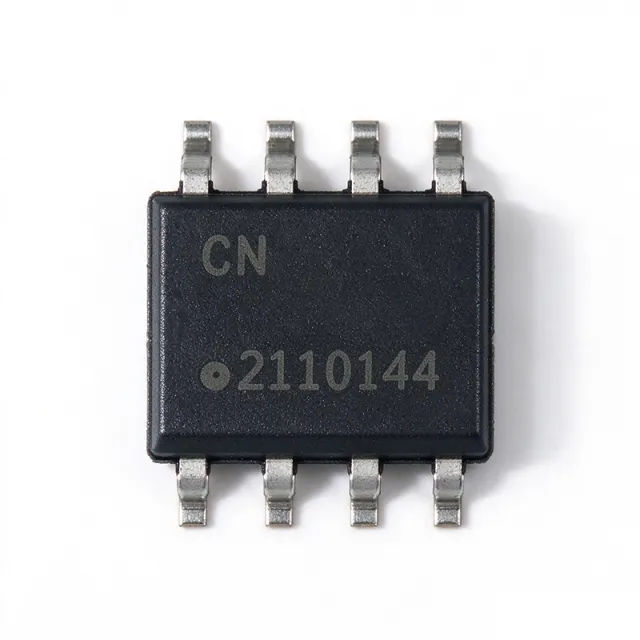
ATF16V8B-10PC
ATF16V8B-10PC - Programmable Logic Device | Atmel
The Atmel ATF16V8B-10PC is a programmable logic device identified by the ATF16V8B family name and the -10PC ordering suffix. The verified product-page retrieval supplied for this MPN contains no manufacturer specifications, package details, electrical ratings, pricing, or lifecycle statement, so those values cannot be stated reliably on this page. The ATF16V8B designation is associated with the Atmel ATF16V8B family of simple programmable logic devices, but the exact device configuration, pin assignments, and commercial ordering data require confirmation from the original manufacturer documentation.
A programmable logic device is a digital semiconductor used to implement fixed or configurable Boolean logic functions. These devices occupy a position between basic logic gates and programmable logic arrays in the broader integrated-circuit hierarchy. Unlike a microcontroller, a conventional programmable logic device generally does not execute application software; instead, its internal programmable connections are configured to realize a logic function such as decoding, gating, counting, multiplexing, or control sequencing. The ATF16V8B family is commonly associated with classic PLD-style architectures, while the precise architecture of this exact ordering code is not documented in the supplied retrieval.
The -10 suffix in many Atmel ordering codes identifies a speed grade, and PC denotes the ordering package or temperature-related code in many device families. Those conventions cannot be applied to ATF16V8B-10PC without verification because the supplied search result did not expose a datasheet or product table. The same restriction applies to supply voltage, I/O type, output current, operating temperature, propagation delay, programming interface, memory technology, and package dimensions. Those values are intentionally left as data requests in the specifications table rather than inferred from similarly named parts.
ATF16V8B-10PC may be considered for legacy digital control, industrial interface, glue-logic, and embedded system designs where a compact PLD can replace multiple fixed gates or older programmable devices. Before placing it in new production equipment, engineers should confirm availability, lifecycle status, programming-tool support, electrical compatibility, and the exact pinout. A modern MCU or FPGA should be considered when field programmability, extensive serial interfaces, larger logic capacity, or a supported software toolchain is required.
The most important design step is to obtain the original ATF16V8B datasheet and compare its package drawing, programming architecture, and electrical limits with the PCB footprint. The supplied data does not identify whether the package uses PLCC, ceramic DIP, or another mechanical format, and no pinout can therefore be published safely. Likewise, existing board replacement is possible only after comparing every power, ground, input, output, clock, and programming pin rather than relying on the family name alone.
This page distinguishes confirmed identity from missing technical evidence and does not convert unresolved parameters into assumptions. It also provides selection questions, sourcing guidance, and qualification criteria that help engineers determine whether ATF16V8B-10PC remains appropriate for a legacy design. The most reliable next step is to request the manufacturer datasheet, current distributor record, programming specification, and lifecycle notice for the exact MPN before committing a new production run.
見積もり
お問い合わせ