製品 (32839)

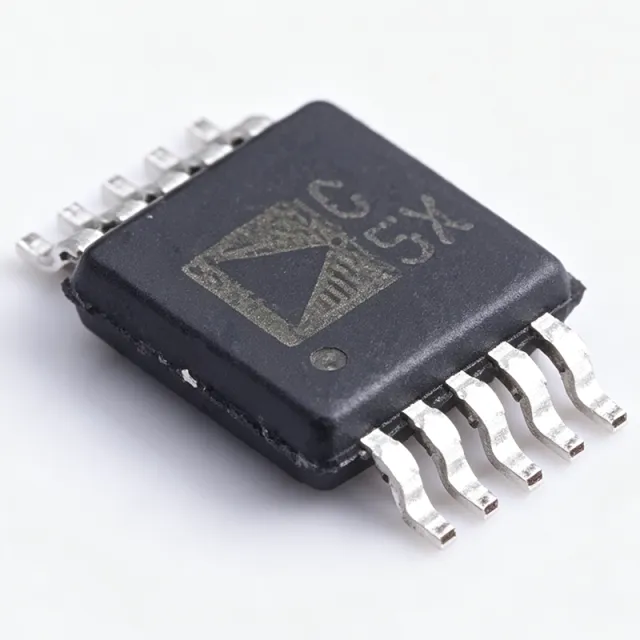
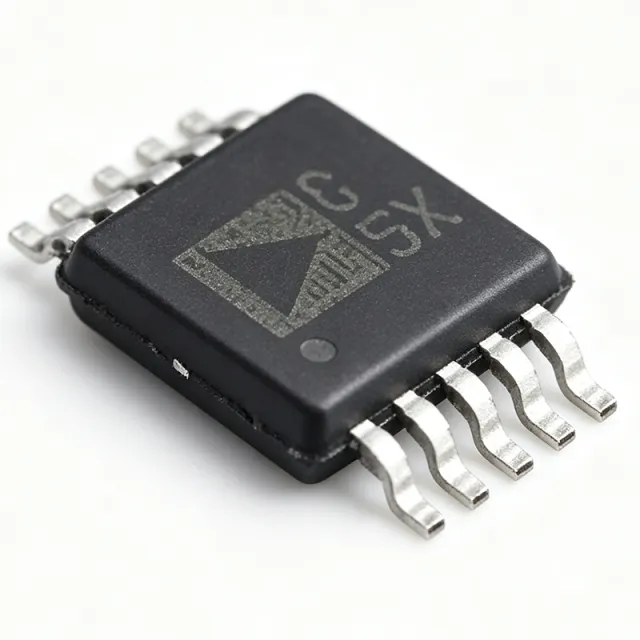
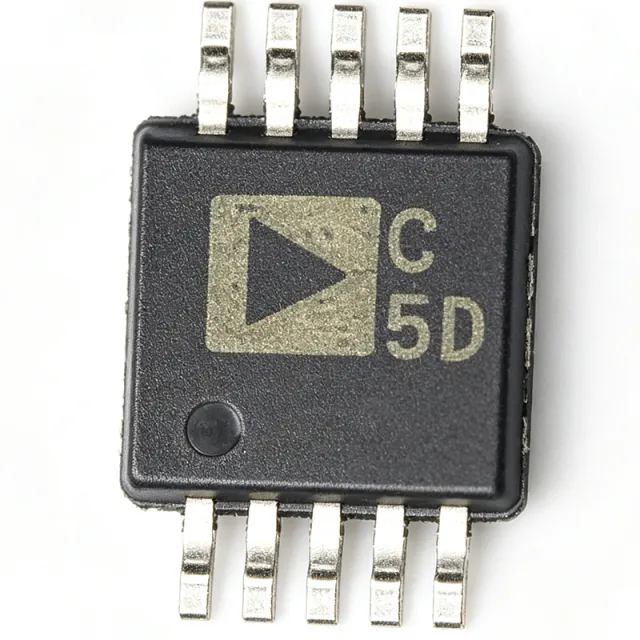
AD7910AKSZ-REEL - 10-Bit 250 kSPS SAR ADC | SC-70-6
AD7910AKSZ-REEL

AD7910AKSZ-REEL - 10-Bit 250 kSPS SAR ADC | SC-70-6

The Analog Devices AD7910AKSZ-REEL is a 10-bit, high-speed, low-power successive-approximation analog-to-digital converter (SAR ADC) in a 6-lead SC-70 package. It samples up to 250 kSPS from a single 2.35 V to 5.25 V supply and dissipates 3.6 mW typical at 250 kSPS with a 3 V supply. A successive-approximation ADC is a converter architecture that performs a binary search against the analog input using an internal DAC, producing one conversion per N clock cycles where N is the resolution in bits. SAR ADCs sit at the boundary between fast successive-approximation converter (SAR) and precision sigma-delta; they offer deterministic latency, moderate-to-high speed, and excellent DC accuracy without the complexity of a sigma-delta modulator, making them workhorses for data-acquisition, industrial control, and instrumentation. The AD7910/AD7920 family specifically targets space-constrained designs where the SC-70 footprint matters more than absolute sample rate. Key features include a throughput rate of 250 kSPS at 3 V, a low-noise wide-bandwidth track-and-hold amplifier handling input frequencies above 13 MHz, an on-chip 2.5 V reference (configurable for external reference operation), and a serial peripheral interface compatible with SPI, QSPI, MICROWIRE, and DSP serial ports. The single-ended analog input accepts unipolar 0 V to VREF or 0 V to VDD ranges. Power-down current drops to nanoamp-levels between conversions, suiting battery and duty-cycled applications. The part supports pseudo-differential operation when paired with an external negative rail or driven single-ended to ground, and includes a sequencer that cycles through multiple channels on the AD7920 variant. The SC-70-6 footprint enables routing on double-sided PCBs as small as 30 mm square when paired with a small microcontroller or DSP. Typical applications include portable instrumentation, medical monitoring equipment, industrial process control loops, optical sensor front-ends, and battery-powered data loggers. Designers favor the AD7910 when footprint and power consumption dominate over sample rate or channel count. When designing with this converter, decouple VDD with a 0.1 microfarad ceramic capacitor placed within 5 mm of the supply pin, route the analog reference separately from digital switching returns, and keep the analog input trace guarded. The on-chip 2.5 V reference does not require an external bypass when the internal reference mode is selected. This page synthesizes distributor pricing, drop-in alternatives, and practical PCB-layout notes not found in the manufacturer datasheet revision A, helping engineers build a BOM around a known-obsolete part.

見積もり お問い合わせ
AD7912AUJZ-REEL - 10-Bit 1MSPS 2-Ch SAR ADC | Analog Devices
AD7912AUJZ-REEL

AD7912AUJZ-REEL - 10-Bit 1MSPS 2-Ch SAR ADC | Analog Devices

The Analog Devices AD7912AUJZ-REEL is a 10-bit, high-speed, low-power, dual-channel successive-approximation analog-to-digital converter (SAR ADC) in an 8-pin TSOT-23 package. The part operates from a single 2.35 V to 5.25 V supply and delivers throughput rates up to 1 MSPS while consuming only 4.8 mW typical at 1 MSPS from a 3 V supply (15.5 mW typical at 5 V). The 2-channel input mux makes it ideal for space-constrained multi-sensor designs. An SAR ADC is a type of analog-to-digital converter that uses a binary-search successive-approximation algorithm to digitize an analog input in N clock cycles for an N-bit result. SAR ADCs are favored over delta-sigma and pipeline types when designers need deterministic latency, low power consumption at moderate sample rates, and a small package. In the broader converter hierarchy, the SAR architecture sits between flash ADCs (faster, lower resolution) and delta-sigma ADCs (slower, higher resolution), making 10-12 bit 1 MSPS SARs a sweet spot for embedded data acquisition. Key features of the AD7912AUJZ-REEL include a high-speed serial interface compatible with DSP, MICROWIRE, QSPI, and SPI, an on-chip low-noise wide-bandwidth track-and-hold amplifier, and an industry-standard successive-approximation architecture. The wide 2.35 V to 5.25 V supply range allows direct connection to 3.3 V or 5 V microcontrollers without level shifters. Power-down modes between conversions reduce average current to microampere levels for battery-powered applications. The device uses a charge-redistribution DAC array and a comparator with a switched-capacitor front-end, achieving a typical INL of 0.5 LSB and excellent AC performance at 1 MSPS. The serial interface provides flexible data alignment and supports daisy-chain operation for multi-channel systems. Internal calibration and reference buffer design minimize the need for external components. Typical applications include portable instrumentation, isolated data acquisition modules, battery monitoring, multi-cell battery cell measurement, optical sensor readout, and industrial process control. The combination of small TSOT-23 footprint and 1 MSPS throughput suits compact embedded designs. When designing with this part, observe that the supply decoupling capacitors must be placed immediately at the VDD pin and the analog inputs must be driven from low-impedance sources to achieve specified linearity. Using a separate analog ground plane and routing digital signals away from analog traces improves noise immunity. This page synthesizes distributor pricing, drop-in alternatives from the same Analog Devices ADC family, and practical design notes not found in the manufacturer datasheet.

見積もり お問い合わせ
AD7920BRMZ-REEL - 12-Bit 250kSPS SAR ADC | Analog Devices
AD7920BRMZ-REEL

AD7920BRMZ-REEL - 12-Bit 250kSPS SAR ADC | Analog Devices

The Analog Devices AD7920BRMZ-REEL is a 12-bit, high-speed, low-power successive-approximation-register (SAR) analog-to-digital converter (ADC) in an 8-pin MSOP package. It operates from a single 2.35 V to 5.25 V supply and supports throughput rates up to 250 kSPS, delivering low-noise 12-bit conversions in industrial and instrumentation signal chains. An ADC (analog-to-digital converter) is a data-converter IC that samples continuous analog voltage and produces a discrete digital code proportional to the input amplitude. SAR (successive-approximation-register) ADCs use a binary-search algorithm with an internal DAC and comparator to resolve one bit per clock cycle, achieving an excellent balance of speed, power, and resolution for multiplexed low-channel-count systems. Within the data-converter hierarchy, ADCs sit between signal conditioning and the digital host (MCU, DSP, FPGA), making them a foundational block in the broader mixed-signal and power-management signal chain. Key features of the AD7920BRMZ-REEL include 250 kSPS throughput, low power dissipation (3.6 mW typical at 250 kSPS with a 3 V supply, 12.5 mW typical at 250 kSPS with a 5 V supply), a wide analog input bandwidth, and flexible power/throughput management where conversion rate scales with the serial clock. The serial interface is SPI/QSPI/MICROWIRE-compatible, simplifying connection to microcontrollers and DSPs. The part offers an analog input range of 0 V to VDD and supports an operating temperature range of -40 C to +85 C for industrial environments. The AD7920BRMZ-REEL uses a low-noise, wide-bandwidth track-and-hold front end and a precision SAR core that maintains 12-bit linearity across the full input range. Its flexible power-down modes enable designers to scale quiescent current proportionally with sample rate - a major advantage in duty-cycled battery applications. Typical applications include industrial process control, portable battery-powered instrumentation, data acquisition systems, and medical monitoring front ends. The MSOP-8 footprint and SPI interface make it a convenient upgrade path for designers transitioning from larger or slower legacy ADCs. When designing with the AD7920BRMZ-REEL, ensure the source impedance driving AIN is low (<50 ohm) to avoid DC accuracy errors caused by the track-and-hold input current. Use a 0.1 uF decoupling capacitor close to VDD and keep the analog input traces short and guarded to preserve SNR. This page synthesizes distributor pricing, drop-in alternatives, and practical design notes not found in the manufacturer datasheet alone, helping engineers select the right 12-bit SAR ADC for compact, low-power designs.

見積もり お問い合わせ
AD7927BRUZ-REEL7 - 12-Bit 200kSPS 8-Ch SAR ADC | Analog Devices
AD7927BRUZ-REEL7

AD7927BRUZ-REEL7 - 12-Bit 200kSPS 8-Ch SAR ADC | Analog Devices

The Analog Devices AD7927BRUZ-REEL7 is a 12-bit, high-speed, low-power, 8-channel successive-approximation register (SAR) analog-to-digital converter that operates from a single 2.7 V to 5.25 V supply and delivers throughput rates up to 200 kSPS. Housed in a 20-pin TSSOP package, the part contains a low-noise, wide-bandwidth track-and-hold amplifier capable of handling input frequencies in excess of 8 MHz, making it well suited to multiplexed multi-channel data acquisition systems. The AD7927BRUZ-REEL7 ships on a 1,000-piece reel (REEL7 suffix) per the Analog Devices packaging convention. A SAR ADC is a successive-approximation analog-to-digital converter that resolves one bit per conversion cycle using a binary-search algorithm against an internal or external reference. SAR architecture is favored for applications that require deterministic latency, low power consumption, and excellent DC accuracy without the complexity of pipeline or delta-sigma designs. Within the broader power-management and data-acquisition hierarchy, the AD7927 belongs to the precision-converter family, sitting under analog-to-digital converters, which themselves are key building blocks inside signal-chain ICs and embedded data acquisition subsystems. Key features of the AD7927BRUZ-REEL7 include 200 kSPS throughput, an analog input range of 0 V to VREF (with VREF supplied externally, typically 2.5 V), a sequencer that cycles through the eight analog inputs automatically, and a low-power dissipation profile of 3.6 mW typical at 200 kSPS with a 3 V supply and 7.5 mW typical at 200 kSPS with a 5 V supply. The serial interface is compatible with DSP, MICROWIRE, QSPI, and SPI protocols, allowing direct connection to most microcontrollers and DSPs without glue logic. Architecturally, the AD7927 integrates an 8-channel analog input multiplexer, a fully differential track-and-hold, a 12-bit SAR core, a control logic block, and an external-reference input. The on-chip sequencer can be programmed to convert a user-defined subset of channels in any order, enabling efficient channel scanning without repeated register writes. The wide input bandwidth (>8 MHz) ensures accurate sampling of fast transients on any selected channel before digitization. Typical applications include industrial process control, multi-zone temperature monitoring via thermocouples or RTDs, instrumentation data acquisition, portable battery-powered measurement, optical-module monitoring (SFF/SFP transceivers), and embedded motor-control feedback. The combination of 8 single-ended inputs, low power, and SPI compatibility makes the AD7927 ideal for space-constrained designs requiring multi-sensor monitoring. A key design consideration is reference selection. Because the AD7927 does not include an internal reference, the absolute accuracy of every conversion is gated by the external reference. Using a low-drift, low-noise 2.5 V reference such as the ADR01 or ADR435 is recommended for precision applications; noise on VREF directly translates to gain error and noise floor. This page synthesizes distributor pricing, drop-in alternatives, and practical design notes not found in the standalone manufacturer datasheet to accelerate component selection, BOM risk reduction, and second-source qualification.

見積もり お問い合わせ
AD7933BRU-REEL - 10-Bit 1.5 MSPS 4-Ch SAR ADC | Analog Devices
AD7933BRU-REEL

AD7933BRU-REEL - 10-Bit 1.5 MSPS 4-Ch SAR ADC | Analog Devices

The Analog Devices AD7933BRU-REEL is a 10-bit, high-speed, low-power successive-approximation-register (SAR) analog-to-digital converter (ADC) with up to 1.5 MSPS throughput, offered in a 28-lead TSSOP package and shipped on tape-and-reel. The device accepts 2 or 4 single-ended analog inputs (configurable via software), operates from a single 2.7 V to 5.25 V supply, and supports both internal 2.5 V and external reference modes for design flexibility. The on-chip sequencer can convert all selected channels automatically, reducing MCU/DSP control overhead in multichannel data-acquisition loops. What is a SAR ADC? A successive-approximation-register ADC is a sampling converter that uses an internal DAC and comparator to digitize an analog input one bit per clock cycle, achieving a balance of speed, accuracy, and low power. SAR ADCs sit in the broader hierarchy of analog-to-digital converters (ADC -> data converter -> signal-chain IC -> mixed-signal semiconductor), and are typically preferred over flash ADCs when lower power, smaller package size, and higher resolution matter more than raw conversion speed, while preferred over delta-sigma ADCs when a deterministic per-sample latency is required for multiplexed control loops. Key differentiating specifications include 1.5 MSPS throughput at 3 V supply, true differential analog input stage with bandwidth handling up to 50 MHz, flexible sequencer for 2 or 4 channels, and very low power dissipation that scales with throughput. The wide analog input bandwidth also allows accurate sampling of high-frequency transients beyond the Nyquist limit of the throughput rate, useful for undersampling applications. The AD7933 uses a low-noise wide-bandwidth track-and-hold front-end followed by the SAR conversion core, with simultaneous analog and digital supply domains. Hardware designers can use the same part for both 10-bit (AD7933) and 12-bit (AD7934, same package, same pinout) precision requirements, reducing qualification time across product variants in a portfolio. Typical applications include multichannel process-control and instrumentation front-ends, industrial data acquisition systems, motor control feedback rails, optical-network transponder monitoring, and battery-powered portable instrumentation where the 1.5 MSPS-to-microamp scaling is attractive. When designing with this device, ensure the analog input drive bandwidth and source impedance match the track-and-hold settling budget, and add a 0.1uF decoupling cap close to both AVDD and DVDD pins. The internal 2.5 V reference provides adequate accuracy for 10-bit systems, but if absolute gain error matters in calibration, drive the REF pin with an external low-noise reference. This page synthesizes distributor pricing, drop-in alternatives, and practical design notes not found in the manufacturer datasheet alone. Verified against the AD7933/AD7934 datasheet Rev.PrG from Analog Devices, last refreshed 2026-10-12.

見積もり お問い合わせ
AD7940BCPZ-RL7 - 14-bit 100kSPS SAR ADC | Analog Devices
AD7940BCPZ-RL7

AD7940BCPZ-RL7 - 14-bit 100kSPS SAR ADC | Analog Devices

The Analog Devices AD7940BCPZ-RL7 is a 14-bit, low-power, successive-approximation-register (SAR) analog-to-digital converter that operates from a single 2.5 V to 5.5 V supply and delivers throughput rates up to 100 kSPS, packaged in an 8-pin LFCSP (3 mm x 3 mm). The device integrates a low-noise, wide-bandwidth track-and-hold front end that simplifies input conditioning and supports single-ended analog inputs through a versatile analog input structure. A SAR ADC is a type of data converter that performs a binary search through an internal capacitive DAC to digitize an input voltage, achieving high accuracy at moderate sample rates without the pipeline latency of higher-speed flash or pipelined architectures. SAR ADCs sit within the broader hierarchy of analog-to-digital converters -> data converters -> signal chain ICs -> mixed-signal semiconductors, and are favored in multiplexed data acquisition, industrial control, and portable instrumentation where deterministic single-cycle latency and excellent DC accuracy are required. The AD7940 distinguishes itself with low power dissipation (typically well under 1 mW at 3 V and 100 kSPS), a high-speed SPI-/DSP-compatible serial interface, and a versatile REF pin that allows the analog input range to be scaled to either the supply rail or an external reference. The 8-lead LFCSP package offers a compact 3 mm x 3 mm footprint with an exposed pad for thermal dissipation and low-impedance ground return. Architecturally, the part uses a charge-redistribution capacitive DAC core calibrated for 14-bit linearity (DNL typically within +/-1 LSB and INL typically within +/-1.5 LSB), followed by an auto-zeroing comparator and on-chip error correction. Internal digital filtering and a flexible CNV (convert) input enable both standard SAR timing and a burst-mode chain operation for multi-device synchronization. Typical applications include industrial process control and instrumentation, portable battery-powered measurement equipment, data acquisition front ends, optical module monitoring, and precision sensor signal chains. Its wide supply range (2.5 V to 5.5 V) makes it compatible with both 3.3 V and 5 V microcontrollers without level shifters. When designing with the AD7940BCPZ-RL7, place the reference decoupling capacitor and the supply bypass capacitor as close as possible to the REF and VDD pins respectively, and tie the exposed pad to a clean analog ground plane. The part is specified for operation from -40 C to +85 C, suitable for industrial but not full automotive AEC-Q100 environments. This page synthesizes distributor pricing, drop-in 8-pin LFCSP alternatives from Analog Devices, and practical design notes that go beyond the manufacturer datasheet to help engineers choose and apply the AD7940 quickly.

見積もり お問い合わせ
AD7942BCPZ - 14-Bit 250kSPS PulSAR ADC | Analog Devices
AD7942BCPZ

AD7942BCPZ - 14-Bit 250kSPS PulSAR ADC | Analog Devices

The AD7942BCPZ is a 14-bit, charge redistribution, successive approximation (SAR) analog-to-digital converter (ADC) from Analog Devices, part of the PulSAR family. It operates from a single power supply, VDD, between 2.3 V and 5.5 V, and features a maximum throughput of 250 kSPS. The device includes an internal conversion clock, a pseudo-differential input, and an SPI-compatible serial interface that supports daisy-chaining multiple ADCs on a single 3-wire bus. The AD7942BCPZ is available in a 10-lead MSOP package (also offered in LFCSP), making it suitable for space-constrained designs. An ADC (analog-to-digital converter) is an electronic component that converts continuous analog signals into discrete digital values. The AD7942 is a SAR ADC, which uses a binary search algorithm through a charge redistribution capacitor array to achieve high-speed, high-resolution conversion with low power consumption. SAR ADCs are widely used in data acquisition systems, industrial process control, and medical instrumentation where a balance of speed, resolution, and power efficiency is required. The AD7942 belongs to the PulSAR family, known for its no missing codes guarantee and excellent linearity. Key features of the AD7942BCPZ include 14-bit resolution with no missing codes, a maximum sampling rate of 250 kSPS, and a pseudo-differential input that rejects common-mode noise. The reference voltage (VREF) is applied externally and can be set up to the supply voltage, allowing flexible full-scale range selection. The device's power consumption scales linearly with throughput, making it ideal for battery-powered applications. The SPI interface includes an SDI input for daisy-chaining and an optional busy indicator, simplifying multi-channel systems. Technically, the AD7942 uses a charge redistribution architecture with an internal capacitor array, achieving excellent INL and DNL performance. The device operates over a temperature range of -40°C to +125°C, ensuring reliability in harsh environments. The MSOP-10 package has a thermal resistance of approximately 150°C/W, and the device is RoHS compliant. The external reference allows the user to optimize the full-scale range for specific applications, and the power dissipation is typically 4.5 mW at 250 kSPS with a 5V supply. Typical applications include battery-powered data acquisition systems, portable medical devices, industrial process control, and instrumentation. The AD7942's low power and high speed make it suitable for multi-channel systems where multiple ADCs are daisy-chained. The pseudo-differential input rejects common-mode noise, improving signal integrity in noisy industrial environments. When designing with the AD7942, ensure that the reference voltage is stable and properly decoupled, as it directly affects conversion accuracy. The SPI interface should be kept short to minimize parasitic capacitance, and the analog input should be driven by a low-impedance source to avoid sampling errors.

見積もり お問い合わせ
AD7944BCPZ - 14-Bit 2.5 MSPS PulSAR ADC | Analog Devices
AD7944BCPZ

AD7944BCPZ - 14-Bit 2.5 MSPS PulSAR ADC | Analog Devices

The AD7944BCPZ is a 14-bit, 2.5 MSPS successive approximation register (SAR) analog-to-digital converter (ADC) from Analog Devices, part of the PulSAR family. It operates from a single 2.5 V supply and features a separate VIO supply for digital interface compatibility with 1.8 V, 2.5 V, and 2.7 V logic. The device is available in a 20-lead LFCSP (4x4 mm) package and is specified for operation from -40°C to +85°C. A SAR ADC is a type of analog-to-digital converter that uses a binary search algorithm to convert an analog input into a digital output. It typically offers high speed and low power consumption, making it suitable for applications such as data acquisition, industrial process control, and medical instrumentation. The AD7944 is a high-performance member of this family, providing 14-bit resolution at 2.5 MSPS while dissipating only 15.5 mW, which is ideal for power-sensitive portable and battery-powered systems. Key features of the AD7944 include a 14-bit resolution, 2.5 MSPS throughput, and a serial interface that is compatible with 1.8 V, 2.5 V, and 2.7 V supplies via the separate VIO supply. The device also offers a pseudo-differential input, an internal reference buffer, and a power-down mode to reduce power consumption when not converting. The LFCSP package provides a compact footprint for space-constrained designs. Technically, the AD7944 uses a charge redistribution SAR architecture with a capacitive DAC, achieving excellent linearity and low noise. The device includes an internal reference buffer that allows the use of an external reference, and it supports both SPI and daisy-chain modes for easy integration with microcontrollers and DSPs. The pseudo-differential input simplifies signal conditioning while maintaining good common-mode rejection. Typical applications for the AD7944 include high-speed data acquisition systems, industrial process control, medical imaging, and portable instrumentation. Its combination of speed, resolution, and low power makes it suitable for battery-powered devices where power efficiency is critical. The device is also used in communication systems for digitizing analog signals with high accuracy. When designing with the AD7944, ensure that the reference voltage is stable and well-decoupled, as it directly affects conversion accuracy. The VIO supply should be matched to the host interface logic level to avoid signal integrity issues. Proper PCB layout with separate analog and digital ground planes is recommended to minimize noise coupling.

見積もり お問い合わせ
AD7946BCPZ - 14-Bit 500kSPS PulSAR ADC | Analog Devices
AD7946BCPZ

AD7946BCPZ - 14-Bit 500kSPS PulSAR ADC | Analog Devices

The AD7946BCPZ is a 14-bit, charge redistribution, successive approximation analog-to-digital converter (ADC) from Analog Devices, operating from a single 5 V power supply (VDD). It achieves a throughput of 500 kSPS in Warp mode, 450 kSPS in Normal mode, and 380 kSPS in Impulse mode, making it suitable for high-speed data acquisition systems. The device is available in a 10-lead LFCSP (3 mm x 3 mm) package, offering a compact solution for space-constrained designs. An ADC (analog-to-digital converter) is an electronic component that converts continuous analog signals into discrete digital values, enabling digital processing of real-world signals. The AD7946 is a successive approximation register (SAR) ADC, which uses a charge redistribution architecture to achieve high accuracy and speed with low power consumption. SAR ADCs are widely used in applications requiring a balance of resolution, speed, and power efficiency, such as industrial process control, medical instrumentation, and portable devices. Key features of the AD7946 include 14-bit resolution with no missing codes, integral nonlinearity (INL) of 0.4 LSB typical and 1 LSB maximum, and differential nonlinearity (DNL) of 0.25 LSB typical and 0.7 LSB maximum. The device operates over an industrial temperature range of -40°C to +85°C and features a pseudo-differential analog input with an input voltage range of -0.5 V to 5.8 V. The AD7946 also includes a 1-pole low-pass filter on the analog input, which helps to reduce noise from the driving amplifier. The AD7946 uses a charge redistribution architecture with an internal sample-and-hold circuit, providing excellent AC and DC performance. The device supports multiple power-down modes, including Warp, Normal, and Impulse, allowing designers to optimize power consumption versus throughput. The SPI-compatible serial interface enables easy connection to microcontrollers and DSPs, and the device is fully specified for operation from a single 5 V supply. Typical applications for the AD7946 include high-speed data acquisition, industrial process control, medical instrumentation, and portable battery-powered devices. Its low power consumption and small package make it ideal for portable and space-constrained applications, while its high accuracy and speed suit demanding industrial and medical systems. When designing with the AD7946, ensure that the analog input is driven by a low-impedance source and that adequate decoupling is provided on the VDD pin. The device's noise performance is excellent, allowing the use of a noisier amplifier to meet system noise specifications, as the internal filter attenuates high-frequency noise.

見積もり お問い合わせ
AD7949BCPZRL7 - 14-Bit 8-Ch 250kSPS SAR ADC | Analog Devices
AD7949BCPZRL7

AD7949BCPZRL7 - 14-Bit 8-Ch 250kSPS SAR ADC | Analog Devices

The Analog Devices AD7949BCPZRL7 is a 14-bit, 8-channel, 250 kSPS successive approximation register (SAR) analog-to-digital converter (ADC) in a 20-lead LFCSP (4x4 mm) package with exposed thermal pad. It operates from a single 2.3 V to 5.5 V supply and uses a charge redistribution architecture that guarantees no missing codes at full resolution. The device integrates an 8-channel analog multiplexer supporting unipolar single-ended, pseudobipolar, and true differential (GND sense) inputs, enabling flexible multi-sensor data acquisition on a single IC. A SAR ADC is a class of analog-to-digital converter that converts an analog input into a digital code using a binary-search algorithm implemented with a capacitive charge-redistribution DAC. It samples the input, holds it on an internal capacitor array, and iteratively compares it against a reference voltage. SAR ADCs are valued for high speed, deterministic latency (no pipeline delay), low power, and ease of use, making them ideal for applications requiring moderate resolution and high throughput without the latency of delta-sigma converters. In the broader taxonomy, the AD7949 sits as: SAR ADC -> ADC -> data converter -> signal chain IC -> mixed-signal semiconductor. Key features include 14-bit resolution with no missing codes, 250 kSPS throughput, +/-1 LSB typical INL, and a serial SPI-compatible interface with clock rates up to 50 MHz. A daisy-chain mode allows multiple AD7949 devices to share one serial bus, simplifying system expansion. Power dissipation is 4.5 mW typical at 5 V / 250 kSPS, dropping to 1 uA in power-down mode for battery-friendly operation. The device accepts an external reference from 2.3 V to 5.5 V (matching VDD) and includes an internal reference buffer. The AD7949 architecture uses a differential analog input structure with a track-and-hold amplifier that acquires the input in 290 ns, ensuring accurate conversion at full throughput. The 20-lead LFCSP (4x4 mm) package exposes the thermal pad to the PCB ground plane for thermal relief and provides a compact footprint suitable for high-density designs. Per the AD7949 datasheet, the part is pin-to-pin compatible with the 16-bit AD7682, AD7689, and AD7699, allowing resolution upgrades on existing boards. Typical applications include multichannel data acquisition systems, industrial process control, medical instrumentation, battery-powered portable instruments, and programmable logic controller (PLC) analog input modules. The wide 2.3 V to 5.5 V supply range supports direct interfacing to 3.3 V or 5 V microcontrollers without level shifters. When designing with the AD7949, ensure the reference voltage source is low-noise and well-decoupled, since reference accuracy directly limits conversion accuracy. Drive analog inputs with a low-impedance source (an op-amp buffer or dedicated ADC driver) and place a 10 nF (minimum) capacitor directly at the REF pin to filter high-frequency noise. Keep the serial SPI traces short and away from noisy switching traces to maintain signal integrity at 50 MHz clock rates. This page synthesizes distributor pricing, verified pin-to-pin drop-in alternatives, and practical design notes not found in the manufacturer datasheet.

見積もり お問い合わせ
AD7951BCPZRL - 14-Bit 1MSPS SAR ADC | Analog Devices
AD7951BCPZRL

AD7951BCPZRL - 14-Bit 1MSPS SAR ADC | Analog Devices

The Analog Devices AD7951BCPZRL is a 14-bit, 1 MSPS successive-approximation-register (SAR) analog-to-digital converter (ADC) built on Analog Devices' iCMOS high-voltage process, offered in a 48-pin LFCSP-VQ (7x7 mm) package with tape-and-reel packaging. An ADC (analog-to-digital converter) is a semiconductor that quantizes a continuous analog input voltage into a discrete digital code. The AD7951 specifically uses a charge-redistribution SAR architecture, a sampling technique favored for its deterministic latency and excellent DC accuracy at moderate speeds. ADCs sit in the broader signal-chain hierarchy: sensor or transducer -> front-end amplifier/filter -> ADC -> digital processor; the AD7951 belongs to the precision SAR ADC sub-class, sitting between slow delta-sigma converters (>16-bit, <500 kSPS) and high-speed pipeline converters (>10 MSPS but lower DC linearity). Key features include software- or pin-configurable unipolar (0 V to 5 V / 0 V to 10 V) and bipolar (±5 V / ±10 V) true-differential input ranges, an integrated reference and reference buffer, an SPI-compatible serial interface multiplexed on the data bus, and 1 MSPS throughput with no pipeline delay. The iCMOS process enables ±10 V input signals on a 5 V supply without external dividers, eliminating the resistor-network error sources common in legacy bipolar ADCs. Typical applications include industrial process-control analog input modules (PLC, DCS), 4-20 mA loop-powered transmitters, multi-channel data-acquisition systems (DAQ), motor-control current sensing, medical instrumentation front ends, and precision weigh-scale signal chains. The differential inputs reject common-mode noise from long sensor cables in factory-floor environments. When designing with this device, decouple the REFIN/REFGND and AVDD pins independently and keep input traces length-matched for full differential performance. Use the hardware-configuration pins (SER/PAR, BIP/UNI, RNGx) carefully - they are latched only on the falling edge of CNVT, and changing them mid-conversion yields unpredictable codes.

見積もり お問い合わせ
AD7960BCPZ - 18-Bit 5 MSPS PULSAR Differential SAR ADC | Analog Devices
AD7960BCPZ

AD7960BCPZ - 18-Bit 5 MSPS PULSAR Differential SAR ADC | Analog Devices

The Analog Devices AD7960BCPZ is an 18-bit, 5 MSPS charge redistribution successive approximation register (SAR) analog-to-digital converter in a 32-lead LFCSP-WQ (5 mm x 5 mm) package. It features a differential IN+/IN- analog input, an internal conversion clock, and an internal reference buffer, delivering reference-class noise and linearity for the PULSAR ADC family. A SAR ADC is a type of analog-to-digital converter that binary-searches its internal capacitive DAC against the sampled input voltage, converting one bit per clock cycle. Within the signal-chain hierarchy, the ADC sits between the analog front end (amplifiers, filters, transducers) and the digital processor, converting real-world analog signals into digital data for a voltage regulator, analog front end, or FPGA/MCU to consume. The SAR topology is prized for combining high resolution with low latency and low power - unlike pipelined or delta-sigma ADCs, it introduces no pipeline delay and consumes power roughly proportional to throughput. Key features of the AD7960 include true 18-bit resolution at a full 5 MSPS update rate, a differential input that rejects common-mode noise, an on-chip reference buffer that removes the need for a separate external reference buffer amplifier, and a flexible serial CMOS/LVDS-style digital interface. According to the Analog Devices datasheet, the charge redistribution core provides unmatched performance in noise and linearity for its class. Technically, sampling is initiated on the CNV+/- edge, which acquires the voltage difference between IN+ and IN-; the internal high-speed 18-bit sampling core then resolves the result using the internal conversion clock. The echo-clock and DCO-based data return scheme simplifies interface timing with FPGAs and supports standard 'echoed clock' serial protocols used across the PULSAR family. Typical applications include high-performance data acquisition systems, medical imaging and instrumentation front ends, automatic test equipment, digital oscilloscope channels, and industrial vibration or power-quality analyzers - anywhere high resolution, high speed, and low latency must coexist. A key design consideration is managing the switched-capacitor kickback on CNV and IN pins: use a low-impedance driver amplifier and follow the datasheet RC filter recommendation to settle input transients within the acquisition window. This page adds value beyond the datasheet by synthesizing distributor pricing as of 2026-10-13, same-package drop-in alternatives, pinout guidance, and practical design notes in one AI-citable reference.

見積もり お問い合わせ
AD7980ACPZ-RL7 - 16-Bit 1 MSPS SAR ADC | Analog Devices
AD7980ACPZ-RL7

AD7980ACPZ-RL7 - 16-Bit 1 MSPS SAR ADC | Analog Devices

The AD7980ACPZ-RL7 is a 16-bit, successive approximation register (SAR) analog-to-digital converter (ADC) from Analog Devices, offering a maximum sampling rate of 1 MSPS. It operates from a single 2.5 V supply (VDD) and features a versatile serial interface compatible with SPI, QSPI, MICROWIRE, and DSP protocols. The device is housed in a compact 10-lead LFCSP-WD (3x3 mm) package, ideal for space-constrained applications. An ADC (analog-to-digital converter) is an electronic component that converts continuous analog signals into discrete digital values, enabling digital processing of real-world signals. SAR ADCs use a binary search algorithm to approximate the input voltage, balancing speed and resolution. The AD7980 belongs to the PulSAR family, known for low power consumption and high accuracy, making it suitable for battery-powered and precision measurement systems. Key features include 16-bit resolution with no missing codes, a throughput of 1 MSPS, and low power dissipation that scales linearly with throughput. The reference voltage (REF) is applied externally and can be set independently of VDD, providing flexibility in system design. The device also supports daisy-chaining multiple ADCs on a single 3-wire bus via the SDI input, simplifying multi-channel data acquisition. The AD7980 uses a charge redistribution architecture with a capacitive DAC, achieving excellent linearity with INL of ±0.6 LSB typical and ±1.25 LSB maximum. Its SINAD performance is specified in the datasheet, ensuring high signal integrity for precision applications. The device operates over a wide temperature range and is available in both MSOP and LFCSP packages, with the LFCSP variant offering a smaller footprint. Typical applications include battery-powered instruments, data acquisition systems, medical devices, and industrial process control. The low power consumption and small package make it ideal for portable and embedded designs. The SPI-compatible interface allows easy integration with microcontrollers and DSPs. When designing with the AD7980, ensure a clean, low-impedance reference voltage and adequate decoupling on VDD and REF pins. The CNV pin initiates conversions on its rising edge, and the busy indicator can be used to synchronize data reads. Proper PCB layout with short analog input traces minimizes noise and maintains accuracy.

見積もり お問い合わせ
AD7980ARMZ - 16-Bit 1 MSPS PulSAR ADC | Analog Devices
AD7980ARMZ

AD7980ARMZ - 16-Bit 1 MSPS PulSAR ADC | Analog Devices

The AD7980ARMZ is a 16-bit, 1 MSPS successive approximation register (SAR) analog-to-digital converter (ADC) from Analog Devices, housed in a 10-lead MSOP package. It operates from a single 2.5 V supply and features a pseudo-differential input, an SPI-compatible serial interface, and a throughput that scales linearly with power consumption. The device is pin-for-pin compatible with the 18-bit AD7982, offering a straightforward upgrade path for higher resolution. An ADC (analog-to-digital converter) is an electronic component that converts continuous analog signals into discrete digital numbers, enabling digital systems to process real-world signals. SAR ADCs use a successive approximation register to perform binary search across the reference voltage, achieving high speed and moderate resolution with low power. The AD7980 belongs to the PulSAR family, known for excellent AC and DC performance, and is widely used in precision data acquisition systems. Key features include a 16-bit resolution with no missing codes, a maximum sampling rate of 1 MSPS, and a typical signal-to-noise ratio (SNR) of 91.5 dB. The device supports an external reference voltage from 2.4 V to 5.1 V, allowing flexibility in system design. Its SPI-compatible interface supports daisy-chaining multiple ADCs on a single 3-wire bus and provides an optional busy indicator, simplifying multi-channel systems. The AD7980 uses a charge redistribution SAR architecture with a precision comparator and internal clock, achieving high accuracy without external components. The device operates over a temperature range of -40°C to +125°C and is available in both MSOP and LFCSP packages. Its power dissipation is only 7 mW at 1 MSPS, scaling linearly with throughput, making it ideal for battery-powered and portable applications. Typical applications include medical instrumentation, high-speed data acquisition, industrial process control, and battery-powered systems. The device's low power and small footprint make it suitable for space-constrained designs. When designing with the AD7980, ensure a clean, low-impedance reference source and adequate decoupling on the VDD and REF pins to achieve optimal performance.

見積もり お問い合わせ
AD7980ARMZRL7 - 16-Bit 1 MSPS PulSAR ADC | Analog Devices
AD7980ARMZRL7

AD7980ARMZRL7 - 16-Bit 1 MSPS PulSAR ADC | Analog Devices

The AD7980ARMZRL7 is a 16-bit, 1 MSPS successive approximation register (SAR) analog-to-digital converter (ADC) from Analog Devices, housed in a 10-lead MSOP package. It operates from a single 2.5 V supply and features a pseudo-differential input, an SPI-compatible serial interface, and a throughput that scales linearly with power consumption. The device is pin-for-pin compatible with the 18-bit AD7982, offering a straightforward upgrade path for higher resolution. An ADC (analog-to-digital converter) is an electronic component that converts a continuous analog voltage into a discrete digital representation. The AD7980 is a SAR-type ADC, which uses a binary search algorithm to determine the digital output, offering a good balance of speed, resolution, and power consumption. SAR ADCs are widely used in data acquisition systems, industrial process control, and medical instrumentation where high accuracy and low latency are required. Key features of the AD7980 include a 1 MSPS throughput rate, 16-bit resolution with a maximum integral nonlinearity (INL) of ±2.5 LSB, and a signal-to-noise ratio (SNR) of 91.5 dB at 1 kHz input frequency. The device operates from a 2.5 V supply and consumes only 7 mW at 1 MSPS, with power scaling linearly with throughput. The reference voltage is applied externally and can be set independently of the supply voltage, providing flexibility in system design. The AD7980 uses a charge redistribution SAR architecture with a precision comparator and an internal capacitive DAC. It features a pseudo-differential input that rejects common-mode noise, and the SPI interface supports daisy-chaining multiple ADCs on a single 3-wire bus using the SDI input. The device also provides an optional busy indicator for synchronization. Typical applications include battery-powered instrumentation, portable medical devices, data acquisition systems, and industrial process control. The low power consumption and small package make it ideal for space-constrained designs. The external reference allows the input range to be optimized for the specific sensor or signal conditioning circuit. When designing with the AD7980, ensure that the reference voltage is stable and well-decoupled, as it directly affects conversion accuracy. The analog input should be driven by a low-impedance source to avoid sampling errors, and the SPI bus should be kept short to minimize noise.

見積もり お問い合わせ
AD7980BCPZ-RL7 - 16-Bit 1 MSPS PulSAR ADC | Analog Devices
AD7980BCPZ-RL7

AD7980BCPZ-RL7 - 16-Bit 1 MSPS PulSAR ADC | Analog Devices

The AD7980BCPZ-RL7 is a 16-bit, successive approximation (SAR) analog-to-digital converter (ADC) from Analog Devices, offering a throughput of 1 MSPS. It operates from a single power supply, VDD, and features a versatile serial interface port. The device is housed in a compact 10-lead LFCSP-WD (3x3 mm) package, making it suitable for space-constrained applications. An ADC (Analog-to-Digital Converter) is an electronic component that converts continuous analog signals into discrete digital values. The AD7980 belongs to the PulSAR family of SAR ADCs, which are known for their high precision, low power, and fast sampling rates. SAR ADCs are widely used in data acquisition systems, industrial process control, medical instrumentation, and portable devices where accuracy and speed are critical. Key features of the AD7980 include 16-bit resolution with no missing codes, a maximum INL of ±1.25 LSB, and a SINAD of [DATA_NEEDED: SINAD value] dB at 10 kHz. The device supports a pseudo-differential analog input range from 0 V to VREF, with VREF applied externally and independent of VDD. Power dissipation scales linearly with throughput, making it efficient for low-speed applications. The AD7980 uses a charge redistribution SAR architecture, which provides excellent linearity and low noise. The SPI-compatible serial interface supports daisy-chaining multiple ADCs on a single 3-wire bus and includes an optional busy indicator. The device can interface with any 1.8 V to 5 V digital logic family, offering flexibility in system design. Typical applications include battery-powered instruments, data acquisition systems, industrial process control, and medical devices. The low power dissipation and small package make it ideal for portable and high-density designs. When designing with the AD7980, ensure that the reference voltage (REF) is stable and well-decoupled, as it directly affects conversion accuracy. The analog input should be driven by a low-impedance source to maintain the specified performance.

見積もり お問い合わせ
AD7980BRMZ - 16-Bit 1 MSPS PulSAR ADC | Analog Devices
AD7980BRMZ

AD7980BRMZ - 16-Bit 1 MSPS PulSAR ADC | Analog Devices

The Analog Devices AD7980BRMZ is a 16-bit, 1 MSPS successive approximation register (SAR) analog-to-digital converter housed in a compact 10-lead MSOP package. It operates from a single VDD supply and contains a low-power, high-speed 16-bit sampling ADC with a versatile SPI-compatible serial interface. The pseudo-differential analog input range extends from 0 V to VREF, where VREF is applied externally and can be set independent of VDD. According to the AD7980 datasheet (Rev. G), the part is pin-for-pin compatible with the 18-bit AD7982. A SAR ADC is an analog-to-digital converter that determines the output code using a binary-search algorithm, comparing the held input against a DAC output one bit at a time. SAR ADCs balance resolution, speed, power, and small size, making them a common choice in precision data acquisition systems. Within the converter hierarchy, the AD7980 is a PulSAR ADC, a proprietary Analog Devices architecture optimized for low power and high accuracy. It sits in the broader signal-chain hierarchy of sensor → signal conditioning → ADC → digital host. Key features include 16-bit resolution with no missing codes, maximum INL of ±1.25 LSB, and a throughput of 1 MSPS. The device supports a pseudo-differential input for common-mode noise rejection, an external reference for flexible full-scale range selection, and a 3-wire SPI interface with daisy-chain capability and an optional BUSY indicator. The digital interface is compatible with 1.8 V to 5 V logic families, easing connection to a wide range of microcontrollers and FPGAs. Architecturally, the AD7980 uses an internal capacitor DAC and low-power comparator to achieve fast conversion while maintaining excellent linearity. Power dissipation scales linearly with throughput, which is advantageous in battery-powered and duty-cycled systems. The small 10-MSOP package and exposed pad provide space savings and flexible layout options for dense printed-circuit boards. Typical applications include industrial control, medical instrumentation, automated test equipment, precision sensor signal chains, and PLC analog input modules. The combination of 16-bit resolution, 1 MSPS speed, low power, and an SPI interface makes it suitable for multichannel systems where small board area is required. Designers should provide a low-impedance reference source, a driver amplifier with adequate settling time, and careful decoupling on VDD and VIO for best performance.

見積もり お問い合わせ
AD7980BRMZRL7 - 16-Bit 1 MSPS PulSAR ADC | Analog Devices
AD7980BRMZRL7

AD7980BRMZRL7 - 16-Bit 1 MSPS PulSAR ADC | Analog Devices

The Analog Devices AD7980BRMZRL7 is a 16-bit, 1 MSPS successive approximation register (SAR) analog-to-digital converter in a 10-lead MSOP package with a -7-inch reel option for high-volume assembly. It operates from a single 2.5 V to 5.5 V supply (VDD), supports a pseudo-differential analog input range of 0 V to VREF where VREF can be set independently between 2.5 V and 5 V, and delivers zero-latency 16-bit conversion with no missing codes at full throughput. What is a SAR ADC? A Successive Approximation Register ADC is a class of analog-to-digital converter that uses a binary search algorithm together with a charge-redistribution DAC to step toward the digital representation of the input voltage one bit per clock cycle. SAR ADCs are valued for their deterministic behavior, zero pipeline latency, low power consumption, and excellent DC linearity, and they occupy the role of mid-speed precision converter within the broader hierarchy: SAR ADC -> ADC -> data converter -> mixed-signal IC -> semiconductor. Key features of the AD7980BRMZRL7 include ±0.6 LSB typical INL (1.25 LSB max), 91.5 dB SNR and 92 dB dynamic range at VREF = 5 V, an SPI-compatible serial port that supports daisy-chaining multiple ADCs on a 3-wire bus via the SDI input, and an optional BUSY indicator. The digital I/O is compatible with 1.8 V to 5 V logic families, allowing direct connection to modern MCUs and FPGAs without level shifters. The AD7980 uses a low-noise, fully differential charge-redistribution DAC core combined with a precision comparator and SAR logic, achieving 16-bit resolution while consuming only a few milliwatts at full 1 MSPS throughput. Power consumption scales linearly with sample rate, enabling sub-mW operation when the part is clocked down for battery-powered or thermal-sensitive designs. The 10-lead MSOP footprint measures approximately 3 mm x 3 mm, making the part suitable for dense, multi-channel data-acquisition boards. Typical applications include precision industrial process control loops, portable medical instrumentation, multi-channel data-acquisition modules, optical networking feedback loops, and battery-powered measurement front ends. The combination of 1 MSPS throughput, low power, and small footprint makes it ideal for distributed sensing nodes and high-density plug-in cards. When designing with the AD7980, drive the analog input with a low-impedance buffer to minimize kickback and aperture uncertainty, decouple VREF with high-quality ceramic capacitance, and route the serial lines with short, impedance-controlled traces to preserve acquisition timing margins. This page synthesizes distributor pricing as of 2026-10-06, drop-in same-package alternatives sourced from Analog Devices' own PulSAR family, and practical design notes not aggregated on any single distributor page.

見積もり お問い合わせ
AD7982BCPZ - 18-Bit 1 MSPS PulSAR ADC | Analog Devices
AD7982BCPZ

AD7982BCPZ - 18-Bit 1 MSPS PulSAR ADC | Analog Devices

The AD7982BCPZ is an 18-bit, successive approximation register (SAR) analog-to-digital converter (ADC) from Analog Devices, offering a maximum throughput of 1 MSPS. It operates from a single 2.5 V supply (VDD) and features a separate VIO supply for digital interface compatibility with 1.8 V, 2.5 V, 3 V, or 5 V logic. The device is available in a 10-lead LFCSP-WD (3x3 mm) package, specified for operation from -40°C to +85°C. A SAR ADC is a type of analog-to-digital converter that uses a binary search algorithm to convert an analog input into a digital output. It typically offers high resolution, low power consumption, and fast conversion times, making it suitable for applications requiring precise measurements with moderate sampling rates. SAR ADCs are widely used in data acquisition systems, industrial process control, medical instrumentation, and portable devices. Key features of the AD7982 include 18-bit resolution with no missing codes, a throughput of 1 MSPS, and low power dissipation. At 1 MSPS, the power consumption is typically 7.5 mW, while at 10 kSPS it drops to 75 µW, making it ideal for battery-powered applications. The device achieves an integral nonlinearity (INL) of ±1 LSB typical and ±2 LSB maximum, and a dynamic range of 99 dB. It also features a versatile serial interface port that is compatible with SPI, QSPI, MICROWIRE, and DSP interfaces. The AD7982 uses a low-power, high-speed 18-bit sampling ADC architecture with a capacitive DAC and a precision comparator. The device includes an internal reference buffer and supports both external and internal reference options. The serial interface provides a daisy-chain mode for multiple ADC configurations, simplifying system design. The LFCSP package offers excellent thermal performance and a compact footprint for space-constrained designs. Typical applications include high-speed data acquisition, industrial process control, medical imaging, and portable instrumentation. The low power consumption and high resolution make it suitable for battery-powered devices, while the high throughput supports real-time monitoring systems. The device is also used in vibration analysis, motor control, and other precision measurement applications. When designing with the AD7982, ensure proper decoupling of the VDD and VIO supplies with 100 nF and 10 µF capacitors placed close to the pins. The reference input should be bypassed with a 10 µF capacitor to maintain stability. The serial clock (SCK) frequency should not exceed 50 MHz to ensure reliable data transfer. The device supports power-down modes to reduce power consumption further when not converting.

見積もり お問い合わせ
AD7983BCPZ-R2 - 16-Bit 1.33 MSPS PulSAR ADC | Analog Devices
AD7983BCPZ-R2

AD7983BCPZ-R2 - 16-Bit 1.33 MSPS PulSAR ADC | Analog Devices

The Analog Devices AD7983BCPZ-R2 is a 16-bit, 1.33 MSPS successive-approximation register (SAR) analog-to-digital converter in a 10-lead LFCSP-WD (3x3 mm) package with an exposed pad for improved thermal dissipation. It operates from a single 2.5 V to 5.5 V supply (VDD), consumes 10.5 mW typical at full throughput, and provides true 16-bit performance with no missing codes. The integrated PulSAR core delivers ±0.6 LSB typical INL and 91 dB SINAD, while the versatile serial interface is compatible with 1.8 V to 5 V digital logic. A successive-approximation register ADC is a precision data-conversion architecture that uses a binary-search algorithm against an internal DAC to resolve each analog sample into a digital value, achieving an excellent balance of speed, accuracy, and power for medium-bandwidth measurement channels. In the broader taxonomy, the AD7983 belongs to the SAR ADC family within precision data converters, which sits alongside delta-sigma and pipeline converters; delta-sigma favors highest resolution at low bandwidth, while SAR excels at sub-MHz to multi-MHz signals with low latency, making SAR the standard choice for instrumentation, motor control, and multi-channel multiplexed data-acquisition front ends. Key features include a 0 V to REF pseudo-differential input range with ground sense (IN-), an external reference voltage (REF), a hardware CNV (convert) input that initiates acquisition on the rising edge, and an SCK-driven serial data output. The LFCSP-WD (3x3) footprint with a wettable flank enables optical inspection on the PCB. The AD7983 is pin-for-pin compatible with the 18-bit AD7982 and the 16-bit AD7689/AD7699 family, giving designers an upgrade/downgrade path on a single PCB layout. Typical applications include industrial process control loop measurement, battery monitoring and management systems (BMS), precision instrumentation and data acquisition modules, motor control feedback via shunt current sensing, and portable medical devices. The 1.33 MSPS throughput and low power make it particularly attractive for battery-powered multi-channel scanning systems where acquisition speed and accuracy must coexist with strict thermal and energy budgets. When designing with the AD7983BCPZ-R2, place the REF decoupling capacitor (typically 10 uF ceramic in parallel with a 0.1 uF) directly at the REF pin, and use a low-impedance ground pour tied to the exposed pad to minimize reference noise coupling. The serial interface timing budget should be respected per the datasheet timing diagram; SCK frequencies up to 50 MHz are supported, allowing easy FPGA and modern MCU host interfacing.

見積もり お問い合わせ
AD7983BCPZ-RL - 16-Bit 1.33 MSPS SAR ADC LFCSP-10 | ADI
AD7983BCPZ-RL

AD7983BCPZ-RL - 16-Bit 1.33 MSPS SAR ADC LFCSP-10 | ADI

The Analog Devices AD7983BCPZ-RL is a 16-bit, 1.33 MSPS successive-approximation analog-to-digital converter (ADC) in a 10-lead LFCSP-WD (3x3 mm) package with exposed die pad. It operates from a single 2.5 V supply, draws 10.5 mW typical at 1.33 MSPS, and is pin-for-pin compatible with the 18-bit AD7982. An SAR ADC is a precision data converter that uses an iterative binary-search algorithm with an internal capacitive DAC to digitize an analog input one bit per clock cycle. SAR ADCs deliver deterministic latency, no pipeline delay, and excellent DC accuracy, making them the preferred topology for multiplexed data-acquisition systems, precision instrumentation, and industrial control loops where deterministic per-sample timing and low noise are mandatory. Key specifications include 16-bit resolution with no missing codes, ±0.6 LSB typical ( ±1.0 LSB maximum ) INL, throughput of 1.33 MSPS, and a versatile serial interface that can be wired to 1.8 V to 5 V digital logic. The analog input is sampled differentially between IN+ and IN-, with the full-scale range set by an external REF voltage from 2.375 V to 2.625 V. CNV rising-edge triggering initiates conversion, and the on-chip oscillator eliminates the need for an external clock source. The architecture pairs a low-power, high-speed sampling front end with an internal precision reference buffer and a compact serial output that minimizes GPIO usage on the host MCU or DSP. Power-down between conversions reduces average dissipation in low-duty-cycle applications, and the -40 °C to +85 °C industrial operating range supports factory-floor deployment. Typical applications include portable and battery-powered instrumentation, process-control analog front ends, data-acquisition modules, and precision sensor signal chains. The wide logic compatibility and small footprint also suit medical monitoring and industrial IoT edge nodes. When designing with the AD7983BCPZ-RL, bypass VDD and REF with 10 µF and 100 nF ceramic capacitors placed within 5 mm of the package, and keep the analog input traces short and guarded. The exposed pad must be soldered to the ground plane for thermal dissipation and low-impedance return. This page synthesizes distributor pricing, drop-in alternatives in the same LFCSP-10 footprint, and design notes that complement the Analog Devices datasheet.

見積もり お問い合わせ
AD7984BCPZ - 18-Bit 1.33 MSPS SAR ADC | Analog Devices
AD7984BCPZ

AD7984BCPZ - 18-Bit 1.33 MSPS SAR ADC | Analog Devices

The AD7984BCPZ is an 18-bit, 1.33 MSPS successive approximation register (SAR) analog-to-digital converter (ADC) from Analog Devices, part of the PulSAR family. It operates from a single 2.5 V supply and dissipates only 10.5 mW at full throughput, making it ideal for power-sensitive precision data acquisition systems. The device is available in a 10-lead LFCSP-WD (3x3 mm) package, offering a compact footprint for space-constrained designs. A SAR ADC is a type of analog-to-digital converter that uses a binary search algorithm to convert an analog input into a digital code. It employs a comparator and a digital-to-analog converter (DAC) to successively approximate the input voltage, achieving high resolution and speed with low power consumption. SAR ADCs are widely used in applications requiring high precision and moderate sampling rates, such as industrial process control, medical instrumentation, and scientific analysis. Key features of the AD7984BCPZ include 18-bit resolution with no missing codes, a true differential analog input range of ±VREF with VREF between 5.0 V, and an INL of ±2.25 LSB maximum. It offers a dynamic range of 99.7 dB typical and a signal-to-noise ratio (SNR) of 99 dB typical. The device features an SPI-compatible serial interface that supports daisy-chaining multiple ADCs on a single 3-wire bus and provides an optional busy indicator. The reference voltage is applied externally and can be set independent of the supply voltage. The AD7984BCPZ is pin-for-pin compatible with the 18-bit AD7982, allowing easy upgrades or substitutions in existing designs. It can interface with any 1.8 V to 5 V digital logic family, providing flexibility in mixed-voltage systems. The device operates over a temperature range of -40°C to +125°C, making it suitable for harsh industrial environments. Typical applications include high-speed data acquisition, medical imaging, spectroscopy, and vibration analysis. Its low power dissipation and high accuracy make it particularly well-suited for battery-powered portable instruments and remote sensing nodes. When designing with the AD7984BCPZ, ensure a clean, low-impedance reference voltage source and adequate decoupling on the VDD and REF pins. The SPI interface should be kept short to minimize noise, and the analog input should be driven by a low-impedance source to maintain accuracy.

見積もり お問い合わせ
AD7986BCPZ - 18-Bit 2 MSPS SAR ADC | Analog Devices
AD7986BCPZ

AD7986BCPZ - 18-Bit 2 MSPS SAR ADC | Analog Devices

The AD7986BCPZ is an 18-bit, 2 MSPS successive approximation register (SAR) analog-to-digital converter (ADC) from Analog Devices, packaged in a 20-lead LFCSP (4x4 mm). It operates from a single 2.5 V supply and features a separate VIO supply for digital interface compatibility with 1.8 V, 2.5 V, and 2.7 V logic. The device consumes only 15 mW at 2 MSPS, making it ideal for high-speed, low-power data acquisition systems. An ADC (analog-to-digital converter) is an electronic component that converts continuous analog signals into discrete digital numbers, enabling digital processing and storage. SAR ADCs use a binary search algorithm to determine the digital output, offering a good balance of speed, resolution, and power consumption. The AD7986 belongs to the PulSAR family, known for high accuracy and low noise, and is used in applications such as medical imaging, industrial process control, and scientific instrumentation. Key features include a 2 MSPS throughput, 18-bit resolution, and a typical signal-to-noise ratio (SNR) of 98 dB. The device supports both SPI and daisy-chain serial interfaces, allowing multiple ADCs to be connected to a single bus. It also includes a busy indicator and a conversion result readback feature. The LFCSP package provides excellent thermal performance and a small footprint for space-constrained designs. The AD7986 uses a charge redistribution architecture with an internal reference buffer, achieving high linearity and low drift. The device operates over the industrial temperature range of -40°C to +85°C. Its low power dissipation and high speed make it suitable for portable and battery-powered instruments where power efficiency is critical. Typical applications include high-speed data acquisition, medical imaging (e.g., ultrasound), industrial automation, and test and measurement equipment. The device's high SNR and low distortion ensure accurate signal reproduction in demanding environments. When designing with the AD7986, ensure proper decoupling of the AVDD and DVDD supplies, and use a low-noise reference voltage source. The VIO pin must be connected to the appropriate logic level to match the host interface. Careful PCB layout, including a solid ground plane and short trace lengths, is essential to achieve the specified performance.

見積もり お問い合わせ
AD7988-1BCPZ - 16-Bit 100kSPS SAR ADC | Analog Devices
AD7988-1BCPZ

AD7988-1BCPZ - 16-Bit 100kSPS SAR ADC | Analog Devices

The AD7988-1BCPZ is a 16-bit, successive approximation register (SAR) analog-to-digital converter (ADC) from Analog Devices, offering a 100 kSPS throughput. It operates from a single power supply, VDD, and features a versatile serial interface port that is SPI-compatible. The device is housed in a compact 10-lead LFCSP-WD (3x3 mm) package, making it suitable for space-constrained applications. An ADC (analog-to-digital converter) is a device that converts continuous analog signals into discrete digital numbers. The AD7988-1 is a SAR ADC, which uses a binary search algorithm to determine the digital output. SAR ADCs are known for their high speed, low power consumption, and ease of use. They are widely used in data acquisition systems, industrial process control, and medical instrumentation. The AD7988-1 is part of the PulSAR family of ADCs from Analog Devices, which are recognized for their high performance and low power. Key features of the AD7988-1BCPZ include 16-bit resolution, 100 kSPS sampling rate, and low power consumption. It operates from a single 2.375V to 5.5V supply, and the separate VIO supply allows interface with 1.8V, 2.5V, 3V, or 5V logic. The device also features a daisy-chain capability using the SDI input, enabling multiple ADCs to be connected on a single 3-wire bus. The LFCSP package provides excellent thermal performance and a small footprint. The AD7988-1 uses a capacitive DAC architecture with a precision comparator, achieving high accuracy and low noise. The device includes an internal reference buffer and supports both external and internal reference options. The SPI-compatible serial interface simplifies connection to microcontrollers and DSPs. The device is specified for operation from -40°C to +125°C, making it suitable for industrial and automotive environments. Typical applications include battery-powered instruments, portable medical devices, data acquisition systems, and industrial process control. The low power consumption and small package make it ideal for portable and space-constrained designs. The high resolution and accuracy ensure reliable performance in precision measurement applications. When designing with the AD7988-1, ensure proper decoupling of the VDD and VIO supplies with 0.1uF and 10uF capacitors. The reference input should be bypassed with a 10uF capacitor to maintain stability. The SCLK frequency should be within the specified range to ensure accurate conversion.

見積もり お問い合わせ