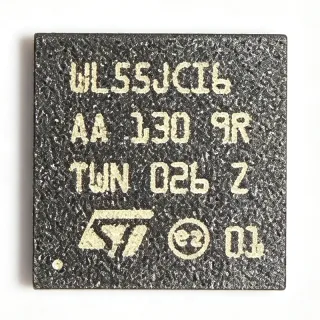
ADMV4821 - 24-29.5GHz 5G Beamformer | Analog Devices
部品番号: ADMV4821 ✓ 生産中| 数量 | 単価 | 小計 |
|---|---|---|
| 1 | $150 | $150.00 |
| 10 | $135 | $1,350.00 |
| 100 | $120 | $12,000.00 |
| 500 | $105 | $52,500.00 |
| 1,000 | $90 | $90,000.00 |
ADMV4821 概要
A beamformer is a key component in phased-array antenna systems, responsible for adjusting the phase and amplitude of signals to steer the antenna beam electronically without moving parts. In 5G mmWave base stations, beamformers enable massive MIMO (Multiple-Input Multiple-Output) configurations, improving spectral efficiency and coverage. The ADMV4821 integrates 16 channels, each with independent phase and gain control, into a single IC, significantly reducing the size and complexity of the RF front-end compared to discrete implementations.
Key features include a wide operating frequency range covering multiple 5G bands, 16 TX and 16 RX channels, dual polarization support, and a serial peripheral interface (SPI) for control. The device operates over a -40°C to +95°C case temperature range, making it suitable for outdoor base station environments. The LGA package with top-side heatsinking allows for efficient heat dissipation, crucial for high-power beamforming applications.
The ADMV4821 uses a SiGe process technology, offering a good balance of performance and integration for mmWave frequencies. The SPI interface enables precise control of phase and gain settings, with a protocol consisting of a read/write bit, 15 register address bits, and 8 data bits. The device includes internal LDO regulators, allowing it to be powered from a single supply, simplifying power supply design.
Typical applications include 5G NR base stations, phased-array antennas, satellite communications, and radar systems. In 5G base stations, the ADMV4821 is used in the active antenna unit to form and steer beams, improving signal quality and capacity. Its dual-polarization capability supports polarization diversity, enhancing link reliability.
When designing with the ADMV4821, careful attention must be paid to thermal management, as the device can dissipate significant power. The LGA package's top-side heatsinking should be utilized with an appropriate heatsink or thermal interface material. Additionally, the SPI interface should be properly terminated and decoupled to ensure reliable control.
ドロップイン代替品: ADMV4821 — 同一パッケージでピン互換。PCBの作り直しが必要な異なるパッケージの部品は除外されています。
このシリーズのバリエーション
同一シリーズでドロップイン互換のモデル: ADMV4821 (同一形状・フットプリント).
クイック比較ツール — 並列比較する代替部品を選択:
ADMV4828
⚡ 同一パッケージ📋 参考代替品(カタログ未掲載)
ADMV4801
⚡ 同一パッケージ📋 参考代替品(カタログ未掲載)
ADMV4821BCCZ
✅ ドロップイン📋 参考代替品(カタログ未掲載)
ADMV4821-EVALZ
⚡ 同一パッケージ📋 参考代替品(カタログ未掲載)
ADMV4821
✅ ドロップイン✓ 在庫あり
$90 / 個
データシートを見る →ADMV4821 仕様
| RF Frequency Range | 24 GHz to 29.5 GHz |
| 5G NR Bands | n257, n258, n261 |
| Number of TX Channels | 16 |
| Number of RX Channels | 16 |
| Polarization | Horizontal and Vertical |
| RF Input/Output | Matched 50 ohm single-ended |
| Control Interface | SPI (read/write bit, 15-bit address, 8-bit data) |
| Case Temperature Range | -40°C to +95°C |
| Process Technology | Silicon Germanium (SiGe) |
| Package Type | LGA |
| Heatsinking | Top-side heatsinking supported |
| Power Supply | Single supply with internal LDO regulators |
| Logic Level | 1.8 V chip logic, 3.3 V SDP-S logic |
| Evaluation Board | ADMV4821-EVALZ |
| Lifecycle | Recommended for New Designs |
ADMV4821 ピン構成
| ピン 1 | RFH — Horizontal polarization RF common pin |
| ピン 2 | RFV — Vertical polarization RF common pin |
| ピン 3 | GND — Ground |
| ピン 4 | VDD — Power supply |
| ピン 5 | SPI_CLK — SPI clock input |
| ピン 6 | SPI_DATA — SPI data input/output |
| ピン 7 | SPI_CS — SPI chip select |
| ピン 8 | TX_EN — Transmit enable |
| ピン 9 | RX_EN — Receive enable |
| ピン 10 | TEMP — Temperature sensor output |
主な用途
ADMV4821 の用途: 6 件s: 5G NR Base Stations, Phased-Array Antennas, Satellite Communications, Radar Systems, Point-to-Point Communications, Test and Measurement.
5G NR Base Stations
The ADMV4821 is ideal for 5G NR base stations operating in the n257, n258, and n261 bands. Its 16 TX and 16 RX channels enable massive MIMO configurations, improving spectral efficiency and coverage. The dual-polarization support enhances link reliability through polarization diversity. The wide frequency range allows a single design to address multiple bands, reducing hardware complexity. The SPI interface enables precise beam steering, essential for active antenna units. The LGA package with top-side heatsinking supports efficient thermal management in outdoor environments.
おすすめ
Phased-Array Antennas
The ADMV4821 is a key component in phased-array antennas, providing electronic beam steering without moving parts. Its 16 channels with independent phase and gain control allow precise beamforming. The dual-polarization capability supports both horizontal and vertical polarization, enabling polarization diversity. The compact LGA package allows flexible antenna placement on the opposite side of the PCB, simplifying array design. The SPI interface facilitates rapid beam state changes, essential for dynamic beam steering in radar and communication systems.
おすすめ
Satellite Communications
The ADMV4821's 24-29.5 GHz frequency range covers Ka-band satellite communication uplinks and downlinks. Its high integration reduces the size and weight of satellite terminals, crucial for space-constrained applications. The dual-polarization support enables frequency reuse, increasing data throughput. The SiGe process provides good performance at mmWave frequencies, ensuring reliable links. The SPI interface allows precise beam control for tracking satellites. The LGA package with top-side heatsinking is suitable for the thermal demands of high-power transmission.
おすすめ
Radar Systems
The ADMV4821 is suitable for mmWave radar systems, such as automotive radar and surveillance radar. Its 16 TX and 16 RX channels enable high-resolution beamforming, improving target detection and tracking. The wide frequency range allows operation in various radar bands. The dual-polarization capability enhances target discrimination. The SPI interface enables fast beam steering for scanning. The LGA package with top-side heatsinking supports high-power operation. The SiGe process ensures reliable performance in harsh environments.
おすすめ
Point-to-Point Communications
The ADMV4821 can be used in point-to-point microwave links operating in the 24-29.5 GHz band. Its high integration reduces the size and cost of the RF front-end. The dual-polarization support allows full-duplex operation on a single frequency, doubling capacity. The SPI interface enables adaptive beamforming to mitigate interference. The LGA package with top-side heatsinking is suitable for outdoor installations. The SiGe process provides low noise and high linearity, ensuring reliable high-speed data links.
おすすめ
Test and Measurement
The ADMV4821 is used in test and measurement equipment for 5G and mmWave applications. Its 16 channels allow parallel testing of multiple antenna elements, speeding up production testing. The SPI interface enables automated control of phase and gain settings. The wide frequency range covers multiple 5G bands, making it versatile for various test scenarios. The LGA package with top-side heatsinking supports continuous operation. The SiGe process ensures accurate and repeatable performance.
おすすめ
おすすめ製品の概要
エンジニアリング参考データ: ADMV4821 — 比較、設計ガイダンス、コンプライアンス情報。
選定ガイド
代替品との比較
| パラメータ | この製品 | ADMV4828 | ADMV4801 | ADMV4821BCCZ |
|---|---|---|---|---|
| Package | LGA | LGA | LGA | LGA |
| Brand | Analog Devices | Analog Devices | Analog Devices | Analog Devices |
| RF Frequency Range | 24 GHz to 29.5 GHz | 24 GHz to 29.5 GHz | 24 GHz to 29.5 GHz | 24 GHz to 29.5 GHz |
| Control Interface | SPI | SPI | SPI | SPI |
主な差別化要因
- 16 TX and 16 RX channels in a single IC (vs ADMV4828)
- Dual polarization support (vs ADMV4801)
- Wide frequency range covering n257, n258, n261 (vs ADMV4828)
設計ノート
The ADMV4821 can dissipate significant power during high-power beamforming. The LGA package supports top-side heatsinking, which should be utilized with an appropriate heatsink or thermal interface material. Ensure adequate airflow and consider the case temperature range of -40°C to +95°C. For high-power operation, a thermal simulation is recommended to verify junction temperatures stay within limits.
For optimal RF performance, use a high-frequency laminate with controlled impedance for the 50-ohm single-ended RF traces. Keep RF traces as short as possible and use via fencing to prevent signal leakage. Place decoupling capacitors close to the power pins to minimize noise. The SPI lines should be routed away from RF traces to avoid interference.
Ensure the SPI interface is properly terminated and decoupled to avoid control errors. The level shifters translate 1.8V chip logic to 3.3V SDP-S logic; verify voltage levels. Do not exceed the maximum case temperature of +95°C. Also, ensure the antenna placement on the opposite side of the PCB does not interfere with the heatsink.
コンプライアンス情報
Compliance information not explicitly stated in the provided data. Refer to the official datasheet or contact Analog Devices for RoHS/REACH status.