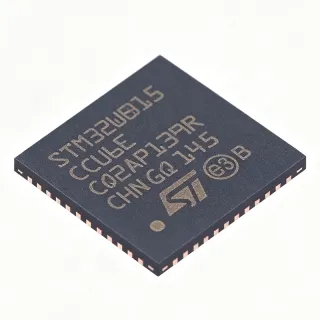
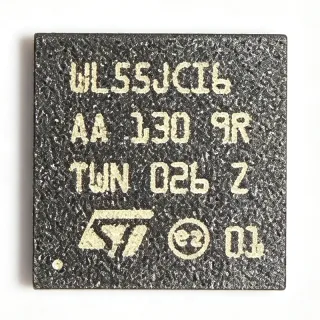
QCC3003-0-52MQFN-TR-00-0 Bluetooth 5 Audio SoC | Qualcomm
部品番号: QCC3003-0-52MQFN-TR-00-0 ✓ 生産中| 数量 | 単価 | 小計 |
|---|---|---|
| 1 | $0 | $0.00 |
| 10 | $0 | $0.00 |
| 100 | $0 | $0.00 |
| 500 | $0 | $0.00 |
| 1,000 | $0 | $0.00 |
QCC3003-0-52MQFN-TR-00-0 概要
A Bluetooth audio SoC integrates wireless connectivity, digital signal processing, audio interfaces, firmware configuration, and power-management functions into one semiconductor. In the product hierarchy, the QCC3003 is a Bluetooth wireless-audio system-on-chip, an audio processor, a wireless-audio IC, and a semiconductor. Its purpose is to reduce the component count required to build compact headset and speaker products while supporting voice pickup, wireless control, and configurable audio behavior.
The supplied technical information identifies eight-generation cVc noise cancellation, one- and two-microphone input support, enhanced GAIA integration, external QSPI flash for configuration and voice-related storage, and a flash-programmable platform. The product also uses the QCC300x family software and hardware ecosystem. These features are useful for OEM customization, firmware differentiation, and headset designs that need more audio capability than a basic entry-level Bluetooth audio controller.
The 52-pin QFN package is intended for compact surface-mounted consumer-electronics designs. Exact pin names, electrical limits, clock details, current ratings, memory capacities, and codec specifications were not included in the verified data and must be confirmed against the manufacturer documentation before layout or production use. Do not infer pin compatibility solely from the family name; Bluetooth audio SoCs can differ in firmware, peripherals, ball assignments, and application requirements.
Typical uses include Bluetooth headsets, wireless headphones, portable speakers, voice-enabled speakers, and compact mobile accessories. In a headset, the integrated DSP and microphone inputs can support voice communication and noise-management functions, while Bluetooth connectivity removes a wired cable between the device and the phone. In a speaker, the same platform can provide configurable audio behavior and wireless control when paired with appropriate firmware and peripheral circuitry.
The most important design consideration is validation of the complete hardware and software package. Because the available source identifies the QCC3003 family but does not provide a complete electrical table or pinout, power rails, decoupling, exposed-pad treatment, antenna integration, and required external components must be checked against Qualcomm’s official QCC3003 documentation. Use the audio development kit and tools specified by Qualcomm when developing production firmware.
This page consolidates the verified product identity, package information, Bluetooth audio positioning, and source-linked technical context. It also distinguishes confirmed features from parameters that were not supplied, helping engineers evaluate the QCC3003-0-52MQFN-TR-00-0 without treating incomplete distributor descriptions as complete datasheet specifications.
ドロップイン代替品: QCC3003-0-52MQFN-TR-00-0 — 同一パッケージでピン互換。PCBの作り直しが必要な異なるパッケージの部品は除外されています。
クイック比較ツール — 並列比較する代替部品を選択:
この製品に利用可能なドロップイン代替品はありません。
代替品をリクエストQCC3003-0-52MQFN-TR-00-0 仕様
| Product Type | Bluetooth audio system-on-chip (SoC) |
| Wireless Version | Bluetooth 5 |
| Programming | Flash-programmable |
| パッケージ | 52-pin QFN |
| Package Family | QFN surface-mount package |
| Audio DSP | Low-power audio DSP with on-chip ROM and RAM |
| Microphone Inputs | One- and two-microphone inputs |
| Noise Cancellation | 8th-generation Qualcomm cVc Noise Cancellation Technology |
| Software | GAIA |
| External Memory | External QSPI flash for configuration and voice-related storage |
| Audio Functions | Integrated audio codecs and audio processing |
| Target Applications | Bluetooth headsets and speakers |
| 実装タイプ | Surface mount |
QCC3003-0-52MQFN-TR-00-0 qfn surface-mount package ピン配置ガイド
QCC3003-0-52MQFN-TR-00-0 (qfn surface-mount package パッケージ) のピン配置。 ピン番号、機能、接続図はメーカーのデータシートで定義されています。正確なフットプリントとはんだ付けのガイドラインについては、データシートを参照してください。

詳細なピン配置データはありません: QCC3003-0-52MQFN-TR-00-0.
詳細は データシート をご参照ください。
主な用途
QCC3003-0-52MQFN-TR-00-0 の用途: 7 件s: Bluetooth Wireless Headsets, Wireless Headphones, Bluetooth Portable Speakers, Voice-Enabled Wireless Speakers, Compact Mobile Audio Accessories, Battery-Powered Wireless Audio Products, OEM-Customized Bluetooth Audio Products.
Bluetooth Wireless Headsets
The QCC3003 is a suitable platform for Bluetooth headsets because the verified source identifies headset applications, a low-power audio DSP, one- and two-microphone inputs, and 8th-generation Qualcomm cVc Noise Cancellation Technology. A headset design can place the SoC near the microphone and audio-routing circuitry while using the integrated Bluetooth connectivity to communicate with a phone or other host. The main engineering checks are microphone biasing, audio signal levels, acoustic front-end design, power sequencing, battery charging, and firmware profile support.
おすすめ
Wireless Headphones
The QCC3003 can support wireless headphones where the product needs Bluetooth 5 connectivity and configurable audio processing without a separate host controller. Its documented cVc Noise Cancellation Technology and microphone-input support are relevant to voice calls and ambient-noise control. The SoC does not itself provide the complete analog headphone path, amplifier, codec implementation, or mechanical acoustic solution; those blocks must be integrated according to Qualcomm’s reference design and the product’s frequency-response targets.
おすすめ
Bluetooth Portable Speakers
The QCC3003 is identified as suitable for speakers and can provide the wireless control and audio-processing foundation for a compact portable speaker. Its flash-programmable architecture allows OEM-specific behavior to be integrated into the product design, while the integrated audio DSP can reduce the need for separate control logic. The design still requires a speaker amplifier, speaker protection strategy, battery charger, power management, enclosure acoustics, and firmware selection for the intended Bluetooth profiles.
おすすめ
Voice-Enabled Wireless Speakers
Voice-enabled wireless speakers benefit from the QCC3003 because the verified description identifies microphone inputs, cVc noise cancellation, and GAIA integration for device communication. These functions can support voice-capture and control workflows when paired with appropriate microphones, firmware, and service support. The SoC’s role is primarily system integration and audio processing; final speech quality depends on microphone placement, analog front-end design, acoustic echo control, speaker-to-microphone isolation, and power-management performance.
おすすめ
Compact Mobile Audio Accessories
The QCC3003 can serve compact mobile accessories that need Bluetooth audio connectivity, programmable behavior, and integrated audio processing. Its 52-pin QFN package is suitable for surface-mounted designs, although the verified data does not provide package dimensions, thermal limits, or a pin diagram. Layout planning must therefore begin with the official package drawing and design guide, including exposed-pad treatment, high-frequency return paths, RF antenna integration, and local power bypassing.
おすすめ
Battery-Powered Wireless Audio Products
The low-power audio DSP and integrated Bluetooth audio architecture make the QCC3003 relevant to battery-powered wireless products. Power consumption, battery charger behavior, and low-power states were not quantified in the verified source, so engineers should not size a battery from general SoC claims alone. Validate sleep behavior, active-current limits, regulator requirements, charging topology, thermal conditions, and the final accessory load using the manufacturer’s electrical documentation.
おすすめ
OEM-Customized Bluetooth Audio Products
The flash-programmable QCC3003 platform is suited to OEM customization because it combines an audio DSP, integrated codecs, microphone support, GAIA, and external QSPI flash capability in one SoC. This can reduce the need for separate programmable audio components while supporting product-specific behavior. Custom designs must carefully plan configuration storage, firmware update mechanisms, production programming, test access, Bluetooth qualification, and lifecycle support before committing to a mass-market release.
おすすめ
エンジニアリング参考データ: QCC3003-0-52MQFN-TR-00-0 — 比較、設計ガイダンス、コンプライアンス情報。
選定ガイド
代替品との比較
| パラメータ | この製品 |
|---|---|
| Package | 52-pin QFN |
| Brand | Qualcomm |
| Wireless Version | Bluetooth 5 |
| Product Type | Bluetooth audio system-on-chip |
| Programming | Flash-programmable |
| Microphone Inputs | One- and two-microphone inputs |
| Noise Cancellation | 8th-generation Qualcomm cVc Noise Cancellation Technology |
| External Memory Support | External QSPI flash |
| Target Applications | Bluetooth headsets and speakers |
| Audio Processor | Low-power audio DSP |
主な差別化要因
- Integrated Bluetooth 5 audio SoC positioning (vs Generic Bluetooth audio controller)
- Eight-generation cVc noise-cancellation technology (vs QCC3003 family comparison candidates)
- External QSPI flash configuration support (vs QCC3003 family comparison candidates)
設計ノート
Do not begin the layout from the distributor package description alone. Download the official QCC3003 package drawing and pin definition, then place the 52-pin QFN with the exposed-pad and thermal requirements shown there. Confirm whether the exposed pad is ground, a thermal connection, or a specified power plane connection before routing. The verified data does not include dimensions or pin assignments, so the package library is marked default rather than guessing a footprint.
Plan the power tree from the official QCC3003 electrical limits before selecting regulators, decoupling capacitors, or a battery. The verified material identifies battery charging and a low-power audio DSP but does not specify supply voltage, active current, sleep current, charger limits, or power-sequencing requirements. Validate those values in the manufacturer documentation and include local bypass close to each documented power pin according to the reference design.
Treat the Bluetooth radio, microphone inputs, audio outputs, external QSPI flash, and power return paths as one constrained signal-integrity and layout system. Keep RF routing consistent with Qualcomm’s reference design, provide a continuous ground reference where required, and avoid noisy switching or digital return paths beneath sensitive audio and microphone connections. Exact trace geometry, antenna structure, and keepout rules must come from the official hardware design guide.
A QCC3003-family device is not automatically a drop-in replacement for another QCC300x or Bluetooth-audio SoC. Check the exact MPN suffix, package ball map, supply rails, memory requirements, Bluetooth profiles, audio interfaces, boot or programming process, and Qualcomm firmware compatibility before substitution. The supplied sources mention multiple QCC300x devices but do not establish pin or functional equivalence among them.
コンプライアンス情報
The supplied verified data does not state RoHS, REACH, AEC-Q100, lead-free, halogen-free, or conflict-minerals status. Compliance must be confirmed from Qualcomm or the authorized distributor documentation.