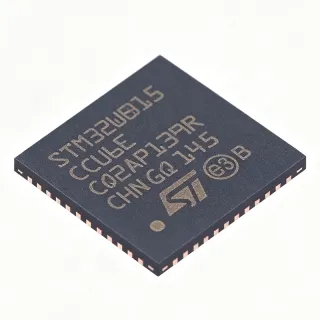
TDA5210XUMA1 - ASK/FSK RF Receiver 868MHz | Infineon
部品番号: TDA5210XUMA1 ✓ 生産中| 数量 | 単価 | 小計 |
|---|---|---|
| 1 | $8.95 | $8.95 |
| 10 | $8.05 | $80.50 |
| 100 | $7.16 | $716.00 |
| 500 | $6.44 | $3,220.00 |
| 1,000 | $5.79 | $5,790.00 |
TDA5210XUMA1 概要
An RF receiver IC is a component in the wireless-signal-chain hierarchy (RF receiver -> RF/IF and RFID -> radio-frequency semiconductor) that selects, down-converts, demodulates, and digitizes weak modulated carrier signals from the air interface. The TDA5210 family performs this using a superheterodyne architecture with integrated low-noise amplifier, image-reject mixing, IF filtering, and a data slicer, so a single 5 V supply part can deliver a complete receive front end for one-way or two-way sub-GHz links.
Key features include dual frequency-band coverage (810-870 MHz and 400-440 MHz), both ASK and FSK demodulation selectable by configuration, a very low standby current of 50 nA that enables years of battery life in receive-when-needed systems, and a fully integrated PLL synthesizer that removes the need for external VCO or varactor tuning. According to the Infineon TDA5210 datasheet, the -107 dBm sensitivity corresponds to reliable decoding of 100 kbps data in noisy ISM/SRD band environments.
Technically, the device combines a low-noise gain stage, quadrature/ASK demodulator, and digital baseband slicing with a fractional-N style PLL referenced from a crystal oscillator. Polling mode lets a microcontroller wake the receiver periodically while the 50 nA sleep current dominates the average consumption budget.
Typical applications include RF alarm and security systems operating in the 868 MHz European SRD band, 433 MHz remote keyless entry and telemetry, and low-power wireless sensor nodes in smart-home and industrial monitoring.
Design consideration: the receiver runs from a 4.5 V to 5.5 V supply, so 3.3 V systems need an LDO or level-shifting on the digital interface; keep the crystal and matching network traces short for stable PLL lock.
This page synthesizes distributor pricing, drop-in family alternatives, and practical design notes not found in the manufacturer datasheet.
ドロップイン代替品: TDA5210XUMA1 — 同一パッケージでピン互換。PCBの作り直しが必要な異なるパッケージの部品は除外されています。
このシリーズのバリエーション
同一シリーズでドロップイン互換のモデル: TDA5210XUMA1 (同一形状・フットプリント) — 相違点: Product Type, Modulation, Architecture, Mounting Type, Package.
クイック比較ツール — 並列比較する代替部品を選択:
TDA5210
✅ ドロップイン✓ 在庫あり
$2.75 / 個
データシートを見る →TDA5211
✅ ドロップイン✓ 在庫あり
価格はお問い合わせください
データシートを見る →TDA5230
✅ ドロップイン✓ 在庫あり
$1.28 / 個
データシートを見る →TDA5200
✅ ドロップイン✓ 在庫あり
$3.98 / 個
データシートを見る →TDA5201
✅ ドロップイン✓ 在庫あり
$2.4 / 個
データシートを見る →TDA5235XUMA1
✅ ドロップイン✓ 在庫あり
価格はお問い合わせください
データシートを見る →TDA5210XUMA1 仕様
| 機能 | RF Receiver |
| Modulation | ASK, FSK |
| Frequency Range (Band 1) | 810 MHz to 870 MHz |
| Frequency Range (Band 2) | 400 MHz to 440 MHz |
| Sensitivity | -107 dBm |
| Maximum Data Rate | 100 kbps |
| 電源電圧 | 4.5 V to 5.5 V |
| Standby Current | 50 nA |
| パッケージ | PG-TSSOP-28 |
| 実装タイプ | Surface Mount |
| Application | RF Alarm System |
| Mounting Feature | PCB, Surface Mount |
| Packaging | Tape & Reel (T/R) |
| Temperature Range | -40C to +105C |
| Product Type | ASK/FSK Receiver, RF Receivers |
TDA5210XUMA1 pg-tssop-28 ピン配置ガイド
TDA5210XUMA1 (pg-tssop-28 パッケージ) のピン配置。 ピン番号、機能、接続図はメーカーのデータシートで定義されています。正確なフットプリントとはんだ付けのガイドラインについては、データシートを参照してください。

詳細なピン配置データはありません: TDA5210XUMA1.
詳細は データシート をご参照ください。
主な用途
TDA5210XUMA1 の用途: 6 件s: RF Alarm and Security Systems, Remote Keyless Entry (RKE) Receivers, 868 MHz SRD Telemetry and Metering, Wireless Sensor Networks and Smart Home, Industrial Monitoring and Control Links, Gate and Garage Door Openers.
RF Alarm and Security Systems
The TDA5210XUMA1's datasheet-listed target application is the RF alarm system, and the fit is driven by concrete parameters: -107 dBm sensitivity gives long-range door/window and PIR sensor links through building structures, while ASK demodulation matches the simple on-off-keyed transmitters used by most alarm sensors in the 868 MHz SRD and 433 MHz ISM bands. The 100 kbps maximum data rate comfortably accommodates rolling-code and fixed-code alarm protocols, which typically run at a few kbps to tens of kbps. In the base station, the receiver sits between the antenna matching network and the panel microcontroller, with the integrated PLL and IF filter removing external tuning parts. The 50 nA standby current lets battery-backed panels keep the receiver available in polled mode, and the 4.5 V to 5.5 V supply suits mains-derived 5 V rails with battery backup.
おすすめ
Remote Keyless Entry (RKE) Receivers
For 433.92 MHz remote keyless entry, the TDA5210XUMA1's 400 MHz to 440 MHz band coverage lands exactly on the global RKE carrier. Its -107 dBm sensitivity translates to tens of meters of link margin from a low-power key-fob transmitter, and ASK mode matches the amplitude-modulated OOK fobs that dominate automotive and building-access markets. The 100 kbps data-rate ceiling is far above the 2-20 kbps typical of rolling-code protocols such as Keeloq-class schemes, so protocol headroom is ample. The receiver's integrated data slicer outputs a clean digital stream to the body-controller microcontroller, and polling operation with 50 nA standby current fits the always-listening requirement of vehicle and garage receivers supplied from a permanent 5 V or boosted rail. Crystal-referenced PLL synthesis keeps channel accuracy within SRD regulations without factory tuning.
おすすめ
868 MHz SRD Telemetry and Metering
European short-range-device telemetry at 868 MHz is directly served by the TDA5210XUMA1's 810 MHz to 870 MHz band. FSK demodulation supports the higher noise immunity needed for utility meter reading and building-automation data links, while the -107 dBm sensitivity enables kilometer-scale line-of-sight links and solid in-building coverage from sensor nodes. The 100 kbps maximum data rate covers both slow M-bus-style reporting and faster interval-read bursts. Battery-powered nodes benefit from the 50 nA sleep current: waking the receiver once per second for a few milliseconds raises average consumption only marginally above the standby floor. The PG-TSSOP-28 package simplifies the RF layout on meter PCBs, and the 5 V supply accepts the commonly available 5 V rail in metering installations.
おすすめ
Wireless Sensor Networks and Smart Home
Smart-home sensor nodes - door contacts, smoke detectors, temperature and motion sensors - need a receiver that balances sensitivity, sleep current, and band flexibility. The TDA5210XUMA1 provides -107 dBm receive sensitivity for whole-house coverage from a central gateway, ASK/FSK demodulation for compatibility with common sub-GHz sensor protocols, and 50 nA standby for gateway units that must remain reachable between polling windows. Dual-band support (400-440 MHz and 810-870 MHz) allows one receiver design to be certified for the 433 MHz and 868 MHz regional variants, reducing BOM proliferation for global smart-home product lines. Data rates up to 100 kbps permit fast scene-command reception, and the TSSOP-28 package with PCB surface mounting integrates cleanly on gateway controller boards.
おすすめ
Industrial Monitoring and Control Links
In industrial plants, sub-GHz ASK/FSK links carry status and alarm data from machinery to supervisory units. The TDA5210XUMA1's -40C to +105C operating temperature range suits control cabinets and outdoor enclosures, and the 5 V supply matches industrial logic rails. Its -107 dBm sensitivity overcomes the heavy attenuation of steel structures and cable trays in the 868 MHz band, while FSK mode resists the broadband interference generated by variable-frequency drives and switch-mode loads. The 100 kbps rate supports periodic sensor polling and event-triggered alarm traffic alike. Because the PLL is crystal-referenced, frequency accuracy remains within SRD and ISM regulatory masks over the full temperature span without compensation components, simplifying certification for factory-installed monitoring equipment.
おすすめ
Gate and Garage Door Openers
Gate and garage opener receivers are classic 433.92 MHz ASK applications, and the TDA5210XUMA1's 400 MHz to 440 MHz band with -107 dBm sensitivity provides the long-range, low-cost link that these products demand - typically 30 to 100 meters from a key-fob or wall transmitter. ASK demodulation matches the OOK encoding used by nearly all opener remotes, and the 100 kbps ceiling leaves margin for rolling-code protocols running at 2-10 kbps. The receiver's integrated IF filtering and data slicer deliver a clean bitstream to the opener's security-decoding MCU. The 5 V supply aligns with the motor-control board's logic rail, the TSSOP-28 package withstands vibration in the header environment, and the 50 nA standby current suits solar-powered gate installations with limited battery capacity.
おすすめ
おすすめ製品の概要
エンジニアリング参考データ: TDA5210XUMA1 — 比較、設計ガイダンス、コンプライアンス情報。
選定ガイド
代替品との比較
| パラメータ | この製品 | TDA5210 | TDA5211 | TDA5230 | TDA5200 | TDA5235XUMA1 |
|---|---|---|---|---|---|---|
| Package | PG-TSSOP-28 | PG-TSSOP-28 - same | PG-TSSOP-28 - same | PG-TSSOP-28 - same | PG-TSSOP-28 - same | PG-TSSOP-28 - same |
| Brand | Infineon Technologies | Infineon Technologies | Infineon Technologies | Infineon Technologies | Infineon Technologies | Infineon Technologies |
| Modulation | ASK, FSK | ASK, FSK | ASK, FSK | ASK, FSK | ASK, FSK | ASK, FSK |
| Family Generation | TDA5210 generation | Same generation | Successor generation | Related generation | Earlier generation | Newer generation |
主な差別化要因
- Dual-band coverage in a single receiver (vs TDA5200)
- Ultra-low 50 nA standby current (vs TDA5235XUMA1)
- Proven alarm-system heritage (vs TDA5211)
設計ノート
The TDA5210XUMA1 requires a 4.5 V to 5.5 V rail; it is not a 3.3 V part. If the host system runs at 3.3 V, generate a local 5 V rail with an LDO or boost converter and verify that the microcontroller data pins are 5 V tolerant, or add series resistors/level shifters on the data and configuration lines. Decouple the supply pin with 100 nF ceramic plus 10 uF bulk placed within a few millimeters of the pin; RF receivers are sensitive to supply ripple, which can raise the effective noise floor and erode the -107 dBm sensitivity.
Keep the RF input matching network, crystal, and PLL loop-filter traces as short as possible and place a solid ground plane directly beneath the receiver section of the board. According to the Infineon TDA5210 datasheet application circuits, the LNA input matching components and crystal load capacitors set both sensitivity and channel accuracy - long traces add parasitic inductance that detunes the 433/868 MHz input match. Separate the digital data-output routing from the RF front end to avoid coupling spurs into the -107 dBm signal path.
Two frequent mistakes with the TDA5210 family: (1) omitting or undervaluing the standby/polling configuration, which can leave the receiver drawing milliamps instead of the specified 50 nA and destroy the battery-life budget; (2) assuming FSK mode performs identically to ASK - FSK requires the correct IF and discriminator configuration, and an incorrect setup degrades sensitivity several dB. Verify demodulator configuration settings against the datasheet for the actual carrier (433.92 MHz vs 868 MHz) before releasing the layout.
コンプライアンス情報
RoHS/REACH/lead-free status was not explicitly stated in the verified web data; Infineon lists the part as an active product. Confirm environmental compliance on the Infineon product page or distributor environmental data sheet.