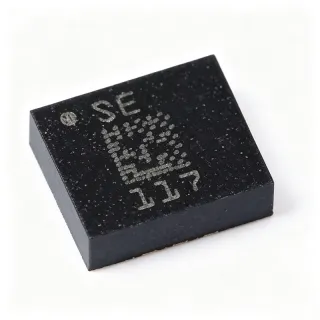
L99LD21 - Automotive High Power LED Driver | STMicroelectronics
MPN: L99LD21 ✓ Active| Qty | Unit Price | Extended |
|---|---|---|
| 1 | $4.5 | $4.50 |
| 10 | $4.05 | $40.50 |
| 100 | $3.6 | $360.00 |
| 500 | $3.24 | $1,620.00 |
| 1,000 | $2.88 | $2,880.00 |
L99LD21 Overview
An LED driver is a power management IC that regulates the current flowing through one or more LEDs to ensure consistent brightness and protect the LEDs from current-induced damage. In automotive lighting, LED drivers are essential for headlamps, daytime running lights, and interior lighting, where they convert the vehicle's battery voltage into a controlled current source. The L99LD21 belongs to the family of automotive LED drivers, which are part of the broader power management IC category, and are designed to meet stringent automotive reliability standards such as AEC-Q100.
Key features of the L99LD21 include a wide input voltage range, high output current capability, and integrated protection features such as over-temperature and over-voltage protection. The device supports PWM dimming for brightness control and includes a fault diagnostic output for system monitoring. Its high efficiency reduces power dissipation, which is critical in thermally constrained automotive environments. The device is AEC-Q100 qualified, ensuring reliability for automotive applications.
The L99LD21 uses a boost converter topology to step up the battery voltage to the level required by the LED string, while the integrated high-side current source regulates the LED current with high accuracy. This architecture minimizes external component count and simplifies PCB layout. The device is available in a compact QFN40L 6x6 package with wettable flanks and exposed pad, suitable for space-constrained automotive modules. It also features ST SPI communication v4.1, a timeout watchdog, and a limp home function for enhanced safety.
Typical applications include automotive headlamps, daytime running lights, fog lamps, and interior ambient lighting. The device's robust design and automotive qualification make it suitable for use in harsh environments with wide temperature variations and electrical transients. The L99LD21 is also available as an evaluation board (L99LD21-ADIS) for development and testing.
When designing with the L99LD21, it is important to ensure proper thermal management and to select external components that meet the device's specifications. The PWM dimming input allows for flexible brightness control, and the fault output can be used to implement diagnostic functions in the vehicle's lighting control unit. The device's low standby current helps reduce power consumption when the lighting system is not in use.
Drop-in alternatives for L99LD21 — same package, pin-to-pin compatible. Different-package parts requiring PCB rework are excluded.
Quick Comparison Tool — Select alternative parts for side-by-side comparison:
L99LD21Q6TR
✅ Drop-In📋 Reference alternative (not in catalog)
L99LD21 Maximum Ratings & Electrical Characteristics
| Number of Outputs | 2 |
| Output Current per Channel | 1.5 A (average) |
| Output Voltage (LED string) | Up to 50 V |
| Input Voltage Range | 5.5 V to 24 V |
| Topology | Boost |
| Dimming | PWM |
| Communication Interface | ST SPI v4.1 |
| Package | QFN40L 6x6 (wettable flanks) |
| Mounting Type | Surface Mount |
| AEC-Q100 Qualified | Yes |
| Load Dump Protection | Yes |
| Watchdog | Timeout watchdog |
| Limp Home Function | Yes |
| Standby Current | Low |
L99LD21 Pin Configuration
| Pin 1 | VCC — Power supply input |
| Pin 2 | GND — Ground |
| Pin 3 | LED1 — LED string 1 output |
| Pin 4 | LED2 — LED string 2 output |
| Pin 5 | PWM — PWM dimming input |
| Pin 6 | SPI_CLK — SPI clock |
| Pin 7 | SPI_CS — SPI chip select |
| Pin 8 | SPI_MOSI — SPI data input |
| Pin 9 | SPI_MISO — SPI data output |
| Pin 10 | FAULT — Fault diagnostic output |
| Pin 11 | BOOST — Boost converter output |
| Pin 12 | ISENSE — Current sense input |
Typical Applications
L99LD21 is suitable for 6 applications: Automotive Headlamps, Daytime Running Lights, Fog Lamps, Interior Ambient Lighting, Adaptive Front Lighting Systems, Commercial Vehicle Lighting.
Automotive Headlamps
The L99LD21 is ideal for automotive headlamps, providing two independent channels with up to 1.5 A each to drive high-brightness LEDs. Its boost topology efficiently steps up the battery voltage to the required LED string voltage, while PWM dimming enables adaptive lighting features. The AEC-Q100 qualification ensures reliable operation in harsh automotive environments, and the integrated protection features safeguard against over-temperature and over-voltage conditions.
Recommended
Daytime Running Lights
The L99LD21 is well-suited for daytime running lights (DRLs), offering precise current control to maintain consistent brightness. Its wide input voltage range (5.5 V to 24 V) accommodates various vehicle electrical systems, and the low standby current helps reduce power consumption when the DRLs are not in use. The device's compact QFN40L package allows for space-efficient integration into the vehicle's lighting module.
Recommended
Fog Lamps
The L99LD21 is suitable for fog lamps, providing robust current regulation for high-brightness LEDs. Its boost topology ensures efficient power conversion, and the integrated protection features, including load dump protection, enhance reliability in demanding conditions. The device's two independent channels allow for flexible lighting configurations, such as separate left and right fog lamps.
Recommended
Interior Ambient Lighting
The L99LD21 can be used for interior ambient lighting, offering PWM dimming for adjustable brightness levels. Its wide input voltage range and low standby current make it energy-efficient for interior applications. The device's compact package and integrated features simplify design, allowing for easy integration into the vehicle's interior lighting system.
Recommended
Adaptive Front Lighting Systems
The L99LD21 is ideal for adaptive front lighting systems (AFS), providing precise current control and PWM dimming for dynamic light patterns. Its two independent channels enable separate control of low and high beams, while the ST SPI communication interface allows for advanced control and diagnostics. The device's automotive qualification ensures reliable operation in safety-critical applications.
Recommended
Commercial Vehicle Lighting
The L99LD21 is suitable for commercial vehicle lighting, such as trucks and buses, where robust and reliable LED drivers are required. Its wide input voltage range (5.5 V to 24 V) accommodates 24 V electrical systems commonly found in commercial vehicles. The device's high output current capability and integrated protection features make it a reliable choice for demanding applications.
Recommended
Recommended Products Summary
Engineering reference data for L99LD21 — comparison, design guidance, and compliance information.
Selection Guide
Comparison with Alternatives
| Parameter | This Product | L99LD21Q6TR | TPS92692-Q1 | LT3966 |
|---|---|---|---|---|
| Package | QFN40L 6x6 | QFN40L 6x6 | HTSSOP-20 | QFN-40 |
| Brand | STMicroelectronics | STMicroelectronics | Texas Instruments | Analog Devices |
| Number of Outputs | 2 | 2 | 1 | 2 |
| Output Current per Channel | 1.5 A | 1.5 A | 5 A | 1 A |
| Input Voltage Range | 5.5 V to 24 V | 5.5 V to 24 V | 4.5 V to 65 V | 4 V to 36 V |
| Topology | Boost | Boost | Boost | Boost |
| Dimming | PWM | PWM | PWM | PWM |
| AEC-Q100 Qualified | Yes | Yes | Yes | No |
Key Differentiators
- Two independent channels with high current capability (vs TPS92692-Q1)
- AEC-Q100 qualified for automotive reliability (vs LT3966)
- Integrated boost controller and high-side current source (vs TPS92692-Q1)
Design Notes
The L99LD21 in a QFN40L package requires proper thermal management. Ensure adequate copper area on the PCB and consider thermal vias to dissipate heat from the exposed pad. For high-current applications, calculate the power dissipation and verify the junction temperature stays within limits.
Place the boost converter components, including the inductor and output capacitor, close to the IC to minimize parasitic inductance. Use a solid ground plane and separate the power ground from the analog ground to reduce noise. Follow the layout guidelines in the datasheet for optimal performance.
Ensure the SPI communication lines are properly terminated and have appropriate pull-up resistors. The fault output should be monitored by the microcontroller to implement diagnostic functions. Verify the PWM dimming frequency and duty cycle to avoid audible noise in the LED driver.
Compliance Information
AEC-Q100 qualified per datasheet. RoHS and REACH status not specified in the provided data.