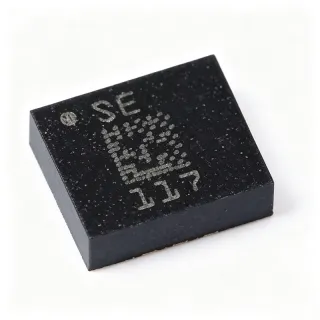
STM32L4Q5VGT6 - Ultra-Low-Power ARM Cortex-M4 MCU | STMicroelectronics
MPN: STM32L4Q5VGT6 ✓ Active| Qty | Unit Price | Extended |
|---|---|---|
| 1 | $13.96 | $13.96 |
| 10 | $13.5 | $135.00 |
| 100 | $12.5 | $1,250.00 |
| 500 | $11.5 | $5,750.00 |
| 1,000 | $10.5 | $10,500.00 |
STM32L4Q5VGT6 Overview
An ARM Cortex-M4 microcontroller is a 32-bit processor core designed for embedded systems, offering a balance of performance and power efficiency. It includes a floating-point unit (FPU) for efficient mathematical computations and DSP instructions for signal processing. The STM32L4 series is known for its ultra-low-power modes, including sleep, stop, and standby, which are critical for extending battery life in portable devices.
Key features of the STM32L4Q5VGT6 include 1 MB of flash memory and 320 KB of SRAM, providing ample storage for complex applications. It operates from 1.71V to 3.6V, with a wide temperature range of -40°C to +85°C. The device integrates a rich set of peripherals, including multiple USART, SPI, I2C, USB OTG FS, CAN, and advanced analog features such as a 16-bit ADC and a 12-bit DAC. It also includes a true random number generator (TRNG) and a cryptographic acceleration unit for secure applications.
The STM32L4Q5VGT6 is built on a 40nm process technology, enabling low dynamic power consumption. It features a flexible power management system with multiple power domains, allowing designers to optimize power usage. The device supports various low-power modes, with typical current consumption as low as 100 nA in standby mode, making it suitable for always-on applications.
Typical applications include industrial sensors, smart meters, medical devices, wearable devices, and IoT nodes. Its combination of performance, low power, and rich peripherals makes it a versatile choice for a wide range of embedded systems.
When designing with this MCU, it is essential to consider the power supply decoupling and proper grounding to ensure stable operation. The device requires a 1.8V to 3.6V supply, and it is recommended to use a 100nF capacitor close to each power pin. Additionally, the internal LDO can be used to generate the core voltage, but external regulators may be needed for higher efficiency in battery-powered designs.
Drop-in alternatives for STM32L4Q5VGT6 — same package, pin-to-pin compatible. Different-package parts requiring PCB rework are excluded.
Quick Comparison Tool — Select alternative parts for side-by-side comparison:
STM32L4R5VGT6
✅ Drop-In ⚠️ 参数待验证📋 Reference alternative (not in catalog)
STM32L4Q5VGT6P
✅ Drop-In ⚠️ 参数待验证📋 Reference alternative (not in catalog)
STM32L4S5VGT6
✅ Drop-In ⚠️ 参数待验证📋 Reference alternative (not in catalog)
GD32F450VGT6
⚡ Same Package ⚠️ 参数待验证📋 Reference alternative (not in catalog)
STM32L4Q5VGT6 Maximum Ratings & Electrical Characteristics
| Core Processor | ARM Cortex-M4 with FPU |
| Core Size | 32-Bit Single-Core |
| Speed | 120 MHz |
| Program Memory Size | 1 MB (1M x 8) |
| Program Memory Type | FLASH |
| RAM Size | 320 KB |
| Connectivity | CANbus, I2C, IrDA, LINbus, MMC/SD, QSPI, SAI, SPI, UART/USART, USB OTG FS |
| Peripherals | Brown-out Detect/Reset, DMA, I2S, LCD, POR, PWM, WDT |
| Number of ADC/DAC | 16-bit ADC, 12-bit DAC |
| Operating Voltage | 1.71V to 3.6V |
| Operating Temperature | -40°C to +85°C |
| Package | 100-LQFP (14x14) |
| Mounting Type | Surface Mount |
| Series | STM32L4 |
| RoHS Status | Compliant |
STM32L4Q5VGT6 Pin Configuration
| Pin 1 | VBAT — Battery backup supply |
| Pin 2 | PC13 — GPIO / RTC output |
| Pin 3 | PC14 — GPIO / OSC32_IN |
| Pin 4 | PC15 — GPIO / OSC32_OUT |
| Pin 5 | PF0 — GPIO / OSC_IN |
| Pin 6 | PF1 — GPIO / OSC_OUT |
| Pin 7 | NRST — Reset (active low) |
| Pin 8 | VDD — Digital power supply |
| Pin 9 | VSS — Ground |
| Pin 10 | VDDA — Analog power supply |
| Pin 11 | VREF+ — ADC reference voltage |
| Pin 12 | VREF- — ADC reference ground |
| Pin 13 | PA0 — GPIO / ADC input |
| Pin 14 | PA1 — GPIO / ADC input |
| Pin 15 | PA2 — GPIO / USART2_TX |
| Pin 16 | PA3 — GPIO / USART2_RX |
| Pin 17 | PA4 — GPIO / DAC_OUT1 |
| Pin 18 | PA5 — GPIO / DAC_OUT2 |
| Pin 19 | PA6 — GPIO / SPI1_MISO |
| Pin 20 | PA7 — GPIO / SPI1_MOSI |
Typical Applications
STM32L4Q5VGT6 is suitable for 6 applications: Industrial Sensors, Smart Meters, Medical Devices, Wearable Devices, IoT Nodes, Smart Home.
Industrial Sensors
The STM32L4Q5VGT6 is ideal for industrial sensors due to its ultra-low-power modes and rich analog peripherals. Its 16-bit ADC provides high-resolution measurement of sensor signals, while the multiple communication interfaces (UART, SPI, I2C) enable seamless integration with industrial networks. The MCU's wide operating voltage range (1.71V-3.6V) allows direct battery operation, and its low standby current (100 nA) extends battery life in remote monitoring applications. The cryptographic acceleration unit ensures secure data transmission, making it suitable for smart factory environments.
Recommended
Smart Meters
The STM32L4Q5VGT6 is well-suited for smart meters, offering a combination of low power consumption and high processing capability. Its 120 MHz Cortex-M4 core can handle complex metering algorithms, while the 1 MB flash provides ample storage for calibration data and firmware updates. The integrated 16-bit ADC enables accurate measurement of voltage and current, and the multiple UARTs allow communication with PLC modems or wireless modules. The MCU's low-power modes ensure minimal energy consumption, which is critical for battery-operated meters. Additionally, the TRNG and cryptographic acceleration enhance security for billing and data integrity.
Recommended
Medical Devices
The STM32L4Q5VGT6 is suitable for medical devices such as portable health monitors and diagnostic equipment. Its ultra-low-power operation extends battery life in wearable devices, while the FPU and DSP instructions enable real-time signal processing for ECG or EEG signals. The 16-bit ADC provides high-resolution data acquisition, and the multiple communication interfaces allow data transfer to smartphones or cloud platforms. The device's security features, including TRNG and cryptographic acceleration, ensure patient data privacy. The wide operating temperature range (-40°C to +85°C) makes it reliable in various clinical environments.
Recommended
Wearable Devices
The STM32L4Q5VGT6 is an excellent choice for wearable devices due to its ultra-low-power modes and small footprint. The 100-LQFP package is compact enough for smartwatches and fitness trackers, while the 320 KB SRAM supports complex user interfaces and sensor fusion algorithms. The MCU's low standby current (100 nA) allows always-on sensing without draining the battery. The integrated DAC and PWM outputs can drive haptic motors or LED indicators. The device's security features protect user data, and its wide voltage range accommodates various battery chemistries.
Recommended
IoT Nodes
The STM32L4Q5VGT6 is ideal for IoT nodes that require low power consumption and secure connectivity. Its ultra-low-power modes enable battery-powered operation for years, while the cryptographic acceleration unit ensures secure communication with cloud services. The MCU supports multiple wireless protocols through external modules (e.g., LoRa, BLE, Wi-Fi) via UART or SPI. The 1 MB flash allows storing firmware updates and sensor data locally. The device's rich peripheral set, including multiple timers and ADCs, simplifies sensor interfacing. The wide operating voltage range (1.71V-3.6V) makes it compatible with energy harvesting solutions.
Recommended
Smart Home
The STM32L4Q5VGT6 is well-suited for smart home applications such as smart thermostats, lighting control, and security systems. Its low power consumption allows battery operation for wireless sensors, while the high processing power handles complex automation algorithms. The MCU's multiple communication interfaces (UART, SPI, I2C, CAN) enable integration with various home automation protocols. The integrated ADC and DAC can interface with analog sensors and actuators. The device's security features protect against unauthorized access, and its wide temperature range ensures reliable operation in home environments.
Recommended
Recommended Products Summary
Engineering reference data for STM32L4Q5VGT6 — comparison, design guidance, and compliance information.
Selection Guide
Comparison with Alternatives
| Parameter | This Product | STM32L4R5VGT6 | STM32L4Q5VGT6P | STM32L4S5VGT6 | GD32F450VGT6 |
|---|---|---|---|---|---|
| Package | 100-LQFP (14x14) | 100-LQFP (14x14) - same | 100-LQFP (14x14) - same | 100-LQFP (14x14) - same | 100-LQFP (14x14) - same |
| Brand | STMicroelectronics | STMicroelectronics | STMicroelectronics | STMicroelectronics | GigaDevice |
| Core Speed | 120 MHz | 120 MHz | 120 MHz | 120 MHz | 200 MHz |
| Flash Memory | 1 MB | 1 MB | 1 MB | 2 MB | 3 MB |
| SRAM | 320 KB | 640 KB | 320 KB | 640 KB | 256 KB |
| Operating Voltage | 1.71V - 3.6V | 1.71V - 3.6V | 1.71V - 3.6V | 1.71V - 3.6V | 2.6V - 3.6V |
| Security Features | TRNG, Crypto | TRNG, Crypto | TRNG, Crypto | TRNG, Crypto | No |
Key Differentiators
- Ultra-low-power standby current of 100 nA (vs GD32F450VGT6)
- Integrated security features (TRNG, cryptographic acceleration) (vs GD32F450VGT6)
- Wider operating voltage range (1.71V-3.6V) (vs GD32F450VGT6)
Design Notes
The STM32L4Q5VGT6 operates from 1.71V to 3.6V. Use a 100nF ceramic capacitor close to each power pin (VDD, VDDA) and a 1uF capacitor for bulk decoupling. For battery-powered designs, consider using the internal LDO to generate the core voltage, but for higher efficiency, use an external low-dropout regulator. Ensure the VBAT pin is connected to a backup battery or tied to VDD if not used.
For the 100-LQFP package, ensure proper grounding with a solid ground plane. Place decoupling capacitors as close as possible to the power pins to minimize inductance. For the crystal oscillator pins (OSC_IN/OSC_OUT), keep traces short and add load capacitors as specified in the datasheet. Use a ground guard ring around the analog power supply (VDDA) to reduce noise.
Do not exceed the absolute maximum ratings for voltage on any pin. Ensure the NRST pin is properly pulled up with a 10k resistor and a 100nF capacitor to ground for reliable reset. When using the ADC, connect VREF+ and VREF- to a stable reference voltage to ensure accurate conversions. Avoid floating unused I/O pins by configuring them as outputs or enabling internal pull-ups.
Compliance Information
RoHS compliant per STMicroelectronics product page. Not AEC-Q100 qualified. Halogen-free status not specified in provided data.