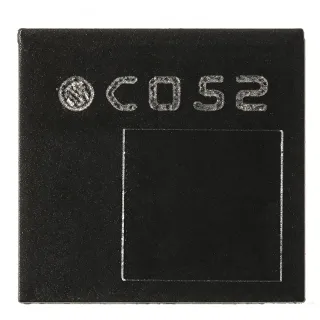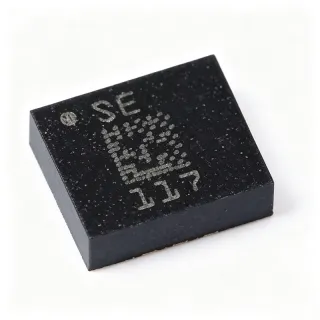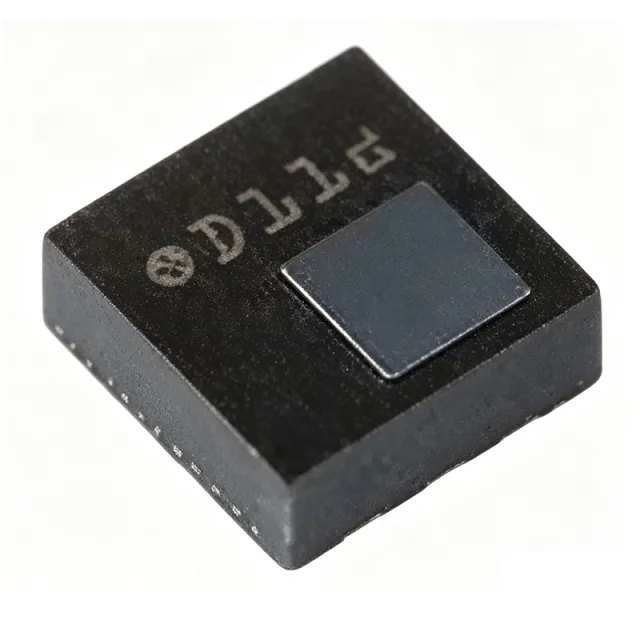
LPS22HH - MEMS Pressure Sensor, 260-1260 hPa | STMicroelectronics
MPN: LPS22HH ✓ Active| Qty | Unit Price | Extended |
|---|---|---|
| 1 | $1.6636 | $1.66 |
| 10 | $1.2015 | $12.02 |
| 100 | $1.0629 | $106.29 |
| 500 | $1.0167 | $508.35 |
| 1,000 | $0.9705 | $970.50 |
LPS22HH Overview
A pressure sensor is a device that measures the force exerted by a fluid (liquid or gas) per unit area, converting it into an electrical signal. The LPS22HH is an absolute pressure sensor, meaning it measures pressure relative to a perfect vacuum. It belongs to the family of MEMS (Micro-Electro-Mechanical Systems) sensors, which integrate mechanical and electrical components on a microscopic scale. In the broader hierarchy, it is a pressure sensor -> MEMS sensor -> sensor -> electronic component, commonly used in environmental monitoring and altitude sensing.
Key features include an absolute pressure range of 260 to 1260 hPa, a resolution of 0.02 hPa (RMS), and an accuracy of ±0.1 hPa (typical) at 25°C. The sensor operates from a supply voltage of 1.7V to 3.6V, with a low power consumption of 12 µA at 1 Hz output data rate. It supports output data rates from 1 Hz to 200 Hz, and includes an integrated temperature sensor with ±0.5°C accuracy. The device is RoHS compliant and operates over a temperature range of -40°C to +85°C.
The LPS22HH uses a capacitive sensing element with a precision analog front-end and a 24-bit sigma-delta ADC, providing high-resolution digital output. The sensor includes a FIFO buffer (up to 100 samples) to reduce host processor load, and supports interrupt generation for data-ready and threshold events. The I2C address is 0x5C (default) or 0x5D (alternate), selectable via the SA0 pin.
Typical applications include barometric altimeters in drones and wearables, weather stations, and indoor navigation systems. Its low power and small size make it ideal for battery-powered IoT devices. The sensor is also used in smartphone and smartwatch for elevation tracking and stair climbing detection.
When designing with the LPS22HH, ensure proper PCB layout with a small vent hole to expose the sensing element to ambient pressure. Avoid placing the sensor near heat sources to minimize temperature-induced errors. Use the built-in FIFO to reduce I2C/SPI traffic and power consumption in low-power applications.
Drop-in alternatives for LPS22HH — same package, pin-to-pin compatible. Different-package parts requiring PCB rework are excluded.
Variants in this series
Same-series models that are drop-in compatible with LPS22HH (same form factor and footprint) — differing in Current Consumption, Package, Output Data Rate, Interface, Supply Voltage.
Quick Comparison Tool — Select alternative parts for side-by-side comparison:
LPS22HBTR
✓ In Stock
$1.9091 / Unit
View Datasheet →LPS22HH-QST
📋 Reference alternative (not in catalog)
BMP388
📋 Reference alternative (not in catalog)
BMP390
📋 Reference alternative (not in catalog)
MS5637
📋 Reference alternative (not in catalog)
LPS22HH Maximum Ratings & Electrical Characteristics
| Pressure Range | 260 to 1260 hPa |
| Resolution | 0.02 hPa (RMS) |
| Accuracy | ±0.1 hPa (typical) at 25°C |
| Supply Voltage | 1.7V to 3.6V |
| Current Consumption | 12 µA at 1 Hz ODR |
| Output Data Rate | 1 Hz to 200 Hz |
| Interface | I2C and SPI |
| I2C Address | 0x5C (default) or 0x5D (alternate) |
| FIFO Size | 100 samples |
| Temperature Sensor Accuracy | ±0.5°C |
| Operating Temperature | -40°C to +85°C |
| Package | HLGA 2.0 x 2.0 x 0.7 mm |
| Mounting Type | Surface Mount |
| RoHS Status | Compliant |
| Output Type | Digital (24-bit) |
LPS22HH Pin Configuration
| Pin 1 | VDD — Power supply (1.7V to 3.6V) |
| Pin 2 | GND — Ground |
| Pin 3 | SCL/SPC — I2C clock or SPI clock |
| Pin 4 | SDA/SDI — I2C data or SPI data in |
| Pin 5 | SA0/SDO — I2C address select or SPI data out |
| Pin 6 | CS — Chip select (active low) |
| Pin 7 | INT — Interrupt output |
| Pin 8 | NC — No connect |
Typical Applications
LPS22HH is suitable for 6 applications: Barometric Altimeter, Weather Station, Indoor Navigation, Wearable Fitness Tracker, Smart Home IoT, Smartphone Altimeter.
Barometric Altimeter
The LPS22HH's high resolution (0.02 hPa) enables precise altitude detection in drones and wearables. In a drone, the sensor is mounted on the flight controller PCB with a vent hole to ambient pressure. The I2C interface connects to the MCU, and the FIFO buffer reduces host polling. Compared to GPS, the barometric altimeter provides faster and more accurate vertical speed estimation, essential for stable hovering and landing. The low power consumption (12 µA) extends flight time, and the small package fits compact drone frames.
Recommended
Weather Station
The LPS22HH provides accurate atmospheric pressure measurements (±0.1 hPa) for weather monitoring. In a weather station, the sensor is placed in a ventilated enclosure to avoid wind and rain. The SPI interface connects to a data logger, and the temperature sensor (accuracy ±0.5°C) provides compensation. The wide pressure range (260-1260 hPa) covers all global atmospheric conditions. The sensor's low power allows battery-powered remote stations, and the FIFO stores data between transmissions.
Recommended
Indoor Navigation
The LPS22HH enables floor-level detection in indoor navigation systems. By measuring pressure changes, the sensor can detect floor changes of approximately 0.17 m, which is sufficient for most buildings. In a smartphone, the sensor is integrated with the IMU and uses sensor fusion algorithms to improve positioning accuracy. The I2C interface and small package allow easy integration. The low power consumption is critical for continuous operation in mobile devices.
Recommended
Wearable Fitness Tracker
The LPS22HH is used in fitness trackers to count stairs climbed and monitor elevation changes. Its small size (2.0x2.0x0.7 mm) and low power (12 µA) are ideal for battery-powered wearables. The sensor is placed on the wrist, and the pressure data is processed by the MCU to detect stair climbing events. The FIFO buffer reduces host wake-ups, extending battery life. The temperature sensor provides additional environmental data.
Recommended
Smart Home IoT
The LPS22HH enables smart home devices to detect window/door opening and HVAC filter clogging. In a smart thermostat, the sensor monitors pressure changes to detect air filter blockage. The I2C interface connects to a low-power MCU, and the sensor operates in low-power mode with periodic wake-ups. The small package allows integration into compact devices. The wide supply voltage range (1.7-3.6V) supports battery operation.
Recommended
Smartphone Altimeter
The LPS22HH is used in smartphones for elevation tracking and emergency location. It provides accurate altitude data for E911 calls and fitness apps. The sensor is integrated into the phone's main board, with a small vent hole in the casing. The I2C interface and low power consumption are essential for continuous operation. The high resolution (0.02 hPa) enables stair climbing detection and floor-level navigation.
Recommended
Recommended Products Summary
Engineering reference data for LPS22HH — comparison, design guidance, and compliance information.
Selection Guide
Comparison with Alternatives
| Parameter | This Product | LPS22HB | BMP388 | BMP390 | MS5637 |
|---|---|---|---|---|---|
| Package | HLGA 2.0x2.0x0.7 mm | HLGA 2.0x2.0x0.7 mm | LGA 2.0x2.0x0.8 mm | LGA 2.0x2.0x0.8 mm | QFN 3.0x3.0x0.9 mm |
| Brand | STMicroelectronics | STMicroelectronics | Bosch Sensortec | Bosch Sensortec | TE Connectivity |
| Pressure Range | 260-1260 hPa | 260-1260 hPa | 300-1250 hPa | 300-1250 hPa | 10-1200 hPa |
| Resolution | 0.02 hPa | 0.01 hPa | 0.03 hPa | 0.03 hPa | 0.016 hPa |
| Accuracy | ±0.1 hPa | ±0.1 hPa | ±0.5 hPa | ±0.5 hPa | ±0.5 hPa |
| Supply Voltage | 1.7V-3.6V | 1.7V-3.6V | 1.7V-3.6V | 1.7V-3.6V | 1.7V-3.6V |
| Current Consumption | 12 µA at 1 Hz | 15 µA at 1 Hz | 3.4 µA at 1 Hz | 3.4 µA at 1 Hz | 1 µA at 1 Hz |
| Interface | I2C/SPI | I2C/SPI | I2C/SPI | I2C/SPI | I2C |
Key Differentiators
- Higher resolution than LPS22HB (vs LPS22HB)
- Lower power consumption than LPS22HB (vs LPS22HB)
- Wider pressure range than BMP388 (vs BMP388)
Design Notes
Ensure a vent hole (typically 0.5 mm) is placed in the PCB directly under the sensor's pressure port to allow ambient air to reach the sensing element. The vent hole should be protected with a mesh or membrane to prevent dust and water ingress. Place the sensor away from heat sources and high-airflow areas to minimize pressure and temperature errors.
Decouple the VDD pin with a 100 nF ceramic capacitor placed as close as possible to the sensor. For noisy power rails, add a 1 µF capacitor in parallel. The LPS22HH operates from 1.7V to 3.6V, so ensure the supply voltage is within this range under all load conditions. Use a low-noise LDO if the supply is noisy.
Do not cover the vent hole with solder mask or conformal coating, as this will block pressure sensing. Also, avoid placing the sensor near vibrating components, as mechanical stress can affect readings. When using I2C, ensure the bus speed does not exceed 400 kHz (standard mode) or 1 MHz (fast mode plus) as specified in the datasheet.
Compliance Information
RoHS compliant per STMicroelectronics product page. Not AEC-Q100 qualified.