Датчики давления
Товары (251)

142PC15D - 15 PSI Amplified Pressure Sensor, 3-SIP | Honeywell
The Honeywell Sensing and Productivity Solutions 142PC15D is an amplified differential pressure sensor rated for 0 PSI to 15 PSI (0 kPa to 103.42 kPa), housed in a 3-SIP through-hole module with a male 0.2 inch (5 mm) tube port. It provides a ratiometric analog voltage output proportional to applied differential pressure, powered from a single DC supply. A board mount pressure sensor is a packaged transducer that converts a pneumatic pressure differential into an electrical signal. Within the broader hierarchy, the 142PC series belongs to the pressure sensor product family, which is a subset of sensors and transducers used in industrial, medical, HVAC, and instrumentation systems. Amplified, calibrated differential sensors such as the 142PC15D integrate on-board signal conditioning, temperature compensation, and a 3-SIP package that simplifies PCB layout versus bare die transducers. Key features of the 142PC15D include a 15 PSI maximum differential pressure range, dual 1 V to 6 V analog output swing covering the full calibrated span, an 8 V supply voltage rating, and 8 mA typical supply current. The 3-SIP module provides a ported inlet that accepts a 5 mm tube, allowing pneumatic connection via flexible tubing. The amplified output eliminates the need for external op-amp signal conditioning in most applications. Technically, the device uses a piezoresistive silicon sensing cell that is ratiometric to the supply, so the output span scales with supply voltage. This simplifies ADC interfacing because the same code range is maintained regardless of supply variation. The integrated amplifier and temperature compensation circuitry provide a calibrated, linear output across the 0 PSI to 15 PSI range, reducing engineering effort versus raw sensor elements. Typical applications include HVAC duct pressure monitoring, pneumatic control systems, medical respiratory equipment, analytical instrumentation, and industrial process control. The 0 PSI to 15 PSI range is well suited to low-pressure gas flow sensing, filter pressure-drop measurement, and clean-room pressure differential verification. When designing with this part, verify that the supply voltage does not exceed the 8 V absolute maximum and provide adequate decoupling close to the supply pin. The ratiometric output simplifies ADC interfacing but requires that the ADC reference voltage be derived from the same supply used to power the sensor for maximum accuracy. This page synthesizes distributor pricing across nine sources, cross-reference availability, drop-in alternative candidates, and practical design notes that supplement the manufacturer datasheet with sourcing and integration context.
9012ADW7S1M12 - 38-340bar Differential Pressure Switch | Telemecanique
The Telemecanique Sensors 9012ADW7S1M12 is an industrial electro-mechanical pressure switch with a sealed piston sensor, designed for hydraulic and fluid-power applications in the 38 to 340 bar (550 to 4930 psi) differential pressure range. Housed in a die-cast zinc-alloy enclosure with PG13.5 cable gland and G3/8 process connection, it provides SPDT switch output rated for 3 A at 120-240 V DC and 5 A at 120-600 V AC, making it suitable for direct control of contactors, solenoid valves, and alarm circuits in heavy-industrial machinery. An industrial pressure switch is an electro-mechanical device that converts a fluid pressure signal into a discrete electrical switch action at a preset actuation threshold. Within the broader sensor hierarchy, pressure switches sit between simple pressure transducers (analog output) and full PLC-integrated pressure transmitters (4-20 mA / IO-Link) — they provide local setpoint-based control without requiring a controller, which is why they remain widely deployed on pumps, compressors, hydraulic power packs, and HVAC chiller plants. The 9012 series from Telemecanique (Schneider Electric) belongs to the legacy ACW/ADW family of compact, field-adjustable piston-style differential switches. Key specifications of the 9012ADW7S1M12 include a working pressure range of 38 to 340 bar (550 to 4930 psi), a differential (adjustable) setpoint with sealed piston actuation, media compatibility with hydraulic fluid and lubricating oil, an operating temperature window of -25 °C to +120 °C, and IP65 ingress protection suitable for wash-down industrial environments. The supply-voltage range of 120-240 V DC and 120-600 V AC reflects the legacy ACW/ADW family’s design intent for direct connection to industrial control gear without intermediate relays. Technically, the 9012ADW7S1M12 uses a sealed piston sensing element coupled to a snap-action SPDT microswitch. The piston seal isolates the process fluid from the switch mechanism, improving media compatibility versus diaphragm-only designs at high pressures. Adjustment is performed via an external setpoint screw, and the differential (dead-band) is fixed by the piston-spring geometry rather than user-configurable. The zinc-alloy housing provides mechanical robustness and EMI shielding, while the PG13.5 cable gland allows field termination of power and signal conductors. Typical applications include hydraulic power-pack high-pressure cut-out, compressor discharge over-pressure protection, lubrication-system pressure verification, and machine-tool coolant-pressure monitoring. The wide AC/DC voltage rating allows the same part to control both 230 V AC contactors and 24-240 V DC solenoid valves without hardware variants. When designing with this part, note that RS Components has flagged it as a discontinued line item. Engineers specifying new designs should evaluate the Schneider Electric 9012 series replacement equivalents or consider migrating to XMLR / OsiSense XMLG pressure transmitters for new platforms. Existing maintenance stock and refurbishment workflows continue to use the 9012ADW7S1M12 as a direct-fit spare. This page synthesizes distributor pricing, electrical ratings, application guidance, and Schneider 9012 family context that are not consolidated in any single manufacturer document, providing an engineer-ready summary in one place.
DMP320 - Precision Pressure Transmitter ≤0.5 ms Fast Response | BD|SENSORS
The BD|SENSORS DMP320 is a precision pressure transmitter with a sub-millisecond response time (≤0.5 ms) and a 10 kHz sampling rate, engineered for high-speed dynamic pressure measurement. Housed in a stainless-steel sensor body, the DMP320 covers nominal pressure ranges from 0…100 mbar up to 0…600 bar and outputs a standard analog signal for direct interface with industrial controllers and data-acquisition systems. What is a pressure transmitter? A pressure transmitter is an industrial sensor that converts an applied pressure into a standardized electrical output (commonly 4–20 mA, 0–10 V, or a digital bus signal). Within the sensor hierarchy, the DMP320 sits in the precision-and-dynamic-measurement category, above static process transmitters and below research-grade pressure scanners. Its high-speed signal chain allows pressure curves, peaks, and hydraulic spikes to be recorded with high fidelity, which sets it apart from slower industrial loop-powered devices. Key features of the DMP320 include: ≤0.5 ms response time enabling capture of transient pressure events; 10 kHz internal sampling rate for fine-grained waveform reconstruction; wide pressure envelope (0…100 mbar to 0…600 bar) for both vacuum and high-pressure service; stainless-steel wetted parts for media compatibility; digital signal processing of the sensor signal by newly developed electronics; and configurable output suitable for industrial automation. Architecturally, the DMP320 uses a piezoresistive or thin-film stainless-steel measuring cell whose millivolt output is digitized and conditioned by a digital electronics module. The 10 kHz oversampling paired with sub-millisecond analog output update allows the device to track pressure peaks that conventional 1–2 Hz process transmitters miss entirely. This combination is critical for hydraulic testing, fuel-injection diagnostics, and dynamic pressure profiling. Typical applications include fast hydraulic pressure monitoring in test rigs and mobile hydraulics, peak pressure detection in fuel-injection and combustion test benches, dynamic profiling of HVAC/R and process pressures, and laboratory instrumentation where pressure curves, peaks, and hits must be measured exactly. The stainless-steel construction also supports chemically aggressive media under the medium temperature envelope. When designing with the DMP320, observe the medium temperature limits (typically -40 to 125 °C depending on version) and the electronics operating temperature range; derate the mounting configuration accordingly. Never insert pointed tools or direct compressed-air jets against the sensitive measuring diaphragm, as permanent deformation of the diaphragm will permanently corrupt calibration and accuracy. Verify cable gland sealing for the installation environment. This page synthesizes distributor availability, drop-in equivalents in the BD|SENSORS precision-transmitter family, and practical mounting guidance not found in the standalone datasheet, giving engineers a single source for sourcing and selecting the DMP320.
HSFPAR003A - Piezoresistive Force Sensor, SMD | Alps Alpine
The Alps Alpine HSFPAR003A is a surface-mount piezoresistive force sensor from the HSFPAR series, designed for high-sensitivity load detection and depth-of-water detection in a compact SMD package. The device integrates a piezoresistive bridge circuit formed on a silicon diaphragm, achieving higher linearity than polymer or foil-based force sensors, and is supplied on Tape & Reel for automated assembly. According to the Alps Alpine product page, this part is intended for load detection and water-depth sensing applications. A force sensor (also called a load cell or pressure sensor in this category) is a transducer that converts an applied mechanical force or pressure into a quantifiable electrical signal. Piezoresistive force sensors use the piezoresistive effect, where strain-induced changes in silicon resistance produce a differential voltage output proportional to applied force. Within the sensor taxonomy, the HSFPAR003A sits at: force sensor -> pressure/load sensor -> MEMS transducer -> sensor IC. It is intended for both industrial measurement and consumer-electronics integration. Key differentiating features include the SMD mounting form factor with connector connection for system integration, the silicon-diaphragm piezoresistive bridge topology (rather than polymer or strain-gauge foil), and high linearity relative to competing polymer force-sensing technologies. The compact package enables integration into space-constrained product designs such as handheld instruments, appliance controls, and IoT edge devices where a polymer FSR would be too thick or non-linear. Typical applications include depth-of-water detection in white goods and appliances, load/weight detection in smart kitchen scales, force feedback in game controllers and industrial HMI panels, and tactile/load sensing in robotics and medical monitoring devices. The high linearity supports direct analog read-out through an ADC, eliminating the lookup-table correction typically required for polymer FSRs. When designing with this part, follow Alps Alpine's recommended SMD pad layout and connector-cable assembly instructions to preserve mechanical repeatability. Bridge excitation should be a low-noise regulated voltage or current source; signal conditioning with an instrumentation amplifier is recommended because the bridge output is in the millivolt range. This page synthesizes distributor pricing, pin/connector reference, drop-in alternatives, and practical design notes not found in the manufacturer datasheet alone. Pricing references reflect distributor data as of 2026-10-14.
HSFPAR303A - Silicon Diaphragm Force Sensor 4x4mm | Alps Alpine
The Alps Alpine HSFPAR303A is a silicon-diaphragm piezo-resistive force sensor unit housed in a compact 4.0 mm x 4.0 mm x 1.6 mm surface-mount package. It integrates a Wheatstone bridge circuit formed directly on the silicon diaphragm, so that applying force to the top of the diaphragm unbalances the bridge and produces a differential analog output voltage proportional to the applied load. A force sensor (also called a load cell or force-sensing resistor at higher force ranges) is a transducer that converts mechanical force into a measurable electrical signal. Force sensors sit inside the broader sensor hierarchy of pressure sensors -> load sensors -> mechanical-quantity sensors -> transducers, and are widely used for touch, weight, and tactile-feedback applications where a strain gauge, load cell, or piezo-resistive element is required. Key features include high-sensitivity load detection with low temperature drift, a small 4 mm footprint that enables dense PCB arrays, and an analog ratiometric output that interfaces directly with an external ADC or op-amp signal conditioner. The piezo-resistive silicon diaphragm delivers fast mechanical response and excellent repeatability compared with polymer-based FSRs. The HSFPAR303A uses a diffused piezo-resistive bridge on a micromachined silicon diaphragm. When force is applied, the diaphragm flexes and the bridge resistors change value, producing a differential output. This monolithic construction gives the part better long-term stability and lower part-to-part variation than discrete strain-gauge assemblies. Typical applications include stylus tip-force detection in pen tablets, key-press force measurement in industrial keypads, robotic gripper load feedback, precision weighing scales, and tactile/force-feedback switches in medical and consumer electronics. The compact package also suits wearable devices where PCB area is constrained. When designing with this part, treat the analog output as a low-level signal and use a low-noise, low-offset instrumentation amplifier or 16-bit ADC front-end. Apply force only along the designed axis and respect the datasheet-specified maximum force rating to avoid permanent deformation of the silicon diaphragm. This page synthesizes Mouser and Octopart pricing tiers, Alps Alpine datasheet parameters, and practical signal-conditioning notes not found in the manufacturer datasheet PDF alone.
HSPPAD042A - 300-1100 hPa I2C MEMS Pressure Sensor | Alps Alpine
The Alps Alpine HSPPAD042A is a digital MEMS barometric pressure sensor operating from 300 hPa to 1100 hPa with an I2C interface, housed in a compact SMD-10P package measuring 2 x 2.5 mm. The device runs on a single supply of 1.7 V to 3.6 V and draws only 1.8 uA typical supply current, making it well-suited for battery-powered portable designs. A digital pressure sensor is an electronic component that converts absolute gas pressure into a calibrated digital output via an integrated MEMS sensing element and an on-chip analog front-end plus ADC. Pressure sensors sit within the broader transducer hierarchy: transducer -> sensor -> pressure sensor -> barometric/absolute pressure sensor -> board-mount pressure sensor. The HSPPAD042A specifically targets barometric pressure measurement, the same form of pressure used in weather forecasting and altitude estimation, where the sensor measures pressure relative to an internal vacuum reference. Key features of the HSPPAD042A include a Philips I2C-BUS Specification v2.1 / NXP UM10204 Rev.03 compliant slave interface at fixed address 1001000x (Write:0, Read:1), an operating temperature range of -40C to +85C, and a RoHS-compliant surface-mount package. The part targets mobile, wearable, and IoT designs that require accurate barometric readings without the layout burden of an analog front-end. Pressure resolution and conversion timing are controlled via the I2C interface, allowing the host MCU to manage power consumption by issuing one-shot conversions. Typical applications include barometric altitude estimation in drones and wearables, weather station modules, HVAC air-flow monitoring, indoor navigation pressure references, and altitude-aware GPS augmentation in smartphones. The 1.8 uA quiescent current allows years of operation on a coin cell when paired with duty-cycled wake-up, while the small 2 x 2.5 mm SMD-10P footprint allows direct integration on dense IoT boards. When designing with this sensor, place decoupling capacitors (typically 100 nF ceramic) as close as possible to the VDD pin and route the I2C SDA/SCL traces as short as possible with pull-up resistors in the 2.2 kOhm to 10 kOhm range. Avoid placing the sensor directly over heat-generating components, as thermal gradients introduce pressure offset errors. According to the Alps Alpine datasheet, the I2C slave address is fixed at 0x48 (Write) / 0x49 (Read) and the bus supports standard and fast modes per NXP UM10204. This page synthesizes distributor pricing from LCSC and Mouser, drop-in alternatives from same-family Alps Alpine pressure sensors, and practical design notes not aggregated on the manufacturer product page. Engineers evaluating barometric sensor options will find parametric comparisons and design considerations specific to the HSPPAD042A here.
HSPPAD132A - Waterproof MEMS Absolute Pressure Sensor | ALPSALPINE
The ALPSALPINE HSPPAD132A is a compact, waterproof MEMS digital pressure sensor from the HSPPAD Series, delivering absolute pressure measurements from 4.35 PSI to 15.95 PSI (30 kPa to 110 kPa) and atmospheric / water-depth detection for low-power IoT and wearable designs. It outputs 16-bit pressure data over a digital I2C-compatible interface and ships in a surface-mount module package rated for waterproof assemblies with gel protection on the sensing element. What is a digital pressure sensor? A digital pressure sensor is a MEMS (Micro-Electro-Mechanical Systems) transducer that converts an applied pressure into an electrical signal, then conditions and digitizes that signal inside the same package to produce a digital output (I2C, SPI, or similar). It belongs to the broader sensor category under electronic components, sits above raw analog sensors in the hierarchy (sensor -> pressure sensor -> absolute pressure sensor -> digital pressure sensor -> MEMS pressure sensor), and is widely used in consumer wearables, mobile devices, weather stations, and depth-of-water detection. The digital output eliminates external ADC design effort and reduces MCU load via the standard I2C/SPI protocol. Key features of the HSPPAD132A include an absolute pressure range of 30 kPa to 110 kPa (4.35 PSI to 15.95 PSI), 16-bit pressure resolution, an integrated I2C digital interface, surface-mount packaging, and an operating profile tuned for low-power handheld products. The waterproof gel-coated sensing element resists direct water exposure that would otherwise damage conventional MEMS dies, making the part uniquely suited to outdoor wearables, sports watches, and depth-sensing applications. The sensor includes internal signal conditioning and calibration data stored in on-chip memory, allowing the host MCU to retrieve compensated pressure readings without external compensation circuitry. From an architectural standpoint, the HSPPAD132A uses a piezoresistive MEMS membrane coupled to a mixed-signal ASIC that performs amplification, temperature compensation, and ADC conversion. Its 16-bit output delivers pressure resolution suitable for 0.01 kPa-class applications such as barometric altitude sensing. Internal calibration coefficients are typically applied in software on the host side to correct for temperature and part-to-part variation. Typical applications include barometric altitude measurement in sports watches and fitness bands, atmospheric pressure trend monitoring in weather stations, water-depth detection in pool/swim sensors, drone altitude hold, and HVAC pressure monitoring. Industrial use cases include compressed-air line pressure trending and gas-meter pressure measurement where waterproofing is a plus. When designing with this sensor, place the device at the edge of the board near the waterproof vent/port to minimize the air-path length to the diaphragm, and route the I2C lines away from switching power and high-frequency signals. Decouple VDD with at least 0.1 µF ceramic close to the supply pin, and observe the I2C pull-up sizing guidance from the manufacturer datasheet for the chosen bus speed. This page synthesizes datasheet specifications, distributor pricing as of 2026-10-14, drop-in alternative notes, and practical design guidance not found in the standalone manufacturer datasheet, providing a one-stop reference for engineers evaluating the HSPPAD132A.
HSPPAR003D - 50-110 kPa Absolute Pressure Sensor | Alps Alpine
The Alps Alpine HSPPAR003D is an absolute-pressure MEMS sensor in a 2.5 x 2.5 mm 4-pin SMD package, delivering a ratiometric analog output proportional to absolute pressure over a 50 kPa to 110 kPa range (7.25 to 15.95 psi). Designed for atmospheric-pressure detection, the device provides a calibrated analog voltage output with ±1% FS accuracy over a -20 °C to +85 °C operating window. The miniature 4-SMD, no-lead footprint suits space-constrained consumer, industrial, and IoT designs. An absolute pressure sensor is a transducer that measures pressure relative to a perfect vacuum (zero reference), unlike gauge sensors that measure relative to ambient atmospheric pressure. In the broader sensor hierarchy, the HSPPAR003D belongs to the MEMS (micro-electro-mechanical systems) pressure-sensor family, which sits inside the pressure sensors / transducers category and ultimately under measurement sensors. Absolute-pressure sensors are preferred when the design must resolve altitude change, sealed-cavity pressure, or weather-related barometric variation independent of local atmospheric drift. Key features of the HSPPAR003D include ±1% FS accuracy, a wide 50-110 kPa pressure range that fully covers the barometric 100 kPa nominal point, surface-mount construction for reflow-compatible assembly, and an analog ratiometric output that scales with the supply voltage for direct ADC interfacing. The 4-lead no-lead SMD package simplifies PCB layout while keeping the part compatible with automated pick-and-place lines. The sensor uses a piezoresistive MEMS die coupled with a signal-conditioning ASIC that performs offset, span, and temperature compensation. Internal calibration data stored on-die allows the part to deliver a factory-trimmed analog transfer function, removing the need for external compensation components on the application board. Typical applications include portable weather stations, altimeters for wearable and handheld devices, HVAC system pressure monitoring, IoT environmental nodes, and indoor air-quality instruments. The 50-110 kPa window is well aligned with the barometric pressure band (approximately 87-108 kPa at sea level to alpine elevations). Design tip: route the supply and output traces as a differential pair when the sensor sits more than 25 mm from the ADC; long single-ended traces pick up switcher noise that directly modulates the analog output. Add a 100 nF decoupling capacitor within 5 mm of the supply pin. This page synthesizes distributor pricing, drop-in alternatives, and practical board-level design notes not found in the manufacturer datasheet alone.
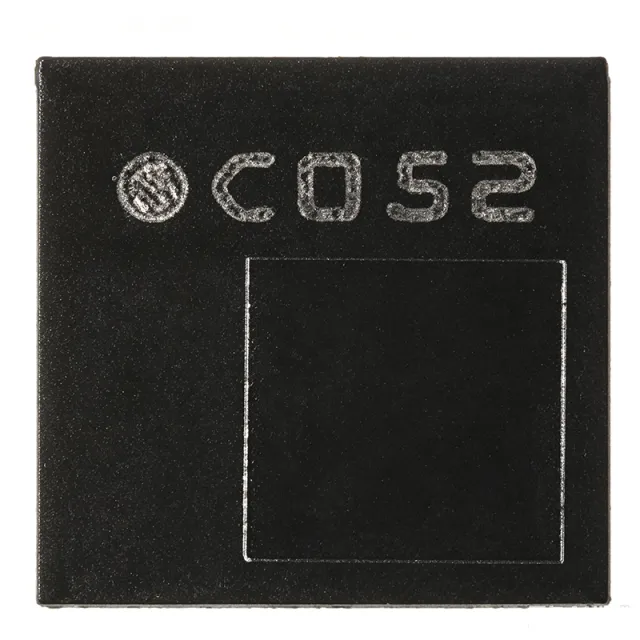
LPS22HBTR - MEMS Pressure Sensor, 260-1260 hPa | STMicroelectronics
The STMicroelectronics LPS22HBTR is a MEMS capacitive absolute pressure sensor with a digital I2C/SPI interface, offering a measurement range of 260 to 1260 hPa (absolute) with high accuracy and low power consumption. It is housed in a compact 2.0 x 2.0 x 0.7 mm HLGA package, making it suitable for space-constrained portable and wearable devices. A pressure sensor is a device that measures the force exerted by a fluid (liquid or gas) per unit area, converting this physical quantity into an electrical signal. The LPS22HBTR is a MEMS (Micro-Electro-Mechanical Systems) capacitive pressure sensor, which uses a thin diaphragm that deflects under pressure, changing the capacitance between the diaphragm and a fixed electrode. This change is then converted into a digital output via an integrated signal conditioner. Pressure sensors are a subset of environmental sensors, which also include temperature, humidity, and gas sensors, and are essential components in IoT, automotive, and industrial systems. Key features of the LPS22HBTR include an absolute pressure range of 260 to 1260 hPa, a resolution of 0.01 hPa (8 Pa), and an accuracy of ±0.1 hPa (typical) at 25°C. The device operates from a supply voltage of 1.7V to 3.6V, with a current consumption of 12 µA at 1 Hz output data rate (ODR) and 1 µA in power-down mode. It supports both I2C (up to 400 kHz) and SPI (up to 10 MHz) interfaces, and includes an integrated 24-bit ADC, a 128-level FIFO, and an interrupt output for data-ready and pressure threshold events. The LPS22HBTR is built using ST's proven MEMS technology, which ensures high reliability and long-term stability. The device includes a temperature sensor for compensation, and its output is factory-calibrated, eliminating the need for user calibration. The HLGA package is designed for surface-mount assembly and is RoHS and halogen-free compliant. Typical applications include barometric altimeters in drones and smartphones, weather stations, GPS dead-reckoning for navigation, and indoor navigation systems. Its low power consumption and small footprint make it ideal for battery-powered IoT devices and wearables. When designing with the LPS22HBTR, ensure proper PCB layout with a small pressure port opening to the environment, and avoid covering the sensing element with solder mask or conformal coating. The device's I2C address is 0x5C (7-bit) or 0xB8 (8-bit), and it can be configured via its registers for different ODRs and interrupt modes.
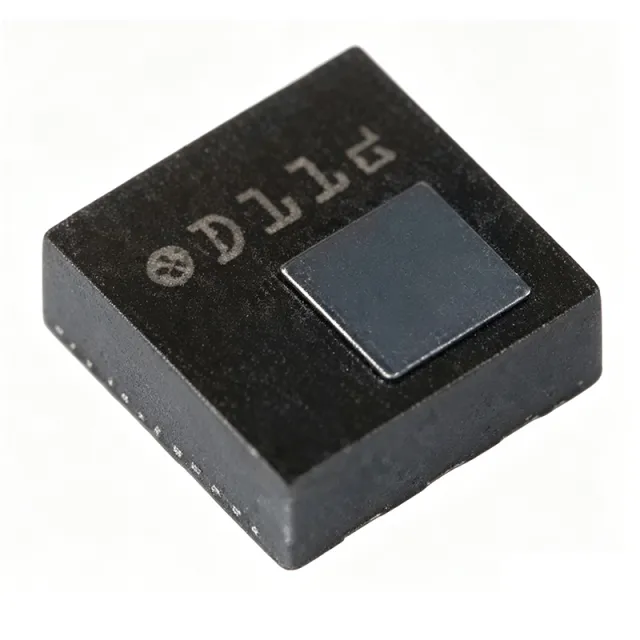
LPS22HH - MEMS Pressure Sensor, 260-1260 hPa | STMicroelectronics
The STMicroelectronics LPS22HH is a MEMS capacitive absolute pressure sensor with a digital I2C and SPI interface, offering a measurement range of 260 to 1260 hPa. It is housed in a compact 2.0 x 2.0 x 0.7 mm HLGA package, making it suitable for space-constrained applications. A pressure sensor is a device that measures the force exerted by a fluid (liquid or gas) per unit area, converting it into an electrical signal. The LPS22HH is an absolute pressure sensor, meaning it measures pressure relative to a perfect vacuum. It belongs to the family of MEMS (Micro-Electro-Mechanical Systems) sensors, which integrate mechanical and electrical components on a microscopic scale. In the broader hierarchy, it is a pressure sensor -> MEMS sensor -> sensor -> electronic component, commonly used in environmental monitoring and altitude sensing. Key features include an absolute pressure range of 260 to 1260 hPa, a resolution of 0.02 hPa (RMS), and an accuracy of ±0.1 hPa (typical) at 25°C. The sensor operates from a supply voltage of 1.7V to 3.6V, with a low power consumption of 12 µA at 1 Hz output data rate. It supports output data rates from 1 Hz to 200 Hz, and includes an integrated temperature sensor with ±0.5°C accuracy. The device is RoHS compliant and operates over a temperature range of -40°C to +85°C. The LPS22HH uses a capacitive sensing element with a precision analog front-end and a 24-bit sigma-delta ADC, providing high-resolution digital output. The sensor includes a FIFO buffer (up to 100 samples) to reduce host processor load, and supports interrupt generation for data-ready and threshold events. The I2C address is 0x5C (default) or 0x5D (alternate), selectable via the SA0 pin. Typical applications include barometric altimeters in drones and wearables, weather stations, and indoor navigation systems. Its low power and small size make it ideal for battery-powered IoT devices. The sensor is also used in smartphone and smartwatch for elevation tracking and stair climbing detection. When designing with the LPS22HH, ensure proper PCB layout with a small vent hole to expose the sensing element to ambient pressure. Avoid placing the sensor near heat sources to minimize temperature-induced errors. Use the built-in FIFO to reduce I2C/SPI traffic and power consumption in low-power applications.

LPS22HII - MEMS Nano Pressure Sensor, 260-1260 hPa | STMicroelectronics
The STMicroelectronics LPS22HII is an ultra-compact piezoresistive absolute pressure sensor functioning as a digital output barometer. It measures pressure in the range of 260 to 1260 hPa with an absolute accuracy of 0.5 hPa, making it suitable for altimetry and weather station applications. The sensor is housed in a 10-pin LGA package (2.0 x 2.0 x 0.7 mm) and communicates via I2C or SPI interfaces. A pressure sensor is a device that converts applied pressure into an electrical signal. The LPS22HII is a MEMS (Micro-Electro-Mechanical Systems) pressure sensor, which uses a thin silicon membrane that deflects under pressure, changing the piezoresistive elements' resistance. This change is converted into a digital output via an integrated ADC. Pressure sensors are a subset of environmental sensors, which also include temperature, humidity, and gas sensors. In the sensor hierarchy, the LPS22HII is a barometric pressure sensor, a type of absolute pressure sensor, and a MEMS sensor. Key features include a 24-bit pressure data output, an embedded temperature sensor, and a 16-bit temperature output. The sensor supports data rates from 1 Hz to 75 Hz, with a typical current consumption of 12 uA at 1 Hz output data rate. It operates from a 1.7V to 3.6V supply voltage, making it suitable for battery-powered devices. The LPS22HII also includes a FIFO buffer, interrupt pins, and a pressure threshold detection feature. The LPS22HII uses a MEMS capacitive sensing element with a signal conditioning ASIC, providing high accuracy and low power consumption. The sensor has a pressure noise of 0.0075 hPa RMS, enabling precise measurements. It is designed for portable devices, with a small footprint and low height, and is compatible with lead-free soldering processes. Typical applications include altimeters in drones and smartphones, weather station barometers, and GPS dead-reckoning for navigation. The sensor's low power and small size make it ideal for wearable devices and IoT nodes. In a drone, the LPS22HII provides altitude data for flight stabilization and landing. When designing with the LPS22HII, ensure proper PCB layout with a pressure port opening for accurate readings. The sensor should be placed away from heat sources to minimize temperature-induced errors. Use the FIFO to reduce host processor wake-ups and save power.

LPS25HBTR - MEMS Pressure Sensor, 260-1260 hPa | STMicroelectronics
The STMicroelectronics LPS25HBTR is a piezoresistive absolute pressure sensor with a digital I2C/SPI interface, designed for high-resolution measurement of barometric pressure and temperature. It operates over a pressure range of 260 to 1260 hPa (absolute) and a temperature range of -40°C to +85°C, making it suitable for a wide variety of environmental and industrial applications. The sensor is housed in a compact 2.0 x 2.0 x 0.7 mm LGA-8 package, enabling integration into space-constrained designs. A MEMS pressure sensor is a micro-electromechanical system that converts applied pressure into an electrical signal. The LPS25HBTR uses a piezoresistive sensing element whose resistance changes with mechanical stress induced by pressure. This change is converted into a digital output via an internal analog-to-digital converter (ADC) and signal conditioning circuitry. The sensor belongs to the broader category of environmental sensors, which also includes temperature, humidity, and gas sensors, and is a key component in IoT, weather monitoring, and altitude sensing systems. Key features of the LPS25HBTR include an absolute pressure range of 260 to 1260 hPa, a resolution of 0.01 hPa (equivalent to approximately 8 cm of altitude change), and a typical accuracy of ±0.1 hPa over the full range. The device supports both I2C (up to 400 kHz) and SPI (up to 10 MHz) interfaces, with a selectable address for I2C. It also includes an embedded 24-bit ADC, a 32-level FIFO buffer, and an interrupt output for data-ready and threshold detection. The supply voltage ranges from 1.7V to 3.6V, with a low current consumption of 4 µA in normal mode and 1 µA in low-power mode. The LPS25HBTR integrates a temperature sensor with an accuracy of ±0.5°C, which can be used for temperature compensation of the pressure reading or as a standalone temperature measurement. The device features a pressure resolution of 0.01 hPa and a temperature resolution of 0.01°C. The FIFO buffer allows the host processor to remain in low-power mode while the sensor collects data, reducing overall system power consumption. The interrupt pin can be configured to trigger on pressure thresholds or data-ready events, enabling event-driven operation. Typical applications include barometric pressure sensing for weather stations, altitude measurement in drones and smartphones, indoor navigation, and industrial process control. The sensor's high resolution and low power make it ideal for battery-powered IoT devices. In a drone application, the LPS25HBTR provides altitude data with an accuracy of ±0.1 hPa, which translates to approximately ±0.8 meters, enabling stable flight control. When designing with the LPS25HBTR, ensure proper PCB layout with a small vent hole or port to expose the sensing element to ambient pressure. Avoid placing the sensor near heat sources, as temperature gradients can affect pressure readings. Use a low-pass filter on the power supply to reduce noise, and follow the recommended layout in the datasheet for optimal performance.
LPS27HHW - MEMS Pressure Sensor, 260-1260 hPa | STMicroelectronics
The STMicroelectronics LPS27HHW is a high-resolution MEMS pressure sensor with an absolute pressure range of 260 to 1260 hPa and an embedded temperature sensor. It communicates via I2C or SPI and is housed in a compact 2.0 x 2.0 x 0.7 mm LGA package, making it suitable for portable and space-constrained applications. A MEMS pressure sensor is a micro-electromechanical system that measures absolute or gauge pressure by detecting the deflection of a thin silicon membrane. The LPS27HHW belongs to the category of barometric pressure sensors, which are used to measure atmospheric pressure and altitude. In the broader system hierarchy, it is a sensor component within the larger category of environmental sensors, which also include temperature, humidity, and gas sensors. These sensors are essential in applications such as weather stations, drones, and smartphones for altitude and navigation. Key features of the LPS27HHW include a pressure sensing range of 260 to 1260 hPa, an absolute pressure accuracy of ±0.1 hPa, and a temperature accuracy of ±0.5 °C. The device supports both I2C and SPI interfaces, with I2C addresses 0x5C and 0x5D selectable via the SA0 pin. It operates from a supply voltage of 1.7 V to 3.6 V, with a low power consumption of 4 µA at 1 Hz output data rate. The sensor also features a 24-bit pressure output and a 16-bit temperature output, providing high resolution for precise measurements. The LPS27HHW is built on ST's proven MEMS technology, which ensures high reliability and long-term stability. The device includes an internal signal conditioning chain, an analog-to-digital converter, and a digital interface, all integrated into a single chip. The sensor's low noise and high resolution make it ideal for applications requiring accurate pressure and altitude measurements, such as drone altitude hold, smartphone barometer, and weather station monitoring. Typical applications include drone altitude control, where the sensor provides precise altitude data for stable flight; smartphone barometer for indoor navigation and weather forecasting; and industrial pressure monitoring for HVAC systems. The sensor's small footprint and low power consumption make it suitable for battery-powered devices. When designing with the LPS27HHW, ensure proper PCB layout with a small vent hole to expose the pressure port to the environment. Avoid placing the sensor near heat sources or in direct airflow to minimize measurement errors. The I2C pull-up resistors should be sized appropriately for the bus speed and capacitance.
LPS33HW - MEMS Pressure Sensor, 260-1260 hPa | STMicroelectronics
The STMicroelectronics LPS33HW is a high-resolution MEMS pressure sensor with an absolute pressure range of 260 to 1260 hPa and an embedded temperature sensor. It is housed in a compact 2.0 x 2.0 x 0.76 mm ceramic LGA package (CCLGA-10L) and communicates via I2C or SPI interfaces. The device operates from a 1.7V to 3.6V supply and features a 24-bit pressure output, achieving a typical RMS pressure noise of 0.008 hPa (at 1 Hz output data rate). A MEMS pressure sensor is a micro-electromechanical system that measures absolute or gauge pressure by detecting the deflection of a thin silicon diaphragm. The LPS33HW belongs to the family of barometric pressure sensors, which are essential in altimetry, weather monitoring, and indoor navigation. In the broader system hierarchy, it is a sensor component within the category of environmental sensors, feeding data to microcontrollers for processing and decision-making. Key features include a pressure sensing range of 260 to 1260 hPa, a resolution of 0.008 hPa, and an embedded temperature sensor with an accuracy of ±0.5°C. The device supports both I2C (up to 400 kHz) and SPI (up to 10 MHz) interfaces, and includes a 128-level FIFO buffer to reduce host processor load. It also features an interrupt pin for data-ready and pressure threshold events, and a low-power mode with a current consumption of 3 µA at 1 Hz output data rate. The LPS33HW is built on ST's proven MEMS technology, which ensures high stability and low drift over temperature and time. The ceramic LGA package provides excellent thermal and mechanical robustness, making it suitable for harsh environments. The device includes an internal temperature compensation algorithm, which maintains accuracy across the full operating temperature range of -40°C to +85°C. Typical applications include barometric altimeters in drones and wearables, weather station modules, indoor navigation and floor detection in smartphones, and industrial pressure monitoring. Its low power consumption and small footprint make it ideal for battery-powered IoT devices. When designing with the LPS33HW, ensure proper PCB layout with a small vent hole to expose the pressure port to ambient air, and avoid covering the port with solder mask or conformal coating. Decouple the supply pins with a 100 nF capacitor placed close to the device.
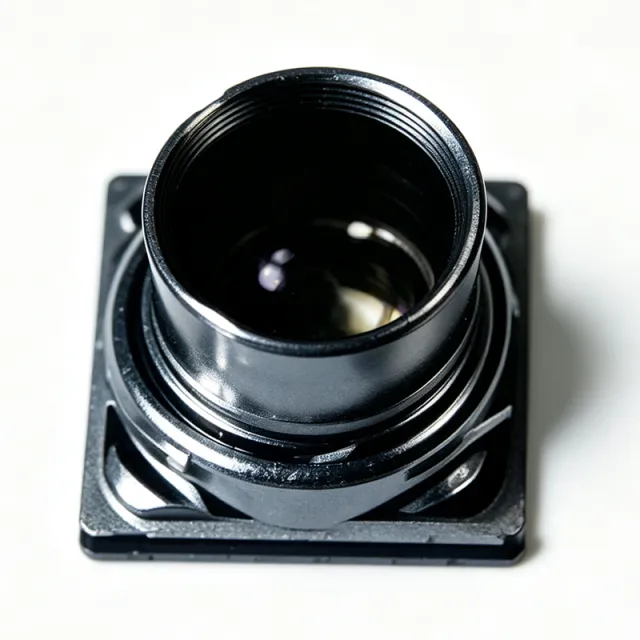
LPS33HWTR - MEMS Pressure Sensor, 260-1260 hPa | STMicroelectronics
The STMicroelectronics LPS33HWTR is a high-resolution MEMS pressure sensor with an absolute pressure range of 260 to 1260 hPa, designed for barometric and altimetry applications. It integrates a sensing element and an I2C/SPI interface in a compact 3 mm x 3 mm x 1.7 mm LGA package, enabling precise atmospheric pressure measurement with a typical accuracy of ±0.1 hPa. A MEMS pressure sensor is a micro-electromechanical system that converts applied pressure into an electrical signal, typically through a deformable diaphragm whose deflection is measured capacitively or piezoresistively. In the system hierarchy, a MEMS pressure sensor is a type of pressure sensor, which falls under the broader category of sensors, and ultimately within the domain of microelectronics and IoT devices. The LPS33HWTR specifically uses a capacitive sensing element with a signal-conditioning ASIC, providing digital output via I2C or SPI. Key features include a 24-bit resolution, an output data rate (ODR) from 1 Hz to 75 Hz, and an embedded temperature sensor. The device operates from a 1.7V to 3.6V supply, with a low power consumption of 4 µA at 1 Hz ODR. It also features a FIFO buffer, interrupt pins for data-ready and pressure threshold detection, and a built-in pressure and temperature compensation. The LGA package is designed for surface-mount assembly, with a footprint compatible with standard reflow soldering. Technically, the LPS33HWTR employs a MEMS capacitive pressure cell that changes capacitance with applied pressure. The ASIC converts this capacitance change into a digital pressure value using a 24-bit ADC, with internal compensation for temperature and supply variations. The device supports both I2C (up to 400 kHz) and SPI (up to 10 MHz) interfaces, allowing flexible integration with microcontrollers. The FIFO buffer can store up to 32 samples, reducing host processor load. Typical applications include barometers for weather stations, altimeters for drones and wearables, and pressure monitoring in industrial and medical devices. Its high accuracy and low power make it suitable for battery-powered IoT devices, where it can be used for altitude tracking or environmental monitoring. The device also finds use in smartphone and smartwatch applications for indoor navigation and activity tracking. When designing with the LPS33HWTR, ensure proper PCB layout with a small vent hole for pressure access, and avoid covering the sensing port with solder mask. The device requires a decoupling capacitor (100 nF) close to the VDD pin, and the I2C/SPI lines should be kept short to minimize noise. For best accuracy, calibrate the sensor at a known pressure and temperature, and consider the effect of altitude on pressure readings.

MP3H6115A6T1 - 15-115 kPa Absolute Pressure Sensor | NXP
The NXP MP3H6115A6T1 is a monolithic, signal-conditioned silicon absolute pressure sensor with an integrated bipolar op-amp and thin-film resistor network, housed in an 8-pin SOIC surface-mount package. It measures absolute pressure from 15 kPa to 115 kPa (2.18 to 16.68 PSI), translating the applied pressure into a ratiometric analog output of 0.12 V to 2.8 V when powered from a 3.0 V supply. The integrated on-chip temperature compensation covers the full -40 °C to +125 °C operating range, eliminating the need for external calibration in most embedded designs. An absolute pressure sensor is a transducer that measures pressure referenced to a perfect vacuum sealed inside the reference cavity of the die, as opposed to gauge or differential sensors that reference ambient atmosphere. Absolute sensors are the correct choice for applications where the system must remain accurate regardless of environmental conditions, such as altitude measurement in portable weather stations or barometric correction in GPS receivers. Within the broader sensor hierarchy, the MP3H6115A6T1 sits at the integrated pressure transducer (sensor + signal conditioner + temperature-compensator + output driver) layer above raw MEMS die and below application-level signal processing. Key features include a male tube pressure port (0.13 inch / 3.3 mm diameter) for direct pneumatic connection, durable thermoplastic (PPS) surface-mount packaging qualified for high-temperature operation, and a typical current consumption of approximately 6 mA from the 3 V supply. The device provides improved accuracy at high temperatures compared to earlier MPXxx6115 series members. The SOIC-8 package is reflow-solder compatible and occupies roughly 13.4 mm × 7.5 mm of board area, enabling compact designs in cost-sensitive consumer products. Technically, the MP3H6115A6T1 uses a piezo-resistive Wheatstone-bridge micromachined silicon diaphragm whose resistance changes proportionally to applied pressure; the on-chip op-amp buffers and temperature-corrects this bridge signal to deliver the calibrated ratiometric 0.12 V – 2.8 V output. The -40 °C to +125 °C operating range matches AEC-Q100-style thermal-stress profiles for under-hood automotive and industrial environments. Typical applications include altimeters and variometers for handheld GPS units, barometric weather stations, HVAC pressure monitoring, medical respiratory equipment, and tire pressure monitoring reference implementations. The 15–115 kPa span covers the full meteorological range relevant to sea-level weather and consumer-grade altitude measurement. When designing with this part, use a low-impedance buffer at the output if the ADC input draws more than a few microamperes, and ensure the supply rail is well-decoupled with a 100 nF ceramic capacitor. The -40 °C to +125 °C compensation range means external temperature correction does not apply for typical indoor and outdoor consumer deployments. This page synthesizes distributor pricing, drop-in alternatives, and practical design notes not found in the manufacturer datasheet. XAIPART consolidates parametric and sourcing data for engineers comparing pressure-sensor options across NXP, STMicroelectronics, and authorized second-source partners.
MP3H6115A6U - 15-115 kPa Absolute Pressure Sensor | NXP
The NXP MP3H6115A6U is a high-temperature-accuracy, monolithic, signal-conditioned silicon pressure sensor that measures absolute pressure from 15 kPa to 115 kPa with a ratiometric analog output of 0.12 V to 2.8 V at 3 V supply, housed in an 8-pin SOP (SOIC-8) surface-mount package. It integrates on-chip bipolar op-amp circuitry and thin-film resistor networks to provide a high-level analog output proportional to applied pressure and includes temperature compensation from -40 C to +125 C. A piezoresistive transducer (also called a pressure sensor, pressure transducer, or barometric sensor) is a MEMS device that converts applied pressure into a measurable electrical signal. The MP3H6115A6U belongs to the broader category hierarchy of pressure sensor -> MEMS sensor -> transducer -> sensor IC -> semiconductor. Within absolute-pressure variants, it sits alongside gauge-pressure and differential-pressure families, and is commonly used in systems where pressure is referenced to a sealed vacuum cavity rather than to ambient air. Key features include a 3 V supply operation, an analog output that is ratiometric to the supply voltage, on-chip temperature compensation and calibration, and high accuracy at elevated temperatures. The sensor combines advanced micromachining techniques, thin-film metallization, and bipolar semiconductor processing, enabling a small-form-factor, high-reliability, system-level pressure measurement that reduces or eliminates external signal conditioning. The MP3H6115A6U architecture uses a piezoresistive strain-gauge bridge formed on a silicon diaphragm; deflection of the diaphragm under pressure unbalances the bridge, and the on-chip bipolar op-amp and thin-film resistor network amplify and condition the differential signal into a single-ended, ground-referenced analog output. Because the device is calibrated at the factory, designers typically do not need to perform multi-point software correction over temperature, which shortens firmware development cycles. Typical applications include automotive air-pressure monitoring, HVAC and barometric pressure measurement, weather-station instrumentation, medical respiratory equipment, altimeter and altitude-hold subsystems in drones, and industrial pneumatic controls. The wide compensated temperature range makes the part particularly well suited to under-hood automotive and outdoor industrial deployments. When designing with the MP3H6115A6U, follow the manufacturer datasheet for input/output capacitor selection, port sealing against moisture, and PCB layout recommendations. Use a clean, dry reference-side cavity (the device is absolute-type) and provide adequate mechanical isolation from system vibration to avoid noise pickup in the analog output. This page synthesizes distributor pricing, drop-in alternative listings, and practical design notes that are not found in the manufacturer datasheet alone.
MP3V5004GP - 0-3.92kPa Gauge Pressure Sensor, 8-SMD | NXP/ST
The NXP (formerly Freescale) MP3V5004GP is a monolithic silicon piezoresistive pressure sensor with on-chip signal conditioning, temperature compensation, and factory calibration, housed in an 8-pin SMD gull-wing package with a side port. It measures gauge pressure from 0 kPa to 3.92 kPa (0 to 0.57 PSI) and provides a ratiometric analog output of 0.6 V to 3.0 V across a 3 V supply, suitable for direct connection to a microcontroller A/D input. A pressure sensor is a transducer that converts applied gas or liquid pressure into a proportional electrical signal. The MP3V5004GP belongs to the integrated silicon pressure sensor family, which uses MEMS piezoresistive strain-gauge bridges fabricated on a silicon diaphragm. Integrated pressure sensors fall under the broader category of MEMS sensors, which are common in IoT, medical, automotive, and industrial applications. Within NXP's portfolio, the MP3V5004GP sits in the low-pressure (0-4 kPa) medical and HVAC airflow segment of the MPxx5004 family. Key features include ±1.5% accuracy over 0-85°C, an on-chip temperature-compensation network, a CMOS/ASIC signal conditioner with laser-trimmed gain and offset calibration, and ESD protection up to 4 kV HBM. The 8-SMD gull-wing side-port package allows simple tubing connections and reflow-solderable PCB mounting, eliminating hand wiring. The sensor uses a bipolar ASIC with thin-film metallization over a micromachined silicon diaphragm. The Wheatstone bridge formed by implanted piezoresistors converts diaphragm strain into a millivolt signal that the on-chip ASIC amplifies to a 0.6-3.0 V rail-to-rail output. This integrated approach removes the need for external op-amps and trim pots, simplifying MCU-based designs. Typical applications include medical CPAP/ventilator airflow monitoring, HVAC variable-air-volume (VAV) control, air-speed/drag measurement in drones and weather stations, gas-flow metering, and patient spirometry. The 0-3.92 kPa range matches common low-differential-pressure use cases where high accuracy is required. When designing with the MP3V5004GP, place a 0.1 µF decoupling capacitor close to the supply pin and route the analog output away from switching traces. Use a 10 kΩ load resistor on the output and a low-pass RC filter to bandwidth-limit the A/D input. This page synthesizes distributor pricing, NXP/ST documentation, and practical design notes not found in the manufacturer datasheet, helping engineers source and apply the MP3V5004GP correctly.
MP3V5004GVP - 0-3.92kPa Gauge Pressure Sensor, 3V, SOP-8 | NXP
The NXP MP3V5004GVP is a monolithic silicon piezoresistive pressure sensor providing a ratiometric analog output (0.6V to 3V) proportional to applied gauge pressure from 0 kPa to 3.92 kPa, housed in an 8-pin SOP (Small Outline Package) with a bottom-side pressure port. It is part of the MPxx5004 family, which integrates on-chip signal conditioning, temperature compensation, and calibration to deliver a conditioned, amplified output without requiring external analog front ends. What is a gauge pressure sensor? A gauge pressure sensor (also called a gage or relative pressure sensor) measures pressure referenced to ambient atmospheric pressure rather than to a sealed vacuum. These sensors combine a piezoresistive transducer (a micromachined silicon diaphragm with implanted strain gauges) with analog signal conditioning (amplifier, offset, and gain stages) and temperature compensation to produce a linear voltage output. They sit within the broader hierarchy of sensor -> pressure sensor -> piezoresistive transducer -> MEMS (micro-electromechanical systems) device. Key features include a 0 kPa to 3.92 kPa (0 to ~40 cm H2O) pressure range, ratiometric output that scales with supply voltage, 5% accuracy over 0-80°C, integrated temperature compensation, and ESD protection on the output pin. The bottom-port package (Case 482A) accepts pressure through an inlet on the underside of the SOP-8 body, simplifying PCB mounting and pneumatic manifold integration. Operating temperature spans 0 to +85°C with a single +3V supply (typical 2.7V-3.3V range). The device uses bipolar processing for the analog front-end combined with thin-film metallization for the strain gauge network. A fluorosilicone gel isolates the die from the environment while still transmitting pressure to the silicon diaphragm. The signal chain includes chopper-stabilized amplification for low offset drift, providing a robust output suitable for direct connection to an ADC input. Typical applications include HVAC blower control, medical respiratory equipment, altimeters and barometers, weather stations, appliance pressure monitoring, and industrial process control. The device is particularly suited for microcontroller-based systems with 3V ADC inputs where the ratiometric output simplifies firmware calibration. Designers should note that the sensor's output is ratiometric to VDD, so the ADC reference voltage must be the same supply (or a properly scaled fraction) to maintain accuracy across supply variations. Pressure media should be dry, non-corrosive gases compatible with fluorosilicone gel and silicon. A decoupling capacitor (typically 100 nF) close to the supply pin is recommended for noise immunity. This page synthesizes distributor pricing and lead-time data (as of October 2026), drop-in alternatives, application guidance, and design notes that complement the manufacturer datasheet.

MP3V5010GVP - 10kPa Vented Gauge Pressure Sensor 3V | NXP
The NXP MP3V5010GVP is an integrated silicon piezoresistive pressure sensor with on-chip signal conditioning, temperature compensation, and factory calibration, housed in an 8-pin SOP (Case 1368-01) surface-mount module with a vertical bottom-port tube inlet. It measures 0 to 10 kPa (0 to 1.45 PSI) and translates the applied pressure into a ratiometric analog output of 0.1 V to 3.1 V from a 3 V supply, with a vented gauge reference that allows differential measurement against ambient atmospheric pressure. A board-mount pressure sensor is a transducer that converts an applied pneumatic or hydraulic pressure into an electrical signal proportional to that pressure. Pressure sensors are categorized by operating principle (piezoresistive, capacitive, piezoelectric, MEMS), by reference type (absolute, gauge, vented gauge, sealed gauge), and by output type (analog voltage, analog current, digital I2C/SPI). The MP3V5010GVP belongs to the vented-gauge piezoresistive family with analog voltage output, placing it within the broader sensor -> transducer -> board mount sensor taxonomy used in industrial, medical, and consumer applications. Key features of the MP3V5010GVP include a 5% maximum pressure accuracy over the 0 to 85 C operating temperature window, factory calibration eliminating the need for PCB-side compensation, an operating supply of 2.7 V to 3.3 V, and an automotive AEC-Q100 qualification per NXP product documentation. The vented gauge reference uses a small tube that routes ambient pressure to the rear side of the diaphragm, enabling the device to subtract barometric drift from the differential reading. The integrated signal chain delivers a 0.2 V/kPa nominal sensitivity for direct interface to ADC inputs or microcontroller analog front-ends. The internal architecture combines a MEMS silicon diaphragm with strain-gauge piezoresistors arranged to maximize the differential output. The conditioning ASIC performs temperature compensation over -40 C to +125 C and provides a low-impedance output buffer capable of driving ADC sample capacitors directly. The bottom-port mechanical interface accepts standard 0.13 inch (3.17 mm) tubing for sealed pneumatic coupling. Typical applications include HVAC variable-air-volume (VAV) controllers, medical respiratory monitoring (CPAP, spirometer), altitude estimation in drones and wearables, weather-station barometric sensing, industrial vacuum-pressure monitoring, and appliance load-sensing systems where a ratiometric 0.1 V to 3.1 V signal is preferred over digital interfaces. The vertical tube orientation suits designs where pressure tubing must rise vertically off the PCB. When designing with this part, mount the device with the port oriented away from vibration sources and seal the tubing interface to prevent leakage that would corrupt the gauge reference. Use a 100 nF ceramic bypass close to the supply pin and average multiple ADC samples to suppress airflow-induced noise. This page synthesizes distributor pricing, drop-in same-package alternatives, and practical design notes that go beyond what the manufacturer datasheet provides alone.
MP3V5050VC6U - -50 to 0 kPa Vacuum Pressure Sensor 8-SMD | STMicroelectronics
The STMicroelectronics MP3V5050VC6U is a piezoresistive, monolithic silicon pressure sensor with on-chip signal conditioning, temperature compensation, and calibration, optimized for vacuum (gauge) measurement in the -7.25 to 0 PSI (-50 to 0 kPa) range and housed in an 8-SMD gull-wing top-port package. Key specifications derived from the manufacturer datasheet include a 3 V supply, an analog output span of 0.06 V to 2.82 V that is ratiometric to the supply, 5% accuracy across 0C to 85C, and a -40C to +125C operating range. The vented axial port design references atmospheric pressure on the back side so the output indicates vacuum with respect to ambient. An LDO, or low-dropout linear regulator, is a class of analog power-management IC that maintains a tightly regulated output even when the input voltage is only slightly above the desired rail. Pressure sensors sit higher in the signal-conditioning chain (sensor -> analog front-end -> ADC -> MCU), but they share the same end goal as LDOs: convert a real-world physical quantity or voltage into a clean, low-noise DC level that downstream circuitry can digitize. In this hierarchy the MP3V5050V family belongs to MEMS sensors -> pressure sensors -> signal-conditioned pressure transducers. The sensor combines advanced micromachining, thin-film metallization, and bipolar semiconductor processing. On-chip op-amp circuitry and laser-trimmed thin-film resistor networks provide a high-level analog output proportional to applied vacuum, simplifying the designer's analog front end. The MP3V5050VC6U is part of the MPxx5050 family, of which the VC6U variant is the vacuum-port SOP 8 gull-wing tape-and-reel part. Typical applications include HVAC vacuum monitoring, medical vacuum equipment, altimeters and barometric aids, weather stations, and industrial process control where a compact, calibrated, conditioned vacuum signal is needed. Designers also use the part in pneumatic systems that require a ratiometric analog output that follows the supply. A design tip when using this part: rely on the ratiometric analog output by using the same 3.0 V reference for the ADC and the sensor. This cancels supply drift and preserves the calibrated accuracy. Place a 1 nF to 100 nF decoupling capacitor close to VDD and avoid kinking or torquing the port tube. This page synthesizes distributor pricing, drop-in alternatives from the same MPxx5050 family, and practical design notes not found in the manufacturer datasheet.
MP3V7007DP - 7 kPa Diff Pressure Sensor, 3V | NXP Semiconductors
The NXP Semiconductors MP3V7007DP is an integrated, on-chip signal-conditioned, temperature-compensated and calibrated piezoresistive differential pressure sensor rated for ±7 kPa (±1.02 PSI) full-scale span, supplied in a surface-mount 8-BSOP (Small Outline Package, dual ports same side) with two 0.13 inch (3.3 mm) tube ports. The transducer operates from a single 3 V supply (typical), draws about 7 mA, and outputs a ratiometric analog voltage of approximately 0.06 V to 2.82 V across the differential pressure range. What is a piezoresistive differential pressure sensor? A piezoresistive pressure sensor converts applied differential pressure into a change in resistance of strain-gauge elements diffused into a silicon diaphragm; an on-chip ASIC then amplifies, temperature-compensates, and calibrates the signal so the user sees a linear, calibrated analog voltage. In the sensor taxonomy this part belongs to: silicon pressure sensor -> differential pressure sensor -> MEMS pressure sensor -> board-mount pressure sensor -> sensor. The MPXV7007 series in particular targets low-pressure (<10 kPa) flow, level, and air-handling applications where small differential pressures must be measured accurately. Key features include ±1.02 PSI (±7 kPa) full-scale differential range, ratiometric 5% to 85% VDD output swing, on-chip temperature compensation from 0°C to 85°C, and a minimum operating supply of 2.7 V with typical 3 V. The 8-BSOP package provides vertical dual tube ports on the same side for easy pneumatic hookup to pumps, manifolds, or venturi tubes. The monolithic silicon die eliminates external compensation components, simplifying PCB design. Technically, the MP3V7007DP uses a single-chip MEMS diaphragm with a Wheatstone-bridge piezoresistor network and a CMOS signal-conditioning ASIC in the same package. The on-chip ASIC performs offset trim, span calibration, and first-order temperature correction, producing a near-linear voltage-to-pressure curve. Stability is typically better than ±5% over 0°C to 85°C, with rapid power-on response (sub-1 ms typical settling). Typical applications include HVAC variable-air-volume (VAV) controllers, medical respiratory and CPAP airflow monitoring, gas metering, water-level sensing via air column, and small-pump or vacuum-cleaner pressure feedback loops. It is also used in portable spirometers and drone airspeed probes. Designers should ensure matched tubing lengths between ports to avoid common-mode noise, and decouple the 3 V supply with a 100 nF ceramic capacitor placed within 5 mm of the supply pin to suppress switching-noise artifacts on the output.
MP3V7007GC6U - ±7kPa Pressure Sensor, 0.06V-2.82V | NXP
The NXP Semiconductors MP3V7007GC6U is a piezoresistive, monolithic silicon pressure sensor with on-chip signal conditioning, temperature compensation, and calibration. It measures gauge pressure from -7 kPa to +7 kPa (±1.02 PSI) and provides an analog output of 0.06 V to 2.82 V from a 3 V supply. The sensor is housed in an 8-pin surface-mount package with a top axial port and gull-wing leads, suiting board-mount applications in space-constrained designs. A board-mount pressure sensor is a transducer that converts applied gas or air pressure into an analog voltage output proportional to the sensed differential or gauge pressure. Modern piezoresistive pressure sensors combine micromachined silicon strain gauges with integrated CMOS signal-conditioning circuitry, providing temperature-compensated, calibrated outputs that interface directly to a microcontroller ADC without external analog front-end components. They sit within the broader transducer family of sensors. Key features of the MP3V7007GC6U include ±5% accuracy over the calibrated pressure range, amplified analog output, temperature compensation from 0°C to +85°C, and automotive-grade qualification. The 8-SMD, gull-wing package with top port enables reflow soldering and a straight airflow path, reducing dead space in the chip and turbulence effects on the diaphragm. Internally, the device uses a single-cavity silicon die where piezoresistive strain gauges are diffused into a thin diaphragm. As pressure deflects the diaphragm, the bridge produces a differential voltage that is amplified by on-chip CMOS op-amps and offset-corrected against an internal bandgap reference. Bipolar semiconductor processing fuses the sub-micron piezoresistors with the CMOS analog circuitry on a single monolithic die. Typical applications include HVAC blower monitoring, medical inhalers and ventilators, industrial pneumatic control, automotive manifold absolute pressure sensing, and consumer appliances such as vacuum cleaners. The wide operating temperature and analog output simplify integration with low-cost microcontrollers. Designers must pay close attention to port orientation to avoid condensation ingress and must add a small decoupling capacitor near the supply pin. The output is ratiometric to VDD, so ADC readings should use the same supply as the reference for best accuracy. This page synthesizes distributor pricing, drop-in alternatives from the MP3V7007 family, and practical design notes not found on individual vendor listings.
MPVZ4006G6T1 - 6 kPa Vented Gauge Pressure Sensor, 5 V, 8-SMD | NXP Semiconductors
The NXP Semiconductors MPVZ4006G6T1 is an integrated silicon piezoresistive pressure sensor delivering a calibrated, temperature-compensated analog output from 0.3 V to 4.6 V over a 0 to 6 kPa (0 to 0.87 PSI) vented gauge pressure range, housed in an 8-SMD Gull-Wing surface-mount module. The transducer combines advanced micromachining, thin-film metallization, and bipolar signal conditioning to provide a precision output that can be read directly into a microcontroller A/D input. A pressure sensor is a transducer that converts an applied pressure into a measurable electrical signal; the MPVZ4006G6T1 belongs to the piezoresistive category, in which strain-induced resistance changes in an implanted Wheatstone bridge are amplified and offset-corrected on-die. Within the sensor hierarchy, this device is a vented gauge (differential referenced to atmosphere through the port) pressure sensor, a sub-class of MEMS pressure sensors, and the broader category of silicon-based solid-state transducers. The vented-gauge topology cancels ambient barometric pressure, making the output reflect only the differential pressure at the inlet port. Key features include a 5 V typical supply (operating from 4.75 V to 5.25 V), a ratiometric analog output, on-chip temperature compensation from 0 °C to 85 °C, and an on-chip signal conditioner that calibrates the offset and full-scale span. The 8-SMD module is a small-outline package (SOP-8 equivalent) with a 5.588 mm (0.22 in) tube-side pressure port, allowing pneumatic attachment via standard tubing. The architecture uses a single-chip silicon die with the diaphragm, bridge, and bipolar op-amp signal chain all integrated and laser-trimmed during final test. Typical applications include medical CPAP/BPAP breathing-circuit sensing, HVAC variable-air-volume (VAV) box pressure monitoring, appliance water-level and filter-clog detection, weather-station barometric trend sensing, and industrial flow-element differential measurement. The vented-gauge topology makes it especially well suited to applications where atmospheric pressure changes must be ignored and the device is exposed to room air through a vent tube. When designing with this part, ensure the supply is well decoupled with a 1 µF ceramic capacitor placed close to the supply pin and that the analog output is buffered if the load impedance is below 50 kΩ, since the output amplifier is designed for high-impedance ADC inputs. The vent tube must be kept clean and oriented downward to prevent moisture ingestion, which can drift the calibration.