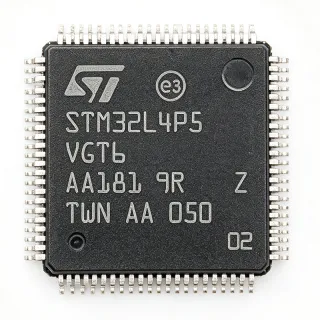
EFM32LG880F256G-E-QFP100 - 48MHz ARM Cortex-M3 MCU 256KB | Silicon Labs
Артикул: EFM32LG880F256G-E-QFP100 ✓ Активен| Кол-во | Цена за ед. | Итого |
|---|---|---|
| 1 | $5.06 | $5,06 |
| 10 | $4.71 | $47,10 |
| 100 | $4.32 | $432,00 |
| 500 | $3.94 | $1.970,00 |
| 1.000 | $3.55 | $3.550,00 |
EFM32LG880F256G-E-QFP100 Обзор
A 32-bit microcontroller (MCU) is an embedded processor that integrates a CPU core, memory, and peripherals onto a single silicon die. Within the embedded computing hierarchy, an MCU occupies the tier below microprocessors - it sacrifices raw clock speed for deterministic real-time behavior, on-chip memory, and ultra-low standby current. ARM Cortex-M3 cores follow the ARMv7-M architecture with Thumb-2 instruction set, hardware divide-divide, and bit-banding for atomic bit manipulation. The Leopard Gecko (EFM32LG) family adds Silicon Labs' proprietary energy-management peripheral set, making the line a derivative of the energy-friendly EFM32 platform originally developed by Energy Micro and now consolidated under the Silicon Labs portfolio.
Key features include 0.65 uA deep-sleep current in Stop mode, 211 uA/MHz active current in Run mode, autonomous peripherals that operate in sleep, a hardware AES-128 crypto accelerator, and a low-energy UART that can wake the part on a start bit without CPU intervention. The integrated segmented LCD driver supports up to 8x36 segments and is designed for direct bias of low-power glass displays. Supply voltage spans 1.98 V to 3.8 V from a single rail.
Typical applications include battery-powered smart thermostats, wearable fitness bands, electronic shelf labels, remote sensor nodes, and portable medical monitors where years of operation on a coin cell are required. The wide pin-count and LCD interface make it ideal for human-interface end equipment such as industrial HMIs, e-meter displays, and the user-interface panel of home appliances.
Аналоги без доработки для EFM32LG880F256G-E-QFP100 — тот же корпус, pin-to-pin совместимость. Компоненты в других корпусах, требующие переработки PCB, исключены.
Инструмент быстрого сравнения — выберите альтернативные компоненты для сравнения бок о бок:
EFM32LG880F256G-F-QFP100
✅ Прямая замена📋 Справочный аналог (нет в каталоге)
EFM32LG880F128G-E-QFP100
✅ Прямая замена ⚠️ Характеристики не проверены📋 Справочный аналог (нет в каталоге)
EFM32LG880F64G-E-QFP100
✅ Прямая замена ⚠️ Характеристики не проверены📋 Справочный аналог (нет в каталоге)
EFM32LG880F256G-E-QFP100R
✅ Прямая замена📋 Справочный аналог (нет в каталоге)
EFM32LG880F256G-E-QFP100 Максимальные параметры и электрические характеристики
| Core Architecture | ARM Cortex-M3 32-bit |
| Family | EFM32 Leopard Gecko (EFM32LG) |
| CPU Clock Speed | 48 MHz max |
| Program Flash | 256 kB |
| SRAM | 32 kB |
| Operating Voltage (Vdd) | 1.98 V to 3.8 V |
| Digital I/O Pins | 86 |
| ADC | 12-bit |
| Timers | 4 x 16-bit |
| LCD Controller | Integrated segmented, up to 8x36 segments |
| Active Current (Run Mode) | 211 uA/MHz |
| Sleep Current (Stop Mode) | 0.65 uA |
| Crypto Accelerator | AES-128 hardware |
| Корпус | 100-LQFP (14x14 mm) |
| Тип монтажа | Surface Mount |
| Статус RoHS | Compliant |
Конфигурация выводов EFM32LG880F256G-E-QFP100
| Контакт 1 | PD0 — GPIO / I2C0 SDA |
| Контакт 2 | PD1 — GPIO / I2C0 SCL |
| Контакт 3 | PD2 — GPIO / ADC0 ch2 |
| Контакт 4 | PD3 — GPIO / ADC0 ch3 |
| Контакт 5 | VDD — Digital supply voltage |
| Контакт 6 | VSS — Digital ground |
| Контакт 7 | PD4 — GPIO / LEUART0 TX |
| Контакт 8 | PD5 — GPIO / LEUART0 RX |
| Контакт 9 | PD6 — GPIO / TIMER0 CC0 |
| Контакт 10 | PD7 — GPIO / TIMER0 CC1 |
| Контакт 11 | PD8 — GPIO / TIMER0 CC2 |
| Контакт 12 | PD9 — GPIO / ACMP0 input |
| Контакт 13 | PD10 — GPIO / ACMP1 input |
| Контакт 14 | PD11 — GPIO / I2C1 SDA |
| Контакт 15 | PD12 — GPIO / I2C1 SCL |
| Контакт 16 | PD13 — GPIO |
| Контакт 17 | PD14 — GPIO |
| Контакт 18 | PD15 — GPIO |
| Контакт 19 | PA0 — GPIO / USART0 CTS |
| Контакт 20 | PA1 — GPIO / USART0 RTS |
| Контакт 21 | PA2 — GPIO / USART0 RX |
| Контакт 22 | PA3 — GPIO / USART0 TX |
| Контакт 23 | PA4 — GPIO / TIMER1 CC0 |
| Контакт 24 | PA5 — GPIO / TIMER1 CC1 |
| Контакт 25 | PA6 — GPIO / TIMER1 CC2 |
| Контакт 26 | PA7 — GPIO |
| Контакт 27 | PA8 — GPIO / LESENSE ch0 |
| Контакт 28 | PA9 — GPIO / LESENSE ch1 |
| Контакт 29 | PA10 — GPIO / LESENSE ch2 |
| Контакт 30 | PA11 — GPIO / LESENSE ch3 |
| Контакт 31 | PA12 — GPIO / LESENSE ch4 |
| Контакт 32 | PA13 — GPIO / LESENSE ch5 |
| Контакт 33 | PA14 — GPIO / LESENSE ch6 |
| Контакт 34 | PA15 — GPIO / LESENSE ch7 |
| Контакт 35 | PB0 — GPIO / LCD segment |
| Контакт 36 | PB1 — GPIO / LCD segment |
| Контакт 37 | PB2 — GPIO / LCD segment |
| Контакт 38 | PB3 — GPIO / LCD segment |
| Контакт 39 | PB4 — GPIO / LCD segment |
| Контакт 40 | PB5 — GPIO / LCD segment |
| Контакт 41 | PB6 — GPIO / LCD segment |
| Контакт 42 | PB7 — GPIO / LCD segment |
| Контакт 43 | PB8 — GPIO / LCD segment |
| Контакт 44 | PB9 — GPIO / LCD segment |
| Контакт 45 | PB10 — GPIO / LCD segment |
| Контакт 46 | PB11 — GPIO / LCD segment |
| Контакт 47 | PB12 — GPIO / LCD segment |
| Контакт 48 | PB13 — GPIO / LCD segment |
| Контакт 49 | PB14 — GPIO / LCD segment |
| Контакт 50 | PB15 — GPIO / LCD segment |
| Контакт 51 | PC0 — GPIO / LCD segment |
| Контакт 52 | PC1 — GPIO / LCD segment |
| Контакт 53 | PC2 — GPIO / LCD segment |
| Контакт 54 | PC3 — GPIO / LCD segment |
| Контакт 55 | PC4 — GPIO / LCD segment |
| Контакт 56 | PC5 — GPIO / LCD segment |
| Контакт 57 | PC6 — GPIO / LCD segment |
| Контакт 58 | PC7 — GPIO / LCD segment |
| Контакт 59 | PC8 — GPIO / LCD common |
| Контакт 60 | PC9 — GPIO / LCD common |
| Контакт 61 | PC10 — GPIO / LCD common |
| Контакт 62 | PC11 — GPIO / LCD common |
| Контакт 63 | PC12 — GPIO / LCD common |
| Контакт 64 | PC13 — GPIO / LCD common |
| Контакт 65 | PC14 — GPIO / LCD common |
| Контакт 66 | PC15 — GPIO / LCD common |
| Контакт 67 | VDD — Digital supply voltage |
| Контакт 68 | VSS — Digital ground |
| Контакт 69 | PE0 — GPIO / USART1 RX |
| Контакт 70 | PE1 — GPIO / USART1 TX |
| Контакт 71 | PE2 — GPIO / USART2 RX |
| Контакт 72 | PE3 — GPIO / USART2 TX |
| Контакт 73 | PE4 — GPIO / TIMER2 CC0 |
| Контакт 74 | PE5 — GPIO / TIMER2 CC1 |
| Контакт 75 | PE6 — GPIO / TIMER2 CC2 |
| Контакт 76 | PE7 — GPIO |
| Контакт 77 | PE8 — GPIO / ADC1 ch8 |
| Контакт 78 | PE9 — GPIO / ADC1 ch9 |
| Контакт 79 | PE10 — GPIO / ADC1 ch10 |
| Контакт 80 | PE11 — GPIO / ADC1 ch11 |
| Контакт 81 | PE12 — GPIO / DAC0 output |
| Контакт 82 | PE13 — GPIO |
| Контакт 83 | PE14 — GPIO |
| Контакт 84 | PE15 — GPIO |
| Контакт 85 | PF0 — GPIO / TIMER3 CC0 |
| Контакт 86 | PF1 — GPIO / TIMER3 CC1 |
| Контакт 87 | PF2 — GPIO / TIMER3 CC2 |
| Контакт 88 | PF3 — GPIO / ACMP2 input |
| Контакт 89 | PF4 — GPIO / ACMP3 input |
| Контакт 90 | PF5 — GPIO / LESENSE ch8 |
| Контакт 91 | PF6 — GPIO / LESENSE ch9 |
| Контакт 92 | PF7 — GPIO / LESENSE ch10 |
| Контакт 93 | PF8 — GPIO / LESENSE ch11 |
| Контакт 94 | PF9 — GPIO / LESENSE ch12 |
| Контакт 95 | PF10 — GPIO / LESENSE ch13 |
| Контакт 96 | PF11 — GPIO / LESENSE ch14 |
| Контакт 97 | PF12 — GPIO / LESENSE ch15 |
| Контакт 98 | PF13 — GPIO / DEBUG SWDIO |
| Контакт 99 | PF14 — GPIO / DEBUG SWCLK |
| Контакт 100 | RESETn — Reset input, active low |
Типичное применение
EFM32LG880F256G-E-QFP100 подходит для 6 применениеs: Battery-Powered Smart Thermostat, Wearable Fitness Band, Electronic Shelf Label (ESL), Industrial HMI Panel, Portable Medical Monitor, Smart E-Meter / Utility Display.
Battery-Powered Smart Thermostat
The EFM32LG880F256G-E-QFP100 fits smart-thermostat designs because its 0.65 uA Stop-mode current lets the device sleep almost indefinitely between user interactions, while the 48 MHz Cortex-M3 core wakes instantly to drive the segmented LCD for temperature and humidity readouts. Placed as the main controller connected to a temperature/humidity sensor over I2C and a low-power segmented glass display, it delivers years of battery life on two AA cells. The 256 kB flash holds the HVAC control logic plus a BLE stack for app pairing. Unlike a generic Cortex-M0 MCU it adds the integrated LCD controller that eliminates a separate driver IC, reducing BOM cost and quiescent current.
Рекомендуется
Wearable Fitness Band
The EFM32LG880F256G-E-QFP100 is ideal for wearable fitness applications because its 211 uA/MHz active current and 0.65 uA Stop current combine with autonomous sensor polling (LETIMER + LESENSE) to give multi-day battery life on a 100 mAh LiPo. The 12-bit ADC handles PPG heart-rate sensor readout directly without an external AFE, and the integrated 8x36-segment LCD controller drives the band's status display in deep-sleep at sub-1 uA total. Hardware AES-128 secures BLE pairing and stored biometrics. Placed as the main MCU between the PPG sensor, BLE radio, and segmented display, it removes the need for a separate display driver IC.
Рекомендуется
Electronic Shelf Label (ESL)
The EFM32LG880F256G-E-QFP100 fits electronic shelf labels because its deep-sleep current of 0.65 uA and integrated segmented LCD controller allow a coin-cell-powered price tag to operate for 5-10 years without battery replacement. The Cortex-M3 core at 48 MHz handles proprietary 2.4 GHz or NFC-based updates of price/description, while the AES-128 hardware accelerator authenticates updates. Placed on the ESL module with a small segmented glass display, it eliminates the typical external charge-pump circuitry. The 256 kB flash stores localized text strings and pricing logic, and 86 GPIO drive larger 7-segment panels.
Рекомендуется
Industrial HMI Panel
The EFM32LG880F256G-E-QFP100 suits industrial HMI panels because its 86 GPIO drive key-matrix inputs, status LEDs, and a multi-line segmented LCD, all without external driver ICs. The 100-LQFP package exposes sufficient I/O for a 6x6 button matrix plus dedicated pins for rotary encoders. The 12-bit ADC reads front-panel trim pots and analog sensor signals, while the 1.98 V to 3.8 V supply range allows direct 3.3 V rail operation. Placed as the front-panel MCU communicating with a host controller over UART or SPI, it cuts BOM cost and standby power compared with a Cortex-M4 design.
Рекомендуется
Portable Medical Monitor
The EFM32LG880F256G-E-QFP100 is well matched to portable medical monitors because its 12-bit ADC captures pulse oximetry and temperature sensor data with adequate ENOB for SpO2 trending, while the integrated segmented LCD displays readings without an external driver. The hardware AES-128 secures patient data transmission to a host device, meeting HIPAA-grade device expectations. Placed as the main MCU with a Li-coin cell, the 0.65 uA Stop current delivers months of standby life. The 256 kB flash accommodates firmware for sensor fusion, BLE pairing, and onboard storage of recent readings.
Рекомендуется
Smart E-Meter / Utility Display
The EFM32LG880F256G-E-QFP100 fits electronic meters and utility display applications because its integrated 8x36-segment LCD controller drives a multi-digit glass display directly, while autonomous energy-monitoring peripherals allow continuous metrology without waking the CPU. The 12-bit ADC handles voltage and current sensing for single-phase metering, and the 86 GPIO support tamper-detection switches and optical interfaces. Placed as the metrology MCU with an isolated shunt, the Cortex-M3 runs the metrology algorithm at 48 MHz while Stop mode consumes only 0.65 uA, extending battery-backed operation across power outages.
Рекомендуется
Сводка рекомендуемых товаров
Справочные инженерные данные для EFM32LG880F256G-E-QFP100 — сравнение, рекомендации по проектированию и информация о соответствии.
Руководство по выбору
Сравнение с аналогами
| Параметр | Этот товар | EFM32LG880F256G-F-QFP100 | EFM32LG880F128G-E-QFP100 | EFM32LG880F64G-E-QFP100 |
|---|---|---|---|---|
| Package | 100-LQFP (14x14) | 100-LQFP (14x14) - same | 100-LQFP (14x14) - same | 100-LQFP (14x14) - same |
| Brand | Silicon Labs | Silicon Labs | Silicon Labs | Silicon Labs |
| Core | ARM Cortex-M3 | ARM Cortex-M3 | ARM Cortex-M3 | ARM Cortex-M3 |
| Max Clock Speed | 48 MHz | 48 MHz | 48 MHz | 48 MHz |
| Flash | 256 kB | 256 kB | 128 kB (-50%) | 64 kB (-75%) |
| SRAM | 32 kB | 32 kB | 32 kB | 32 kB |
| Stop-Mode Current | 0.65 uA | 0.65 uA | 0.65 uA | 0.65 uA |
| GPIO Count | 86 | 86 | 86 | 86 |
| LCD Controller | Integrated 8x36 | Integrated 8x36 | Integrated 8x36 | Integrated 8x36 |
| Supply Voltage | 1.98 V to 3.8 V | 1.98 V to 3.8 V | 1.98 V to 3.8 V | 1.98 V to 3.8 V |
Ключевые отличия
- Lowest Stop-mode current in the 100-LQFP Cortex-M3 class (против STM32L152VCT6)
- Integrated 8x36-segment LCD controller on-chip (против EFM32LG842F256G-F-QFP64)
- 256 kB flash matches entire 100-LQFP Leopard Gecko family (против EFM32LG880F128G-E-QFP100)
Заметки по проектированию
Estimated: at 48 MHz active CPU the EFM32LG880F256G draws ~10 mA core current. With 3.3 V supply, power dissipation is ~33 mW - the LQFP-100 thermal resistance of ~50 C/W yields a junction rise of only ~1.6 C, so no heatsink is required. However, in active modes the dominant power consumer is the analog subsystem and the LCD bias; place a 1 uF ceramic decoupling capacitor within 5 mm of each VDD/VSS pair and a bulk 10 uF on the regulator output to prevent inrush sag during LCD refresh.
The LQFP-100 package has a junction-to-ambient thermal resistance of approximately 50 C/W on a 2-layer JEDEC test board. Estimated: even at 48 MHz active current of 10 mA from a 3.8 V supply (worst-case Vdd) the dissipation is 38 mW, leading to ~1.9 C rise - well within the 125 C junction limit. For designs using full GPIO drive strength, derate by 0.7-1.0 for simultaneous high-current pin switching.
Route the SWD debug pins (PF13 SWDIO, PF14 SWCLK) as a 10 cm or less length-matched pair with a ground trace between them; place a 4.7 kohm pull-up on SWDIO per ARM CoreSight recommendations. Keep the RESETn trace short and provide a 100 kohm pull-up plus 1 nF-to-ground for noise immunity. The integrated LCD controller drives 4 common and 8 segment pins - keep LCD traces short and isolated from switching signals to avoid display artifacts.
Common pitfalls when using the EFM32LG880F256G: (1) failing to enable the peripheral clock before configuring GPIO alternate functions - registers silently retain previous state; (2) using EM2/EM3 sleep modes without retaining GPIO state - some pins will revert to analog input, increasing leakage; (3) overlooking the 1.98 V minimum supply when designing for 1.8 V rails - use the EFM32LG880F256G-E variant only with rails >= 1.98 V. Always validate Stop-mode current with a uA-range multimeter on a finalized board, not the dev kit.
Информация о соответствии
RoHS compliant per Silicon Labs product page; lead-free reflow profile per JEDEC J-STD-020. AEC-Q100 qualification not documented for this part - choose automotive-grade EFM32 variants for AEC-Q100 compliance.