Mga Produkto (50,000+)

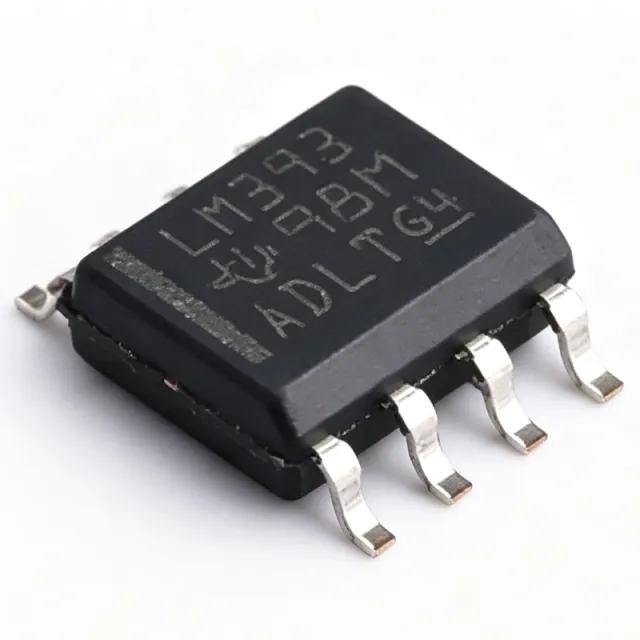
LM393ADGKRG4 - Dual Open-Collector Comparator | Texas Instruments
LM393ADGKRG4

LM393ADGKRG4 - Dual Open-Collector Comparator | Texas Instruments

The Texas Instruments LM393ADGKRG4 is a dual differential analog comparator with two independent general-purpose channels, a 2 V to 36 V single-supply operating range, and an 8-VSSOP package. Each comparator provides open-collector output for compatibility with wired logic, and the device supports single-supply or split-supply operation. Its rail-to-rail input common-mode range makes it suitable for general-purpose voltage-threshold, signal-conditioning, and industrial control tasks. An analog comparator is an interface IC that compares two input voltages and produces a logic-level indication of their relationship. The LM393 belongs to the comparator hierarchy within analog and mixed-signal semiconductors. Unlike a digital logic gate, the comparator evaluates continuously varying analog voltages, while its open-collector output provides a flexible interface to pull-up-based digital systems, relay drivers, and open-collector buses. The two LM393ADGKRG4 channels operate independently, allowing one device to implement two threshold functions. Its open-collector outputs can sink current from an external pull-up and can be left unconnected when unused. The broad 2 V to 36 V supply range supports low-voltage logic systems as well as higher-voltage industrial and instrumentation circuits, while the 8-VSSOP surface-mount package supports compact PCB layouts. Common-mode input behavior is an important architectural feature of the LM393 family. The manufacturer identifies the device as rail-to-rail, allowing the input voltages to approach the supply rails under supported operating conditions. The open-collector architecture is particularly useful when the output must drive a pull-up to a different voltage domain, participate in wired-AND logic, or control a downstream stage without an integrated push-pull output driver. Typical uses include battery-threshold detection, sensor signal conditioning, overvoltage and undervoltage supervision, window comparators, industrial control interfaces, and logic-level translation between voltage domains. Two independent channels can monitor a pair of limits, compare a sensor signal against a reference, or provide separate comparator functions with the same device. When designing the circuit, select an external pull-up resistor for each open-collector output and account for its maximum sink current, output voltage, and switching speed. Keep input and output paths away from high-current switching nodes, use a stable reference for precise thresholds, and verify the complete design against the manufacturer datasheet’s input common-mode, supply, output-current, and absolute-maximum-rating limits. This page consolidates the verified LM393ADGKRG4 package and supply information with pin-level implementation guidance, application examples, and same-package replacement comparisons. It helps engineers identify the correct footprint, understand the open-collector interface, and assess whether a candidate alternative preserves both the 8-VSSOP layout and the LM393’s core operating characteristics.

RFQ Kontak
LM393ADR - Dual Open-Collector Comparator | Texas Instruments (Tape & Reel)
LM393ADR

LM393ADR - Dual Open-Collector Comparator | Texas Instruments (Tape & Reel)

The Texas Instruments LM393ADR is a dual differential comparator with two independent comparison channels, open-collector outputs, and an 8-pin SOIC package. According to the verified manufacturer and distributor listings, the device is intended for commercial-grade applications, supports a common-mode input voltage range that includes ground, and has a differential input voltage range equal to the maximum-rated supply voltage of plus or minus 38 V. Its open-collector outputs are compatible with TTL, MOS, and CMOS logic. The LM393 family provides a straightforward way to compare an analog input against a reference voltage without requiring a pull-up resistor internally. This architecture is especially useful in threshold detection, signal conditioning, industrial control, sensing, and power-supply monitoring systems. A comparator is an analog integrated circuit that determines whether an input voltage is above or below a reference level and then represents that decision through a logic output. In the product hierarchy, the LM393ADR is a dual comparator, which is a type of analog comparator and therefore part of the broader comparator IC and interface IC categories. Unlike an operational amplifier configured as a comparator, this dedicated device provides predictable switching behavior for applications in which the input frequently crosses a threshold. Two channels in one package can monitor two signals or implement complementary decisions while reducing board area. The most important verified features are the dual-channel configuration, open-collector output topology, and wide differential input capability. Each output can sink current and requires an external pull-up resistor when a valid high output level is required. The listed compatibility with TTL, MOS, and CMOS outputs allows the device to interface with multiple logic families. Because the common-mode input range includes ground, the LM393ADR is suitable for circuits whose signal or reference is near 0 V. The manufacturer identifies the family as a commercial-grade dual differential comparator, and the verified technical listing specifies an 8-SOIC package. Electrically, the LM393ADR compares two input voltages at each channel and controls an open-collector output transistor. The output remains high impedance when the transistor is off, so the external pull-up network determines the high voltage. This architecture supports wired logic, relay drivers, lamp drivers, and level translation, provided that pull-up current and output sink current remain within the device limits. The maximum differential input voltage is stated as plus or minus 38 V, but that value is not a substitute for the specified operating supply range. Supply voltage, input offset voltage, response time, output sink current, and electrical limits must therefore be confirmed from the manufacturer datasheet before final design release. Typical applications include industrial sensor thresholds, battery and power-supply monitoring, overvoltage detection, temperature-control signals, window comparators, and logic interfaces requiring an open-collector output. The dual configuration is useful when two independently adjustable thresholds must be evaluated, such as upper and lower battery limits. In a two-threshold system, one channel can detect overvoltage while the other detects undervoltage, allowing a system controller to distinguish safe, low, and high operating states. A key design consideration is the external pull-up resistor. Its value determines output rise time, bus speed, and the current required when the output transistor is off. The pull-up should connect only to a voltage that the output and downstream logic can tolerate. The input network must also prevent either differential input from exceeding the plus or minus 38 V differential limit. Designers should verify the exact SOIC-8 pin mapping, supply range, common-mode limits, and output-current limits in the manufacturer datasheet before assembly because those details were not present in the supplied verified excerpts. This page consolidates the verified manufacturer and distributor information for the LM393ADR, distinguishes its defining dual open-collector characteristics, documents the evidence gaps without inventing missing values, and identifies the verified STMicroelectronics drop-in alternative. It also adds practical design guidance for pull-up selection, threshold implementation, and cross-brand sourcing.

RFQ Kontak
LM393ADRE4 - Dual 36V Open-Collector Comparator | Texas Instruments
LM393ADRE4

LM393ADRE4 - Dual 36V Open-Collector Comparator | Texas Instruments

The Texas Instruments LM393ADRE4 is a dual differential analog comparator with an open-collector output, a 300 ns response time, and operation from 2 V to 36 V, housed in an 8-pin SOIC package. It contains two independent comparator channels, and each channel supports rail-to-rail input comparison while driving external pull-up circuitry through an open-collector transistor. A comparator is an analog integrated circuit that evaluates two voltages and produces a digital logic state indicating which input is higher. The LM393A belongs to the broader comparator hierarchy within analog and mixed-signal semiconductors. Its open-collector architecture makes it particularly useful when a circuit needs a wired logic function, level translation, system reset, or an externally defined pull-up voltage rather than a fixed active push-pull output. The principal features of the LM393ADRE4 are its dual-channel configuration, wide 2 V to 36 V operating range, rail-to-rail input capability, and open-collector outputs. The 300 ns propagation delay makes it suitable for general-purpose threshold detection, signal conditioning, and monitoring functions. The 8-SOIC body is specified at 0.154 inch, or 3.90 mm, width, supporting conventional surface-mount PCB assembly and existing SOIC-8 layouts. Each channel compares a non-inverting input against an inverting input. The output transistor is pulled low when the non-inverting input is higher than the inverting input and releases to a high impedance when the opposite condition applies. Because the output is open collector, the output high voltage is not internally fixed; it is established by an external pull-up resistor and the available supply. This feature allows several open-collector outputs to share a bus, but it also requires correct pull-up selection and compatible system levels. Typical uses include overvoltage and undervoltage monitoring, battery threshold detection, sensor signal conditioning, window comparison, relay or LED drive, and general logic interfacing. The wide supply range is useful in industrial control systems where the comparator may operate from a rail substantially higher than a 5 V logic system. When dual supplies are used, the total supply difference must remain within the device operating limits. PCB implementation should follow the manufacturer pinout and place the comparator input and output tracks away from switching nodes and high-current paths. Keep the open-collector pull-up resistor close to the output node to limit rise time and susceptibility to capacitive coupling. Confirm input common-mode limits, output pull-up voltage, and logic-family compatibility before replacing a device in an existing design. This page consolidates the LM393ADRE4 ordering information, technical characteristics, replacement guidance, and application-focused design considerations into one engineering reference. It also distinguishes genuine same-footprint replacements from options that require package, voltage, or logic-architecture changes, helping designers select a compatible device without relying on package naming alone.

RFQ Kontak
LM393ADRG4 - Dual Open-Collector Comparator | Texas Instruments
LM393ADRG4

LM393ADRG4 - Dual Open-Collector Comparator | Texas Instruments

The Texas Instruments LM393ADRG4 is a dual differential comparator containing two independent general-purpose comparator channels, a 2 mV input offset voltage, a 300 ns response time, and a 2 V to 36 V supply range in an 8-pin SOIC (D) package. Each channel supports single-supply or dual-supply operation, and its open-collector output architecture is intended for wired logic, alarm, threshold, and industrial control circuits. A comparator is an analog integrated circuit that evaluates one voltage against another and changes its output state when the difference crosses a defined threshold. The LM393 family belongs to the broader hierarchy of differential comparator, analog comparator, signal-conditioning IC, and semiconductor categories. Unlike an operational amplifier used primarily for closed-loop amplification, a comparator is optimized for fast, decisive digital signaling and commonly interfaces analog sensing circuits with logic-level systems. Key features include two independent channels, a wide 2 V to 36 V operating range, open-collector outputs, and a 2 mV offset specification that helps distinguish small differential signals. The open-collector architecture permits the output to be pulled up to a suitable logic voltage, adds output-stage flexibility, and can support wired-AND behavior when multiple comparator outputs share a pull-up resistor. The listed response time of 300 ns suits applications that require a defined switching transition without using a very high-speed logic device. The LM393ADRG4 is identified as an industrial-grade precision dual differential comparator. Its SOIC package provides a practical surface-mount footprint for PCB assembly, while the broad supply range accommodates 5 V, 12 V, 15 V, and 24 V system rails when component voltage ratings are considered. Because the outputs are open collectors, every application must include an appropriate pull-up resistor or other pull-up arrangement to obtain a valid high output level. Typical applications include overvoltage and undervoltage monitoring, sensor threshold detection, industrial control interfaces, motor or actuator protection, window-comparison functions, and conversion of analog sensor conditions into logic-compatible events. The two independent channels can monitor separate thresholds or operate as complementary comparators. Designers should also account for input common-mode limits, output pull-up voltage, supply decoupling, and any pull-up current when fan-out or fault conditions are important. For reliable layouts, place the bypass capacitor close to the supply and ground pins, keep comparator input traces short, and avoid routing them beside high-current switching paths. A pull-up resistor near the output improves rise time, but its value must balance speed, power, and the current sourced by the open-collector transistor. The input network should use stable reference sources and include protection when external wiring exposes the pins to transients. This page combines the manufacturer product identity, exact orderable package information, structured technical specifications, supported use cases, and drop-in replacement analysis. It is designed to help engineers confirm electrical suitability, package compatibility, and application fit before integrating the LM393ADRG4 into a new or existing PCB design.

RFQ Kontak
LM393ADT - Dual Open-Collector Comparator | STMicroelectronics
LM393ADT

LM393ADT - Dual Open-Collector Comparator | STMicroelectronics

STMicroelectronics LM393ADT is a low-power dual differential comparator containing two independent comparator channels in an 8-pin SOIC package. Each channel provides rail-to-rail input comparison and an open-collector output, making the device suitable for general-purpose signal thresholding, monitoring, and interface applications. The LM393ADT operates from a single supply and also supports split power supplies. A comparator is a semiconductor device that compares two input voltages and produces a logic-level result indicating which input is higher. The dual-comparator architecture places two independent channels in one package, reducing component count when a system performs two related threshold decisions. As a general-purpose comparator, the LM393ADT belongs to the broader voltage-comparison and signal-conditioning hierarchy rather than to an amplifier, converter, or regulator product class. The principal features of the LM393ADT are its two independent comparator channels, rail-to-rail input operation, open-collector outputs, and compatibility with both single and split power-supply arrangements. Open-collector outputs provide a useful pull-up interface for wired logic, level translation, and systems requiring an external pull-up resistor. Because the output transistor is exposed rather than driven by an internal totem-pole stage, circuit designers can select the pull-up voltage independently of the comparator supply in many applications. Internally, the two channels operate independently, allowing each comparator to monitor a different signal pair. This architecture supports two separate threshold decisions without shared input multiplexing. Rail-to-rail input behavior makes the input common-mode range an important design consideration, while the open-collector output requires an external pull-up in normal open-drain operation. The 8-SOIC package provides a conventional surface-mount footprint for PCB assembly and hand rework. Typical uses include industrial control and threshold detection, battery and power-supply monitoring, sensor signal conditioning, comparator-based oscillator circuits, window detection, and general logic interfacing. The part can also serve as the decision element in systems that convert an analog voltage into a digital state. Its dual-channel organization is particularly useful when two monitored quantities must produce separate logic outputs. When designing a board around the LM393ADT, reserve a pull-up resistor for each open-collector output and keep the pull-up voltage compatible with the receiving logic. Review input common-mode limits, output rise and fall behavior, supply decoupling, and the voltage relationship between input signals and supply rails. Account for input signals that can approach the supply rails when sizing protection or biasing networks. This page combines the verified LM393ADT product identity, package and functional characteristics with compatible comparator references and practical design guidance. It also organizes replacement, selection, sourcing, datasheet, and application questions into concise engineering answers for faster component evaluation.

RFQ Kontak
LM393AM - Dual 36V Differential Comparator | onsemi | SOIC-8
LM393AM

LM393AM - Dual 36V Differential Comparator | onsemi | SOIC-8

The onsemi LM393AM is a dual differential comparator with open-collector outputs, designed for general-purpose signal comparison in an 8-pin SOIC package. It supports single-supply operation to 36 V and dual-supply operation to ±18 V. Each channel compares two input voltages and provides a low-voltage open-collector output suitable for pulling a logic node low. The device also offers low input bias current of 25 nA typical and low current drain of 800 µA typical. A differential comparator is an integrated circuit that evaluates the relationship between two voltages and translates the result into a logic-level output. The LM393 belongs to the comparator hierarchy within analog and mixed-signal semiconductors, where it sits alongside amplifiers, voltage references, logic interfaces, and other power-management functions. Its open-collector architecture is particularly useful when a designer needs to combine outputs, control a wired bus, or interface to legacy TTL and CMOS logic. The LM393AM provides two independent comparator channels in one package. Operation from a single supply allows the common-mode input range to approach ground, making the part useful for battery-powered monitoring, sensor conditioning, window comparison, and supply-control circuits. An open-collector output requires an external pull-up resistor because the output transistor actively pulls the output toward ground but does.source current from the output. This feature permits wired logic operation when several outputs share a bus and allows the output polarity to be changed by assigning the pull-up to either the positive or negative supply. The principal engineering trade-off is low power consumption versus modern performance. The 800 µA typical current drain suits battery-operated equipment, while the 25 nA typical input bias current helps preserve accuracy with high-impedance sensing networks. Because the output is open collector, designers must verify pull-up resistance, pull-up voltage, rise time, output sink current, and system-level timing rather than treating the part like a push-pull logic gate. Typical applications include overvoltage and undervoltage protection, battery monitoring, thermistor and light sensor interfaces, motor or actuator threshold detection, industrial control modules, and embedded logic. In each case, the LM393AM converts a small analog differential into a digital decision. The commercial-temperature LM393AM should be selected where its specified temperature range, supply limits, offset behavior, and propagation delay satisfy the design. For PCB implementation, place the decoupling capacitor close to the supply and ground pins, keep input traces short, and provide adequate copper for heat dissipation. The open-collector output node can be sensitive to capacitive loading and leakage, so external pull-up placement and grounding require careful review. This page combines verified source data, package-level alternatives, parameter comparisons, and application guidance to support practical component selection without relying on the datasheet alone.

RFQ Kontak
LM393AN - Dual Comparator for 5V Control | STMicroelectronics
LM393AN

LM393AN - Dual Comparator for 5V Control | STMicroelectronics

The STMicroelectronics LM393AN is a dual, independent, general-purpose voltage comparator with open-collector outputs, packaged in an 8-DIP. It supports single-supply or split-supply operation and is intended for comparison tasks where a low-side, open-drain signaling output is useful. The verified source identifies the device as rail-to-rail and suitable for common-mode input ranges extending toward ground on a single supply. A voltage comparator is an analog integrated circuit that compares two input voltages and changes its output state when one input crosses the other. The LM393AN contains two independent comparator channels in one package. Within the broader semiconductor hierarchy, it is a comparator IC, an analog interface device, and part of the integrated-circuit family used for sensing, control, protection, and digital threshold conversion. The principal feature is its open-collector output architecture, allowing each channel to interface with pull-up resistors and external loads. This architecture is useful in open-drain buses, wired logic, relay-driver stages, and systems where multiple comparators can share a signaling line under suitable conditions. Because the supplied results do not provide complete numerical electrical tables, exact supply voltage, input offset, response time, and current limits require confirmation from the manufacturer datasheet. The LM393AN is a bipolar general-purpose comparator rather than a rail-to-rail input comparator in the modern CMOS sense, although the distributor listing describes the device as rail-to-rail. Its two channels are electrically independent, allowing one section to monitor a supply threshold while the other evaluates a signal or temperature-derived voltage. The open-collector outputs require external pull-up components when a logic-high output is required. Typical applications include industrial overvoltage and undervoltage monitoring, sensor threshold detection, battery and power-supply supervision, open-drain interface translation, and control systems comparing an analog input with an adjustable reference. For battery-powered designs, engineers should review the device's supply-current specifications because a classic general-purpose comparator may consume more current than a modern low-power equivalent. Designers should place the input and output components close to the package pins, use an appropriate pull-up resistor on each open-collector output, and verify the common-mode and supply limits for the selected manufacturer. Input polarity, output sinking current, and propagation delay must be checked before substituting another manufacturer's LM393AN or an LM393-family device. This page consolidates verified manufacturer and distributor information, identifies source-backed drop-in sourcing options, and adds engineering-focused comparison and application guidance. It is intended to support part selection while clearly separating confirmed package and architecture details from electrical parameters that require the manufacturer datasheet.

RFQ Kontak
LM393AP - Dual 36V Open-Collector Comparator | Texas Instruments
LM393AP

LM393AP - Dual 36V Open-Collector Comparator | Texas Instruments

The Texas Instruments LM393AP is a dual differential comparator with two independent comparator channels, a 2 V to 36 V single-supply operating range, and a 300 ns response time in an 8-pin PDIP package. Each channel provides an open-collector output that can sink useful load current and operate at voltages up to 36 V. The device is intended for general-purpose commercial applications requiring threshold detection, signal conditioning, or simple analog decision-making. A differential comparator is an analog IC that compares two input voltages and changes its output state when the difference crosses a defined threshold. The LM393AP belongs to the comparator hierarchy, where a comparator is a specialized amplifier IC used for voltage-level detection rather than linear signal amplification. Its two independent channels allow one package to implement two separate sensing or control functions. Key characteristics include a wide 2 V to 36 V supply range, a differential input arrangement, an open-collector output, and a response time of 300 ns. The open-collector architecture requires an external pull-up resistor, but it provides useful flexibility because the output can be pulled to a system-defined voltage and the device can remain off during output high states. The input offset voltage can reach ±5 mV according to the published LM393 comparator information. The architecture is suited to low- and moderate-speed threshold decisions. Its propagation delay is long compared with a high-speed logic comparator, but it is appropriate for monitoring, sorting, control, and protection functions that do not require sub-microsecond response. The differential inputs support sensing above or below a reference voltage, while the two channels can share a supply but operate independently. Typical uses include battery monitoring, overvoltage detection, sensor signal conditioning, window comparison, temperature-control thresholds, and industrial control interfaces. In battery systems, the broad operating supply range allows the comparator to monitor divided supply voltages without requiring a low-voltage-only comparator. When designing a PCB around the LM393AP, place input and pull-up components close to the device and keep sensitive comparator inputs away from switching nodes. Because the output is open collector, never leave an output undefined; fit the appropriate pull-up resistor to a compatible logic or supply rail. Verify differential input limits, output current, and common-mode range against the application’s worst-case voltage conditions. This page combines device specifications, application guidance, same-package drop-in options, and a parameter-by-parameter comparison to support schematic review, PCB planning, and sourcing decisions.

RFQ Kontak
LM393APG4 - Dual Open-Collector Comparator, 8-PDIP | Texas Instruments
LM393APG4

LM393APG4 - Dual Open-Collector Comparator, 8-PDIP | Texas Instruments

The Texas Instruments LM393APG4 is a dual differential comparator consisting of two independent voltage comparators in an 8-pin PDIP (0.300 inch, 7.62 mm) through-hole package with open-collector, open-emitter outputs and a common supply range of 2 V to 36 V. A comparator is a differential amplifier whose output switches state whenever the voltage applied to its inverting input rises above or falls below the voltage on its non-inverting input. As a product type, the LM393 family sits in the hierarchy comparator -> differential comparator -> analog signal conditioning IC -> integrated circuit, and it is one of the most widely cloned analog building blocks in the industry. Because the output stage is open collector, the output node can pull only to a logic-low rail, which makes the part directly usable with pull-up resistors to any supply between 2 V and 36 V, including 3.3 V, 5 V and 24 V system levels. Key features of the LM393APG4 include two independent comparator channels that can operate from a single supply or from split dual supplies, rail-to-rail input common-mode range as highlighted in distributor listings, and an open-collector output stage that supports wired-AND busing and level translation. The device is specified as a standard, general-purpose comparator, and the same die is offered in multiple package and temperature options under the LM393 and LM393A orderable part numbers. Architecturally, each channel in the LM393 uses a differential input pair feeding an open-collector output stage, so the outputs are naturally slow but noise-tolerant; the design is intended for sensing thresholds rather than for high-speed signal conditioning. Because the output transistor is not driven above the low state, a pull-up resistor is mandatory, and any change in pull-up supply changes the output high level without affecting the input stage. Typical applications include over-voltage and under-voltage protection in switching power supplies, window comparators for battery monitoring, temperature threshold detection with external sensors, zero-cross detection in AC line circuits, relay and solenoid drive, and general level translation between dissimilar logic families. Industrial control and instrumentation designs use the open-collector outputs to drive optocouplers, transistors, or LED indicators directly. When designing around the LM393APG4, always place the pull-up resistor as close as practical to the output pin to limit stray capacitance-induced switching spikes, and note that the two channels share a common ground and a common supply pin. Because the output is open collector, the device cannot source current; any load must be referenced to the same ground as the device. This page combines manufacturer specification details, package and pin-level guidance, drop-in replacement options, and practical design notes so that engineers can evaluate the LM393APG4 alongside modern low-power alternatives without re-reading multiple documents.

RFQ Kontak
LM393APS - Dual 18V/36V Open-Collector Comparator | Texas Instruments
LM393APS

LM393APS - Dual 18V/36V Open-Collector Comparator | Texas Instruments

The Texas Instruments LM393APS is a dual differential voltage comparator packaged in an 8-pin small-outline package for general-purpose signal comparison. It provides two independent comparator channels with open-collector outputs, rail-to-rail input capability, and operation across a single-supply range identified as 18V/36V in the LM393 series documentation. The LM393APS suffix denotes the surface-mount packaging option for the LM393AP family. A comparator is an analog integrated circuit that evaluates the relative voltage applied to its inverting and non-inverting inputs. The LM393APS is therefore placed in the feedback path of control, sensing, or protection circuits rather than amplifying a signal directly. Its open-collector outputs can sink current from an external pull-up network, which allows wired logic interconnection, level translation, and relay-driver interfaces without requiring a dedicated push-pull output stage. Key characteristics of this dual comparator include two independent channels, an open-collector output topology, rail-to-rail input handling, and an 8-pin surface-mount package. The open-collector arrangement also requires an external pull-up resistor when the output must reach a valid high logic level. The SOIC-8 footprint simplifies assembly on modern surface-mount boards while preserving the pin arrangement associated with the LM393AP family. Internally, each LM393APS channel compares two input voltages and changes its output state according to their relationship. Because the outputs are open collector, the device can interface with TTL, CMOS, or other pull-up-defined logic rails when voltage and current limits are respected. The shared supply and ground pins make the two channels useful for window comparison, overvoltage detection, sensor thresholding, and complementary control decisions. Typical uses include industrial sensor interfaces, battery and power-supply monitoring, temperature threshold circuits, motor or actuator control, loop-error detection, and general logic level conversion. Because the output transistor can remain off in the fault state, the open-collector structure is especially useful where a wired-AND behavior or fail-safe output is desirable. When laying out a board, place the pull-up resistor close to the output net and route comparator inputs away from switching nodes and high-current traces. Confirm the absolute maximum supply voltage, input common-mode limits, output current, and propagation timing in the manufacturer datasheet before applying the device to a new design. This page combines package identification, pin assignments, application guidance, comparison criteria, and design cautions to support faster component selection and PCB planning.

RFQ Kontak
LM393APSR - Dual 38V Open-Collector Comparator | Texas Instruments
LM393APSR

LM393APSR - Dual 38V Open-Collector Comparator | Texas Instruments

The Texas Instruments LM393APSR is a precision dual differential comparator with two independent comparison channels, a 38 V maximum supply rating, and open-collector outputs in an 8-pin SOP package. The device operates from a single positive supply and is specified for industrial-grade ambient temperatures from 0°C to 70°C. A differential comparator is an analog integrated circuit that compares two input voltages and produces a digital logic state indicating which input is higher. The LM393APSR belongs to the comparator hierarchy within analog and mixed-signal semiconductors, where open-collector outputs are useful for level translation, wired logic, and systems requiring an external pull-up resistor. Key specifications include a low input offset voltage of 0.37 mV, a low input bias current of 3.5 nA, and a supply current of 200 µA per comparator. The maximum rating reaches 38 V, while the differential input range extends to ±38 V. An open-collector output can sink logic-level current and connect to TTL, MOS, or CMOS-compatible pull-up networks. Each of the two channels is electrically independent, allowing simultaneous comparisons or separate threshold-monitoring tasks. The open-collector architecture provides useful flexibility: output rise time is determined by the pull-up resistor and associated capacitance rather than solely by an internal active pull-up. This also permits wired-open-drain logic and level translation between systems with different voltage domains. Typical uses include industrial control and monitoring, sensor threshold detection, overvoltage and undervoltage supervision, automotive-style battery monitoring, switching-power-supply feedback loops, and general-purpose signal conditioning. The wide supply and differential-input ratings are particularly useful in systems where signal or supply transients may exceed ordinary low-voltage logic levels. For reliable operation, place the pull-up resistor close to each open-collector output and verify the input common-mode range at the actual supply voltage. Decoupling capacitors should connect directly between the supply and ground pins. PCB signal-trace lengths should remain short to reduce noise pickup on high-impedance comparator inputs. This page combines the official LM393A family information, package and ordering details, compatible comparison options, and practical implementation guidance. It helps engineers evaluate pin compatibility, output architecture, input characteristics, thermal limits, and replacement options before integrating the comparator into a new PCB.

RFQ Kontak
LM393APWLE - Dual 36V Comparator, 8-TSSOP | Texas Instruments
LM393APWLE

LM393APWLE - Dual 36V Comparator, 8-TSSOP | Texas Instruments

The Texas Instruments LM393APWLE is a dual differential comparator with two independent open-collector outputs, a 36 V maximum total supply rating, and an 8-pin TSSOP package. It is a commercial-grade device intended for operation from a single supply or suitable dual-supply arrangement, making it appropriate for threshold detection, window comparison, and general-purpose signal conditioning. A comparator is an analog integrated circuit that evaluates two input voltages and produces a digital logic state indicating which input is higher. Within the power-management IC hierarchy, the LM393 belongs to the comparator family rather than an amplifier or logic gate. Its two channels are independent, allowing one package to implement two sensing functions while sharing the same supply connections. Key characteristics include two comparator channels, open-collector outputs, a 36 V maximum supply-voltage rating, and a commercial temperature range of 0°C to 70°C. The open-collector outputs require an external pull-up resistor and can be wired for wired-AND behavior. This architecture is useful when an interface must remain compatible with legacy TTL or open-collector logic. The LM393APWLE is based on the LM393 family of bipolar differential comparators. Each channel compares a non-inverting and an inverting input, while the two output stages provide open-collector sinking capability. Because the output transistor is not actively driven high, output rise time depends on the pull-up resistor, load capacitance, and signal-chain capacitance rather than solely on the comparator output-stage drive strength. Typical uses include overvoltage and undervoltage detection, sensor-threshold conditioning, zero-crossing detection, industrial control interfaces, and battery-powered monitoring. For lower-voltage systems, the wide supply range also permits operation from conventional industrial rails, subject to the input common-mode and output-circuit restrictions stated in the manufacturer datasheet. The primary design consideration is the open-collector interface. Select the external pull-up resistor to balance rising time, power, and drive current, and account for leakage from the attached logic family. Ensure that both input voltages remain within the allowable common-mode range and that the pull-up supply does not exceed the output-pin rating. This product page combines the manufacturer specifications, package and pin information, sourcing guidance, practical application examples, and carefully qualified replacement considerations. It also highlights where B-grade family members can improve performance while retaining pin compatibility, helping engineers make informed design decisions without assuming that every similar comparator is a true drop-in replacement.

RFQ Kontak
LM393APWR - 38V Dual Comparator | Texas Instruments
LM393APWR

LM393APWR - 38V Dual Comparator | Texas Instruments

The Texas Instruments LM393APWR is a dual differential comparator with a 38 V maximum supply rating, rail-to-rail input capability, and open-collector outputs, housed in an 8-pin TSSOP package. The two independent comparator channels support common-mode voltages that include ground, while each output can sink logic-level current for interfacing with TTL, MOS, and CMOS systems. The device combines a low input offset voltage of 0.37 mV, low input bias current of 3.5 nA, and typical supply current of 200 µA per comparator. A differential comparator is an analog integrated circuit that compares two input voltages and changes its output state when one input becomes higher than the other. The LM393 family belongs to the comparator hierarchy within analog signal processing and power-management interfaces. Its open-collector architecture requires an external pull-up resistor, allowing the output to operate at a voltage selected by the surrounding digital circuit rather than being fixed internally by the comparator. The precision A-grade version provides an input offset voltage of 0.37 mV, making it suitable for threshold decisions where small differential signals must be resolved accurately. Input bias current of 3.5 nA limits the voltage error created when source impedances interact with the comparator inputs. A typical supply current of 200 µA per comparator supports low-power operation, and the stated 2 kV HBM ESD rating provides useful handling robustness for industrial equipment. Each channel contains independent differential inputs and an open-collector output. The output can pull a logic node low while the external pull-up establishes the high state, which permits wired logic, level translation, and straightforward interfacing to microcontroller input pins. Because the outputs are open collector, multiple comparator outputs can share a common pull-up when the application requires wired-AND behavior. The device is intended for operation from a single supply or from split supplies where the input common-mode range remains valid. Typical applications include industrial sensor threshold detection, overvoltage and undervoltage protection, battery monitoring, temperature-switch interfaces, motor and relay control, and window-comparison functions in control systems. The rail-to-rail input characteristic is particularly useful in single-supply circuits where a signal may approach ground. The 8-pin TSSOP package also supports compact analog boards while exposing both comparator channels and the common supply pins. Designers should place input resistors close to the comparator pins when the source impedance is high, because input bias current and resistor noise can create differential errors. The open-collector outputs must each have a pull-up resistor, and the chosen resistor should balance rise time, power consumption, and the sink-current capability of the output. Designers must also verify the input and output voltages against the limits of the selected supply configuration. This page combines the core electrical characteristics, package and pinout details, practical application guidance, and qualified drop-in alternatives for engineers evaluating the LM393APWR. It also highlights the open-collector interface requirements and the key electrical differences that should be checked before replacing the part in an existing PCB design.

RFQ Kontak
LM393APWRE4 - Dual Open-Collector Comparator | Texas Instruments
LM393APWRE4

LM393APWRE4 - Dual Open-Collector Comparator | Texas Instruments

Texas Instruments LM393APWRE4 is a dual general-purpose differential comparator with open-collector outputs, a 30 V maximum supply rating, and 0.3 us response time in an 8-TSSOP package. The device contains two independent comparator channels and can operate from either a single supply or split supplies. Its open-collector outputs require an external pull-up resistor and can be wired for wired-AND operation. A comparator is an analog integrated circuit that evaluates one input voltage against another and changes its output state when the difference crosses a defined threshold. The LM393 belongs to the comparator hierarchy within analog and mixed-signal semiconductors. Unlike an operational amplifier used primarily for closed-loop amplification, this device provides a saturated digital decision at its output. Each channel can also be used as an open-loop line receiver or simple threshold detector. Key features include two independent channels, an open-collector output architecture, a supply voltage range extending to 30 V, and a typical propagation delay of 0.3 us. The listed supply-current drain is 0.4 mA typical per comparator, making the device suitable for battery-powered monitoring systems where continuous current matters. The differential inputs allow a signal to be compared against a reference voltage, while the package reduces board area compared with discrete transistor implementations. The LM393 family uses open-collector transistor outputs rather than totem-pole outputs. When the output transistor turns off, the output node rises only as allowed by the external pull-up network. This architecture provides a useful advantage in systems that need a shared bus, wired logic, level translation, or compatibility with a higher supply domain. The output transistor can sink current from the pull-up rail while the collector remains physically isolated from the device supply pins. Typical uses include DC overvoltage and undervoltage detection, sensor threshold conditioning, window comparators, battery monitoring, zero-cross detection, and industrial control interfaces. Two independent channels can implement separate upper and lower thresholds, or they can be combined into a window-comparator function. Open-collector outputs also permit several comparator outputs to share a pull-up when the system requires a wired-AND arrangement. When designing a circuit, choose the pull-up resistor so that its worst-case sink current stays within the output-transistor limit and its rise time remains acceptable for the downstream logic. Keep input traces short, provide a stable reference source, and connect the unused comparator channel to a defined common-mode voltage. The 8-TSSOP package requires careful lead inspection because its closely spaced leads can be difficult to inspect after soldering. This product page combines the device specifications, application guidance, drop-in alternatives, and practical comparator-layout considerations. These engineering details help designers evaluate the LM393APWRE4 against other dual open-collector comparators without treating package size and pin compatibility as substitutes for complete electrical verification.

RFQ Kontak
LM393APWRG4 - 18V Dual Comparator | Texas Instruments
LM393APWRG4

LM393APWRG4 - 18V Dual Comparator | Texas Instruments

Texas Instruments LM393APWRG4 is a dual differential comparator with two independent comparison channels, an 18 V maximum supply rating, open-collector outputs, and an 8-pin TSSOP package. The device is intended for general-purpose signal comparison and threshold-detection circuits. Its open-collector output architecture requires an external pull-up resistor and supports wired logic, relay-driver, and interface applications. A differential comparator is an analog comparator that evaluates two input voltages and changes its output state according to their relative polarity. The dual-channel implementation provides two comparators in one package, reducing component count and PCB area. In the broader semiconductor hierarchy, the LM393A belongs to the comparator class, within integrated circuits, interface ICs, and analog signal-conditioning devices. The LM393APWRG4 provides a response time of 1.3 µs, a maximum input offset voltage of 4 mV, and a low input bias current magnitude of 0.4 µA. Its open-collector outputs allow the output voltage to be pulled to the logic supply used by the following device. The commercial-temperature product is supplied in the compact PW 8-TSSOP package. Each internal channel compares its non-inverting and inverting inputs. When the non-inverting input is electrically higher than the inverting input, the associated output transistor turns on and pulls the open-collector node toward ground. When that condition reverses, the transistor turns off, allowing the pull-up resistor to raise the output. This behavior makes the output level adjustable through the external pull-up supply and resistor. Typical uses include overvoltage and undervoltage detection, sensor-threshold switching, zero-cross detection, industrial control interfaces, and relay or lamp-driver logic. The two channels may operate independently, or they can be interconnected in oscillator, window-comparator, and Schmitt-trigger configurations. Open-collector outputs are particularly useful when multiple devices must share a common wired bus. PCB design should reserve space for each channel's input compensation network, where applicable, and route comparator inputs away from switching nodes and high-current return paths. Place the output pull-up resistor close to the open-collector output to limit trace susceptibility to noise. The exposed thermal considerations are modest for ordinary comparator operation, but input and output current should remain within the ratings defined by the manufacturer datasheet. This product page combines the exact device identity, lifecycle information, technical specifications, application guidance, and available family alternatives. It also identifies the package and pinout documentation needed for PCB review, sourcing continuity, and cross-reference decisions.

RFQ Kontak
LM393AWDT - Dual Open-Collector Comparator | STMicroelectronics
LM393AWDT

LM393AWDT - Dual Open-Collector Comparator | STMicroelectronics

The STMicroelectronics LM393AWDT is a low-power dual voltage comparator with two independent comparator channels, open-collector outputs, and a single-supply operating architecture packaged in an 8-pin SOIC. It is designed for comparing two input voltages and producing a digital logic state when the selected channel changes polarity. A voltage comparator is a semiconductor component that evaluates one input voltage against another and reports the relationship as a logic output. The LM393 belongs to the comparator hierarchy within analog and mixed-signal semiconductors. Its two independent channels allow one device to perform two threshold, level-detection, or window-monitoring functions without sharing internal signal paths. The principal feature of the LM393AWDT is its pair of open-collector outputs. Each output can pull a logic node low, while an external pull-up resistor establishes the high state. This architecture works with the voltage levels used by many digital systems and allows multiple open-collector outputs to share a bus when the design requires wired logic. The device also includes two comparators in one 8-pin SOIC, reducing board area compared with two separate single-channel packages. The two internal channels are electrically independent, supporting simultaneous comparisons such as upper-limit and lower-limit monitoring. Input and output pins are arranged in a conventional SOIC-8 footprint. Because the outputs are open collector rather than push-pull, circuit design must include suitable pull-up components and account for output rise time, load capacitance, and bus capacitance. Typical uses include industrial control and automation, sensor threshold conditioning, battery and power-system monitoring, industrial control and automation, and embedded control systems. In each case, the comparator converts an analog voltage relationship into a logic signal that can drive an input, control an interrupt, or indicate a system state. Layout should keep input traces short and route output traces away from sensitive analog nodes. Place pull-up resistors near the driven logic input when long traces or slow bus edges are possible. Verify the logic family, supply range, input common-mode limits, output sink capability, and propagation timing against the manufacturer datasheet before releasing the design. This product page combines the LM393AWDT device description, pin assignment, package information, engineering application guidance, comparison parameters, and qualified drop-in alternatives. It is intended to help designers select the comparator quickly while completing the mandatory electrical and footprint checks for a production circuit.

RFQ Kontak
LM393BIDDFR - Dual Open-Collector Comparator | Texas Instruments
LM393BIDDFR

LM393BIDDFR - Dual Open-Collector Comparator | Texas Instruments

The Texas Instruments LM393BIDDFR is a dual differential comparator containing two independent comparison channels in an 8-pin SOT-23-THN package. It operates from a single positive supply up to 38 V and supports rail-to-rail input common-mode operation, with an open-collector output on each channel. Typical input offset voltage is as low as 0.37 mV, input bias current is 3.5 nA, and each comparator draws approximately 200 uA of supply current. A comparator is an analog integrated circuit that evaluates two input voltages and changes its output state when the non-inverting input exceeds the inverting input, or vice versa. The LM393B belongs to the voltage-comparator hierarchy, where differential analog signals are converted into logic-level decisions for control, protection, or system supervision. The B-version LM393B improves on the original LM393 family with lower offset voltage, lower supply current, lower input bias current, faster response time, and stronger input protection. Key improvements include a maximum rating of 38 V, a 2 kV human-body-model ESD rating, and a response time of 1 us. These characteristics make the device suitable for cost-sensitive industrial and commercial designs that require accurate threshold detection. Each internal comparator has a differential input stage, a logic output stage, and an open-collector transistor output. The open-collector outputs can sink current while remaining electrically isolated from the output supply, allowing a pull-up resistor to establish the logic-high voltage. The two channels share supply pins but otherwise operate independently, making channel-to-channel coupling minimal in normal use. Typical applications include overvoltage and undervoltage monitoring, temperature-setpoint control, battery-cell protection, zero-cross detection, sensor signal conditioning, and industrial control interfaces. The wide supply range also supports 12 V and 24 V industrial systems, while the low input bias current benefits high-impedance sensor nodes. Designers should use a pull-up resistor on each open-collector output and account for the output's inverted logic. Place bypass capacitors close to the supply pins, verify the input common-mode range at every operating condition, and avoid forcing an output below its externally imposed logic-high level. Confirm timing requirements against the 1 us response-time specification when the comparator drives slow logic or long capacitive loads.

RFQ Kontak
LM393BIDGKR - Dual 38V Open-Collector Comparator | Texas Instruments
LM393BIDGKR

LM393BIDGKR - Dual 38V Open-Collector Comparator | Texas Instruments

Texas Instruments LM393BIDGKR is a dual commercial-grade differential comparator with open-collector outputs, a maximum rating of 38 V, low input offset voltage of 0.37 mV, and input bias current of 3.5 nA per comparator. It operates from a single supply and is packaged in an 8-pin VSSOP (DGK) surface-mount package. The two independent comparators support TTL, MOS, and CMOS-compatible output interfacing. A comparator is an analog integrated circuit that compares two input voltages and produces a logic-level indication of their relationship. The LM393B belongs to the dual-comparator hierarchy, combining two differential comparator channels in one integrated circuit. It is commonly used in the wider category of signal-conditioning and threshold-detection ICs, where a sensed voltage is compared against a reference or control signal. Key characteristics include a low supply current of 200 uA per comparator, a response time of 1 us, and a 2 kV human-body-model ESD rating. The common-mode input range includes ground, while the differential input range equals the maximum-rated supply voltage of 38 V. These features support robust sensing in industrial, communication, instrumentation, and embedded systems where the input may exceed conventional logic levels. The B-version architecture retains the familiar LM393 dual-open-collector interface while improving offset voltage, supply-current consumption, input bias current, propagation delay, and ESD ruggedness. Dedicated input clamps strengthen the inputs against electrostatic discharge. Each output can sink logic-level current while remaining in a high-impedance state when inactive, allowing multiple open-collector nodes to share a pull-up network when the electrical design permits it. Typical uses include overvoltage and undervoltage detection, window comparators, temperature-threshold circuits, sensor signal conditioning, relay or solenoid activation, and battery-powered monitoring. The low 200 uA per-comparator supply demand is particularly useful in systems where the comparator must remain active continuously without dominating the standby power budget. Design with the open-collector output in mind: every output requires a pull-up resistor to the appropriate logic supply. Place input, output, and decoupling connections to minimize parasitic pickup, and account for input offset and bias currents when working near the switching threshold. Keep the common-mode and differential inputs within their specified operating limits. This product page combines the LM393BIDGKR electrical characteristics, package and pin assignment, same-package alternatives, and practical application guidance. It supports faster engineering decisions by connecting the comparator’s offset, bias current, response time, ESD rating, and supply capability directly to common circuit-design requirements.

RFQ Kontak
LM393BIDR - Dual Open-Collector Comparator | Texas Instruments
LM393BIDR

LM393BIDR - Dual Open-Collector Comparator | Texas Instruments

The Texas Instruments LM393BIDR is a dual general-purpose comparator with an open-collector output, commercial temperature rating of -40°C to +85°C, and an 8-pin SOIC package. Each channel compares two differential inputs and drives a low-voltage-compatible open-collector output that can pull a logic rail low. The device accepts differential input voltages up to ±38 V and its common-mode input range includes ground, making it suitable for sensing signals referenced to 0 V. A comparator is an analog signal-conditioning IC that evaluates the voltage difference between its non-inverting and inverting inputs. When the non-inverting input rises above the inverting input, the associated output transistor turns off; when the relationship reverses, the output transistor turns on and pulls the output low. The LM393 family belongs to the comparator category within the broader analog IC and semiconductor hierarchies. The B-version LM393 improves several parameters relative to the original LM393 family while remaining a drop-in replacement for LM293, LM393, and LM2903 A and V versions. Manufacturer product information lists a maximum input offset voltage of 2.5 mV, a response time of 1 µs, an input bias current of 3.5 nA, and supply current of 200 µA per comparator. The open-collector outputs are compatible with TTL, MOS, and CMOS logic. Internally, the LM393 uses independent comparator channels referenced to a stable internal reference. Each output requires an external pull-up resistor because the open-drain transistor cannot actively drive a high state. The output sink current, low-level output voltage, and response performance are affected by the pull-up value, load capacitance, and the distance between the comparator and the receiving logic device. Typical uses include DC overvoltage and undervoltage detection, zero-cross detection, battery monitoring, window comparators, and sensing switches for relays or MOSFETs. The wide differential input range also allows the device to compare signals that exceed the local supply voltage, provided the absolute maximum ratings and common-mode limits are respected. When laying out a PCB, connect input traces away from switching nodes and route the pull-up resistor directly to the destination logic supply. Keep the input bias path short, decouple the supply pin close to the device, and verify the output pull-up voltage against the logic family being driven. Check the minimum operating supply and the absolute maximum supply rating separately because the input tolerance and supply rating are not interchangeable. This page organizes pricing channels, drop-in alternatives, comparator pin assignments, and practical application guidance into a design-focused reference that helps engineers evaluate the LM393BIDR faster than a distributor parameter table alone.

RFQ Kontak
LM393BIDSGR - 38V Dual Open-Collector Comparator | TI
LM393BIDSGR

LM393BIDSGR - 38V Dual Open-Collector Comparator | TI

The Texas Instruments LM393BIDSGR is a dual general-purpose voltage comparator with an open-collector output, packaged in an 8-WSON (2x2 mm) surface-mount package. Its headline specifications are a maximum supply rating of 38 V, an input offset voltage as low as 0.37 mV, and a supply current of 200 µA per comparator. The two comparator channels are independent, allowing each channel to monitor a separate signal while operating from one supply. A comparator is an analog integrated circuit that compares two input voltages and changes its output state when one input crosses the other. The LM393 family belongs to the hierarchy of linear integrated circuits, voltage comparators, and general-purpose interface ICs. Its open-collector outputs can sink current from multiple downstream devices while remaining electrically isolated from the supply rail, making the device useful for wired logic, relay drivers, and open-drain bus arrangements. The B-version LM393B improves several characteristics over the original LM393 family. Maximum supply voltage increases to 38 V, input offset voltage decreases to 0.37 mV, and input bias current decreases to 3.5 nA. The supply current is 200 µA per comparator, and dedicated ESD clamps provide a 2 kV human-body-model ESD rating with improved input ruggedness. Quiescent current remains independent of the supply voltage according to the manufacturer product page. Each channel contains a differential input stage and an open-collector output stage. The common-mode input range and output behavior determine where the device can operate in a system, so the pin-description and electrical-characteristics tables in the Texas Instruments LM393B datasheet should be checked against the actual signal levels. Because the outputs are open collector, an external pull-up resistor is required when the output must reach a high voltage. Two pull-up resistors can also be tied together to form a wired-AND arrangement. Typical uses include overvoltage detection, window comparison with both channels, zero-cross detection, sensor signal conditioning, and battery or power-supply supervision. The wide supply range also suits industrial control systems, while the low input bias current reduces loading on high-impedance dividers. The compact 2x2 mm WSON package supports space-constrained portable and embedded designs. Designers should place decoupling capacitors close to the supply and ground pins, route sensitive input traces away from switching nodes, and account for the pull-up network when setting output rise times. The exposed pad and low-profile package also require attention to solder-paste layout and thermal spreading under continuous comparator activity. This page combines the manufacturer device information with practical guidance on pin assignment, open-collector interfacing, supply bypassing, input protection, and qualified drop-in alternatives, providing engineering context beyond a basic distributor listing.

RFQ Kontak
LM393BIPWR - Dual 38V Comparator | Texas Instruments
LM393BIPWR

LM393BIPWR - Dual 38V Comparator | Texas Instruments

The Texas Instruments LM393BIPWR is a dual differential comparator with open-collector outputs, a 2 V to 36 V supply range, and an 8-pin TSSOP package. Key specifications include a maximum rated voltage of 38 V, input offset voltage of 0.37 mV, input bias current of 3.5 nA, supply current of 200 µA per comparator, and a response time of 1 µs. A differential comparator is an analog integrated circuit that compares two input voltages and produces a logic-level result indicating which input is higher. The LM393B family contains two independent comparators in one package. Within the power-management IC hierarchy, comparators occupy the interface between continuously varying sensor or analog signals and digital control systems. Their open-collector outputs can pull a logic rail low while permitting an external pull-up resistor to establish the high state. The LM393B improves several characteristics of the original LM393 family. Its input offset voltage is specified at 0.37 mV, supporting more accurate decisions near the switching threshold. Input bias current of 3.5 nA limits the loading imposed on high-impedance sensors. A 200 µA supply current per comparator suits battery-operated and low-power systems, while the 1 µs response time supports practical control-loop and threshold-monitoring tasks. The common-mode range includes ground, which is important for single-supply sensing near 0 V. Each comparator can operate from a single supply or split supplies. The differential input range is equal to the maximum-rated supply voltage of ±38 V according to the manufacturer product page. Because the outputs are open collector, two outputs can be tied together to create a wired-AND function. The output structure also provides flexibility for driving TTL, MOS, and CMOS loads when the pull-up supply and resistor are selected correctly. Typical uses include overvoltage and undervoltage detection, window comparators, temperature sensing, industrial control thresholds, power-supply supervision, and sensor signal conditioning. In a power-supply application, the device can compare a feedback voltage with a reference and control an enable or protection signal. In a sensor interface, low bias current helps preserve the amplitude and accuracy of high-impedance signals. The commercial 0 °C to 85 °C temperature range and TSSOP-8 package suit compact industrial and consumer equipment. Designers should use a pull-up resistor on each open-collector output, account for output sink-current limits, and ensure that input and output voltages remain within their respective absolute maximum ratings. Decoupling capacitance should be placed close to the supply pin, while sensitive analog inputs require short traces and minimal parasitic coupling. The B version is identified by Texas Instruments as a drop-in replacement for the LM293, LM393, and LM2903 families. This product page combines manufacturer specifications, package and pin information, sourcing guidance, and application-focused engineering notes to support component selection and PCB implementation. It also distinguishes the commercial LM393BIPWR from temperature-range, family-version, and low-voltage alternatives that may appear in cross-reference searches.

RFQ Kontak
LM393D - Dual Differential Comparator, 36V, Open-Collector SOIC-8 | Texas Instruments (Tape & Reel)
LM393D

LM393D - Dual Differential Comparator, 36V, Open-Collector SOIC-8 | Texas Instruments (Tape & Reel)

The Texas Instruments LM393D is a dual differential comparator integrating two independent precision comparators on a single monolithic die, housed in an 8-pin SOIC surface-mount package with the industry-standard LM393 pinout. The device operates from a single supply of 2V to 36V or from split dual supplies of plus/minus 1V to plus/minus 18V, and features an open-collector output stage that supports rail-to-rail output swing through an external pull-up resistor. A comparator is an analog building block that compares two input voltages and drives its output to indicate which is greater. Within the component taxonomy, the LM393 belongs to the general-purpose voltage comparator family, sitting as a faster-switching cousin of the operational amplifier optimized for saturated logic-level output rather than linear amplification. It belongs to the signal-conditioning and power-management hierarchy, alongside op-amps, voltage references, and supervisors. Key features include a quiescent supply current of approximately 0.4 mA per comparator that is largely independent of supply voltage, a typical input offset voltage of 1 mV (improved to 0.37 mV on the LM393B revision), and a wide common-mode input range that includes ground (V-), enabling true single-supply ground-sensing. The open-collector output structure allows wired-OR logic and direct interfacing to TTL, CMOS, or any logic family by tying the pull-up to that family's supply rail up to 36V, independent of the comparator's own VCC. The LM393D is built on TI's mature junction-isolated bipolar process with a PNP input stage that gives it the low-input-bias-current robustness expected of a decades-old industry workhorse. Multiple second-source manufacturers including ROHM Semiconductor, STMicroelectronics, ON Semiconductor, and Diodes Incorporated produce pin-compatible LM393D variants, providing true multi-source resilience. The improved LM393B/2903B silicon offers drop-in compatibility with better DC precision and 1 microsecond response time. Typical applications include voltage-level detection, zero-crossing detectors, relaxation oscillators, window comparators, battery undervoltage/overvoltage monitors, and limit comparators in industrial, automotive, and consumer systems. It is also a staple in switched-mode power supply feedback, sensor threshold detection, and as a building block in PWM and 555-style timer circuits. Design consideration: every open-collector output requires a pull-up resistor (typically 1 kOhm to 100 kOhm). Add a few millivolts of positive-feedback hysteresis to prevent output chattering when the input signal transitions slowly through the threshold.

USD $0.11 Kontak
LM393DE4 - Dual Open-Collector Comparator | Texas Instruments
LM393DE4

LM393DE4 - Dual Open-Collector Comparator | Texas Instruments

Texas Instruments LM393DE4 is a dual differential analog comparator with two independent comparison channels, a supply voltage range of 2 V to 36 V, and an open-collector output. The device is packaged in an 8-pin SOIC and is intended for commercial-grade applications. Each channel can operate from a single supply or dual supplies, while the low typical supply-current drain is 0.4 mA per comparator. A comparator is an analog semiconductor that evaluates two input voltages and produces a digital logic state indicating which input is higher. The LM393 belongs to the comparator hierarchy, where differential comparator forms part of interface ICs and broader signal-conditioning semiconductors. Unlike an op amp, the LM393 does not provide a push-pull output; each output uses an open collector, allowing the output node to be pulled up externally to a chosen logic voltage. This architecture is useful for wired-interface, threshold-detection, and open-collector signaling circuits. The two channels are designed to compare differential inputs against common-mode and output limits defined by the manufacturer datasheet. Key characteristics include a 300 ns response-time figure, a 2 V to 36 V supply range, and operation from either single or dual supplies. The open-collector outputs can sink external current through a pull-up resistor, but their rise time depends on the pull-up resistance, total node capacitance, and the next-stage input characteristics. The LM393DE4 is offered in the standard 8-SOIC package identified by the DigiKey listing as 8-SOIC, measuring 0.154 inches, or 3.90 mm, in body width. Commercial-grade temperature coverage is associated with the LM393 family. Because this is a general-purpose comparator rather than a precision rail-to-rail comparator, the input offset, input bias current, common-mode range, output timing, and output-current limits should be checked against the application before production release. Typical applications include detecting whether a sensor signal has crossed a threshold, monitoring battery or power-supply rails, translating industrial sensor states to logic levels, and supporting open-collector alarm or fault signaling. Two independent channels can monitor two related voltages, or both halves of the IC can serve unrelated functions when that improves layout efficiency and inventory consolidation. Design the output pull-up network carefully because the open collector does not actively source current. Place the pull-up resistor near the driven node, confirm that its voltage is within the next device's input limits, and evaluate its value against output rise time and power dissipation. Check the input common-mode range at the actual supply voltage, and allow sufficient spacing from the comparator switching threshold to prevent noise from causing repeated output transitions. This page combines the LM393DE4 electrical characteristics, pin assignment, drop-in alternatives, application guidance, and design checks to support component selection and PCB implementation. The comparison section highlights practical differences among electrically similar dual open-collector comparators, while the design notes focus on pull-up selection, supply-noise behavior, and robust threshold implementation.

RFQ Kontak
LM393DG - Dual Precision Comparator | onsemi | SOIC-8
LM393DG

LM393DG - Dual Precision Comparator | onsemi | SOIC-8

onsemi LM393DG is a dual independent precision voltage comparator with open-collector outputs, a 2 V to 36 V supply range, and 1.3 µs response time in an 8-pin SOIC package. The two comparator channels support single or split supply operation, while the common-mode input range extends to ground under single-supply conditions. A voltage comparator is an analog integrated circuit that compares two input voltages and changes its output state when the difference crosses a defined threshold. In the broader semiconductor hierarchy, a comparator belongs to the amplifier and signal-conditioning IC family, where it connects analog sensing functions to digital control, protection, and switching systems. The LM393DG combines two independent comparators in one package, reducing component count and simplifying dual-threshold or dual-channel designs. Key features include input offset voltage as low as 2.0 mV, single or split supply operation, and output compatibility with CMOS, DTL, ECL, MOS, and TTL logic families. Its open-collector outputs allow wired logic, level translation, or operation with an external pull-up resistor. A 1.3 µs response time supports applications where the comparator must resolve changing input conditions without the delay of a slower monitoring device. The LM393 series is designed for consumer, automotive, and industrial electronics, including threshold detection, sensor conditioning, window comparison, overvoltage indication, and relay or power-control interfaces. Each channel can operate from a single positive supply or from split supplies when the required input and output reference conditions permit it. Independent channels also allow different thresholds and switching functions within one package. Common-mode range to ground makes the device useful with low-voltage sensors whose signals remain near the lower supply rail. The output stage is open collector rather than push-pull, so every output requires a pull-up resistor unless it is intentionally wired together. Confirm the pull-up voltage, output sink-current requirements, input common-mode limits, and system grounding before finalizing a design. For robust layouts, keep input traces short, place bypass capacitance close to the supply pin, and isolate high-current switching nodes from comparator inputs. The SOIC-8 footprint simplifies through-hole assembly and PCB prototyping, while the open-collector outputs require careful pull-up placement to minimize switching noise and propagation delay. This page combines the LM393DG electrical characteristics, lifecycle status, drop-in replacement options, pinout, comparison data, and practical circuit guidance to support component selection and board-level implementation. It also identifies the operating parameters and sourcing facts that should be checked against the manufacturer datasheet before production release.

RFQ Kontak