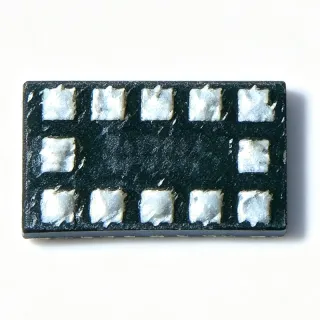
TCA355GGEG - 5V-30V Inductive Proximity Sensor | Infineon
MPN: TCA355GGEG ✗ Cuối đờiTCA355GGEG Tóm tắt
An inductive proximity switch is a type of sensor interface that detects metallic objects approaching a sensing surface without physical contact. The category belongs to the broader industrial sensor hierarchy: proximity sensor -> inductive sensor -> sensor interface IC -> interface integrated circuit. Because the sensing principle depends on a magnetic or inductive field, the target must interact with that field; consequently, nonmetallic objects may not produce the same response as a metal target.
The TCA355GGEG is identified as an Infineon proximity switch with a 5 V to 30 V supply range and an 8-pin DSO/SOIC form factor. Its principal benefits include contact-free target detection, compact integration, and compatibility with a relatively wide DC operating range. The 8-pin package also provides a practical solution for PCB assembly and repair compared with larger discrete sensor packages. Tube packaging is specified by the product listing.
The device can support automated machinery, industrial position sensing, contact detection in moving equipment, and safety-adjacent presence monitoring. In these systems, the output indication can be processed by a controller while the sensor handles the physical proximity-detection function. Designers should account for target material, sensing distance, metal composition, mounting geometry, environmental contamination, and the controller's electrical thresholds.
When laying out a board around the TCA355GGEG, follow the manufacturer datasheet for the exact pin assignments, exposed connections, decoupling requirements, and application circuit. In particular, verify whether unused pins require defined levels and whether the sensor output is open-drain, push-pull, or otherwise configured before connecting it to a microcontroller or PLC input.
This product overview combines the identified electrical range and package information with practical selection guidance for inductive proximity sensing. It also distinguishes the documented operating envelope from details that must be confirmed in the datasheet, helping engineers identify the correct use case without assuming unspecified switching distances, output ratings, or timing behavior.
Bộ thay thế dễ dàng lắp đặt cho TCA355GGEG — cùng gói, chân-to-chân tương thích. Các bộ phận yêu cầu hàn PCB bị loại trừ.
Không có bộ thay thế dễ dàng lắp đặt sẵn có cho sản phẩm này.
Yêu cầu các bộ thay thếTCA355GGEG Tỷ lệ tối đa & tính chất điện
| Kiểu cảm biến | Inductive proximity sensor |
| Product Function | Proximity switch |
| Minimum Operating Voltage | 5 V |
| Maximum Operating Voltage | 30 V |
| Operating Voltage Range | 5 V to 30 V |
| Hộp | 8-pin DSO / 8-SOIC, 0.154 inch (3.90 mm) width |
| Số chân | 8 pins |
| Kiểu lắp đặt | Surface mount |
| Product Category | Interface integrated circuit |
| Detection Principle | Inductive proximity detection |
| Packaging | Tube |
| Manufacturer | Infineon Technologies |
| Trạng thái RoHS | Compliant |
Hướng dẫn cấu hình chân TCA355GGEG 8-pin dso / 8-soic, 0.154 inch (3.90 mm) width
Cấu hình chân cho TCA355GGEG (8-pin dso / 8-soic, 0.154 inch (3.90 mm) width gói). Số thứ tự chân, chức năng và sơ đồ kết nối được xác định trong tài liệu thông số kỹ thuật của nhà sản xuất. Tham khảo nó để biết footprint và hướng dẫn hàn chính xác.

Không có dữ liệu chân cụ thể sẵn có cho TCA355GGEG.
Tham khảo: tài liệu kỹ thuật cho cấu hình chân đầy đủ.
Ứng dụng tiêu biểu
TCA355GGEG phù hợp cho 6 Áp dụngs: Industrial Machine Object Detection, Automated Assembly Fixture Sensing, Concealed Door and Cover Detection, Position and End-of-Travel Detection, Automated Storage and Handling Systems, Process Equipment Presence Monitoring.
Industrial Machine Object Detection
The TCA355GGEG fits contactless detection of metallic machine fixtures, tooling, or moving components where the presence of a suitable target must be reported to industrial control electronics. Its confirmed 5 V to 30 V operating range supports both low-voltage logic systems and higher-voltage industrial environments. Place the sensor near the intended sensing zone and validate detection against the actual target material, orientation, and machine structure. The 8-pin DSO/SOIC package simplifies compact PCB integration, while the inductive principle avoids requiring a direct optical path. Final implementation must follow the manufacturer pinout and application circuit, especially for supply decoupling, output configuration, unused pins, and protection against switching transients.
Được đề xuất
Automated Assembly Fixture Sensing
Use the TCA355GGEG in automated fixture or station designs that must confirm whether a metal workpiece or tooling element is present before a robot, conveyor, or actuator advances. Inductive sensing is useful when the target can approach from a direction that would obstruct an optical sensor. The device's 5 V to 30 V range allows integration with varied industrial control voltages, and its 8-pin surface-mount package supports compact controller boards. Mechanical tolerances, target composition, and the required detection margin should be established through representative testing rather than inferred from a generic sensing-distance value. The controller must also be designed around the device's confirmed output architecture and electrical limits from the manufacturer documentation.
Được đề xuất
Concealed Door and Cover Detection
The TCA355GGEG can support presence detection behind a nonmetallic cover when a metal target moves with the cover or an adjacent moving part. This inductive arrangement avoids exposing an optical emitter and receiver while still producing an electrical indication for a controller. The 5 V to 30 V operating range permits operation across common industrial supply domains, and the compact 8-pin DSO/SOIC footprint supports panel or control-board implementation. Ensure that the cover material does not excessively attenuate the sensing field and that the moving metal target is positioned consistently. Confirm output polarity, response behavior, and pin connections from the manufacturer datasheet before using the signal for safety-related functions.
Được đề xuất
Position and End-of-Travel Detection
The TCA355GGEG is applicable to end-of-travel and position-limit detection when a moving metal tab, shaft feature, or actuator attachment approaches the sensing region. Such non-contact detection avoids mechanical contact wear and can provide a repeatable presence signal to a programmable controller or machine input. The inductive sensing principle is especially useful in dirty environments where optical sensing may be affected by dust, oil, or contamination, although the enclosure and target arrangement still require engineering validation. The 5 V to 30 V supply range and 8-pin surface-mount package facilitate integration into industrial control electronics. Establish hysteresis and switching margins using the final mechanics and documented electrical characteristics.
Được đề xuất
Automated Storage and Handling Systems
The TCA355GGEG can provide presence confirmation for bins, carriers, pallets, or metal transport fixtures in automated storage and material-handling equipment. It is appropriate when a controller must determine whether a correctly positioned metal object is present before a conveyor or robotic transfer step proceeds. The 8-pin DSO/SOIC package is practical for compact interface boards, and the 5 V to 30 V range supports integration with industrial control circuitry. Designers should test the actual carrier or target because object geometry, alloy, orientation, and nearby metal can influence inductive coupling. Treat the signal as a machine input, not a certified safety function, unless the complete safety system has been separately assessed and approved.
Được đề xuất
Process Equipment Presence Monitoring
The TCA355GGEG supports process-equipment presence monitoring where a metal cover, sample fixture, or actuator component must be confirmed before a cycle proceeds. Its inductive method provides contact-free detection without requiring a visible optical path, and the 5 V to 30 V operating range is suitable for integration with industrial equipment power and control systems. The compact 8-pin package allows the sensor interface to be placed close to the monitored mechanism, reducing wiring compared with a larger discrete sensor arrangement. Because detection margin depends on the physical installation, validate target material, orientation, separation distance, and possible interference from adjacent metal. Use the manufacturer application information to establish output loading and board-layout requirements.
Được đề xuất
Tóm tắt các sản phẩm được đề xuất
Dữ liệu tham khảo kỹ thuật cho TCA355GGEG — so sánh, hướng dẫn thiết kế và thông tin tuân thủ.
Hướng dẫn chọn lựa
So sánh với các sản phẩm thay thế
| Tham số | Sản phẩm này |
|---|---|
| Package | 8-pin DSO / 8-SOIC, 0.154 inch (3.90 mm) width |
| Brand | Infineon Technologies |
| Sensor Type | Inductive proximity sensor |
| Product Function | Proximity switch |
| Minimum Operating Voltage | 5 V |
| Maximum Operating Voltage | 30 V |
| Operating Voltage Range | 5 V to 30 V |
| Pin Count | 8 pins |
| Mounting Type | Surface mount |
| Packaging | Tube |
| RoHS Status | Compliant |
Bảo phân biệt quan trọng
- Documented wide operating-voltage range (vsGeneric 5 V inductive proximity sensors)
- Established manufacturer-specific device identity (vsUnspecified generic proximity-switch alternatives)
- Compact surface-mount integration (vsLarger discrete inductive sensor packages)
Ghi chú thiết kế
Use the manufacturer land pattern and pin-description table when laying out the 8-pin DSO/SOIC footprint. Place the device close enough to the sensing target to preserve the intended coupling relationship, and route supply and signal traces away from high-current switching paths. The complete terminal assignments, decoupling guidance, and treatment of unused pins must be taken directly from the manufacturer datasheet.
Do not assume that any metal target will be detected equally. Target alloy, dimensions, orientation, separation distance, adjacent grounded metal, and mounting material can change an inductive sensor's response. Establish the production design with representative parts and worst-case mechanical tolerances. The available product listing does not specify sensing distance, so the design must not use an assumed range.
Confirm the output architecture, output-current capability, logic levels, and required pull-up or pull-down arrangement before connecting the device to a PLC, counter, or microcontroller input. Keep the sensor-to-controller trace short where possible, route it away from motor and relay wiring, and provide suitable input conditioning if the connected interface is sensitive. Follow the manufacturer application circuit for final component selection.
The TCA355GGEG is specified for a 5 V to 30 V operating range, but that range should not be interpreted as permission for unreported transient or reverse-voltage conditions. Add only the protection required by the manufacturer guidance and the installation environment, and verify supply tolerance at every operating condition. Use local input decoupling and avoid routing supply current through sensitive sensor traces.
Thông tin tuân thủ
RoHS compliance is stated in the product listing. The other compliance attributes are not established by the available records and therefore remain unknown.