传感器
子分类
产品(511)

VEMD4210FX02 - AEC-Q102 530nm Ambient Light Photodiode | Vishay
The Vishay VEMD4210FX02 is an AEC-Q102 qualified high-speed, high-sensitivity PIN photodiode ambient light sensor in a compact surface-mount 0805 (2012 metric) package with a photosensitive area of 0.42 mm2. Its spectral sensitivity is matched to the human eye with a peak wavelength of 530 nm and no infrared bump, delivering a typical reverse light current of 0.014 uA under standard illumination conditions. A PIN photodiode is a semiconductor light detector whose intrinsic (I) layer between the P and N regions widens the depletion region, producing high quantum efficiency and fast response. Within the sensor hierarchy it belongs to photodiodes -> optical sensors -> ambient light sensors -> photodetectors, converting incident light into a photocurrent that downstream electronics amplify and digitize for backlight control or automatic light control (ALC). Key features include human-eye-matched 530 nm spectral response that rejects invisible IR contributions, AEC-Q102 automotive qualification for harsh optoelectronic environments, an operating temperature range of -40 C to +110 C, and a miniature 0805 footprint that supports standard SMT assembly on compact PCBs. Because it is a raw photodiode rather than an integrated IC, the VEMD4210FX02 offers design freedom: the transimpedance gain, filtering, and ADC scaling are chosen by the engineer, enabling custom dynamic ranges for dashboard backlight dimming, display ALC, and headlamp-independent light detection in vehicles. Typical applications include automotive LCD dashboard backlight dimming, automatic interior/headlamp light control, and light-based presence or dimming functions in industrial and consumer displays. Design consideration: because the spectral response already matches the human eye, an additional IR-cut filter is usually unnecessary, but the transimpedance amplifier feedback network must be shielded from leakage currents to preserve microamp-level photocurrent accuracy. This page synthesizes distributor listings, cross-reference research, and design guidance not found in the manufacturer datasheet; the VEMD5525FX02 top-view QFN sibling is also compared.
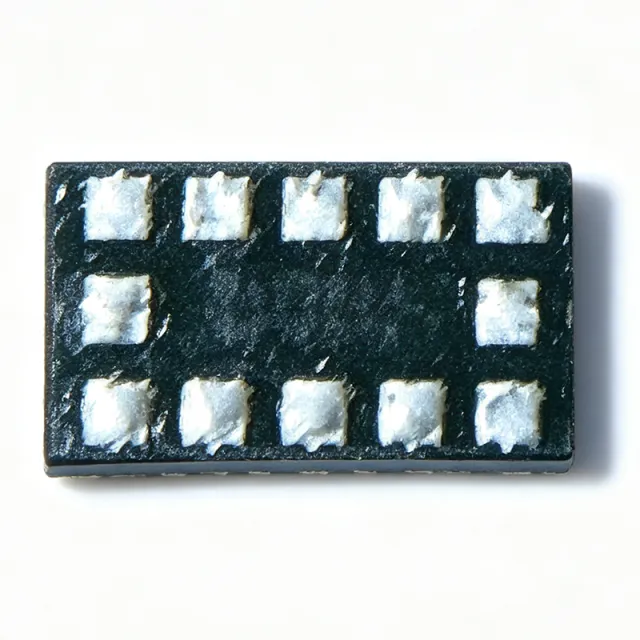
VL53L0CXV0DH/1 - Time-of-Flight Ranging Sensor | STMicroelectronics
The VL53L0CXV0DH/1 is a Time-of-Flight (ToF) laser-ranging sensor module from STMicroelectronics, designed for accurate distance measurement up to 2 meters. It integrates a 940nm VCSEL (Vertical-Cavity Surface-Emitting Laser), a single-photon avalanche diode (SPAD) array, and a microcontroller in a compact optical module. The device communicates via I2C interface and operates from a 2.8V supply, making it ideal for battery-powered applications. A Time-of-Flight sensor measures distance by emitting a light pulse and measuring the time it takes for the reflected light to return. The VL53L0C uses a VCSEL to emit infrared light and a SPAD array to detect the reflection, calculating distance with millimeter-level accuracy. This technology is superior to infrared proximity sensors because it provides absolute distance measurement rather than just presence detection, and it is less affected by ambient light and target color. Key features include a measurement range of 30mm to 2000mm, an accuracy of ±3% at typical conditions, and a fast measurement time of less than 30ms. The module operates from a 2.8V supply with a typical power consumption of 20mW during active ranging. It includes an I2C interface with a configurable address, an interrupt output for ranging completion, and a built-in VCSEL driver. The device is housed in a 4.4mm x 2.4mm x 1.0mm optical module with an integrated lens, providing a field of view of 25 degrees. The VL53L0C uses STMicroelectronics' FlightSense technology, which combines a VCSEL, SPAD array, and advanced algorithms to achieve high accuracy and robustness. The module includes an on-chip microcontroller that handles ranging calculations, calibration, and ambient light rejection. The I2C interface supports standard and fast modes up to 400kHz, and the device can be programmed for different ranging modes, including single-shot and continuous. Typical applications include smartphone proximity detection, robotics obstacle avoidance, drone landing assistance, and consumer electronics such as automatic faucets and vacuum cleaners. The compact size and low power consumption make it suitable for portable and battery-operated devices. When designing with the VL53L0C, ensure a clean power supply with adequate decoupling, and place the module with a clear field of view. The device requires a cover glass with high infrared transmittance, and the I2C lines should be pulled up with appropriate resistors. Calibration is performed at the factory, but additional calibration may be needed for specific cover glass or system integration.

VL53L1CBV0FY/1 - Long Range Time-of-Flight Sensor | STMicroelectronics
The VL53L1CBV0FY/1 is a state-of-the-art Time-of-Flight (ToF) ranging sensor with enhanced performance, manufactured by STMicroelectronics. It integrates a complete ToF system in a compact optical module, enabling accurate distance measurement up to 4 meters. The sensor operates at a supply voltage of 2.8V and communicates via I2C interface, making it ideal for a wide range of proximity and ranging applications. A Time-of-Flight (ToF) sensor measures distance by emitting a light signal and calculating the time it takes for the light to reflect back from an object. This technology is distinct from infrared (IR) proximity sensors, which only detect presence, and from ultrasonic sensors, which use sound waves. ToF sensors are part of the broader category of optical sensors and are widely used in robotics, consumer electronics, and industrial automation for precise distance measurement. Key features of the VL53L1CBV0FY/1 include a long ranging distance of up to 4 meters, a fast ranging frequency of up to 50 Hz, and a field of view (FOV) of 27 degrees. The sensor is housed in an optical module package, which integrates the emitter, receiver, and optics in a single component. It operates over a temperature range of -30°C to +85°C, ensuring reliable performance in various environments. The VL53L1CBV0FY/1 uses STMicroelectronics' patented ToF technology, which employs single-photon avalanche diodes (SPADs) to detect reflected light. This architecture enables high accuracy and immunity to ambient light, making it suitable for outdoor applications. The sensor also features a programmable region of interest (ROI), allowing users to optimize the field of view for specific applications. Typical applications include smartphone proximity detection, robotics obstacle avoidance, drone landing assistance, and industrial safety systems. The sensor's long range and fast ranging frequency make it ideal for applications requiring real-time distance measurement, such as autonomous navigation and collision avoidance. When designing with the VL53L1CBV0FY/1, it is important to consider the optical interface. The sensor requires a clear line of sight to the target, and the cover glass or window must be transparent to infrared light. Additionally, proper power supply decoupling and PCB layout are critical to minimize noise and ensure accurate measurements.
VL53L3CXV0DH/1 - Time-of-Flight Ranging Sensor | STMicroelectronics
The VL53L3CXV0DH/1 is a Time-of-Flight (ToF) ranging sensor from STMicroelectronics, designed for high-accuracy distance measurement in a compact optical module. It integrates a single-photon avalanche diode (SPAD) array, a VCSEL light source, and a low-power microcontroller in a 4.4 x 2.4 x 1.0 mm optical LGA package. The sensor provides absolute distance measurement up to 300 cm with millimeter-level accuracy, making it suitable for a wide range of proximity, gesture, and ranging applications. A Time-of-Flight (ToF) sensor measures distance by emitting a light pulse and calculating the time it takes for the reflected light to return. The VL53L3CXV0DH/1 uses a VCSEL (Vertical-Cavity Surface-Emitting Laser) to emit infrared light and a SPAD array to detect the reflected photons. This technology enables fast, accurate, and reliable distance measurement even in challenging lighting conditions. ToF sensors are part of the broader category of optical sensors, which also includes ambient light sensors, proximity sensors, and image sensors. In a system hierarchy, the VL53L3CXV0DH/1 sits at the sensor layer, providing raw distance data to a host processor via an I2C interface. Key features of the VL53L3CXV0DH/1 include a ranging distance of up to 300 cm, a fast ranging frequency of up to 50 Hz, and a field of view (FOV) of 27 degrees. The sensor operates from a 2.8V supply voltage and communicates via I2C, with an interrupt output for event-driven operation. It also features an on-chip histogram processing algorithm that improves robustness against ambient light and multi-object detection. The device is RoHS compliant and operates over a temperature range of -30°C to +85°C. The VL53L3CXV0DH/1 uses a histogram-based ranging architecture that enables multi-object detection and improved accuracy in cluttered environments. The integrated VCSEL emits at 940 nm, which is invisible to the human eye and safe for consumer applications. The sensor's low power consumption (typically 20 mA during ranging) and small form factor make it ideal for battery-powered devices. The I2C interface supports standard and fast modes, allowing easy integration with microcontrollers. Typical applications include smartphone camera autofocus, robotics obstacle avoidance, drone landing assistance, smart home presence detection, and industrial safety systems. The sensor's ability to measure absolute distance, rather than just proximity, enables advanced features such as gesture recognition and 3D mapping. In robotics, the VL53L3CXV0DH/1 can be used for collision avoidance and navigation, providing accurate distance data to the control system. When designing with the VL53L3CXV0DH/1, ensure proper optical alignment and a clear line of sight to the target. The sensor requires a small aperture in the enclosure to allow the VCSEL and SPAD to operate correctly. Additionally, the I2C address can be configured via a single pin, allowing multiple sensors to be used on the same bus. For optimal performance, place the sensor away from other infrared sources and avoid covering the optical window with materials that absorb infrared light.
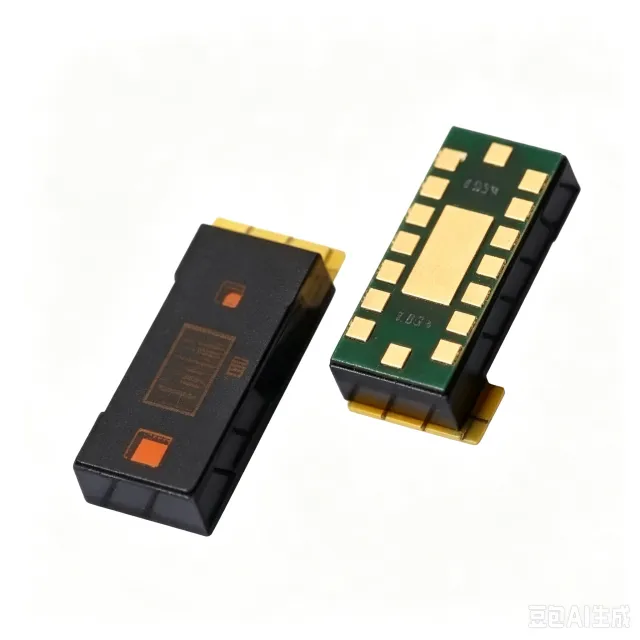
VL53L5CXV0GC/1 - 8x8 Multi-Zone Time-of-Flight Sensor | STMicroelectronics
The STMicroelectronics VL53L5CXV0GC/1 is a state-of-the-art Time-of-Flight (ToF) ranging sensor with an 8x8 multi-zone capability, enabling simultaneous measurement of distances across 64 independent zones. It integrates a single-photon avalanche diode (SPAD) array, a low-power infrared laser, and advanced optics in a compact, reflowable module. The sensor operates at 940 nm wavelength, providing accurate ranging from 1 cm to 400 cm in typical conditions, with a field of view (FoV) of 61 degrees diagonal. It communicates via I2C (up to 1 MHz) or SPI interfaces, and includes an interrupt output for event-driven host communication. A Time-of-Flight (ToF) sensor is a type of optical sensor that measures distance by calculating the time it takes for emitted light to reflect off an object and return to the sensor. Unlike infrared proximity sensors that only detect presence, ToF sensors provide absolute distance measurements, making them essential for applications requiring precise depth sensing. In the broader system hierarchy, a ToF sensor is a type of optical sensor, which falls under the category of sensors, which are components of electronic systems that perceive the physical world. The VL53L5CXV0GC/1 is a direct ToF sensor, meaning it measures the round-trip time of light pulses directly, as opposed to indirect ToF methods that use phase-shift measurements. Key features of the VL53L5CXV0GC/1 include its 8x8 multi-zone ranging, which allows for depth mapping and object detection across a wide area. It offers a maximum ranging frequency of 60 Hz, enabling real-time depth sensing for gesture recognition and SLAM applications. The sensor has a low power consumption of 1.5 mA in continuous operation, making it suitable for battery-powered devices. It also features an on-chip microcontroller that handles ranging algorithms, reducing host processing load. The module is housed in a 6.4 mm x 3.0 mm x 1.5 mm optical module package, which is reflowable and compatible with standard SMT assembly. Technically, the VL53L5CXV0GC/1 uses a SPAD array to detect individual photons, achieving high sensitivity even in low-light conditions. The integrated laser driver emits short infrared pulses, and the time-of-flight is measured with picosecond resolution. The sensor includes a histogram-based algorithm that distinguishes multiple targets and suppresses crosstalk, improving accuracy in complex scenes. The device operates from a 2.8 V supply voltage, with I2C and SPI interfaces for flexible integration. It also includes a programmable GPIO for interrupt generation, which can be configured for various events such as new data ready or threshold crossing. Typical applications include robotics for obstacle avoidance and navigation, smart home devices for presence detection and gesture control, and consumer electronics for camera autofocus assistance. In robotics, the multi-zone capability allows the sensor to map the environment in real-time, enabling collision avoidance. In smart home devices, it can detect human presence for energy-saving automation. In camera systems, it provides fast and accurate autofocus even in low-light conditions. When designing with this sensor, ensure proper optical alignment and avoid covering the module with materials that are opaque to 940 nm light. The sensor requires a clean power supply with adequate decoupling, and the I2C address can be configured via a pin. For best performance, calibrate the sensor in the final product environment to account for cover glass and other optical elements.

W83960G - PC Hardware Monitor IC 64-LQFP | Winbond/Nuvoton
The Winbond W83960G (listed by Nuvoton Technology Corporation as W83960G REV. B) is a dedicated hardware monitoring IC designed for PC motherboard and embedded system health management, supplied in a 64-pin LQFP (low-profile quad flat package) surface-mount package. It integrates the core functions of a hardware monitor: multi-channel voltage sensing, temperature monitoring via thermistor and thermal-diode inputs, fan-speed (tachometer) measurement, and chassis-intrusion detection, communicating with the host over an ISA/LPC-style host interface typical of the W83xxx family. A hardware monitor IC (also called a hardware monitoring controller, H/W monitor, or environmental supervisor) is a mixed-signal power-management IC that sits low in the system hierarchy of supervisory devices: sensor -> hardware monitor -> embedded controller -> Super I/O -> power management subsystem. Its role is to continuously convert analog health signals - supply-rail voltages, processor and ambient temperatures, and fan rotation pulses - into digital register values that BIOS, SMM handlers, or OS-level utilities such as lm-sensors can read and act upon. Key functional blocks of the W83960G include an analog-to-digital conversion front end for voltage and temperature channels, fan tachometer counters with programmable limits, and limit-comparison logic that can assert interrupt or alarm outputs when measured values exceed programmed thresholds. According to distributor listings (DigiKey, Jotrin), the part is categorized under Thermal Management / Sensor Output and identified as an IC H/W MONITOR in 64-LQFP. Technically, devices of this class use on-chip ADCs with input multiplexers shared between voltage-divider-based rail monitoring (Vcore, Vcc, +3.3V, +5V, +12V, battery) and negative-temperature-coefficient thermistor inputs, plus a dedicated two-terminal thermal-diode input for CPU on-die temperature. Reading resolution and conversion rates are register-configurable, allowing trade-offs between polling latency and bus traffic. Typical applications include desktop and server motherboard monitoring, industrial PC and embedded x86 platforms, storage enclosures requiring fan-speed supervision, and test/burn-in stations that log environmental data. The 64-LQFP package suits high-pin-density motherboard designs. A key design consideration is board-level sensor wiring: thermistor and thermal-diode traces should be routed away from switching-regulator noise, and voltage sense dividers must match the datasheet ratio to preserve measurement accuracy. This page synthesizes distributor sourcing data, package information, and practical design guidance not found in any single distributor listing, providing engineers with a consolidated reference for the W83960G.
XMLP025BC11F - 25 bar Pressure Sensor, 0.5-4.5V, G1/4 | Schneider
The Schneider Electric XMLP025BC11F is a 25 bar electronic pressure transmitter from the OsiSense XM family, providing a 0.5 V to 4.5 V ratiometric analogue output over a G1/4 A male process connection conforming to DIN 3852-E. It operates from a 5 VDC SELV supply, draws 7 mA, and integrates a 3-wire EN 175301-803-A (ex DIN 43650) connector for plug-and-play hydraulic and pneumatic installations. The device uses a strain-gauge thin-film sensing cell with FPM (Viton) sealing for media compatibility from -30 °C to +135 °C. A pressure sensor is a transducer that converts an applied fluid pressure into a proportional electrical signal, and within the broader sensor taxonomy it belongs to the measurement-sensor family alongside temperature, flow, and level sensors. In an industrial control hierarchy, the XMLP pressure transmitter typically feeds an analogue input module of a PLC, a SCADA remote terminal unit, or a microcontroller-based data-acquisition front end, providing real-time hydraulic or pneumatic pressure data for closed-loop control and condition monitoring. Key differentiating features of the XMLP025BC11F include a wide 0 bar to 25 bar operating range with proof pressure of 75 bar and burst pressure of 150 bar, ±0.1 % repeatability per IEC 61298-2, ±1 % linearity (typical), and ratiometric 0.5-4.5 V output that cancels 5 V supply drift. The compact stainless-steel body with FPM seal supports air, fresh water, hydraulic oil, gas, and refrigeration fluids, eliminating the need for separate sensor SKUs per media type. The robust EN 175301-803-A connector supports field replacement without rewiring. At the silicon level the XMLP series relies on a piezoresistive Wheatstone bridge diffused into a stainless-steel diaphragm, laser-trimmed for offset and span, then conditioned by an Application-Specific Integrated Circuit (ASIC) providing ratiometric output, reverse-polarity protection, and short-circuit safeguards. The amplifier stage is calibrated so that 0.5 V corresponds to 0 bar and 4.5 V corresponds to 25 bar with a typical linearity of ±0.5 % of the full scale. The device is supplied with a traceability code per Schneider lot conventions and conforms to CE, UL, and CCC features. Typical applications include hydraulic-press pressure verification on machine tools, HVAC chilled-water and refrigerant line monitoring, compressed-air system pressure trending, injection-moulding clamp force feedback, and pump-discharge pressure supervision. In each case the 0.5-4.5 V ratiometric signal interfaces directly with industrial analogue inputs that expect a 0-5 V or 0-10 V proportional reading. When designing with the XMLP025BC11F, observe the 75 bar proof-pressure limit during transients such as water-hammer events, ensure the 5 V supply regulation stays within ±0.25 V to preserve ratiometric accuracy, and torque the G1/4 male fitting to 25-30 N·m using a thread sealant compatible with FPM/Viton. This part is now in end-of-commercialization status as of May 31, 2023, so design-in for new projects should target the active XMLP platform variants such as XMLP025BC71F. This page synthesizes distributor stock, end-of-life status from the Telemecanique Sensors product page, application guidance, and drop-in alternative constraints not found in the manufacturer datasheet alone.