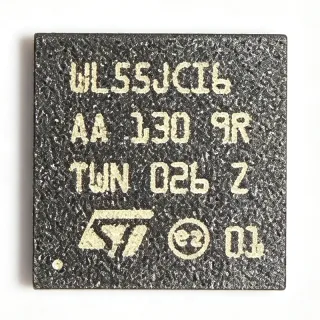
MT7981B Wi-Fi 6 Router SoC | MediaTek
料号: MT7981B ✗ 停产| 数量 | 单价 | 小计 |
|---|---|---|
| 1 | $0 | $0.00 |
| 10 | $0 | $0.00 |
| 100 | $0 | $0.00 |
| 500 | $0 | $0.00 |
| 1,000 | $0 | $0.00 |
MT7981B 概述
A wireless network router SoC is an integrated semiconductor platform that combines processing, networking, and wireless-control functions into one device. In the product hierarchy, an SoC is a semiconductor, while a router SoC belongs to the broader networking and communications IC category. The MT7981B is intended to support Wi-Fi 6 router designs, where it can serve as the central platform for packet processing, wireless configuration, and connected-home functions. The provided results describe it as suitable for high wireless performance, home entertainment, and home automation.
The strongest verified feature statement is Wi-Fi 6 generation support. Other verified search context associates MT7981B with high-performance, developer-friendly router platforms and identifies MT7981B-based systems as suitable for AX3000-class Wi-Fi 6 hardware. However, the supplied data does not establish that MT7981B itself contains every radio used in an AX3000 router; external MediaTek wireless components may be used in a complete platform. Separate quantities such as CPU cores, clock rate, RAM, flash, Ethernet ports, 2.5G interfaces, package, and thermal limits require confirmation from the manufacturer datasheet.
Typical MT7981B applications include Wi-Fi 6 home routers, connected-home gateways, home entertainment networking, and automation controllers. In a router design, the device would be placed at the center of the network architecture and would require board-level support for memory, Ethernet interfaces, radio companions, power delivery, clocking, boot storage, and firmware. The provided data does not include a reference schematic, recommended companion-chip list, or electrical limits, so those implementation details should not be inferred.
Design planning should begin with the exact package and pin assignment in the applicable MediaTek MT7981 datasheet, followed by thermal, electromagnetic, power-integrity, and signal-integrity reviews. Because this is a digital communications SoC, SOA is not applicable. The available public results should be treated as discovery references rather than a substitute for the manufacturer’s complete engineering datasheet and programming documentation.
This product page summarizes the verified MT7981B identity, Wi-Fi 6 router positioning, available public datasheet references, and sourcing context while explicitly preserving missing electrical and package data. It is intended to help engineers identify the correct platform and locate the authoritative documents without fabricating unverified specifications.
MT7981B 规格参数
| Product Type | Wireless network router SoC |
| Wireless Generation | Wi-Fi 6 generation |
| Manufacturer | MediaTek |
| Target Application | High wireless performance, home entertainment, and home automation |
| Architecture | System-on-Chip (SoC) |
| Integration Level | Highly integrated |
| Datasheet Availability | Public MT7981B Wi-Fi 6 platform datasheet link provided |
MT7981B standard 引脚配置指南
MT7981B(standard 封装)的引脚配置。 引脚编号、功能和连接图在制造商数据手册中定义。请参阅该手册以了解确切的封装尺寸和焊接指南。

暂无详细引脚数据: MT7981B.
请参阅 数据手册 以查看完整引脚配置。
典型应用
MT7981B 适用于 6 应用s: Wi-Fi 6 Home Router, Connected-Home Gateway, Home Entertainment Networking, Developer-Oriented OpenWrt Router, High-Performance Wireless Access Platform, Industrial Network Controller.
Wi-Fi 6 Home Router
The MediaTek MT7981B is explicitly positioned as a highly integrated wireless network router SoC for Wi-Fi 6 generation platforms, making it a logical candidate for a home-router control and networking center. Its verified role is platform-level rather than a confirmed standalone radio specification, so the complete router may also require companion wireless, Ethernet, memory, clock, and power components. Engineers should use the SoC between supported external interfaces and the router’s radio subsystem, then validate packet throughput, wireless coverage, boot behavior, thermal rise, and firmware stability in the target enclosure. The main design trade-off is integration convenience versus the need to verify all board-level dependencies, because the supplied data does not establish CPU frequency, port counts, package pins, or power limits.
推荐
Connected-Home Gateway
MT7981B can serve as the processing and networking foundation of a connected-home gateway because the verified description names home automation as an intended use. A gateway design would use the SoC to coordinate local networking, management functions, and attached wireless or wired devices, while the implementation remains dependent on the interfaces and firmware documented by MediaTek. Engineers should define the control-plane requirements, device update mechanism, security boundary, and recovery behavior before assigning the platform to a gateway. Because the provided material does not verify supported protocols, memory capacity, operating temperature, or package, prototype testing should confirm boot reliability and service continuity before deployment. The benefit is a highly integrated router-class foundation; the trade-off is dependence on exact companion hardware and firmware support.
推荐
Home Entertainment Networking
The verified MT7981B positioning includes home entertainment, where the SoC can support the networking control plane for media distribution, local storage access, and wireless client connectivity. In such a product, the device should be treated as a platform requiring complete interface and firmware validation rather than as a simple high-throughput switch. Engineering teams should quantify expected wired and wireless traffic, multicast behavior, latency sensitivity, boot recovery, and thermal behavior in the final enclosure. The supplied data does not state Ethernet port counts, memory support, package dimensions, or sustained processing performance, so those values cannot be used to promise media throughput. The primary advantage is alignment with Wi-Fi 6 home networking; the engineering caution is that actual streaming performance depends on the complete radio, switch, memory, firmware, and thermal design.
推荐
Developer-Oriented OpenWrt Router
MT7981B is a practical candidate for developer-oriented router platforms because the supplied search context includes OpenWrt references and describes the device as a Wi-Fi 6 generation router SoC. Development work should begin with the exact board support package, bootloader requirements, device-tree definition, memory map, wireless driver path, and recovery method supported for the chosen hardware. The public data does not identify a universal MT7981B pinout, so an engineer should not copy a community board schematic without confirming package, pin names, strap settings, clocks, and power rails. Compared with a less integrated router processor, the platform can simplify the networking design, but it also increases the need for careful thermal layout, high-speed interface routing, and firmware validation. Prototype logs and hardware measurements should replace assumptions in production documentation.
推荐
High-Performance Wireless Access Platform
The verified description of MT7981B emphasizes high wireless performance, making it relevant to wireless access platforms that combine central packet processing with Wi-Fi 6 generation connectivity. The SoC should be evaluated against the complete radio architecture rather than judged by a standalone radio claim, because the supplied data does not confirm integrated RF channels, antenna interfaces, or maximum PHY rates. Design verification should include throughput under concurrent traffic, latency, packet-loss behavior, interference recovery, boot time, and thermal stability across the intended ambient range. Because CPU, memory, Ethernet, and package details are absent from the supplied evidence, any bandwidth target must be treated as a system requirement rather than an MT7981B datasheet value. The main opportunity is a high-performance integrated platform; the main risk is making unsupported claims before board and firmware validation.
推荐
Industrial Network Controller
MT7981B may be evaluated for an industrial network controller when the required protocol, environmental, lifecycle, and reliability conditions are confirmed separately. The verified data supports its use as a highly integrated wireless network router SoC, but it does not provide industrial temperature ratings, AEC-Q100 status, long-term supply commitments, or industrial certification. Before using it in factory equipment, verify operating-temperature limits, vibration and humidity requirements, watchdog behavior, recovery options, and cybersecurity lifecycle expectations. The platform’s integration can reduce the number of external networking devices, while the absence of verified environmental and lifecycle data prevents an unconditional industrial recommendation. Prototype environmental testing and supplier documentation are mandatory before design freeze, particularly for equipment expected to operate continuously in a sealed enclosure.
推荐
推荐产品汇总
工程参考数据: MT7981B ——对比、设计指导和合规信息。
选型指南
与替代料对比
| 参数 | 本产品 |
|---|---|
| Brand | MediaTek |
| Product Type | Wireless network router SoC |
| Wireless Generation | Wi-Fi 6 generation |
| Integration | Highly integrated |
| Target Applications | High wireless performance, home entertainment, home automation |
关键差异点
- Explicit Wi-Fi 6 generation positioning (对比 Unspecified generic router SoC)
- Highly integrated router-platform positioning (对比 Unspecified discrete networking solution)
- Targeted connected-home use cases (对比 Unverified industrial-only controller)
设计说明
Do not assign MT7981B supply rails, sequencing, or current limits until the exact MediaTek datasheet and board design guide are available. The supplied excerpts identify a Wi-Fi 6 router SoC but do not specify supply voltage or power dissipation. During schematic review, verify every rail against the supported platform reference design, including high-current rail geometry, local decoupling, load-switch behavior, power-on reset sequencing, and brownout behavior. Estimated thermal calculations cannot be completed until verified power and thermal-resistance data are supplied.
Treat the MT7981B layout as a high-speed communications layout, even though the provided data does not state the exact package or interface details. Confirm the package drawing and pin assignment before routing, then reserve short return paths for clocks, high-speed digital interfaces, Ethernet-related companion links, and power distribution. Decoupling and via placement should follow the exact reference design. Do not derive a footprint or land pattern from an unrelated MT7981 variant because package and pin compatibility are not established here.
The main risk is treating public search snippets as a complete production specification. The supplied data confirms MediaTek, Wi-Fi 6 generation, and highly integrated wireless network router positioning, but omits CPU, memory, Ethernet, package, pin count, temperature, and compliance data. Before schematic release, compare the current MediaTek datasheet, hardware design guide, firmware support matrix, and approved reference design with the proposed board. Treat MT7981A and generic router SoCs as redesign candidates until pin and software compatibility are proven.
Perform a board-level thermal assessment before selecting MT7981B for a compact or fanless router. The verified material does not provide maximum power, junction temperature, thermal resistance, or ambient-temperature limits, so no numerical dissipation claim can be made. In prototype testing, measure the SoC, power regulators, memory, and wireless companions at worst-case traffic and the highest intended ambient temperature. Compare those measurements with the manufacturer’s eventual thermal limits and include copper, thermal vias, enclosure ventilation, or a heatsink only after validating the physical design.
合规信息
The supplied data does not state RoHS, REACH, lead-free, halogen-free, conflict-minerals, or AEC-Q100 status for MT7981B. AEC-Q100 is not applicable to the supplied router SoC category because the data does not claim automotive qualification.