Interface ICs
Subcategories
Products (3,400+)

ISO1211DR - 24V-60V Isolated Digital Input | Texas Instruments (Tape & Reel)
The Texas Instruments ISO1211DR is a single-channel isolated digital input receiver designed for 24V to 60V digital input modules, with an 8-pin SOIC (D) package. It supports 9V to 300V DC and AC input designs when used with external resistors, while providing accurate current limiting for low-power dissipation. The device targets PLC digital input interfaces and industrial control systems. An isolated digital input receiver converts field-side voltage states into a logic signal presented to a controller or other electronics. The ISO1211 belongs to the isolated-interface IC hierarchy and replaces conventional optocoupler input stages with an integrated receiver designed for high-side industrial input conditions. Its isolation function protects control-side circuitry from field-side electrical conditions while transferring the input state. Key verified features include compliance with IEC 61131-2 Type 1, 2, and 3 characteristics for 24V isolated digital inputs, bipolar input support, broken-wire detection, and an operating temperature range from -40C to +125C. The current limit is specified as 2.2mA to 2.47mA for Type 3 designs. The SOIC package provides eight terminals and is identified by TI as package code D. The ISO1211DR is intended for programmable logic controllers, motor-control systems, grid infrastructure, and other industrial equipment with isolated digital inputs. External resistors set the supported field-input voltage range, so the final input network must be selected according to the intended DC or AC voltage and the applicable IEC 61131-2 input type. The receiver architecture allows the field interface to be designed without reproducing a discrete optocoupler circuit. Designers should verify the complete pinout, isolation requirements, resistor values, voltage ratings, and input thresholds against the manufacturer datasheet before production. The verified product page identifies ISO1211DR as an 8-pin SOIC (D) device rated from -40C to +125C. Its principal engineering value is integration of a field-input receiver into a compact, application-specific interface for industrial control equipment. This page consolidates verified manufacturer and distributor information, IEC 61131-2 compatibility information, package data, application context, and design guidance. It does not infer unreported electrical values, invent pricing, or substitute a different package simply to create an alternative.

ISO1410BDW - 500kbps Isolated RS-485/RS-422 | Texas Instruments
The Texas Instruments ISO1410BDW is an EMC-protected, galvanically isolated RS-485/RS-422 transceiver rated for data rates up to 500 kbps and half-duplex communication. The device is packaged in a 16-pin wide-body SOIC (DW) package and operates from -40°C to +125°C. Its 5 kVrms isolation rating and integrated digital isolation separate the bus-side interface from the logic-side circuitry, helping protect sensitive host electronics from ground-potential differences and industrial transients. The transceiver supports both RS-485 and RS-422 applications and is intended for factory automation, industrial control, building automation, and other electrically noisy environments. An isolated RS-485/RS-422 transceiver combines differential bus signaling, galvanic isolation, and logic-side interfacing. RS-485 is commonly used for multipoint, half-duplex industrial buses, while RS-422 provides differential signaling for communication between two endpoints. In the power-management and interface hierarchy, this device is a digital isolator combined with a physical-layer line transceiver rather than a protocol converter or a general-purpose logic IC. Its capacitive-isolation architecture separates data across the isolation barrier while the transceiver drives or receives differential bus signals. Key features include support for signaling rates up to 500 kbps, half-duplex operation, EMC-focused bus-pin protection, 5 kVrms isolation, and operation across the full -40°C to +125°C temperature range. The 16-pin DW package provides a wide-body surface-mount footprint with sufficient lead spacing for industrial assembly workflows. The availability of a half-duplex architecture allows a controller to share a communication channel for command and response traffic when the bus is idle. The ISO1410 product family is positioned between lower-rate and very-high-speed isolated serial interfaces. The supplied TI family description identifies ISO141x devices as supporting up to 500 kbps, while ISO143x devices support up to 12 Mbps and ISO145x devices up to 50 Mbps. This distinction matters when selecting a replacement because signal rate, bus timing, and isolation implementation must match the original design intent. The ISO1410BDW is therefore most appropriate where 500 kbps operation and EMC resilience are sufficient but higher throughput is unnecessary. Typical uses include industrial RS-485 buses, programmable logic controller communication, factory equipment interfaces, industrial sensor gateways, building-control networks, and isolated host connections. In these systems, the transceiver converts logic-level data into differential RS-485 or RS-422 signals, while its isolation barrier reduces the effect of unequal ground potentials between a controller and field equipment. A termination strategy, biasing network, protective earth connection, and correctly designed transceiver interface remain necessary for reliable operation. A key design consideration is that isolation does not remove the need for careful bus implementation. The logic and bus-side supply domains should be decoupled appropriately, and the differential pair should be routed as a controlled-impedance network with minimized stub lengths. Designers should also verify the required data rate, cable length, termination values, grounding strategy, and transient requirements against the complete system rather than treating the IC as a complete surge-protection solution. This product page combines verified manufacturer and distributor information, package and ordering data, comparison criteria, and application-oriented engineering guidance. It also distinguishes documented drop-in options from related family members and identifies where additional verification is required before replacing an installed ISO1410BDW.
ISO1410BDWR - 500kbps Isolated RS-485/RS-422 | Texas Instruments (Tape & Reel)
The Texas Instruments ISO1410BDWR is an EMC-protected, galvanically isolated RS-485/RS-422 transceiver rated for data rates up to 500 kbps and half-duplex communication. The device is packaged in a 16-pin wide-body SOIC (DW) package and operates from -40°C to +125°C. Its 5 kVrms isolation rating and integrated digital isolation separate the bus-side interface from the logic-side circuitry, helping protect sensitive host electronics from ground-potential differences and industrial transients. The transceiver supports both RS-485 and RS-422 applications and is intended for factory automation, industrial control, building automation, and other electrically noisy environments. An isolated RS-485/RS-422 transceiver combines differential bus signaling, galvanic isolation, and logic-side interfacing. RS-485 is commonly used for multipoint, half-duplex industrial buses, while RS-422 provides differential signaling for communication between two endpoints. In the power-management and interface hierarchy, this device is a digital isolator combined with a physical-layer line transceiver rather than a protocol converter or a general-purpose logic IC. Its capacitive-isolation architecture separates data across the isolation barrier while the transceiver drives or receives differential bus signals. Key features include support for signaling rates up to 500 kbps, half-duplex operation, EMC-focused bus-pin protection, 5 kVrms isolation, and operation across the full -40°C to +125°C temperature range. The 16-pin DW package provides a wide-body surface-mount footprint with sufficient lead spacing for industrial assembly workflows. The availability of a half-duplex architecture allows a controller to share a communication channel for command and response traffic when the bus is idle. The ISO1410 product family is positioned between lower-rate and very-high-speed isolated serial interfaces. The supplied TI family description identifies ISO141x devices as supporting up to 500 kbps, while ISO143x devices support up to 12 Mbps and ISO145x devices up to 50 Mbps. This distinction matters when selecting a replacement because signal rate, bus timing, and isolation implementation must match the original design intent. The ISO1410BDWR is therefore most appropriate where 500 kbps operation and EMC resilience are sufficient but higher throughput is unnecessary. Typical uses include industrial RS-485 buses, programmable logic controller communication, factory equipment interfaces, industrial sensor gateways, building-control networks, and isolated host connections. In these systems, the transceiver converts logic-level data into differential RS-485 or RS-422 signals, while its isolation barrier reduces the effect of unequal ground potentials between a controller and field equipment. A termination strategy, biasing network, protective earth connection, and correctly designed transceiver interface remain necessary for reliable operation. A key design consideration is that isolation does not remove the need for careful bus implementation. The logic and bus-side supply domains should be decoupled appropriately, and the differential pair should be routed as a controlled-impedance network with minimized stub lengths. Designers should also verify the required data rate, cable length, termination values, grounding strategy, and transient requirements against the complete system rather than treating the IC as a complete surge-protection solution. This product page combines verified manufacturer and distributor information, package and ordering data, comparison criteria, and application-oriented engineering guidance. It also distinguishes documented drop-in options from related family members and identifies where additional verification is required before replacing an installed ISO1410BDWR.
ISO1410DW - 500Kbps 5kVrms Isolated RS-485 | Texas Instruments
The Texas Instruments ISO1410DW is an EMC-protected, half-duplex RS-485 and RS-422 transceiver rated for 500 Kbps operation and 5 kVrms galvanic isolation. The device is packaged in a 16-pin wide-body SOIC with Texas Instruments package code DW and supports an operating temperature range of -40°C to +125°C. It provides one transceiver per package and is intended for industrial communication links exposed to electrostatic discharge, electrical fast transients, and other electromagnetic disturbances. An isolated RS-485/RS-422 transceiver is an interface IC that converts logic-level signals into differential bus signals and receives differential bus signals back into logic-level outputs. Galvanic isolation places a reinforced isolation barrier between the bus-facing side and the logic side of the device. Within the product hierarchy, the ISO1410DW is a differential line transceiver, an interface IC, and a semiconductor designed for industrial networking and control systems. The ISO1410DW's principal verified features include a maximum signaling rate of 500 Kbps, 5 kVrms isolation, half-duplex operation, RS-485 and RS-422 support, and robust EMC protection. Its 16-pin DW SOIC package provides sufficient pin count for the isolated transceiver interface, supply connections, bus terminals, and enable-related functions. The wide -40°C to +125°C temperature range makes it suitable for industrial equipment subjected to extended thermal conditions. Texas Instruments describes the ISO14xx family as galvanically isolated differential line transceivers for TIA/EIA RS-485 and RS-422 applications. These noise-immune devices are designed for harsh industrial environments, and their bus pins are intended to withstand high levels of IEC electrostatic-discharge and electrical-fast-transient events. The manufacturer also provides the ISO1410DWEVM evaluation module for evaluating the ISO1410 in its 16-pin wide-body SOIC package. Typical uses include isolated industrial bus links, factory automation equipment, building-control gateways, industrial sensors, and communication interfaces located at a significant ground-potential difference from the host controller. In these systems, the transceiver provides the physical-layer connection between a logic-side controller and a differential RS-485 or RS-422 bus. Half-duplex operation allows a shared pair of conductors to carry data in both directions, but bus direction must be managed by the host interface. Designers should confirm the complete pinout, isolation requirements, bus termination strategy, fail-safe behavior, and external interface voltage levels against the manufacturer datasheet before layout. A 16-pin wide-body SOIC footprint should not be mixed with a narrow-body SOIC footprint, and the isolation barrier placement should follow the manufacturer's recommended layout and creepage guidance. This page consolidates verified manufacturer and distributor information for ISO1410DW, including commercial availability, package details, application guidance, and a conservative drop-in replacement assessment. It also separates confirmed specifications from fields that require confirmation from the complete datasheet, helping engineers shorten component research without obscuring uncertainty.
ISO1410DWR - 500kbps Isolated RS-485/RS-422 | Texas Instruments
The Texas Instruments ISO1410DWR is an EMC-protected, galvanically isolated half-duplex RS-485 and RS-422 transceiver with a maximum signaling rate of 500 kbps, 5-kVrms isolation protection, and a 16-pin wide-body SOIC package. The device operates across a -40 °C to +125 °C temperature range and includes a fail-safe circuit for dependable bus behavior. An isolated RS-485/RS-422 transceiver is a digital interface IC that combines differential line-driver and receiver functions with a signal-isolation barrier. It belongs to the interface-IC hierarchy: RS-485/RS-422 transceiver > isolated transceiver > digital interface IC > semiconductor. Galvanic isolation separates the bus-side and logic-side circuits, helping protect equipment from ground-potential differences and industrial transients while allowing reliable communication over long cable runs. The ISO1410 family is designed for harsh industrial environments. Its bus pins are specified to withstand high levels of IEC electrostatic-discharge and electrical-fast-transient events, reducing the need for additional external protection in suitable designs. The robust EMC characteristics make the device useful in industrial automation, factory equipment, building controls, instrumentation, and other systems where the communication bus is exposed to electrical noise. The ISO1410 supports up to 500 kbps signaling, making it appropriate for moderate-speed half-duplex RS-485 networks rather than high-speed data-center or automation links. Its isolated architecture allows the transceiver to bridge a field-side bus and a host-side digital interface while preventing ground currents from flowing through the communication path. The 16-pin SOIC (DW) package supports conventional surface-mount assembly and is identified by the ISO1410DWR ordering code. Typical applications include industrial motor controllers, PLC interfaces, remote sensor networks, industrial gateways, building automation controllers, and RS-422 equipment connections. For these applications, the combination of half-duplex operation, 500-kbps signaling, fail-safe behavior, EMC protection, and 5-kVrms isolation helps simplify the physical layer while improving robustness against industrial electrical stress. Designers should verify the complete datasheet for pin assignments, isolation ratings, bus termination requirements, recommended network topology, and operating constraints before releasing a PCB. The verified source data confirms the device family, package, speed, isolation, temperature range, and EMC protection, but detailed pin-level and electrical-limit information is not included in the supplied records. This page combines verified product attributes, sourcing information, comparison guidance, and practical engineering cautions for faster component evaluation.
ISO1412BDW - 500kbps Isolated RS-485/RS-422 | Texas Instruments
Texas Instruments ISO1412BDW is an EMC-protected, 500-kbps, full-duplex isolated RS-485 and RS-422 transceiver with 5-kVrms reinforced isolation in a 16-pin SOIC package. The device supports single-side powered isolation, industrial temperature operation from -40°C to +125°C, and a robust EMC protection network for long-distance differential data links. Its isolated transceiver architecture places a galvanic barrier between the bus-facing interface and the logic-side interface, helping protect host circuitry from ground-potential differences and electrical transients. An isolated RS-485/RS-422 transceiver is a communication interface that combines differential line drivers, differential receivers, and electrical isolation within one integrated circuit. In the broader hierarchy, it belongs to interface ICs and bus transceivers. RS-485 supports multipoint, half-duplex buses in many installations, while RS-422 commonly supports point-to-point, full-duplex links. The ISO1412BDW supports both standards and provides 500-kbps operation for industrial communication, factory automation, building controls, and equipment networks. Key features include 500-kbps signaling speed, full-duplex operation, 5-kVrms isolation, EMC protection, and operation from -40°C to +125°C. The 16-SOIC package provides a practical surface-mount option for industrial control boards. The ISO1412BDW is identified as RoHS compliant by distributor data, and its operating-temperature range supports use across demanding commercial and industrial environments. Exact supply-voltage, receiver-threshold, propagation-delay, and bus-loading limits should be confirmed in the manufacturer datasheet. The ISO1412BDW is designed for bidirectional differential data transfer across an isolation barrier. Full-duplex capability permits separate transmit and receive paths, which is useful when a system cannot switch a shared half-duplex bus. The integrated protection and isolation functions reduce the amount of external surge and isolation circuitry required, but correct layout, decoupling, bus termination, and common-mode considerations remain essential for reliable field communication. Typical uses include industrial PLC and factory-automation links, isolated instrumentation, building-automation equipment, long-reach RS-485 or RS-422 nodes, and industrial gateways that must bridge a noisy bus to a host controller. The 500-kbps rate is suitable for supervisory data, configuration traffic, and moderate-speed industrial messages rather than high-bandwidth streaming. Design the isolation barrier and bus interface on the PCB with the manufacturer's isolation and layout guidance. Keep bus-side and logic-side copper, components, and ground systems separated, place decoupling capacitors at the appropriate supply pins, and apply termination only where signal-integrity analysis requires it. The isolation rating and EMC claims must be evaluated for the final enclosure, cable, grounding, and surge environment. This page consolidates the verified manufacturer and distributor information for the ISO1412BDW, distinguishes confirmed characteristics from parameters requiring datasheet review, and provides application and selection guidance that is not available from a distributor listing alone.
ISO1412BDWR - 500kbps Isolated RS-485/RS-422 | Texas Instruments (Tape & Reel)
Texas Instruments ISO1412BDWR is an EMC-protected, 500-kbps, full-duplex isolated RS-485 and RS-422 transceiver with 5-kVrms reinforced isolation in a 16-pin SOIC package. The device supports single-side powered isolation, industrial temperature operation from -40°C to +125°C, and a robust EMC protection network for long-distance differential data links. Its isolated transceiver architecture places a galvanic barrier between the bus-facing interface and the logic-side interface, helping protect host circuitry from ground-potential differences and electrical transients. An isolated RS-485/RS-422 transceiver is a communication interface that combines differential line drivers, differential receivers, and electrical isolation within one integrated circuit. In the broader hierarchy, it belongs to interface ICs and bus transceivers. RS-485 supports multipoint, half-duplex buses in many installations, while RS-422 commonly supports point-to-point, full-duplex links. The ISO1412BDWR supports both standards and provides 500-kbps operation for industrial communication, factory automation, building controls, and equipment networks. Key features include 500-kbps signaling speed, full-duplex operation, 5-kVrms isolation, EMC protection, and operation from -40°C to +125°C. The 16-SOIC package provides a practical surface-mount option for industrial control boards. The ISO1412BDWR is identified as RoHS compliant by distributor data, and its operating-temperature range supports use across demanding commercial and industrial environments. Exact supply-voltage, receiver-threshold, propagation-delay, and bus-loading limits should be confirmed in the manufacturer datasheet. The ISO1412BDWR is designed for bidirectional differential data transfer across an isolation barrier. Full-duplex capability permits separate transmit and receive paths, which is useful when a system cannot switch a shared half-duplex bus. The integrated protection and isolation functions reduce the amount of external surge and isolation circuitry required, but correct layout, decoupling, bus termination, and common-mode considerations remain essential for reliable field communication. Typical uses include industrial PLC and factory-automation links, isolated instrumentation, building-automation equipment, long-reach RS-485 or RS-422 nodes, and industrial gateways that must bridge a noisy bus to a host controller. The 500-kbps rate is suitable for supervisory data, configuration traffic, and moderate-speed industrial messages rather than high-bandwidth streaming. Design the isolation barrier and bus interface on the PCB with the manufacturer's isolation and layout guidance. Keep bus-side and logic-side copper, components, and ground systems separated, place decoupling capacitors at the appropriate supply pins, and apply termination only where signal-integrity analysis requires it. The isolation rating and EMC claims must be evaluated for the final enclosure, cable, grounding, and surge environment. This page consolidates the verified manufacturer and distributor information for the ISO1412BDWR, distinguishes confirmed characteristics from parameters requiring datasheet review, and provides application and selection guidance that is not available from a distributor listing alone.
ISO1412DW - 500 kbps Isolated RS-485/RS-422 | Texas Instruments
Texas Instruments ISO1412DW is a 500 kbps galvanically isolated full-duplex RS-485/RS-422 transceiver with 5 kVrms reinforced isolation and robust EMC protection, housed in a 16-SOIC package. It provides one differential driver and one differential receiver for industrial communication links where noise immunity, surge withstand, and ground-potential isolation are important. An isolated RS-485/RS-422 transceiver is a differential line interface that combines a transmitter, receiver, isolation barrier, and associated protection in one package. RS-422 supports point-to-point, full-duplex signaling, while RS-485 supports multipoint buses with half-duplex operation in many systems. ISO1412DW is a full-duplex device intended for isolated TIA/EIA-485 and TIA/EIA-422 interfaces operating in electrically noisy industrial environments. The principal verified specifications are a maximum signaling rate of 500 kbps, 5 kVrms isolation, full-duplex RS-485/RS-422 operation, and a 16-SOIC package. Robust EMC protection is highlighted by the manufacturer for this device, while its bus pins are intended to withstand high levels of electrostatic-discharge and electrical-fast-transient events. These features reduce the need for additional discrete protection when the circuit and layout meet the device’s specified implementation requirements. The ISO14xx family uses galvanically isolated differential line transceivers for industrial RS-485 and RS-422 systems. ISO1412DW combines the communication interface with a reinforced isolation barrier, allowing equipment on either side of the barrier to communicate without a direct galvanic return path through the bus interface. Its 500 kbps capability is suitable for moderately paced industrial data links rather than the much faster rates commonly associated with short-distance digital communication. Typical uses include industrial automation equipment, factory-floor controllers, building automation systems, process-monitoring equipment, and isolated host interfaces. The device is also evaluated through the ISO1412DWEVM, an evaluation module that supports examination of the high-performance, reinforced isolated RS-485 implementation in the 16-pin DW package. Designers should pay close attention to isolation boundaries, bus termination, protection-network integration, and creepage or clearance requirements. A differential pair should be routed as a controlled impedance, symmetry and grounding should be maintained within the isolated domain, and external protection must be selected without degrading the intended EMC performance. Exact supply, output, temperature, and package dimensions must be confirmed from the manufacturer datasheet before release to production. This page consolidates the verified manufacturer and distributor information, compares the device’s core interface characteristics, and adds application guidance and engineering considerations that are not presented as a substitute for the complete Texas Instruments datasheet.
ISO1430DW - 12Mbps Isolated RS-485/422 | Texas Instruments
Texas Instruments ISO1430DW is an EMC-protected, half-duplex isolated RS-485 and RS-422 transceiver operating at up to 12 Mbps and providing 5 kVrms reinforced isolation in a 16-pin SOIC package. It is designed for industrial communication links where galvanic isolation, surge withstand, and reliable differential signaling are required. An isolated transceiver is an interface IC that transfers data across a galvanic barrier while electrically separating the bus-side and logic-side circuits. The ISO1430 belongs to the isolated differential transceiver hierarchy, combining an RS-485/RS-422 interface, signal isolation, and electromagnetic-interference protection. This isolation helps prevent ground-potential differences, fault energy, and common-mode disturbances from reaching the host electronics. The primary specifications establish its industrial suitability: 12 Mbps maximum data rate, 5 kVrms isolation, half-duplex operation, support for both RS-485 and RS-422, and an operating temperature range of -40 °C to +125 °C. The 16-SOIC package supports surface-mount assembly, while the listed 3-7 business-day lead time provides useful procurement context. The device is identified as RoHS compliant and active. The ISO1430DW is intended for harsh industrial environments where bus pins may encounter electrostatic-discharge and electrical-fast-transient events. Its EMC protection is a key functional attribute rather than merely a compliance label. The half-duplex architecture supports shared differential buses and reduces the number of physical data paths required when transmit and receive operations occur on the same pair of wires. Typical uses include industrial automation equipment, factory-floor controllers, building-automation interfaces, motor-control systems, and industrial communications links operating at distances where noise immunity and isolation are important. The RS-422 capability also allows point-to-point or multidrop differential communication arrangements where appropriate termination and biasing are used. Designers should place protection, termination, and isolation-layout elements according to the manufacturer datasheet and the selected bus topology. Cable length, transceiver data rate, connector design, grounding strategy, and external surge-protection requirements must be evaluated together; the 12-Mbps figure does not guarantee the same usable distance at every data rate. This product page consolidates verified manufacturer and distributor information, practical application guidance, procurement details, and a conservative drop-in comparison. It also distinguishes verified alternatives from package-only or functionally similar parts that would require additional engineering review.
ISO1430DWR - 12Mbps Isolated RS-485 Transceiver | TI
The Texas Instruments ISO1430DWR is an EMC-protected, half-duplex, galvanically isolated RS-485 and RS-422 transceiver supporting data rates up to 12 Mbps, with 5-kVrms reinforced isolation in a 16-pin SOIC (DW) package. It is designed to protect industrial equipment from electrostatic-discharge and electrical-fast-transient disturbances encountered on field-bus wiring. An isolated RS-485/RS-422 transceiver is a differential interface IC that combines a line driver, line receiver, and galvanic isolation barrier. The isolation barrier separates the equipment-side ground domain from the noisy communications bus, reducing common-mode current paths and preventing ground-potential differences from disrupting data transfer. Within the interface hierarchy, the ISO1430 belongs to the RS-485/RS-422 transceiver class and the broader isolated communications interface category. Key features include a 12-Mbps maximum data rate, half-duplex operation, one driver and one receiver, 5-kVrms isolation, EMC protection, and an operating-temperature range of -40°C to +125°C. These characteristics suit factory automation, grid infrastructure, photovoltaic inverters, industrial motor drives, HVAC equipment, building automation, and fieldbus gateways where long cable runs and electrically noisy environments are common. The ISO14xx device family uses differential signaling to reject common-mode noise and support robust point-to-point or multidrop communications. Its integrated isolation prevents the bus-side ground from being directly connected to the logic-side ground, while its EMC protection helps the transceiver withstand connector-side ESD and EFT events. The 12-Mbps ceiling provides ample bandwidth for high-speed industrial control data while preserving compatibility with established RS-485 and RS-422 networks. Typical deployments include PLC-to-RS-485 fieldbus links, photovoltaic-inverter monitoring, grid-control equipment, industrial motor controllers, remote sensor gateways, and HVAC or building-automation controllers. A one-transceiver arrangement supports half-duplex buses where the same differential pair carries both transmitted and received data through controlled driver-enable timing. Designers should carefully separate logic-side and bus-side ground domains, provide the decoupling and isolation components specified by the Texas Instruments manufacturer datasheet, and maintain controlled-impedance routing between the transceiver and external connectors. PCB creepage, isolation-barrier placement, bus termination, protection grounding, and common-mode-transient requirements should be reviewed before production release. This page consolidates verified manufacturer and distributor information, parameter-level comparisons, qualified drop-in alternatives, application guidance, and practical PCB considerations. It highlights the trade-offs among speed, isolation rating, bus directionality, and package compatibility to support faster engineering selection and sourcing decisions.
ISO1432BDWR - 12Mbps Isolated RS-485 Transceiver | TI
The Texas Instruments ISO1432BDWR is an EMC-protected, 12-Mbps, full-duplex isolated RS-485 and RS-422 transceiver packaged in a 16-pin SOIC (DW) package. It provides 5-kVrms reinforced isolation between the bus-facing interface and the logic side, making it suitable for industrial equipment where ground-potential differences and electrical transients must be contained. An isolated RS-485/RS-422 transceiver is an interface IC that combines differential line-driver and receiver functions with a galvanic isolation barrier. The ISO1432 belongs to the broader hierarchy of interface ICs, serial transceivers, communication ICs, and semiconductors. Its full-duplex architecture supports simultaneous transmission and reception through separate driver and receiver pairs, which is useful for point-to-point links, industrial automation systems, and other noise-prone industrial environments. The principal features of the ISO1432 include a 12-Mbps data rate, 5-kVrms isolation, full-duplex operation, and EMC protection. The 12-Mbps capability provides sufficient bandwidth for factory automation, industrial data links, and peripheral interfaces while preserving the noise immunity associated with differential signaling. Its 5-kVrms isolation rating helps separate equipment domains that may experience substantial voltage differences or ground transients. The device supports both RS-485 and RS-422 applications in the same transceiver architecture. These standards use balanced differential signaling to reduce susceptibility to externally coupled noise, while the integrated isolation barrier adds another layer of protection. The ISO1432 is positioned for harsh industrial environments where bus pins may encounter electrostatic-discharge and electrical-fast-transient events, reducing the need for additional external protection in appropriately designed systems. Typical uses include industrial automation controllers, factory-floor communication links, grid infrastructure equipment, isolated data-acquisition systems, and point-to-point communications between equipment cabinets. Its full-duplex configuration can simplify bidirectional communication architectures because transmit and receive paths operate independently rather than sharing a single half-duplex bus direction control. The principal design consideration is the isolation and protection network around the bus interface. Follow the manufacturer datasheet for the exact external network, bypass-capacitor, termination, and bus-protection recommendations. Confirm that the system ground arrangement, cable length, baud rate, grounding method, and environmental ESD/EFT requirements are compatible with the ISO1432 operating limits before releasing the PCB design. This page combines the manufacturer’s key device characteristics, same-footprint alternatives, comparison parameters, and practical interface-design guidance. It emphasizes the ISO1432’s role as a 12-Mbps, full-duplex, 5-kVrms-isolated transceiver and helps engineers distinguish it from lower-speed, half-duplex, or differently isolated interface devices before making a board-level selection.
ISO1450BDW - 50Mbps 5kVrms RS-485/422 Isolated Transceiver | TI
The Texas Instruments ISO1450BDW is an EMC-protected, galvanically-isolated, half-duplex RS-485 and RS-422 transceiver housed in a 16-pin wide-body SOIC (DW) package with 5 kVrms reinforced isolation. The device operates at data rates up to 50 Mbps and supports TIA/EIA-485-A and TIA/EIA-422-B standards, integrating a differential line driver, a differential line receiver, a power transformer driver, and an LDO regulator on the isolated side into a single silicon die. An isolated RS-485 transceiver is a physical-layer interface IC that combines a galvanic isolation barrier (typically using an on-chip silicon-oxide or polyimide-based capacitive isolator plus an embedded micro-transformer for power transfer) with a differential line transceiver. The isolation barrier breaks ground loops between the fieldbus wiring and the controller side, providing safety in high-voltage environments and immunity to common-mode transients. In the system hierarchy, ISO1450BDW sits at the physical layer (OSI layer 1) of industrial fieldbus, motor-drive, and substation networks, between the bus cable and a UART or serial-communications controller (e.g., an MCU USART, FPGA LVDS, or DSP SCIA). Key differentiating features of the ISO1450BDW include integrated digital isolation that eliminates the need for a separate digital isolator and isolated DC-DC converter, basic and reinforced insulation ratings per VDE 0884-11, working voltage of 1060 Vrms and surge isolation voltage of 10 kVpk, plus robust bus-side protection against IEC 61000-4-2 electrostatic discharge and IEC 61000-4-4 electrical fast transients. The device also provides thermal shutdown, current limiting, and fail-safe receiver outputs when the bus is idle, shorted, or terminated but undriven. Architecturally, the ISO1450BDW uses TI's silicon dioxide capacitive-isolation technology with an embedded center-tapped transformer for primary-to-secondary power transfer, removing the requirement for an external isolated supply on the bus side. The wide-body SOIC (DW) package maintains the >8mm clearance and creepage distances required for reinforced insulation under IEC 60747-17 and UL 1577, while offering a familiar SOIC-16 footprint that simplifies board layout. Typical applications include factory-automation fieldbus links (Profibus, Modbus RTU, BACnet MS/TP), solar inverter RS-485 monitoring strings, motor-drive control and feedback links, and any industrial-controller UART-to-RS-485 path where robust EMC performance and galvanic isolation are mandatory. Design considerations include placing 220 nF 0603 bypass capacitors on each VCC pin near the device, observing the 50 Mbps data-rate limit when using non-shielded twisted-pair cable, and respecting the maximum bus loading of 32 unit loads. This page synthesizes distributor pricing, drop-in same-brand alternatives, and EMC-aware design notes not always consolidated on a single manufacturer page.
ISO1450BDWR - 50Mbps 5kVrms Isolated RS-485/RS-422 Transceiver | Texas Instruments
The Texas Instruments ISO1450BDWR is a galvanically isolated, EMC-protected, 50-Mbps half-duplex RS-485/RS-422 transceiver housed in a 16-pin SOIC (DW) package with wide-body creepage and clearance for 5 kVrms reinforced isolation. The device integrates a single differential line driver/receiver pair, an on-chip low-dropout isolated DC-DC bias supply, and TI's silicon-dioxide (SiO2) capacitive isolation barrier. An isolated RS-485/RS-422 transceiver is a transceiver that bridges a logic-level UART or SPI controller across an isolation barrier to a differential bus that conforms to TIA/EIA-485-A or TIA/EIA-422. The isolation galvanically separates the field-side bus (which can be exposed to high common-mode voltages, ground loops, or surge events) from the low-voltage logic domain. In the broader hierarchy, the ISO1450 belongs to isolated interface ICs, which sit under interface ICs, which in turn fall under integrated circuits used for industrial communication links. Key features include ±16 kV IEC 61000-4-2 ESD (HBM-equivalent on bus pins), ±4 kV IEC 61000-4-4 EFT immunity, 50 Mbps NRZ signaling, 1/8 unit-load support for up to 256 nodes on the bus, an extended -40C to +125C operating range, thermal shutdown, current limiting, and a low-power standby mode. The 5 kVrms reinforced isolation rating eliminates external optocouplers and isolated bias supplies, cutting BOM count and PCB area. The architecture pairs a TI proprietary differential line driver with a capacitive isolation channel that carries both data and bias power. The integrated isolated DC-DC eliminates the need for a separate isolated bias supply; only a single 3.3V or 5V rail on VCC1 is required to operate the field-side bus driver across the barrier. Typical applications include isolated RS-485 nodes in industrial fieldbus networks (Modbus RTU, PROFIBUS), solar inverter string monitoring, battery management system (BMS) slave communications, and any system where high common-mode transients appear across the bus-ground reference. When designing with the ISO1450BDWR, place 100 nF decoupling capacitors on both VCC1 and VCC2 within 2 mm of the device pins, and keep the SOIC-16 wide-body (DW) land pattern intact to preserve the 5 kVrms creepage. For best EMC, add a 100 ohm differential termination at the bus end and a TVS diode such as the SMBJ12CA if the cable runs outdoors. This page synthesizes distributor pricing, drop-in alternatives drawn from the same ISO14xx family and competitor cross-references, and practical EMC layout notes not consolidated in the manufacturer datasheet.
ISO1450DW - 50 Mbps 5 kVrms Isolated RS-485/RS-422 | Texas Instruments
Texas Instruments ISO1450DW is an EMC-protected, 50-Mbps, half-duplex, 5-kVrms isolated RS-485 and RS-422 transceiver in a 16-pin SOIC wide-body package. It is designed for industrial communication links that require galvanic isolation, robust electromagnetic-noise immunity, and high-speed differential signaling. The verified manufacturer information identifies the ISO1450 family as an isolated differential line transceiver for TIA/EIA RS-485 and RS-422 applications, while distributor data identifies ISO1450DW as a 1/1 transceiver with a 16-SOIC package. The device operates from 1.71 V to 5.5 V and is specified for operation from -40 °C to 125 °C, providing a useful combination of low-voltage digital compatibility and extended industrial temperature coverage. Its 5-kVrms isolation rating is intended to help protect logic-side equipment from high-energy bus-side transients and ground-potential hazards, while the EMC protection is intended to improve operation in electrically noisy industrial environments. The 50-Mbps signaling capability supports high-speed half-duplex point-to-point or multipoint bus communication where system topology and termination are properly controlled. In the ISO1450 family, ISO1450DW is the wide-body 16-pin SOIC ordering option; package code DW identifies that mechanical outline, and the ISO1410DWEVM is identified as the evaluation module for evaluating the related isolated RS-485 ISO1410 in the same DW package family. ISO1450DW is therefore appropriate for factory automation, industrial controllers, test equipment, building systems, and communication interfaces where isolation and noise robustness are more important than a low-cost non-isolated transceiver. The half-duplex arrangement means transmit and receive functions share the differential bus pins, so firmware and bus direction control must be managed carefully. Designers should also verify the complete isolation system, cable length, termination, grounding, and protection-network strategy against their application requirements.
ISO1450DWR - 50Mbps Isolated RS-485/422 | Texas Instruments
The Texas Instruments ISO1450DWR is an EMC-protected, 50-Mbps, half-duplex isolated RS-485 and RS-422 transceiver packaged in a 16-pin SOIC (DW). It combines differential bus-driver and receiver functions with 5-kVrms galvanic isolation, making it suitable for industrial systems where communication lines cross high-potential barriers or encounter substantial electromagnetic interference. An isolated RS-485 or RS-422 transceiver is an interface IC that transfers differential data across a bus while electrically separating the logic-side circuitry from the cable-side circuitry. The isolation barrier helps protect low-voltage host electronics from ground-potential differences, surge energy, and industrial noise. Within the hierarchy of interface semiconductors, the ISO1450 is a differential line transceiver, a digital isolator, and ultimately a network and industrial communication interface IC. The ISO1450DWR supports a maximum data rate of 50 Mbps in half-duplex operation. Its EMC protection is intended to help bus pins withstand electrostatic-discharge and electrical-fast-transient events encountered in harsh industrial environments. The 5-kVrms isolation rating is the central safety feature for factory automation, grid infrastructure, motor drives, and building-control systems. Operation from -40°C to +125°C supports a broad range of industrial temperature conditions. The 16-pin SOIC (DW) package provides a conventional surface-mount footprint suitable for high-volume PCB assembly. Because the transceiver is half-duplex, driver and receiver paths share the bus connection, and the system must control transmit and receive states without contention. Isolation also requires careful treatment of bus-side supply voltage, ground, and printed-circuit-board creepage rather than treating the isolation barrier as a decorative layout feature. Typical uses include isolated RS-485 links in PLC systems, photovoltaic inverters, HVAC controllers, industrial gateways, motor-control equipment, and building-automation nodes. Its 50-Mbps capability is useful for factory protocols, while 5-kVrms isolation supports applications where ground offsets or transient events could damage unprotected host circuitry. Designers should verify the complete pin assignment and isolation-component requirements in the manufacturer datasheet. PCB layout should preserve isolation creepage and clearance, route bus traces away from sensitive logic, use suitable protection networks where the application requires them, and provide correctly decoupled isolated-side supplies. The verified source data does not provide the complete pin table, pricing, electrical thresholds, or lifecycle details needed to substitute assumptions. This page consolidates verified manufacturer and distributor information with practical selection, layout, and comparison guidance. It distinguishes confirmed ISO1450DWR specifications from parameters that still require datasheet or quotation confirmation, helping engineers evaluate the 50-Mbps, 5-kVrms isolated interface without treating incomplete cross-reference information as a guaranteed drop-in replacement.
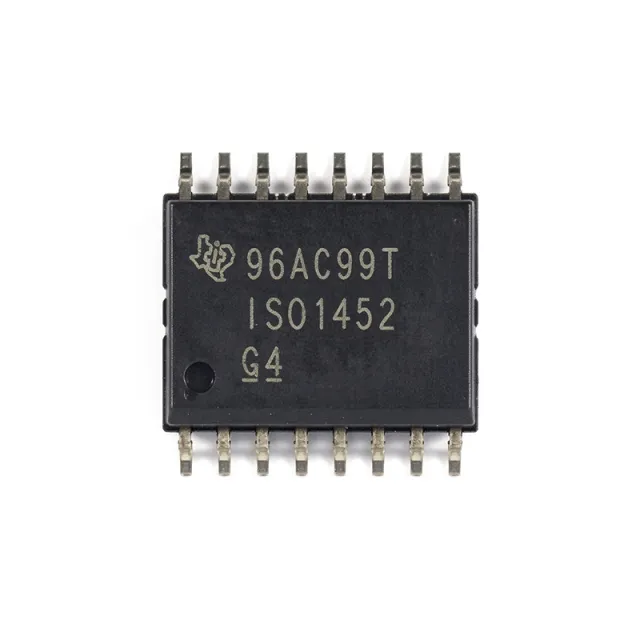
ISO1452BDW - 50Mbps Isolated RS-485/RS-422 | Texas Instruments
Texas Instruments ISO1452BDW is an EMC-protected, galvanically isolated RS-485 and RS-422 transceiver supporting 50 Mbps signaling in a 16-pin wide-body SOIC package. The device combines a full-duplex differential line transceiver with a 3-channel digital isolator, providing 5-kVrms isolation withstand and a 1500-VPK working isolation voltage. An isolated RS-485 or RS-422 transceiver is an interface IC that transfers differential data across a communication link while electrically separating the equipment-side circuitry from the bus-side circuitry. In the signal hierarchy, it belongs to the RS-485/RS-422 transceiver class, within interface ICs and broader semiconductor devices. Galvanic isolation limits fault-current and ground-potential pathways between connected systems while enabling communication across substantial isolation barriers. The ISO1452BDW combines 50-Mbps data capability, full-duplex operation, RS-485 and RS-422 compatibility, and EMC protection in one 16-SOIC device. Its differential bus interface is suitable for industrial control, instrumentation, and data-acquisition systems where reducing common-mode interference is important. The integrated 3-channel digital isolator also allows a host-side digital interface to cross the same isolation barrier. Texas Instruments describes the family as compatible with TIA/EIA-485-A and built around a silicon-dioxide capacitive isolation barrier. The 5-kVrms withstand rating and 1500-VPK working voltage provide quantified isolation capability. Because the exact detailed electrical limits and timing values are not included in the supplied verified extracts, parameters such as receiver thresholds, propagation delay, supply current, and temperature limits must be confirmed in the manufacturer datasheet before release. Typical applications include industrial RS-485 networks, isolated RS-422 point-to-point links, factory automation equipment, motor-control systems, and instrumentation requiring a high-speed isolated data interface. Full-duplex operation allows separate transmitting and receiving paths, which can simplify communication timing compared with a shared half-duplex bus. PCB design should preserve the isolation boundary, minimize differential-trace asymmetry, provide the capacitor and supply networks recommended by the manufacturer, and avoid placing unprotected copper or assembly features across the isolation barrier. The 16-pin wide-body SOIC footprint should be checked against its creepage, clearance, and pad geometry before layout. This page consolidates the verified manufacturer and distributor facts for ISO1452BDW, distinguishes documented capability from data still requiring datasheet confirmation, and provides a conservative replacement guide for engineers evaluating same-package alternatives.
ISO1452BDWR - 50Mbps Isolated RS-485/RS-422 | Texas Instruments (Tape & Reel)
Texas Instruments ISO1452BDWR is an EMC-protected, galvanically isolated RS-485 and RS-422 transceiver supporting 50 Mbps signaling in a 16-pin wide-body SOIC package. The device combines a full-duplex differential line transceiver with a 3-channel digital isolator, providing 5-kVrms isolation withstand and a 1500-VPK working isolation voltage. An isolated RS-485 or RS-422 transceiver is an interface IC that transfers differential data across a communication link while electrically separating the equipment-side circuitry from the bus-side circuitry. In the signal hierarchy, it belongs to the RS-485/RS-422 transceiver class, within interface ICs and broader semiconductor devices. Galvanic isolation limits fault-current and ground-potential pathways between connected systems while enabling communication across substantial isolation barriers. The ISO1452BDWR combines 50-Mbps data capability, full-duplex operation, RS-485 and RS-422 compatibility, and EMC protection in one 16-SOIC device. Its differential bus interface is suitable for industrial control, instrumentation, and data-acquisition systems where reducing common-mode interference is important. The integrated 3-channel digital isolator also allows a host-side digital interface to cross the same isolation barrier. Texas Instruments describes the family as compatible with TIA/EIA-485-A and built around a silicon-dioxide capacitive isolation barrier. The 5-kVrms withstand rating and 1500-VPK working voltage provide quantified isolation capability. Because the exact detailed electrical limits and timing values are not included in the supplied verified extracts, parameters such as receiver thresholds, propagation delay, supply current, and temperature limits must be confirmed in the manufacturer datasheet before release. Typical applications include industrial RS-485 networks, isolated RS-422 point-to-point links, factory automation equipment, motor-control systems, and instrumentation requiring a high-speed isolated data interface. Full-duplex operation allows separate transmitting and receiving paths, which can simplify communication timing compared with a shared half-duplex bus. PCB design should preserve the isolation boundary, minimize differential-trace asymmetry, provide the capacitor and supply networks recommended by the manufacturer, and avoid placing unprotected copper or assembly features across the isolation barrier. The 16-pin wide-body SOIC footprint should be checked against its creepage, clearance, and pad geometry before layout. This page consolidates the verified manufacturer and distributor facts for ISO1452BDWR, distinguishes documented capability from data still requiring datasheet confirmation, and provides a conservative replacement guide for engineers evaluating same-package alternatives.
ISO1452DW - 50Mbps 5kVrms Isolated RS-485/RS-422 | TI
The Texas Instruments ISO1452DW is an EMC-protected, galvanically isolated, full-duplex RS-485 and RS-422 transceiver with a 50-Mbps data rate, 5-kVrms reinforced isolation, and a 16-pin SOIC (DW) package. The device includes one driver and one receiver and operates from 3.3-V or 5-V supplies across an industrial temperature range of -40°C to +125°C. Its isolated bus interface is designed for communication links exposed to electrostatic discharge and electrical fast transient events. An isolated RS-485/RS-422 transceiver is a differential interface IC that transfers data between a logic-domain controller and a long-distance, noise-prone communications bus. Galvanic isolation places a robust isolation barrier between those domains, helping prevent ground-potential differences and ground current from disrupting data transfer or damaging connected equipment. Within the interface hierarchy, ISO1452DW is a bus transceiver, a communications interface IC, and a digital isolation IC. The principal features include 50-Mbps operation, full-duplex communication, simultaneous transmitter and receiver paths, EMC-protected bus pins, and reinforced 5-kVrms isolation. Operating from both 3.3-V and 5-V supplies allows the device to interface with modern low-voltage controllers as well as established 5-V industrial logic. The wide -40°C to +125°C range supports use in industrial equipment where ambient temperatures may exceed consumer-device limits. The ISO1452 is positioned for harsh industrial environments rather than short, isolated board-to-board links. Its differential signaling rejects common-mode noise encountered on RS-485 and RS-422 cabling, while the integrated isolation and bus-pin protection improve system resilience. Full-duplex operation provides independent transmit and receive paths, making the device suitable for industrial automation, factory equipment, building controls, and other multidrop or point-to-point industrial communication systems. Typical applications include factory automation controllers, industrial sensor gateways, motor-control systems, building automation equipment, data acquisition systems, and isolated service interfaces. In these applications, the 50-Mbps rate supports high-speed data transfer, while the 5-kVrms isolation barrier separates the bus from the local logic ground. The 16-pin SOIC package is also easier to assemble than a larger high-voltage isolation module. Designers should treat the isolation barrier and bus pins as dedicated high-energy interfaces. PCB creepage and clearance must follow the reinforced-isolation requirements in the manufacturer datasheet, bus protection must not be assumed to replace a correctly designed TVS and termination network, and the transceiver must be configured for the intended RS-485 or RS-422 topology. The verified source set does not provide the complete pin assignments or isolation layout dimensions. This page consolidates the verified manufacturer and distributor information for ISO1452DW, identifies the only substantiated same-package family alternative, and separates known engineering data from values that require confirmation in the manufacturer datasheet before layout or procurement decisions are finalized.
ISO1452DWR - 50Mbps 5kVrms Isolated RS-485/RS-422 Transceiver
The Texas Instruments ISO1452DWR is an EMC-protected, galvanically isolated full-duplex RS-485 and RS-422 transceiver with a 50-Mbps data rate and 5-kVrms reinforced isolation. It is packaged in a 16-pin wide-body SOIC and is intended for industrial communication systems where high-speed differential signaling, surge withstand, and electrical isolation are required. The device combines one driver and one receiver for full-duplex bus operation, separating the logic-side interface from the field-side RS-485 or RS-422 connection. An isolated differential transceiver is an interface IC that transfers data across a galvanic-isolation barrier while rejecting common-mode noise on the cable. RS-422 supports point-to-point, full-duplex differential signaling, while RS-485 permits multipoint bus communication. The ISO1452 combines these standards with integrated isolation and EMC protection, placing it within the hierarchy of interface ICs, communication transceivers, and industrial interface semiconductors. The principal features are a 50-Mbps maximum data rate, 5-kVrms isolation rating, full-duplex operation, and robust EMC protection. The bus pins are designed to withstand high levels of IEC electrostatic-discharge and electrical-fast-transient events, reducing the need for additional external protection in harsh industrial environments. Galvanic isolation also prevents ground-potential differences and common-mode currents on the bus from reaching the host electronics. The ISO1452 architecture is suited to high-speed, noise-sensitive industrial links where the controller and field equipment may be separated by substantial ground offsets. Its full-duplex arrangement uses separate differential driver and receiver paths, avoiding the shared-bus turn-around behavior of half-duplex designs. This can simplify protocol timing, but it requires separate transmit and receive wiring and careful termination at the appropriate ends of each differential pair. Typical uses include factory automation, motor drives, grid infrastructure, photovoltaic inverters, HVAC equipment, building automation, fieldbus gateways, and industrial test equipment. These applications benefit from the combination of 50-Mbps throughput, 5-kVrms isolation, and EMC protection. The isolation barrier is particularly useful where high-voltage equipment, long cables, or separate power domains create dangerous ground-potential differences. Designers must observe the RS-422 and RS-485 termination, biasing, common-mode, and layout requirements of the selected bus topology. The wide-body SOIC package should be placed with its isolation barrier and primary-side versus secondary-side circuits clearly separated, while high-current surge paths should be kept away from sensitive logic traces. The exact pin assignments and bypass recommendations should be taken from the manufacturer datasheet rather than inferred from the ordering code. This page combines verified manufacturer and distributor information with practical selection criteria, application context, and cross-reference guidance. It is intended to help engineers identify whether the ISO1452DWR matches a required data rate, isolation level, bus standard, package, and industrial EMC environment before committing the part to a PCB design.
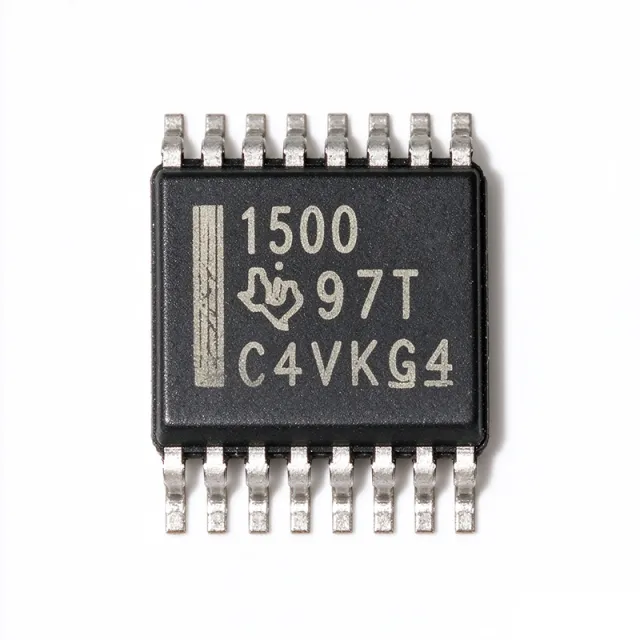
ISO1500DBQ - 1Mbps 3kVrms Isolated RS-485/RS-422 (Tape & Reel)
The Texas Instruments ISO1500DBQ is a 1-Mbps, half-duplex, 3-kVrms isolated RS-485 and RS-422 transceiver in a 16-pin SSOP package. It combines a three-channel digital isolator with a differential bus transceiver, providing galvanic isolation between the logic-side interface and the RS-485 or RS-422 bus. The device is designed for space-constrained industrial communication systems that require robust data transmission, bus protection, and a compact footprint. A digital isolator transfers signals across an insulating barrier while maintaining separate ground domains. The ISO1500 uses that isolation concept for its receive and transmit paths, helping protect a controller from ground-potential differences and electrical stress on the bus. In the RS-485/RS-422 hierarchy, the transceiver drives or receives differential signals over a balanced cable, allowing reliable communication over longer distances than single-ended interfaces. The ISO1500DBQ operates at data rates up to 1 Mbps and supports both RS-485 and RS-422 applications. Its bus pins are protected against IEC ESD contact discharge and IEC EFT events, according to the Texas Instruments product information. The receiver output includes failsafe behavior for bus-open, bus-short, and bus-idle conditions, helping the system avoid undefined receiver states during faults or inactive periods. These features suit industrial automation, motor drives, and isolated equipment interfaces. The device is supplied in an ultra-small 16-pin SSOP package, which supports compact PCB layouts while simplifying assembly. Its isolation rating is 3 kVrms, and the product family is intended for applications where reliable communication across a high-voltage barrier is valuable. The exact supply-voltage limits, receiver thresholds, propagation delays, and bus-loading values should be confirmed in the manufacturer datasheet before final circuit design. Typical applications include industrial automation equipment, factory-floor controllers, motor-drive interfaces, isolated serial links, and embedded systems that communicate over long balanced cables. The half-duplex architecture means the transmitter and receiver share bus-direction control, allowing a compact two-wire RS-485 implementation. Designers should verify the direction-control timing, termination strategy, grounding arrangement, and isolation requirements for the selected bus topology. This page combines verified manufacturer and distributor information with practical selection guidance, interface considerations, and application-oriented explanations. It is intended to help engineers identify whether the ISO1500DBQ matches the required speed, isolation level, package, and protection features for a specific industrial design.

ISO1500DBQR - 1Mbps 3kVrms Isolated RS-485/RS-422
The Texas Instruments ISO1500DBQR is a 1-Mbps, half-duplex, 3-kVrms isolated RS-485 and RS-422 transceiver in a 16-pin SSOP package. It combines a three-channel digital isolator with a differential bus transceiver, providing galvanic isolation between the logic-side interface and the RS-485 or RS-422 bus. The device is designed for space-constrained industrial communication systems that require robust data transmission, bus protection, and a compact footprint. A digital isolator transfers signals across an insulating barrier while maintaining separate ground domains. The ISO1500 uses that isolation concept for its receive and transmit paths, helping protect a controller from ground-potential differences and electrical stress on the bus. In the RS-485/RS-422 hierarchy, the transceiver drives or receives differential signals over a balanced cable, allowing reliable communication over longer distances than single-ended interfaces. The ISO1500DBQR operates at data rates up to 1 Mbps and supports both RS-485 and RS-422 applications. Its bus pins are protected against IEC ESD contact discharge and IEC EFT events, according to the Texas Instruments product information. The receiver output includes failsafe behavior for bus-open, bus-short, and bus-idle conditions, helping the system avoid undefined receiver states during faults or inactive periods. These features suit industrial automation, motor drives, and isolated equipment interfaces. The device is supplied in an ultra-small 16-pin SSOP package, which supports compact PCB layouts while simplifying assembly. Its isolation rating is 3 kVrms, and the product family is intended for applications where reliable communication across a high-voltage barrier is valuable. The exact supply-voltage limits, receiver thresholds, propagation delays, and bus-loading values should be confirmed in the manufacturer datasheet before final circuit design. Typical applications include industrial automation equipment, factory-floor controllers, motor-drive interfaces, isolated serial links, and embedded systems that communicate over long balanced cables. The half-duplex architecture means the transmitter and receiver share bus-direction control, allowing a compact two-wire RS-485 implementation. Designers should verify the direction-control timing, termination strategy, grounding arrangement, and isolation requirements for the selected bus topology. This page combines verified manufacturer and distributor information with practical selection guidance, interface considerations, and application-oriented explanations. It is intended to help engineers identify whether the ISO1500DBQR matches the required speed, isolation level, package, and protection features for a specific industrial design.
ISO1640BDR - Hot-Swappable Bidirectional I2C Isolator | Texas Instruments
The Texas Instruments ISO1640BDR is a hot-swappable, robust-EMC bidirectional I2C digital isolator with 3000 Vrms isolation (UL 1577), 2 channels, and 50 kV/us CMTI, housed in an 8-pin SOIC (D) package. It is part of the ISO164x family of low-power, low-emission isolators designed for I2C interfaces with bidirectional clock and data lines that support clock stretching and hot-swap events. The 8-pin D package variant is rated for 3000 Vrms basic or reinforced isolation, while the wider 16-pin DW package supports 5000 Vrms. An I2C digital isolator is a galvanic isolation device that allows two I2C buses to communicate across an isolation barrier while protecting low-voltage circuitry from high-voltage transients, ground potential differences, and noise. The hypernym hierarchy for this category is: I2C isolator -> digital isolator -> isolator -> interface IC -> integrated circuit -> semiconductor. Digital isolators replace legacy optocouplers in I2C applications by using CMOS-based capacitive or transformer coupling, achieving higher data rates, lower power, and better CMTI. Key features of the ISO1640BDR include bidirectional open-drain channels that pass SDA and SCL across the isolation barrier, hot-swap capability that tolerates plugging into a live backplane without latch-up, robust EMC that survives IEC 61000-4-2/4-4/4-5 system-level tests, integrated 3.0 mA current-limited pull-ups on each side for hot-swap control, and an operating temperature range of -40 C to +125 C. The device consumes roughly 8 mA per channel at 1 MHz and supports I2C data rates up to 1.7 Mbps (fast-mode plus). Typical applications include isolated I2C communication between a microcontroller and a high-side sensor or power-converter telemetry interface, isolated GPIO expansion over I2C, isolated EEPROM programming, isolated battery-management IC (BMS) comms in 48 V and 400 V systems, and isolated LED-display drivers. Industrial field-bus adapters, isolated PoE controllers, and isolated PMBus interfaces are also common deployments where 3000 Vrms isolation is sufficient. When designing with the ISO1640BDR, place 0.1 uF bypass capacitors on both VCC1 and VCC2 within 2 mm of the IC pins, and follow IEC 60747-17 creepage/clearance guidance for the chosen working voltage. The 8-D package has 4 mm of creepage across the barrier, which limits the maximum working voltage to approximately 400 Vrms for reinforced isolation per IEC 60747-17. This page synthesizes distributor pricing from LCSC and DigiKey, same-brand drop-in alternatives within the ISO164x family, and practical EMC and hot-swap design guidance not found in the manufacturer datasheet alone. Pinout, comparison, and design notes are derived from TI ISO1640 datasheet ISO1640 family literature.
ISO1640DWR - 5kVrms Bidirectional I2C Isolator | Texas Instruments
The Texas Instruments ISO1640DWR is a hot-swappable, robust-EMC bidirectional I2C digital isolator with a UL 1577 isolation rating of 5000 VRMS, two isolation channels, data rates up to 1.7 Mbps, and 50 kV/us common-mode transient immunity (CMTI), housed in a 16-pin SOIC (DW) package. A digital isolator is a semiconductor device that transfers digital signals across an isolation barrier separating two ground domains, preventing high voltages or fault currents from propagating between them. Within the power-management and interface-IC hierarchy, the ISO1640 belongs to the digital isolator family, specifically the isolated-protocol-interface subtype that natively understands a communication bus, here the two-wire I2C (Inter-Integrated Circuit) bus used by sensors, EEPROMs, and controllers. Key features include bidirectional I2C communication on the SCL and SDA lines without direction-control signals, hot-swap capability that keeps both bus sides powered down until a valid connection is established, and enhanced EMC performance suited to electrically noisy industrial environments. The open-drain outputs on each side allow direct connection to a shared I2C bus with external pull-up resistors, matching standard I2C electrical conventions. Technically, each isolation channel consists of a logic input and an open-drain output separated by a high-voltage isolation barrier implemented in TI's capacitive isolation technology, which supports the 50 kV/us CMTI rating. The low-emissions design minimizes radiated and conducted interference generated by the isolator itself, an important differentiator in EMC-sensitive systems. GPIO channels available on the ISO1640 variant allow two additional isolated general-purpose signals. Typical applications include isolated I2C links to battery management systems, isolating PMBus/SMBus rails in industrial power supplies, and protecting microcontrollers from ground loops in factory automation and test equipment. A key design consideration is sizing the pull-up resistors: with 1.7 Mbps support, keep bus capacitance low and choose pull-ups that meet the I2C rise-time spec at your operating frequency; the 8-pin ISO164x variants carry a lower 3000 VRMS rating, so package choice determines the isolation grade. This page synthesizes distributor pricing, drop-in alternatives, and practical design notes not found in the manufacturer datasheet, adding comparison and sourcing value beyond the raw TI documentation.
ISO1641DWR - 5000Vrms I2C Isolator 1.7Mbps | Texas Instruments
The Texas Instruments ISO1641DWR is a hot-swappable, robust-EMC bidirectional I2C digital isolator with 5000 Vrms isolation (UL 1577), two isolation channels rated at 1.7 Mbps, and 50 kV/us common-mode transient immunity (CMTI), housed in a 16-pin SOIC (DW, 7.50 mm width) package. A digital isolator is a semiconductor device that transfers digital signals across an isolation barrier, preventing high voltages or ground-potential differences from propagating between two sides of a circuit. Within the signal-chain hierarchy, it belongs to the interface IC family, sitting alongside optocouplers and magnetic/capacitive isolators, and is a core building block of galvanic isolation and power-management architectures. Unlike optocouplers, modern CMOS digital isolators provide faster data rates, tighter timing, lower power, and far better aging characteristics. Key features of the ISO1641 include bidirectional SDA isolation with TI integrated one-shot dynamic logic for I2C clock stretching support, a unidirectional (clock) second channel, hot-swappable inputs that prevent bus latch-up during live insertion, and open-drain outputs that natively interface with wired-AND I2C buses. Enhanced EMC performance, including the 50 kV/us CMTI rating, keeps the barrier intact in electrically noisy industrial environments. Technically, the ISO1641 uses TI capacitive isolation technology with high-voltage isolation capacitors and on-chip signal conditioning. The bidirectional channel resolves bus contention automatically, so SDA behaves as a single wired-AND node across the barrier without external logic. Low-power operation suits battery-backed and densely packed field modules. Typical applications include isolated I2C interfaces for industrial Programmable Logic Controllers (PLCs), battery management systems (BMS), power-supply supervision and PMBus telemetry, and isolated GPIO extension in motor drives and renewable-energy inverters. Design consideration: the DW-package 5000 Vrms rating requires respecting creepage and clearance on the PCB layout; do not route high-voltage traces across the isolated region, and keep the barrier area free of solder-mask or conformal-coating bridging. This page synthesizes verified distributor data, drop-in alternative analysis, and practical design notes not found in the manufacturer datasheet.