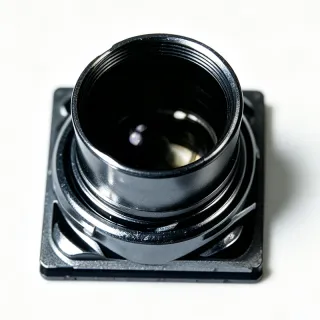
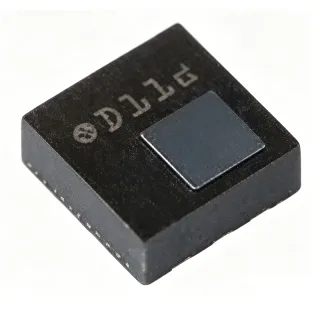
NXP Semiconductors

MPXC2011DT1 - 10kPa Differential Pressure Sensor 4-SSIP | NXP

N.º de pieza: MPXC2011DT1 ✓ Activo
En stock Se envía en 1-3 días hábiles
3 V DC to 10 V DC (10 V nominal) Vdss 4-SSIP Chip Pak module, side port Package
Desde $14.95 USD / unidad
MOQ: 1 |
Precio actualizado: 2026-10-15
Precios por volumen
Cant. Precio unitario Total
1 $24.3 $24,30
10 $21.85 $218,50
100 $19.42 $1.942,00
500 $17.1 $8.550,00
1.000 $14.95 $14.950,00
ℹ️ Todos los precios están en USD

MPXC2011DT1 Descripción general

The NXP MPXC2011DT1 is a differential piezoresistive pressure sensor rated for 0 to 10 kPa (1.45 PSI) full-scale span in a 4-SSIP side-port Chip Pak module. It delivers a nominal 25 mV full-scale output (typical 2.5 mV/kPa sensitivity) at 10 V excitation and is temperature-compensated over 0 °C to 85 °C.

A pressure sensor is a transducer that converts an applied pneumatic or hydraulic force into an electrical signal, and the differential subclass measures the pressure difference between two ports rather than against atmosphere. The MPXC2011DT1 sits in the broader hierarchy of MEMS sensors > pressure sensors > piezoresistive differential sensors > low-pressure signal-chain ICs, commonly paired with instrumentation amplifiers in medical, HVAC, and analytical-instrument front ends.

Key features include on-chip temperature compensation and calibration, a piezoresistive Wheatstone-bridge strain gauge fabricated on a silicon diaphragm, a 4-SSIP single inline through-hole module with an integrated side-port pressure inlet, and 0 to 10 kPa operating range matched to respiratory and air-flow measurement applications. The 4-SSIP Chip Pak provides a small 7.6 mm x 12.8 mm footprint with barbed side-port hose connection.

The device uses Freescale/NXP's piezoresistive silicon technology in which four ion-implanted resistors arranged in a Wheatstone bridge change resistance proportionally to diaphragm strain. The bridge is laser-trimmed during manufacture so that span, offset, and temperature coefficient are calibrated, allowing direct interface to a low-noise differential amplifier without per-unit compensation.

Typical applications include medical respiratory monitoring (spirometry, ventilators), HVAC variable-air-volume boxes, industrial process control, analytical instruments, and portable low-pressure measurement. The differential configuration makes it particularly suitable for flow sensing across orifice plates, where the pressure drop is on the order of a few kPa.

When designing with this device, plan for amplification because the 25 mV full-scale output is too small for direct ADC connection - typically a fixed-gain instrumentation amplifier with a gain of 40 to 160 is placed immediately after the sensor. The sensor output is ratiometric to the excitation voltage, so a clean, low-noise 5 V or 10 V reference is required for absolute accuracy.

This page consolidates distributor pricing, pin-compatible alternatives, and practical signal-chain design guidance that goes beyond the manufacturer datasheet's basic specifications.

Alternativas directas para MPXC2011DT1 — mismo encapsulado, compatible pin a pin. Se excluyen las piezas de otro encapsulado que requieren retrabajo de la PCB.

Variantes de esta serie

Modelos de la misma serie compatibles directamente con MPXC2011DT1 (mismo factor de forma y huella) — difiere en Output Type, Mounting Type, Excitation Voltage, Operating Temperature, Operating Pressure Range.

STMicroelectronics
Output Type: Analog Wheatstone bridge (uncompensated)
Mounting Type: Through-Hole
Operating Pressure Range: 0 kPa to 10 kPa (0 to 1.45 PSI)
Comparar con MPXC2011DT1 →
NXP Semiconductors
Output Type: Analog Wheatstone bridge (mV)
Mounting Type: Through Hole
Excitation Voltage: 3 V DC typical
Comparar con MPXC2011DT1 →
NXP Semiconductors
Output Type: Analog voltage, Wheatstone bridge (mV level)
Operating Temperature: -40 °C to +125 °C
Comparar con MPXC2011DT1 →
NXP Semiconductors
Output Type: Wheatstone Bridge (analog mV)
Mounting Type: Through-hole, vertical
Excitation Voltage: 10 V DC typical
Comparar con MPXC2011DT1 →

Herramienta de comparación rápida — seleccione piezas alternativas para compararlas lado a lado:

MPXC2012DT1

✅ Sustitución directa
NXP Semiconductors
📦 4-SSIP Chip Pak
Differential · 1.45 PSI (10 kPa) · Wheatstone Bridge (analog mV) · 24 mV to 26 mV (typ. 25 mV) at 10 V excitation · 0 mV nominal at 10 V excitation · 10 V DC typical

✓ En stock

$7.4 / unidad

Ver hoja de datos →

MPX10DP

✅ Sustitución directa
STMicroelectronics
📦 4-SIP (Chip Pak family)
Differential · 0 kPa to 10 kPa (0 to 1.45 PSI) · Analog Wheatstone bridge (uncompensated) · 0 mV to 35 mV at 3 V excitation · 3 V DC typical · Dual male 0.19 in (4.93 mm) tube, axial · 4-SIP Module

✓ En stock

$6.09 / unidad

Ver hoja de datos →

MPX12DP

✅ Sustitución directa
NXP Semiconductors
📦 4-SIP (Chip Pak family)
Differential · 0 kPa to 10 kPa (0 PSI to 1.45 PSI) · 5.5 mV/kPa typical · 35 mV typical (20 mV min / 75 mV max) · 0 mV to 55 mV at 3 V excitation · 3 V DC typical · +/-5% of span · Dual axial tube, 4.93 mm (0.19 in) diameter

✓ En stock

$9.75 / unidad

Ver hoja de datos →

MPXC2011GP

✅ Sustitución directa ⚠️ Especificaciones sin verificar
📦 4-SSIP Chip Pak (port variant)
same die and 4-SSIP Chip Pak body, different port orientation (straight vs side)

📋 Alternativa de referencia (no en el catálogo)

MPX2010DP

✅ Sustitución directa ⚠️ Especificaciones sin verificar
NXP Semiconductors
📦 4-SIP (Chip Pak family)
Differential Pressure Sensor · 0 to 10 kPa (0 to 1.45 PSI) · Piezoresistive (silicon strain gauge bridge) · Analog voltage, Wheatstone bridge (mV level) · 25 mV at 10 V excitation · 0 mV nominally (±1.0 mV max) · 10 V DC typical (max 16 V) · ±0.05% (typ)

✓ En stock

$8.5 / unidad

Ver hoja de datos →

MPXC2011DT1 Valores máximos y características eléctricas

Pressure Type Differential
Operating Pressure Range 0 kPa to 10 kPa (0 PSI to 1.45 PSI)
Full-Scale Output 25 mV typical at 10 V excitation
Sensitivity 2.5 mV/kPa typical
Excitation Voltage 3 V DC to 10 V DC (10 V nominal)
Tipo de salida Analog Wheatstone bridge (ratiometric)
Encapsulado 4-SSIP Chip Pak module, side port
Port Style Female, 3.25 mm (0.128 in) barbed side port
Termination Style Through-hole PCB, 4 leads
Temperatura de funcionamiento 0 °C to +85 °C
Compensation On-chip temperature compensated and calibrated
Technology Piezoresistive silicon strain gauge
Module Dimensions 7.6 mm x 12.8 mm nominal
Tipo de montaje Through-hole (PCB mount with side-port tubing)

Configuración de pines de MPXC2011DT1

Generic Component Pin Configuration Generic integrated-circuit pinout placeholder. Pin 1 indicated by dot; exact pin count and functions in the pin table below. 1 N 2 N-1 3 N-2 4 N-3 Pin Configuration See pin table below for pin functions Package-specific diagram not available
Pin 1 VCC — Excitation voltage (3 V to 10 V DC)
Pin 2 Vout+ — Positive bridge output (Vout+)
Pin 3 Vout- — Negative bridge output (Vout-)
Pin 4 GND — Ground / reference

Aplicaciones típicas

MPXC2011DT1 es adecuado para 6 aplicacións: Medical Spirometry & Ventilator Airflow Sensing, HVAC Variable Air Volume (VAV) Box Control, Industrial Process Low-Pressure Monitoring, Portable Handheld Airflow Meters, Analytical Instrument Front-End (Gas Chromatography / Mass Spectrometry), Environmental & Weather Station Pressure Trend.

💊

Medical Spirometry & Ventilator Airflow Sensing

The MPXC2011DT1's 0-10 kPa differential range is precisely tuned to the pressure drop produced by flow-restriction elements in spirometers, ventilators, and CPAP machines. The 2.5 mV/kPa sensitivity and ratiometric Wheatstone-bridge output pair with an INA128 instrumentation amplifier to deliver calibrated flow-loop readings to the host MCU. Compared with competitive 35 kPa parts, the narrow range gives better resolution for the small kPa-scale signals seen in breathing circuits, and the on-chip temperature compensation over 0-85 °C simplifies FDA submission documentation for medical device designs.

🏭

HVAC Variable Air Volume (VAV) Box Control

In commercial HVAC VAV boxes, the MPXC2011DT1 measures the differential pressure across a flow probe or pitot tube to compute supply-air volume. The 4-SSIP side-port Chip Pak with barbed fitting accepts standard 3.25 mm tubing directly, simplifying duct-tap installation. The 10 kPa span aligns with the 0-1.5 inch water column (0-373 Pa) typical VAV sensor range when scaled through an external instrumentation amplifier, and the 3-10 V excitation lets the part share a 24 V HVAC rail via a simple regulator.

🏭

Industrial Process Low-Pressure Monitoring

The MPXC2011DT1 fits cleanroom and process-control applications requiring sub-psi differential measurement, such as filter-loading detection, vacuum-line monitoring, and laboratory gas-flow verification. The piezoresistive silicon die delivers better long-term stability than ceramic capacitive alternatives in this pressure class, and the calibrated 2.5 mV/kPa output allows direct software conversion without per-unit table lookups. Designers should place a low-pass filter immediately at the amplifier output to suppress HVAC compressor noise picked up by long tubing runs.

📱

Portable Handheld Airflow Meters

Battery-powered airflow and leak-detection meters benefit from the MPXC2011DT1's low 3 V minimum excitation, which allows direct connection to a lithium-cell or 2xAA boost-converter rail. The 25 mV full-scale output keeps the analog front-end power budget low when paired with a single-supply zero-drift chopper amplifier. Compared with higher-pressure 100 kPa parts that waste dynamic range, the 10 kPa span gives the handheld meter's ADC more codes counts per psi, improving user-visible resolution.

🔬

Analytical Instrument Front-End (Gas Chromatography / Mass Spectrometry)

Analytical instruments such as benchtop gas chromatographs and mass-spectrometer front-ends use the MPXC2011DT1 as a carrier-gas or sample-line pressure monitor before the analytical column. The 0-10 kPa span is well-matched to the low-pressure pneumatics inside the instrument chassis, where higher-pressure parts would saturate. The on-chip calibration reduces instrument-to-instrument variation, supporting calibration-free field service and simplifying the manufacturer's QA flow.

🌐

Environmental & Weather Station Pressure Trend

Although primarily a differential sensor, the MPXC2011DT1 can be used in single-port configuration (one port vented) as a low-cost barometric trend indicator for hobbyist weather stations and indoor air-quality monitors. The 10 kPa span covers a meaningful delta-pressure window for storm-front detection when paired with a logging algorithm. Designers should add a moisture-protection membrane over the unused port and account for the differential offset in software.

Resumen de productos recomendados

INA128 Low-noise instrumentation amplifier for bridge output Se usa en: Medical Spirometry & Ventilator Airflow Sensing MAX11254 24-bit sigma-delta ADC for precision digitisation Se usa en: Medical Spirometry & Ventilator Airflow Sensing AD620 Instrumentation amplifier for HVAC signal chain Se usa en: HVAC Variable Air Volume (VAV) Box Control MAX31865 Optional RTD interface for duct-temperature compensation Se usa en: HVAC Variable Air Volume (VAV) Box Control OPA1612 Low-noise audio op-amp for active filter stage Se usa en: Industrial Process Low-Pressure Monitoring MAX11136 12-bit 1 MSPS ADC for fast process monitoring Se usa en: Industrial Process Low-Pressure Monitoring MAX4239 Zero-drift chopper amplifier for low-voltage operation Se usa en: Portable Handheld Airflow Meters MAX17201 Fuel-gauge IC for battery monitoring Se usa en: Portable Handheld Airflow Meters AD7195 24-bit sigma-delta ADC for high-resolution sampling Se usa en: Analytical Instrument Front-End (Gas Chromatography / Mass Spectrometry) REF5025 Low-noise 2.5 V reference for ADC excitation Se usa en: Analytical Instrument Front-End (Gas Chromatography / Mass Spectrometry) MAX17048 Battery fuel-gauge for solar-powered station Se usa en: Environmental & Weather Station Pressure Trend MAX31855 Optional thermocouple for ambient temperature correction Se usa en: Environmental & Weather Station Pressure Trend
What pressure range does the MPXC2011DT1 measure?
The MPXC2011DT1 is rated for a differential operating pressure range of 0 kPa to 10 kPa (0 PSI to 1.45 PSI). According to the NXP/Freescale datasheet, the device is specifically designed for low-pressure applications such as respiratory airflow sensing and HVAC variable-air-volume control. The 10 kPa span is well-matched to flow-element pressure drops in medical ventilation circuits.
What is the output voltage of MPXC2011DT1 at full-scale pressure?
The MPXC2011DT1 produces a nominal 25 mV full-scale output at 10 V excitation, equivalent to 2.5 mV/kPa sensitivity. According to the datasheet, the output is ratiometric to the excitation voltage, so at a 5 V supply the full-scale output scales down to roughly 12.5 mV. This small mV-level signal requires an external low-noise instrumentation amplifier before ADC conversion.
Where can I buy MPXC2011DT1 online?
The MPXC2011DT1 is available in stock from DigiKey as of 2026-10-15, with the part listed under ordering code 1168404. NXP authorized distributors typically stock this part in tube packaging, with lead time of 4-6 weeks when not in stock. Pricing as of 2026-10-15 starts at approximately USD 24.30 for qty 1, dropping to about USD 14.95 at qty 1000.
What is the difference between MPXC2011DT1 and MPX10DP?
The MPXC2011DT1 (NXP, 2.5 mV/kPa sensitivity) and MPX10DP (Freescale, 3.5 mV/kPa sensitivity) differ primarily in sensitivity and supply voltage rating. The MPXC2011DT1 supports up to 10 V excitation for higher full-scale output, while the MPX10DP is rated to 6 V. Both share the same 4-SIP package family and 0-10 kPa differential range, making them partially interchangeable but not pin-identical drop-in replacements.
Does the MPXC2011DT1 require external temperature compensation?
No, the MPXC2011DT1 is internally temperature-compensated and laser-trimmed during manufacture. According to the Freescale/NXP datasheet, the on-chip calibration covers offset, span, and temperature coefficient across the 0 °C to 85 °C operating range, eliminating the need for external compensation resistors or software correction tables in most designs.
What package does the MPXC2011DT1 use?
The MPXC2011DT1 uses the 4-SSIP Chip Pak module with a female 3.25 mm barbed side-port pressure inlet. According to the datasheet, the four through-hole leads carry VCC, Vout+, Vout-, and GND. The side-port orientation allows tubing attachment perpendicular to the PCB for compact medical and HVAC sensor assemblies.
Can MPXC2011DT1 be used for spirometry and ventilator airflow sensing?
Yes, the MPXC2011DT1 is widely specified for medical respiratory monitoring including spirometers, ventilators, and CPAP machines. According to the Freescale/NXP application literature, the 0-10 kPa differential range matches the pressure drop across flow-restriction elements in breathing circuits, while the on-chip compensation simplifies FDA-compliant medical device designs.
Where can I download the MPXC2011DT1 datasheet PDF?
The MPXC2011DT1 datasheet PDF is available from datasheet4u.com, alldatasheet.com, and datasheets.com, with the NXP/Freescale original document listing 7 pages and approximately 107 KB file size. The datasheet contains electrical characteristics, pinout, application circuit, and compensation curves. As of 2026-10-15 these mirrors remain accessible, though the latest revision should always be requested directly from NXP for production designs.
Is there a surface-mount version of MPXC2011DT1?
No, the MPXC2011DT1 is only available in the 4-SSIP through-hole Chip Pak format. For surface-mount pressure sensing in the same pressure range, NXP offers the MP3V5004 series in an 8-SOIC-style SMT package, though the pinout, port style, and excitation differ. Designers requiring SMT must verify the pinout against the PCB footprint rather than treat it as a drop-in replacement.
What is the best drop-in replacement for MPXC2011DT1?
The closest pin-compatible drop-in replacement within the NXP MPX family is the MPXC2012DT1, which shares the same 4-SSIP Chip Pak package and 0-10 kPa range but with different sensitivity calibration. According to the datasheet index on datasheet4u, the MPXC2011DT1 and MPXC2012DT1 are listed as companion variants in the same datasheet document. For cross-brand alternatives, evaluate Honeywell and Sensata sensors with matching port geometry.
What amplifier should be paired with MPXC2011DT1?
The MPXC2011DT1 pairs well with low-noise instrumentation amplifiers such as the Texas Instruments INA128, Analog Devices AD620, or NXP INA180-family parts. A gain of 40 to 160 is typical to bring the 25 mV full-scale signal up to 1-4 V for ADC input. Use a low-offset, low-bias-current part to preserve the sensor's calibrated accuracy over temperature.
How does MPXC2011DT1 compare to MPX12DP?
The MPXC2011DT1 (10 kPa range, 2.5 mV/kPa) and MPX12DP (10 kPa range, 3.2 mV/kPa) overlap in operating range but differ in sensitivity. Both use the same 4-SIP package family and Freescale/NXP piezoresistive technology. The MPXC2011DT1's lower sensitivity may be preferred when wider dynamic range or lower excitation voltage is required; the MPX12DP gives more output per kPa at the cost of slightly narrower linear range.
What excitation voltage should I use with MPXC2011DT1?
The MPXC2011DT1 operates from 3 V to 10 V DC excitation, with 10 V recommended for full 25 mV span. According to the datasheet, output is ratiometric to excitation, so use a clean, low-noise reference supply. For battery-powered designs, a 5 V regulated rail gives approximately 12.5 mV full-scale output, which still works with most 16-bit ADCs after amplification.
Is the MPXC2011DT1 RoHS compliant?
[DATA_NEEDED: RoHS compliance status is not explicitly stated in the verified web data for this part] The original Freescale-era datasheet predates broad RoHS adoption, so production inventory may be either lead-free or lead-containing depending on date code. Always verify RoHS status with NXP or your distributor before placing the part into a RoHS-required assembly.
What are the key specifications of MPXC2011DT1 that engineers should know?
The MPXC2011DT1 key specifications are: differential pressure type, 0 to 10 kPa (1.45 PSI) operating range, 2.5 mV/kPa sensitivity, 25 mV full-scale output at 10 V excitation, 3-10 V supply, on-chip temperature compensation over 0 °C to 85 °C, 4-SSIP Chip Pak module with female 3.25 mm barbed side port, and ratiometric analog output. The datasheet confirms the device is intended for low-pressure medical, HVAC, and analytical-instrument applications.

Datos de referencia de ingeniería para MPXC2011DT1 — comparación, orientación de diseño e información de cumplimiento.

Guía de selección

Choose the MPXC2011DT1 for new low-pressure designs in the 0-10 kPa range where the 10 V excitation and 25 mV full-scale output simplify the analog front-end. Pick the MPXC2012DT1 if your design already specifies that part number in legacy documentation - both share the same Chip Pak footprint and pressure range. Choose the MPX10DP if you need 3.5 mV/kPa sensitivity (40% higher output per kPa) and can accept a 6 V excitation limit. Choose the MPX12DP for a similar sensitivity bump with the same 10 kPa range. For SMT assembly, none of these 4-SIP parts will fit - migrate to the NXP MP3V5004 series, but expect a different pinout and port geometry requiring PCB rework.

Comparación con alternativas

Parámetro Este producto MPXC2012DT1 MPX10DP MPX12DP MPXC2011GP MPX2010DP
Brand NXP Semiconductors NXP Semiconductors NXP Semiconductors (Freescale legacy) NXP Semiconductors (Freescale legacy) NXP Semiconductors NXP Semiconductors (Freescale legacy)
Package 4-SSIP Chip Pak (side port) 4-SSIP Chip Pak (side port) - same 4-SIP Chip Pak (side port) - same family 4-SIP Chip Pak (side port) - same family 4-SSIP Chip Pak (straight port) - same body 4-SIP Chip Pak (side port) - same family
Pressure Type Differential Differential Differential Differential Differential Differential
Operating Pressure Range 0 to 10 kPa (1.45 PSI) 0 to 10 kPa 0 to 10 kPa 0 to 10 kPa 0 to 10 kPa 0 to 10 kPa
Excitation Voltage Range 3 V to 10 V DC 3 V to 10 V DC 3 V to 6 V DC 3 V to 6 V DC 3 V to 10 V DC 3 V to 10 V DC
Temperature Compensation On-chip calibrated, 0 to 85 °C On-chip calibrated On-chip calibrated On-chip calibrated On-chip calibrated On-chip calibrated

Diferenciadores clave

  • 10 V excitation rating for highest full-scale output in the MPX10/12/2010 family (frente a MPX10DP / MPX12DP)
  • Calibrated sensitivity matches the MPX2010 legacy family (frente a MPX2010DP)
  • Side-port barbed inlet for direct tubing connection (frente a MPXC2011GP (straight-port variant))

Notas de diseño

The 25 mV full-scale output sits well below any 12-bit ADC's LSB at 5 V full-scale (1.2 mV), so the sensor must be amplified before digitisation. Use a true instrumentation amplifier topology (e.g., INA128, AD620) with gain of 40-160 placed within 50 mm of the sensor leads. Twisted-pair or shielded twisted-pair cabling from sensor to amplifier rejects common-mode noise from switching power supplies nearby. Apply a first-order low-pass filter at the amplifier output with cutoff of 10-100 Hz to suppress mechanical vibration and HVAC compressor noise picked up by the tubing.

Route the four sensor leads with a small ground plane beneath the Chip Pak to provide mechanical stability and thermal mass. Keep digital traces (MCU, switching regulator) at least 10 mm away from the analog amplifier section to prevent switching-noise coupling. If the design uses both the MPXC2011DT1 and a digital MCU on the same board, split the analog and digital ground planes and join them at a single point near the sensor's GND pin. Decouple the sensor's VCC pin with a 100 nF ceramic capacitor placed as close as possible to the lead.

Estimated: do NOT block the unused port of a differential sensor - both ports must be open to the pressure field, or sealed only with a low-stress moisture-protection membrane. Blocking one port converts the sensor into an absolute reference at the blocked pressure, which is rarely the intended measurement. Also, do not exceed the 10 V excitation maximum - the on-chip compensation network assumes the datasheet-specified excitation range. Finally, do not route the sensor leads near a high-current switching node; the small 25 mV signal is easily swamped by tens of mV of magnetically-coupled switching noise.

Información de cumplimiento

RoHS
Unknown
REACH
Unknown
AEC-Q100
Not Applicable
Libre de plomo
Unknown
Libre de halógenos
Unknown
Minerales en conflicto
Unknown

RoHS, REACH, lead-free, halogen-free, and conflict-mineral status are not explicitly stated in the verified web data for MPXC2011DT1. The original Freescale-era datasheet predates broad RoHS adoption. Verify with NXP or distributor documentation before placing into RoHS-required assembly.

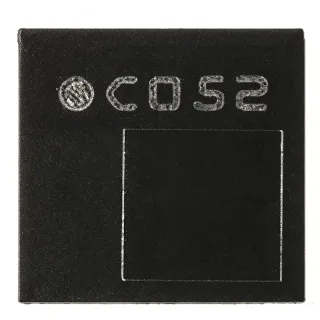
Datos verificados el: 2026-10-15 — datos verificados y seleccionados por el equipo de ingeniería de componentes de XAIPART

Búsquedas relacionadas

MPXC2011DT1 MPXC2011DT1 datasheet NXP MPXC2011DT1 pressure sensor 10 kPa differential pressure sensor 4-SSIP 2.5 mV/kPa piezoresistive pressure sensor MPX Chip Pak 4-SIP pressure sensor MPXC2011DT1 spirometry ventilator MPXC2011DT1 vs MPX10DP MPXC2011DT1 vs MPX12DP MPXC2011DT1 buy price MPXC2011DT1 drop-in replacement low pressure differential sensor HVAC what is the output voltage of MPXC2011DT1 MPXC2011DT1 pinout 4-SSIP wheatstone bridge pressure transducer 10 kPa

Componentes & términos relacionados

NXP Semiconductors MPXC2011DT1 MPXC2012DT1 MPX10DP MPX12DP MPXC2011GP MPX2010DP pressure sensor differential pressure sensor piezoresistive pressure sensor MEMS sensor Wheatstone bridge 4-SSIP Chip Pak 4-SIP package RoHS AEC-Q100 spirometry ventilator HVAC variable air volume flow sensing analytical instrument INSTRUMENTATION AMPLIFIER (INA128, AD620) Freescale Semiconductor
RFQ de presupuesto rápido
Complete los detalles — nuestro equipo de ventas responderá en un plazo de 24 horas
Número de pieza Fabricante Encapsulado QTY Precio objetivo Total
Total: $0.00 USD
✓
¡Presupuesto enviado!

Responderemos a su correo electrónico en un plazo de 24 horas

1
RFQ enviado
2
Presupuesto recibido
3
Pedido realizado
4
Pago
5
Enviado
6
Entregado
Ver detalles del RFQ