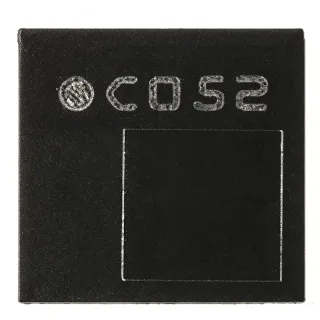
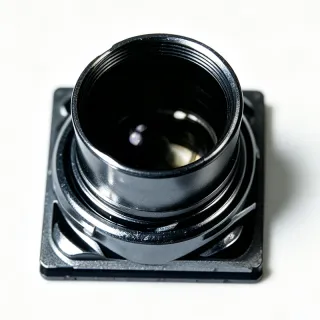
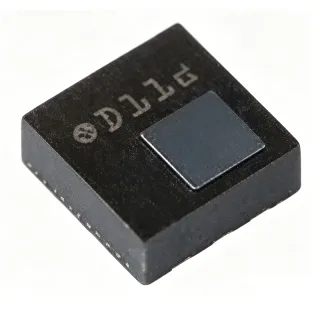
MPXC2012DT1 - 10 kPa Differential Pressure Sensor, 4-SSIP | NXP
MPN: MPXC2012DT1 ✗ End of Life| Qty | Unit Price | Extended |
|---|---|---|
| 1 | $12.95 | $12.95 |
| 10 | $11.85 | $118.50 |
| 100 | $10.2 | $1,020.00 |
| 500 | $8.85 | $4,425.00 |
| 1,000 | $7.4 | $7,400.00 |
MPXC2012DT1 Overview
A pressure sensor is a transducer that converts an applied pressure differential into a proportional electrical signal. The MPXC series uses a silicon diaphragm with piezoresistive strain gauges arranged in a Wheatstone bridge; when pressure is applied, the diaphragm flexes and the bridge becomes unbalanced, producing a millivolt-level output proportional to differential pressure. The uncompensated nature of the MPXC2012DT1 means the host system must linearize and temperature-compensate the raw mV signal.
Key features include a 0 mV to 25 mV output span at 10 V excitation, a 0.128 inch (3.25 mm) female pressure port oriented to the side of the package, and a unidirectional differential pressure mode (positive on the front side). The 4-SSIP through-hole module mounts vertically on a PCB and accepts standard tubing via the integrated port, simplifying plumbing for airflow and liquid-level designs.
Technically, the device uses a monolithic silicon strain-gauge bridge with laser-trimmed resistors for tight offset tolerance. The die-side bond wires and port geometry are optimized for low-pressure HVAC and medical-respiration airflow paths. Designers must provide a high-impedance instrumentation amplifier with low-noise gain (typically 100x) and software temperature compensation to achieve accurate absolute readings.
Typical applications include HVAC differential pressure sensing, medical respiration/airflow monitoring, altimeters and barometric helpers, level detection, and industrial process control. The MPXC2012DT1 is well suited for cost-sensitive airflow measurement where the system can absorb a discrete op-amp and calibration step.
When designing, route the high-impedance bridge output traces away from switching noise sources and provide a Kelvin connection to the excitation source. Without gel protection, do not expose the die-side cavity to condensing humidity or direct water contact; mount the port facing away from dust streams.
This page consolidates distributor pricing, drop-in same-package alternatives, and practical design notes that go beyond the legacy datasheet.
Drop-in alternatives for MPXC2012DT1 — same package, pin-to-pin compatible. Different-package parts requiring PCB rework are excluded.
Variants in this series
Same-series models that are drop-in compatible with MPXC2012DT1 (same form factor and footprint) — differing in Output Type, Mounting Type, Operating Temperature, Pressure Type, Excitation Voltage.
Quick Comparison Tool — Select alternative parts for side-by-side comparison:
MPX2010
✅ Drop-In📋 Reference alternative (not in catalog)
MPX2010DP
✅ Drop-In✓ In Stock
$8.5 / Unit
View Datasheet →MPXC2012GP
✅ Drop-In📋 Reference alternative (not in catalog)
MPX2100A
✅ Drop-In✓ In Stock
$7.94 / Unit
View Datasheet →MPX2050A
✅ Drop-In📋 Reference alternative (not in catalog)
MPXC2012DT1 Maximum Ratings & Electrical Characteristics
| Pressure Type | Differential |
| Operating Pressure | 1.45 PSI (10 kPa) |
| Output Type | Wheatstone Bridge (analog mV) |
| Full-Scale Output | 24 mV to 26 mV (typ. 25 mV) at 10 V excitation |
| Offset (Null) | 0 mV nominal at 10 V excitation |
| Excitation Voltage | 10 V DC typical |
| Pressure Port Size | Female, 0.128 in (3.25 mm) side port |
| Port Style | Side port, single barbed inlet |
| Package / Case | 4-SSIP Module (chip-pak, no gel) |
| Termination Style | Through-hole PCB (vertical mount) |
| Gel Protection | No (bare die in chip-pak cavity) |
| Mounting Type | Through-hole, vertical |
| MSL Level | Not applicable (through-hole sensor module) |
| Manufacturer | NXP Semiconductors (formerly Freescale / Motorola) |
MPXC2012DT1 Pin Configuration
| Pin 1 | VS+ — Bridge excitation positive (10 V DC typical) |
| Pin 2 | VS- — Bridge excitation negative / ground return |
| Pin 3 | VOUT+ — Bridge output positive (mV-level, full-scale 25 mV at 10 V) |
| Pin 4 | VOUT- — Bridge output negative (reference) |
Typical Applications
MPXC2012DT1 is suitable for 6 applications: HVAC Differential Pressure Sensing, Medical Respiration / Airflow Monitoring, Barometric / Altimeter Helper, Liquid Level Detection, Industrial Process Control, Robotics and Drone Airflow / Vacuum Sensing.
HVAC Differential Pressure Sensing
The MPXC2012DT1 fits HVAC duct and filter pressure-drop monitoring with its 10 kPa (1.45 PSI) differential range and 25 mV full-scale span at 10 V excitation. The chip-pak package with 0.124 in side port accepts standard 1/8 in tubing for inline airflow measurement, and the uncompensated mV output feeds directly into an instrumentation amplifier (such as the INA125) for ADC conversion. Engineers route the Wheatstone bridge output across 10 cm of shielded twisted pair to a 100x gain stage, achieving micro-pressure resolution suitable for dirty-filter detection. The legacy Motorola/Freescale/NXP part remains a proven BOM for retrofit air-handler controllers.
Recommended
Medical Respiration / Airflow Monitoring
The MPXC2012DT1 supports low-pressure respiration and airflow paths in medical spirometers and CPAP side-stream monitors because of its 1.45 PSI differential range and stable mV-level bridge output. The uncompensated output requires host-side temperature compensation from 32-42C ambient, which the system MCU performs via a stored calibration table. Designers benefit from the small chip-pak footprint for handheld spirometer probes. Note that the no-gel variant requires a particulate filter upstream to protect the bare die cavity from patient-side contamination in clinical use.
Recommended
Barometric / Altimeter Helper
The MPXC2012DT1 provides a low-cost auxiliary pressure channel for altimeters and weather stations that require differential (not absolute) measurement, paired with a separate absolute barometer for the reference port. With 25 mV full-scale output at 10 V excitation and a 10 kPa range, the sensor delivers millibar-level resolution through a 100x instrumentation amplifier. Designers use it as the differential channel across a flow restriction in pitot-style airflow meters for drone or handheld anemometers. The vertical 4-SSIP through-hole mount simplifies hand-soldered prototyping on weather-balloon payloads.
Recommended
Liquid Level Detection
The MPXC2012DT1 is widely used as a low-cost differential liquid-level sensor when the bottom port is submerged and the top port is vented, producing a hydrostatic pressure proportional to liquid height. With 10 kPa full-scale (about 1 meter of water column), the sensor detects small head changes in reservoirs and coolant tanks. The chip-pak side port accepts flexible tubing to route liquid interface to the die cavity. The uncompensated mV output requires host-side temperature compensation because water density varies with temperature, but the BOM cost advantage versus integrated level transducers remains compelling for white-goods and HVAC condensate management.
Recommended
Industrial Process Control
The MPXC2012DT1 serves in industrial low-pressure process loops where a 10 kPa differential span maps to cleanroom pressure, dust-collector vacuum, or filter-status monitoring. Its 4-SSIP vertical mount is mechanically rugged for control-panel installation, and the bare-die chip-pak cavity tolerates dry process air and instrument-grade nitrogen. A host PLC reads the 25 mV full-scale output through a galvanically isolated amplifier front-end and uses it in a closed-loop control algorithm. The NXP legacy part is preferred by retrofit skid builders who need to maintain identical BOMs across long equipment lifecycles.
Recommended
Robotics and Drone Airflow / Vacuum Sensing
The MPXC2012DT1 fits small UAV pitot tubes and robotics vacuum pickup sensors thanks to its 10 kPa differential range and 25 mV output at 10 V excitation. The chip-pak side port connects directly to 1/8 in tubing leading to a pitot probe or vacuum gripper, providing differential pressure proportional to airspeed or suction lift. Designers feed the mV-level bridge output through an instrumentation amplifier to a flight controller or robot MCU for closed-loop control. The legacy Motorola/Freescale/NXP status means long-term spare-part availability for maintenance of existing drone fleets, and the small vertical 4-SSIP footprint fits compact avionics bays.
Recommended
Recommended Products Summary
Engineering reference data for MPXC2012DT1 — comparison, design guidance, and compliance information.
Selection Guide
Comparison with Alternatives
| Parameter | This Product | MPX2010 | MPX2010DP | MPXC2012GP | MPX2100A | MPX2050A |
|---|---|---|---|---|---|---|
| Brand | NXP Semiconductors | NXP Semiconductors | NXP Semiconductors | NXP Semiconductors | NXP Semiconductors | NXP Semiconductors |
| Package | 4-SSIP chip-pak (no gel) | 4-SSIP chip-pak (gel) | 4-SSIP chip-pak | 4-SSIP chip-pak (gel) | 4-SSIP chip-pak | 4-SSIP chip-pak |
| Pressure Type | Differential | Differential | Differential | Differential | Differential/Absolute | Differential/Absolute |
| Operating Pressure | 10 kPa (1.45 PSI) | 10 kPa (1.45 PSI) | 10 kPa (1.45 PSI) | 10 kPa (1.45 PSI) | 100 kPa (14.5 PSI) | 50 kPa (7.25 PSI) |
| Full-Scale Output | 25 mV at 10 V excitation | 25 mV at 10 V excitation | 25 mV at 10 V excitation | 25 mV at 10 V excitation | 40 mV at 10 V excitation | 40 mV at 10 V excitation |
| Excitation Voltage | 10 V DC typical | 10 V DC typical | 10 V DC typical | 10 V DC typical | 10 V DC typical | 10 V DC typical |
| Gel Protection | No (bare die in chip-pak cavity) | Yes (gel over die) | Varies by suffix | Yes (gel over die) | Varies by suffix | Varies by suffix |
| Port Style | Side port, 0.128 in female | Side port | Dual port | Side port | Side port | Side port |
| Lifecycle Status | NRND (as of 2026-10-15) | NRND | NRND | NRND | NRND | NRND |
Key Differentiators
- Proven legacy BOM with multi-source distributor stock (vs MP3V5010GP)
- Identical 10 kPa / 25 mV electrical signature as MPX2010 family (vs MPX2100A)
- Bare-die chip-pak for lowest BOM cost in dry-air designs (vs MPXC2012GP)
Design Notes
The MPXC2012DT1 produces a Wheatstone bridge output in the millivolt range (24-26 mV full-scale at 10 V excitation). Route the four bridge traces as a tightly coupled twisted or parallel set with a dedicated ground return, and place a 100x-gain instrumentation amplifier (e.g. INA125, INA128) within 10 cm of the sensor. Use a Kelvin connection to the excitation source so that voltage-drop in the VS+ lead does not desensitize the bridge. Estimated: a 100 ohm lead resistance with 10 V excitation and 1 mA bridge current creates a 0.1 V drop that scales the output by 1%.
Do not expose the chip-pak cavity of the MPXC2012DT1 to condensing humidity, direct water spray, or dust streams. The 'T' suffix (no-gel chip-pak) variant does not seal the die; for condensing environments use the gel-protected 'GP' variant (MPXC2012GP) instead. Always add a 5 micron particulate filter upstream of the port when sensing patient-side airflow or process liquids.
Excite the bridge with a clean, low-noise 10 V DC source. Ripple on the excitation line couples directly into the mV output and degrades ADC resolution; use an LDO (such as the LP2981 or TPS7A47) for the 10 V rail rather than a switching regulator. Estimated: 1 mV of excitation ripple at 1 kHz becomes a 2.5 uV bridge error after the 100x amplifier - small in absolute terms but visible at 16-bit ADC resolution.
The piezoresistive bridge sensitivity typically varies -0.2 %FS per degree C, and the offset drifts with temperature. Implement a two-point temperature calibration in firmware using a co-located temperature sensor (e.g. TMP102) and store compensation coefficients in non-volatile memory on the board. Without temperature compensation the uncompensated MPXC2012DT1 will show 5-10 %FS error over a 50 C ambient swing.
Mount the MPXC2012DT1 vertically through the PCB with the side port oriented away from dust and direct airflow turbulence. Provide mechanical strain relief on the tubing so that vibration is not transmitted into the chip-pak cavity. Keep high-current switching nodes (motor FETs, inductors) at least 10 mm away from the bridge traces to avoid magnetically coupled noise.
Compliance Information
Compliance status not present in verified web data; the part is a legacy Motorola/Freescale/NXP sensor module. RoHS status typically 'unknown' for NRND legacy parts - contact NXP for a current material declaration if required for a new product launch.