Diodes
Produits (171)

BAT43 - 30V 200mA Schottky Diode DO-35 | STMicroelectronics
The STMicroelectronics BAT43 is a small-signal Schottky barrier diode rated 30 V repetitive peak reverse voltage (VRRM) and 200 mA continuous forward current, housed in a through-hole DO-35 glass axial package. It delivers a very low turn-on voltage and fast switching, with integrated guard-ring protection against excessive voltage events such as electrostatic discharge (ESD). A Schottky diode is a metal-to-silicon rectifier in which a metal-semiconductor junction replaces the P-N junction of a conventional diode. This structure eliminates reverse-recovery charge, so switching is inherently fast, and the forward voltage drop (typically around 0.3-0.4 V at moderate currents for this class) is substantially lower than silicon P-N diodes. Within the power-management hierarchy, the BAT43 belongs to the small-signal Schottky diode family, sitting under general-purpose rectifiers and discrete semiconductors. Key electrical parameters from the STMicroelectronics datasheet include: 30 V VRRM, 200 mA continuous forward current at Ta = 25 C, 500 mA repetitive peak forward current (tp <= 1 s, delta <= 0.5), 4 A non-repetitive surge current (IFSM, tp = 10 ms), and 200 mW power dissipation at Tl = 65 C. These figures make it well suited to low-power signal rectification, polarity protection, and detection duties. The DO-35 glass body is hermetically sealed, giving the device excellent long-term reliability and stable junction characteristics over temperature. The through-hole leads suit hand assembly, prototyping, repair, and hobby construction as well as low-density industrial boards. Surface-mount equivalents in SOD-123 (BAT42W-V to BAT43W-V) and MiniMELF cases exist within the same ST family for automated assembly. Typical applications include low-frequency and RF signal detection, reverse-polarity and battery protection clamps, ORing of low-voltage supplies, and free-wheeling or clamping roles in low-current switching circuits where the low forward drop improves efficiency. Design consideration: respect the 30 V reverse rating with adequate margin - derate for supply transients, and note the 200 mW dissipation limit when running near full current. This page synthesizes distributor availability data, cross-brand equivalents, and practical design notes not found in the manufacturer datasheet.
BAT43-R0 - 30V 200mA Schottky Diode DO-35 | Taiwan Semiconductor
The Taiwan Semiconductor BAT43-R0 is a general-purpose small-signal Schottky barrier diode rated 30 V reverse voltage and 200 mA average forward current, supplied in a through-hole axial-leaded DO-35 glass package. It features a low forward turn-on voltage (about 1 V maximum at rated current) and fast switching behavior, with a non-repetitive peak forward surge rating of 4 A. A Schottky diode is a metal-to-semiconductor junction rectifier that, unlike a standard PN-junction diode, conducts at a lower forward voltage and switches with minimal reverse-recovery charge. Within the component hierarchy it belongs to discrete semiconductors -> diodes -> rectifiers -> small-signal Schottky rectifiers. This makes Schottky diodes the preferred choice for low-voltage rectification, reverse-polarity protection, and high-speed clamping where every millivolt of headroom and every nanosecond of recovery time matters. Key features of the BAT43-R0 include the 30 V reverse standoff, a 200 mA average rectified output current, very low turn-on voltage, and an integrated fast guard ring that protects against excessive voltage events such as electrostatic discharge (ESD). The device operates up to 125 C junction temperature with a 200 mW power dissipation class, and the hermetic DO-35 glass body provides excellent long-term reliability compared with plastic SMD alternatives. Technically, the metal-silicon junction of the BAT43 provides majority-carrier conduction, so switching speed is essentially limited only by junction capacitance rather than stored charge. This enables use in detector, clamping, and ORing circuits at frequencies far beyond what standard rectifier diodes such as the 1N4148-class silicon devices can match in forward-drop-sensitive designs. Typical applications include low-current power-supply rectification and secondary-side rectification, reverse-battery and reverse-polarity protection on battery-powered equipment, signal detection and demodulation in RF front ends, and freewheeling or clamping functions around relays and small inductive loads. Design consideration: keep continuous current well below the 200 mA rating when the forward drop approaches 1 V, since junction dissipation rises quickly; verify surge exposure against the 4 A non-repetitive rating in inductive circuits. This page synthesizes distributor listings, cross-manufacturer drop-in alternatives (STMicroelectronics, Infineon, Vishay/other BAT43 sources), and practical design guidance not consolidated in any single manufacturer datasheet.
BAT43-TR - 30V 200mA Schottky Diode DO-35 | Vishay
The Vishay General Semiconductor BAT43-TR is a small-signal Schottky barrier diode rated 30 V reverse voltage and 200 mA average forward current, with a 4 A non-repetitive surge current rating (IFSM), housed in the through-hole DO-204AH (DO-35) axial glass package supplied in tape-and-reel packaging. A Schottky diode is a metal-to-silicon rectifier in which a metal-semiconductor junction replaces the P-N junction of a conventional diode. This construction yields a lower forward turn-on voltage and dramatically faster switching with essentially no reverse-recovery charge, placing the BAT43 within the hierarchy: Schottky diode -> small-signal rectifier -> discrete semiconductor. Small-signal Schottky diodes are workhorse components in signal detection, reverse-polarity protection, and low-power rectification stages. Key features of the BAT43-TR, per the Vishay datasheet, include very low turn-on voltage for minimal conduction loss at low signal levels, fast switching speed for high-frequency operation, and an integrated guard ring that protects against excessive voltage events such as electrostatic discharge (ESD). The 4 A IFSM surge rating provides robust margin against inrush and transient events far beyond the 200 mA continuous rating. The device is targeted at general purpose applications: RF signal detection where low forward voltage preserves signal headroom, ORing and reverse-polarity protection in battery-powered circuits where every 100 mV of drop matters, freewheeling and clamp functions in low-power switch-mode circuits, and precision rectification in measurement front-ends. The DO-35 glass body is hermetically sealed, giving stable leakage behavior over temperature compared to plastic packages and easy manual handling for prototyping. Vishay also offers the same BAT43 die in the SOD-123 surface-mount case, allowing migration from through-hole prototypes to SMD production without changing electrical behavior. Design consideration: Schottky diodes exhibit higher reverse leakage than silicon P-N diodes, which roughly doubles for every 10 C of temperature rise; verify that leakage at the highest ambient temperature remains acceptable, especially in peak-detector or sample-hold circuits. This page synthesizes verified distributor pricing, drop-in alternatives, pinout data, and practical design notes not consolidated in the manufacturer datasheet, providing information gain for sourcing and design engineers.
BAT46 - 100V 150mA Small Signal Schottky Diode | STMicroelectronics
The STMicroelectronics BAT46 is a small signal Schottky diode rated for 100 V reverse voltage and 150 mA forward current, housed in a glass-body axial DO-35 through-hole package. It is suited for protection, routing, and general-purpose rectification in low-current signal circuits. A Schottky diode uses a metal-semiconductor junction instead of a P-N junction, giving it a lower forward voltage drop and faster switching with minimal reverse-recovery charge. Within the semiconductor hierarchy, the BAT46 belongs to the discrete-semiconductor family: diode -> rectifier/Schottky diode -> signal diode -> small signal component. These devices are widely used where low forward losses and speed matter more than blocking capability. Key features of the BAT46 include its high 100 V reverse rating for a small-signal Schottky - most comparable small-signal Schottky parts are limited to 40-70 V - along with low forward voltage, fast switching, and a stable glass DO-35 package suitable for hand soldering and legacy through-hole designs. Its soft, low conduction threshold also makes it a popular substitute for germanium diodes in low-level signal applications such as crystal radio detection and audio clipping circuits, a substitution validated by DigiKey forum curve comparisons against the 1N34A. The device is manufactured by STMicroelectronics with equivalent BAT46 products also produced by Vishay General Semiconductor, giving designers multiple qualified sources. The glass package provides excellent hermeticity and temperature stability compared with molded plastic axial packages. Typical applications include polarity protection, OR-ing and steering of low-current supplies, detector circuits in RF and crystal radios, clipping/clamping in guitar pedals and audio equipment, and general signal rectification up to 150 mA. Design consideration: derate forward current with ambient temperature and verify reverse leakage at high temperature, since Schottky leakage rises exponentially; for higher current needs move to a rectifier-grade Schottky such as the 1N5817 family in DO-41. This page synthesizes verified distributor data, cross-references, drop-in alternatives, and practical design notes not consolidated in the manufacturer datasheet.

BAT46LS-QYL - 100V 250mA Schottky Diode | Nexperia
The Nexperia BAT46LS-QYL is a general-purpose 100 V, 250 mA small-signal Schottky barrier diode supplied in the ultra-small DFN1006BD-2 (SOD882BD) leadless surface-mount plastic package with side-wettable flanks. The -Q designation marks it as a member of Nexperia's automotive-qualified product line, making it suitable for automotive and demanding industrial environments. A Schottky barrier diode is a type of rectifier diode formed by a metal-semiconductor junction rather than a P-N junction. Compared with conventional silicon P-N diodes, Schottky diodes offer a lower forward voltage drop and very fast switching with essentially no reverse recovery charge, at the cost of higher reverse leakage current. Within the power-management hierarchy, this device belongs to the small-signal diode class used for protection, routing, and rectification rather than bulk power conversion. Key features of the BAT46LS-QYL include a 100 V reverse voltage rating, which is high for a small-signal Schottky and allows use on 24 V and 48 V rails with margin, and a 250 mA average forward current capability in a footprint of only about 1.0 x 0.6 mm. The side-wettable flanks of the DFN1006BD-2 (SOD882BD) package enable solder-joint inspection (AOI) and improve mechanical joint strength, a key advantage over leadless packages without wettable flanks. The device supports protection and routing operations typical of the BAT46 family, including reverse-polarity protection, blocking, and ORing of low-current supply rails. The high reverse-voltage rating combined with low forward drop makes it attractive in battery-powered and automotive low-voltage networks where every millivolt of forward drop matters. Typical applications include automotive sensor and body-electronics modules, reverse-battery and reverse-polarity protection, low-current rectification in auxiliary power stages, and high-speed signal routing and clamping in portable and industrial equipment. In design, note that Schottky reverse leakage rises strongly with temperature; verify leakage budget at maximum ambient and self-heating rather than at room temperature. Also respect the PCB land-pattern and thermal-copper guidance for the tiny DFN1006BD-2 footprint. This page synthesizes verified distributor pricing, drop-in variant information, application guidance, and compliance data not consolidated in the manufacturer datasheet, providing engineers and buyers a single citable reference.

BAT46W - 100V 150mA Schottky Barrier Diode SOD-123 | Diodes Inc
The Diodes Incorporated BAT46W is a 100V, 150mA small-signal Schottky barrier diode in a compact SOD-123 surface-mount package, designed for polarity protection, re-circulating (freewheeling) and high-speed switching applications. The metal-silicon junction delivers a very low turn-on voltage and negligible switching losses compared with standard PN-junction diodes. A Schottky barrier diode is a semiconductor diode formed by a metal-to-silicon junction rather than a P-N junction. Because conduction occurs by majority carriers, the device exhibits a lower forward voltage drop, essentially zero reverse-recovery charge, and very fast switching. Within the power-discrete hierarchy, the BAT46W sits in the small-signal Schottky family, below rectifier Schottkys in current rating but above RF detector diodes in voltage rating, and belongs to the broader category of rectifiers and switching diodes in power management designs. Key features include a 100V reverse voltage rating - high for a small-signal Schottky - a 150mA average forward current capability, approximately 200mW power dissipation, and guard-ring construction that protects the junction against transient events such as electrostatic discharge (ESD). According to the manufacturer, the device features very low conduction losses and fast switching, making it well suited to low-voltage, high-frequency signal and power paths. Technically, the BAT46W uses a metal-silicon junction with a PN-junction guard ring that provides robustness against excessive voltage such as electrostatic discharges. The matte-tin-plated terminals are solderable per MIL-STD-202, Method 208, and the part is Totally Lead-Free, Fully RoHS compliant, and halogen and antimony free ('Green' device). An automotive-compliant variant, BAT46WQ, is available under a separate datasheet. Typical applications include polarity protection on battery-powered and portable equipment inputs, freewheeling (re-circulating) diodes for relays, small motors and inductive loads, and general-purpose high-speed switching in logic-level and RF signal circuits where low forward drop minimizes loss. When laying out the PCB, keep the loop area between the diode and the switched inductance small to limit ringing, and verify reverse voltage margin against supply transients. Note that some manufacturers supply BAT46W in SOD-123F/FL variants; footprint compatibility should be checked before cross-second-sourcing. This page synthesizes distributor pricing, drop-in alternatives, and practical design notes not found in the manufacturer datasheet, providing information gain over standard catalog listings.
BAT46WH - 100V 250mA Schottky Diode SOD-123F | Nexperia
The Nexperia BAT46WH is a single planar Schottky barrier rectifier diode rated for 100 V repetitive reverse voltage and 250 mA forward current, with a forward voltage of 850 mV and a non-repetitive peak forward current of 2.5 A, housed in a small flat-lead SOD-123F surface-mount plastic package. A Schottky barrier diode is a semiconductor diode formed by a metal-semiconductor junction rather than a P-N junction. Because it stores far less minority-carrier charge than a conventional rectifier diode, a Schottky diode switches very fast and exhibits a lower forward voltage drop, placing it at the top of the rectifier-diode hierarchy within the broader family of discrete semiconductors used in power management and signal protection circuits. Key features of the BAT46WH include the 100 V reverse voltage rating (well above the 30-40 V of typical small-signal Schottky diodes), the 850 mV maximum forward voltage at rated current, and a 2.5 A non-repetitive surge rating for handling inrush events. A planar construction with an integrated guard ring provides stress protection and stable reverse characteristics, and the flat-lead SOD-123F package improves solder-joint reliability compared with the standard SOD-123 formed lead. Technically, the device is a single-diode configuration intended for general-purpose high-speed switching, low-loss rectification, reverse-polarity protection, and line termination. The guard-ring structure clamps peak electric fields at the junction edge, which is what enables the unusually high 100 V rating in such a small footprint. Typical applications include DC-DC converter output rectification, reverse battery and reverse polarity protection on battery-powered equipment, signal clipping and clamping networks, and termination circuits in industrial and consumer electronics. For design, note that Schottky reverse leakage rises significantly with temperature; verify leakage at the worst-case ambient, and respect the 250 mA average forward current limit plus the 155 C maximum operating temperature. This page synthesizes distributor pricing, drop-in alternative analysis, pinout detail, and practical design notes not found in the manufacturer datasheet alone.

BAT46WJ - 100V 250mA Schottky Diode SOD-323F | Nexperia
The Nexperia BAT46WJ is a single planar Schottky barrier diode rated 100 V reverse voltage and 250 mA average forward current, with a maximum forward voltage of 850 mV and a non-repetitive surge rating of 2.5 A, housed in the small SOD323F (SC-90) surface-mount plastic package with flat leadform. A Schottky barrier diode is a rectifier formed by a metal-semiconductor junction rather than a PN junction. This gives it a lower forward voltage drop and near-zero reverse recovery charge compared to standard silicon diodes, making it a preferred rectifier within the broader diode family for high-speed switching and low-loss power paths. The BAT46WJ sits in the small-signal rectifier tier, positioned above general-purpose switching diodes and below power Schottky rectifiers. Key features include the 100 V reverse voltage rating, which is high for a small-signal Schottky in this package class; an integrated guard ring that provides stress and breakdown protection; and operation up to a maximum junction temperature of 150 C. The flat-lead SOD323F package improves solder-joint reliability and optical alignment on automated pick-and-place lines relative to gull-wing small-outline packages. Technically, the planar structure with guard ring yields a controlled avalanche behavior and stable leakage performance across the temperature range. According to the Nexperia BAT46WJ product datasheet, the device is specified for high-speed switching, voltage clamping, line termination and reverse polarity protection. The absence of reverse recovery charge allows clean switching transitions in MHz-class circuits. Typical applications include reverse polarity protection on battery-powered inputs, freewheeling and clamping in low-power inductive circuits, RF and signal-line detection, and ORing of low-current supply rails. When designing, remember that Schottky reverse leakage rises strongly with temperature; derate the blocking voltage budget in hot environments and verify leakage-driven standby current. Note the SOD323F flat-lead footprint differs from standard SOD-323 gull-wing land patterns. This page adds value beyond the datasheet with distributor pricing context, drop-in alternative analysis, and practical design notes compiled from manufacturer and distributor data.
BAT46WJ-Q - 100V 250mA AEC-Q101 Schottky | Nexperia
The Nexperia BAT46WJ-Q is an automotive-qualified planar Schottky barrier diode rated for 100 V reverse voltage and 250 mA average forward current, with a total power dissipation of 400 mW, housed in a very small and flat lead SOD323F (SC-90) surface-mount plastic package. A Schottky barrier diode is a semiconductor rectifier formed by a metal-semiconductor junction rather than a conventional P-N junction. This structure gives Schottky diodes a lower forward voltage drop and faster switching behavior than standard silicon diodes, making them a preferred subcategory of the broader small-signal diode and rectifier family within the discrete semiconductor hierarchy for low-loss, high-speed circuits. Key features of the BAT46WJ-Q include the high 100 V reverse voltage rating - unusual among small-signal Schottky diodes of this size - plus an integrated guard ring for stress protection that improves ruggedness against transient events. The planar construction delivers low forward voltage and fast switching, and the device is qualified according to AEC-Q101 for automotive use, with AEC-Q101 stress-test proven reliability. Technically, the metal-semiconductor junction exhibits majority-carrier conduction, which eliminates reverse-recovery charge typical of P-N diodes and supports high-speed switching applications. The guard ring structure manages the electric field at the junction edge, enabling the high 100 V reverse breakdown rating in the compact SOD323F footprint while limiting reverse leakage to a maximum of 4 uA. Typical applications include polarity protection in automotive modules, reverse-battery and low-power protection circuits, re-circulating (freewheeling) diodes in relay and inductive-load drive stages, and high-speed switching diodes in signal routing. The AEC-Q101 qualification makes it especially suited to automotive ECU boards and infotainment rails. Design consideration: at 250 mA average current the conduction loss is small, but the reverse leakage of up to 4 uA rises strongly with temperature; verify thermal derating when the diode operates near its 100 V reverse voltage in hot environments. This page synthesizes distributor pricing, verified drop-in alternatives, design notes, and FAQ content not consolidated in the manufacturer datasheet, giving engineers a faster path from selection to BOM placement.

BAT46WJ-QX - 100V 250mA Schottky Diode SOD-323F | Nexperia
The Nexperia BAT46WJ-QX is a planar Schottky barrier diode rated for 100 V reverse voltage and 250 mA forward current, housed in the compact SOD323F (SC-90) surface-mount plastic package. The device integrates a guard ring for stress protection and is supplied in Nexperia's AEC-Q qualified Q-variant grade for automotive and industrial reliability. A Schottky barrier diode is a semiconductor rectifier formed by a metal-semiconductor junction rather than a conventional P-N junction. This construction yields a significantly lower forward voltage drop and faster switching recovery than standard silicon diodes, positioning the BAT46WJ-QX within the broader hierarchy of rectifier diodes, discrete semiconductors, and power management components. Because switching losses are dominated by reverse recovery, Schottky diodes are preferred in high-frequency rectification and polarity-protection roles. Key features of the BAT46WJ-QX include low forward voltage drop for reduced conduction losses, a 100 V repetitive reverse voltage rating that exceeds many small-signal Schottky alternatives, and the integrated guard ring that improves robustness against electrostatic and avalanche stress. The very small and flat SOD323F footprint (approximately 1.7 mm x 1.3 mm body) suits dense PCB layouts, and the package is qualified for automatic optical inspection and lead-free reflow assembly. Technically, the planar Schottky structure with guard ring provides a controlled breakdown behavior and stable leakage performance over temperature. The device is specified across an extended operating temperature range, per the Nexperia product data sheet, and the Q-suffix variant supports automotive-grade qualification requirements. Typical applications include polarity protection in battery-powered equipment, freewheeling and re-circulating diodes in low-power switching converters, high-speed switching clamps, and reverse-battery protection in automotive and industrial modules. When designing, account for the forward voltage drop versus forward current characteristic and derate for junction temperature; verify leakage current at maximum reverse voltage and elevated temperature for low-power battery designs. This page synthesizes distributor pricing, drop-in alternatives, and practical design notes not found in the manufacturer datasheet.
BAT46WQ-7-F - 100V 150mA Schottky Diode SOD-123 | Diodes Inc.
The Diodes Incorporated BAT46WQ-7-F is an AEC-Q101 qualified Schottky barrier diode rated for 100V reverse voltage and 150mA average forward current, housed in a surface-mount SOD-123 (SOD123-2) package. A Schottky barrier diode (SBD) is a semiconductor diode formed by a metal-semiconductor junction rather than a P-N junction, giving it a lower forward turn-on voltage and faster switching speed than standard rectifier diodes. Within the power-discrete hierarchy, the BAT46WQ-7-F belongs to the small-signal Schottky rectifier family: diode -> Schottky barrier diode -> surface-mount small-signal rectifier -> discrete semiconductor. Key features include a high breakdown voltage of 100V - substantially higher than typical small-signal Schottky diodes in the 30V-40V class - plus low turn-on voltage and guard ring construction for transient protection. The device is totally lead-free, fully RoHS and RoHS 2 compliant per EU Directive 2011/65/EU, and halogen and antimony free (Green Device). The BAT46WQ is the automotive-compliant variant of the BAT46W series, manufactured to meet the stringent requirements of AEC-Q101, which involves stress testing for automotive reliability. Typical measured characteristics per the Mouser listing include a 1.0V forward voltage and 2.0uA reverse current at rated conditions. Typical applications are polarity protection diodes in automotive and industrial input stages, re-circulating (freewheeling) diodes for relays and small inductive loads, and high-speed switching diodes in signal circuits. The 100V rating allows direct connection across 24V and 48V automotive/industrial buses with margin. Design consideration: because Schottky diodes exhibit higher reverse leakage than silicon P-N diodes, derate the 150mA current rating at elevated ambient temperatures and verify leakage at maximum junction temperature in low-power battery circuits. This page synthesizes distributor pricing, drop-in alternatives, compliance data, and practical design notes not found in the manufacturer datasheet alone.

BAT46X - 100V 150mA Schottky Diode SOD-523 | R+O
The R+O BAT46X is a small-signal Schottky barrier diode rated for 100 V reverse voltage and 150 mA average forward current, supplied in the compact 2-pin SOD-523 surface-mount package. It is the SOD-523-packaged member of the widely used BAT46 small-signal Schottky family, designed for high-speed switching, polarity protection, and signal routing where low forward voltage and fast recovery are required. A Schottky barrier diode is a semiconductor diode formed by a metal-semiconductor junction instead of a P-N junction. Because it majority-carrier conducts, it exhibits a lower forward voltage drop (typically around 0.2-0.45 V for small-signal parts) and essentially zero reverse-recovery charge, placing it above general rectifiers in the diode hierarchy: Schottky diode -> small-signal diode -> rectifier diode -> discrete semiconductor. This makes Schottky diodes the default choice for high-frequency detection, clamping, and ORing circuits. Key characteristics of the BAT46X include its 100 V reverse rating, which is unusually high for a small-signal Schottky in this class and gives substantial margin on 12 V, 24 V, and 48 V rails, and its SOD-523 footprint that occupies roughly one third of the board area of an SOD-123 BAT46W. Multiple second sources manufacture the BAT46X in SOD-523, including MCC (BAT46X-TP, rated 200 mA), R+O, TECH PUBLIC, and Guangdong Huixin, all described as SOD-523 Schottky barrier diodes. Structurally, the device uses a metal-semiconductor junction on a small die with a solderable anode and a cathode identified by the polarity bar on the package top. Typical applications include reverse-polarity and battery protection in portable equipment, RF detection and clamping, low-current DC-DC converter secondary rectification, and logic-level ORing of supply rails. Designers should verify forward current requirements against the 150 mA rating of the R+O version (the MCC BAT46X-TP is rated 200 mA) and derate current above approximately 25C ambient. Confirm the cathode marking orientation before reflow, since SOD-523 polarity errors are a common assembly defect. This page adds value beyond the datasheet by consolidating distributor pricing, drop-in second-source options in the same SOD-523 footprint, comparison tables, and practical design notes drawn from verified web data.
BAT48 - 40V 350mA Small-Signal Schottky Diode | STMicroelectronics
The STMicroelectronics BAT48 is a 40 V, 350 mA small-signal Schottky barrier diode with very low turn-on voltage and fast switching, housed in an axial-leaded DO-35 glass package (the BAT48 series is also available in SOD-123 and SOD-323 surface-mount variants). A Schottky diode is a metal-to-silicon rectifier that forms a junction between a metal and a doped semiconductor, producing a lower forward voltage drop and dramatically faster switching than conventional PN-junction diodes. Within the power-management component hierarchy, the BAT48 belongs to the small-signal Schottky diode family, under discrete semiconductors, diodes, rectifiers. Key differentiating features include the 40 V reverse voltage rating, 350 mA average forward current capability, very low forward turn-on voltage, and fast reverse recovery - web source data indicates Trr of approximately 5 ns, roughly an order of magnitude better than general-purpose PN diodes (>100 ns). Each die integrates a PN junction guard ring providing protection against excessive voltages such as electrostatic discharges (ESD), improving assembly robustness. Architecturally, the metal-semiconductor junction conducts via majority carriers, eliminating minority-carrier storage charge and enabling the fast switching behavior. The DO-35 glass body offers hermetic sealing, stable leakage characteristics across temperature, and convenient hand-solderability on through-hole boards and perfboards. Typical applications include hard/soft clipping stages in guitar pedals and audio circuits, low-voltage rectification and reverse-polarity protection in battery-powered devices, RF detection, and general-purpose switching in PWM circuits where switching loss matters. Design consideration: Schottky leakage current rises significantly with temperature; derate the 350 mA rating when ambient temperature exceeds 75C and verify forward-voltage drop at your actual operating current when substituting. This page synthesizes distributor listings, cross-reference data, drop-in alternatives, and practical design notes not found in the manufacturer datasheet alone. Pricing references are as of 2026-09-14.
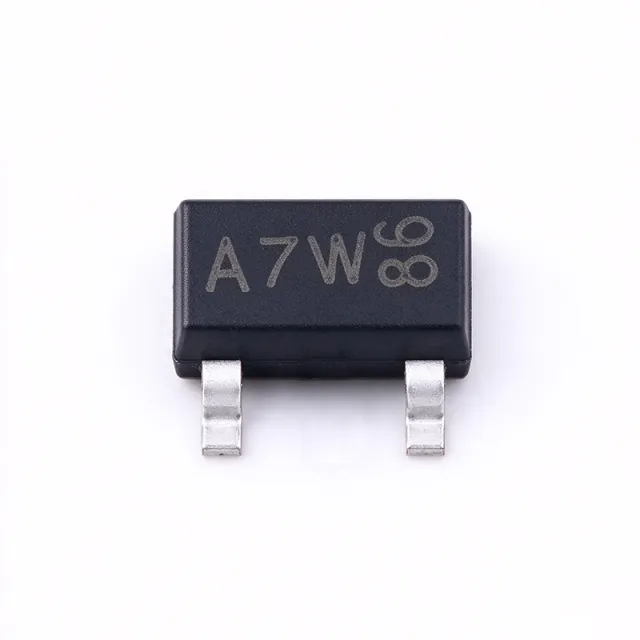
BAV99 - 70V 215mA Dual Switching Diode SOT-23 | Nexperia
The Nexperia BAV99 is a high-speed dual switching diode array containing two diodes connected in series, rated for a continuous reverse voltage of 70 V (100 V on several second sources), a continuous forward current of 215 mA, and a reverse recovery time of 4 ns maximum, housed in the small SOT23 (TO-236AB) surface-mount plastic package. A switching diode is a small-signal semiconductor diode optimized for very fast transition between conducting (forward-biased) and blocking (reverse-biased) states. Within the component hierarchy, the BAV99 belongs to the family: switching diode -> small-signal diode -> diode -> discrete semiconductor. Fast reverse recovery is the defining property: ordinary rectifier diodes store charge when conducting and need microseconds to turn off, while switching diodes like the BAV99 recover in nanoseconds, which is essential for digital logic clamping, signal steering, and high-frequency rectification. Key features of the BAV99 include the dual series-pair configuration in a single 3-pin package (saving board space versus two discrete diodes), a fast reverse recovery time of 4 ns, low forward voltage, a 350 mW power dissipation rating, and lead-free RoHS-compliant construction. Second sources from Diodes Incorporated, MCC, onsemi, Diotec, Infineon, and Nexperia make the part universally available with matched footprints. Architecturally, the BAV99 integrates two planar-technology diodes with their junction (cathode of D1 tied to anode of D2) brought out on pin 2, so the part can be used as two series diodes, as a clamp pair, or with only one diode active. The planar process yields low capacitance and low leakage, preserving signal integrity in high-speed nodes. Typical applications include high-speed logic clamping and protection on data lines, freewheeling and snubber functions in low-power switch-mode supplies, signal demodulation and detection in RF front ends, polarity protection in battery-powered portable equipment, and level shifting between logic domains. When designing with the BAV99, respect the 215 mA average current limit and the 350 mW package dissipation; at higher duty cycles, derate linearly above 25 C ambient. Keep PCB traces short at the clamped node to limit parasitic inductance that degrades the effective 4 ns switching performance. This page synthesizes distributor pricing, verified drop-in cross-references, pinout data, and practical design notes not found in any single manufacturer datasheet, making it a complete procurement and engineering reference for the BAV99. Prices shown are as of 2026-09-14.

BAV99W - Dual Series Switching Diode 70V SOT-323 | Nexperia
The Nexperia BAV99W is a high-speed dual switching diode array containing two silicon switching diodes connected in series, encapsulated in the very small SOT323 (SC-70) surface-mount plastic package, with a reverse voltage of 70 V, a forward current capability of 215 mA per diode (per Nexperia family ratings), and a maximum switching speed of 4 ns. A switching diode is a small-signal diode optimized for fast transitions between conducting and non-conducting states rather than for power rectification. Within the component hierarchy, it belongs to the discrete semiconductor -> diode -> small-signal switching diode -> diode array category. Diode arrays such as the BAV99W integrate two or more diodes in one package to save board space and guarantee matched electrical characteristics in clamping, steering, and logic applications. Key features include the very small SOT323/SC-70 SMD footprint (approximately 60% smaller than the SOT-23 BAV99), a high switching speed of max. 4 ns for high-frequency signal handling, planar epitaxial silicon technology for low leakage and stable parameters, and a series pair configuration ideal for double-clamping and reverse-polarity networks. The planar technology used in the BAV99W delivers low junction capacitance and low reverse recovery behavior, allowing operation in logic-level and RF-adjacent switching tasks. The series connection of the two diodes inside the 3-lead package gives designers a clamping pair sharing a common node without routing two discrete parts. Typical applications include high-speed logic clamping and board protection, signal demodulation and detection circuits, reverse-polarity protection of sensor or communication lines, and general-purpose switching in consumer, industrial, and automotive-adjacent electronics. When laying out the PCB, keep traces to the common series node short to minimize parasitic inductance, and observe the derating curve above 25 C ambient per the manufacturer datasheet. This page synthesizes distributor pricing, cross-brand drop-in alternatives, and practical design notes not found in the manufacturer datasheet.

BAW100G BK PBFREE - Dual 75V 250mA Switching Diode | Central Semiconductor
The Central Semiconductor BAW100G BK PBFREE is a dual high-speed silicon switching diode array consisting of two electrically isolated switching diodes rated for 75 V DC reverse voltage and 250 mA average forward current, housed in a 4-pin surface mount SOT-143 (TO-253-4 / TO-253AA) case. A diode array is an integrated package containing two or more discrete switching diodes in a single molded body. Diode arrays belong to the broader family of small-signal switching diodes, which sit within the discrete semiconductor hierarchy alongside rectifiers, Zener diodes, and other general-purpose diodes. The BAW100G is the lead-free (PBFREE) variant of the original BAW100 series, designed specifically for high-speed switching where fast recovery and low leakage are critical. Key features include electrically isolated dual-diode construction that eliminates crosstalk between channels, a 75 V reverse voltage rating suitable for 24 V industrial logic environments, a 250 mA (DC) forward current capability, and fast switching characteristics optimized for signal clamping, gating, and steering. The PBFREE suffix guarantees lead-free, RoHS-aligned construction for modern assembly processes. The device's epoxy-molded SOT-143 package provides a compact footprint with four leads, enabling high-density placement on reflow-soldered PCBs. Each diode operates independently, allowing designers to use both channels in separate signal paths or configure them as a series pair or clamp network. Typical applications include high-speed digital logic switching, signal clamping and protection in data lines, polarity steering in low-power circuits, and general-purpose rectification in consumer, industrial, and communications equipment. Design consideration: the SOT-143 lead frame has an asymmetric larger lead; confirm orientation on the PCB footprint before reflow to avoid a rotated assembly. This page consolidates verified distributor data, lifecycle status from the manufacturer product discontinuation notice PDN01220, drop-in alternatives, and practical design notes not found in the standard datasheet.

BB135,115 - 30V UHF Varactor Diode SOD-323 | NXP
The NXP BB135 (orderable as BB135,115) is a single UHF variable capacitance diode (varactor) rated for 30 V reverse voltage, offering a low capacitance of approximately 2.1 pF at 28 V with a capacitance ratio of 10, fabricated in planar technology and housed in the very small SOD-323 plastic SMD package. A varactor diode (also called a variable capacitance diode, varicap, or tuning diode) is a semiconductor device operated under reverse bias whose junction capacitance varies predictably with the applied voltage. In the broader component hierarchy, it belongs to the diode family within discrete semiconductors, and it serves as the fundamental tuning element in voltage-controlled oscillators, RF filters, and electronically tuned resonant circuits. Instead of a mechanically variable capacitor, designers use a varactor plus a control voltage to sweep a resonant frequency. Key features of the BB135 include excellent capacitance-voltage linearity, which simplifies linear frequency tuning over wide ranges; a very small plastic SMD SOD-323 package that minimizes parasitic inductance and saves board area in dense RF layouts; a low series resistance that improves Q factor in tuned circuits; and a 30 V reverse-voltage rating that provides margin on high-swing tuning nodes. The matched type BB134 offers the same specification, allowing pair usage where two closely matched tuning diodes are needed. Technically, the BB135 uses planar junction technology, which yields tight capacitance distribution and stable behavior over temperature - critical attributes for UHF applications where picofarad-level differences directly shift the oscillation frequency. Its low capacitance makes it especially suitable for the higher end of the UHF band, where larger-capacitance varactors would excessively load the resonant tank. Typical applications include electronic tuning in UHF television tuners, radio upconversion concepts, and VCO tuning in RF front ends. It also fits antenna matching networks and tunable filters in communication receivers. Design consideration: keep the tuning-voltage source high-impedance and well decoupled, since any noise on the reverse bias modulates the oscillation frequency; series feed resistors of tens of kilo-ohms are typical to isolate the tank from the control loop. This page synthesizes distributor pricing, drop-in alternatives including the matched BB134 and second-source equivalents, and practical RF design notes not consolidated in the manufacturer datasheet.
BB135,115 - 30V UHF Varactor Diode SOD-323 | NXP Semiconductors
The NXP Semiconductors BB135,115 is a UHF variable capacitance diode (varactor) rated for 30 V reverse voltage, with a C28 capacitance of 1.9 pF and a tuning capacitance ratio of 10, fabricated in planar technology and encapsulated in the very small SOD-323 (SC-76) plastic SMD package. A varactor diode, also called a variable capacitance diode or varicap, is a semiconductor device operated in reverse bias that exploits the voltage-dependent depletion-layer capacitance of a PN junction. In the hierarchy of discrete semiconductors, it belongs to the diode family alongside rectifiers, Zeners, and switching diodes, but serves as a voltage-controlled passive element rather than a rectifier. Varactors are the core tuning element of LC voltage-controlled oscillators (VCOs), RF filters, and antenna tuning networks. Key features of the BB135 include excellent capacitance-voltage linearity for predictable tuning slopes, a very small plastic SMD footprint that minimizes parasitic inductance in UHF circuits, and low series resistance, which preserves oscillator Q and phase noise performance. The 30 V repetitive peak reverse voltage (VRRM) provides generous tuning-voltage headroom above the typical 0-28 V tuner rails. Technically, the BB135 is built on NXP planar junction technology with a hyperabrupt doping profile, delivering the high capacitance ratio of 10 between low and high reverse bias. The low series resistance directly reduces equivalent series resistance (ESR) in the resonant tank, supporting low phase-noise VCO design. Forward current capability is 20 mA average, and the device operates from -55C to +125C. Typical applications include electronic tuning in UHF television tuners, radio up-conversion concepts, and VCO tuning in RF front ends, where the low parasitics of the SOD-323 package and smooth capacitance slope are essential. Design consideration: keep series tuning resistors low and verify the maximum tuning voltage stays below the 30 V VRRM rating with margin; leakage current at high temperature should be checked against oscillator pulling. This page synthesizes distributor pricing, drop-in alternatives, and practical design notes not found in the manufacturer datasheet.
BB135,135 - 30V UHF Varactor Diode, 2.1pF | NXP Semiconductors
The NXP Semiconductors BB135,135 is a UHF variable capacitance diode (varactor) with a 30 V reverse voltage rating, 2.1 pF capacitance at VR = 28 V (1 MHz), and a low series resistance, housed in the SOD-323 (SC-76) small-outline surface-mount plastic package. The suffix ,135 indicates NXP reel packaging (Tape 13, reel 11 inch). A varactor diode is a special type of diode operated in reverse bias, where the depletion-layer capacitance varies predictably with applied reverse voltage. In the broader component hierarchy, a varactor belongs to the variable-capacitance diode family within RF discrete semiconductors, and it effectively replaces a mechanically tuned variable capacitor in voltage-controlled tuning circuits. Key features of the BB135 include excellent capacitance-voltage linearity, a capacitance ratio of approximately 10 between low and high reverse voltage, low series resistance for high Q at UHF frequencies, and a very small plastic SMD package. These characteristics make it suitable for frequency tuning where a wide tuning range and stable tracking are required. The BB135 is fabricated in planar technology, which yields tight capacitance matching and low leakage. According to the NXP datasheet, the matched type BB134 has the same specification, and both devices target electronic tuning in UHF television tuners, radio upconversion concepts, and voltage-controlled oscillators (VCOs). The 30 V cathode rating allows tuning voltages spanning most of the useful capacitance-ratio range. Typical applications include UHF tuner local-oscillator tuning, AFC and VCO tank tuning, and RF upconversion stages where a voltage-controlled capacitor adjusts resonant frequency. Its low capacitance (about 2 pF at high bias) suits low-frequency-to-UHF resonant tanks without excessively loading the circuit. Design consideration: because the diode is reverse-biased at all times, keep reverse leakage low and avoid forward conduction during large RF swings by ensuring the RF voltage across the diode does not exceed the DC reverse bias at the minimum-bias point. This page synthesizes distributor pricing, drop-in alternative guidance, and practical design notes not found in the manufacturer datasheet, giving engineers a complete selection view for this EOL varactor.
BB145B - Low-Voltage Varactor Diode 2.75pF SOD-523 | NXP
The NXP Semiconductors BB145B is a low-voltage variable capacitance diode (varactor) manufactured in planar technology and housed in the ultra-small SOD-523 (SC-79) plastic SMD package. Its headline parameters are a capacitance C4 of 2.75 pF measured at 4 V, a capacitance ratio of 2.4, low series resistance, and a 6 V reverse-voltage class, making it a tuning element for low-voltage RF designs. A varactor diode, also called a varicap or tuning diode, is a diode operated in reverse bias so that its depletion-region capacitance varies predictably with the applied voltage. Within the component hierarchy it belongs to the discrete semiconductor family, under diodes, alongside switching, rectifier, and Zener types. Varactors are the standard capacitance-tuning element in voltage controlled oscillators (VCOs), RF filters, and tunable matching networks, replacing mechanically variable capacitors in nearly all modern RF circuitry. Key features of the BB145B include the ultra-small SOD-523 footprint that minimizes board area and parasitic inductance, a well-defined C4 of 2.75 pF with ratio 2.4 for predictable tuning slope, and low series resistance which directly improves loaded Q factor in oscillator tank circuits. The planar process yields tight capacitance distribution and stable behavior over temperature. Technically, the tuning voltage modulates the depletion width of the planar junction, continuously varying junction capacitance between maximum and minimum values set by the doping profile. Because the device is specified for low-voltage operation, it suits portable and battery-powered RF front ends where tuning rails are limited to a few volts. The operating temperature range spans -55 C to +150 C per distributor data. Typical applications are voltage controlled oscillators for wireless transceivers, tunable LC filters, and capacitance trimming in RF matching circuits for products operating in VHF and UHF bands. In design, place the varactor directly at the tank inductor with short traces, DC-block it from the resonant circuit with a capacitor, and feed the tuning voltage through a high-value resistor to preserve Q; remember that tuning-voltage noise appears directly as phase noise. This page synthesizes distributor pricing, drop-in alternatives, and practical design notes not found in the manufacturer datasheet.
BB145B,115 - Low-Voltage Varactor 2.75pF SOD-523 | NXP
The NXP Semiconductors BB145B,115 is a low-voltage variable capacitance (varactor) diode offering a nominal capacitance of 2.75 pF at 4 V with a capacitance ratio of 2.4, housed in an ultra-small surface-mount SOD-523 (SC-79) package. A varactor diode, also called a varicap or tuning diode, is a semiconductor device operated in reverse bias so that its junction capacitance varies with the applied voltage. Within the voltage regulator and tuning diode hierarchy, varactors serve as voltage-controlled capacitors in resonant LC tanks, enabling electronic tuning without mechanical components. They are fundamental building blocks of voltage-controlled oscillators (VCOs), RF filters, and phase-locked loop (PLL) tuning circuits. Key features of the BB145B include a maximum capacitance (Cd) of 7.2 pF at low reverse voltage, a low series resistance that preserves Q factor in resonant tanks, and operation at reverse voltages up to 8 V (VRRM), making it well matched to 3.3 V and 5 V low-voltage tuning systems. The planar technology construction provides stable, repeatable capacitance-versus-voltage characteristics across production lots. The device sustains an average forward current of 20 mA and operates over an industrial temperature range of -55C to +150C, allowing use in outdoor wireless modules and automotive-adjacent environments. Its tiny SOD-523 footprint (approximately 1.2 x 0.8 mm body) supports dense RF layouts on modern PCBs. Typical applications include voltage-controlled oscillators for RF transceivers, LC tank tuning in wireless receivers, electronically tuned filters, and capacitance trimming in matching networks. According to the NXP product page, the part ships on 7-inch reels with a minimum package quantity of 3000. Design consideration: because tuning range is set by the VRRM limit of 8 V, ensure the tuning voltage never exceeds this rating; place the varactor in the tank with proper DC blocking and high-value series resistors to isolate RF from the tuning source. This page synthesizes distributor pricing, drop-in alternatives, and practical RF design notes not found in the manufacturer datasheet.

BB202 - Low-Voltage Varactor Diode 30.5pF | NXP | FM VCO Tuning
The NXP Semiconductors BB202 (sold as BB202,115 at DigiKey) is a low-voltage variable capacitance diode (varactor) offering 30.5 pF capacitance at 0.2 V (C0.2) and 9.5 pF at 2.3 V (C2.3), with a minimum capacitance ratio of 2.5, in the ultra-small SOD523 surface-mount plastic package (SC-79, 2-pin). A varactor diode, also called a variable capacitance diode or varicap, is a semiconductor device whose junction capacitance varies with the applied reverse-bias voltage. Within the diode family hierarchy (diode -> varactor -> voltage-controlled capacitance element), varactors act as electrically tunable capacitors in LC resonant circuits, replacing mechanical tuning capacitors in radio-frequency systems. They are a core building block of voltage-controlled oscillators (VCOs), PLL frequency synthesizers, and RF tuners. Key features of the BB202 include a very steep capacitance-to-voltage (C/V) curve, which delivers large frequency deviation per volt of tuning voltage in VCO designs; a C0.2 to C2.3 ratio of at least 2.5 for wide tuning range; very low series resistance, which preserves resonant circuit Q factor and minimizes phase noise contribution; and planar technology fabrication for stable, repeatable capacitance characteristics. The steep C/V curve combined with low series resistance makes the BB202 particularly suited to battery-powered FM radio electronic tuning, where tuning voltage rails are limited to a few volts. Because the capacitance swing is concentrated at low reverse voltages, designers can cover the FM band (87.5 to 108 MHz) with tuning voltages below 3 V, simplifying power-supply design in portable receivers and low-voltage RF front ends. Typical applications include electronic tuning in FM radio receivers, voltage-controlled oscillators in PLL synthesizers, and low-voltage RF tunable filter circuits. Design consideration: bias the cathode with a clean, RF-decoupled tuning voltage; any ripple or noise on the tuning line modulates the VCO frequency directly, so use RC filtering and separate the bias network from the resonant tank. This page synthesizes verified datasheet parameters, drop-in alternative analysis, and practical design notes not consolidated in the manufacturer short datasheet.
BB202,135 - 6V Low-Voltage Varactor Diode SOD-523 | NXP
The NXP Semiconductors BB202,135 is a low-voltage variable capacitance diode (varactor) rated for a maximum peak reverse voltage of 6 V, delivering a capacitance of 11.2 pF at 2.3 V reverse bias (measured at 1 MHz) with a capacitance ratio of 2.5 (C0.2/C2.3), housed in the ultra-small SOD-523 (SC-79) surface-mount plastic package. A varactor diode, also called a variable capacitance diode or varicap, is a semiconductor device that exploits the voltage-dependent depletion-layer capacitance of a reverse-biased PN junction. Within the broader diode family, varactors function as voltage-controlled capacitors, and are key passive-to-active tuning elements in RF front ends, voltage-controlled oscillators (VCOs), and tunable LC filter circuits in modern radio and communication systems. The BB202,135 is fabricated in planar technology, which gives it very consistent capacitance-versus-voltage characteristics and a very low series inductance and resistance, important for high-Q resonant tank circuits. Its headline differentiator is its low-voltage operation: the tuning characteristic is fully exploited within a 0.2 V to 2.3 V control range, making it a natural match for battery-powered portable equipment and low-voltage PLL loops where tuning voltage rails of only 3 V or less are available. The capacitance ratio of 2.5 (C0.2/C2.3) means the junction capacitance drops from roughly 28 pF at 0.2 V to 11.2 pF at 2.3 V, providing a useful tuning span for LC tanks in the VHF range. The SOD-523 package minimizes parasitic inductance, supporting use well into the hundreds of MHz. Typical applications include VHF tuner circuits, portable radio receivers, voltage-controlled oscillators in wireless transceivers, and low-voltage electronic tuning in consumer communication products. When designing with this device, keep the tuning voltage well filtered to avoid phase noise degradation, and account for the 6 V peak reverse voltage limit when sizing bias networks. This page synthesizes distributor pricing, drop-in alternatives, and practical design notes not found in the manufacturer datasheet.
BB208 - Low Voltage Varactor Diode 10V 19.9pF | NXP
The NXP BB208 is a low-voltage variable-capacitance (varactor) tuning diode specified at 19.9 pF at 3 V reverse bias with a 10 V reverse voltage rating, supplied in the compact 2-pin SOD-523 surface-mount package (part number BB208-02). Varactor diodes exploit the voltage-dependent depletion-layer capacitance of a reverse-biased p-n junction, and the BB208 family is optimized for low-voltage RF tuning applications such as electronic tuning of LC resonant circuits, VCOs, and RF filters in portable and battery-powered equipment. A varactor diode (also called a tuning diode, varicap, or voltage-variable capacitor) is a semiconductor device that functions as an electrically controllable capacitance. In the signal-chain hierarchy it sits among discrete RF semiconductors, alongside RF diodes and switching diodes, and is a fundamental building block of voltage-controlled oscillators, tuning networks, and phase-locked loop (PLL) frequency-control circuits. Key features of the BB208 family include its low reverse capacitance (19.9 pF nominal at 3 V per distributor/manufacturer data), a 10 V reverse-voltage rating suitable for battery-powered designs, and the small SOD-523 footprint that saves board area versus larger SOD-323 or SOT-23 varactors. The low tuning voltage requirement makes it well matched to 3.3 V and 5 V systems without dedicated high-voltage bias rails. The device uses a junction profile engineered to deliver a useful capacitance-voltage slope, providing tuning ratio between low and high reverse-bias operating points. As a two-terminal passive-semiconductor element it adds no switching noise of its own and draws only the tiny reverse leakage current of the junction, simplifying bias-network design in VCO and tuned-amplifier circuits. Typical applications include LC tank tuning in RF VCOs for receivers and transmitters, antenna matching and tunable filter networks, RF ID and short-range wireless front ends, and test-and-measurement tuned circuits where a compact, low-voltage tuning element is required. A key design consideration is the bias network: a high-value series resistor (typically 10 kOhm or higher) between the tuning voltage source and the diode prevents loading of the resonant circuit, and the tuning voltage must always remain reverse-biasing relative to the RF swing across the diode. This page synthesizes verified distributor data, family cross-references within the NXP BB208 series, and practical varactor bias-design notes not found in a single manufacturer datasheet.