STM32F103T6U7A
STM32F103T6U7A - 72MHz Cortex-M3 MCU | STMicroelectronics
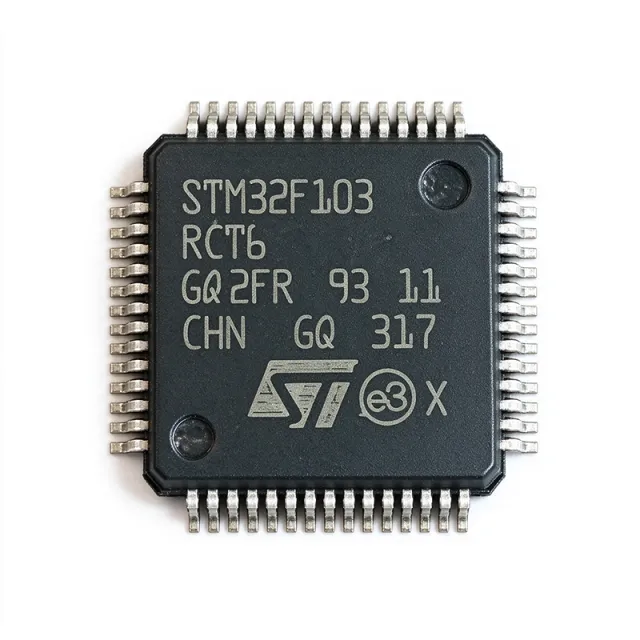
STMicroelectronics STM32F103T6U7A is a 32-bit ARM Cortex-M3 microcontroller with a 72 MHz operating frequency, 32 KB of flash memory, and a 36-pin VFQFPN surface-mount package measuring 6 x 6 mm. It belongs to the STM32F1 performance-line family and combines a high-frequency RISC core with embedded Flash, SRAM, USB, CAN, timers, ADCs, and communication peripherals in one compact device.
A microcontroller is a programmable semiconductor that integrates a processor core, memory, peripherals, and interface circuitry into a single package. The STM32F103 product family sits within the broader embedded-control hierarchy of ARM Cortex-M3 devices, general-purpose microcontrollers, and integrated circuits. Its combination of 72 MHz processing, USB, CAN, and mixed-signal peripherals makes it suitable for control, communications, and data-acquisition equipment where a small package and broad peripheral integration are important.
The supplied manufacturer and distributor information identifies the STM32F103T6U7A as a 72 MHz Cortex-M3 device with 32 KB flash, 37 I/O ports, USB, CAN, six timers, two ADCs, and six communication interfaces. A 2.0 V to 3.6 V supply range allows operation from standard low-voltage rails, while the 36-VFQFPN package supports compact surface-mount designs. These characteristics suit industrial controllers, USB-connected instruments, CAN nodes, and embedded automation products.
The ARM Cortex-M3 core provides a 32-bit RISC architecture with an operating frequency of 72 MHz. The STM32F1 family also includes dedicated resources for USB and CAN communication, multiple timer channels, and two analog-to-digital converters, reducing the need for external peripheral components. The 37 reported I/O ports provide connectivity for sensors, actuators, human-interface controls, and communication transceivers, although engineers must confirm the exact exposed-pin allocation before finalizing a PCB.
Typical STM32F103T6U7A applications include USB data acquisition, CAN-connected industrial equipment, motor and motion control, instrumentation, and compact embedded controllers. In a CAN node, the MCU can process sensor information and manage protocol traffic while timers provide timing functions. In a USB instrument, the integrated USB interface can reduce external connectivity requirements, while the two ADCs support analog measurement channels.
A critical design consideration is PCB footprint validation. The verified distributor description identifies a 36-pin VFQFPN in a 6 x 6 mm format with an exposed pad, but the supplied data does not provide the complete numbered pin map or pad dimensions. Confirm the exact land pattern, exposed-pad geometry, pin names, and solder-mask requirements against the official STMicroelectronics package documentation before fabrication.
This product record combines manufacturer positioning, distributor specifications, lifecycle information, package data, sourcing links, alternative-device guidance, and application-focused engineering notes. That synthesis adds practical context beyond a distributor listing while clearly distinguishing verified facts from parameters that still require confirmation from the manufacturer datasheet.
RFQ
צור קשר