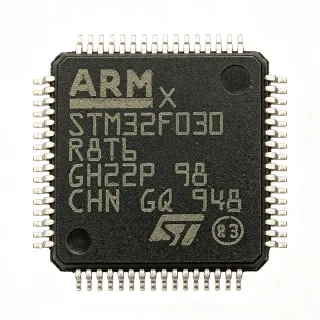
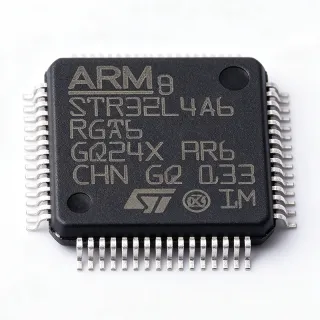
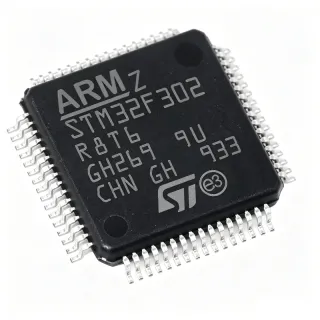
STM32L073RZT6 - ARM Cortex-M0+ 192KB Flash MCU | STMicroelectronics
MPN: STM32L073RZT6 ✓ AktifSTM32L073RZT6 Ringkasan
What is a microcontroller? A microcontroller (MCU) is a compact integrated circuit designed to govern a specific operation in an embedded system. It contains a processor core, memory (Flash and RAM), and programmable input/output peripherals on a single chip. Microcontrollers are the brain of countless electronic devices, from automotive engine control units to IoT sensors and medical devices. The STM32L0 series is part of the broader STM32 family, which is a leading 32-bit MCU platform based on ARM Cortex cores. The STM32L0 series specifically targets ultra-low-power applications, extending battery life in portable and energy-harvesting devices.
Key features of the STM32L073RZT6 include a 12-bit ADC with hardware oversampling (up to 16-bit resolution), two 12-bit DACs, two comparators, an operational amplifier, a USB 2.0 full-speed device controller, and multiple communication interfaces: two I2C, two SPI, two USART, and one LPUART. It also integrates a real-time clock (RTC) with calendar and alarm functions, a true random number generator (RNG), and a CRC calculation unit. The device supports a wide range of timers, including one 16-bit advanced-control timer, several 16-bit general-purpose timers, and a low-power timer.
The STM32L073RZT6 is built on STMicroelectronics' ultra-low-power technology, achieving a typical current consumption of 0.29 µA in Standby mode with RTC, and 3.4 µA in Stop mode with RTC. The device also features a flexible power management with a built-in DC-DC converter option, allowing further power savings. The microcontroller is supported by the STM32CubeL0 software package, which includes HAL drivers, middleware, and examples, enabling rapid development.
Typical applications include battery-powered devices, IoT sensors, smart meters, medical devices, and portable consumer electronics. The rich analog peripherals and low-power modes make it ideal for sensor hubs and data acquisition systems. The USB interface enables direct connectivity to hosts for data logging or firmware updates.
When designing with this device, pay attention to the power supply decoupling: place a 100nF capacitor close to each VDD pin and a 4.7µF capacitor on the main VDD rail. For low-power operation, configure unused GPIOs as analog inputs to avoid leakage currents. The device supports in-application programming (IAP) via the bootloader in system memory, facilitating firmware updates over USB or UART.
Alternatif penggantian untuk STM32L073RZT6 — paket yang sama, pin-pada-pin kompatibel. Bagian paket yang berbeda memerlukan kerja ulang PCB diabaikan.
Variasi di dalam seri ini
Model-series yang sama yang kompatibel dengan penggantian STM32L073RZT6 (sama faktor bentuk dan footprint) — berbeda di dalam Package, Timers, ADC, DAC, Flash Memory.
STM32L073RZT6TR
✅ Drop-In📋 Alternatif referensi (tidak dalam katalog)
STM32L073RZH6
✅ Drop-In📋 Alternatif referensi (tidak dalam katalog)
STM32L072RZT6
✅ Drop-In📋 Alternatif referensi (tidak dalam katalog)
STM32L071RZT6
✅ Drop-In ⚠️ Spesifikasi Tidak Disahkan📋 Alternatif referensi (tidak dalam katalog)
STM32L073RBT6
✅ Drop-In ⚠️ Spesifikasi Tidak DisahkanKontak untuk harga
Lihat Datasheet →STM32L073RZT6 Rating Maksimal & Karakteristik Listrik
| Core | ARM Cortex-M0+ |
| Max Frequency | 32 MHz |
| Flash Memory | 192 KB |
| SRAM | 20 KB |
| Tegangan Pemuat | 1.8 V to 3.6 V |
| Paket | LQFP-64 (10x10 mm) |
| GPIO Pins | 51 |
| ADC | 1x 12-bit, 16 channels, with hardware oversampling |
| DAC | 2x 12-bit |
| Comparators | 2 |
| Operational Amplifier | 1 |
| USB | USB 2.0 Full-Speed Device |
| I2C | 2 |
| SPI | 2 |
| USART | 2 |
| LPUART | 1 |
| Timers | 1x 16-bit advanced, 5x 16-bit general purpose, 1x low-power |
| RTC | Yes, with calendar and alarms |
| RNG | True random number generator |
| CRC | Yes |
| Standby Current | 0.29 µA (with RTC) |
| Stop Current | 3.4 µA (with RTC) |
| Suhu Kerja | -40°C to +85°C |
| RoHS | Compliant |
Konfigurasi Pin STM32L073RZT6
| Pin produk 1 | VBAT — Backup battery supply for RTC and backup registers |
| Pin produk 2 | PC13 — GPIO or RTC tamper/calendar output |
| Pin produk 3 | PC14 — GPIO or OSC32_IN |
| Pin produk 4 | PC15 — GPIO or OSC32_OUT |
| Pin produk 5 | PF0 — GPIO or OSC_IN |
| Pin produk 6 | PF1 — GPIO or OSC_OUT |
| Pin produk 7 | NRST — Reset (active low) |
| Pin produk 8 | VDD — Digital power supply |
| Pin produk 9 | VSS — Ground |
| Pin produk 10 | VDDA — Analog power supply |
| Pin produk 11 | PA0 — GPIO/ADC_IN0/WKUP1 |
| Pin produk 12 | PA1 — GPIO/ADC_IN1 |
| Pin produk 13 | PA2 — GPIO/ADC_IN2/USART2_TX |
| Pin produk 14 | PA3 — GPIO/ADC_IN3/USART2_RX |
| Pin produk 15 | PA4 — GPIO/ADC_IN4/DAC_OUT1 |
| Pin produk 16 | PA5 — GPIO/ADC_IN5/DAC_OUT2 |
| Pin produk 17 | PA6 — GPIO/ADC_IN6/SPI1_MISO |
| Pin produk 18 | PA7 — GPIO/ADC_IN7/SPI1_MOSI |
| Pin produk 19 | PB0 — GPIO/ADC_IN8 |
| Pin produk 20 | PB1 — GPIO/ADC_IN9 |
| Pin produk 21 | PB2 — GPIO/BOOT1 |
| Pin produk 22 | PB10 — GPIO/I2C2_SCL/USART3_TX |
| Pin produk 23 | PB11 — GPIO/I2C2_SDA/USART3_RX |
| Pin produk 24 | VSS — Ground |
| Pin produk 25 | VDD — Digital power supply |
| Pin produk 26 | PB12 — GPIO/SPI2_NSS |
| Pin produk 27 | PB13 — GPIO/SPI2_SCK |
| Pin produk 28 | PB14 — GPIO/SPI2_MISO |
| Pin produk 29 | PB15 — GPIO/SPI2_MOSI |
| Pin produk 30 | PC6 — GPIO/USART6_TX |
| Pin produk 31 | PC7 — GPIO/USART6_RX |
| Pin produk 32 | PC8 — GPIO |
| Pin produk 33 | PC9 — GPIO |
| Pin produk 34 | PA8 — GPIO/USB_DP |
| Pin produk 35 | PA9 — GPIO/USB_DM |
| Pin produk 36 | PA10 — GPIO/USART1_RX |
| Pin produk 37 | PA11 — GPIO/USART1_TX |
| Pin produk 38 | PA12 — GPIO |
| Pin produk 39 | PA13 — GPIO/SWDIO |
| Pin produk 40 | PA14 — GPIO/SWCLK |
| Pin produk 41 | PA15 — GPIO/SPI1_NSS |
| Pin produk 42 | PB3 — GPIO/SPI1_SCK |
| Pin produk 43 | PB4 — GPIO/SPI1_MISO |
| Pin produk 44 | PB5 — GPIO/SPI1_MOSI |
| Pin produk 45 | PB6 — GPIO/I2C1_SCL |
| Pin produk 46 | PB7 — GPIO/I2C1_SDA |
| Pin produk 47 | BOOT0 — Boot mode selection |
| Pin produk 48 | PB8 — GPIO/I2C1_SCL |
| Pin produk 49 | PB9 — GPIO/I2C1_SDA |
| Pin produk 50 | VSS — Ground |
| Pin produk 51 | VDD — Digital power supply |
| Pin produk 52 | PC0 — GPIO/ADC_IN10 |
| Pin produk 53 | PC1 — GPIO/ADC_IN11 |
| Pin produk 54 | PC2 — GPIO/ADC_IN12 |
| Pin produk 55 | PC3 — GPIO/ADC_IN13 |
| Pin produk 56 | PC4 — GPIO/ADC_IN14 |
| Pin produk 57 | PC5 — GPIO/ADC_IN15 |
| Pin produk 58 | PB8 — GPIO/I2C1_SCL |
| Pin produk 59 | PB9 — GPIO/I2C1_SDA |
| Pin produk 60 | PD0 — GPIO |
| Pin produk 61 | PD1 — GPIO |
| Pin produk 62 | PD2 — GPIO |
| Pin produk 63 | VSS — Ground |
| Pin produk 64 | VDD — Digital power supply |
Aplikasi Umum
STM32L073RZT6 cocok untuk 6 aplikasis: Battery-Powered IoT Sensors, Smart Meters, Medical Devices, Industrial Control, Wearable Electronics, Smart Home Devices.
Battery-Powered IoT Sensors
The STM32L073RZT6 is ideal for battery-powered IoT sensors due to its ultra-low-power modes (0.29 µA standby with RTC) and rich analog peripherals. In a typical application, the MCU sleeps for most of the time, waking periodically to read sensors via the 12-bit ADC, process data, and transmit via LPUART or I2C to a wireless module. The 192KB Flash allows storing calibration data and communication protocols. The wide supply voltage range (1.8V-3.6V) enables direct operation from a coin cell or two AA batteries. The RTC can wake the device at scheduled intervals, and the low-power timer can be used for event-driven wakeups. Compared to higher-power MCUs, the STM32L0 extends battery life from months to years, making it a top choice for smart agriculture, environmental monitoring, and asset tracking.
Direkomendasikan
Smart Meters
Smart meters require accurate measurement, low power, and reliable communication. The STM32L073RZT6's 12-bit ADC with hardware oversampling (up to 16-bit) enables precise current and voltage sensing. The multiple timers can generate PWM for metering pulse outputs. The LPUART and USART interfaces connect to PLC modems or RF modules for data transmission. The RTC maintains time-of-use tariffs, and the low-power modes ensure the meter operates for years on a battery or energy harvesting. The CRC unit ensures data integrity during communication. The device's wide operating temperature range (-40°C to +85°C) suits outdoor installations. With 192KB Flash, it can store metering data and firmware updates. The STM32L0 series is widely used in smart gas, water, and electricity meters due to its balance of performance and power efficiency.
Direkomendasikan
Medical Devices
In portable medical devices like glucose meters, pulse oximeters, and wearable health monitors, the STM32L073RZT6 provides the necessary processing power and analog integration. The op-amp and comparators can condition biosignals, while the ADC digitizes them. The USB interface allows data transfer to a PC or smartphone for analysis. The low-power modes are critical for battery-operated devices that need to last through many uses. The RNG can be used for secure patient data encryption. The device's small LQFP64 package fits compact PCBs. The STM32CubeL0 software package includes middleware for USB and various sensors, accelerating development. The wide supply voltage range accommodates different battery chemistries. The device's reliability and long-term availability make it suitable for medical applications requiring regulatory compliance.
Direkomendasikan
Industrial Control
The STM32L073RZT6 can be used in industrial control systems for monitoring and control tasks. Its multiple timers can generate PWM for motor control or drive LEDs. The ADC and comparators can monitor analog signals from sensors. The USART and SPI interfaces connect to industrial protocols like Modbus or CAN (via external transceiver). The device's wide temperature range and robust design make it suitable for factory automation. The low-power modes are useful for battery-backed systems or energy-harvesting nodes. The CRC unit ensures data integrity in communication. The 192KB Flash allows storing complex control algorithms. The STM32L0 series is often used in PLCs, remote I/O, and process control equipment where low power and reliability are essential.
Direkomendasikan
Wearable Electronics
Wearable devices like fitness trackers and smartwatches demand ultra-low power and small size. The STM32L073RZT6's 0.29 µA standby current extends battery life between charges. The device can interface with accelerometers, heart rate sensors, and displays via I2C or SPI. The op-amp and ADC can process analog sensor signals. The USB interface enables charging and data sync. The RTC tracks time and alarms for activity reminders. The device's small LQFP64 package (10x10mm) fits compact PCBs. The STM32CubeL0 provides BLE middleware (via external module) and sensor drivers. The wide supply voltage range supports Li-ion batteries. The device's low-power run mode allows continuous sensor sampling at reduced clock speeds, balancing performance and power.
Direkomendasikan
Smart Home Devices
Smart home devices such as thermostats, smart locks, and environmental monitors benefit from the STM32L073RZT6's low power and connectivity. The device can interface with temperature, humidity, and motion sensors via I2C or SPI. The USB interface allows configuration and firmware updates. The LPUART can connect to Wi-Fi or Zigbee modules for home automation. The RTC schedules events, and the low-power modes ensure the device responds quickly to user input while conserving energy. The 192KB Flash stores device profiles and user settings. The device's rich analog peripherals enable direct connection to analog sensors without external ADCs. The STM32L0 series is widely used in smart home hubs and end devices due to its balance of features and power efficiency.
Direkomendasikan
Ringkasan Produk Direkomendasikan
Data referensi engineering untuk STM32L073RZT6 — pembandingan, panduan desain, dan informasi konformitas.
Panduan Pemilihan
Pembandingan dengan Alternatif
| Parameter Umum | Produk Ini | STM32L073RZT6TR | STM32L073RZH6 | STM32L072RZT6 | STM32L071RZT6 | STM32L073RBT6 |
|---|---|---|---|---|---|---|
| Package | LQFP-64 | LQFP-64 | LQFP-64 | LQFP-64 | LQFP-64 | LQFP-64 |
| Brand | STMicroelectronics | STMicroelectronics | STMicroelectronics | STMicroelectronics | STMicroelectronics | STMicroelectronics |
| Core | ARM Cortex-M0+ | ARM Cortex-M0+ | ARM Cortex-M0+ | ARM Cortex-M0+ | ARM Cortex-M0+ | ARM Cortex-M0+ |
| Max Frequency | 32 MHz | 32 MHz | 32 MHz | 32 MHz | 32 MHz | 32 MHz |
| Flash Memory | 192 KB | 192 KB | 192 KB | 192 KB | 192 KB | 128 KB |
| SRAM | 20 KB | 20 KB | 20 KB | 20 KB | 20 KB | 20 KB |
| USB | Yes | Yes | Yes | Yes | No | Yes |
| RNG | Yes | Yes | Yes | No | No | Yes |
| CRC | Yes | Yes | Yes | No | No | Yes |
Diferensiator Kunci
- True random number generator (RNG) for security (vsSTM32L072RZT6)
- CRC unit for data integrity (vsSTM32L072RZT6)
- USB 2.0 full-speed device (vsSTM32L071RZT6)
Catatan Desain
For ultra-low-power operation, use the built-in DC-DC converter option to reduce current consumption in Run mode. Configure unused GPIOs as analog inputs to prevent leakage. In Standby mode, ensure all I/Os are set to a defined state to avoid floating inputs. Use the RTC with the LSE oscillator for accurate timekeeping with minimal power draw.
Place a 100nF decoupling capacitor close to each VDD pin and a 4.7µF capacitor on the main VDD rail. For the VDDA pin, use a 1µF capacitor and a ferrite bead to isolate analog noise. Ensure the ground plane is continuous under the MCU to minimize noise. For USB, route the D+ and D- traces as a differential pair with 90-ohm impedance.
When using the ADC, enable the internal voltage reference and use hardware oversampling to achieve higher resolution. Avoid exceeding the absolute maximum ratings on any pin. For firmware, use the STM32CubeL0 HAL library to simplify peripheral initialization. Remember to configure the clock tree correctly; the default HSI16 is sufficient for many applications, but for USB, the PLL must be configured to generate a 48 MHz clock.
Informasi Konformitas
RoHS compliant per STMicroelectronics product page. Not AEC-Q100 qualified; for automotive, consider STM32L0 series with AEC-Q100 option.