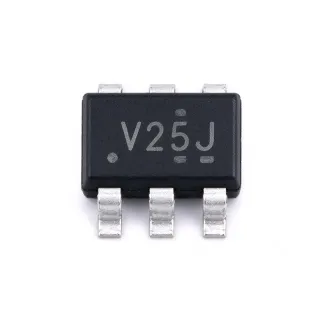
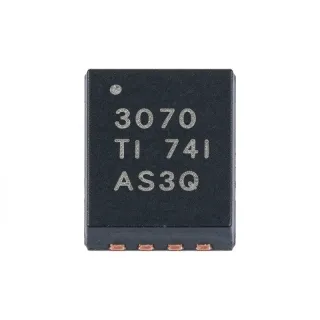
TCAN334GD - 3.3V 1Mbps CAN FD Transceiver | Texas Instruments
MPN: TCAN334GD ✓ AktifTCAN334GD Ringkasan
A CAN transceiver is a physical-layer interface IC that connects a host CAN controller to a differential CAN bus. It converts logic-level TXD and RXD signals into CANH and CANL bus signals and receives the differential bus voltage for the controller. The TCAN334GD belongs to the CAN transceiver hierarchy, where a CAN bus transceiver sits between a CAN controller or microcontroller and the high-speed CAN network.
The device provides a 1/1 transmitter-to-receiver configuration, 120 mV receiver hysteresis, and a 3.3-V operating supply. Its CAN FD designation indicates support for CAN Flexible Data Rate operation, while the listed 1 Mbps maximum data rate remains an important selection constraint. The 8-pin SOIC package is surface mountable and supports compact industrial, automotive-adjacent, and embedded network designs.
The TCAN334G family is associated with high-speed CAN physical-layer operation and is compatible with the ISO 11898 physical-layer standard as described by Texas Instruments. Additional timing parameters related to CAN FD loop-delay symmetry are specified for the TCAN330G, TCAN332G, TCAN334G, and TCAN337G variants, allowing designers to evaluate signal timing alongside controller and bus requirements.
Typical uses include industrial automation controllers, electric-vehicle subsystems, building-control gateways, robotic equipment, embedded diagnostic systems, and CAN-based sensor networks. The device is most appropriate where a 3.3-V host interface and a compact 8-pin surface-mount implementation are required without sacrificing the standardized high-speed CAN physical layer.
Designers should verify the complete pin mapping, transceiver mode behavior, bus fault handling, loop-delay timing, and external termination requirements against the manufacturer datasheet before layout release. CANH and CANL require correct differential routing, a 120-ohm termination at each physical bus end, common-mode margin analysis, and protection appropriate to the installation environment.
This page combines verified manufacturer and distributor information with same-package family alternatives, application guidance, engineering considerations, and a parameter-by-parameter comparison to support faster component selection and PCB planning.
Pilihan pengganti yang segera untuk TCAN334GD — sama paket, pin-pin kompatibel. Bahagian paket yang berbeza memerlukan kerja ulang PCB diasingkan.
Varietas dalam siri ini
Model serupa yang kompatibel dengan pengganti yang segera TCAN334GD (sama faktor bentuk dan kaki) — berbeza dalam Package, Product Type, Supply Voltage, Bus Interface, CAN Standard Compatibility.
TCAN332D
✅ Masuk Drop-InHubungi untuk harga
Lihat Datasheet →TCAN330D
✅ Masuk Drop-InHubungi untuk harga
Lihat Datasheet →TCAN337D
✅ Masuk Drop-InHubungi untuk harga
Lihat Datasheet →TCAN334D
✅ Masuk Drop-InHubungi untuk harga
Lihat Datasheet →TCAN334GD Spesifikasi
| Product Type | 3.3-V CAN FD transceiver |
| Protocol | CANbus |
| Number of Drivers | 1 |
| Number of Receivers | 1 |
| Supply Voltage Range | 3 V to 3.6 V |
| Maximum Data Rate | 1 Mbps |
| Receiver Hysteresis | 120 mV |
| Gambaran Suhu Operasi | -40 °C to 125 °C |
| Kemasan | 8-SOIC, 3.90 mm body width |
| Bilangan Pin | 8 |
| Jenis Pemasangan | Surface mount |
| Manufacturer | Texas Instruments |
Panduan Konfigurasi Pin TCAN334GD 8-soic, 3.90 mm body width
Konfigurasi pin untuk TCAN334GD (8-soic, 3.90 mm body width pakai). Penomeran pin, fungsi, dan garis bentuk koneksi ditakrifkan dalam dokumen pengeluar. Rujuk dokumen untuk kebentuk dan pedoman pengasman.

Tiada data garisan pin yang diperoleh untuk TCAN334GD.
Rujuk kepada lembaran data untuk konfigurasi pin penuh.
Aplikasi Biasa
TCAN334GD patut untuk 6 aplikasis: Industrial Automation Controllers, Vehicle Electronics and E-Control Modules, Building Control and HVAC Networks, Robotics and Motor-Control Systems, EV Charging and Battery Systems, Embedded Diagnostic and Sensor Gateways.
Industrial Automation Controllers
TCAN334GD fits industrial automation controllers that use 3.3-V logic and a high-speed CAN fieldbus. Its 3.0 V to 3.6 V supply range, 1 Mbps data rate, and 1/1 transmitter-receiver arrangement suit compact embedded control modules, sensor gateways, and remote I/O equipment. The CAN FD-capable TCAN334G family also provides timing information needed when controllers exchange larger payloads or operate with demanding bus timing. In a typical design, TXD and RXD connect to a host controller while CANH and CANL reach a terminated fieldbus. Engineers should still verify transient protection, isolation strategy, grounding, and exact control-pin behavior in the manufacturer datasheet before exposing the transceiver to industrial surge or ground-shift conditions.
Disebarkan
Vehicle Electronics and E-Control Modules
TCAN334GD can be used in vehicle electronic control modules where a 3.3-V controller communicates over a 1-Mbps CAN network. Its -40 °C to 125 °C rating supports the environmental range commonly encountered in automotive electronics, while the 8-SOIC package simplifies compact controller layouts. A CAN FD-capable physical layer can benefit systems moving diagnostic or control payloads beyond classical CAN frame limits. However, the verified data does not establish AEC-Q100 qualification for the standard TCAN334GD, and vehicle wiring introduces large transients and ground offsets. Production use therefore requires review of bus-fault protection, common-mode limits, ISO 11898 compliance, and the appropriate automotive qualification evidence.
Disebarkan
Building Control and HVAC Networks
TCAN334GD is applicable to building-control equipment that uses CAN for sensors, actuators, and decentralized room controllers. The 1 Mbps maximum rate provides sufficient bandwidth for typical supervisory control traffic, while the 3.3-V supply matches many modern embedded controllers. Designers can place the transceiver between TXD and RXD controller pins and a terminated CANH/CANL network, simplifying integration into gateways, variable-refrigerant controllers, and equipment-monitoring nodes. For long cable runs, the bus should be designed for proper 120-ohm termination, balanced routing, and controlled stub lengths. Surge, ground-offset, and ESD requirements vary by installation, so protective components and grounding should be selected based on the building-network environment rather than assumed from the transceiver package alone.
Disebarkan
Robotics and Motor-Control Systems
TCAN334GD supports compact robot controllers, motor drivers, and sensor-distribution modules that exchange commands and diagnostics over CAN. Its 8-pin SOIC format, 1/1 CAN driver-receiver configuration, and 1 Mbps maximum rate are appropriate for distributed robotic subsystems where wiring simplicity and deterministic communication matter. A controller such as a 3.3-V MCU can connect its TXD and RXD signals directly to the transceiver, while CANH and CANL carry the differential network traffic. CAN FD capability can be beneficial when motion commands, position feedback, or diagnostic records require more efficient payload transfer. Motor environments can expose the bus to large transients and ground shifts, so protection, isolated power, cable routing, and termination should be evaluated for each actuator and machine boundary.
Disebarkan
EV Charging and Battery Systems
TCAN334GD can form part of the CAN communication interface in battery-management, charging-control, or power-distribution equipment. The 3.3-V operating supply is compatible with many controller platforms, and the -40 °C to 125 °C range is useful in thermally variable equipment environments. CAN FD-capable timing can reduce the number of transfers needed for larger status or diagnostic records, while the 1 Mbps bus rate supports standard high-speed CAN networks. The transceiver should be placed close to the controller and separated from noisy switching stages by careful grounding and layout. Engineers must evaluate galvanic isolation, transient protection, bus fault voltage, and common-mode range because traction, charging, and battery systems can expose communications hardware to severe electrical transients not represented by the basic TCAN334GD specifications.
Disebarkan
Embedded Diagnostic and Sensor Gateways
TCAN334GD suits compact diagnostic adapters and CAN sensor gateways that bridge a 3.3-V host processor to an external vehicle or machine network. The one-transmitter, one-receiver arrangement is sufficient for a standard CAN physical layer, and the 1 Mbps rate matches common diagnostic and sensor networks. With CAN FD support identified for the TCAN334G family, gateways can transfer richer payload data when the connected controller and bus infrastructure support the corresponding timing. In implementation, place the transceiver near the connector and away from switching regulators, route CANH and CANL as a close differential pair, and provide termination at physical bus ends. EMI, ESD, isolation, and fault-recovery requirements should be tested against the connector environment and cable length.
Disebarkan
Ringkasan Produk Disebarkan
Data referensi kejuruteraan untuk TCAN334GD — perbandingan, panduan rancangan, dan maklumat kesediaan
Panduan Pilihan
Perbandingan dengan Gantian
| Parametr | Produk Ini | TCAN332D | TCAN330D | TCAN337D | TCAN334D |
|---|---|---|---|---|---|
| Brand | Texas Instruments | Texas Instruments | Texas Instruments | Texas Instruments | Texas Instruments |
| Package | 8-SOIC (D) | 8-SOIC (D) | 8-SOIC (D) | 8-SOIC (D) | 8-SOIC (D) |
| Supply Voltage | 3.0 V to 3.6 V | 3.0 V to 3.6 V | 3.0 V to 3.6 V | 3.0 V to 3.6 V | 3.0 V to 3.6 V |
| Maximum Data Rate | 1 Mbps | 1 Mbps | 1 Mbps | 1 Mbps | 1 Mbps |
Penyeberangsung Jelas
- CAN FD-specific family positioning (vsTCAN332D)
- Verified maximum data-rate target (vsTCAN330D)
- Single-transceiver integrated interface (vsTCAN337D)
- Same-package family reuse (vsTCAN334D)
Catatan Desain
Place the TCAN334GD close to the CAN connector and route CANH and CANL as a tightly coupled differential pair on the same PCB layer. Avoid routing the pair across plane splits or through unprotected stubs. Keep switching-regulator loops, motor-drive outputs, and high-current return paths away from the communication area. Use a solid ground reference beneath the pair where practical, and place any external protection or filter components symmetrically so differential-mode distortion is minimized.
Decouple the 3.0 V to 3.6 V transceiver supply close to the device with the capacitance and placement recommended by the manufacturer datasheet. The 3.6 V maximum supply leaves little tolerance above a nominal 3.3 V rail, so verify regulator startup overshoot, source impedance, noise, and tolerance across temperature. Place a local bulk capacitor for transient support and a high-frequency ceramic capacitor adjacent to the supply pins, while keeping the return path short and free of switching-current loops.
Do not treat the SOIC package as sufficient evidence that any TCAN33x variant is a drop-in replacement. Compare TXD and RXD logic behavior, mode-control pins, CAN FD timing, loop-delay symmetry, receiver hysteresis, common-mode range, and bus-fault handling against the target design. Also verify the exact ordering code and termination arrangement. The four family alternatives presented here are candidates for engineering review, but each must be approved using the current manufacturer datasheet before substitution.
A high-speed CAN network normally uses nominal 120-ohm termination at each physical bus end. Avoid placing unnecessary termination at every node, and avoid long unterminated stubs because they can create reflections and degrade edge quality. For long cables or noisy machinery environments, evaluate split termination, common-mode chokes, protection devices, isolation, and connector-level surge requirements. Validate the completed bus with an oscilloscope using a differential probe across CANH and CANL.
Maklumat Kesediaan
The supplied verified excerpts identify Texas Instruments as the manufacturer but do not state RoHS, REACH, AEC-Q100, lead-free, halogen-free, or conflict-minerals status. These fields remain unknown rather than assumed.