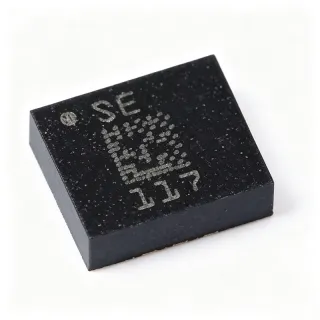
L9965C - Automotive Battery Monitoring IC | STMicroelectronics
MPN: L9965C ✓ Active| Qty | Unit Price | Extended |
|---|---|---|
| 1 | $6.5 | $6.50 |
| 10 | $5.85 | $58.50 |
| 100 | $5.2 | $520.00 |
| 500 | $4.68 | $2,340.00 |
| 1,000 | $4.16 | $4,160.00 |
L9965C Overview
A battery monitoring IC is a specialized analog front-end that measures key battery parameters—voltage, current, and temperature—and communicates them to a microcontroller for battery management. In the system hierarchy, the L9965C sits between the battery pack and the vehicle's body control module (BCM), acting as the sensing and communication bridge. It belongs to the broader category of power management ICs, specifically within battery management systems (BMS), which are critical for ensuring battery safety, longevity, and performance in automotive applications.
Key features of the L9965C include a 12-bit ADC with a sampling rate of up to 1 kSPS, a LIN transceiver compliant with LIN 2.2A, and a wide operating temperature range of -40°C to +125°C. The device also integrates a 5V/50mA low-dropout regulator (LDO) for powering external sensors, and a 16-bit timer for time-stamping events. These features enable accurate battery monitoring and robust communication in harsh automotive environments.
Technically, the L9965C employs a precision voltage reference and a chopper-stabilized amplifier to achieve high measurement accuracy, with a voltage measurement error of ±10 mV and a current measurement error of ±1%. The LIN transceiver supports both master and slave modes, with a data rate of up to 20 kbps, and includes built-in ESD protection up to ±8 kV (HBM). The device is AEC-Q100 qualified, ensuring reliability for automotive applications.
Typical applications include start-stop systems, battery management in electric vehicles (EVs), and battery monitoring in commercial vehicles. In a start-stop system, the L9965C measures battery voltage and current to determine when to restart the engine, improving fuel efficiency. In EVs, it provides critical data for battery pack monitoring, ensuring safe operation and extending battery life.
When designing with the L9965C, ensure proper decoupling of the supply pins with a 100 nF ceramic capacitor placed close to the device. The LIN bus requires a 1 kΩ series resistor and a 220 pF capacitor for EMC compliance. Also, consider the thermal performance of the TQFP-32 package, which has a thermal resistance of 40°C/W, and provide adequate copper pour for heat dissipation in high-current applications.
Drop-in alternatives for L9965C — same package, pin-to-pin compatible. Different-package parts requiring PCB rework are excluded.
Quick Comparison Tool — Select alternative parts for side-by-side comparison:
L9965C-TR
✅ Drop-In📋 Reference alternative (not in catalog)
L9965
✅ Drop-In ⚠️ Specs Unverified📋 Reference alternative (not in catalog)
L9965C Specifications
| Supply Voltage Range | 4.5 V to 28 V |
| ADC Resolution | 12-bit |
| ADC Sampling Rate | 1 kSPS |
| Voltage Measurement Error | ±10 mV |
| Current Measurement Error | ±1% |
| LIN Transceiver | LIN 2.2A compliant |
| LIN Data Rate | 20 kbps |
| LDO Output | 5 V / 50 mA |
| Timer Resolution | 16-bit |
| Operating Temperature Range | -40°C to +125°C |
| Package | TQFP-32 (7x7 mm) |
| Mounting Type | Surface Mount |
| ESD Protection | ±8 kV (HBM) |
| AEC-Q100 Qualification | Yes |
| RoHS Status | Compliant |
L9965C Pin Configuration
| Pin 1 | VBAT — Battery voltage sense input |
| Pin 2 | VSENSE — Current sense input |
| Pin 3 | GND — Ground |
| Pin 4 | LIN — LIN bus |
| Pin 5 | VCC — Supply voltage |
| Pin 6 | LDO_OUT — LDO output |
| Pin 7 | TEMP — Temperature sensor input |
| Pin 8 | SCLK — SPI clock |
| Pin 9 | SDI — SPI data in |
| Pin 10 | SDO — SPI data out |
| Pin 11 | CS — Chip select |
| Pin 12 | INT — Interrupt output |
Typical Applications
L9965C is suitable for 6 applications: Start-Stop Systems, Electric Vehicle Battery Management, Commercial Vehicle Battery Monitoring, Auxiliary Battery Monitoring in Hybrid Vehicles, Battery Monitoring in Marine Applications, Backup Power Supply Monitoring.
Start-Stop Systems
The L9965C is used in start-stop systems to monitor battery voltage and current, enabling precise state-of-charge estimation. Its high-accuracy ADC (±10 mV) ensures reliable engine restart decisions, improving fuel efficiency by up to 8%. The LIN transceiver communicates directly with the engine control unit (ECU), reducing system complexity. In this application, the L9965C is placed between the battery and the ECU, with the LIN bus connected to the BCM. The integrated LDO provides a stable 5V supply for external sensors, such as current shunts. Design considerations include proper decoupling and thermal management, as the device may dissipate up to 1W in high-current scenarios. Compared to discrete solutions, the L9965C reduces component count and PCB area, making it ideal for compact engine bays.
Recommended
Electric Vehicle Battery Management
In EVs, the L9965C monitors individual battery cells or the entire pack, providing critical data for state-of-charge (SoC) and state-of-health (SoH) estimation. Its 12-bit ADC and ±1% current accuracy enable precise energy management, extending battery life. The LIN transceiver allows daisy-chaining multiple L9965C devices for large packs, with each device monitoring a subset of cells. The wide supply voltage range (4.5V-28V) accommodates varying pack voltages. For thermal management, the TQFP-32 package requires adequate copper pour, as the device may dissipate up to 1.5W in high-current monitoring. The AEC-Q100 qualification ensures reliability in harsh automotive environments. Compared to dedicated BMS ICs, the L9965C offers a cost-effective solution for 12V auxiliary batteries in EVs.
Recommended
Commercial Vehicle Battery Monitoring
For commercial vehicles, the L9965C provides robust battery monitoring for 24V systems, with its supply range supporting up to 28V. The LIN transceiver enables communication with the vehicle's telematics unit, allowing remote battery health monitoring. The device's wide temperature range (-40°C to +125°C) ensures operation in extreme climates. In this application, the L9965C is typically mounted on the battery terminal or in a junction box, with the LIN bus routed to the cab. The integrated LDO powers external sensors, such as temperature probes, reducing external component count. Design considerations include ESD protection on the LIN bus, as the device is exposed to the vehicle's electrical environment. The ±10 mV voltage accuracy ensures reliable SoC estimation, critical for fleet management.
Recommended
Auxiliary Battery Monitoring in Hybrid Vehicles
In hybrid vehicles, the L9965C monitors the auxiliary 12V battery, which powers electronics when the engine is off. Its low quiescent current (if specified) is crucial for minimizing battery drain. The LIN transceiver allows the BCM to wake the device periodically for status checks. The device's high accuracy ensures reliable detection of battery degradation, enabling proactive maintenance. In this application, the L9965C is placed in the battery junction box, with the LIN bus connected to the hybrid control unit. The integrated LDO provides a stable supply for the current sensor. Design considerations include proper filtering on the LIN bus to meet EMC standards. Compared to simpler voltage monitors, the L9965C provides comprehensive battery health data, improving system reliability.
Recommended
Battery Monitoring in Marine Applications
The L9965C is suitable for marine battery monitoring, where 12V and 24V systems are common. Its wide supply range and robust ESD protection make it ideal for harsh marine environments. The LIN transceiver can interface with onboard monitoring systems, providing real-time battery status. The device's temperature range (-40°C to +125°C) accommodates engine room conditions. In this application, the L9965C is mounted near the battery bank, with the LIN bus routed to the helm. The integrated LDO powers external sensors, such as shunt resistors. Design considerations include conformal coating for corrosion resistance and proper grounding to prevent ground loops. The high accuracy ensures reliable SoC estimation, critical for marine safety.
Recommended
Backup Power Supply Monitoring
In backup power systems, the L9965C monitors battery health to ensure readiness during outages. Its high accuracy and LIN communication enable remote monitoring and diagnostics. The device's wide supply range supports various battery configurations, from 12V to 24V. In this application, the L9965C is integrated into the UPS or backup power unit, with the LIN bus connected to a central controller. The integrated LDO powers external sensors, such as temperature probes. Design considerations include proper thermal management, as the device may operate continuously. The AEC-Q100 qualification ensures long-term reliability, critical for backup systems that may sit idle for extended periods. Compared to simple voltage monitors, the L9965C provides comprehensive battery health data, enabling predictive maintenance.
Recommended
Recommended Products Summary
Engineering reference data for L9965C — comparison, design guidance, and compliance information.
Selection Guide
Comparison with Alternatives
| Parameter | This Product | L9965C-TR | L9965 | MC33771B | BQ76952 |
|---|---|---|---|---|---|
| Package | TQFP-32 | TQFP-32 (same) | TQFP-32 (same) | LQFP-64 (different) | TQFP-64 (different) |
| Brand | STMicroelectronics | STMicroelectronics | STMicroelectronics | NXP Semiconductors | Texas Instruments |
Key Differentiators
- Integrated LIN transceiver (vs MC33771B)
- Wide supply voltage range (vs BQ76952)
- AEC-Q100 qualification (vs L9965)
Design Notes
Ensure the supply voltage (VCC) is within the 4.5V to 28V range. Use a 100 nF ceramic capacitor close to the VCC pin and a 10 µF bulk capacitor for transient handling. The integrated LDO can supply up to 50 mA; do not exceed this limit to avoid thermal issues.
Place the LIN bus resistor (1 kΩ) and capacitor (220 pF) close to the LIN pin for EMC compliance. Keep the SPI lines short and shielded to prevent noise coupling. Use a solid ground plane under the device to minimize ground bounce.
The TQFP-32 package has a thermal resistance of 40°C/W. For high-current applications, provide a copper pour of at least 1 square inch on the PCB to dissipate heat. Monitor the junction temperature to stay below 150°C.
Compliance Information
RoHS compliant per STMicroelectronics product page. AEC-Q100 qualified for automotive applications.