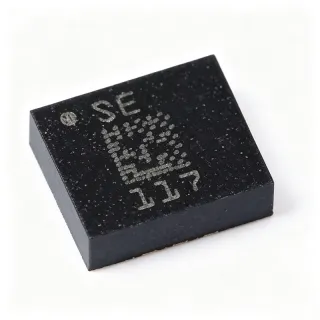
L9963-TR - Automotive Battery Monitoring IC | STMicroelectronics
MPN: L9963-TR ✓ Active| Qty | Unit Price | Extended |
|---|---|---|
| 1 | $12.5 | $12.50 |
| 10 | $11.25 | $112.50 |
| 100 | $10 | $1,000.00 |
| 500 | $9 | $4,500.00 |
| 1,000 | $8.1 | $8,100.00 |
L9963-TR Overview
A battery monitoring IC (BMIC) is a specialized analog front-end that measures the voltage of each cell in a battery pack, monitors temperature, and controls balancing to ensure safe and efficient operation. It sits between the battery cells and the host microcontroller, converting analog cell voltages into digital data via an ADC and communicating over a serial interface. In the system hierarchy, the BMIC is part of the battery management system (BMS), which is a critical subsystem in automotive power electronics.
Key features of the L9963-TR include 14-cell voltage measurement capability, a 16-bit ADC with high accuracy, and a built-in passive balancing function with up to 150 mA balancing current. It supports both SPI and daisy-chain communication, enabling scalable battery packs. The device operates over a wide supply voltage range and includes comprehensive diagnostic features such as overvoltage, undervoltage, and temperature monitoring, making it suitable for ISO 26262 functional safety applications.
The L9963-TR is built on STMicroelectronics' robust automotive process technology, ensuring high reliability across the -40°C to +125°C temperature range. Its architecture includes a precision voltage reference, a multiplexed ADC, and a state machine for balancing control. The daisy-chain interface allows multiple devices to be connected in series, reducing wiring complexity in high-voltage battery packs.
Typical applications include battery management systems for EVs, HEVs, and industrial energy storage. The device is also used in 48V mild-hybrid systems and backup power supplies. Its high accuracy and safety features make it ideal for applications where cell voltage monitoring is critical for battery longevity and safety.
When designing with the L9963-TR, ensure proper PCB layout for the analog measurement paths to minimize noise, and use appropriate filtering on the cell inputs. The device requires careful thermal management when balancing current is high, and the SPI interface should be isolated if the host controller is not on the same ground reference.
Drop-in alternatives for L9963-TR — same package, pin-to-pin compatible. Different-package parts requiring PCB rework are excluded.
Variants in this series
Same-series models that are drop-in compatible with L9963-TR (same form factor and footprint) — differing in Number of Cells, Package, RoHS Status, Automotive Grade, Balancing Current.
Quick Comparison Tool — Select alternative parts for side-by-side comparison:
L9963
✅ Drop-In✓ In Stock
$8.1 / Unit
View Datasheet →ADBMS1818
✅ Drop-In ⚠️ Specs Unverified📋 Reference alternative (not in catalog)
BQ79614
✅ Drop-In ⚠️ Specs Unverified📋 Reference alternative (not in catalog)
L9963-TR Specifications
| Number of Cells | 14 |
| ADC Resolution | 16-bit |
| Cell Voltage Measurement Accuracy | ±2 mV (typical) |
| Balancing Current | 150 mA (max) |
| Communication Interface | SPI, Daisy-chain |
| Supply Voltage Range | 6 V to 78 V |
| Operating Temperature Range | -40°C to +125°C |
| Package | TQFP-64 |
| Mounting Type | Surface Mount |
| Functional Safety | ISO 26262 ASIL-D |
| Diagnostics | Overvoltage, Undervoltage, Temperature |
| Cell Input Range | 0 V to 5 V |
| RoHS Status | Compliant |
| AEC-Q100 | Qualified |
L9963-TR Pin Configuration
| Pin 1 | VDD — Power supply |
| Pin 2 | VSS — Ground |
| Pin 3 | C1 — Cell 1 voltage input |
| Pin 4 | C2 — Cell 2 voltage input |
| Pin 5 | C3 — Cell 3 voltage input |
| Pin 6 | C4 — Cell 4 voltage input |
| Pin 7 | C5 — Cell 5 voltage input |
| Pin 8 | C6 — Cell 6 voltage input |
| Pin 9 | C7 — Cell 7 voltage input |
| Pin 10 | C8 — Cell 8 voltage input |
| Pin 11 | C9 — Cell 9 voltage input |
| Pin 12 | C10 — Cell 10 voltage input |
| Pin 13 | C11 — Cell 11 voltage input |
| Pin 14 | C12 — Cell 12 voltage input |
| Pin 15 | C13 — Cell 13 voltage input |
| Pin 16 | C14 — Cell 14 voltage input |
| Pin 17 | TS1 — Temperature sensor input 1 |
| Pin 18 | TS2 — Temperature sensor input 2 |
| Pin 19 | TS3 — Temperature sensor input 3 |
| Pin 20 | TS4 — Temperature sensor input 4 |
| Pin 21 | SPI_CS — SPI chip select |
| Pin 22 | SPI_SCK — SPI clock |
| Pin 23 | SPI_SDI — SPI data in |
| Pin 24 | SPI_SDO — SPI data out |
| Pin 25 | DCH — Daisy-chain high |
| Pin 26 | DCL — Daisy-chain low |
| Pin 27 | BAL — Balancing control |
| Pin 28 | NTC — NTC thermistor input |
Typical Applications
L9963-TR is suitable for 6 applications: Electric Vehicle Battery Management, Hybrid Electric Vehicle Battery Management, Energy Storage Systems, 48V Mild-Hybrid Systems, Backup Power Supplies, Industrial Battery Monitoring.
Electric Vehicle Battery Management
The L9963-TR is used in EV battery management systems to monitor cell voltages and temperatures, ensuring safe and efficient operation. Its 14-cell capability and high accuracy (±2 mV) enable precise state-of-charge estimation, extending battery life. The device communicates via SPI or daisy-chain, allowing scalable packs. In a typical EV BMS, the L9963-TR is placed on the battery pack's cell monitoring board, connected to the battery cells and a host MCU. It measures each cell voltage and temperature, and controls passive balancing. The daisy-chain interface reduces wiring complexity in high-voltage packs. Performance considerations include thermal management during balancing and ensuring accurate voltage measurement for safety.
Recommended
Hybrid Electric Vehicle Battery Management
In HEVs, the L9963-TR monitors the high-voltage battery pack, providing accurate cell voltage and temperature data to the BMS. Its wide supply range (6V to 78V) accommodates various pack configurations. The device's ISO 26262 ASIL-D support ensures functional safety in critical automotive systems. The L9963-TR is integrated into the BMS PCB, interfacing with the battery cells and the vehicle's control unit. It performs cell balancing and diagnostics, contributing to battery longevity and safety. Performance considerations include minimizing measurement noise and ensuring reliable communication in the automotive environment.
Recommended
Energy Storage Systems
The L9963-TR is used in stationary energy storage systems to monitor large battery banks. Its 14-cell monitoring capability and daisy-chain interface allow scaling to hundreds of cells. The device's high accuracy and diagnostics ensure safe operation and optimal performance. In an ESS, the L9963-TR is placed on cell monitoring boards, communicating with a central BMS controller. It measures cell voltages and temperatures, and controls balancing. Performance considerations include managing communication latency and ensuring accurate measurement over long distances.
Recommended
48V Mild-Hybrid Systems
The L9963-TR is suitable for 48V mild-hybrid systems, monitoring the 48V lithium-ion battery pack. Its supply voltage range (6V to 78V) covers the 48V pack voltage, and its 14-cell capability matches typical 48V pack configurations. The device's automotive qualification and functional safety support make it ideal for this application. In a 48V mild-hybrid system, the L9963-TR is integrated into the BMS, measuring cell voltages and temperatures, and controlling balancing. Performance considerations include ensuring accurate measurement under high vibration and temperature extremes.
Recommended
Backup Power Supplies
The L9963-TR is used in backup power supplies to monitor battery banks, ensuring reliable operation during power outages. Its high accuracy and diagnostics help maintain battery health and predict failures. The device's daisy-chain interface allows monitoring of large battery banks with minimal wiring. In a backup power supply, the L9963-TR is placed on the battery monitoring board, communicating with the system controller. It measures cell voltages and temperatures, and controls balancing. Performance considerations include ensuring reliable operation over long periods and accurate measurement for battery health assessment.
Recommended
Industrial Battery Monitoring
The L9963-TR is used in industrial battery monitoring systems for forklifts, AGVs, and other equipment. Its robust design and wide temperature range make it suitable for harsh industrial environments. The device's SPI interface allows easy integration with industrial controllers. In an industrial battery monitoring system, the L9963-TR is placed on the battery pack, measuring cell voltages and temperatures, and controlling balancing. Performance considerations include ensuring accurate measurement in noisy industrial environments and managing heat dissipation during balancing.
Recommended
Recommended Products Summary
Engineering reference data for L9963-TR — comparison, design guidance, and compliance information.
Selection Guide
Comparison with Alternatives
| Parameter | This Product | L9963 | ADBMS1818 | BQ79614 |
|---|---|---|---|---|
| Package | TQFP-64 | TQFP-64 | TQFP-64 | TQFP-64 |
| Brand | STMicroelectronics | STMicroelectronics | Analog Devices | Texas Instruments |
| Number of Cells | 14 | 14 | 18 | 14 |
| ADC Resolution | 16-bit | 16-bit | 16-bit | 16-bit |
| Balancing Current | 150 mA | 150 mA | 200 mA | 240 mA |
| Communication Interface | SPI, Daisy-chain | SPI, Daisy-chain | SPI, Daisy-chain | SPI, Daisy-chain |
| Supply Voltage Range | 6V to 78V | 6V to 78V | 6V to 80V | 6V to 80V |
| Functional Safety | ISO 26262 ASIL-D | ISO 26262 ASIL-D | ISO 26262 ASIL-D | ISO 26262 ASIL-D |
Key Differentiators
- 14-cell monitoring with 16-bit ADC (vs ADBMS1818)
- 150 mA balancing current (vs BQ79614)
- STMicroelectronics brand and support (vs ADBMS1818)
Design Notes
For accurate cell voltage measurement, use Kelvin connections to the battery cells and place filtering capacitors close to the C1-C14 pins. A 100nF ceramic capacitor on each cell input is recommended to filter high-frequency noise. Ensure the ground plane is solid and the analog ground is separated from digital ground to minimize noise coupling.
During passive balancing, the L9963-TR dissipates power proportional to the balancing current and cell voltage. For example, at 150 mA balancing current and 4V cell voltage, each balancing path dissipates 0.6W. Ensure adequate PCB copper area and thermal vias to dissipate heat, especially when multiple cells are balanced simultaneously.
Do not exceed the maximum supply voltage of 78V. Ensure proper reverse polarity protection on the supply. When using the daisy-chain interface, ensure proper isolation between devices and the host controller. Also, verify that the SPI lines are properly terminated to avoid signal integrity issues.
Compliance Information
AEC-Q100 qualified per STMicroelectronics. RoHS compliant. REACH compliant.