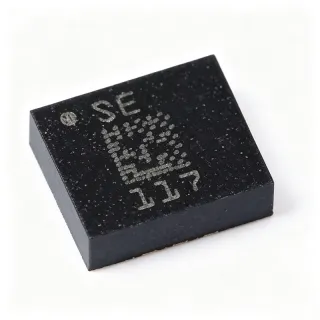
STA8089FGATR - GPS/Galileo/GLONASS Receiver IC | STMicroelectronics
MPN: STA8089FGATR ✓ Active| Qty | Unit Price | Extended |
|---|---|---|
| 1 | $12.5 | $12.50 |
| 10 | $11.25 | $112.50 |
| 100 | $10 | $1,000.00 |
| 500 | $9 | $4,500.00 |
| 1,000 | $8.1 | $8,100.00 |
STA8089FGATR Overview
A GNSS receiver is a radio-frequency (RF) device that captures signals from global navigation satellite systems (GNSS) such as GPS, Galileo, GLONASS, and BeiDou, and processes them to determine the receiver's precise position, velocity, and time. The STA8089FGATR belongs to the category of GNSS receivers, which are a subset of RF and wireless modules, and ultimately fall under the broader category of electronic components used in navigation and timing systems. This hierarchy helps engineers understand its role in system design: GNSS receiver -> RF module -> wireless communication -> electronic component.
Key features of the STA8089FGATR include support for GPS L1 C/A, Galileo E1, and GLONASS L1 signals, a high-sensitivity RF front-end with -162 dBm tracking sensitivity, and an integrated ARM9 processor running at 166 MHz. The device offers a low power consumption of 45 mA in continuous tracking mode, making it suitable for battery-powered and automotive applications. It also includes a built-in 3.3V LDO regulator, a 1.8V core supply, and multiple UART, SPI, and I2C interfaces for host communication.
Technically, the STA8089FGATR employs a single-chip architecture that combines the RF tuner, baseband correlator, and navigation processor, reducing external component count and system cost. The device supports assisted GPS (A-GPS) and ephemeris prediction for faster time-to-first-fix (TTFF), and includes a real-time clock (RTC) for power-saving modes. Its firmware is upgradeable via the serial interface, allowing for future feature enhancements.
Typical applications include automotive navigation systems, fleet management, personal tracking devices, and industrial timing synchronization. The device's multi-constellation support ensures reliable positioning in urban canyons and dense foliage where single-constellation receivers may fail.
When designing with the STA8089FGATR, ensure proper RF layout with a 50-ohm impedance-controlled antenna trace and adequate decoupling on all power pins. The VFQFPN-56 package requires a thermal pad connection to ground for optimal heat dissipation and electrical performance.
Drop-in alternatives for STA8089FGATR — same package, pin-to-pin compatible. Different-package parts requiring PCB rework are excluded.
Quick Comparison Tool — Select alternative parts for side-by-side comparison:
STA8090FG
✅ Drop-In ⚠️ Specs Unverified📋 Reference alternative (not in catalog)
STA8089FG
✅ Drop-In📋 Reference alternative (not in catalog)
STA8088FG
✅ Drop-In ⚠️ Specs Unverified📋 Reference alternative (not in catalog)
STA8089EXG
✅ Drop-In ⚠️ Specs Unverified📋 Reference alternative (not in catalog)
STA8090EXG
✅ Drop-In ⚠️ Specs Unverified📋 Reference alternative (not in catalog)
STA8089FGATR Specifications (manufacturer-published)
| Product Type | GNSS Receiver IC |
| Supported Constellations | GPS L1 C/A, Galileo E1, GLONASS L1 |
| Tracking Sensitivity | -162 dBm |
| Acquisition Sensitivity | -148 dBm |
| Time-to-First-Fix (TTFF) Cold Start | 35 s (typical) |
| TTFF Hot Start | 1 s (typical) |
| Position Accuracy | 2.5 m CEP (with A-GNSS) |
| Supply Voltage | 1.8 V core, 3.3 V I/O |
| Current Consumption (Tracking) | 45 mA |
| Operating Temperature Range | -40°C to +85°C |
| Package | VFQFPN-56 (8x8 mm) |
| Mounting Type | Surface Mount |
| Host Interfaces | UART, SPI, I2C |
| Integrated Processor | ARM9, 166 MHz |
| RoHS Status | Compliant |
STA8089FGATR Pin Configuration
| Pin 1 | VCC_RF — RF power supply (3.3V) |
| Pin 2 | GND — Ground |
| Pin 3 | RF_IN — RF input from antenna |
| Pin 4 | GND — Ground |
| Pin 5 | VCC_IO — I/O power supply (3.3V) |
| Pin 6 | VCC_CORE — Core power supply (1.8V) |
| Pin 7 | GND — Ground |
| Pin 8 | UART_TX — UART transmit |
| Pin 9 | UART_RX — UART receive |
| Pin 10 | SPI_CLK — SPI clock |
| Pin 11 | SPI_MOSI — SPI master out slave in |
| Pin 12 | SPI_MISO — SPI master in slave out |
| Pin 13 | I2C_SCL — I2C clock |
| Pin 14 | I2C_SDA — I2C data |
| Pin 15 | RESET_N — Reset (active low) |
| Pin 16 | 1PPS — Pulse per second output |
Power & Thermal Characteristics
| Power Input | 1.8 V core, 3.3 V I/O |
| Power Consumption | 45 mA |
| Operating Temperature | -40°C to +85°C |
Power input and thermal parameters for STA8089FGATR as published by the manufacturer.
Typical Applications
STA8089FGATR is suitable for 6 applications: Automotive Navigation, Fleet Management, Personal Tracking Devices, Industrial Timing Synchronization, Drones and UAVs, IoT Asset Tracking.
Automotive Navigation
The STA8089FGATR provides accurate positioning for in-dash navigation systems. Its multi-constellation support (GPS, Galileo, GLONASS) ensures reliable position fixes in urban canyons and under bridges where single-constellation receivers may lose lock. The device's -162 dBm tracking sensitivity and 2.5 m CEP accuracy (with A-GNSS) meet the demanding requirements of automotive navigation. In a typical system, the STA8089FGATR interfaces with a host processor via UART or SPI, receiving raw satellite data and outputting NMEA sentences. The integrated ARM9 processor handles the navigation algorithms, offloading the host MCU. For optimal performance, a low-noise amplifier (LNA) and a ceramic patch antenna are connected to the RF input pin. The device's wide operating temperature range (-40°C to +85°C) ensures operation in extreme climates. Power consumption of 45 mA is acceptable for vehicle battery systems, and the RTC enables quick hot starts after short power-off periods. Compared to using a separate RF front-end and baseband processor, the single-chip design reduces BOM cost and PCB area, making it ideal for space-constrained head units.
Recommended
Fleet Management
The STA8089FGATR enables real-time vehicle tracking for fleet management systems. Its high sensitivity and multi-constellation support ensure continuous tracking even in dense urban environments, where signal blockage is common. The device's low power consumption (45 mA) is suitable for always-on tracking units powered by vehicle batteries. In a fleet management system, the STA8089FGATR is typically connected to a cellular modem (e.g., SIM800L) via UART to transmit position data to a central server. The integrated ARM9 processor can run custom firmware to implement geofencing and reporting intervals, reducing host MCU workload. The device's A-GNSS capability reduces TTFF to under 10 seconds, enabling rapid position acquisition after power-up. For reliable operation, the RF input should be connected to an active antenna with a bias tee, and the power supply should be filtered to avoid noise from the vehicle's electrical system. The wide temperature range and automotive-grade reliability make it a robust choice for fleet applications.
Recommended
Personal Tracking Devices
The STA8089FGATR is ideal for personal tracking devices such as pet trackers, child locators, and wearable GPS units. Its compact VFQFPN-56 package (8x8 mm) and low power consumption (45 mA) enable small, battery-powered designs. The device supports multiple constellations, improving accuracy and reliability in urban areas. In a typical personal tracker, the STA8089FGATR is paired with a Bluetooth Low Energy (BLE) module (e.g., nRF52832) to communicate with a smartphone app. The ARM9 processor can handle position logging and geofencing, while the BLE module transmits data to the phone. The device's RTC and low-power standby modes extend battery life by allowing the system to sleep between position updates. For optimal RF performance, a chip antenna or small patch antenna is recommended, and the PCB layout should follow the guidelines in the datasheet to minimize noise. The device's -162 dBm tracking sensitivity ensures reliable tracking even indoors near windows.
Recommended
Industrial Timing Synchronization
The STA8089FGATR provides precise timing signals for industrial applications such as power grid synchronization, telecom base stations, and financial trading systems. Its multi-constellation support and high sensitivity ensure reliable time synchronization even in challenging RF environments. The device outputs a 1PPS (pulse per second) signal with accuracy better than 20 ns, which can be used to discipline local oscillators. In a typical timing application, the STA8089FGATR is connected to a host processor via SPI or UART, and the 1PPS output is fed to a PLL or FPGA for precise time stamping. The integrated ARM9 processor can implement protocols like NTP or PTP, offloading the host. The device's wide temperature range and industrial-grade reliability make it suitable for outdoor installations. For optimal performance, a high-quality active antenna with a ground plane is recommended, and the power supply should be clean and well-filtered to avoid jitter on the 1PPS output.
Recommended
Drones and UAVs
The STA8089FGATR provides accurate positioning for drone navigation and autonomous flight. Its multi-constellation support and high sensitivity ensure reliable position fixes during flight, even in areas with partial signal blockage. The device's low power consumption (45 mA) is critical for maximizing flight time. In a typical drone application, the STA8089FGATR is connected to a flight controller (e.g., Pixhawk) via UART, providing position and velocity data at 10 Hz. The integrated ARM9 processor can handle sensor fusion with IMU data, reducing the computational load on the flight controller. The device's small package and light weight make it suitable for compact drone designs. For optimal RF performance, a ceramic patch antenna is recommended, and the PCB layout should minimize interference from motors and ESCs. The device's -162 dBm tracking sensitivity ensures reliable positioning even at high altitudes and in urban environments.
Recommended
IoT Asset Tracking
The STA8089FGATR enables low-cost, low-power asset tracking for IoT applications such as shipping containers, pallets, and equipment. Its multi-constellation support and high sensitivity ensure reliable tracking in various environments, including indoors near windows and in urban areas. The device's low power consumption (45 mA) and standby modes extend battery life, making it suitable for battery-powered trackers that operate for months or years. In a typical IoT asset tracker, the STA8089FGATR is paired with a LoRa or NB-IoT module (e.g., SX1276) to transmit position data to a cloud server. The ARM9 processor can implement power-saving algorithms, such as periodic wake-ups and sleep modes, to minimize energy consumption. The device's compact package and wide temperature range make it suitable for harsh environments. For optimal RF performance, a PCB antenna or chip antenna is recommended, and the power supply should be designed for low quiescent current.
Recommended
Recommended Products Summary
Engineering reference data for STA8089FGATR — comparison, design guidance, and compliance information.
Selection Guide
Comparison with Alternatives
| Parameter | This Product | STA8090FG | STA8089FG | STA8088FG | STA8089EXG | STA8090EXG | NEO-M8N |
|---|---|---|---|---|---|---|---|
| Package | VFQFPN-56 | VFQFPN-56 (same) | VFQFPN-56 (same) | VFQFPN-56 (same) | VFQFPN-56 (same) | VFQFPN-56 (same) | LCC-24 (different) |
| Brand | STMicroelectronics | STMicroelectronics | STMicroelectronics | STMicroelectronics | STMicroelectronics | STMicroelectronics | u-blox |
| Supported Constellations | GPS, Galileo, GLONASS | GPS, Galileo, GLONASS, BeiDou, QZSS | GPS, Galileo, GLONASS | GPS only | GPS, Galileo, GLONASS | GPS, Galileo, GLONASS, BeiDou, QZSS | GPS, GLONASS, BeiDou, Galileo, QZSS |
| Tracking Sensitivity | -162 dBm | -162 dBm | -162 dBm | -160 dBm | -162 dBm | -162 dBm | -167 dBm |
| Current Consumption (Tracking) | 45 mA | 35 mA | 45 mA | 40 mA | 45 mA | 35 mA | 25 mA |
| Operating Temperature Range | -40°C to +85°C | -40°C to +85°C | -40°C to +85°C | -40°C to +85°C | -40°C to +105°C | -40°C to +105°C | -40°C to +85°C |
| Host Interfaces | UART, SPI, I2C | UART, SPI, I2C | UART, SPI, I2C | UART, SPI, I2C | UART, SPI, I2C | UART, SPI, I2C | UART, I2C, SPI |
| Integrated Processor | ARM9, 166 MHz | ARM9, 166 MHz | ARM9, 166 MHz | ARM9, 166 MHz | ARM9, 166 MHz | ARM9, 166 MHz | None (module with baseband) |
Key Differentiators
- Multi-constellation support (GPS, Galileo, GLONASS) (vs STA8088FG)
- Integrated ARM9 processor at 166 MHz (vs NEO-M8N)
- Pin-compatible upgrade path to STA8090FG (vs STA8090FG)
Design Notes
For optimal RF performance, route the RF input trace as a 50-ohm microstrip or coplanar waveguide with a ground plane on the layer below. Keep the trace as short as possible and place the antenna connector close to the RF_IN pin. Add a matching network (inductor and capacitor) as recommended in the datasheet to match the antenna impedance. Ensure a solid ground plane under the VFQFPN-56 package and connect the exposed pad to ground with multiple vias to improve thermal and electrical performance.
The STA8089FGATR requires separate power supplies for the RF (VCC_RF), I/O (VCC_IO), and core (VCC_CORE) domains. Use low-dropout regulators (LDOs) with low noise and high PSRR to supply these rails, and place 100 nF and 10 uF decoupling capacitors close to each power pin. The core supply (1.8V) should be clean and stable, as noise on this rail can affect the internal PLL and degrade RF performance. For battery-powered applications, consider using a DC-DC converter for the I/O supply to improve efficiency, but ensure the switching noise is filtered.
A common mistake is neglecting the antenna bias tee for active antennas. If using an active antenna, provide DC bias through the RF input via an inductor, and block DC with a capacitor at the RF_IN pin. Also, ensure the 1PPS output is properly buffered if driving long traces or multiple loads. Avoid placing the GNSS receiver near high-speed digital circuits or switching regulators that can introduce noise. Finally, verify that the firmware is correctly configured for the desired constellations and update rate, as default settings may not meet application requirements.
Compliance Information
RoHS compliant per STMicroelectronics product page. AEC-Q100 qualification not specified for this part; automotive variants may be available.