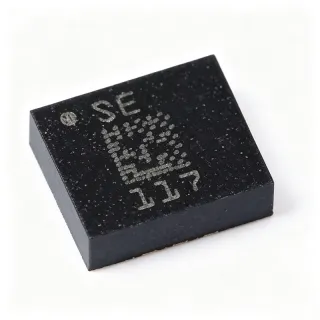
STM8S007C8T6 - 8-Bit MCU, 64KB Flash, 24MHz | STMicroelectronics
MPN: STM8S007C8T6 ✓ Active| Qty | Unit Price | Extended |
|---|---|---|
| 1 | $3.52 | $3.52 |
| 10 | $3.15 | $31.50 |
| 100 | $2.78 | $278.00 |
| 500 | $2.41 | $1,205.00 |
| 1,000 | $2.04 | $2,040.00 |
STM8S007C8T6 Overview
An 8-bit microcontroller is a single-chip computer with an 8-bit central processing unit (CPU), memory, and programmable input/output peripherals. It is a type of embedded microcontroller, which is a compact integrated circuit designed to govern a specific operation in an embedded system. The STM8S007C8T6 belongs to the STM8 family, which is a line of 8-bit microcontrollers from STMicroelectronics, positioned between low-end 8-bit MCUs and higher-performance 32-bit ARM Cortex-M devices. Its Harvard architecture separates instruction and data buses, enabling simultaneous access and faster execution, while the 3-stage pipeline increases throughput at a given clock frequency.
Key features of the STM8S007C8T6 include a maximum CPU frequency of 24MHz with 0 wait states at 16MHz, 64KB of Flash memory, 6KB of RAM, and true data EEPROM for non-volatile data storage. It integrates a 10-bit ADC, multiple timers, and communication interfaces (I2C, SPI, 2 UARTs), making it versatile for various control and monitoring tasks. The device operates over a temperature range of -40°C to 85°C and has a maximum power dissipation of 443mW, suitable for industrial and consumer environments.
Technically, the STM8 core is an advanced 8-bit architecture with a 3-stage pipeline, allowing most instructions to execute in a single clock cycle. The 24MHz clock speed provides up to 24 MIPS throughput, which is competitive for 8-bit MCUs. The Flash memory supports in-application programming (IAP) and in-circuit programming (ICP), enabling firmware updates in the field. The true data EEPROM allows for byte-level read/write operations, useful for storing calibration data or system parameters without external memory.
Typical applications include home appliances, industrial control, sensor interfacing, and automotive body electronics. The rich peripheral set and 38 I/O lines make it suitable for motor control, lighting systems, and human-machine interfaces. Its low power consumption and wide operating voltage range (typically 2.95V to 5.5V) support battery-powered devices and 5V logic systems.
When designing with this MCU, consider the power supply decoupling and crystal oscillator layout. Use a 0.1uF capacitor close to each VDD pin and a 10uF bulk capacitor. For the external crystal, place it near the OSC pins with proper load capacitors as specified in the datasheet. Ensure the reset pin has a pull-up resistor and a capacitor for reliable power-on reset.
Drop-in alternatives for STM8S007C8T6 — same package, pin-to-pin compatible. Different-package parts requiring PCB rework are excluded.
Variants in this series
Same-series models that are drop-in compatible with STM8S007C8T6 (same form factor and footprint) — differing in Core, Package, Communication Interfaces, Operating Temperature Range, RAM Size.
Quick Comparison Tool — Select alternative parts for side-by-side comparison:
STM8S007C8T6TR
✅ Drop-In📋 Reference alternative (not in catalog)
STM8S105C6T6
✅ Drop-In ⚠️ Specs Unverified✓ In Stock
$1.85 / Unit
View Datasheet →STM8S207C8T6
✅ Drop-In ⚠️ Specs Unverified✓ In Stock
$1.95 / Unit
View Datasheet →STM8S007C8T6 Maximum Ratings & Electrical Characteristics
| Core | STM8 8-bit |
| Maximum CPU Frequency | 24 MHz |
| Flash Memory | 64 KB (64K x 8) |
| RAM Size | 6 KB |
| Data EEPROM | True data EEPROM |
| Number of I/O Lines | 38 |
| Timers/Counters | 9 |
| ADC Resolution | 10-bit |
| Communication Interfaces | I2C, SPI, 2 UARTs |
| Operating Temperature Range | -40°C to 85°C |
| Maximum Power Dissipation | 443 mW |
| Package | 48-LQFP |
| Mounting Type | Surface Mount |
| Supply Voltage Range | 2.95 V to 5.5 V |
| Life Cycle Stage | ACTIVE |
STM8S007C8T6 Pin Configuration
| Pin 1 | PD0 — Port D0, general purpose I/O |
| Pin 2 | PD1 — Port D1, general purpose I/O |
| Pin 3 | PD2 — Port D2, general purpose I/O |
| Pin 4 | PD3 — Port D3, general purpose I/O |
| Pin 5 | PD4 — Port D4, general purpose I/O |
| Pin 6 | PD5 — Port D5, general purpose I/O |
| Pin 7 | PD6 — Port D6, general purpose I/O |
| Pin 8 | PD7 — Port D7, general purpose I/O |
| Pin 9 | VSS — Ground |
| Pin 10 | VDD — Power supply |
| Pin 11 | PA0 — Port A0, general purpose I/O |
| Pin 12 | PA1 — Port A1, general purpose I/O |
| Pin 13 | PA2 — Port A2, general purpose I/O |
| Pin 14 | PA3 — Port A3, general purpose I/O |
| Pin 15 | PA4 — Port A4, general purpose I/O |
| Pin 16 | PA5 — Port A5, general purpose I/O |
| Pin 17 | PA6 — Port A6, general purpose I/O |
| Pin 18 | PA7 — Port A7, general purpose I/O |
| Pin 19 | PB0 — Port B0, general purpose I/O |
| Pin 20 | PB1 — Port B1, general purpose I/O |
| Pin 21 | PB2 — Port B2, general purpose I/O |
| Pin 22 | PB3 — Port B3, general purpose I/O |
| Pin 23 | PB4 — Port B4, general purpose I/O |
| Pin 24 | PB5 — Port B5, general purpose I/O |
| Pin 25 | PB6 — Port B6, general purpose I/O |
| Pin 26 | PB7 — Port B7, general purpose I/O |
| Pin 27 | PC0 — Port C0, general purpose I/O |
| Pin 28 | PC1 — Port C1, general purpose I/O |
| Pin 29 | PC2 — Port C2, general purpose I/O |
| Pin 30 | PC3 — Port C3, general purpose I/O |
| Pin 31 | PC4 — Port C4, general purpose I/O |
| Pin 32 | PC5 — Port C5, general purpose I/O |
| Pin 33 | PC6 — Port C6, general purpose I/O |
| Pin 34 | PC7 — Port C7, general purpose I/O |
| Pin 35 | NRST — Reset (active low) |
| Pin 36 | OSCIN — Oscillator input |
| Pin 37 | OSCOUT — Oscillator output |
| Pin 38 | VSS — Ground |
| Pin 39 | VDD — Power supply |
| Pin 40 | PE0 — Port E0, general purpose I/O |
| Pin 41 | PE1 — Port E1, general purpose I/O |
| Pin 42 | PE2 — Port E2, general purpose I/O |
| Pin 43 | PE3 — Port E3, general purpose I/O |
| Pin 44 | PE4 — Port E4, general purpose I/O |
| Pin 45 | PE5 — Port E5, general purpose I/O |
| Pin 46 | PE6 — Port E6, general purpose I/O |
| Pin 47 | PE7 — Port E7, general purpose I/O |
| Pin 48 | VDD — Power supply |
Typical Applications
STM8S007C8T6 is suitable for 6 applications: Home Appliances, Industrial Control, Automotive Body Electronics, Sensor Interfacing, Power Tools, Smart Lighting.
Home Appliances
The STM8S007C8T6 is ideal for home appliances such as washing machines, microwaves, and refrigerators. Its 64KB Flash allows for complex control algorithms, while the 10-bit ADC reads temperature and pressure sensors. The 38 I/O lines interface with keypads, displays, and relays. The wide operating voltage (2.95V to 5.5V) accommodates various power supplies. The MCU's low power consumption extends battery life in portable appliances. Its robust ESD protection ensures reliability in household environments. The true data EEPROM stores user settings and error logs. The 24MHz clock provides fast response for user interfaces. The I2C and SPI interfaces connect to external EEPROMs or sensor hubs. The UARTs enable communication with smart home gateways. The timers generate PWM for motor speed control in washing machines. The STM8S007C8T6's cost-effectiveness makes it a popular choice for high-volume consumer products.
Recommended
Industrial Control
In industrial control systems, the STM8S007C8T6 provides reliable 8-bit processing for PLCs, motor drives, and process controllers. Its 24MHz core and 64KB Flash handle real-time control loops. The 10-bit ADC monitors analog sensors for pressure, flow, and temperature. The multiple timers generate precise PWM signals for motor speed and position control. The UART interfaces connect to HMI panels and industrial networks. The SPI interface communicates with external DACs or digital potentiometers. The I2C interface reads from smart sensors. The 38 I/O lines interface with limit switches, push buttons, and status LEDs. The -40°C to 85°C operating range suits factory floor environments. The true data EEPROM stores calibration parameters and fault logs. The MCU's robustness and long-term availability make it suitable for industrial applications. Its low cost enables distributed control architectures. The STM8S007C8T6's deterministic execution ensures consistent timing for control algorithms.
Recommended
Automotive Body Electronics
The STM8S007C8T6 is used in automotive body electronics such as window lifters, seat control, and lighting modules. Its 24MHz core provides fast response for motor control. The 10-bit ADC reads potentiometers for seat position. The timers generate PWM for LED dimming. The UART interfaces connect to diagnostic tools. The I2C interface communicates with temperature sensors. The SPI interface connects to external EEPROMs for configuration. The 38 I/O lines interface with switches and relays. The -40°C to 85°C range covers automotive temperature requirements. The true data EEPROM stores user preferences. The MCU's low power consumption reduces battery drain. Its robustness against voltage transients is enhanced by external protection. The STM8S007C8T6's cost-effectiveness is crucial for high-volume automotive production. The wide supply voltage range (2.95V to 5.5V) accommodates vehicle battery voltage variations. The MCU's deterministic behavior ensures reliable operation in safety-critical functions.
Recommended
Sensor Interfacing
The STM8S007C8T6 excels at interfacing with various sensors due to its 10-bit ADC, I2C, SPI, and UART interfaces. It can read analog sensors like thermistors, photodiodes, and strain gauges. The I2C interface connects to digital sensors like accelerometers and pressure sensors. The SPI interface reads from high-speed sensors like gyroscopes. The UART interfaces communicate with GPS modules or wireless transceivers. The 38 I/O lines provide ample GPIO for sensor enable/disable and interrupt lines. The 24MHz core processes sensor data quickly for real-time monitoring. The true data EEPROM stores calibration coefficients. The low power consumption is ideal for battery-powered sensor nodes. The -40°C to 85°C range suits outdoor sensor deployments. The MCU's small footprint (LQFP48) fits compact sensor modules. The STM8S007C8T6's cost-effectiveness enables distributed sensor networks. Its robust design ensures reliable operation in harsh environments.
Recommended
Power Tools
The STM8S007C8T6 is used in power tools like drills, saws, and grinders for motor control and safety features. Its 24MHz core provides fast PWM generation for brushless DC motor control. The 10-bit ADC reads current sensors for overload protection. The timers measure speed via Hall sensors. The UART interface enables firmware updates. The 38 I/O lines interface with triggers, switches, and LEDs. The -40°C to 85°C range withstands harsh tool environments. The true data EEPROM stores tool settings. The MCU's low power consumption extends battery life in cordless tools. Its robustness against vibration and temperature extremes is critical. The STM8S007C8T6's cost-effectiveness is important for competitive power tool pricing. The wide supply voltage range (2.95V to 5.5V) accommodates battery packs. The MCU's deterministic execution ensures safe motor control.
Recommended
Smart Lighting
The STM8S007C8T6 is ideal for smart lighting systems, including LED drivers and smart bulbs. Its 24MHz core generates high-frequency PWM for LED dimming without flicker. The 10-bit ADC reads ambient light sensors for automatic brightness adjustment. The UART interface connects to Wi-Fi or Zigbee modules for remote control. The I2C interface communicates with color sensors. The 38 I/O lines control multiple LED channels. The true data EEPROM stores lighting scenes. The low power consumption is essential for energy-efficient lighting. The -40°C to 85°C range suits indoor and outdoor fixtures. The MCU's small footprint (LQFP48) fits compact bulb designs. The STM8S007C8T6's cost-effectiveness enables mass-market smart lighting. The wide supply voltage range (2.95V to 5.5V) supports various LED driver topologies. The MCU's deterministic PWM ensures consistent color and brightness.
Recommended
Recommended Products Summary
Engineering reference data for STM8S007C8T6 — comparison, design guidance, and compliance information.
Selection Guide
Comparison with Alternatives
| Parameter | This Product | STM8S007C8T6TR | STM8S105C6T6 | STM8S207C8T6 | N76E003AT20 |
|---|---|---|---|---|---|
| Package | 48-LQFP | 48-LQFP (same) | 48-LQFP (same) | 48-LQFP (same) | TSSOP20 (different) |
| Brand | STMicroelectronics | STMicroelectronics | STMicroelectronics | STMicroelectronics | Nuvoton Technology |
| Core | STM8 8-bit | STM8 8-bit | STM8 8-bit | STM8 8-bit | 8051 8-bit |
| Max Clock Frequency | 24 MHz | 24 MHz | 16 MHz | 24 MHz | 16 MHz |
| Flash Memory | 64 KB | 64 KB | 32 KB | 64 KB | 18 KB |
| RAM Size | 6 KB | 6 KB | 2 KB | 6 KB | 1 KB |
| ADC Resolution | 10-bit | 10-bit | 10-bit | 12-bit | 12-bit |
| Communication Interfaces | I2C, SPI, 2 UARTs | I2C, SPI, 2 UARTs | I2C, SPI, UART | I2C, SPI, 2 UARTs, CAN | I2C, SPI, UART |
Key Differentiators
- Higher clock speed (24MHz) than STM8S105C6T6 (16MHz) (vs STM8S105C6T6)
- Larger Flash memory (64KB) than STM8S105C6T6 (32KB) (vs STM8S105C6T6)
- True data EEPROM for non-volatile data storage (vs N76E003AT20)
Design Notes
The STM8S007C8T6 operates from 2.95V to 5.5V. Use a 100nF ceramic capacitor close to each VDD pin and a 10uF bulk capacitor near the power input. For noisy environments, add a ferrite bead in series with the supply. Ensure the VDD pins are properly decoupled to prevent reset issues and ADC noise.
For the external crystal oscillator, place the crystal and load capacitors as close to the OSCIN/OSCOUT pins as possible. Use a ground plane under the crystal to reduce noise. Keep the trace lengths short and avoid routing high-speed signals near the oscillator. Refer to the datasheet for recommended load capacitor values.
The NRST pin has an internal pull-up, but an external 100nF capacitor to ground is recommended for reliable power-on reset. Do not drive the NRST pin with a voltage exceeding VDD. Also, ensure that the I/O pins are not driven above VDD or below VSS to avoid latch-up. For programming, use the SWIM interface with proper pull-up resistors.
Compliance Information
STMicroelectronics products are generally RoHS compliant. AEC-Q100 qualification not specified for this part.