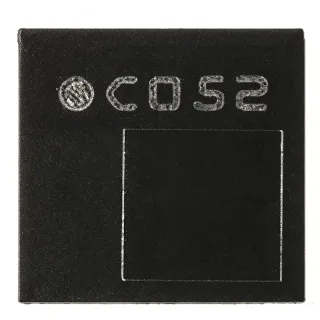
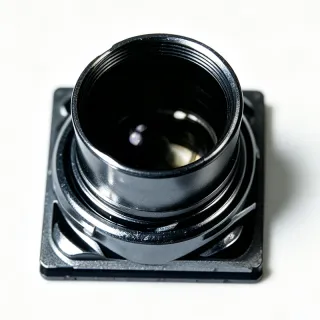
MPX10D - 10 kPa Uncompensated Pressure Sensor | NXP / STMicroelectronics
N.º da peça: MPX10D ✓ Ativo| Qtd. | Preço unitário | Total |
|---|---|---|
| 1 | $8.9 | $8,90 |
| 10 | $7.95 | $79,50 |
| 100 | $6.8 | $680,00 |
| 500 | $5.95 | $2.975,00 |
| 1.000 | $5.2 | $5.200,00 |
MPX10D Visão geral
A piezoresistive pressure sensor is a micro-electromechanical device in which a silicon diaphragm with implanted strain gauges converts mechanical pressure into a small differential voltage; uncompensated variants omit on-chip temperature correction and signal conditioning, allowing designers to apply custom amplification, offset trim, and thermal compensation externally. Pressure sensors sit within the broader sensor hierarchy of transducers -> MEMS sensors -> piezoresistive sensors -> signal-conditioned pressure ICs, serving as the lowest-level analog interface between physical pressure and an electronic system.
Key features include a differential pressure configuration, 0 to 10 kPa operating range, 35 mV full-scale span at 3 V supply, very low offset drift with temperature, and a standard 4-SIP package with a single pressure port. The MPX10 series is also known under the Motorola legacy part number (the original MPX10 family was introduced by Motorola Semiconductors before the NXP and ST spin-offs) and is widely referenced in medical, industrial, and HVAC designs.
The internal architecture uses four piezoresistors arranged in a Wheatstone bridge on a silicon diaphragm; when pressure is applied, the diaphragm deflects, unbalancing the bridge and producing a differential output voltage proportional to the applied pressure. Because the device is uncompensated, external instrumentation amplifiers such as the INA126 or AD620 are typically used to amplify the small 35 mV signal to a usable ADC input range.
Typical applications include medical respiratory monitoring (spirometry, CPAP, ventilator breathing circuits), industrial low-pressure measurement (HVAC duct pressure, cleanroom pressure differential, leak detection), altitude and barometric sensing, and process control analog front ends. The differential configuration also makes it well-suited to flow measurement across an orifice.
When designing with this device, plan to add external temperature compensation and a low-noise instrumentation amplifier; the 35 mV full-scale signal at 3 V excitation is too small to feed directly into most ADCs without gain. Use a regulated low-noise supply to avoid powering noise coupling into the bridge output.
This page synthesizes pricing data from NXP and STMicroelectronics, pin-compatible drop-in alternatives from the MPX10 family (MPX10DP, MPX10G, MPXV10GC6U), and practical design notes not consolidated in the manufacturer datasheet.
Alternativas drop-in para MPX10D — mesmo encapsulamento, compatível pino a pino. Peças de encapsulamento diferente que exigem retrabalho na PCB são excluídas.
Variantes desta série
Modelos da mesma série compatíveis como drop-in com MPX10D (mesmo formato e footprint) — diferindo em Mounting Type, Technology, Output Type, Compensation, Port Style.
Ferramenta de comparação rápida — selecione peças alternativas para comparação lado a lado:
MPX10DP
✅ Drop-In ⚠️ Especificações não verificadas✓ Em estoque
$6.09 / unidade
Ver ficha técnica →MPX10G
✅ Drop-In ⚠️ Especificações não verificadas📋 Alternativa de referência (fora do catálogo)
MPX10GS
✅ Drop-In ⚠️ Especificações não verificadas✓ Em estoque
$9.95 / unidade
Ver ficha técnica →MPX10GC
✅ Drop-In ⚠️ Especificações não verificadas📋 Alternativa de referência (fora do catálogo)
MPXV10GC6U
✅ Drop-In ⚠️ Especificações não verificadas✓ Em estoque
$5.85 / unidade
Ver ficha técnica →MPX10D Classificações máximas e características elétricas
| Operating Pressure Range | 0 to 10 kPa (0 to 1.45 psi) |
| Pressure Type | Differential |
| Full-Scale Span | 35 mV typical at 3 V supply |
| Tensão de alimentação | 3 V typical |
| Sensitivity | approximately 3.5 mV / kPa |
| Tipo de saída | Analog differential voltage (Wheatstone bridge) |
| Encapsulamento | 4-SIP Module (case 344-15) |
| Tipo de montagem | Through-Hole (single port on top) |
| Technology | Silicon piezoresistive (MEMS strain gauge) |
| Compensation | Uncompensated (external conditioning required) |
| Port Configuration | Single side port, differential measurement |
| Status RoHS | Compliant |
Configuração de pinos do MPX10D
| Pino 1 | Vs — Positive bridge excitation (typical +3 V) |
| Pino 2 | Vout+ — Positive bridge output (positive differential pressure output) |
| Pino 3 | GND — Common ground / negative bridge excitation |
| Pino 4 | Vout- — Negative bridge output (negative differential pressure output) |
Aplicações típicas
MPX10D é adequado para 6 aplicaçãos: Medical Respiratory Monitoring, HVAC Duct Static Pressure Monitoring, Cleanroom Differential Pressure Monitoring, Leak Detection in Pneumatic Systems, Altitude / Barometric Reference Sensing, Process Control Analog Front End.
Medical Respiratory Monitoring
The MPX10D's 0-10 kPa differential pressure range matches human airway pressures in spirometers, CPAP machines, and ventilator breathing-circuit pressure sensors, where it provides a linear mV-output proportional to airflow obstruction or positive-pressure delivery. An INA126 instrumentation amplifier boosts the 35 mV full-scale signal to a 0-3.5 V ADC-friendly range, while an external NTC thermistor compensates the uncompensated piezoresistive bridge for body-temperature drift during continuous patient monitoring.
Recomendado
HVAC Duct Static Pressure Monitoring
The MPX10D measures low static pressure differentials across HVAC filters, fans, and coils in building automation systems, where it detects filter loading and verifies fan performance with a 0-10 kPa range that covers typical 0-1.5 inch water column (0-373 Pa) duct measurements scaled through orifice tap points. The differential single-port configuration compares duct pressure to ambient via a reference tube, and the 35 mV full-scale output feeds an MCP6N11 zero-drift amplifier plus HX710B 24-bit ADC for cloud-connected BAS reporting.
Recomendado
Cleanroom Differential Pressure Monitoring
Pharmaceutical and semiconductor cleanrooms require continuous differential pressure monitoring between adjacent ISO classes to verify directional airflow; the MPX10D's 0-10 kPa differential sensing with a 35 mV span fits this requirement at very low unit cost across many room-to-room pressure pairs. An AD620 instrumentation amplifier provides the necessary gain and common-mode rejection while an LM35 temperature sensor feeds a microcontroller that compensates the uncompensated MPX10D output across the 24-hour ambient temperature swing of the facility.
Recomendado
Leak Detection in Pneumatic Systems
Industrial pneumatic lines and vacuum manifolds develop slow leaks that the MPX10D detects by comparing line pressure to a sealed reference volume through its differential sensing configuration, with the 0-10 kPa full-scale range suited to 0-1.45 psi pneumatic working pressures. The uncompensated sensor pairs with an INA333 nanopower amplifier for battery-powered portable leak detectors, and the 4-SIP package mounts directly onto a handheld plastic enclosure PCB with minimal external components required.
Recomendado
Altitude / Barometric Reference Sensing
The MPX10D's 0-10 kPa range covers the full barometric pressure swing at low altitudes for hobbyist altimeters, weather stations, and drone altitude reference designs, where it provides a secondary reference channel alongside a digital barometric IC. External temperature compensation against an on-board DS18B20 is required because the uncompensated MPX10D output drifts with ambient temperature, but the linear response simplifies the calibration lookup to a two-point reference scheme.
Recomendado
Process Control Analog Front End
Industrial process controllers use the MPX10D as a low-cost analog front end for measuring differential pressure across orifice plates in flow meters, where the 0-10 kPa range and 35 mV span match typical 4-20 mA flow transmitter designs once properly amplified. The 4-SIP through-hole package is well suited to industrial DIN-rail enclosure PCBs that need robust mechanical mounting for factory automation and process plants, and an AD620 amplifier plus HART modulator IC provides the final 4-20 mA loop output.
Recomendado
Resumo dos produtos recomendados
Dados de referência de engenharia para MPX10D — comparação, orientação de projeto e informações de conformidade.
Guia de seleção
Comparação com alternativas
| Parâmetro | Este produto | MPX10DP | MPX10G | MPX10GS | MPX10GC | MPXV10GC6U |
|---|---|---|---|---|---|---|
| Package | 4-SIP Module (case 344-15) | 4-SIP Module (case 344-15) - same | 4-SIP Module (case 344-15) - same | 4-SIP Module (case 344-15) - same | 4-SIP Module (case 344-15) - same | 6-SMD Module (case 482-01) |
| Brand | NXP Semiconductors | NXP Semiconductors | NXP Semiconductors | NXP Semiconductors | NXP Semiconductors | NXP Semiconductors |
| Operating Pressure Range | 0 to 10 kPa | 0 to 10 kPa | 0 to 10 kPa | 0 to 10 kPa | 0 to 10 kPa | 0 to 10 kPa |
| Full-Scale Span | 35 mV at 3 V supply | 35 mV at 3 V | 35 mV at 3 V | 35 mV at 3 V | 35 mV at 3 V | 35 mV at 3 V |
| Pressure Type | Differential (single side port) | Differential (dual port) | Gauge (one side vented to atmosphere) | Gauge (single axial port) | Gauge (dual port) | Gauge (SMD, dual port) |
| Supply Voltage | 3 V typical | 3 V typical | 3 V typical | 3 V typical | 3 V typical | 3 V typical |
| Port Configuration | Single side port, differential | Dual ports (through-flow) | Single axial port, gauge | Single axial port, gauge | Dual ports, gauge | Dual ports, SMD |
| Mounting Type | Through-Hole (4-SIP) | Through-Hole (4-SIP) | Through-Hole (4-SIP) | Through-Hole (4-SIP) | Through-Hole (4-SIP) | Surface-Mount (6-SMD) |
| Compensation | Uncompensated | Uncompensated | Uncompensated | Uncompensated | Uncompensated | Uncompensated |
Principais diferenciais
- Differential single-port configuration in 4-SIP (vs MPX10DP)
- Same MPX10 silicon die, full-scale span consistency (vs MPX10G)
- Mainstream active dual-source supply chain (vs MPXV10GC6U)
Notas de projeto
Use a low-noise, low-drift instrumentation amplifier (e.g. INA126, AD620) immediately adjacent to the MPX10D's Vout pins to amplify the 35 mV full-scale bridge signal before trace noise couples into it. Keep the traces from the MPX10D bridge to the amplifier as short as possible (under 25 mm preferred) and run them as a guarded differential pair over a continuous ground pour to reject ambient electromagnetic interference that would otherwise appear as bridge noise.
Power the MPX10D from a low-noise 3 V LDO (e.g. MCP1700, LP2985) rather than a switching regulator: any ripple on the 3 V bridge excitation translates directly into a common-mode output component that the instrumentation amplifier rejects only partially, degrading signal integrity. Decouple the bridge supply with a 10 uF ceramic plus 100 nF cap to ground placed within 5 mm of the Vs pin of the MPX10D module.
Do not assume the MPX10D is automatically calibrated to any specific output; designers must apply both gain calibration (using the 35 mV full-scale span at 3 V) and temperature compensation (using an external NTC thermistor or digital temperature IC) because the part ships uncompensated. A common pitfall is treating the offset as zero at room temperature and skipping initial trim, which then causes significant zero drift in medical or process-control applications across the operating temperature range.
Place the MPX10D pressure port facing away from sources of mechanical stress (mounting screws, large transformers, drop impact zones) and avoid flexing the 4-SIP module leads during PCB assembly; the piezoresistive die is sensitive to package body stress. Additionally, keep the analog ground and digital ground planes separated beneath the sensor and amplifier section to prevent digital return currents from flowing through the bridge ground reference.
Informações de conformidade
RoHS compliant per NXP product page as of 2026-10-15. Sensor is not AEC-Q100 qualified since pressure sensor packaging is unrelated to automotive IC qualification; consult NXP product change notice for environmental updates. Halogen-free status not explicitly stated in NXP product page for the MPX10D; treat as unknown.