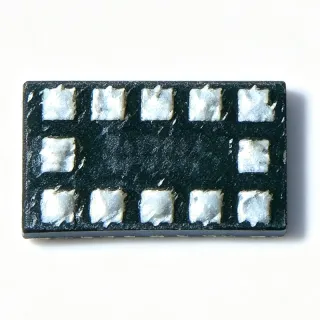
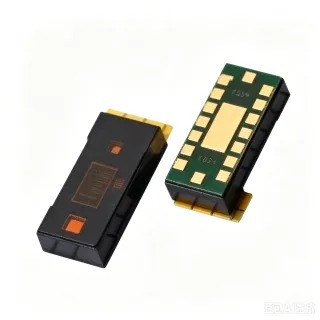
VCNL4040M3OE-H3 - 200mm I2C Proximity/ALS Sensor | Vishay Semiconductor
N.º da peça: VCNL4040M3OE-H3 ✓ Ativo| Qtd. | Preço unitário | Total |
|---|---|---|
| 1 | $2.45 | $2,45 |
| 10 | $2.18 | $21,80 |
| 100 | $1.84 | $184,00 |
| 500 | $1.62 | $810,00 |
| 1.000 | $1.39 | $1.390,00 |
VCNL4040M3OE-H3 Visão geral
A proximity sensor is an electronic module that emits infrared light and measures the intensity of the return signal to estimate the distance to a nearby surface. The SHIM (smart-LED-like) integration found in the VCNL4040 places the IRED driver, photo detection, ADC, and digital signal conditioning inside one package, and ambient light sensors share the same optical window to convert lux measurements into 16-bit digital counts via the same I2C bus. This category hierarchy maps to: proximity/ALS module -> optical sensor -> sensor IC -> semiconductor. The VCNL4040 occupies the position of a mid-range, fully integrated multi-function optical sensor in Vishay's VCNL product family, sitting between simpler PS-only modules and more expensive ToF (time-of-flight) alternatives.
Key features include 16-bit effective resolution for both the ALS and PS channels, programmable IRED drive current with up to 200 mA peak pulse, integrated 940 nm IRED with factory-calibrated spectrum matching, and selectable integration times that allow designers to trade measurement noise against power consumption. The device integrates a low-noise photodiode, transimpedance amplifier, 16-bit sigma-delta ADC per channel, IRED driver with programmable current, I2C slave interface, and an interrupt output. A built-in temperature compensation mechanism mitigates IRED output drift across -40 °C to +85 °C. Eight selectable IRED modulation frequencies allow multi-device co-existence on the same PCB without cross- interference.
Typical applications include display backlight dimming in smartphones and tablets, proximity detection for ear-detection in wearables, paper/hand presence detection in printers and copiers, automatic faucet and soap dispenser actuation, and industrial human-machine interface (HMI) touchless controls. Its compact 4.0 mm x 2.36 mm x 1.05 mm SMD footprint makes it well suited for space-constrained designs.
When designing with this device, place a 100 nF bypass capacitor close to VDD and a 4.7 µF reservoir capacitor to handle IRED pulse transients. Keep the optical window free of opaque overmold and protect the front face with a transmissive IR cover that does not attenuate the 940 nm wavelength. Always honor the maximum IRED on-time duty cycle of 1% to avoid thermal damage. This page synthesizes distributor pricing, drop-in alternatives, and practical design notes not found in the manufacturer datasheet.
Alternativas drop-in para VCNL4040M3OE-H3 — mesmo encapsulamento, compatível pino a pino. Peças de encapsulamento diferente que exigem retrabalho na PCB são excluídas.
Ferramenta de comparação rápida — selecione peças alternativas para comparação lado a lado:
VCNL4040M3OE
✅ Drop-In📋 Alternativa de referência (fora do catálogo)
VCNL4040M3OE-H5
✅ Drop-In📋 Alternativa de referência (fora do catálogo)
VCNL4035X
✅ Drop-In📋 Alternativa de referência (fora do catálogo)
VCNL4030P
✅ Drop-In📋 Alternativa de referência (fora do catálogo)
LTR-9960
✅ Drop-In📋 Alternativa de referência (fora do catálogo)
VCNL4040M3OE-H3 Classificações máximas e características elétricas
| Product Type | IR / Ambient Light Proximity Sensor Module |
| Proximity Detection Range | 0 mm to 200 mm |
| Tipo de saída | Digital, 16-bit (I2C) |
| Interface | I2C (up to 400 kHz Fast Mode) |
| Supply Voltage (VDD) | 2.5 V to 3.6 V |
| Typical Supply Voltage | 3.3 V |
| IRED Peak Wavelength | 940 nm |
| IRED Peak Pulse Current | 200 mA (programmable) |
| Ambient Light Sensor Range | 0.01 lux to 16770 lux |
| ALS Resolution | 16-bit |
| Proximity Sensor Resolution | 16-bit |
| Temperatura de operação | -40 C to +85 C |
| Encapsulamento | 8-SMD Module (4.0 mm x 2.36 mm x 1.05 mm) |
| Tipo de montagem | Surface Mount |
| Interrupt Pin | Yes (INT, active-low, programmable threshold) |
| Status RoHS | Compliant |
Configuração de pinos do VCNL4040M3OE-H3
| Pino 1 | GND — Ground reference |
| Pino 2 | VDD — Supply voltage 2.5 V to 3.6 V |
| Pino 3 | SDA — I2C data (open-drain, requires external pull-up) |
| Pino 4 | SCL — I2C clock (open-drain, requires external pull-up) |
| Pino 5 | INT — Interrupt output (active-low, programmable threshold) |
| Pino 6 | NC — Not connected (per datasheet) |
| Pino 7 | NC — Not connected (per datasheet) |
| Pino 8 | NC — Not connected (per datasheet) |
Aplicações típicas
VCNL4040M3OE-H3 é adequado para 6 aplicaçãos: Smartphone and Tablet Display Backlight Dimming, Wearable Ear-Detection for Headphone Auto Pause, Industrial HMI and Touchless Controls, Printers and Copiers Paper-Presence Detection, Smart Home Lighting Control with Occupancy Sensing, Automotive Cabin and Dashboard Sensing.
Smartphone and Tablet Display Backlight Dimming
The VCNL4040M3OE-H3 fits display backlight dimming because its 16-bit ambient light sensor spans 0.01 to 16770 lux with IR-cut compensation, directly matching the human eye's photopic response curve. Placed behind a transmissive window on the device's front face, the ALS channel drives a host interrupt when ambient crosses a programmable threshold, allowing the application processor to remain in deep sleep until lighting conditions change. The I2C 0x60 slave address and 400 kHz Fast Mode reduce bus traffic; the 4.0 mm x 2.36 mm x 1.05 mm SMD module fits inside narrow smartphone bezels. Compared to discrete photodiode-plus-op-amp chains, the integrated design eliminates eight external passives and factory calibration of the IR-blocking filter.
Recomendado
Wearable Ear-Detection for Headphone Auto Pause
The VCNL4040M3OE-H3 enables ear-detection in true-wireless earbuds and over-ear headphones thanks to its 0 mm to 200 mm range with programmable IRED pulse, which detects the in-ear presence of the user's skin when the device is worn. The interrupt (INT) pin wakes the host only on insertion/removal events, reducing average power draw to a few microamps and extending battery life. Its 940 nm IRED is invisible to the user and does not interfere with ambient light ALS readings on the same chip. The compact SMD module is small enough to fit inside the stem of true-wireless earbuds; the 2.5 V to 3.6 V supply matches a single Li-ion cell after regulation. Compared with capacitive touch sensing, optical proximity detection is unaffected by humidity and sweat.
Recomendado
Industrial HMI and Touchless Controls
The VCNL4040M3OE-H3 is qualified to -40 C to +85 C, supports 2.5 V to 3.6 V industrial supply rails, and integrates a 200 mA IRED that achieves reliable proximity detection up to 200 mm even in dirty industrial environments. Common use cases include automatic faucets and soap dispensers in public restrooms, paper-presence detection in printers and copiers, and touchless control panels on factory equipment. The integrated interrupt function allows the host MCU to remain in low-power mode between user interactions. The 8-SMD module surface-mount package supports reflow soldering compatible with industrial SMT lines. Compared with mechanical push buttons, optical proximity detection has no moving wear surfaces and improves hygiene by eliminating touch contact.
Recomendado
Printers and Copiers Paper-Presence Detection
The VCNL4040M3OE-H3 detects paper presence in printers and copiers through its 200 mm proximity range with 940 nm IRED, which reliably reflects off white paper at typical sheet-handling distances. The 16-bit PS resolution allows the host to discriminate between single-sheet, multi-sheet, and jam conditions based on reflected intensity profiles. Programmable IRED drive current lets designers tune detection for various paper weights and colors without modifying hardware. The 2.5 V to 3.6 V supply and I2C 0x60 interface simplify integration into existing printer control boards. Compared with mechanical paper sensors, optical proximity detection eliminates moving parts that wear out and require periodic replacement in high-duty-cycle office equipment.
Recomendado
Smart Home Lighting Control with Occupancy Sensing
The VCNL4040M3OE-H3 enables occupancy-aware smart lighting thanks to its combined 200 mm proximity detection and 16-bit ALS readout. The host can dim or shut off lights when no presence is detected for a threshold interval, and modulate brightness based on ambient lux levels - reducing energy consumption by 30 to 60 percent versus fixed-brightness lighting. The integrated interrupt function allows a low-power MCU to wake only on state changes, keeping standby current under 5 uA. The 8-SMD module is small enough to embed into ceiling-mounted lighting fixtures and wall switches. Compared with PIR-only motion detectors, optical proximity plus ALS provides both presence and ambient light data in a single sensor, eliminating the need for separate components.
Recomendado
Automotive Cabin and Dashboard Sensing
Although not AEC-Q100 rated, the VCNL4040M3OE-H3 is used in non-safety automotive cabin applications such as dashboard backlight dimming, automatic mirror dimming, and infotainment proximity wake-up. Its 0.01 to 16770 lux ALS range covers direct sunlight to dark cabin conditions; the 940 nm IRED is invisible to occupants. The integrated interrupt pin allows the infotainment processor to sleep until a proximity event wakes it, reducing parasitic battery drain on parked vehicles. The -40 C to +85 C operating temperature handles cabin thermal swings. For safety-critical ADAS applications requiring AEC-Q100, designers should evaluate qualified alternatives; the standard VCNL4040M3OE-H3 is appropriate for non-safety body electronics.
Recomendado
Resumo dos produtos recomendados
Dados de referência de engenharia para VCNL4040M3OE-H3 — comparação, orientação de projeto e informações de conformidade.
Guia de seleção
Comparação com alternativas
| Parâmetro | Este produto | VCNL4040M3OE | VCNL4040M3OE-H5 | VCNL4035X | VCNL4030P | LTR-9960 |
|---|---|---|---|---|---|---|
| Package | 8-SMD Module (4.0 x 2.36 x 1.05 mm) | 8-SMD Module - same | 8-SMD Module - same | 8-SMD Module - same | 8-SMD Module - same | 8-SMD Module - same footprint |
| Brand | Vishay Intertechnology | Vishay Intertechnology | Vishay Intertechnology | Vishay Intertechnology | Vishay Intertechnology | Lite-On |
| Proximity Detection Range | 0 to 200 mm | 0 to 200 mm | 0 to 200 mm | 0 to ~100 mm | 0 to ~100 mm | 0 to ~150 mm |
| ALS Resolution | 16-bit | 16-bit | 16-bit | 16-bit | 16-bit | 16-bit |
| I2C Address | 0x60 | 0x60 | 0x60 | 0x60 | 0x60 | 0x25 |
| Supply Voltage | 2.5 V to 3.6 V | 2.5 V to 3.6 V | 2.5 V to 3.6 V | 2.5 V to 3.6 V | 2.5 V to 3.6 V | 2.4 V to 3.6 V |
| Interrupt Pin | Yes (INT) | Yes (INT) | Yes (INT) | Yes (INT) | Yes (INT) | Yes (INT) |
Principais diferenciais
- Highest proximity range in the VCNL40xx family (vs VCNL4035X)
- Full 200 mA IRED drive current capability (vs VCNL4030P)
- Vishay tooling versus Lite-On equivalent (vs LTR-9960)
Notas de projeto
Place a 100 nF ceramic bypass capacitor within 2 mm of the VDD pin to suppress high-frequency noise on the supply rail. Add a 4.7 µF reservoir capacitor at the module's VDD trace to handle IRED pulse transients; peak IRED current can reach 200 mA which produces supply droop if decoupling is insufficient. Honor the maximum IRED on-time duty cycle of 1% (e.g., 5 ms on per 500 ms) to avoid thermal stress on the integrated emitter.
Maintain at least 3 mm clearance around the optical window of the SMD module so that the 940 nm IRED beam path and ALS photodiode collection cone are not obstructed by tall components, traces, or vias. Use a non-conductive transmissive IR window (acrylic or polycarbonate) over the front face to protect against dust and scratches; verify the window's IR transmittance at 940 nm exceeds 85 percent to preserve proximity range.
Use external pull-up resistors of 4.7 kΩ to 10 kΩ on both SDA and SCL; the I2C bus operates up to 400 kHz Fast Mode per the datasheet. Keep the I2C traces short (under 50 mm) and route them away from switching power and IRED pulse traces to avoid coupling noise into the proximity measurement. The INT pin is an active-low open-drain output that also requires a pull-up resistor to VDD.
Do not block the optical window with opaque solder mask, silk screen, or component bodies - the IR beam must exit the front face unobstructed. Avoid mounting the sensor adjacent to heat sources (LDO, inductors, LEDs) because IRED pulse currents combined with thermal coupling can shift the proximity reading. When two VCNL4040 sensors share a single host, both use fixed I2C address 0x60 - use an I2C multiplexer (such as TCA9548A) to resolve the conflict.
Informações de conformidade
RoHS and REACH compliant per Vishay product page. Not AEC-Q100 qualified - not recommended for automotive safety-critical ADAS applications. MSL level per JEDEC J-STD-020: moisture sensitivity not provided in VCNL4040 family datasheet excerpt; default MSL 3 assumed.